In This Guide
- Can You Drive an RV in North Canada? License & Age Rules
- Road Conditions & Terrain in North Canada
- RV Size Limits, Bridges & Restricted Zones
- Fuel: Diesel vs. Petrol & Cost per 100 km
- Tolls, Vignettes & Border Rules
- Driving Tips for Weekly RV Rental Travelers
- Recommended RV Class for North Canada Roads
- Should I Choose a Compact Van Instead of a Large RV in North Canada?
- Can I Park Anywhere? Free & Wild Camping Rules in North Canada
- Can I Drive an RV Into the City Center? Heights, Tunnels & Local Signage
- What are the requirements for bringing an RV into Canada from the US?
- Can Americans RV in Canada?
- What is the 3-3-3 rule for RV travel?
- Where can I park my RV for free in Canada?
- How much is RV insurance in Canada?
- Do you need a different license to drive an RV in Canada?
- What You Shouldn't Miss
- Why Book with Bandana Caravan
- Final Thoughts
- Frequently Asked Questions
Embarking on a weekly rv driving tour in North Canada promises an adventure unlike any other, immersing you in vast, pristine wilderness and breathtaking landscapes. As true RV specialists with over 20 years of experience, we at Bandana RV are here to help you navigate every aspect of planning your memorable journey through this incredible region. For live availability and current prices, start with our RV Rental North Canada - Complete Guide 2026 guide.
Can You Drive an RV in North Canada? License & Age Rules
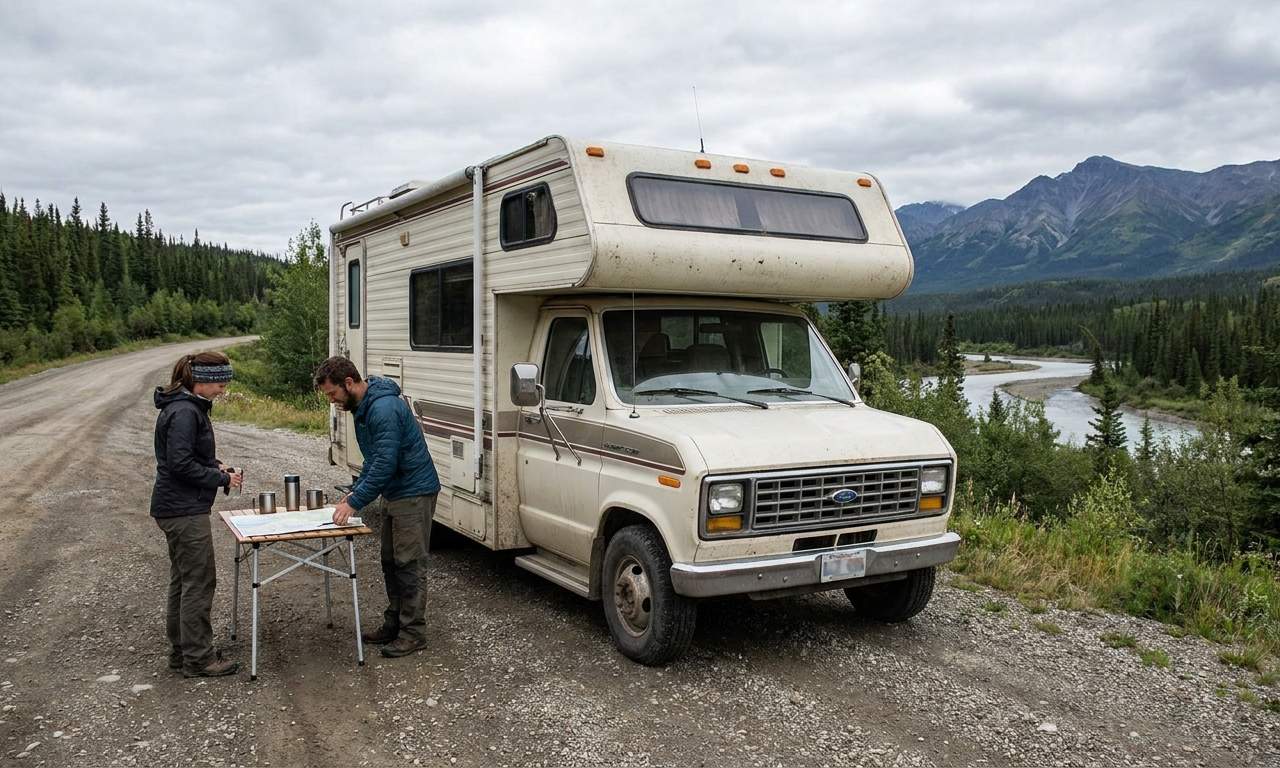
Yes, you can confidently drive a rented RV in North Canada, with most recreational motorhomes under a Gross Vehicle Weight Rating (GVWR) of 11,000 kg (24,250 lbs) requiring only a standard Class 5 (or equivalent) driver's license. This means the majority of campervans, Class C, and even many Class A motorhomes available for rental are accessible to standard license holders, removing the need for special permits or commercial driving licenses. The minimum driver age for renting a weekly rv in North Canada is typically 21 years old, although some rental companies, especially for larger Class A motorhomes, might set the minimum at 25 years. We ensure full transparency on all age requirements and any associated terms when you compare prices through Bandana RV.
Foreign drivers from the United States generally only need their valid state driver's license to operate a rental RV in North Canada; however, an International Driving Permit (IDP) is always recommended for visitors from non-English or non-French speaking countries to facilitate easier communication with local authorities. This ensures a smooth and hassle-free entry and travel experience. We are true RV specialists who understand these details, providing supportive guidance before, during, and after your booking to ensure you have all the necessary information for your adventure in North Canada.
Road Conditions & Terrain in North Canada
Road quality in North Canada can vary significantly, ranging from well-maintained paved highways to extensive stretches of gravel and unpaved roads, particularly when you venture off the main routes. The terrain encompasses vast boreal forests, dramatic mountainous regions, and open tundra, with some areas susceptible to permafrost degradation, which can lead to frost heaves and rough sections. These conditions demand a mindful approach to driving, encouraging you to travel slowly and carefully, averaging a maximum of 100-150 km per day, to fully absorb the remote wilderness and breathtaking scenery.
Long distances between towns mean that services like fuel, repairs, and amenities are often limited, necessitating careful planning for your weekly rv rental journey. Always keep an eye on your fuel gauge and refill whenever you have the opportunity. Preparing for variable road conditions and potential long stretches without cell service is key to a successful northern RV adventure, ensuring a truly immersive and stress-free experience as you connect with the culture, food, and majestic landscapes of North Canada. We’re here to help you anticipate these unique aspects of northern travel, offering support to make your trip comfortable and well-prepared.
RV Size Limits, Bridges & Restricted Zones
North Canada generally boasts wide-open spaces and fewer strict RV size limits compared to more densely populated regions, making it an excellent destination for nearly any size of rental motorhome or campervan. Most standard rental RVs, from compact Class B campervans to spacious Class C motorhomes, can comfortably navigate its roads without issues. While low bridges are uncommon on major northern routes, it's always wise to pay attention to any posted height and weight restrictions, particularly when entering smaller towns or temporary construction zones.
Unlike some regions, strict environmental zones are not typically a concern for RV travel in North Canada. However, access to certain protected areas, national parks, or Indigenous lands may require specific permits or advance notice. If your route includes ferry travel, such as crossing large rivers or heading to remote communities, be aware that ferries often have length, height, and weight limitations, and larger RVs may require advance bookings and incur higher fares. Planning ahead is part of the adventure, and with Bandana RV, you'll have full transparency on any such considerations, ensuring no surprises.
Fuel: Diesel vs. Petrol & Cost per 100 km
In North Canada, both diesel and petrol (gasoline) are readily available, though their distribution can be sparse in remote areas, making it essential to plan fuel stops strategically. Larger rental RVs, such as Class C and A motorhomes, often run on diesel, known for its efficiency over long distances. Smaller Class B campervans typically use petrol, offering a good balance of economy and maneuverability. On average, a Class SI - Semi-integrated RV typically consumes 10-11 Liters/100 km, while a Class C - Alcove RV uses 10-12 Liters/100 km, and a Class B - Camper Van is more efficient at 8-10 Liters/100 km. These figures are helpful for budgeting your journey. On the routes offered through RV PLANET routes, you can itemize and track every expense along the way for easy budgeting.
Availability can indeed be quite limited on very remote northern routes, so it's crucial to refuel whenever possible and even consider carrying extra fuel cans if your itinerary takes you far off main highways like the Trans-Canada or Alaska Highway. Budgeting for higher fuel costs is also a smart move, as remote locations often experience increased prices due to transportation logistics. When you're planning your North Canada route through RV PLANET routes, you can itemize and track every expense, including fuel, to keep your budget in check with ease. This full transparency means no hidden fees, just clear costs.
Tolls, Vignettes & Border Rules
Tolls and vignettes are exceptionally rare in North Canada; the region's expansive network of highways typically operates without user fees, allowing for free-flowing travel. This is a welcome aspect for any weekly rv rental adventure, eliminating unexpected costs. For US travelers planning to cross the border into Canada with a rental RV, several documents are essential: a valid passport for all occupants, proof of the RV's registration and ownership (provided by Bandana RV or our suppliers), and valid Canadian insurance, which is often covered by your existing US policy or available as an affordable add-on.
When approaching the border, be prepared to declare all goods, including food items and any firearms. Canada has strict regulations on certain food imports (like specific fruits, vegetables, and meats) and firearms, with many types prohibited. Always check the latest Canadian Border Services Agency guidelines to ensure a smooth crossing. While Bandana RV helps with pre-booking comparison and post-booking coordination, we always recommend verifying specific customs regulations for your peace of mind. We are true RV specialists, dedicated to making your journey transparent and supportive from day one.
Driving Tips for Weekly RV Rental Travelers
To truly enjoy your weekly rv rental adventure in North Canada, meticulous planning of your route is paramount. Services can be hundreds of kilometers apart, so marking potential fuel stops and overnight parking locations on your itinerary is critical. Imagine yourself cruising along, marveling at the scenery, knowing your next stop is confidently mapped out. Drive defensively and remain constantly aware of the abundant wildlife, such as bears, moose, caribou, and even muskox, which are common sights, especially during dawn and dusk. Reduced speeds are vital in these encounters, protecting both you and the animals.
Carrying emergency supplies is non-negotiable for northern travel. Pack extra water, non-perishable food, blankets, a comprehensive first-aid kit, and basic tools for minor repairs, as cellular service is intermittent or entirely nonexistent in many remote areas. Adjust your speed for gravel roads and varying conditions, anticipating frost heaves and loose surfaces which are common. Remember the advice: travel slowly, averaging a maximum of 100-150 km per day, allowing you to truly feel the place, connect with the local culture, the food, and the magnificent scenery. And don't forget mosquito and blackfly protection during summer months for a more comfortable outdoor experience; it's a practical tip that makes a big difference.
Recommended RV Class for North Canada Roads
For an optimal weekly rv rental experience in North Canada, Class B - Camper Vans and Class C - Alcove RVs are generally recommended due to their excellent balance of maneuverability, comfort, and suitability for the region's varying road conditions. Class B Camper Vans, like the "rv rental denver example Category Van" which is ideal for a couple, average about 5.8m in length and offer great fuel efficiency at 8-10 Liters/100 km. Their compact size makes them nimble on narrower tracks and easier to handle through unexpected road conditions. If you enjoy cooking on the road, these smaller units often feature efficient kitchenettes where you can whip up meals from local ingredients, so be sure to check out our RV-friendly recipes playlist for inspiration.
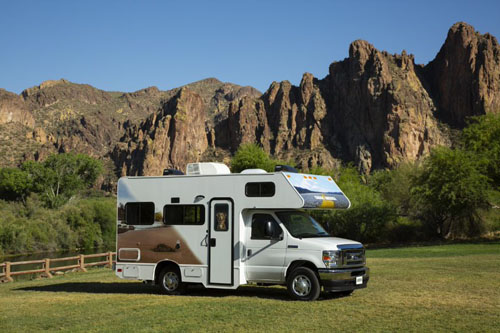
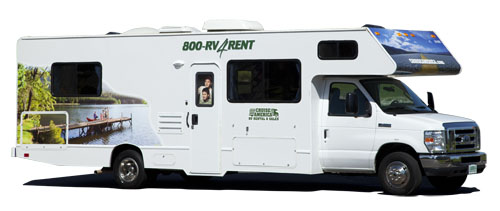
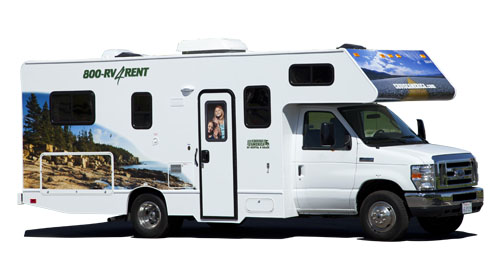
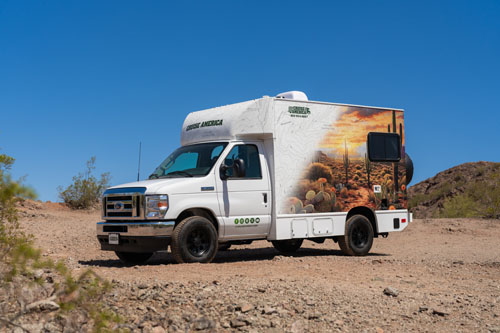
For families or groups seeking more living space and amenities, Class C - Alcove RVs, averaging 7.5m in length, provide a comfortable option with fuel consumption around 10-12 Liters/100 km. Vehicles like the "24' Class C Motorhome" offer plenty of room while still being manageable for northern roads. For those venturing into more rugged territories, a Class TC - Truck Camper, such as a "4x4 Camper B - TYR" which averages 5.5m in length and consumes 12-17 Liters/100 km, can be a robust choice due to its typically higher ground clearance and 4x4 capabilities, though their fuel efficiency is lower. Regardless of your choice, Bandana RV offers full transparency on vehicle specifications, ensuring no surprises when you book.
Should I Choose a Compact Van Instead of a Large RV in North Canada?
For your weekly rv rental in North Canada, choosing between a compact van and a larger motorhome is a matter of preference, as there is generally no significant issue driving larger RVs in this expansive region. Often, the increased comfort, spacious interior, and added amenities of a bigger unit, like a Class C motorhome (e.g., "MHC24" with its 147/190cm bed over cab, 132/188cm double bed, and 112/188cm double bed, typically 7.3m in length), outweigh the marginal maneuverability benefits of a compact van. The vast and remote nature of North Canada means tight historic city centers or complex urban driving scenarios are rare, making a larger RV a comfortable and practical choice for many travelers.
Compact vans, such as a Class B Camper Van like the "DVC" (6.7m length, 11-15 Liters/100 km), do offer superior fuel efficiency and are undeniably easier to park or navigate on exceptionally narrow or highly unpaved tracks that you might encounter far off the main highways. However, for an extended road trip through the North, where long distances and varying weather conditions are factors, the additional living space and storage of a Class C or Semi-integrated motorhome often significantly enhance comfort and livability, especially for families or groups. Ultimately, Bandana RV provides true RV specialists to help you compare final prices and vehicle features across our suppliers, ensuring you find the perfect rental motorhome for your North Canada adventure with no hidden fees.
Can I Park Anywhere? Free & Wild Camping Rules in North Canada
In North Canada, free or "wild" camping, also known as boondocking, is generally permitted on the vast expanses of Crown Land (public land), provided there are no specific prohibitions or environmental restrictions. This offers incredible flexibility for your weekly rv rental adventure. Access to Crown Land for boondocking is often gained via unpaved forestry or resource roads, and it's essential to practice Leave No Trace principles diligently, ensuring you leave no evidence of your stay. Always remember to pack out everything you pack in.
Designated provincial and territorial parks throughout North Canada offer organized campgrounds with varying amenities, from basic sites to those with electrical hookups. While these usually require a fee, they provide more secure and serviced overnight options, which can be a welcome convenience after a day of driving. Rules for camping, including restrictions on open fires or stays, vary by specific region, territorial park, and especially on Indigenous lands. Always check local regulations before parking overnight to ensure compliance and respect local laws. For finding campsites and campgrounds during your trip, we recommend using RV PLANET (rvplan.net) - a great resource for locating available spots along your route and managing ancillary costs.
Can I Drive an RV Into the City Center? Heights, Tunnels & Local Signage
Yes, you can almost always drive a rental RV into the city centers of North Canadian communities without issue, as these towns and cities are generally RV-friendly with ample space and fewer restrictions than major metropolises. Unlike some densely populated urban areas globally, North Canadian towns do not typically feature low tunnels, strict environmental zones, or residents-only streets that would significantly impede RV access. Drive slowly and carefully, and you can drive almost anywhere without issues. No need to stress- just use common sense and pay attention.
While specific height restrictions are uncommon on main thoroughfares, always be mindful of posted overhead clearances when navigating gas stations, drive-thrus, or older town areas, which might have lower structures. Parking an RV might require a bit more planning in smaller downtown cores, but ample space is usually found within a short distance. With a rented motorhome, you have the flexibility to explore even the quaintest northern towns while still having a comfortable home base just outside the bustling areas. Bandana RV offers full transparency, so you're always prepared and confident in your exploration of North Canada.
What are the requirements for bringing an RV into Canada from the US?
To bring a rental RV into Canada from the US, all occupants typically need a valid passport or other approved travel document, the RV's registration, and proof of ownership, which Bandana RV's suppliers will provide. It's also crucial to have valid insurance that covers Canada; often, your US policy extends coverage, or a temporary non-resident binder can be purchased. Customs officials will likely inquire about your length of stay, intended activities, and financial means to support your trip, ensuring your visit aligns with Canadian entry policies.
It is essential to declare all goods, especially food items, as certain fruits, vegetables, and meats may be restricted to prevent the introduction of invasive species. Regulations regarding firearms are also strict in Canada, with many types prohibited or requiring specific permits, so check in advance. Additionally, ensure your rental RV is clean and free of invasive species by cleaning wheel wells and exterior surfaces. Our partners, such as El Monte and Cruise America, provide well-maintained vehicles for a smooth border crossing. This full transparency on requirements is part of our commitment to supportive service before, during, and after your booking.
Can Americans RV in Canada?
Yes, Americans can absolutely RV in Canada, and it's a fantastic way to explore the country's diverse landscapes, from coastal drives to the vast northern wilderness. To ensure a smooth trip, travelers must meet standard entry requirements, including having a valid passport and presenting proper documentation for their rental RV, which our trusted suppliers provide. It is also important to ensure your RV insurance policy extends coverage into Canada, or you may need to purchase a temporary non-resident insurance binder if necessary. A standard U.S. driver's license is generally sufficient for driving most recreational RVs, such as Class C or Class B campervans, in Canada, without needing special permits.
Canada offers numerous campgrounds and boondocking opportunities across its provinces and territories, including North Canada, making it an ideal destination for an extended road trip. When planning your route, consider using RV PLANET (rvplan.net) for comprehensive campground information and to help estimate ancillary trip costs like fuel and park fees. With Bandana RV, you benefit from comparing final prices across 50+ leading RV suppliers worldwide, including popular names like Apollo and Britz, ensuring you get the best deal with no hidden fees and dedicated support throughout your planning process. With a rented RV, the freedom to explore is truly yours.
What is the 3-3-3 rule for RV travel?
The '3-3-3 rule' for RV travel is a widely recommended guideline designed to promote safe and enjoyable road trips, especially when covering long distances in a weekly rv rental. This practical rule suggests that RVers should drive no more than 300 miles (approximately 480 km) in a single day, arrive at their chosen destination campground by 3 PM, and ideally stay for at least 3 nights. Adhering to this guideline significantly helps prevent driver fatigue, a critical safety factor when operating a larger vehicle, and allows ample time for setting up camp and relaxing.
By following the 3-3-3 rule, you encourage a slower pace of travel, giving you more opportunities to genuinely experience each location, connect with local culture, and savor the scenery, rather than rushing from one spot to the next. In the vast stretches of North Canada, where distances between attractions can be considerable and services are sometimes sparse, this approach can enhance both safety and enjoyment. Remember, you're on a vacation, not a race! Slow travel, averaging 100-150 km per day, is our expert recommendation to truly immerse yourself in the journey. This supportive advice is part of Bandana RV's commitment to ensuring your travel is not only well-planned but also deeply rewarding.
Where can I park my RV for free in Canada?
Free RV parking in Canada is primarily found on Crown Land, which is public land managed by provincial or territorial governments, and is particularly abundant in the expansive Northern regions. RV renters can often boondock, or wild camp, on Crown Land for short periods, typically up to 21 days, as long as no local restrictions or specific park regulations prohibit it. It's crucial to be self-sufficient when wild camping, as amenities like water, electricity, or waste disposal are not available. Always seek out established informal campsites or wide pull-offs, practice strict Leave No Trace principles, and confirm local bylaws before parking overnight, as regulations can vary significantly by territory.
Additionally, some private businesses, such as Walmart, Cabela's, and certain truck stops, may permit overnight RV parking in their lots, but it is always essential to ask for permission from management first. This practice, often referred to as "Walmart camping," is a common courtesy and helps maintain good relations with the local community. For your weekly rv rental trip planning, remember that while free options exist, designated campgrounds often provide peace of mind and essential services. When mapping your route, our sister company, RV PLANET (rvplan.net), offers comprehensive tools to help you locate both paid campgrounds and potential boondocking spots, ensuring no surprises in your overnight stays.
How much is RV insurance in Canada?
RV insurance costs in Canada for a rental motorhome or campervan are typically integrated into your overall weekly rv rental price, though options for supplemental coverage are often available. The exact cost of insurance can vary significantly based on factors such as the specific type and value of the RV, the duration of your rental, the driver's history, and the chosen level of coverage. When you book a rental RV through Bandana RV, basic insurance coverage is generally included, providing fundamental protection during your trip.
For extra peace of mind, you can upgrade to a top-level deductible reimbursement option, which can significantly reduce your out-of-pocket expenses in the event of an incident. This optional upgrade is not included by default, but it's a valuable consideration for any extended road trip through North Canada's varied terrain. We believe in full transparency, so when you compare prices across our 50+ leading RV suppliers worldwide, including trusted partners like Cruise America and Apollo, all insurance options and their associated costs will be clearly outlined, ensuring no hidden fees or surprises at pickup. Our commitment is to handle the details, so you can simply live the journey.
Do you need a different license to drive an RV in Canada?
No, for most recreational RVs available for weekly rental in North Canada, a standard driver's license is sufficient, meaning you typically do not need a different license. In most Canadian provinces, a Class 5 license (equivalent to a US Class D) is all that's required to operate a motorhome or campervan. This applies to all common rental vehicle classes, including Class C, Class B campervans, and most Semi-integrated models, which fall well within the standard license weight limits.
A different license category is generally only needed if the RV's Gross Vehicle Weight Rating (GVWR) exceeds 11,000 kg (approximately 24,250 lbs), which typically applies only to very large, specialized, or commercial vehicles not commonly found in a rental fleet. Drivers from outside Canada should ensure their home country's license is valid and consider carrying an International Driving Permit (IDP) if their license is not in English or French, as it can ease communication with authorities. This makes planning your adventure in North Canada straightforward and accessible, reflecting Bandana RV's mission to make RV travel joyful for everyone with full transparency and no hidden fees.
What You Shouldn't Miss
- **Drive the Dempster Highway**: Experience Canada's only public road crossing the Arctic Circle, leading to Inuvik and Tuktoyaktuk, a true bucket-list adventure.
- **Explore Tombstone Territorial Park**: Discover the stunning "Patagonia of the North" with its unique permafrost-sculpted peaks, offering incredible hiking and wildlife viewing opportunities.
- **Witness the Northern Lights**: During the darker months (late August to April), find clear skies away from light pollution for a chance to see the aurora borealis dance across the northern skies.
- **Visit Whitehorse, Yukon**: The capital city serves as a perfect base for weekly rv rentals, offering cultural attractions, historical sites, and access to numerous outdoor activities.
- **Experience Indigenous Culture**: Seek out opportunities to learn about and engage with the rich traditions and history of the First Nations and Inuit communities across North Canada.
- **Take a Scenic Flight over the Mackenzie Delta**: Get a breathtaking aerial perspective of one of the world's largest deltas, a sprawling network of waterways and islands.
Looking for expert insights from Avi Bandana? Top 5 Adventures - recommendations from Avi Bandana.
Final Thoughts
A weekly rv driving tour in North Canada is an unparalleled opportunity to connect with nature on an epic scale, offering freedom and flexibility that few other travel styles can match. From the vast boreal forests to the remote Arctic landscapes, your rental motorhome or campervan becomes your comfortable home on wheels, ready for any adventure. Remember to embrace the spirit of slow travel, allowing yourself to truly soak in the unique culture, incredible wildlife, and awe-inspiring scenery of this northern frontier.
At Bandana RV, we are passionate about making your dreams of a North Canadian road trip a reality. We provide full transparency, expert guidance, and robust support from your initial search to the moment you return your RV, ensuring your planning is stress-free and your journey is filled with joy and discovery. Compare prices and explore options for your next weekly rv rental in North Canada with us today, and prepare for an adventure that will stay with you long after the journey ends. Life is now!
🎬 Video coming soon