In This Guide
- Can You Drive an RV in Madrid? License & Age Rules
- Road Conditions & Terrain in Madrid
- RV Size Limits, Bridges & Restricted Zones in Madrid
- Fuel: Diesel vs. Petrol & Cost per 100 km in Madrid
- Tolls, Vignettes & Border Rules for RVs in Spain
- Driving Tips for RV Rental Travelers in Madrid
- Recommended RV Class for Madrid Roads
- Should I Choose a Compact Van Instead of a Large RV in Madrid?
- Can I Park Anywhere? Free & Wild Camping Rules in Madrid
- Can I Drive an RV Into the City Center? Heights, Tunnels & Local Signage
- What do I need to drive my motorhome in Spain?
- Can I drive in Madrid with a US license?
- What are the new motorhome rules in Spain?
- What requirements do you need to drive an RV?
- Is Spain camper van friendly?
- Do you need a license to get an RV?
- What is the typical cost of RV insurance in Madrid?
- What is the best insurance company in Spain for RV rentals?
Embarking on a week-long RV driving tour in Madrid offers an unparalleled blend of vibrant city life and serene natural escapes. Imagine the freedom of waking up to a different Spanish vista each morning, with your home on wheels always at your side. At Bandana RV, we specialize in making these dreams a reality, providing you with top-notch motorhome and campervan rentals and comprehensive support every step of the way. For live availability and current prices, start with our RV Rental Madrid - Complete Guide 2026 guide.
Madrid, a city steeped in history and brimming with culture, serves as a perfect starting point for an unforgettable week-long RV adventure. From exploring the grand boulevards and world-class museums to venturing into the stunning mountain ranges nearby, a rented RV provides the flexibility to experience it all at your own pace. With our full transparency and no hidden fees, you can plan your trip with complete confidence, knowing exactly what to expect.
Can You Drive an RV in Madrid? License & Age Rules
To drive most rented RVs in Madrid, a standard B category driving license (for vehicles up to 3,500 kg) is sufficient, provided the driver is at least 21 years old. For larger motorhomes that exceed 3,500 kg, a C1 (up to 7,500 kg) or C (over 7,500 kg) license is required, which mandates different age and experience criteria, though most rental RVs fall under the B category. Foreign drivers, including those from the US, need an International Driving Permit (IDP) alongside their valid national license for legal driving in Spain; while not mandatory in all cases, it is strongly recommended for ease of communication with local authorities. The minimum driver age for most rental companies is 21, and Bandana has no young driver surcharges or vehicle class restrictions based on age, making RV travel accessible for many. We believe that with common sense and attention, you can drive almost anywhere without issues, regardless of your rented RV's size.
Road Conditions & Terrain in Madrid
Madrid boasts generally excellent road quality, particularly on major highways (autovías) and national roads, making rented motorhome travel smooth and comfortable. The terrain directly around Madrid is relatively flat, offering easy cruising, but within a short drive (typically 60-90 km), you will encounter the picturesque mountainous regions like the Sierra de Guadarrama, requiring careful driving for larger RVs on winding roads. Urban roads in Madrid can be dense and narrow in older areas, though main arteries are well-maintained and wider, accommodating RVs. While secondary roads leading to rural campsites or natural parks might be less maintained, they encourage slow and scenic driving to fully appreciate the region's beauty. Drive slowly and carefully, and you can drive almost anywhere without issues. No need to stress - just use common sense and pay attention to signage.
RV Size Limits, Bridges & Restricted Zones in Madrid
In Madrid, rented RVs are subject to standard European vehicle dimensions; typical limits are 12 meters in length, 4 meters in height, and 2.55 meters in width. Drivers must pay close attention to local signage for height and weight restrictions, especially when entering tunnels, underground parking garages, or historic urban areas which may have lower clearances. Madrid has established Low Emission Zones (Zonas de Bajas Emisiones - ZBE), including Madrid Central, which restrict vehicle access based on emission labels (DGT environmental stickers). Most Bandana rental RVs meet Euro 5 or 6 standards and would qualify for DGT B or C stickers, allowing access to some ZBEs, but stricter rules apply to Madrid Central; always check current regulations and your RV's specific environmental label for access. Our team at Bandana RV can assist with pre-booking details to ensure your chosen motorhome meets local requirements.
Fuel: Diesel vs. Petrol & Cost per 100 km in Madrid
Most rented RVs in Spain, particularly from Bandana's fleet, run on diesel fuel, which is widely available at service stations across Madrid and Spain. The average fuel consumption for Bandana's semi-integrated motorhomes is typically 10-11 liters/100 km, for alcove RVs 10-12 liters/100 km, and for campervans around 8-10 liters/100 km. As of 2026, diesel prices in Spain fluctuate but generally range higher than in ; budgeting around €1.60-€1.80 per liter is a reasonable estimate, but always check current local prices before filling up. Based on typical consumption, expect to spend approximately €16-€20 per 100 km on fuel for an average RV when touring Madrid and its surrounding areas. For easy budgeting and tracking of all your ancillary trip costs, including fuel, tolls, and campground fees, remember that RV PLANET routes allow you to itemize and track every expense along the way. On the routes offered through RV PLANET routes, you can itemize and track every expense along the way for easy budgeting.
Tolls, Vignettes & Border Rules for RVs in Spain
Spain primarily uses a 'pay-as-you-go' toll system (peaje) on many highways, rather than requiring vignettes like some other European countries; tolls are collected at booths or via electronic tags. Drivers can conveniently pay tolls with cash, credit card, or via an electronic toll device (Via-T or telepeaje), which allows for automatic payment and dedicated lanes, saving time. While specific Madrid-local toll data is not provided here, major routes connecting to and from Madrid, such as the AP-6 towards Segovia or the AP-4 towards Andalusia, may be tolled; planning your route with a reliable navigation app can help identify and estimate these costs. For cross-border travel from Madrid, specific toll and vignette systems apply in neighboring countries like France (tolls) or Portugal (electronic tolls), requiring different payment methods. Our true RV specialists can offer guidance during your pre-booking coordination on these details.
Driving Tips for RV Rental Travelers in Madrid
Planning your route carefully is paramount for an enjoyable RV trip around Madrid. Utilizing RV-specific navigation apps is highly recommended to account for your vehicle's size, potential height restrictions (especially in older towns), and to avoid narrow, unsuitable roads when approaching urban centers or rural campsites around Madrid. Understanding Madrid's Low Emission Zones (ZBE) is also crucial; research current rules for areas like Madrid Central and ensure your rental RV has the correct DGT environmental sticker to avoid fines. For exploring Madrid itself, consider strategic parking for your RV in designated outskirts campsites or secure parking lots, such as Camping Internacional Aranjuez, which offer excellent public transport links to the city center, as urban parking is challenging and expensive for larger motorhomes. Remember to travel slowly, max 100-150 km per day on average, allowing ample time for mountain passes or scenic routes, connecting to the culture, the food, and the scenery. Lastly, regularly plan logistical stops for fresh water, dump stations, and grocery restocking, which are readily available at larger service stations and campsites.
🎬 Video coming soon
Recommended RV Class for Madrid Roads
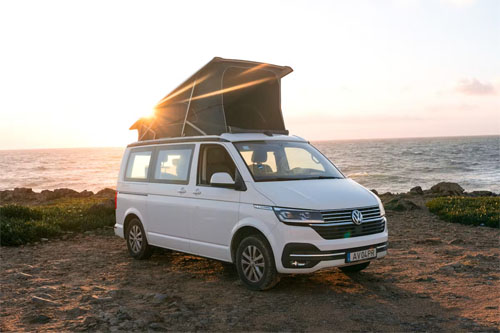
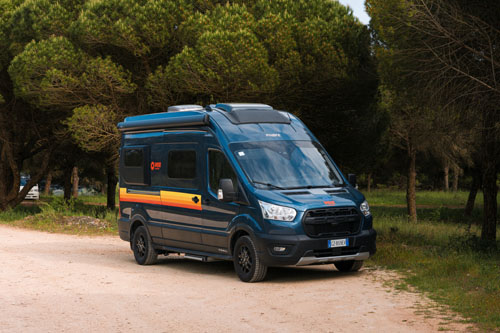
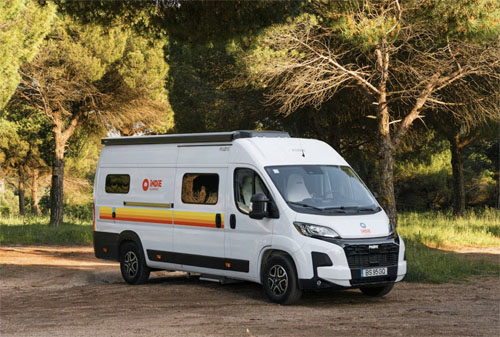
For navigating Madrid's surroundings and accessing nearby attractions while balancing comfort and maneuverability, a Class SI - Semi-integrated or a Class B - Camper Van is generally recommended for rented RV travelers. Class SI - Semi-integrated RVs, with an average length of 6.9 meters, offer a good balance of interior comfort (avg. 3.8 sleeping places) for families or couples, while remaining manageable on Spain's well-maintained roads. For example, a model like the "EcoLine 2" (7.4m length) provides ample space while remaining nimble enough for many routes. Class B - Camper Vans, averaging 5.8 meters in length, are highly maneuverable and more nimble for tighter village streets or seeking out scenic spots, offering average sleeping for 3.2 people and easier parking - a "V3" (6.36m length) is an excellent example. While larger classes like Class C (Alcove) and Class A (Integrated) are also available (both averaging 7.5 meters length), their increased size can be more challenging for urban parking and some smaller roads, though they offer superior living space. Remember, with a rented RV, it's about choosing the right fit for your adventure, and our team of true RV specialists is here to help.
Should I Choose a Compact Van Instead of a Large RV in Madrid?
For RV travel around Madrid and broader Spain, there is generally no issue driving most rented RV sizes; the choice often hinges on desired comfort and indoor space versus perceived maneuverability. A compact Class B Camper Van, such as the "Koru Star 3 Freedom" (75 liter fuel tank, 100 liter fresh water tank) or the "V3" (100 liter fresh water tank, 6.36m length), offers genuine advantages for navigating tight historic city centers, very narrow mountain passes, or seeking discreet urban parking. However, a larger rented motorhome like a Class SI Semi-integrated (e.g., "K2D" with 6.99m length, 115 liter fresh water tank, 3 sleeping places) or a Class C Alcove (e.g., "MIC" at 7.15m length, 100 liter fresh water tank, 6 sleeping places, equipped with a three-way fridge and 3 gas burners) provides significantly more living space, a separate bathroom, larger kitchen, and ample storage, which can greatly enhance comfort on longer trips. While larger RVs require more careful driving and parking planning, the superior comfort for sleeping, cooking, and relaxing often outweighs the marginal maneuverability benefits of a compact van for many travelers. For culinary inspiration on the road, check our RV-friendly recipes playlist. Consider your travel style, number of passengers, and trip duration: for extended family trips or comfort-focused journeys, a larger RV is often the better trade-off, even with Madrid's urban considerations. Our goal is to ensure you have an amazing experience with your rented motorhome, perfectly suited to your needs.
Can I Park Anywhere? Free & Wild Camping Rules in Madrid
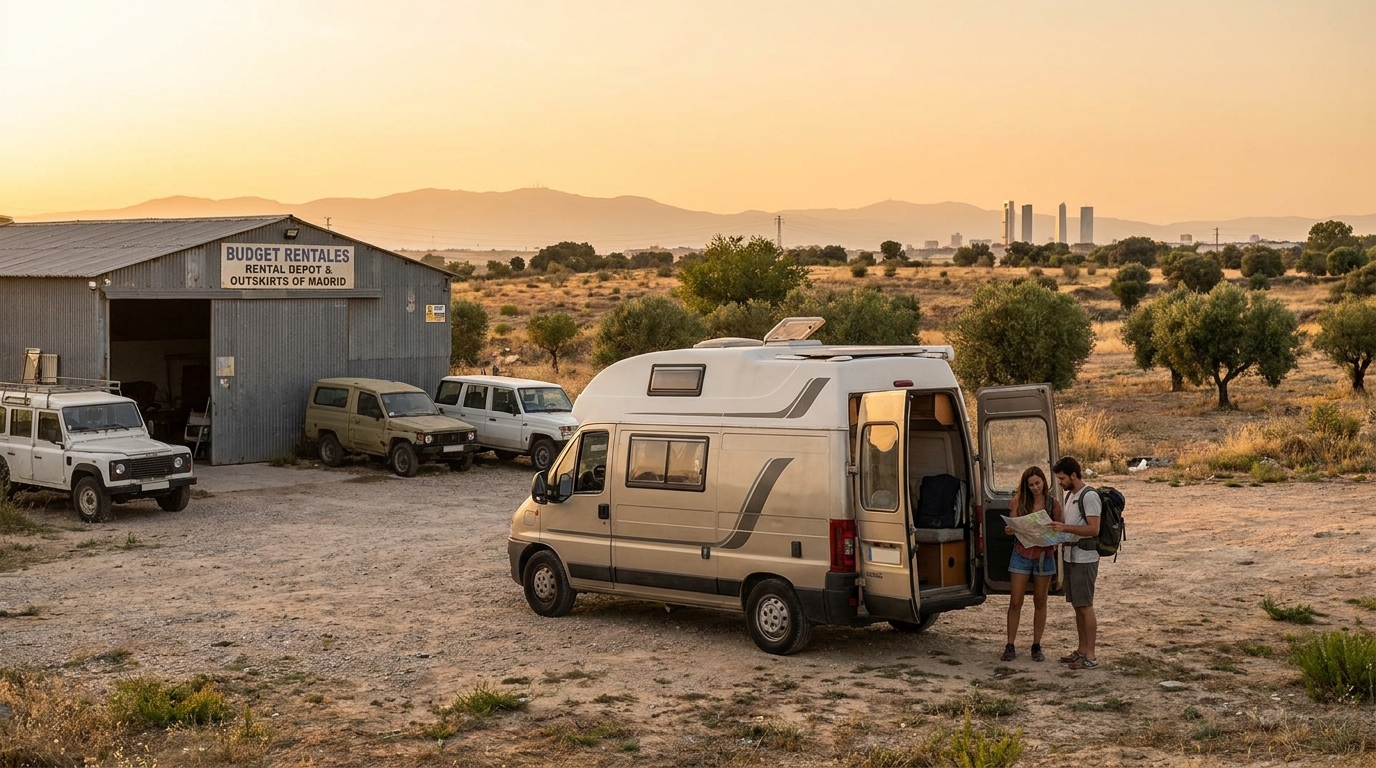
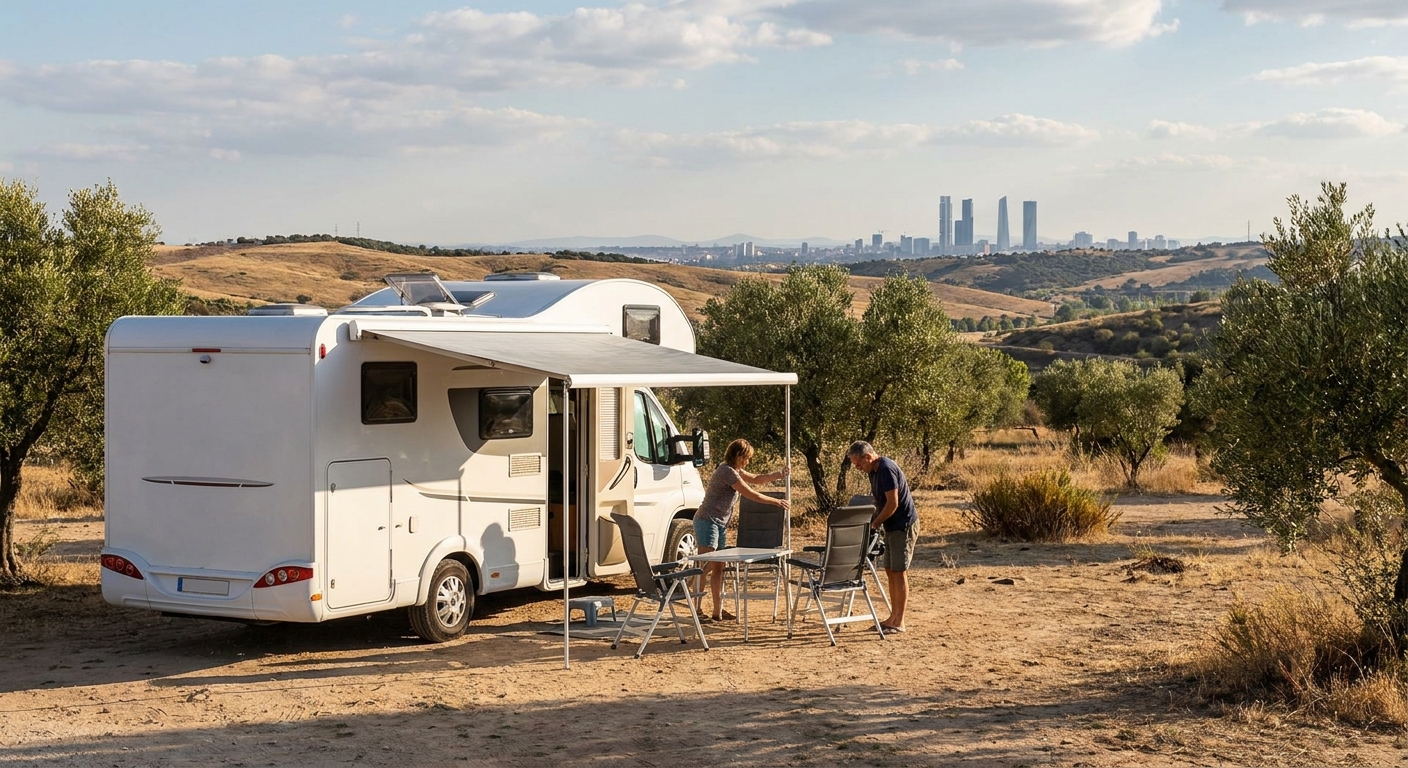
In Madrid and throughout Spain, while overnight parking in a rented RV is generally permitted where cars can park, 'wild camping' (setting up camp, extending awnings, or deploying tables) is largely restricted and often illegal outside designated areas. Spanish law differentiates between parking (allowed if the vehicle fits within a marked space and does not impede traffic) and camping (prohibited in non-designated areas). For Madrid specifically, overnight parking for RVs is challenging within the city due to size and Low Emission Zones; designated RV parking areas or well-equipped campsites on the outskirts with public transport links are highly recommended. Examples include Camping Internacional Aranjuez or Camping Osuna, which is conveniently located near Madrid airport and offers metro access to the city center. Madrid does not have explicit free designated 'aires de service' within the city limits, but several well-equipped campsites and private RV parking facilities are located just outside the urban area. Rules vary significantly by region and municipality - always check local regulations (municipio) and follow local law before parking overnight, as fines can be substantial for illegal wild camping. For finding campsites and campgrounds during your trip, we recommend using RV PLANET (rvplan.net) - a great resource for locating available spots along your route.
Can I Drive an RV Into the City Center? Heights, Tunnels & Local Signage
You can technically drive a rented RV into parts of Madrid's city center, but it's generally not recommended due to pervasive height limits, narrow streets, extreme parking difficulties, and stringent Low Emission Zone (ZBE) restrictions. Drivers must pay very close attention to local signage indicating height restrictions (e.g., in tunnels or underground car parks), weight limits, and 'residents only' zones, which can be frequent, particularly in historic areas like those around Plaza Mayor. Madrid has a strict ZBE, including Madrid Central, where access is severely limited for most vehicles without specific permits; typically, only low-emission vehicles (DGT 'ECO' or '0' stickers) have unrestricted access. The most practical approach for RV travelers is to park at a designated RV-friendly campsite, such as Camping Alpha Madrid (located south of the city, offering a direct metro line to Atocha station), or an authorized parking area outside the immediate city center, then use Madrid's excellent public transport system (metro, bus) to explore the city. Always confirm current access rules for your specific rented RV's emission label before attempting to drive into central Madrid, as regulations can change frequently and fines are strictly enforced.
What do I need to drive my motorhome in Spain?
To drive a rented motorhome in Spain, you generally need a valid Category B driving license for vehicles up to 3,500 kg, or a C1/C license for heavier RVs, along with an International Driving Permit (IDP) if your license is not from an EU/EEA country. Drivers must also carry their passport or national ID, vehicle registration documents, proof of insurance, and a rental agreement at all times. Essential safety equipment required in the vehicle includes a reflective vest, two warning triangles, and a spare tire (or a puncture repair kit), all of which rented motorhome companies typically provide. Ensure your motorhome displays the appropriate DGT environmental sticker for legal access to Low Emission Zones in Spanish cities like Madrid, and remember that our comprehensive pre-booking support ensures you have all the necessary information.
Can I drive in Madrid with a US license?
No, you cannot solely drive in Madrid with just a US license; you must also carry an International Driving Permit (IDP) alongside your valid US driver's license to legally operate a rented vehicle in Spain. The IDP translates your US license into multiple languages and is recognized by Spanish authorities, providing an official interpretation of your driving qualifications. It is valid for one year from its issue date and must be obtained in the US before your travel to Spain, typically from AAA or AATA. Failure to present both your US license and an IDP can result in fines, potential issues with your vehicle rental agreement, and complications with insurance claims, so it's a simple step to ensure a smooth journey with your rented RV.
What are the new motorhome rules in Spain?
As of 2026, significant new motorhome rules in Spain primarily revolve around stricter enforcement of Low Emission Zones (ZBEs) in municipalities over 50,000 inhabitants, including Madrid, affecting access for certain vehicles. These zones require vehicles, including rented motorhomes, to display a DGT environmental sticker (pegatina medioambiental) based on their emissions, restricting access for older, higher-emission vehicles. While the national parking and camping regulations (instrucción 08/V-74) generally allow overnight parking of RVs where cars are permitted, local municipalities are increasingly defining specific areas where wild camping (setting up camp with awnings, tables, chairs outside the vehicle) is prohibited. There's also increased emphasis on responsible waste disposal and respecting environmental regulations in natural parks and protected areas, with stricter penalties for non-compliance. These regulations are designed to maintain the beauty and sustainability of Spain's diverse landscapes for all to enjoy in their rented campervan or motorhome.
What requirements do you need to drive an RV?
To drive a rented RV, you generally need a valid driving license corresponding to the vehicle's weight; for most standard RVs under 3,500 kg, a Category B license is sufficient in Spain. For larger RVs weighing between 3,500 kg and 7,500 kg (common for some larger Class C or Class A models), a Category C1 license is required, while RVs over 7,500 kg demand a Category C license. Rental companies typically impose a minimum age requirement, usually 21 (Bandana's minimum age), and often require drivers to have held their license for a minimum period (e.g., 2-3 years) for insurance purposes. Foreign drivers must also comply with local requirements, such as carrying an International Driving Permit (IDP) alongside their national license when driving in Spain, in addition to meeting age and experience criteria. These requirements ensure that all drivers of rented motorhomes are prepared for the road ahead.
Is Spain camper van friendly?
Spain is generally very campervan friendly, offering a fantastic network of campsites, designated 'aires de service' (motorhome service points), and stunning natural landscapes ideal for rented RV exploration. The country's infrastructure supports RV travel with readily available fuel, well-maintained roads, and a growing number of services tailored to motorhomes, even if Madrid's city center poses access challenges. Beyond legalities, Spain offers diverse RV experiences, from coastal routes and national parks like the Sierra de Guadarrama near Madrid, to cultural sites and vibrant local events, all accessible by rented motorhome. While wild camping is restricted, numerous official campsites and RV parking areas are available, often equipped with fresh water, greywater disposal, and electricity, making logistics straightforward. Consider seasonal factors; summers can be very hot, especially inland, while spring and autumn offer ideal weather for RV touring and timing a visit with local Madrid festivals or events. Our goal is to make every rented camper adventure exceptional.
Do you need a license to get an RV?
Yes, you absolutely need a valid driving license to rent and drive an RV; the specific license category depends on the rented motorhome's Gross Vehicle Weight (GVW). For RVs up to 3,500 kg GVW, a standard Category B car license is sufficient in most European countries, including Spain. For larger RVs between 3,500 kg and 7,500 kg, a Category C1 license is required, while vehicles over 7,500 kg need a Category C license. Rental companies will rigorously verify your license at the time of booking and pickup, and typically have minimum age and driving experience requirements (e.g., 21 years old, 2+ years experience) to ensure driver competence and insurance eligibility. This due diligence ensures both your safety and that of others on the road when you embark on your rented motorhome adventure.
What is the typical cost of RV insurance in Madrid?
The typical cost of RV insurance for a rental in Madrid is usually included in the base rental price, often as a basic third-party liability policy with a high deductible (excess). Optional additional insurance packages are highly recommended to reduce your financial liability and can range from €15 to €40 per day, depending on the level of coverage (e.g., reducing the deductible, covering tires/windscreen, enhanced roadside assistance). Factors influencing the cost of supplementary insurance include the rented RV's value, the rental duration, the driver's age and experience, and the specific coverage selected. You can upgrade to a top-level deductible for extra peace of mind. Remember, prices are dynamic like flight tickets, changing daily based on availability, seasonality, and supplier marketing decisions, with the final price set at actual booking time. A holistic RV travel budget for Madrid should also include fuel, tolls, campsite fees (typically €20-€40/night), food, and public transport costs into the city, beyond just insurance premiums.
What is the best insurance company in Spain for RV rentals?
For RV rentals in Spain, you typically do not choose a separate insurance company directly; rather, the rental provider (like Bandana RV) includes comprehensive insurance options from their partnered insurers. The 'best' insurance for a rented RV isn't about the specific company, but the *level of coverage* you select through your rental agreement, balancing cost with your desired peace of mind. Look for policies that offer collision damage waiver (CDW) with a reduced or zero deductible, theft protection, and comprehensive coverage for extras like tires, windows, and undercarriage damage. Reputable rental companies work with established insurers; prioritize a clear understanding of what is and isn't covered, the exact deductible amount, and the roadside assistance policy, rather than focusing on a specific insurance company's brand. Our team of true RV specialists is here to guide you through these options, ensuring you travel with peace of mind and full transparency.
What You Shouldn't Miss
- Explore El Retiro Park: Just east of the Prado Museum, this royal park offers boat rides on its grand pond and beautifully manicured gardens. Park your rented motorhome at a nearby RV-friendly spot outside the immediate city center and take a short metro ride to access this green oasis.
- Day Trip to Segovia: A comfortable 90 km drive northwest of Madrid, Segovia offers the ancient Roman aqueduct and the fairy-tale Alcázar castle. Find RV-friendly parking at designated areas on the outskirts before exploring this UNESCO World Heritage city.
- Discover Toledo's History: Approximately 70 km south of Madrid, this historic city offers a rich tapestry of Christian, Muslim, and Jewish cultures. Park your motorhome at the 'Parking gratuito Toledo' (free parking) near the escalator access to the old town for convenient exploration.
- Hike in Sierra de Guadarrama National Park: Located less than 100 km north of Madrid, this national park offers stunning mountain scenery and numerous trails accessible from charming towns like Cercedilla or Navacerrada, with campsites available for overnight stays.
- Visit the Royal Palace of Madrid: The official residence of the Spanish Royal Family, now used for state ceremonies. Park your RV at a periphery campground and use public transport to access the magnificent Plaza de Oriente.
- Savor Tapas in La Latina: Experience Madrid's vibrant culinary scene in neighborhoods like La Latina. Park your RV safely away from the dense city center and take a metro to explore these iconic streets, sampling authentic Spanish flavors. Remember to check out the RV-friendly recipes playlist for ideas on cooking delicious meals in your rented motorhome.
Why Book with Bandana RV
Choosing Bandana RV means you're partnering with true RV specialists, not just another travel agency. We've been helping tens of thousands of travelers explore the world by RV since 2001, accumulating over 23 years of hands-on experience in the motorhome travel industry. Our direct partnerships with 50+ leading RV suppliers worldwide, including trusted names like El Monte, Cruise America, Apollo, and Britz, ensure you get the best selection and value.
Full Transparency, No Surprises
We pride ourselves on full transparency. What you see is what you get, with no hidden fees, no surprises, and bookings available in 30+ currencies without conversion commissions. This commitment to honesty is central to our philosophy.
Dedicated Support, Real People
Before, during, and after your booking, you have 24/7 support from real people. We're here to help with pre-booking comparisons, booking assistance, and post-booking coordination, ensuring your week-long RV driving tour in Madrid is smooth and enjoyable.
Peace of Mind on Every Journey
Travel with confidence thanks to options for top-level deductible reimbursement. We cover you across 50+ countries with local expertise and support, because God is in the small details, and we take care of them. That's what makes the big difference.
Expertly Crafted Itineraries
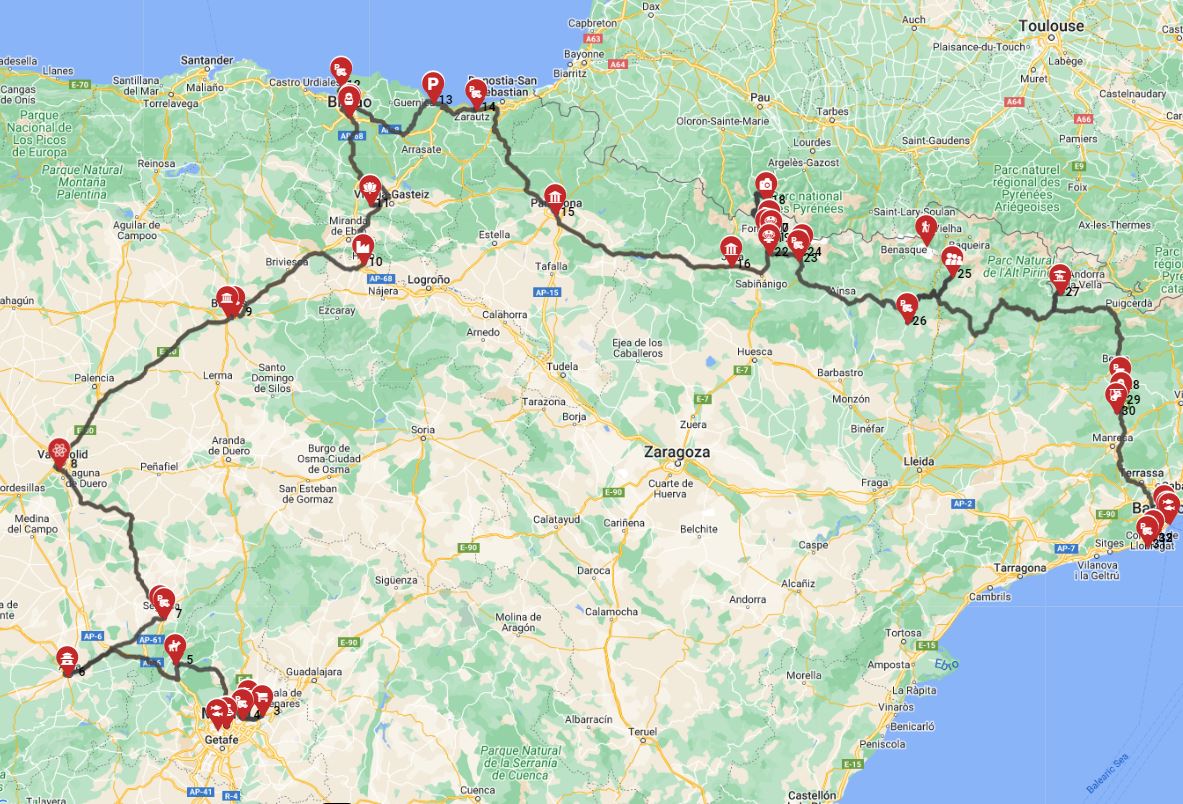
With Rent&Plan, our sister company, RV PLANET (rvplan.net) offers over 1,300 pre-planned routes across 5 continents, including detailed itineraries for your Madrid adventure. Enjoy a 25% planning discount when you use rvplan.net to organize your trip.
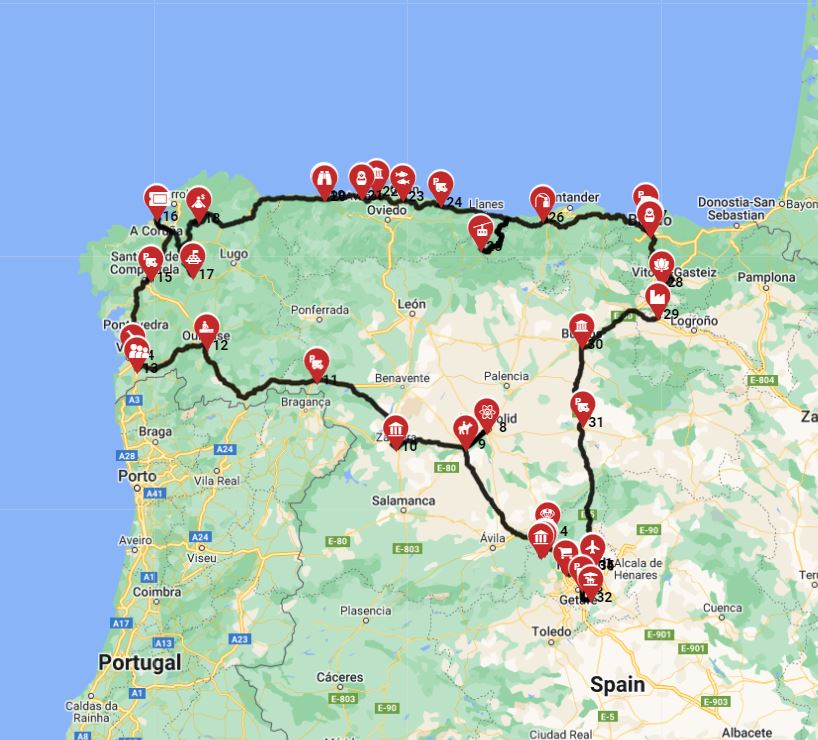
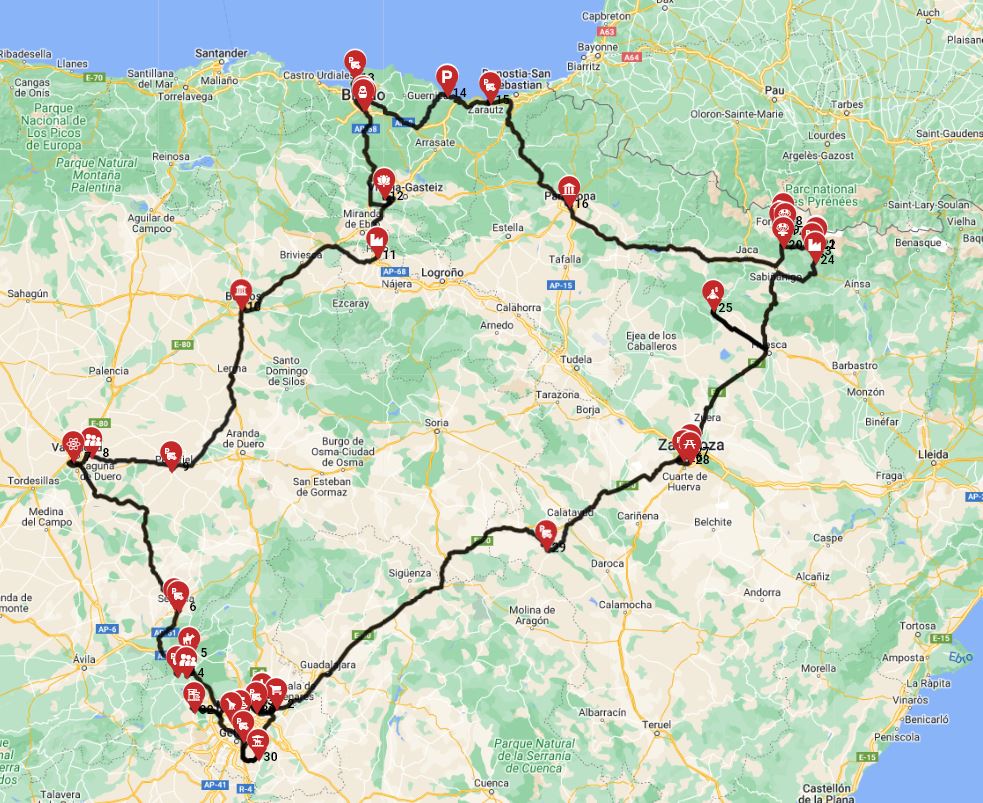
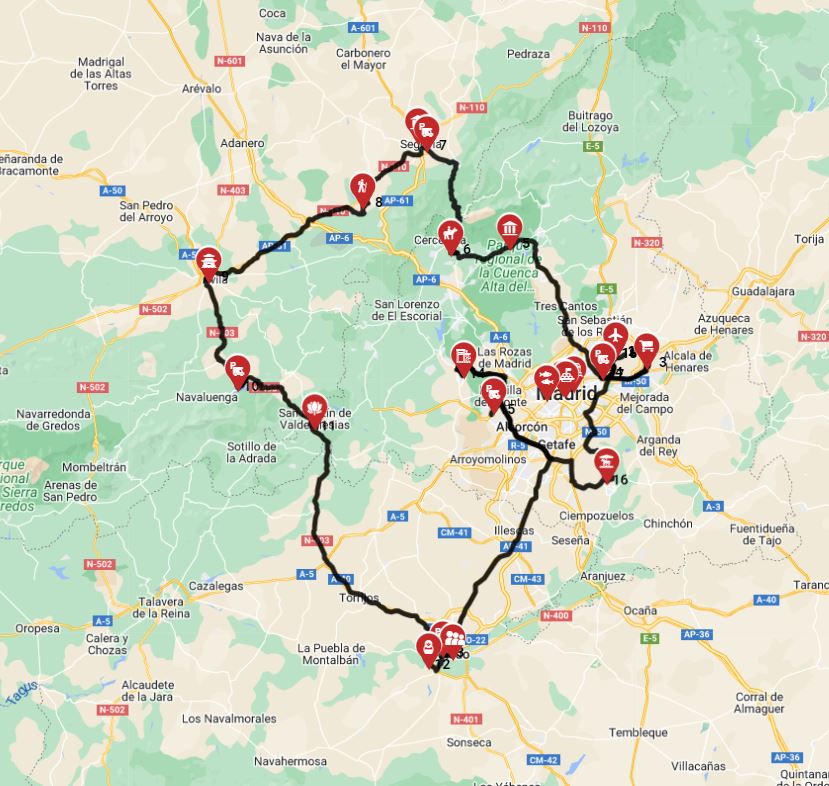
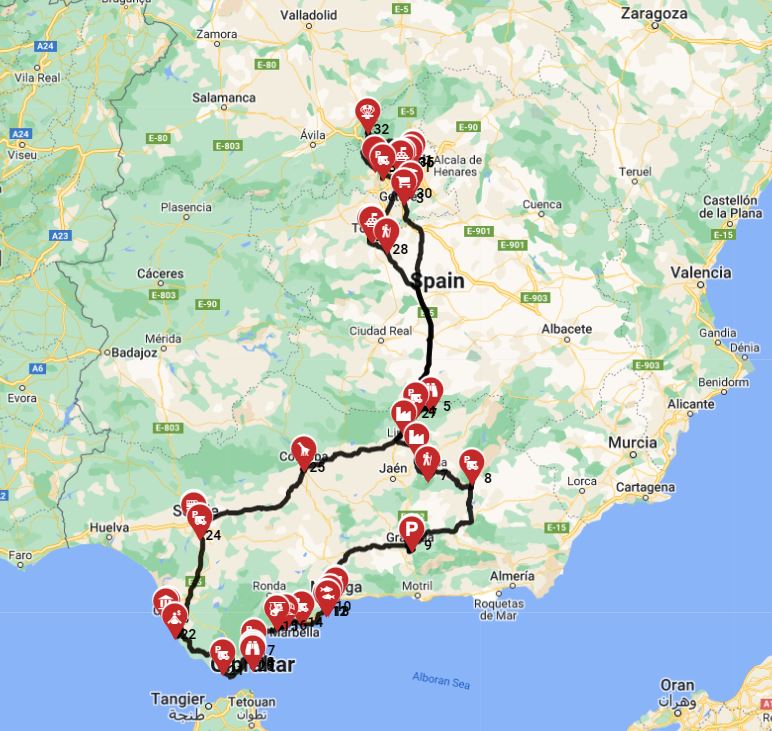
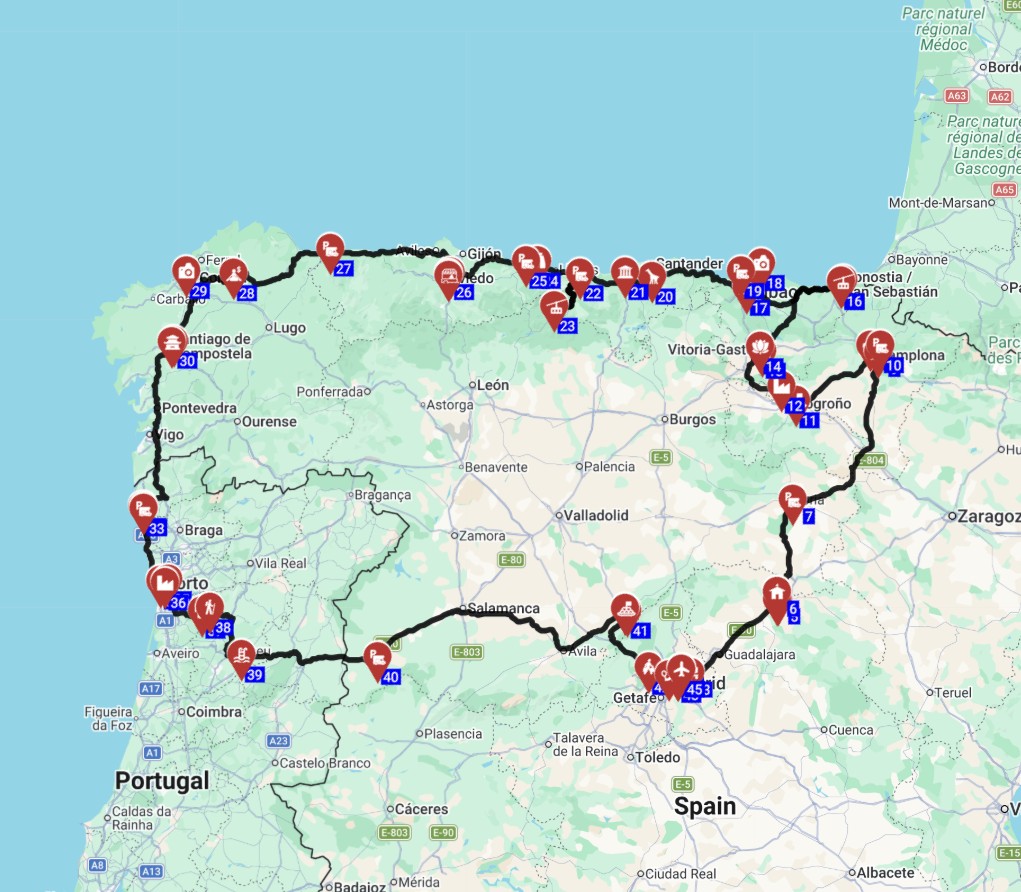
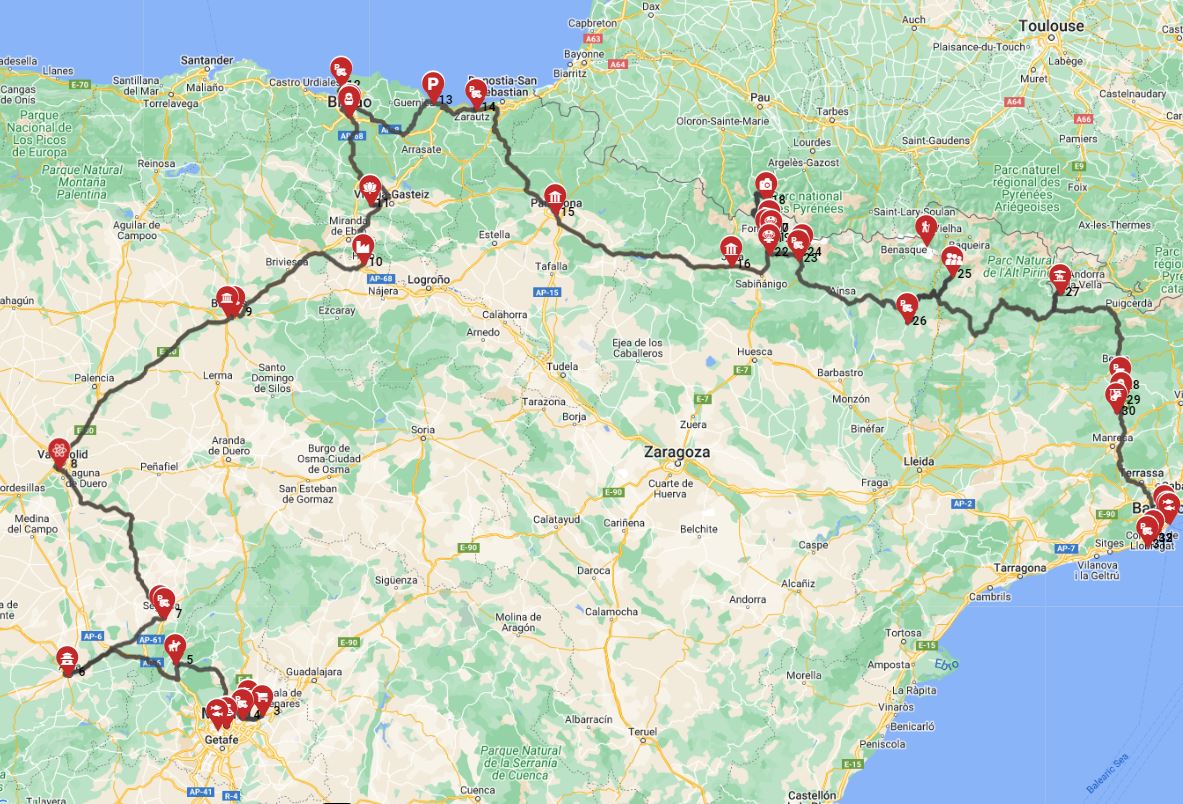
For example, the "Madrid Roundtrip - Southern Spain" is a 16-day, 2032.1 km itinerary from Madrid, offering a rich exploration of the region, including 4 historical sites and 2 traditional restaurants. Or consider the "
Final Thoughts
A week-long RV driving tour in Madrid is more than just a vacation; it is an invitation to discover the heart of Spain with unparalleled freedom and flexibility. From the bustling streets of the capital to the tranquil beauty of its surrounding natural parks and historic towns, a rented motorhome or campervan puts you in control of your adventure. With Bandana RV, you benefit from our full transparency, dedicated support, and extensive selection of quality vehicles, ensuring your trip is smooth, memorable, and worry-free. We believe that life is now, and there’s no better way to experience it than on the open road.
So, why wait? Start dreaming of your next Spanish escapade. Whether you are a pre-planner who loves every detail organized or a spontaneous traveler, Madrid and its rich surroundings are ready to be explored. Let Bandana RV be your trusted partner in crafting the perfect rented RV holiday. We're here to support you in every step, ensuring you travel slowly, immerse yourself fully in the culture, and create unforgettable memories. For more insights, remember to check out "RV Travel Guide to Madrid - Tips and Top Spots 2026".
Find Motorhome Rentals in Madrid