For live availability and current prices, start with our RV Rental Asia - Complete Guide 2026 guide.
In This Guide
- Can You Drive an RV in Asia? License & Age Rules
- Road Conditions & Terrain in Asia
- RV Size Limits, Bridges & Restricted Zones
- Fuel: Diesel vs. Petrol & Cost per 100 km
- Tolls, Vignettes & Border Rules
- Driving Tips for Weekly RV Rental Travelers
- Recommended RV Class for Asia Roads
- Should I Choose a Compact Van Instead of a Large RV in Asia?
- Can I Park Anywhere? Free & Wild Camping Rules in Asia
- Can I Drive an RV Into the City Center? Heights, Tunnels & Local Signage
- What is the 3-3-3 rule for RV travel?
- Do I need a special license to drive an RV in Japan?
- What is the biggest motorhome you can drive on a car licence?
- How many people can you have in an RV while driving?
- What countries are RV friendly?
- What is the 444 rule for RV?
- Can I sleep in RV while driving?
Imagine yourself on a thrilling road trip, navigating ancient landscapes and bustling modern cities, all from the comfort of your very own home-on-wheels. A weekly RV driving tour in Asia 2026 offers an unparalleled sense of freedom and discovery, allowing you to immerse yourself in diverse cultures, breathtaking scenery, and incredible culinary adventures. From the serene temples of Japan to the majestic Himalayas of India, exploring Asia by rented motorhome is an experience that caters to adventurers and comfort-seekers alike. We are your true RV specialists, not just a travel agency side department, ensuring you get honest, transparent advice for your journey.
For live availability and current prices, start with our RV Rental Asia - Complete Guide 2026 guide. For those seeking detailed itineraries and routes, check out the resources available at RV PLANET (rvplan.net) where you can access professional pre-planned routes for your weekly RV rental in Asia. You can even enjoy a 25% planning discount when using their services to map out your adventure.
Can You Drive an RV in Asia? License & Age Rules
Yes, you can drive an RV in Asia, with most motorhomes under 3,500 kg Gross Vehicle Weight (GVW) requiring a standard car license (Category B or equivalent) and an International Driving Permit (IDP).
Driver minimum age for RV rentals in Asia is typically 21 years old across most Bandana partner suppliers, with no young driver surcharges or vehicle class restrictions based on age. An International Driving Permit (IDP) is highly recommended for visitors from non-English-speaking countries like Japan or South Korea, although it is not mandatory in all cases, as it translates your domestic license into multiple languages. Always obtain your IDP in your home country before you travel to Asia, as it cannot be issued abroad. For larger RVs exceeding 3,500 kg GVW, a higher license category might be mandated in some regions, though most rental motorhomes (Class A, Class B, and Class C) fall within the standard car license limit.
Road Conditions & Terrain in Asia
Road conditions across Asia vary significantly, ranging from immaculately maintained highways in countries like Japan and South Korea to more challenging, unpaved, or narrow roads in rural areas of Southeast Asia.
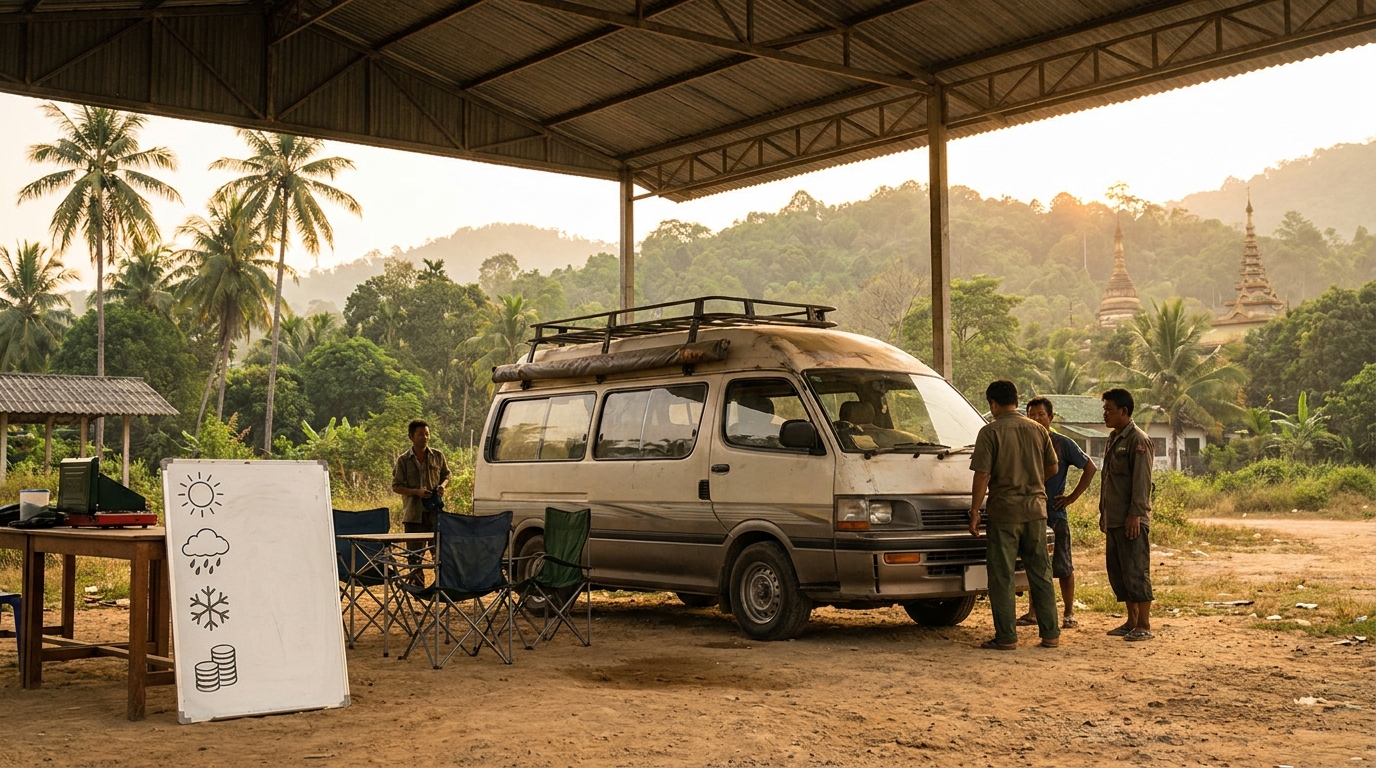
RV travelers should prepare for diverse terrain, which includes mountainous regions with winding roads, dense urban centers, and potentially unpaved tracks in more remote, scenic locations. Embracing a slower, more scenic driving pace, averaging max 100-150 km per day, allows for better navigation of varied road quality and a deeper appreciation of the local landscapes and culture. Be aware of varying traffic laws, a high volume of pedestrian and scooter traffic in many areas, and less developed road infrastructure in some regions, especially when planning a comprehensive weekly RV rental in Asia. Regardless of the roads, always drive slowly and carefully, and you can drive almost anywhere without issues. No need to stress - just use common sense and pay attention.
RV Size Limits, Bridges & Restricted Zones
RV travelers in Asia must be mindful of vehicle height and weight restrictions, which can vary by country and even specific roads or bridges.
Low bridges and tunnels, particularly in older city centers or mountainous areas in countries like Japan, are critical considerations for taller Class C motorhomes; always pay attention to posted signage. Environmental zones and traffic-restricted areas may exist in certain Asian cities, limiting access for larger vehicles or requiring specific permits. When planning ferry travel within Asia, confirm the maximum length, height, and weight limits, as these can significantly impact booking and cost for larger rented RVs. For a comfortable weekly RV rental, always select a vehicle appropriate for your route and group size.
Fuel: Diesel vs. Petrol & Cost per 100 km
Most rental motorhomes in Bandana's global fleet typically consume between 10-12 liters of fuel per 100 km, with smaller campervans averaging 8-10 liters and larger Class C or Class A motorhomes consuming 12-17 liters.
Diesel fuel is common for RVs and widely available across most Asian countries, though petrol (gasoline) stations are also prevalent for other vehicle types. Fuel costs in Asia fluctuate by country; budgeting approximately €1-€2 per liter for diesel is a reasonable estimate for 2026, leading to an average cost of €10-€24 per 100 km for an RV. Some RV rental companies may offer fuel discount cards or loyalty programs, which can help mitigate costs over a weekly rental period. When planning your budget, remember that fuel is a major ancillary cost; RV PLANET routes allow travelers to itemize and track every expense along the way for easy budgeting. On the routes offered through RV PLANET routes, you can itemize and track every expense along the way for easy budgeting.
Tolls, Vignettes & Border Rules
Toll roads and expressways are common in many Asian countries, such as Japan, South Korea, and Taiwan, and travelers should budget for these expenses as they can add up over a weekly rental.
Vignettes, which are pre-paid road use stickers, are not a widespread system for RVs across Asia; instead, most countries utilize point-to-point toll booths or electronic toll collection systems. When crossing borders between Asian countries with a rented RV, rigorous documentation is typically required, including vehicle registration, proof of ownership, insurance, and possibly a Carnet de Passages en Douane (CPD) for some more complex routes, so plan well in advance. Some RV rental providers may offer pre-purchased electronic toll passes or guidance on toll payment systems to help weekly renters avoid fines and streamline their journey.
Driving Tips for Weekly RV Rental Travelers
Planning your routes in advance is essential, especially in urban areas or mountainous regions of Asia, allowing for extra travel time due to varying road conditions and traffic.
Familiarize yourself with local traffic laws, signage, and driving customs, such as horn usage, lane discipline, and right-of-way rules, which can differ significantly across Asia, from the organized flow in Japan to the more spontaneous style in India. Prioritize regular stops, especially for family travelers, aiming for breaks every 2-3 hours to prevent driver fatigue and allow passengers to stretch and explore. Budget-conscious travelers should pre-plan fuel stops and consider using navigation apps that highlight toll-free routes. Preparing for language barriers by carrying a translation app or phrasebook is highly recommended, especially for interactions at fuel stations, local markets, or in emergencies, ensuring a smoother journey for your weekly RV rental in Asia.
Recommended RV Class for Asia Roads
For diverse Asian road conditions, a Class B Camper Van or Class SI Semi-integrated RV is often recommended, balancing maneuverability with comfortable living space for your weekly rental.
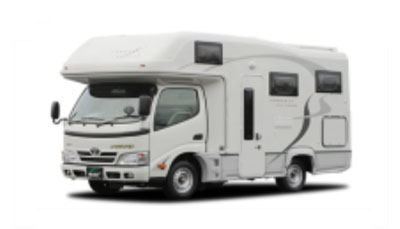
Bandana's Class B Camper Vans, like the "Active Pop Top" with sleeping for 4 and a length of 5.99 meters, offer excellent agility for navigating narrower roads and city streets while providing sleeping for up to 4 people. The "Combi Van" is another fantastic option, offering a compact 5-meter length for easy maneuverability in tighter spaces. Class SI Semi-integrated RVs, such as the "K125" with a length of 6.99 meters and sleeping for 3, provide more interior space and amenities, suitable for longer trips or small families, while still being manageable on most Asian main roads. These RV classes generally offer sufficient ground clearance for varied terrain, making them versatile for both paved highways and less-developed routes common in Asia. Always consider the comfort and space you need for your weekly rv trip.
Should I Choose a Compact Van Instead of a Large RV in Asia?
While a compact van offers superior maneuverability in very tight historic centers or extremely narrow mountain passes, most large RVs are generally manageable on primary and secondary roads throughout Asia without issue.
For a weekly RV rental, the comfort and indoor living space provided by a larger motorhome or campervan, such as a Class C Alcove like the "MHC24" (7.3 meters long, sleeps 6) often outweigh the minor maneuverability benefits of a compact van, especially for families or longer journeys. A compact van (like a Class B Camper Van such as the "Category Van" or "Duo") is ideal for solo travelers or couples prioritizing stealth camping and easy parking in urban environments. However, if your weekly itinerary involves extensive travel on well-maintained highways and visits to larger campgrounds, a semi-integrated or alcove RV (Class SI or C) offers significantly more space, amenities, and comfort without undue driving difficulty. You can compare various vehicle types and their features on Bandana Caravan to find the perfect fit for your weekly rv rental in Asia.
Can I Park Anywhere? Free & Wild Camping Rules in Asia
Rules for free and wild camping vary significantly across Asian countries; in many regions, wild camping is generally discouraged or prohibited in populated or protected areas.
Some countries, like Japan, have designated 'Michi-no-Eki' (roadside stations) that often permit overnight parking for RVs, offering facilities like restrooms and local produce. South Korea also offers well-regulated 'Auto-Camping Sites' that are perfect for a comfortable stay. Always prioritize safety and respect local customs; avoid parking in residential areas or on private land without explicit permission. Before relying on wild camping for your weekly RV rental in Asia, it's crucial to check local regulations and follow local law. For finding campsites and campgrounds during your trip, we recommend using RV PLANET (rvplan.net) - a great resource for locating available spots along your route.
Can I Drive an RV Into the City Center? Heights, Tunnels & Local Signage
Yes, you can drive an RV into city centers in Asia, but paying close attention to local signage is crucial due to potential height, weight, and environmental restrictions.
Drivers should vigilantly watch for explicit height limits on tunnels, low bridges, and multi-story car park entrances, which can be common in older or densely built urban areas like Tokyo or Seoul. Be aware of environmental zones or residents-only streets that might restrict larger vehicles or require special permits during certain hours, particularly in major Asian cities. Always use a GPS system that allows you to input your rented RV's dimensions to avoid unsuitable routes, and be prepared for dense traffic and limited parking options in city centers. Drive slowly and carefully, and you can drive almost anywhere without issues. No need to stress - just use common sense and pay attention.
What is the 3-3-3 rule for RV travel?
The 3-3-3 rule for RV travel is a widely adopted guideline encouraging safe and enjoyable journeys: drive no more than 300 miles (approximately 480 km) per day, arrive at your destination by 3 PM, and stay for a minimum of 3 nights.
This rule is designed to prevent driver fatigue, allow ample time for setup and breakdown of your rented motorhome, and provide sufficient opportunity to explore each location in Asia without feeling rushed. Adhering to the 3-3-3 rule helps minimize stress, especially for weekly RV rentals where time is limited, ensuring a more relaxed pace and greater appreciation of your surroundings, from the bustling markets of India to the tranquil landscapes of Japan. This pace aligns perfectly with our recommendation to travel slowly, ideally a maximum of 100-150 km per day on average, to truly feel the place, connect to the culture, the food, and the scenery.
Do I need a special license to drive an RV in Japan?
No, you typically do not need a special license to drive most rental RVs in Japan if your vehicle's Gross Vehicle Weight (GVW) is under 3,500 kg (7,700 lbs).
A standard International Driving Permit (IDP), obtained in your home country before travel, is required along with your valid domestic driver's license for foreign nationals driving in Japan. Most rental campervans and smaller motorhomes in Japan fall within the standard car license category, similar to Category B in many countries. For RVs exceeding 3,500 kg, a specific Japanese commercial vehicle license or equivalent international heavy vehicle endorsement would be necessary, though these are rarely encountered in typical tourist rentals.
What is the biggest motorhome you can drive on a car licence?
The biggest motorhome you can drive on a standard car license (Category B or equivalent) is generally one with a Gross Vehicle Weight (GVW) of up to 3,500 kg (7,700 lbs).
This weight limit is consistent across many countries, including those in Asia, and typically covers most Class B Camper Vans and many Class SI Semi-integrated RVs, which are commonly available for a weekly RV rental in Asia. Beyond 3,500 kg, a higher license category, such as a C1 or C license, is typically required, depending on the specific country's regulations. It's crucial to verify the specific GVW of any RV you intend to rent and cross-reference it with your driver's license category and the regulations of the Asian country you plan to visit, ensuring legal compliance and peace of mind.
How many people can you have in an RV while driving?
The number of people legally allowed in a rented RV while driving is determined by the number of designated seatbelts installed by the manufacturer, not by the sleeping capacity.
Each occupant, regardless of age, must occupy a seat equipped with a working seatbelt while the vehicle is in motion, adhering to road safety laws across Asia. For example, a Class C Alcove motorhome like the "cruise america rv rental example Explorer" has 4 seat belts for driving, even though it sleeps 4. This is a critical safety and legal requirement for any weekly RV rental. Always consult your specific RV rental agreement and the vehicle's manual to confirm the legal seating capacity for driving, ensuring everyone travels safely and legally.
What countries are RV friendly?
Japan and South Korea are considered among the most RV-friendly countries in Asia, offering excellent road infrastructure, well-maintained campgrounds, and amenities like 'Michi-no-Eki' (roadside stations).
Taiwan also provides a growing RV culture with scenic routes and dedicated camping facilities, making it an increasingly popular destination for weekly RV rentals in Asia. Countries like Thailand and Vietnam offer unique adventurous RV experiences, though with more varied road conditions and fewer dedicated RV facilities, requiring more self-sufficiency and careful planning. An RV-friendly country typically boasts good road networks, clear regulations, available fuel and service points, and a culture that is welcoming to mobile tourism, all of which contribute to a smoother and more enjoyable journey.
What is the 444 rule for RV?
The '4-4-4 rule' for RV travel is an alternative guideline to the 3-3-3 rule, suggesting driving no more than 400 miles (approximately 640 km) per day, arriving by 4 PM, and staying for a minimum of 4 nights.
This rule is often adopted by more experienced RVers or those on longer trips who prefer to cover more ground per day while still allowing ample time for relaxation and exploration of Asian destinations. For a weekly RV rental in Asia, the 4-4-4 rule might be suitable if your itinerary involves covering significant distances between major destinations in countries with excellent highway networks. Both the 3-3-3 and 4-4-4 rules aim to balance travel efficiency with the enjoyment of the journey, emphasizing responsible driving habits and minimizing travel stress, which is key for any memorable adventure.
Can I sleep in RV while driving?
No, it is illegal and extremely unsafe for passengers to sleep in an RV while it is in motion if they are not properly secured in a seat with a seatbelt.
All occupants of a rented RV must be seated in designated seats with their seatbelts fastened whenever the vehicle is being driven, adhering to road safety laws in every Asian country. Unrestrained passengers, especially those lying down or sleeping, are at severe risk of injury in the event of sudden stops, turns, or accidents. For safety and legal compliance during your weekly RV rental in Asia, ensure everyone is properly seated and belted while the motorhome is in motion, regardless of the journey's length. Safety is always paramount on the road.
What You Shouldn't Miss
- Explore Japan's Ancient Trails and Modern Cities: Discover the serene temples of Kyoto, the bustling streets of Tokyo, and the volcanic landscapes of Hokkaido with a rented campervan. Don't miss the chance to park overnight at a Michi-no-Eki and sample local delicacies.
- Discover South Korea's Coastal Wonders: Drive along the scenic East Sea coast, visit vibrant Busan, and explore the historical sites of Gyeongju by motorhome. South Korea's well-developed camping infrastructure makes this an easy and rewarding journey.
- Experience the Spiritual Journeys of India: For the adventurous, a weekly RV rental in India offers a unique way to witness the vibrant culture, diverse landscapes from Rajasthan's deserts to Kerala's backwaters, and incredible local cuisine.
- Journey through Israel's Historical Sites: With a rented motorhome in Israel, explore ancient Jerusalem, float in the Dead Sea, and hike the stunning desert trails of the Negev.
Looking for expert insights from Avi Bandana? Top 5 Adventures - recommendations from Avi Bandana
🎬 Video coming soon
Final Thoughts
Embarking on a weekly RV driving tour in Asia is an adventure unlike any other. It’s an opportunity to truly connect with the diverse landscapes, rich histories, and vibrant cultures at your own pace. With a rented motorhome or campervan, you have the flexibility to chase sunsets over ancient ruins, savor local cuisines in quaint villages, and discover hidden gems far from the usual tourist paths. Remember to travel slowly, aiming for 100-150 km per day, allowing you to soak in every moment and create lasting memories.
Whether you're a meticulous pre-planner who loves mapping out every detail with tools like RV PLANET (rvplan.net), or a spontaneous explorer who enjoys booking day-to-day, a weekly RV rental in Asia offers the perfect blend of freedom and comfort. We are here to support you every step of the way, providing full transparency and expert guidance to make your dream trip a reality. Discover top destinations, planning tips, all in one place and let us help you compare motorhome prices for Asia.