In This Guide
- The 5 RV Families Compared for Tokyo - Airport
- Class A (Integrated) — Best For
- Price Comparison by RV Class in Tokyo - Airport
- Class SI (Semi-Integrated) — Best For
- Class C (Alcove) — Best For
- Class B (Campervan) — Best For
- Class TC (Truck Camper) — Best For
- Side-by-Side Comparison Table
- Our Recommendation for rv rental deals Travelers in Tokyo - Airport
- Can I really save money with an RV rental for a family trip in Japan compared to hotels?
- What are the hidden costs of RV rental in Japan beyond the daily rate?
- How do RV rentals in Japan handle road tolls and fuel costs?
- How do I choose the right size RV for navigating Japanese roads and cities?
- What amenities and features are crucial for an RV rental in Japan given the climate?
- What unique challenges do RV travelers face when driving in Japan, like narrow roads or language barriers?
- Are there specific rules for RV parking and camping in Japan, especially near Tokyo?
- What are Japanese 'Michi-no-Eki' and how do they function for RV travelers?
- Is 'wild camping' or 'boondocking' allowed or practical with an RV in Japan?
- What should I know about waste disposal (gray/black water) for an RV in Japan?
- What are the cultural etiquette tips for RV travelers interacting with locals or using public facilities in Japan?
- What are the essential apps and technology for RV navigation and travel in Japan?
- Where can I find pet-friendly RV campsites in Japan, and what are the pet travel rules?
- What are the best times of year to rent an RV in Japan for specific scenic experiences?
- Are there recommended scenic RV routes near Tokyo or throughout Japan?
- What safety precautions and emergency procedures are important for RV travel in Japan?
- What You Shouldn't Miss
- Why Book with Bandana Caravan
- Final Thoughts
- Frequently Asked Questions
The 5 RV Families Compared for Tokyo - Airport
Choosing the right RV family significantly impacts your trip success in Japan, especially when exploring from Tokyo - Airport. Japan's unique road infrastructure and parking availability often favor more compact vehicle types. Consider your group size, desired itinerary, and budget to find the best rental deals. For live availability and current prices, start with our RV Rental Tokyo - Airport - Complete Guide 2026 guide. Bandana Caravan offers full transparency in pricing, ensuring no hidden fees or surprises as you compare options from top suppliers like El Monte and Apollo.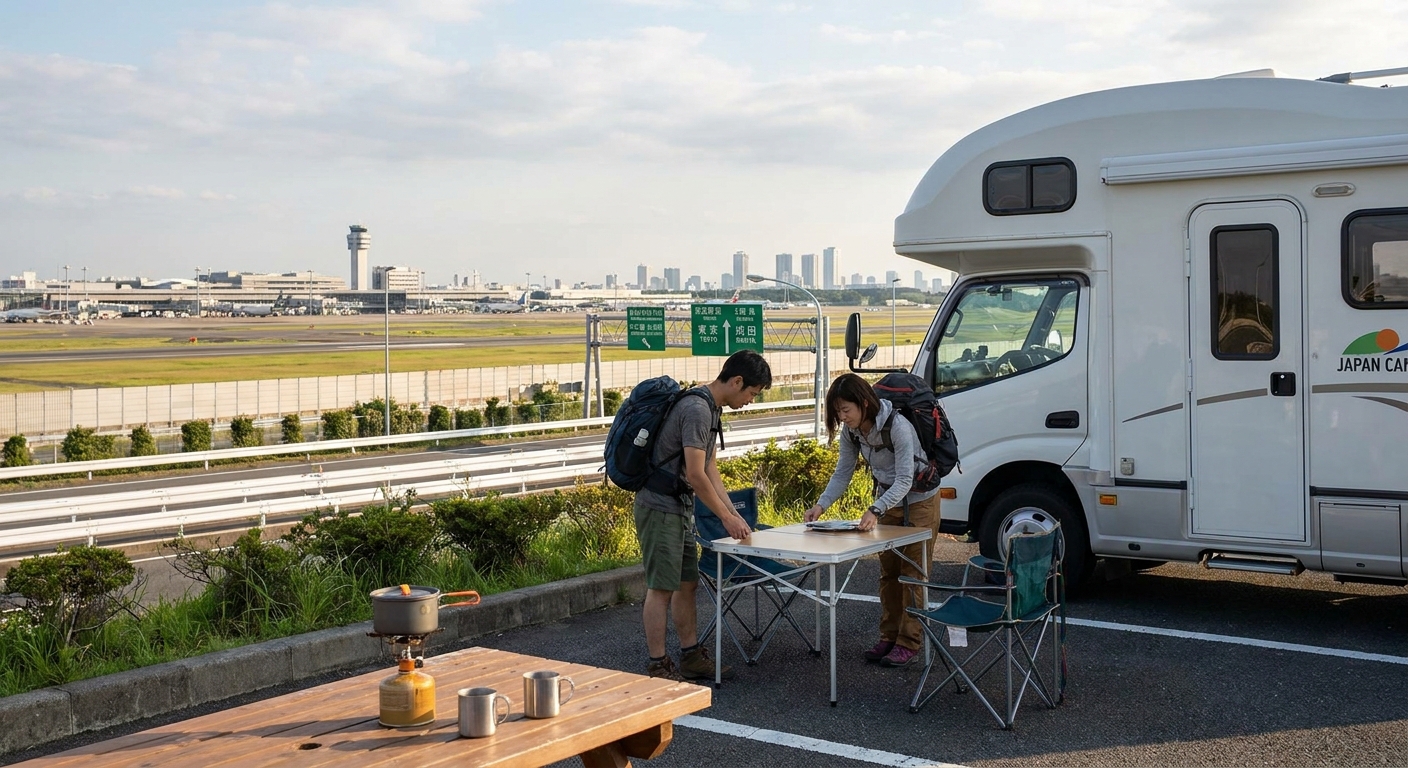
Class A (Integrated) — Best For
Class A motorhomes offer luxury and spacious living for larger groups of 4-6 people, ideal for extended road trips across Japan. Bandana's global fleet averages around 7.5 meters in length and comfortably sleeps 4 to 6 adults. While these vehicles provide high comfort for longer journeys, their size can be challenging for navigating Tokyo's narrower streets and finding parking in dense urban areas. For travelers prioritizing maximum space and luxury outside of major city centers, a Class A rented motorhome, such as the "el monte rv rentals example Flash C714GA P" which features three double beds, offers an unparalleled experience. Remember, a standard car driver's license is sufficient for all motorhome classes in Japan.Price Comparison by RV Class in Tokyo - Airport
RV rental prices in Tokyo - Airport are dynamic and flex-rate, changing daily based on factors like seasonal demand, vehicle availability, and supplier marketing decisions. For example, a 1-week rental of a compact Class B campervan might range from $90-$150 per day in the low season, while a larger Class C for a family could be $120-$250 per day during peak spring or autumn months. Longer rental periods often offer better daily value, making a two-week adventure or extended road trip more cost-effective per day than shorter rentals. When budgeting for your journey, consider all ancillary costs such as fuel, campground fees, tolls, and groceries; you can easily itemize and track every expense along the way using RV PLANET routes. Our platform offers full transparency, showing you the complete price without any hidden fees. For more details on budgeting, check out our guide on Cheap RV Rental in Tokyo - Airport - Budget Guide 2026.Class SI (Semi-Integrated) — Best For
Class SI (Semi-integrated) motorhomes offer a balanced blend of comfort and maneuverability, making them highly suitable for varied Japanese roads. Bandana's global fleet of these vehicles averages 6.9 meters in length and typically sleeps 3 to 4 people, making them an ideal choice for couples or small families seeking flexibility. Their more streamlined profile compared to Class C or A RVs makes navigating regional routes and even some suburban areas around Tokyo - Airport much easier. An example is the "K3E", featuring automatic transmission and pet-friendly options, perfect for travelers wanting modern amenities without excessive bulk.Class C (Alcove) — Best For
Class C (Alcove) motorhomes are excellent for families due to their distinctive overhead alcove sleeping area, providing additional bunk space without consuming living room floor space. Bandana's global fleet of Class C RVs averages 7.5 meters in length and often sleeps 5 to 6 people, like the "29′ Class C Motorhome" which is perfect for a big family. These models provide cost-effective sleeping capacity for larger groups without sacrificing too much comfort, making them a popular choice for families with kids exploring Japan from Tokyo - Airport. While larger than campervans, they still offer good handling; just remember to drive slowly and carefully in urban environments.Class B (Campervan) — Best For
Class B (Campervan) motorhomes prioritize maneuverability and fuel efficiency, making them an excellent choice for RV rental deals in Tokyo - Airport and wider Japan. With Bandana's global fleet averaging around 5.8 meters in length and sleeping 2-3 people, like the "Juliette 2-3" or "Active Standard Auto", these compact campervans are best suited for navigating urban Tokyo's streets and reaching remote, smaller locations with ease. Their smaller footprint makes parking in city centers or at popular tourist spots much less stressful. An International Driving Permit (IDP) is recommended for visitors from non-English speaking countries, although it's not strictly mandatory in all situations.Class TC (Truck Camper) — Best For
Class TC (Truck Camper) models offer unique flexibility with a living unit that can often be detached from the truck chassis, though for rentals they typically remain integrated. Bandana's global fleet averages 5.5 meters in length and sleeps 2 to 3 people, ideal for adventurers seeking off-grid capabilities and exploring diverse Japanese terrain, such as the "4x4 Scout Adventure Truck Camper Gold". These vehicles are particularly suited for rougher roads or remote natural areas that larger motorhomes might struggle with, offering a robust and self-contained experience. Their compact size also aids in navigating less-trafficked rural routes.Side-by-Side Comparison Table
A quick comparison of key RV specifications helps match vehicle features to your specific travel needs in Japan. Understanding differences in length, sleeping capacity, and fuel efficiency is crucial for a smooth trip around Tokyo - Airport and beyond.
| RV Class | Average Length (m) | Sleeps (people) | Key Advantage for Japan | Typical Daily Price Range (USD) |
|---|---|---|---|---|
| Class A (Integrated) | 7.5 | 4-6 | Spacious, luxurious for long trips | $180 - $350 |
| Class SI (Semi-Integrated) | 6.9 | 3-4 | Balance of comfort & maneuverability | $140 - $280 |
| Class C (Alcove) | 7.5 | 5-6 | Cost-effective for families with kids | $120 - $250 |
| Class B (Campervan) | 5.8 | 2-3 | Urban navigation, fuel-efficient | $90 - $180 |
| Class TC (Truck Camper) | 5.5 | 2-3 | Off-grid, handles diverse terrain | $100 - $200 |
Our Recommendation for rv rental deals Travelers in Tokyo - Airport
For RV rental deals travelers in Tokyo - Airport, Class B Campervans or Class SI Semi-integrated motorhomes are generally recommended due to their excellent maneuverability on Japanese roads. Smaller vehicles, typically under 6.5 meters in length, are far more practical for navigating dense urban areas and narrower rural roads around Mt. Fuji or the Izu Peninsula. While larger options offer more amenities, consider that parking in popular spots, even outside Tokyo like near Narita Airport's vicinity, can be limited for oversized vehicles. Drive slowly and carefully, and you can drive almost anywhere without issues. No need to stress - just use common sense and pay attention, as you would when navigating unfamiliar streets in Shinjuku or Shibuya.Can I really save money with an RV rental for a family trip in Japan compared to hotels?
RV rentals in Japan can offer significant savings for families or groups, especially by combining transport and accommodation costs for a week-long trip. A family of four, for instance, might find a Class C motorhome rental comparable to, or even cheaper than, hotel rooms plus daily train tickets for their journey. Beyond just savings, RV travel provides unique experiential benefits, such as direct access to remote natural sites, authentic cultural immersion, and flexibility to explore specific scenic routes, as highlighted in the RV Travel Guide to Tokyo - Airport - Tips and Top Spots 2026. The ability to prepare your own meals in an RV kitchen can also lead to substantial savings on food expenses compared to dining out daily; check out our RV-friendly recipes playlist for inspiration.What are the hidden costs of RV rental in Japan beyond the daily rate?
Hidden costs of RV rental in Japan typically include tolls, fuel, campsite fees, specific local taxes, and food, which can add considerably to the overall budget. Japanese expressways utilize electronic toll collection (ETC) cards, and tolls can accumulate, especially on longer journeys; always factor in insurance deductibles and potential one-way fees if applicable when booking a One-Way RV Rental in Tokyo - Airport - Price Guide 2026. Other potential costs include propane for cooking and heating, waste disposal fees at some facilities, and potentially higher prices for certain amenities during peak seasons. Bandana prides itself on full transparency, ensuring you know all the costs upfront with no hidden fees or surprises.How do RV rentals in Japan handle road tolls and fuel costs?
RV rentals in Japan often include an ETC (Electronic Toll Collection) card for seamless toll payments, with charges typically settled upon return of your rented motorhome. Fuel costs, primarily for diesel or gasoline, are the renter's responsibility and generally average 10-12 Liters/100 km for most RV types, though this can vary depending on the vehicle size and driving conditions. It is important to budget for regular refueling as gas stations, especially in rural areas or late at night around smaller towns outside Tokyo - Airport, may have limited operating hours and some may not accept international credit cards, requiring cash.How do I choose the right size RV for navigating Japanese roads and cities?
Choosing the right RV size for Japan is critical, with smaller Class B Campervans (averaging 5.8m in length) or Class SI Semi-integrated models (averaging 6.9m in length) generally preferred for navigating narrow urban streets and smaller rural roads. While larger Class A or C RVs offer more comfort, their average length of 7.5m can make parking and maneuvering extremely challenging in dense areas or at many popular attractions like the bustling Ginza district. Consider your itinerary: if primarily exploring cities or mountainous regions, prioritize a more compact vehicle; if sticking to major highways and dedicated RV parks, larger options are more feasible. Remember, drive slowly and carefully, and you can drive almost anywhere without issues. No need to stress - just use common sense and pay attention.What amenities and features are crucial for an RV rental in Japan given the climate?
Crucial RV amenities for Japan's varied climate include reliable air conditioning for humid summers, especially around Tokyo - Airport, and efficient heating for cold winters, along with adequate fresh water capacity (typically 80-120 liters). Many RVs in Bandana's global fleet, such as the "Combi Van" or "K125" (a van class), feature compact kitchens essential for preparing meals and saving on dining costs. They also often include a toilet/shower combo, though public bathhouses (onsen) are a popular alternative. Given Japan's dense infrastructure and language nuances, a built-in GPS with English language options is highly recommended, as is sufficient power (e.g., solar or robust auxiliary batteries) for off-grid options like Michi-no-Eki.What unique challenges do RV travelers face when driving in Japan, like narrow roads or language barriers?
RV travelers in Japan frequently encounter challenges such as navigating extremely narrow roads, particularly in older towns like those near Narita City or rural areas in Chiba Prefecture, and finding suitable RV-friendly parking in urban centers. Overcoming language barriers is key; essential apps like Google Translate or DeepL, along with learning basic Japanese phrases for directions and inquiries (e.g., 'sumimasen' for 'excuse me,' 'doko desu ka' for 'where is it?'), are invaluable. Additionally, understanding local road signs and driving etiquette, such as yielding to pedestrians and specific turning rules at intersections, is crucial for a smooth and safe journey.Are there specific rules for RV parking and camping in Japan, especially near Tokyo?
RV parking and camping in Japan adhere to specific rules, with designated RV parks ('RV parks') and 'Michi-no-Eki' (roadside stations), which number over 1,100 nationwide, offering official overnight stays. In and around Tokyo, finding large RV-friendly parking can be difficult, often requiring pre-booking at commercial parking lots or RV parks further from the city center, such as RV Park Narita Airport. Always respect local signage regarding parking restrictions and be aware that overnight parking in unauthorized areas, like residential streets in Tokyo's suburbs, can lead to fines or being asked to move.What are Japanese 'Michi-no-Eki' and how do they function for RV travelers?
Japanese 'Michi-no-Eki' are roadside stations, similar to rest stops, that offer a unique blend of amenities including clean restrooms, local produce shops, restaurants, and sometimes even hot springs. With over 1,100 locations, they often serve as crucial overnight stops for RV travelers. While technically not official campgrounds, many Michi-no-Eki permit overnight parking for RVs, providing a safe and convenient place to sleep, though typically without hookups or designated dump stations. It's customary to patronize the Michi-no-Eki's facilities (e.g., buying local peanuts in Chiba or dining at their restaurants) if staying overnight, and to maintain quiet and cleanliness as a sign of respect.Is 'wild camping' or 'boondocking' allowed or practical with an RV in Japan?
True 'wild camping' or 'boondocking' in the sense of unregulated overnight stays is generally not permitted or practical in Japan, especially in densely populated or private areas, which includes much of the region surrounding Tokyo - Airport. While roadside stations (Michi-no-Eki) offer free overnight parking, it's considered 'staying' rather than 'camping,' meaning no awnings, outdoor chairs, or extensive setup outside the rented vehicle. It's best to utilize official campsites or Michi-no-Eki for overnight stays to avoid legal issues and ensure a respectful interaction with local communities and landowners, upholding Japan's high standards of public order.What should I know about waste disposal (gray/black water) for an RV in Japan?
Waste disposal for RVs in Japan, particularly for gray and black water, requires strict adherence to specific guidelines, primarily by using designated dump stations found at official campsites or RV parks. Unlike some Western countries, casual roadside dumping is strictly prohibited and can result in severe penalties, reflecting Japan's strong environmental protection and cleanliness standards. Plan your route to include stops at facilities with waste disposal services, and always inquire about specific procedures upon rental pickup at your Tokyo - Airport location, as waste disposal options may be less frequent or operate differently than in other countries.What are the cultural etiquette tips for RV travelers interacting with locals or using public facilities in Japan?
Cultural etiquette for RV travelers in Japan includes maintaining quiet in residential areas and campsites, especially after dark (around 9-10 PM), and always disposing of trash properly in designated bins. When using public facilities like restrooms or onsen (hot springs), adhere strictly to their rules, such as thoroughly washing before entering the bath and avoiding loud conversations; many 'super sento' near Tokyo - Airport offer convenient RV parking for this very reason. Showing respect for public and private property, being mindful of noise levels, and greeting locals with a simple 'konnichiwa' (hello) can significantly enhance your travel experience and foster positive interactions.What are the essential apps and technology for RV navigation and travel in Japan?
Essential technology for RV travel in Japan includes reliable navigation apps like Google Maps or Japan-specific navigators (often pre-installed in rental vehicles) which handle complex road systems and provide real-time traffic updates around Tokyo. Translation apps such as Google Translate, DeepL, or iTranslate are critical for overcoming language barriers when interacting with locals or reading signs in areas like Narita City. Additionally, apps providing weather forecasts, earthquake alerts, and toll information (like 'Navitime' for Japan) are invaluable for safety and planning an efficient journey with your rented RV.Where can I find pet-friendly RV campsites in Japan, and what are the pet travel rules?
Finding pet-friendly RV campsites in Japan requires specific research, as not all campsites or Michi-no-Eki accommodate animals, and strict rules apply to pet entry and behavior. Japan has rigorous pet entry requirements, including microchipping, vaccinations, and health certificates, which must be completed well in advance of travel. At pet-friendly sites, always keep pets on a leash, clean up after them diligently, and be aware of local customs regarding animals in public spaces, which may vary by region, even around the Tokyo - Airport area.What are the best times of year to rent an RV in Japan for specific scenic experiences?
The best times to rent an RV in Japan for scenic experiences vary by season: spring (March-May) is perfect for cherry blossoms around Tokyo's Chidorigafuchi Moat or Ueno Park, autumn (October-November) offers vibrant fall foliage in places like Nikko, and winter (December-February) provides stunning snowscapes in Hokkaido or the Japan Alps. Summer (June-August) is ideal for exploring cooler regions like Hokkaido or mountainous areas, but can be very hot and humid in lower elevations, including Tokyo. Consider regional weather patterns and public holidays when planning, as popular destinations can become crowded, impacting campsite availability. You'll find a spot; if not at the first campground, then the next one. Call ahead before driving.Are there recommended scenic RV routes near Tokyo or throughout Japan?
Recommended scenic RV routes near Tokyo include the Fuji Five Lakes area for iconic Mount Fuji views, just a few hours' drive from Tokyo - Airport, and the Izu Peninsula for coastal drives, hot springs, and fresh seafood. For broader exploration, the 'Japan Alps' route through Nagano and Gifu offers stunning mountain vistas, while Hokkaido provides vast open roads and unparalleled natural beauty, which you can read more about in our RV Rental Japan - Complete Guide 2026. Research specific routes like the 'Romantic Road' or coastal drives in Shikoku for unique cultural immersion and access to remote onsen experiences. For finding campsites and campgrounds during your trip, we recommend using RV PLANET (rvplan.net) - a great resource for locating available spots along your route and discovering pre-planned routes by professionals. You can even get a 25% planning discount when using rvplan.net to craft your itinerary.What safety precautions and emergency procedures are important for RV travel in Japan?
Essential safety precautions for RV travel in Japan include carrying a basic emergency kit (first-aid, flashlight, power bank), having comprehensive travel insurance, and understanding procedures for breakdowns or medical emergencies. Japan is prone to natural disasters like earthquakes and typhoons; familiarize yourself with local emergency alerts (e.g., via apps like NHK World-Japan) and designated evacuation routes around Tokyo - Airport. Always keep a full tank of fuel and sufficient supplies when traveling through remote areas, and know how to contact emergency services (110 for police, 119 for fire/ambulance) using a working mobile phone.What You Shouldn't Miss
- **Explore Chiba's Coastal RV Parks**: Just a short drive from Tokyo - Airport, Chiba Prefecture offers coastal RV parks with stunning ocean views, perfect for a peaceful overnight stay after a long flight.
- **Visit Narita-san Shinshoji Temple**: Immerse yourself in the serene beauty of this ancient temple complex in Narita City, easily accessible with your rented motorhome before heading out on a longer trip.
- **Indulge in a 'Parking Lot Onsen' Experience**: Discover local 'super sento' or large public bathhouses near Tokyo - Airport, many offering spacious parking for RVs, providing a relaxing dip in natural hot springs before returning to your comfortable mobile home.
- **Drive the Tokyo Bay Aqua-Line**: Experience the unique engineering marvel of the bridge-tunnel that crosses Tokyo Bay, offering incredible views and an unforgettable journey to or from the city center.
- **Sample Local Delicacies at Michi-no-Eki**: Stop at one of Chiba's roadside stations (Michi-no-Eki) to try local peanut-themed snacks, fresh produce, and unique crafts, enjoying a taste of regional Japanese culture right from your RV.
Final Thoughts
An RV rental from Tokyo - Airport offers an incredible way to experience Japan, providing flexibility and the comfort of your own space. Whether you're planning a week-long trip to explore the historic temples or a longer adventure to the scenic Japan Alps, choosing the right motorhome is key. With options ranging from nimble campervans to spacious Class C models, there's a perfect vehicle waiting for your journey. Remember to travel slowly, averaging a maximum of 100-150 km per day, allowing yourself time to truly feel the place, connect to the culture, the incredible food, and the breathtaking scenery. By comparing RV Rental Deals Comparison in Tokyo - Airport - Best Offers 2026, you're well on your way to a memorable Japanese road trip with full confidence and support from Bandana Caravan. Find Motorhome Rentals in Tokyo - AirportOn the routes offered through RV PLANET routes, you can itemize and track every expense along the way for easy budgeting.