In This Guide
- The 5 RV Families Compared for Italy
- Class A (Integrated) - Best For
- Price Comparison by RV Class in Italy
- Class SI (Semi-Integrated) - Best For
- Class C (Alcove) - Best For
- Class B (Campervan) - Best For
- Class TC (Truck Camper) - Best For
- Side-by-Side Comparison Table
- Our Recommendation for rv rental Travelers in Italy
- What are the advantages of RV travel in Italy compared to other modes?
- What is the best RV size for different regions in Italy?
- How do you navigate ZTLs and find RV parking in Italian cities?
- What are the unique regional challenges for RV travel in Italy?
- How can I use an RV to explore Italy's culinary scene?
- What are the considerations for RV travel with pets in Italy?
- What are sustainable RV travel practices for Italy?
- What You Shouldn't Miss
- Why Book with Bandana Caravan
- Final Thoughts
- Frequently Asked Questions
The 5 RV Families Compared for Italy
Choosing the right RV family is crucial for an Italian adventure, impacting maneuverability, comfort, and cost as you explore diverse landscapes. Italy's varied terrain, from winding coastal roads like the Amalfi Coast to wider autostrade and challenging mountain passes in the Dolomites, dictates optimal rented RV types. When selecting your ideal motorhome or campervan rental, consider the number of travelers, the length of your trip, and the specific regions you plan to visit, as each class offers a distinct balance of features and driving experience. For live availability and current prices, start with our RV Rental Italy - Complete Guide 2026 guide to find the perfect vehicle for your journey.Class A (Integrated) - Best For
Class A integrated motorhomes, typically averaging 7.5 meters in length from Bandana's global fleet, are best suited for large families or groups seeking luxury and ample living space on longer trips in Italy. These vehicles, often sleeping around 4.4 people and comfortably accommodating 4 adults, offer a comprehensive home-on-wheels experience with generous load capacity (average 209.5 kg), allowing for plenty of luggage and supplies. Ideal for wider main routes and designated RV parks, Class A RVs provide maximum comfort but require careful planning due to their size when navigating Italy's narrower village roads or finding parking in congested areas. Fuel consumption for these larger models typically ranges from 8-12 Liters/100 km, making them a comfortable, albeit more fuel-intensive, option for extended touring across Italy. Remember to check for "Luxury RV Rental in Italy - Premium Prices 2026" if this class is your preference.Price Comparison by RV Class in Italy
Understanding the dynamic cost differences between RV classes is vital for budgeting your Italian adventure, as prices vary significantly based on vehicle type, season, and rental duration. Because pricing is flexible, the table below pulls real example prices for a 7-day rental from Bandana's live search for various trip lengths and RV classes. Please note that these prices are estimates and update daily based on availability and supplier decisions; for the most current rates, use the search box at the top of the page. You can discover excellent deals by exploring our "RV Rental Deals in Italy - Latest Offers 2026" page. For managing all ancillary costs beyond the rental, such as fuel and campground fees, remember that RV PLANET routes allow you to itemize and track every expense for easy budgeting.| RV Class | Average Daily Price (Low Season) | Average Daily Price (Mid Season) | Average Daily Price (High Season) |
|---|---|---|---|
| Class B (Campervan) | €65 - €100 | €90 - €150 | €120 - €200 |
| Class SI (Semi-Integrated) | €80 - €130 | €110 - €180 | €150 - €250 |
| Class C (Alcove) | €90 - €140 | €130 - €200 | €170 - €280 |
| Class A (Integrated) | €120 - €180 | €160 - €250 | €220 - €350 |
| Class TC (Truck Camper) | €70 - €110 | €100 - €160 | €130 - €220 |
These prices are indicative for a 7-day rental in Italy and may vary based on exact dates, availability, and supplier promotions.
Class SI (Semi-Integrated) - Best For
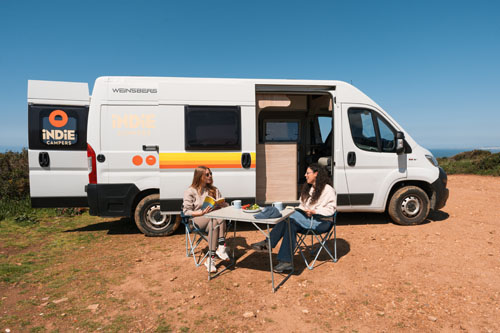
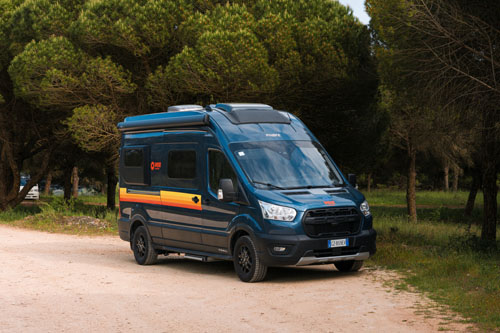
Class SI semi-integrated motorhomes, averaging 6.9 meters in length from Bandana's global fleet, offer a balanced option for couples or small families exploring Italy, blending comfort with improved maneuverability. Typically sleeping 3.8 people and accommodating 3.4 adults, these RVs provide essential amenities like showers, toilets, and cooking facilities without the bulk of a Class A, making them more suitable for Italy's varied road conditions. With an average load capacity of 72.2 kg and typical fuel consumption of 10-11 Liters/100 km, semi-integrated RVs are a versatile choice for those seeking a comfortable yet adaptable travel experience across different Italian regions. They often outperform larger Class A and smaller Class B vehicles by offering a good compromise between living space and ease of driving, making them excellent for a week-long trip through Tuscany or a two-week adventure along the coast.Class C (Alcove) - Best For
Class C alcove motorhomes, which average 7.5 meters in length from Bandana's global fleet, are ideal for families or larger groups traveling in Italy thanks to their distinctive over-cab sleeping area. These RVs typically sleep 5.8 people and accommodate 4.4 adults, making them excellent for maximizing sleeping capacity while remaining relatively cost-efficient. With an average load capacity of 42.4 kg and fuel consumption generally ranging from 10-12 Liters/100 km, Class C vehicles offer a practical balance for family-focused RV rental priorities in Italy, providing sufficient space for children and gear. Their robust design makes them suitable for various Italian road conditions, offering a dependable and family-friendly base for exploration. Consider "Weekly RV Rental in Italy - Pricing 2026" to plan your family adventure.Class B (Campervan) - Best For
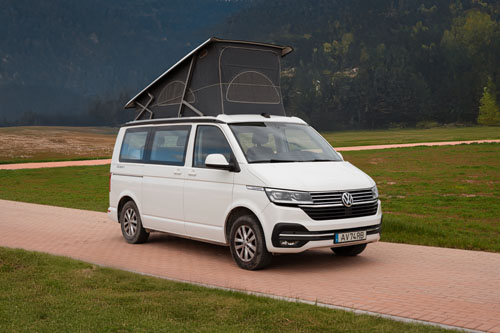
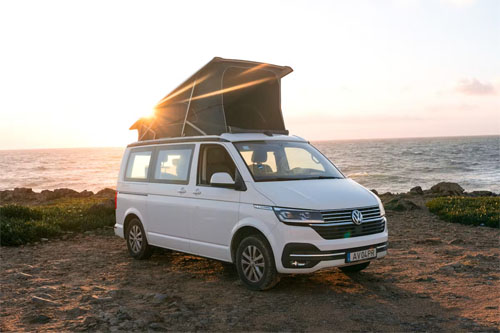
Class B campervans, averaging 5.8 meters in length from Bandana's global fleet, are exceptionally well-suited for solo travelers, couples, or small groups prioritizing maneuverability, fuel economy, and access to more secluded Italian locations. These compact vehicles, typically sleeping 3.2 people and accommodating 2.7 adults, blend seamlessly into urban environments and navigate narrow Italian roads with ease, including many coastal and mountain routes. With an average load capacity of 37 kg and excellent fuel economy, often around 8-10 Liters/100 km, campervans are perfect for travelers who value flexibility, quick stops, and a more immersive experience without the bulk of larger motorhomes. They excel in scenarios where larger RVs struggle, like accessing charming hill towns or finding parking within city limits.Class TC (Truck Camper) - Best For
Class TC truck campers, averaging 5.5 meters in length from Bandana's global fleet, are a top choice for adventure seekers and those desiring ultimate flexibility and off-grid capabilities in Italy. Typically sleeping 2.4 people and accommodating 2.1 adults, these unique vehicles offer a detachable living unit mounted on a pickup truck, providing greater ground clearance and potential for off-road exploration. While load capacity data is often zero as the camper itself is the load, their fuel consumption typically ranges from 12-17 Liters/100 km, reflecting their robust build. Truck campers are perfect for reaching remote campsites in the Dolomites or exploring rugged terrain not accessible to conventional RVs, appealing to an RV rental profile focused on genuine adventure and spontaneity in Italy.Side-by-Side Comparison Table
This table provides a concise overview of the key characteristics for each RV family, aiding in your decision for an RV rental in Italy. Evaluate average length, sleeping capacity, fuel consumption, and ideal use cases to match the perfect RV with your Italian travel aspirations. This comparison helps clarify which rented motorhome or campervan best fits your specific travel style and destination needs.| Family | Avg Length (m) | Sleeps | Fuel Use (L/100km) | Best Use Case in Italy |
|---|---|---|---|---|
| Class A (Integrated) | 7.5 | 4.4 | 8-12 | Luxury travel, large groups, long trips on main routes |
| Class SI (Semi-integrated) | 6.9 | 3.8 | 10-11 | Couples/small families, balanced comfort and maneuverability |
| Class C (Alcove) | 7.5 | 5.8 | 10-12 | Families, budget-conscious groups, extra sleeping capacity |
| Class B (Campervan) | 5.8 | 3.2 | 8-10 | Solo/couples, urban exploration, narrow roads, fuel economy |
| Class TC (Truck Camper) | 5.5 | 2.4 | 12-17 | Adventure seekers, off-grid travel, rugged terrain access |
Our Recommendation for rv rental Travelers in Italy
For most RV rental travelers in Italy, the Class B (Campervan) is our primary recommendation due to its unparalleled maneuverability and ease of navigating Italy's notoriously narrow roads, charming villages, and often-challenging parking situations. Its compact size makes it ideal for urban exploration and accessing scenic coastal routes like the Amalfi Coast, while still providing essential amenities for comfortable travel for 2-3 people. A strong runner-up is the Class SI (Semi-Integrated) motorhome, offering an excellent balance of comfort and practicality for small families or couples seeking more interior space than a campervan without the bulk of a Class A. The SI provides a comfortable living area, a dedicated bathroom, and sufficient storage, making it versatile for both scenic drives and longer stays at campsites across Italy's diverse regions. Remember, drive slowly and carefully, and you can drive almost anywhere without issues. No need to stress - just use common sense and pay attention.What are the advantages of RV travel in Italy compared to other modes?
RV travel in Italy offers unparalleled flexibility and freedom, allowing travelers to spontaneously explore hidden villages, stunning coastlines, and historic sites at their own pace without rigid itineraries. This mode of travel provides significant cost savings on accommodation and dining for families or groups, as you have a mobile kitchen and bedroom, eliminating daily hotel expenses and offering opportunities to cook with local ingredients. Unlike traditional touring, a rented RV allows for an immersive cultural experience, enabling stays in diverse locations from tranquil rural vineyards to seaside campsites, fostering a deeper connection with Italian landscapes and local life. It also offers a unique blend of adventure and comfort, with personal amenities always accessible, and is particularly appealing for those seeking outdoor activities in regions like the Dolomites or Tuscan countryside. RV travel is especially advantageous for travelers valuing privacy and control over their environment, especially compared to fixed hotel stays and public transport schedules. Imagine waking up to a fresh Italian coffee, ready to hit the road on your own terms!
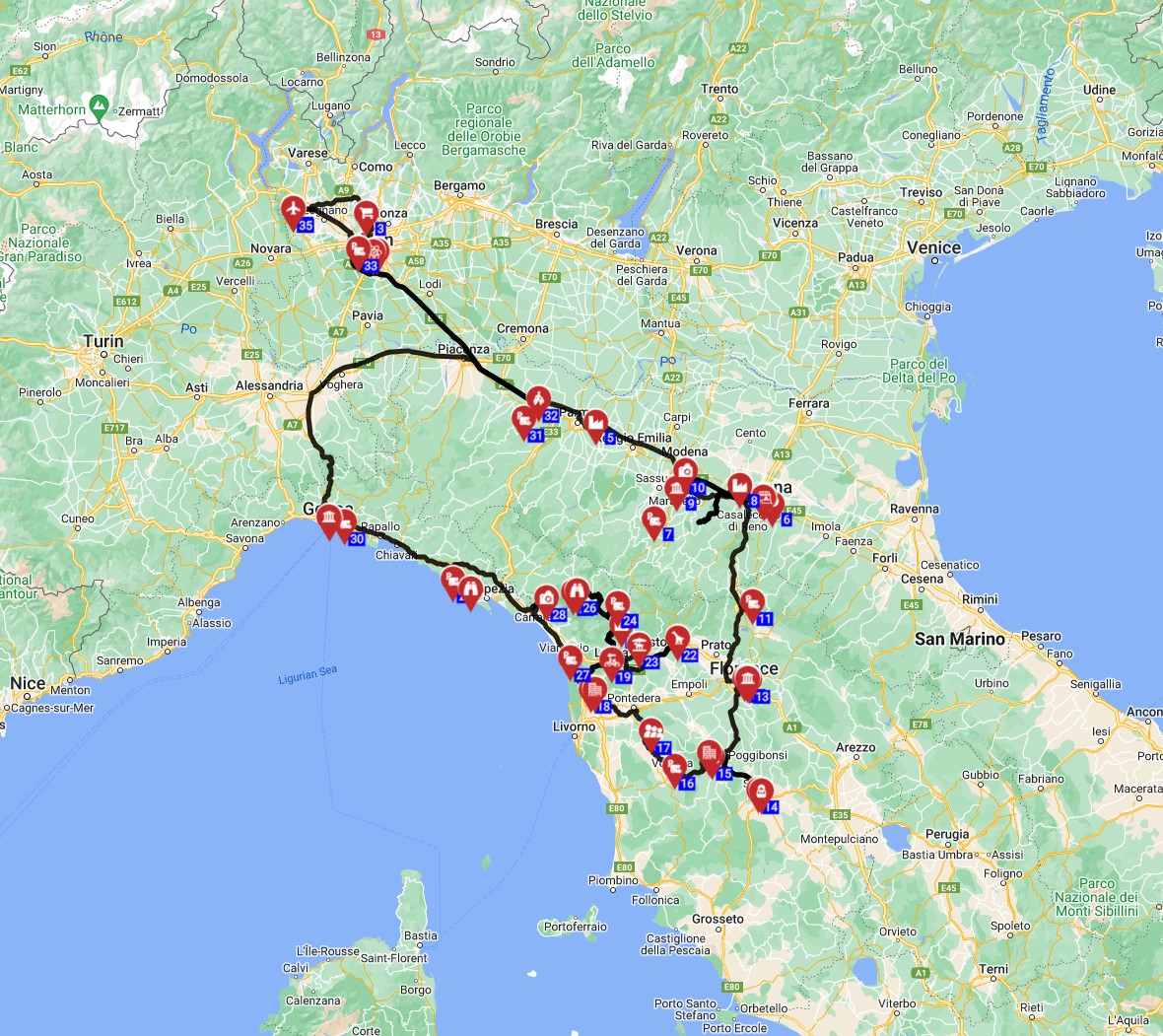
Slovenia, Croatia & Italy" class="rvplan-route-image" style="display:block;max-width:600px;width:100%;height:auto;margin:0 auto 12px;border-radius:12px;" loading="lazy">
Explore the Ljubljana Roundtrip - Adriatic sea Round -> Slovenia, Croatia & Italy Route
What is the best RV size for different regions in Italy?
The optimal RV size for Italy heavily depends on your intended regions, with smaller campervans (Class B, avg. 5.8m) and semi-integrated models (Class SI, avg. 6.9m) generally recommended for navigating narrow mountain roads, historic village centers, and bustling coastal towns. For areas like the Amalfi Coast, Cinque Terre, or the winding roads of Tuscany and Umbria, a compact Class B campervan provides superior maneuverability, easier parking, and better access to charming locations. Larger Class C (avg. 7.5m) or Class A (avg. 7.5m) motorhomes are better suited for wider main routes, particularly in regions with more developed infrastructure and spacious campsites, such as the Po Valley, certain parts of Sicily, or when planning longer stints between major cities via autostrade. When planning to explore the Dolomites, a Class SI or even a robust Class TC truck camper (avg. 5.5m) can offer a good balance of comfort and capability for mountain passes, while larger vehicles might face restrictions or difficult driving conditions. Always research specific regional road regulations and parking availability when choosing your RV size, as some historic centers and national parks have length or weight limits.How do you navigate ZTLs and find RV parking in Italian cities?
To navigate ZTLs (Limited Traffic Zones) in Italian cities, RV travelers must understand that these areas are restricted to authorized vehicles, and unauthorized entry can result in hefty fines. The most effective strategy is to park your rented RV outside the ZTL boundaries, often in designated 'Parcheggio Camper' (RV parking) or 'Parcheggio di Scambio' (Park and Ride) lots, and then use public transport (buses, trams, metro) to reach the city center. Use apps like Google Maps, Park4Night, or Campercontact to identify RV-friendly parking areas and their proximity to public transport links before arriving at your destination. Specific RV parking solutions outside ZTLs can be found near major city ring roads ('tangenziale') or at suburban campsites with good connections to public transportation; for example, Rome has several camper stops accessible by metro or bus. Always look for 'Zona Traffico Limitato' signs and CCTV cameras at entry points, and if unsure, park further out and confirm local parking rules to avoid fines.What are the unique regional challenges for RV travel in Italy?
RV travel in Italy presents unique regional challenges that go beyond generic advice, requiring specific planning for areas like the Amalfi Coast, Dolomites, and Cinque Terre. The Amalfi Coast is famous for extremely narrow, winding roads with limited passing points and scarce parking, making large RVs impractical; smaller Class B campervans are highly recommended, or you can park further away and use public transport or ferries. In the Dolomites, while roads are generally well-maintained, steep mountain passes can challenge larger RVs, and some scenic routes have weight or length restrictions; winter travel requires snow chains and careful route planning. Accessing Cinque Terre by RV is challenging as vehicles are generally prohibited within the villages; travelers must park in designated lots outside the five towns (e.g., La Spezia, Levanto) and use local trains or ferries to explore the area. Many historic city centers across Italy, beyond just the ZTLs, have very tight streets unsuitable for even medium-sized RVs, necessitating careful pre-trip research on parking and alternative transport. Southern Italy, including Sicily and Puglia, may offer more relaxed driving conditions in rural areas but can present challenges with less developed infrastructure, fewer dedicated RV facilities, and sometimes less English signage. For exploring different regions, consider a "One-Way RV Rental in Italy - Price Guide 2026" to maximize your itinerary without backtracking.How can I use an RV to explore Italy's culinary scene?
Leveraging a rented RV for culinary exploration in Italy provides unparalleled opportunities to deeply immerse in local food culture, from farm-to-table experiences to preparing authentic meals onboard. An RV allows direct access to local markets ('mercato'), enabling travelers to purchase fresh, seasonal ingredients directly from producers; look for weekly markets in smaller towns for the best selection of regional specialties. Plan your route to include stays near vineyards ('vigneti') and olive groves ('uliveti') in regions like Tuscany, Piedmont, or Puglia, many of which offer RV parking (agricamper or sosta camper) for visitors to enjoy tastings and purchase directly. Equipping your RV kitchen with basic Italian cooking essentials - good olive oil, pasta, fresh herbs - facilitates preparing authentic meals onboard, perfect for enjoying picturesque al fresco dining at your campsite. For some inspiration on what to prepare, check out our RV-friendly recipes playlist. Utilize apps like Park4Night to find farm stays ('agriturismo') or dedicated 'sosta camper' locations at farms and wineries that welcome RVs, often in exchange for purchasing local products. Slow travel, averaging max 100-150 km per day, allows ample time to savor the local food and culture.What are the considerations for RV travel with pets in Italy?
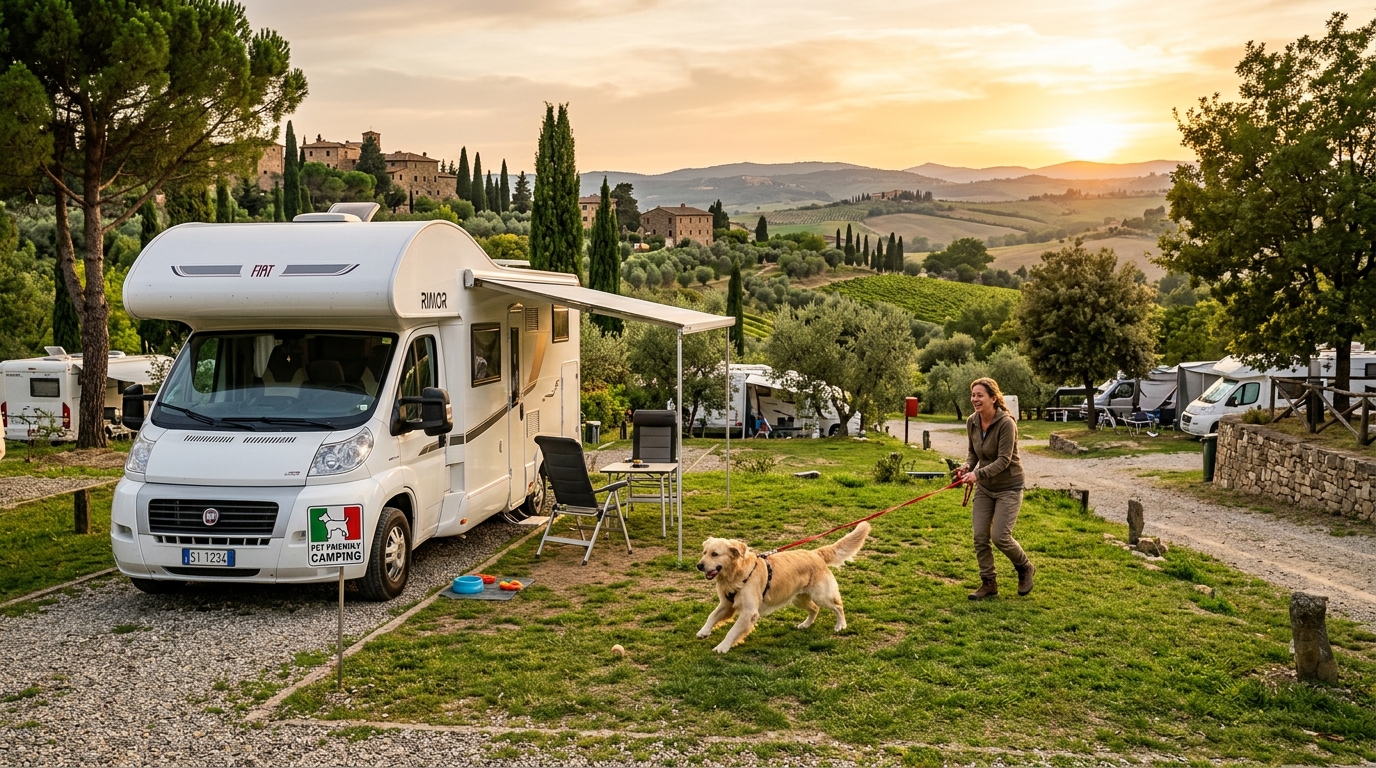
Traveling with pets in a rented RV in Italy requires adherence to specific regulations and careful planning regarding campsites, attractions, and public transport. Pets entering Italy from EU countries must have an EU pet passport, be microchipped, and be up-to-date on rabies vaccinations. For non-EU visitors, a health certificate issued by a licensed veterinarian within 10 days of travel and proof of rabies vaccination are usually required; a vet check-up before departure is always recommended to ensure all certificates are current. Many campsites in Italy are pet-friendly, but it's crucial to check their specific rules regarding pet size, breed, designated areas, and additional fees before booking. Access to attractions with pets is varied: national parks often allow dogs on leashes on trails but may restrict them in certain protected areas, while museums and indoor attractions generally prohibit pets. For public transport, small dogs are often allowed on buses and trains if held in a carrier, but larger dogs usually require a muzzle and leash, and often a separate ticket; always verify rules with the specific transport provider. Always ensure your RV is adequately ventilated for pets, especially during warm Italian summers, and plan for regular stops for exercise and water.What are sustainable RV travel practices for Italy?
Sustainable and eco-friendly RV travel practices in Italy focus on minimizing environmental impact, responsible waste management, ethical camping, and contributing positively to local economies. Responsible waste disposal is paramount: always utilize designated grey and black water dump stations ('scarico acque grigie/nere') at campsites or approved service points, never disposing of waste illegally. Conserve resources by minimizing water and electricity usage in your rented RV, opting for eco-friendly cleaning products, and segregating waste for recycling where facilities are available. Support local economies by purchasing food from local markets, dining at small family-run restaurants, and visiting artisan shops in the towns you pass through, rather than relying solely on large supermarkets or tourist traps. Practice 'leave no trace' camping, ensuring you leave your chosen spot as you found it (or better), respecting natural environments, local wildlife, and private property. Choose campsites or 'agricampeggi' that prioritize sustainability, and respect local customs and quiet hours, especially when wild camping is permitted (which is generally restricted in Italy outside of designated areas).What You Shouldn't Miss
Italy is a treasure trove of experiences for RV travelers, offering a blend of history, culture, and breathtaking scenery. Here are a few must-do experiences:- **Drive the Tuscan Countryside**: Rent a motorhome and immerse yourself in rolling hills, cypress-lined roads, and historic towns like Siena and Florence. Stop at local vineyards for wine tastings, picking up a bottle or two to enjoy at your campsite.
- **Explore the Grandeur of Rome**: Park your RV at a dedicated site just outside the city center and use public transport to explore iconic landmarks like the Colosseum, Vatican City, and the Trevi Fountain.
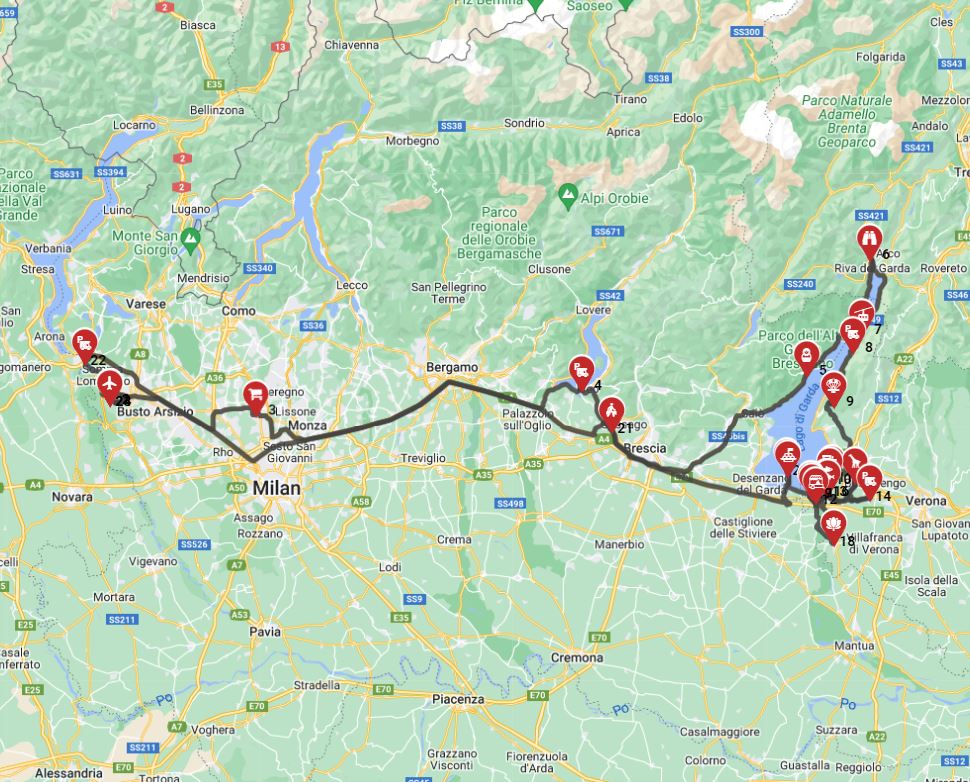
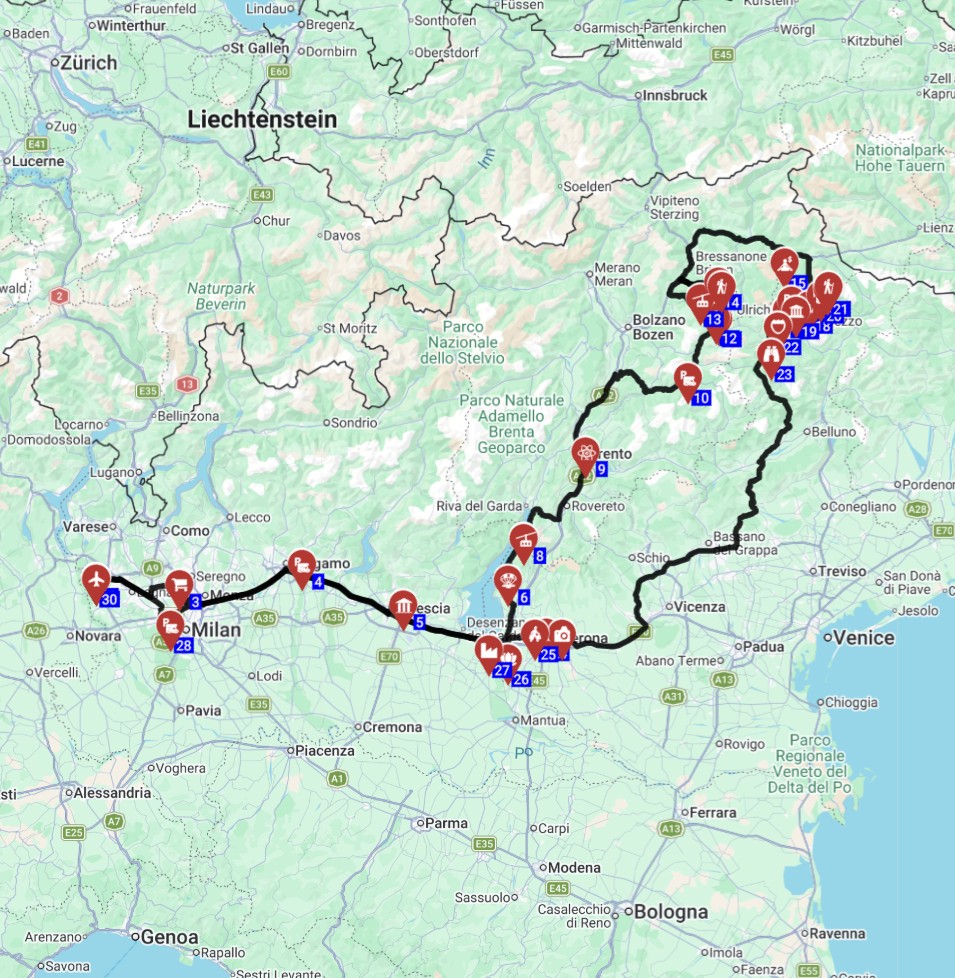
- **Discover the Lakes of Northern Italy**: Visit Lake Como, Lake Garda, and Lake Maggiore. Our
route plan covers 16 days and 1361 km, including stops at an amusement park and several traditional visits, allowing you to discover the beauty of the region.
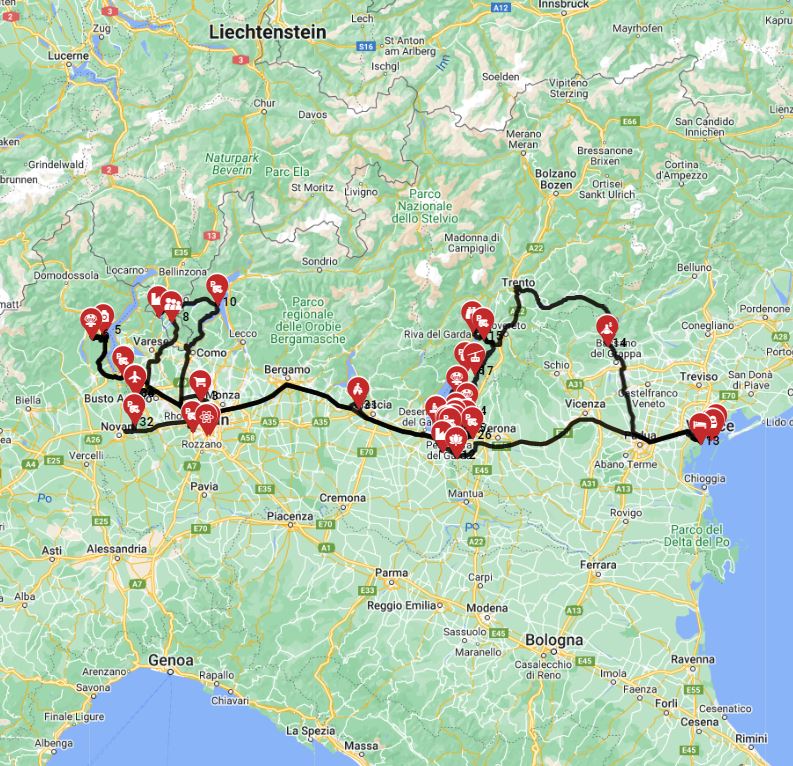 Milano Roundtrip - The Lakes of North Italy
 - **Coastal Views of Puglia**: Head south to Puglia for stunning Adriatic coastline, charming trulli houses in Alberobello, and delicious seafood. The roads are generally more open here, suitable for larger Class C motorhomes.
- **Hike the Dolomites**: Experience the dramatic peaks and valleys of this UNESCO World Heritage site. Numerous campsites cater to RVs, offering a perfect base for hiking, climbing, or simply enjoying the Alpine views.
Final Thoughts
An RV rental in Italy offers an unparalleled way to experience this magnificent country, from its bustling cities to its tranquil countryside and dramatic coastlines. Whether you're a couple dreaming of a romantic escape in a compact campervan or a family planning an extended road trip in a spacious Class C motorhome, there's a perfect vehicle waiting for you. Remember to travel slowly, enjoying an average of 100-150 km per day, taking the time to feel the place, connect to the culture, the food, and the scenery. With Bandana Caravan, you get not just a vehicle, but a partner who understands RV travel inside and out. Our commitment to full transparency, real human support, and diverse fleet means your Italian adventure will be stress-free and truly unforgettable. Embrace the freedom of the open road and let Italy unfold before you at your own pace.🎬 Video coming soon
Discover your ideal Italian road trip today! Compare Motorhome Prices for Italy now.
On the routes offered through RV PLANET routes, you can itemize and track every expense along the way for easy budgeting.