In This Guide
- Best North Canada RV Itinerary for rv rental - Overview
- 7-Day Classic Route in North Canada
- 14-Day Extended Journey in North Canada
- Recommended RVPlan Trip for North Canada
- Must-See Stops Along the Way (Avi Bandana Picks)
- Daily Driving Distances & Drive Times in North Canada
- Best RV Class for This Itinerary - Couple & Family Picks
- What is the 3 3 3 rule for RV travel?
- What is the 4 4 4 rule for RV?
- What is the best RV route planner in Canada?
- Which direction is north?
- What does "north" mean?
- Why is the north called north?
- Which part is north?
- Where to visit in northern Canada?
- What is the most scenic drive across Canada?
- What You Shouldn't Miss
- Why Book with Bandana Caravan
- Final Thoughts
- Frequently Asked Questions
Best North Canada RV Itinerary for rv rental - Overview
An RV journey through Canada's North offers an unparalleled adventure, typically encompassing the vast territories of Yukon and Northwest Territories, alongside the northern reaches of provinces like British Columbia and Alberta. This region promises unique wilderness experiences, from majestic mountain ranges to the phenomena of the Midnight Sun and Northern Lights. For live availability and current prices, start with our RV Rental North Canada - Complete Guide 2026 guide. A foundational 7-day trip will cover approximately 1,000 km (620 miles), while more extensive 14-day adventures can exceed 2,000 km (1,240 miles). We recommend a minimum duration of 7 days; however, an ideal experience for truly appreciating the remote landscapes and diverse cultures is 10-14 days. The best season for RV travel in North Canada is late May to early September, which avoids the harshest winter conditions and maximizes daylight hours, allowing you to fully immerse yourself in the natural splendor. Imagine yourself driving your rented motorhome through endless forests, pulling over for impromptu wildlife sightings, and enjoying meals cooked right on board using our RV-friendly recipes playlist.7-Day Classic Route in North Canada
A classic 7-day RV itinerary through North Canada provides a focused glimpse into the region's beauty, starting from Whitehorse, Yukon, and extending into northern British Columbia.- Day 1: Whitehorse (Yukon) → Teslin (Yukon) (approx. 165 km / 100 miles) - Start your rented motorhome journey from Whitehorse, the Yukon's capital. Highlights include the vibrant Teslin Tlingit Heritage Centre, offering insights into Indigenous culture. Settle in for the night at Teslin Lake Campground.
- Day 2: Teslin → Watson Lake (Yukon) (approx. 130 km / 80 miles) - Continue along the Alaska Highway to Watson Lake. The main attraction here is the iconic Signpost Forest, where travelers have left over 100,000 signs from around the world. Watson Lake Campground provides a comfortable overnight stop.
- Day 3: Watson Lake → Liard River Hot Springs (BC) (approx. 70 km / 45 miles) - Drive a shorter distance today to relax in the natural, warm mineral waters of Liard River Hot Springs Provincial Park in British Columbia. Camping is available directly within Liard River Hot Springs Provincial Park Campground.
- Day 4: Liard River Hot Springs → Muncho Lake (BC) (approx. 70 km / 45 miles) - Enjoy the stunning turquoise waters of Muncho Lake, a perfect spot for wildlife viewing, including stone sheep and caribou. Spend the night at Muncho Lake Provincial Park Campground, embracing the serene natural surroundings with your rented campervan.
- Day 5: Muncho Lake → Fort Nelson (BC) (approx. 200 km / 125 miles) - Travel further into British Columbia to Fort Nelson, a community rich in history. Don't miss the Northern Rockies Museum, which showcases the region's natural and human heritage. Fort Nelson Provincial Park Campground offers overnight RV parking.
- Day 6: Fort Nelson → Pink Mountain (BC) (approx. 180 km / 110 miles) - Experience the breathtaking viewpoints around Pink Mountain, known for its wildflower displays and the possibility of seeing wild horses. A Provincial Campsite near Pink Mountain is available for a peaceful night.
- Day 7: Pink Mountain → Dawson Creek (BC) (approx. 150 km / 95 miles) - Conclude your 7-day North Canada RV adventure in Dawson Creek, British Columbia, famous as Mile 0 of the Alaska Highway. Dawson Creek RV Park is a convenient spot for your final night on this classic route.
14-Day Extended Journey in North Canada
An extended 14-day RV journey into North Canada allows for deeper exploration, particularly into the remote Arctic regions of Yukon and Northwest Territories, offering an unparalleled sense of adventure.- Days 1-3: Yukon's Southern Lakes Loop (Whitehorse → Carcross → Haines Junction → Whitehorse) - Begin your journey by exploring Indigenous culture in Carcross, riding the historic White Pass & Yukon Route Railway, and discovering the pristine wilderness of Kluane National Park. Aim to maximize 150 km per day to truly immerse yourself.
- Days 4-6: Dawson City & Klondike Gold Rush Trail (Whitehorse → Dawson City) - Drive the historic Klondike Highway in your rented mobile home, a route steeped in Gold Rush history. Experience the unique phenomenon of the Midnight Sun during summer, where daylight lasts nearly 24 hours. Again, keep daily travel to a maximum of 150 km.
- Days 7-9: Dempster Highway Introduction (Dawson City → Eagle Plains) - Begin your adventure on the iconic unpaved Dempster Highway. This challenging but rewarding road crosses the Arctic Circle. Essential preparation for this remote travel segment includes extra fuel, spare tires, and satellite communication. Maximize 150 km per day, understanding that road conditions may dictate a slower pace. You can find more route plans and detailed maps on RV PLANET routes to assist with such remote sections.
- Days 10-12: Mackenzie Mountains & Northern Rockies (Eagle Plains → Fort McPherson, NWT → Inuvik, NWT) - Continue your journey on the Dempster Highway to reach the Arctic Ocean at Inuvik, Northwest Territories. This segment offers significant wildlife viewing and vast tundra landscapes. This remote drive requires careful planning and specialized RV preparation for gravel roads. Drive slowly and carefully, as you can drive almost anywhere without issues. No need to stress - just use common sense and pay attention to wildlife.
- Days 13-14: Return to Southern Yukon (Inuvik → Whitehorse, or fly out) - Begin the return journey south from Inuvik towards Whitehorse, or arrange for an internal flight with an RV drop-off, if available, after your unparalleled Arctic exploration. Consider how much a one-way RV rental from Inuvik might cost if you choose to fly out. Adhere to a maximum of 150 km per day on average to ensure a relaxed and safe trip.
Recommended RVPlan Trip for North Canada
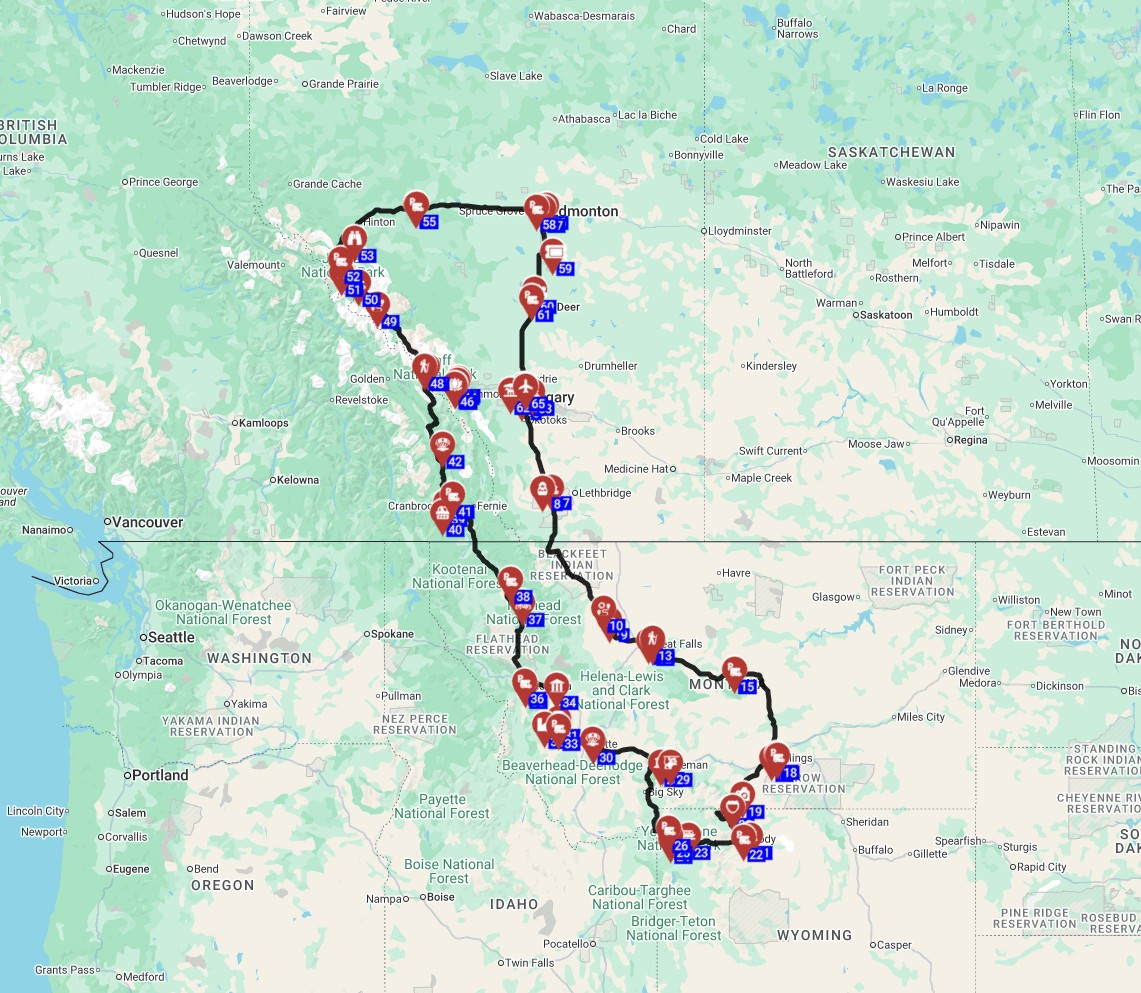
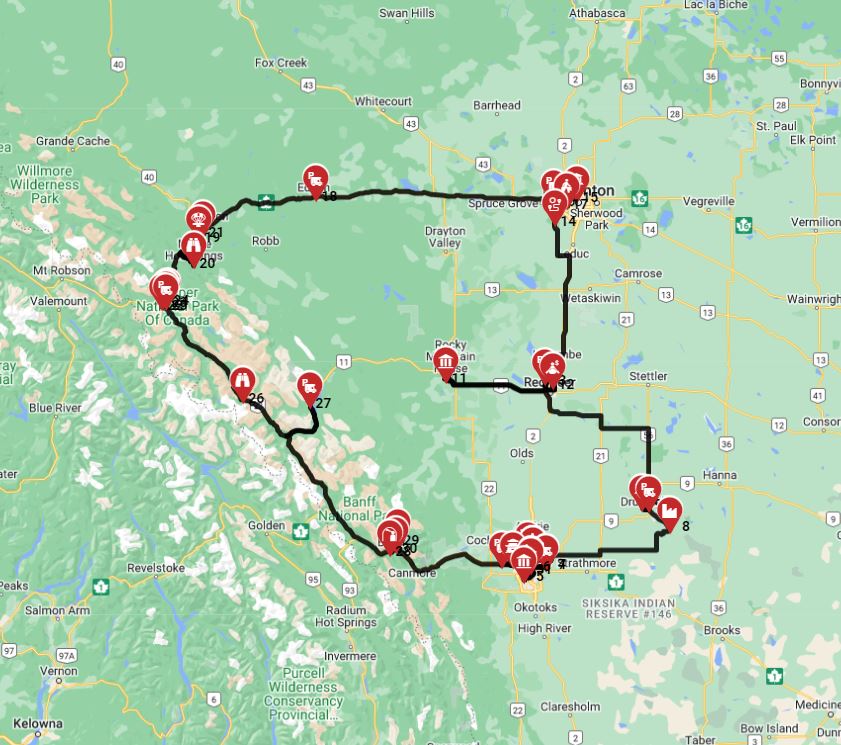
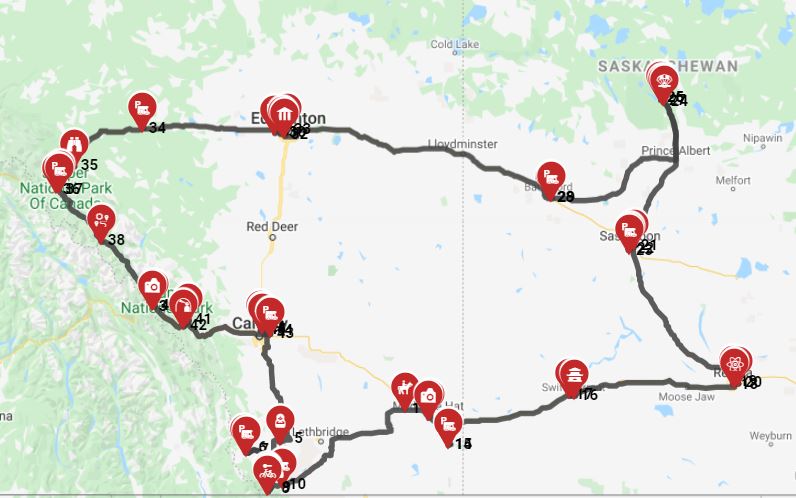
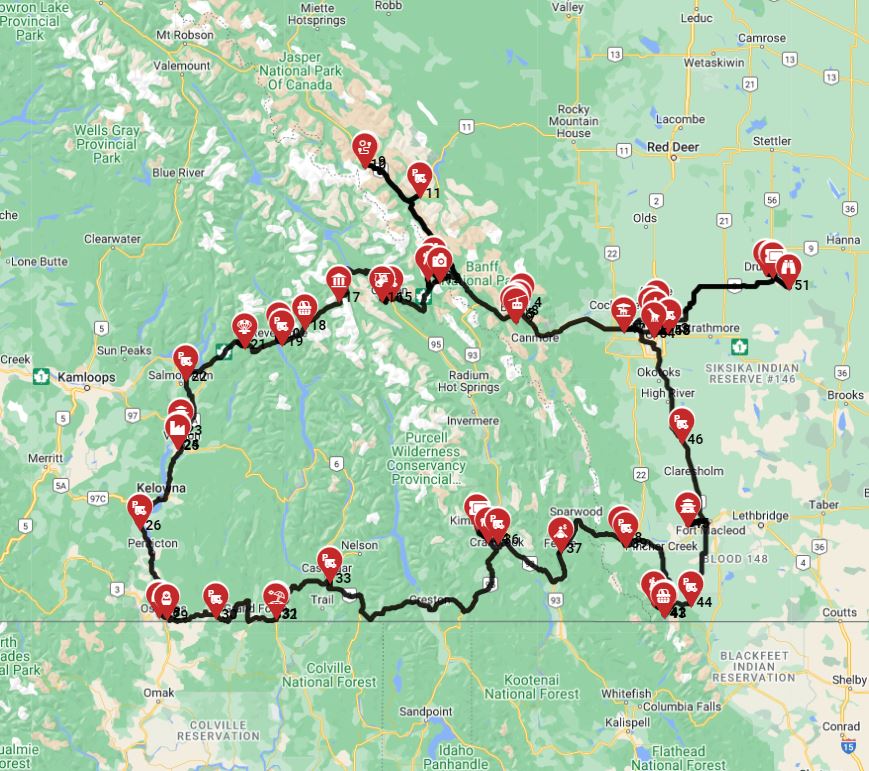
While specific RV PLANET trip data for North Canada isn't directly available here, Bandana RV, through its sister company RV PLANET (rvplan.net), offers a curated selection of itineraries for various destinations worldwide. For your North Canada RV rental adventure, we strongly encourage you to visit rvplan.net to explore ready-made RV trip plans. These professional itineraries can be tailored to your specific North Canada adventure, providing detailed routes, points of interest, and campsite suggestions to simplify your planning and significantly reduce potential headaches. Using our RV PLANET routes, you can itemize and track every expense along the way, making budgeting for your adventure easy and transparent. Plus, Bandana customers enjoy a 25% planning discount when using rvplan.net to craft their perfect route! This means less time stressing over logistics and more time enjoying the stunning scenery from your rented caravan.Must-See Stops Along the Way (Avi Bandana Picks)
Avi Bandana's personal picks for must-see stops in North Canada focus on immersing travelers in the region's unparalleled natural beauty and unique cultural heritage. As true RV specialists, we understand the desire for authentic experiences. Look for opportunities to engage with Indigenous communities, witness the magical Midnight Sun or the breathtaking Northern Lights, and visit historical sites tied to the famous Klondike Gold Rush. Prioritize stops that offer genuine local experiences over merely tourist-centric attractions, such as exploring local markets for fresh provisions for your motorhome kitchen, sampling fare at small-town eateries, and discovering traditional craft shops.Looking for expert insights from Avi Bandana? Top 5 Adventures - recommendations from Avi Bandana
- Kluane National Park & Reserve (Yukon): A UNESCO World Heritage site, it’s a paradise for hiking and wildlife spotting amidst North America's largest non-polar icefields.
- Dempster Highway (Yukon/NWT): An epic journey, this unpaved highway allows you to cross the Arctic Circle and reach the Arctic Ocean at Tuktoyaktuk, offering raw, untouched Arctic wilderness.
- Tombstone Territorial Park (Yukon): Often called the "Patagonia of the North," this park boasts stunning wilderness, dramatic peaks, and excellent hiking trails.
- Liard River Hot Springs (BC): A truly relaxing natural soak in a geothermal hot spring surrounded by a boreal forest, offering a perfect respite during your journey.
- Dawson City (Yukon): Step back in time to the Klondike Gold Rush era, explore historic buildings, and try your luck at panning for gold.
Daily Driving Distances & Drive Times in North Canada
Avi Bandana, with over 25 years of experience in motorhome travel, consistently recommends a maximum of 100 miles or 150 km per day on average when RVing in North Canada. This approach allows ample time for exploration, photography, and simply soaking in the vast northern landscapes from your rented camper. Travelers should wholeheartedly embrace a slower pace, factoring in frequent stops for incredible wildlife viewing opportunities, spontaneous scenic pullovers, and unforeseen road conditions like gravel sections or frost heaves. For example, the distance from Whitehorse to Dawson City is approximately 530 km (330 miles); while technically drivable in 7-9 hours, it is ideally split over two days for a truly relaxed pace, allowing you to explore the historic Klondike Highway fully. Similarly, the 240 km (150 miles) drive from Fort Nelson to Muncho Lake typically takes 3-4 hours, which is perfect for a single day's relaxed drive with plenty of time for lakeside stops and nature walks. Remember, the journey is as important as the destination, especially in North Canada. For more ideas on how to manage your time, consider our "RV Travel Guide to North Canada - Tips and Top Spots 2026" video guide.Best RV Class for This Itinerary - Couple & Family Picks
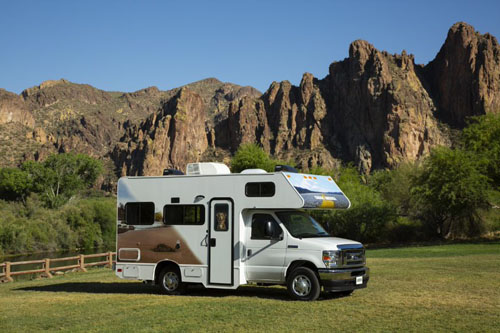
Choosing the right rented motorhome for your North Canada itinerary is key to comfort and enjoyment. Bandana Caravan offers a range of options from its global fleet to suit different travel styles.For couples embarking on a North Canada RV adventure, a **Class B - Camper Van** is an excellent choice. These campervans, like the "Active Pop Top" with its compact 5.99 meters length and ability to sleep 4, or the "V3" at 6.36 meters with sleeping places for 2, offer superb maneuverability and generally better fuel efficiency (around 8-10 Liters/100 km) on both paved and remote gravel roads. A Class B is perfect for a couple seeking intimacy with nature without sacrificing essential amenities. They are easy to drive and park, making them ideal for exploring smaller towns and national park campgrounds.
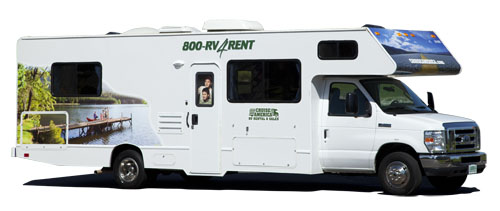
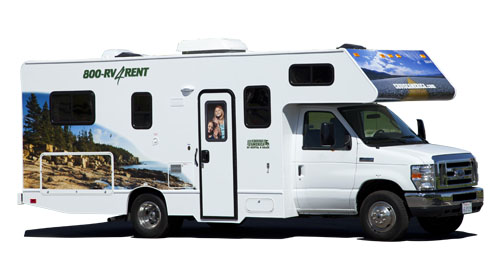
For families exploring North Canada, a **Class C - Alcove motorhome** provides ample space and comfort, which is crucial for longer trips with multiple travelers. Vehicles like the "24' Class C Motorhome," which is 7.46 meters long and sleeps 5, or the larger "Denali Searcher 30 - Gold," which can accommodate up to 9 people and is approximately 9.15 meters long, offer spacious living areas, separate sleeping berths, and full kitchen and bathroom facilities. Bandana's global fleet average for Class C - Alcove RVs shows an average length of 7.5 meters and 5.8 sleeping places, accommodating 4.4 adults, with common fuel consumption typically between 10-12 Liters/100 km. This ensures everyone has space while offering robust capabilities for navigating northern roads. You can even find options for a "Family RV Rental in North Canada - Pricing Guide 2026" to plan your budget.
Bandana RV's 'Rent&Plan' service seamlessly combines your chosen RV rental with a ready-made itinerary crafted by travel experts, providing full access to trip-planning software and removing the planning headache for your North Canada journey. This allows you to focus on the adventure, knowing all the details are taken care of. Plus, our true RV specialists are always here to help you compare final prices across 50+ suppliers, ensuring you find the easiest, safest, and most affordable way to rent an RV.
What is the 3 3 3 rule for RV travel?
The '3-3-3 rule' for RV travel, also sometimes referred to as the '3-3-3 rule for RVs,' suggests travelers drive no more than 300 miles (or roughly 500 km) in a day, arrive at their destination by 3 PM, and stay for at least 3 days. This guideline aims to promote a relaxed and enjoyable RV experience, preventing burnout from excessive driving and allowing ample time to explore each location thoroughly. While a useful general principle, in North Canada's remote regions, adhering strictly to the '300 miles' might be challenging due to vast distances between services and varied road conditions; a more practical interpretation for this region is often a 150-200 km (100-125 miles) daily maximum, as advised in earlier sections, emphasizing the 'arrive by 3 PM' and 'stay for 3 days' parts for deeper immersion. This slower pace is crucial for truly experiencing the unique northern environment.What is the 4 4 4 rule for RV?
The '4-4-4 rule' for RV travel is a variation of the '3-3-3 rule', recommending travelers drive no more than 400 miles (approximately 640 km) in a day, stop driving by 4 PM, and stay at least 4 nights in a location. This rule is generally adopted by those who prefer covering slightly more ground than the 3-3-3 rule allows, while still emphasizing the importance of not over-driving and allowing sufficient time at each stop. For North Canada, adhering to the '400 miles' might be too aggressive given the often unpaved road conditions, limited services, and the desire to truly experience the unique remote environment; a conservative approach to daily mileage (as suggested by Avi Bandana's 100 miles/150 km max) combined with the 'stop by 4 PM' and longer stays is more suitable for this region to maximize enjoyment and safety.What is the best RV route planner in Canada?
The best RV route planner for Canada often depends on a traveler's specific needs and comfort level with technology, but popular and highly recommended options include dedicated RV planning apps like RV LIFE Trip Wizard, Roadtrippers, and iOverlander, alongside general mapping services like Google Maps. RV LIFE Trip Wizard is highly rated for its RV-specific features, allowing users to input vehicle dimensions, find RV-friendly campgrounds, and identify points of interest relevant to RVers, making it invaluable for planning routes through North Canada. For navigation in remote areas of North Canada with limited cell service, it's crucial to download offline maps, and physical maps (such as those from the Yukon and NWT tourism boards) are highly recommended as a reliable backup. Services like Bandana RV's 'Rent&Plan' can also provide pre-planned itineraries and access to trip-planning software through RV PLANET (rvplan.net), simplifying the complexities of navigating northern routes and ensuring readiness for unique northern challenges.Which direction is north?
North is one of the four cardinal directions, typically represented at the top of a map, and is the direction of the Earth's North Pole. When RVing in North Canada, understanding your orientation to 'north' is fundamental not only for accurate navigation with your rented campervan but also for appreciating phenomena like the Northern Lights (Aurora Borealis), which are more active and visibly stunning the further north you travel into regions like the Yukon and Northwest Territories. While modern compasses and GPS devices provide precise guidance, observing the sun's position can also indicate north: in the Northern Hemisphere, the sun is always to the south at noon, meaning north is directly behind you.What does "north" mean?
The term "north" refers to the compass direction directly opposite south, and it also frequently denotes regions situated towards the Earth's North Pole, characterized by colder climates and distinct geographical features. In the context of 'RV rental in North Canada,' 'north' specifically encompasses the vast and sparsely populated Canadian territories of Yukon, Northwest Territories, and Nunavut, along with the northernmost parts of provinces like British Columbia, Alberta, Saskatchewan, Manitoba, Ontario, and Quebec. For RV travelers, heading 'north' in Canada signifies an adventure into extreme wilderness, encounters with significant wildlife, immersion in Indigenous cultures, and experiencing unique seasonal phenomena like the Midnight Sun and the spectacular Northern Lights.Why is the north called north?
The word 'north' originates from the Proto-Germanic '*nurþraz,' which originally meant 'on the left' (as one faces the rising sun), and over time evolved to denote the direction towards the cold, darker part of the sky. Historically, various cultures across the Northern Hemisphere often named directions based on natural phenomena or their own geographical reference points, and 'north' universally came to represent the direction towards the Arctic, or the Earth's North Pole. For RV travelers exploring North Canada, this historical naming reinforces the sense of venturing into a truly distinct and often challenging frontier, a vast and wild landscape defined by its northern latitude and associated environmental characteristics.Which part is north?
The 'north part' of Canada typically refers to the regions above the 60th parallel, encompassing the Yukon Territory, the Northwest Territories, and Nunavut, but can also include the remote northern sections of provincial lands. For RV travel with a rented motorhome, 'North Canada' primarily focuses on the accessible road networks within the Yukon and Northwest Territories, along with northern British Columbia and Alberta, which serve as crucial gateways to the Arctic. These northern parts are characterized by vast boreal forests, taiga, expansive tundra, numerous pristine lakes and rivers, and majestic mountainous terrain, offering unparalleled opportunities for remote and awe-inspiring RV adventures. To learn more about broader Canadian RV travel, see our "RV Rental USA - Complete Guide 2026" which covers general North American tips.Where to visit in northern Canada?
Northern Canada offers unparalleled destinations for RVers seeking wilderness, unique culture, and natural phenomena, with top recommendations including Kluane National Park & Reserve, the Dempster Highway, and Whitehorse.- Yukon Territory: Explore Kluane National Park and Reserve, a UNESCO World Heritage site known for its massive glaciers and abundant wildlife, perfect for a several-day stop in your rented RV. Experience the rich Klondike Gold Rush history in Dawson City, where historic buildings tell tales of prospectors. Driving the iconic Dempster Highway allows you to cross the Arctic Circle, an unforgettable milestone.
- Northwest Territories: Venture to Inuvik via the Dempster Highway (now extended to Tuktoyaktuk on the Arctic Ocean), where you can stand at the edge of the Arctic Ocean. While Nahanni National Park Reserve is often accessed by air or water, understanding its remote beauty is key to appreciating the region's vastness. Yellowknife, though not directly on typical RV routes to the far north, is a vibrant capital known for its arts scene and prime Northern Lights viewing in season.
- Northern British Columbia: Gateway towns like Fort St. John and Fort Nelson offer crucial services and access to provincial parks like Stone Mountain and Muncho Lake. These areas feature incredible mountain scenery and abundant wildlife along the Alaska Highway, making them essential stops on any RV itinerary in North Canada.
What is the most scenic drive across Canada?
While the Trans-Canada Highway offers diverse scenery coast-to-coast, for truly unparalleled wilderness and unique northern beauty, segments of the Alaska Highway and the entire Dempster Highway are considered among the most scenic drives across or into Canada's North. The Alaska Highway, particularly its sections through northern British Columbia and the Yukon, winds through majestic mountains, pristine lakes, and vast forests, offering frequent wildlife viewing opportunities for bears, moose, caribou, and bison from your rented motorhome. However, the Dempster Highway (Yukon/NWT) is arguably Canada's most unique scenic drive, taking travelers through permafrost landscapes, across the Arctic Circle, and now to the Arctic Ocean at Tuktoyaktuk. This epic route showcases raw, untouched Arctic wilderness, introduces you to remote Indigenous communities, and offers a profound sense of adventure unmatched by other roads. For specific rental details for this adventurous route, consider checking for "RV Rental North Canada - Prices and Best Deals 2026".What You Shouldn't Miss
- Driving the iconic Alaska Highway in your rented campervan, especially the stretches through northern British Columbia and the Yukon, for breathtaking mountain vistas and diverse wildlife.
- Experiencing the Midnight Sun phenomenon during summer in destinations like Dawson City or Whitehorse, where endless daylight reshapes your sense of time.
- Crossing the Arctic Circle on the Dempster Highway, an achievement that puts you deep into the true Arctic wilderness and is a highlight for any adventurous RVer.
- Soaking in the natural thermal waters of Liard River Hot Springs Provincial Park in northern British Columbia, a unique oasis amid the vast boreal forest.
- Visiting the Signpost Forest in Watson Lake, Yukon, a quirky and heartwarming roadside attraction where travelers from around the world leave their mark.
- Exploring Kluane National Park and Reserve, a UNESCO World Heritage site, for unparalleled hiking, glacier viewing, and opportunities to spot grizzly bears and Dall sheep from your rented mobile home.
Final Thoughts
North Canada, with its vast wilderness, rich Indigenous cultures, and spectacular natural phenomena like the Midnight Sun and Northern Lights, offers an RV adventure unlike any other. It's a journey of self-discovery and breathtaking beauty, perfect for families and couples alike seeking an authentic escape. Embrace the slow travel philosophy, allow yourself to be captivated by the scenery, and remember that with a rented RV, your mobile home allows you to carry your comfort wherever the road takes you. Planning an RV trip to such a remote region might seem daunting, but with Bandana Caravan, you're never alone. We provide full transparency in pricing, dedicated support before and after your booking, and the tools you need to plan every detail. Whether you choose a 7-day classic route or an extended 14-day Arctic exploration, the memories you make in your rented motorhome will last a lifetime. Get inspired for your next trip and discover top destinations, planning tips, all in one place!🎬 Video coming soon
On the routes offered through RV PLANET routes, you can itemize and track every expense along the way for easy budgeting.