In This Guide
- Best France RV Itinerary for rv rental — Overview
- 7-Day Classic Route in France
- 14-Day Extended Journey in France
- Recommended RVPlan Trip for France
- Must-See Stops Along the Way (Avi Bandana Picks)
- Daily Driving Distances & Drive Times in France
- Best RV Class for This Itinerary — Couple & Family Picks
- What is the best way to rent an RV in France?
- How much does it cost to rent an RV in France?
- Do I need a special license to drive an RV in France?
- What are the best places to visit in France by RV?
- Can you wild camp in France with an RV?
- What are the rules for driving a motorhome in France?
- Is France good for motorhome travel?
- What are the best campsites in France for RVs?
- What You Shouldn't Miss
- Top Cities for RV Rental in France
- Practical Information for RV Travel in France
France offers an unparalleled experience for travelers looking to explore at their own pace, and a rented RV is truly the ultimate way to discover its diverse landscapes, rich history, and vibrant culture. Imagine waking up to the sounds of a Provençal village, enjoying breakfast with fresh croissants purchased from a local market, and then setting off to discover ancient châteaux or picturesque coastal towns. This guide is designed to help you craft the perfect RV itinerary in France, ensuring you make the most of your adventure on the open road. For live availability and current prices, start with our RV Rental France - Complete Guide 2026 guide, offering comprehensive information to kickstart your journey.
Best France RV Itinerary for rv rental — Overview
A classic RV itinerary for France often highlights its most iconic and picturesque regions, including the sun-drenched lavender fields of Provence, the majestic châteaux of the Loire Valley, and the breathtaking peaks of the French Alps. The recommended minimum duration for a truly fulfilling RV trip in France is 7 days, although a 14-day journey allows for a much deeper and more relaxed exploration, aligning perfectly with our recommendation for slow travel – averaging no more than 100-150 km per day. An ideal trip typically covers approximately 800-1500 km (500-930 miles), depending on the chosen route and the duration of your adventure. The best season for RV travel in France is usually late spring (May-June) or early autumn (September-October), offering pleasant weather conditions, fewer crowds, and vibrant seasonal beauty such as blooming lavender or colorful fall foliage.
7-Day Classic Route in France
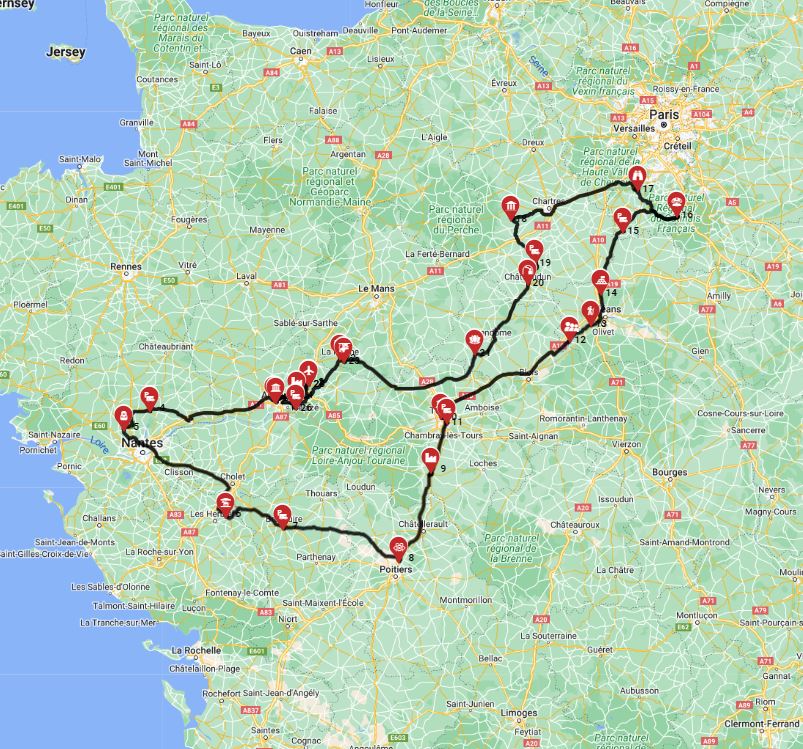
For a week-long immersion into France's charm, this classic route provides a wonderful blend of history, culture, and scenic beauty. This itinerary is designed for a relaxed pace, averaging under 150 km (93 miles) of driving per day, allowing ample time for exploration.
- Day 1: Paris to Chartres (90 km / 56 miles): Upon picking up your rented RV near Paris, head southwest to Chartres. Explore the magnificent Chartres Cathedral, a UNESCO World Heritage site known for its stunning stained-glass windows. Overnight at Camping Huttopia Chartres, which offers convenient pitches for motorhomes.
- Day 2: Chartres to Chenonceaux (150 km / 93 miles): Drive into the heart of the Loire Valley. Visit the iconic Château de Chenonceau, gracefully spanning the River Cher. Spend your evening at Camping de l'Etang du Val de Loire, enjoying the peaceful surroundings.
- Day 3: Chenonceaux to Saumur (70 km / 43 miles): Continue your exploration of the Loire Valley. Discover Saumur, home to an impressive château and the famous Cadre Noir cavalry school. Consider enjoying a wine tasting at a local vineyard before overnighting at Camping de l'Ile d'Offard.
- Day 4: Saumur to Bordeaux (300 km / 186 miles): This is a longer driving day, but it’s a necessary leg to reach the renowned wine region of Bordeaux. Explore Bordeaux's elegant historic center, another UNESCO site. Stay at Camping Bordeaux Lac, conveniently located near the city.
- Day 5: Bordeaux to Sarlat-la-Canéda (180 km / 112 miles): Journey eastward to the picturesque Dordogne region. Wander through Sarlat-la-Canéda's well-preserved medieval streets and indulge in local Périgord cuisine. Camping Huttopia Sarlat offers excellent facilities for your motorhome.
- Day 6: Sarlat-la-Canéda to Rocamadour (70 km / 43 miles): Visit the stunning cliffside village of Rocamadour, a significant pilgrimage site, and its ancient sanctuaries. Explore some of the region's fascinating prehistoric caves nearby. Stay at Camping Les Cigales for the night.
- Day 7: Rocamadour to Clermont-Ferrand (200 km / 124 miles): Conclude your trip by journeying through the volcanic landscapes of the Auvergne region. A visit to the Puy de Dôme, a dormant volcano, offers panoramic views. You can then drop off your RV rental near Clermont-Ferrand or extend your adventure into other regions.
14-Day Extended Journey in France
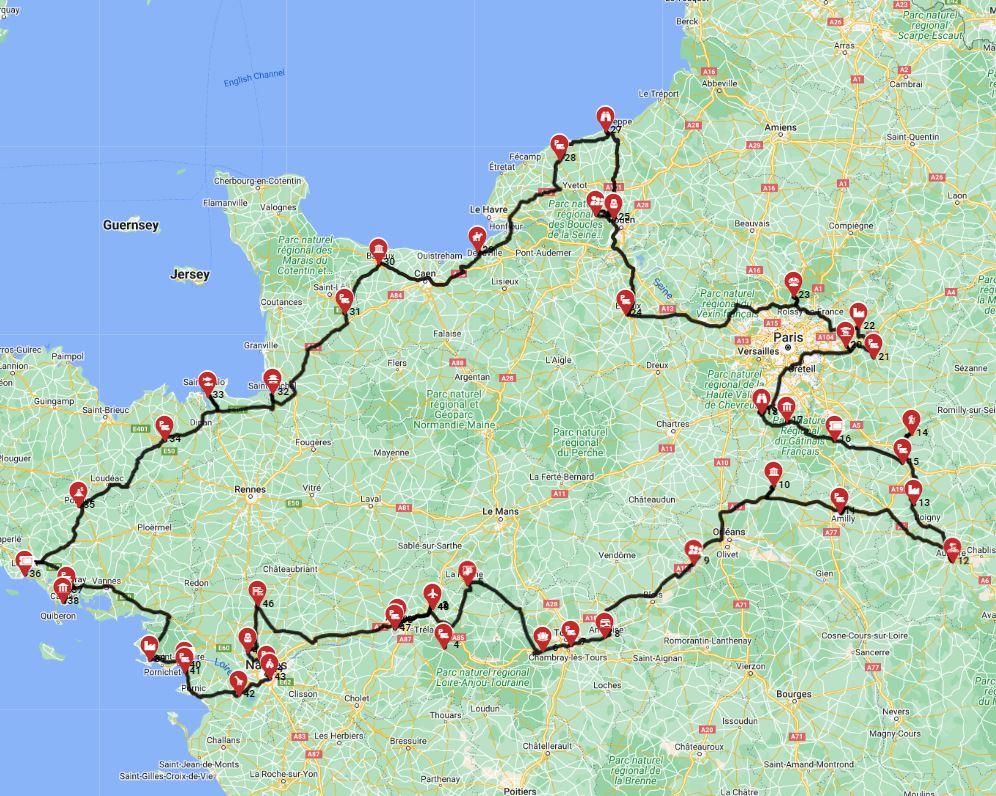
For those with more time, a two-week RV adventure in France allows for a comprehensive exploration of its diverse regions, from the historical coasts of Normandy to the majestic French Alps. This extended route plan provides a balanced mix of driving and leisure, ensuring you truly connect with the culture, food, and scenery.
- Days 1-3: Paris & Normandy Coast:
- Day 1: Paris to Giverny & Rouen (90 km / 56 miles): Pick up your campervan rental near Paris. Start your journey with Claude Monet's enchanting gardens in Giverny, then continue to explore Rouen's historic center and its impressive Gothic cathedral. Overnight at Camping de Rouen.
- Day 2: Rouen to Honfleur & D-Day Beaches (120 km / 75 miles): Drive to the charming port town of Honfleur, known for its picturesque harbor. Afterward, pay your respects at the poignant D-Day landing sites and museums near Bayeux. A local campsite near Bayeux will be your resting spot.
- Day 3: D-Day Beaches to Mont Saint-Michel (100 km / 62 miles): Experience the awe-inspiring Mont Saint-Michel, a UNESCO World Heritage site. Secure an overnight spot at an 'aire de service' or campsite with views overlooking the bay.
- Days 4-6: Loire Valley Châteaux:
- Day 4: Mont Saint-Michel to Amboise (270 km / 168 miles): This is a longer but scenic drive to the heart of the Loire Valley. Settle your RV in Amboise, home to Clos Lucé, Leonardo da Vinci's final residence. Camping Municipal d'Amboise is a great option.
- Day 5: Amboise to Chenonceaux & Villandry (40 km / 25 miles): Explore the architectural marvel of Château de Chenonceau and the exquisitely landscaped gardens of Villandry. Find a convenient campsite near Tours for the night.
- Day 6: Villandry to Saumur (70 km / 43 miles): Visit Saumur Castle and immerse yourself in the region's renowned vineyards with a local wine-tasting experience. Spend the night at Camping de l'Ile d'Offard.
- Days 7-9: Dordogne & Lot Valley:
- Day 7: Saumur to Sarlat-la-Canéda (300 km / 186 miles): Head south to the beautiful Dordogne region, where you can immerse yourself in Sarlat's captivating medieval charm. Camping Huttopia Sarlat offers a great base.
- Day 8: Sarlat-la-Canéda & Les Eyzies (50 km / 31 miles): Explore the prehistoric cave art in Les Eyzies-de-Tayac and discover vibrant local markets. Enjoy traditional Périgord dishes, cooked in your RV or at a local eatery. Cooking meals in your RV kitchen can be a great way to save money and enjoy local ingredients; check out our RV-friendly recipes playlist for inspiration.
- Day 9: Sarlat-la-Canéda to Rocamadour (70 km / 43 miles): Journey to the breathtaking cliffside village of Rocamadour, a significant pilgrimage site. Consider exploring the nearby Gouffre de Padirac, an impressive cave system.
- Days 10-12: French Alps:
- Day 10: Rocamadour to Annecy (450 km / 280 miles): This is a longer travel day, leading you to the stunning French Alps. Settle your rented motorhome in Annecy, often called the 'Venice of the Alps'. Overnight at Camping Annecy.
- Day 11: Annecy & Lake Annecy: Enjoy water sports on the crystal-clear Lake Annecy, cycle along its scenic shores, or embark on a hike in the surrounding mountains. Explore Annecy's charming Old Town and its canals.
- Day 12: Annecy to Chamonix (100 km / 62 miles): Drive through breathtaking alpine scenery to Chamonix-Mont-Blanc. Take the Aiguille du Midi cable car for unparalleled panoramic views of Mont Blanc. Stay at Camping Mer de Glace.
- Days 13-14: Provence & Return:
- Day 13: Chamonix to Avignon (300 km / 186 miles): Travel south to the sun-drenched region of Provence. Explore Avignon's historic Papal Palace and the famous Pont d'Avignon. Savor the delights of Provençal cuisine. Overnight at Camping Bagatelle.
- Day 14: Avignon to Marseille/Nice for drop-off (100-250 km / 62-155 miles): Depending on your chosen RV rental drop-off location, you might have time to explore Marseille's vibrant Vieux Port or the coastal beauty of Nice before returning your RV.
Recommended RVPlan Trip for France
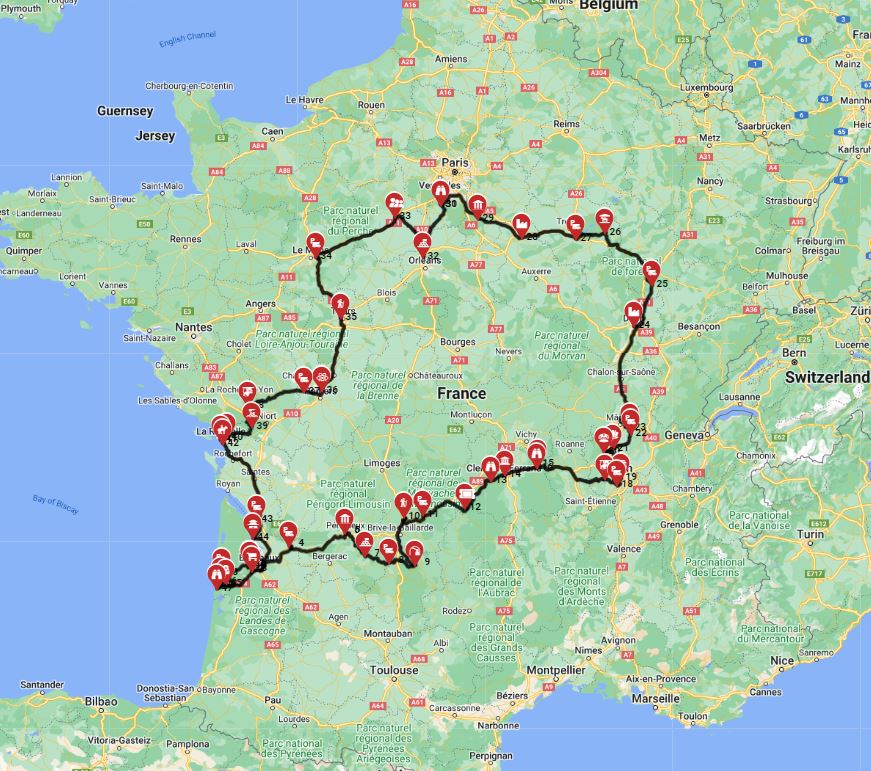
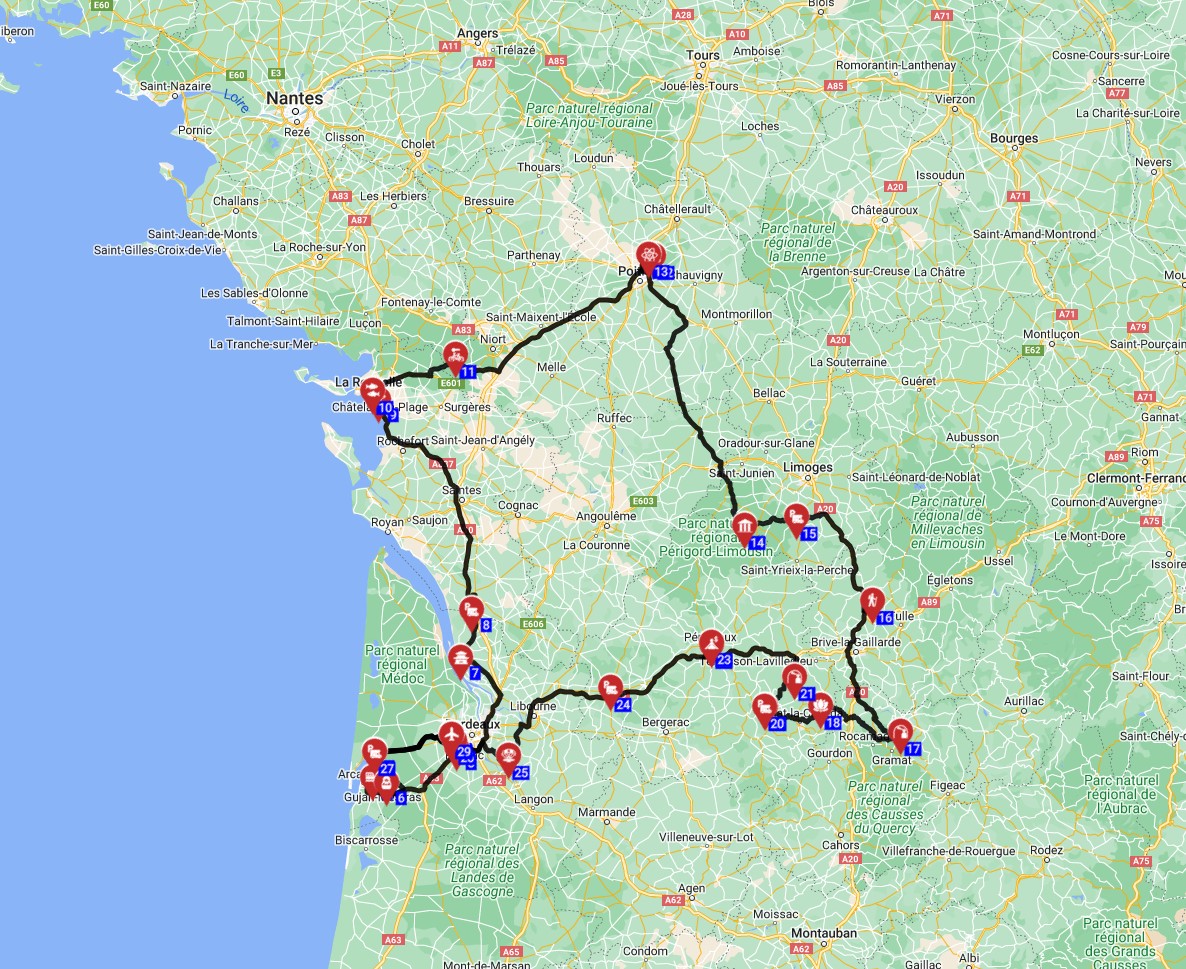
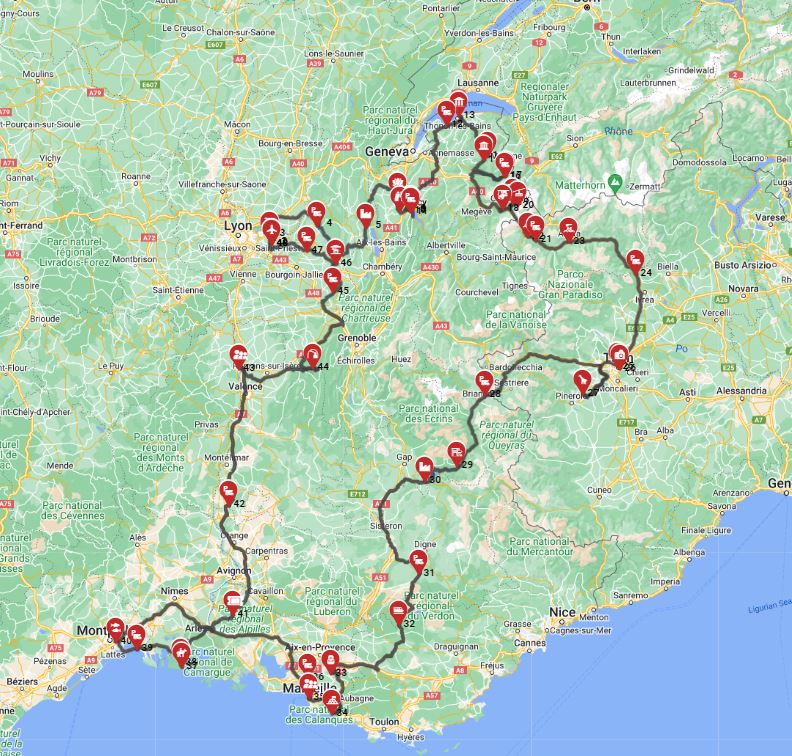
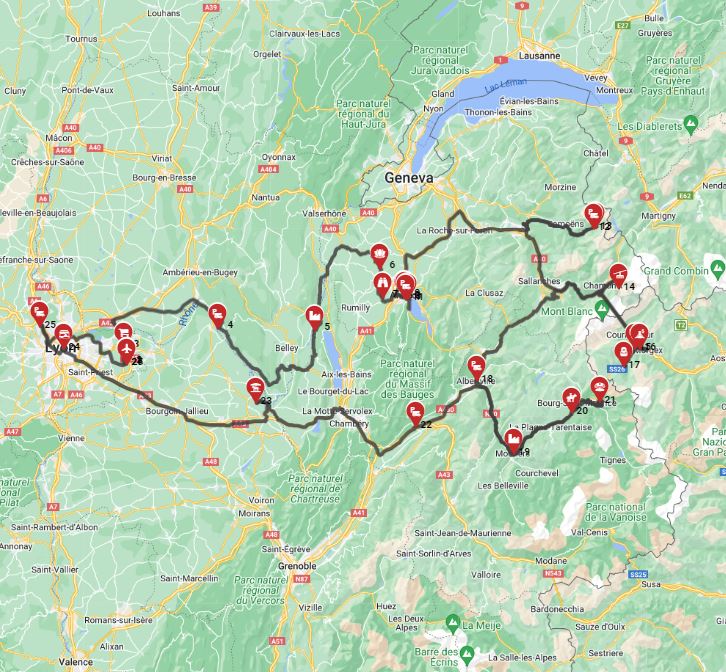
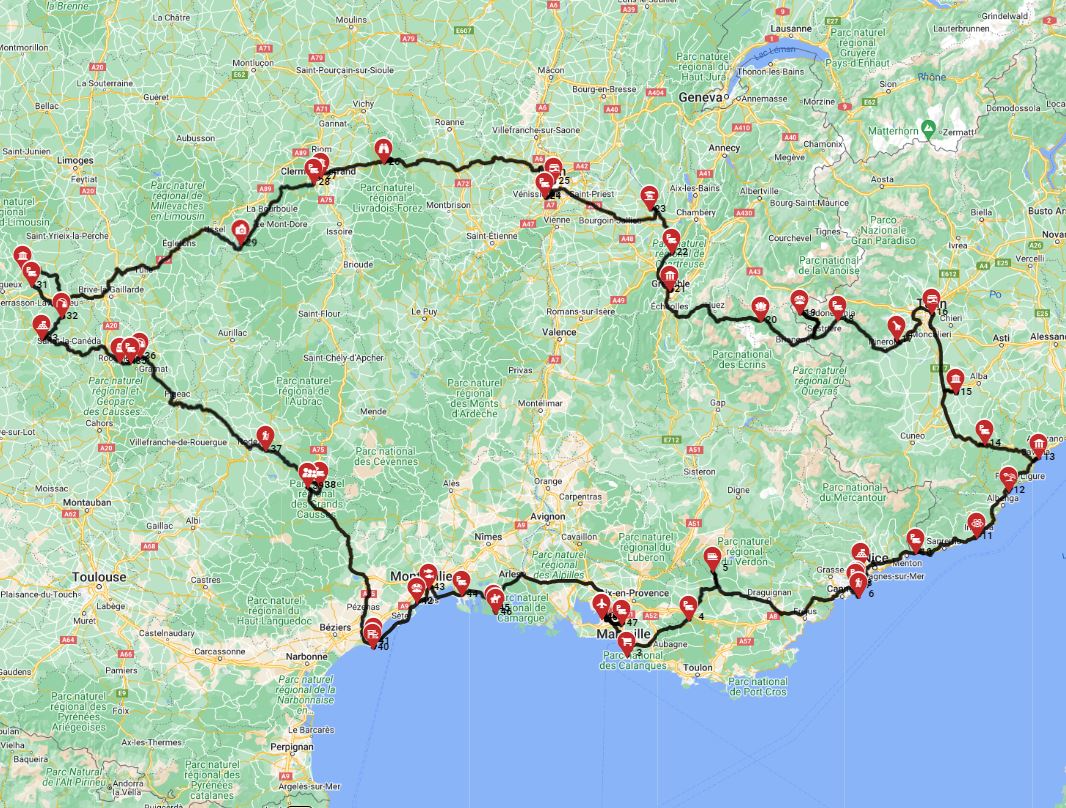
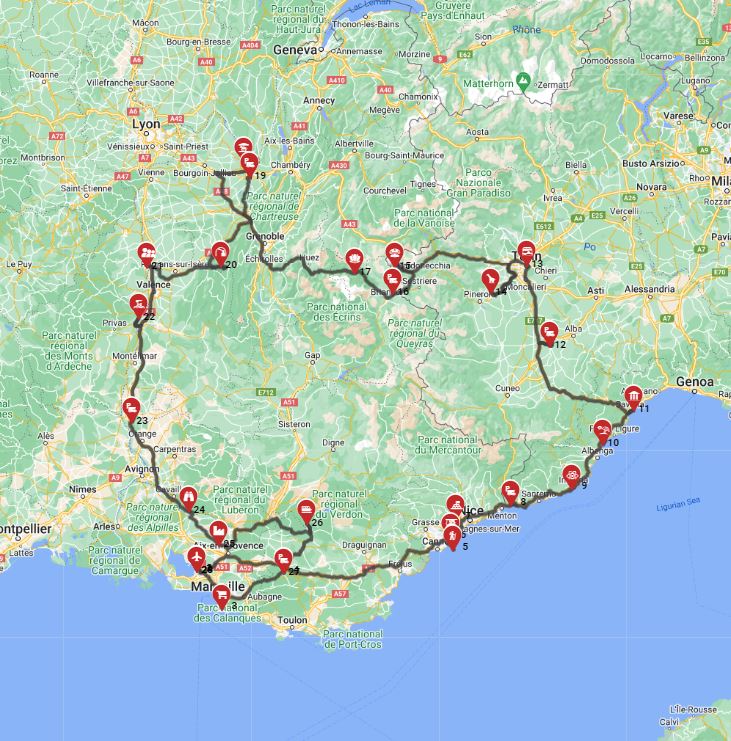
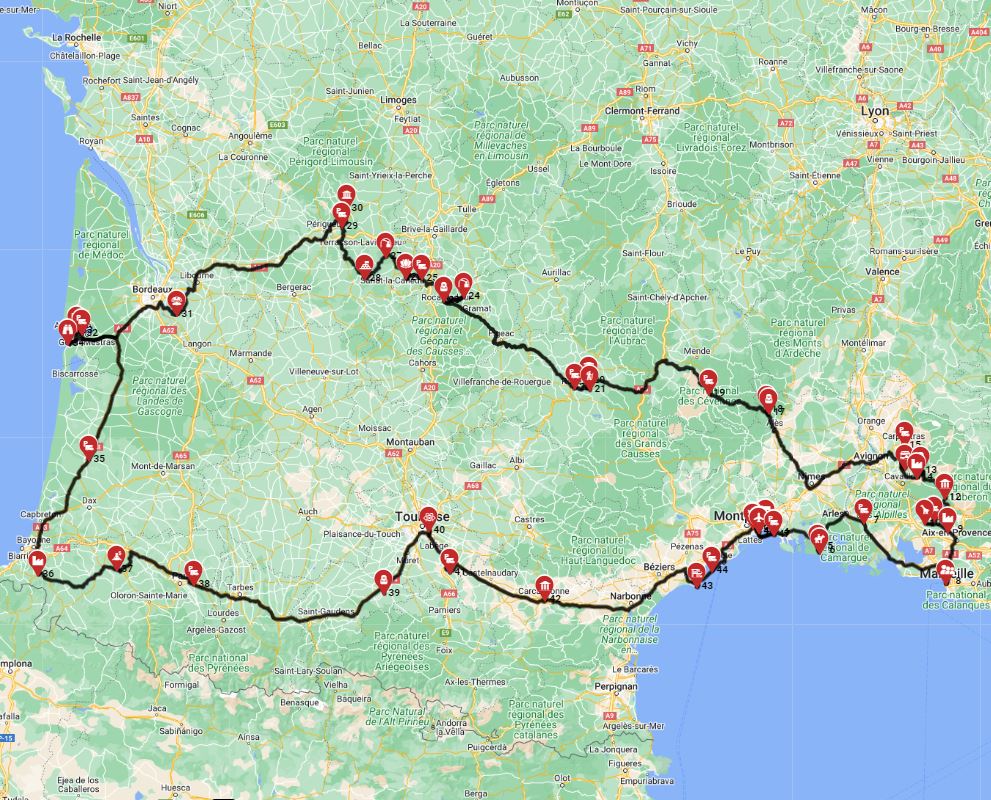
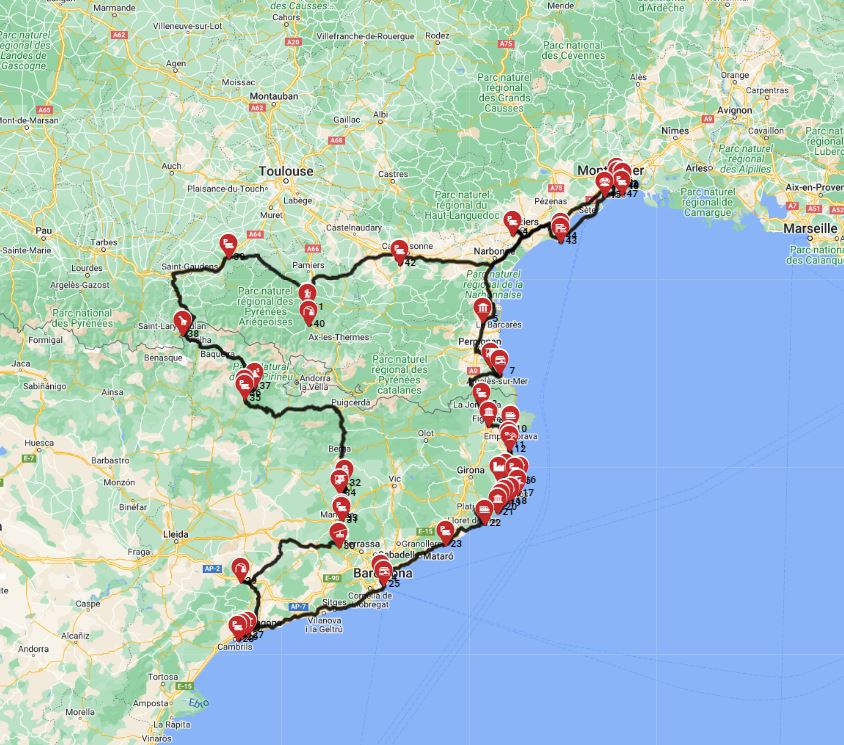
For an extensive journey that fully embraces the stunning French Alps, Avi Bandana, our founder and a seasoned RV expert, highly recommends exploring the "Milano Roundtrip - West - Italian alps, France alps" trip available on RVPLAN. This comprehensive RV road trip itinerary, accessible via motorhome road trip with an RV from Milano, spans 21 days and covers approximately 1734 km (1077 miles) of incredibly diverse and dramatic landscapes. Starting and ending in Milan, this route allows you to seamlessly immerse yourself in both the Italian and French Alpine regions, offering a unique cross-border experience. With RVPLAN, you can also itemize and track every expense along the way for easy budgeting, a feature vital for managing total trip costs on longer adventures across multiple countries through RV PLANET routes. This meticulously planned route is perfect for those seeking an unforgettable extended adventure. On the routes offered through RV PLANET routes, you can itemize and track every expense along the way for easy budgeting.
Must-See Stops Along the Way (Avi Bandana Picks)
From the extensive "Milano Roundtrip - West - Italian alps, France alps" RVPlan trip, Avi Bandana emphasizes focusing on authentic local experiences to truly capture the essence of France. Beyond the famous landmarks, discovering the local heart of each region enriches your rented motorhome journey significantly.
- Seek out Local Industry visits to understand regional crafts or food production. These hidden gems, often found in smaller villages, provide unique insights into local culture and can range from cheese making in the Alps to lavender oil distilleries in Provence.
- Make sure to visit at least one Traditional Market. These are fantastic places to sample regional produce, artisanal goods, and soak in the vibrant atmosphere. You'll find everything from fresh bread and cheeses to local wines and crafts, perfect for stocking your RV kitchen.
- Indulge in at least two different Traditional Restaurant / Fine Dining experiences to truly savor the diverse French culinary landscape. From rustic regional dishes in a cozy bistro to refined gastronomy in a Michelin-starred establishment, France offers an incredible range of dining pleasures for every budget.
- Don't miss the picturesque village of Annecy, known for its stunning lake and canals. It's an ideal stop for a day of leisurely exploration, enjoying paddleboarding or a stroll through its charming Old Town.
- In the Dordogne, beyond Sarlat-la-Canéda, delve into the prehistory of Les Eyzies-de-Tayac, where ancient cave art tells stories of early human history. It's a profound and educational stop that truly adds depth to your RV rental itinerary.
🎬 Video coming soon
Daily Driving Distances & Drive Times in France
Avi Bandana, drawing from years of RV travel expertise, consistently recommends maintaining a maximum average of 100 miles or 150 km per day to genuinely savor your RV adventure in France. This commitment to slow travel allows for spontaneous stops at charming villages, deeper cultural immersion, and prevents the stress often associated with rushed journeys. French roads, particularly in rural or mountainous areas like the Alps or Dordogne, can be winding or narrow, making a relaxed pace even more crucial for safe and enjoyable driving. For example, a manageable drive from Avignon to Marseille is roughly 100 km (62 miles) and typically takes about 1 hour and 15 minutes without any stops. Traveling from Bordeaux to Sarlat-la-Canéda, approximately 180 km (112 miles), might take around 2 hours and 30 minutes of driving time, not including any picturesque detours you’ll undoubtedly want to make. A shorter leg, such as from Annecy to Chamonix, covers about 100 km (62 miles) and generally takes 1 hour and 15 minutes, leaving ample time to enjoy the stunning alpine scenery and outdoor activities.
Best RV Class for This Itinerary — Couple & Family Picks
Choosing the right rented RV for your French adventure is a key decision, requiring a balance between the number of travelers and your preference for maneuverability versus interior space. Each motorhome class offers distinct advantages for exploring France's diverse landscapes.
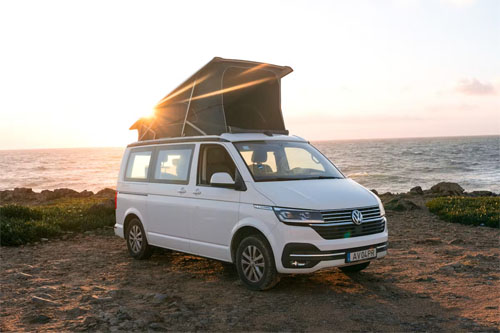
For couples, Avi Bandana highly recommends the Class B - Camper Van. These compact RVs, with an average length of 5.8 meters and comfortably sleeping 2 adults (potentially a child too, with 3.2 average sleeping places in our global fleet), are perfectly suited for navigating the charmingly narrower French village streets and fitting into smaller, often more intimate campsites. Bandana’s global fleet average for Class B campervans, like the "Active Pop Top" or "Combi Van", offers excellent fuel efficiency, typically around 8-11 liters per 100 km depending on the model, making them economical for longer journeys. Their smaller footprint also makes parking in towns like Agen or Annecy much less challenging.
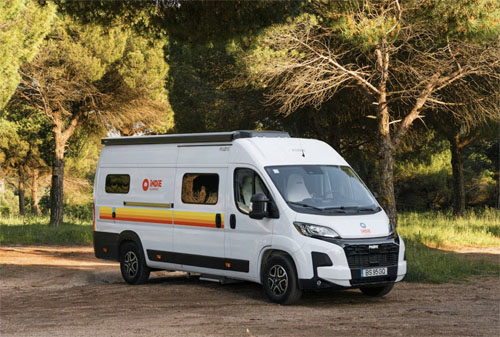
For families, the Class C - Alcove is often the preferred choice for a rental motorhome. Averaging 7.5 meters in length, these motorhomes typically offer 5.8 sleeping places and comfortably accommodate 4-6 adults, making them perfect for families with children. The distinctive alcove design provides an extra bed over the cab, maximizing living space for everyone onboard. Models like the "Euro Deluxe" or "4 Berth Adventurer" offer ample room for families, often featuring spacious dining areas and well-equipped kitchens. Even with their larger size, our Class C motorhomes are designed for comfortable driving, and their average load capacity of 42.4 kg ensures you can bring all your family essentials. To streamline your trip planning, consider Bandana RV's "Rent&Plan" service, which combines your motorhome rental with a ready-made itinerary crafted by travel professionals, offering full access to our trip-planning software and removing common planning headaches.
What is the best way to rent an RV in France?
The best way to rent an RV in France involves booking through reputable international or local rental platforms that prioritize full transparency in pricing and offer comprehensive insurance options, often including invaluable roadside assistance. Start by comparing fleets and dynamic prices online with platforms like Bandana, which partners directly with over 50 leading RV suppliers worldwide including El Monte, Cruise America, Apollo, and Britz. This ensures you find the perfect rental motorhome or campervan for your itinerary and budget. Always ensure your chosen rental includes essential amenities for your trip, such as kitchen equipment, linens, and camping necessities, as these can vary by supplier. For reliable internet access throughout your journey, consider purchasing a local SIM card upon arrival or utilizing portable Wi-Fi hotspots, especially if you plan to rely on GPS apps for navigation. Familiarize yourself with local emergency numbers, such as 112 for all emergencies, and always confirm your rental insurance provides adequate coverage for breakdowns and potential incidents while traveling in France. We handle the details, so you can focus on living the journey, offering personal service from day one until your booking is confirmed.
How much does it cost to rent an RV in France?
The cost to rent an RV in France is dynamic and can vary significantly based on factors such as the RV class, rental duration, season, and how far in advance you book. Typically, prices for smaller campervans can range from €80 to €150 per day, while larger motorhomes might cost €150 to €300+ per day, especially during peak season (July-August). Beyond the base rental fee, a comprehensive budget breakdown should include estimated fuel costs; for instance, a Class B Camper Van like a "V3" has a fuel consumption of 11-13 liters/100 km, while a larger "F4" (Class C) averages 12-14 liters/100 km. You also need to factor in highway tolls, which can add up on longer routes, and various campsite price tiers ranging from free 'aires de service' to luxury holiday parks (€25-€60+ per night for powered sites). Daily expenses for food and drink can range from €30-€70 per person per day, depending on whether you cook most meals in your RV or choose to dine out at traditional French restaurants. Lastly, attraction fees for historical châteaux, museums, and activities typically add another €10-€30 per person per site. Early booking, particularly for peak seasons, can secure better rates and wider availability, with many travelers finding discounts of up to 20-30% when booking 4-6 months ahead. For transparent pricing with no hidden fees or surprises, Bandana compares final prices across 50+ suppliers so you don't have to. You can also track every expense along your planned RVPLAN itinerary to help manage your overall budget effectively.
Do I need a special license to drive an RV in France?
Most standard RVs, specifically motorhomes with a Maximum Authorised Mass (MAM) up to 3,500 kg (3.5 tons), can be driven in France with a regular B category driving license. This is equivalent to a standard car license in many countries, making RV travel accessible for most drivers. For larger RVs exceeding 3,500 kg MAM, generally encompassing some of the bigger Class A Integrated or Class C Alcove units, a C1 license (for vehicles between 3,500 kg and 7,500 kg) or a C license (for vehicles over 7,500 kg) may be required. Drivers from outside the EU/EEA should always ensure they carry an International Driving Permit (IDP) alongside their national license, as it serves as a legal translation and is highly recommended in France, although not always strictly mandatory in all cases. It's always crucial to confirm the specific weight (MAM) of your chosen RV model with the rental company and verify that your current license category allows you to drive it legally before embarking on your adventure. The minimum rental age for RVs in France is 21, and there are no young driver surcharges or vehicle class restrictions for those over this age.
What are the best places to visit in France by RV?
France offers incredibly diverse regions perfect for RV travel, each providing a unique blend of experiences. Top destinations include the picturesque, châteaux-dotted Loire Valley, perfect for history enthusiasts; the sun-drenched Provence and French Riviera, ideal for scenic coastal drives and lavender fields; and the dramatic peaks of the French Alps, offering stunning natural beauty and outdoor activities. For profound cultural immersion, explore the vibrant local markets of the Dordogne region, or sample exquisite regional food and drink in Burgundy's renowned vineyards. If your timing allows, attending local festivals (fêtes) can provide an authentic French experience. Considering seasonal variations, the iconic lavender fields of Provence are best viewed in June-July, while the French Alps are spectacular for hiking in summer and offer excellent skiing opportunities in winter. Autumn provides vibrant foliage and fewer crowds in regions like the Alsace wine route, making it ideal for a relaxed pace and enjoying seasonal culinary delights. Always respect local etiquette when interacting with locals; a simple "Bonjour" to shopkeepers and residents goes a long way, and be mindful of noise levels in quiet villages and campsites, particularly when enjoying an evening meal in your rented campervan.
Can you wild camp in France with an RV?
Wild camping (camping sauvage) in France is generally prohibited or heavily restricted in many areas, particularly along the scenic coastlines, within protected natural parks, and close to major tourist sites. However, nuanced options for free overnight parking do exist. Strictly speaking, setting up camp in remote, undeveloped areas is often illegal, but 'bivouac' – temporary, lightweight overnight stays, typically away from roads and without setting up extensive camp – is sometimes tolerated in certain mountain regions, provided you practice 'leave no trace' principles. The most common and legal alternative for free overnight RV parking in France is utilizing 'aires de service' or 'aires de camping-car.' These are designated parking areas specifically for motorhomes, often providing basic services such as fresh water, waste disposal points, and sometimes even electrical hookups, with varying costs from free to a small fee (e.g., €5-€15). These 'aires' can range from simple parking lots to more developed spots and are easily found using popular RV travel apps like Park4Night or Campercontact, or by looking for clear roadside signage. Always observe local signage carefully, respect private property, avoid blocking access, and consistently practice eco-friendly RVing to maintain positive relations with local communities and support sustainable travel.
What are the rules for driving a motorhome in France?
Driving a rented motorhome in France requires strict adherence to standard French road rules, including driving on the right side of the road, yielding to traffic from the right at unmarked intersections (known as 'priorité à droite'), and diligently observing posted speed limits. Typically, speed limits are 130 km/h on motorways, 80-90 km/h on national roads, and 50 km/h in urban areas, though these can be lower for larger vehicles. Specific challenges for different RV sizes include navigating narrow roads in historic villages and mountainous regions. Larger motorhomes, such as a Class C Alcove (averaging 7.5 meters) or a Class A Integrated, may find these routes particularly challenging. In such cases, smaller campervans (e.g., a Class B Camper Van averaging 5.8 meters, like the "V2L" model) are often more agile and suitable. City access can be restricted for larger vehicles in certain urban centers (ZFE - Zones à Faibles Émissions), necessitating a Crit'Air vignette (emission sticker) which must be ordered in advance to avoid fines. Parking for RVs can also be difficult in popular tourist towns; it's best to utilize designated motorhome parking areas ('aires de camping-car') or larger out-of-town car parks, as street parking may be limited or prohibited for oversized vehicles. When planning ferry travel, particularly to destinations like Corsica or other islands, book well in advance and be aware that specific length and height declarations are required, impacting both pricing and availability. Remember, drive slowly and carefully, and you can drive almost anywhere without issues. No need to stress - just use common sense and pay attention.
Is France good for motorhome travel?
France is an exceptionally good and highly recommended destination for motorhome travel, boasting an extensive and well-maintained network of campsites and 'aires de service' designed specifically for RVers. The country offers incredibly diverse landscapes, from the rolling vineyards of Bordeaux to the dramatic coastline of Brittany and the majestic peaks of the French Alps, complemented by a rich cultural tapestry and excellent infrastructure. France's commitment to sustainability and eco-friendly RVing practices is continually growing, with initiatives encouraging responsible waste disposal, energy conservation, and respect for natural environments at campgrounds and 'aires.' For pet travel, France is generally quite pet-friendly, though specific regulations apply for bringing pets into the country (e.g., microchip, rabies vaccination, EU pet passport), and some campsites or attractions may have restrictions or additional fees for pets. Emergency preparedness is vital for any trip; always have local emergency numbers readily accessible (112 for all emergencies, 15 for SAMU medical, 17 for police, 18 for fire services), understand your rental RV's breakdown procedures, and ensure your motorhome rental insurance provides adequate coverage in France. While not universally advertised, many campsites and attractions are actively improving accessibility for RVers with specific needs, although it is always best to research and contact establishments directly beforehand to confirm facilities.
What are the best campsites in France for RVs?
France offers a vast and impressive array of RV-friendly campsites, catering to every preference, from basic municipal sites providing essential services to luxurious holiday parks boasting extensive amenities. When choosing, look for the 'Camping Qualité' label, which indicates high standards in services, cleanliness, and environmental quality. Popular choices often include sites managed by large chains like Huttopia or Yelloh! Village, which typically offer excellent facilities such as swimming pools, restaurants, and entertainment, along with a range of pitch types suitable for all motorhomes and campervans. Campsite price tiers vary widely; basic municipal sites or 'aires de service' can be free or cost as little as €5-€15 per night, while private campsites typically range from €20-€60 per night, with premium spots in high season potentially exceeding €80. Many campsites are indeed pet-friendly, but it's crucial to confirm their specific policies, any additional fees for pets, and local leash requirements before booking, especially in popular tourist regions like the French Riviera. For a more authentic and often quieter experience, seek out independent farm campsites ('Campings à la Ferme') or smaller, family-run establishments that frequently provide a unique local touch and a serene atmosphere, perfect for relaxing after a day of slow travel. Remember, many national/state parks reserve only 25-30% of spots for advance booking- the rest are first-come-first-serve. You'll find a spot. If not at the first campground, then the next one. Call ahead before driving to confirm availability.
What You Shouldn't Miss
France is brimming with experiences for RV travelers, and some truly stand out. Here are Avi Bandana's top 5 adventures and must-do stops for your RV rental in France:
- Explore the Alsace Wine Route: Drive through charming villages like Riquewihr and Colmar, stopping at local wineries for tastings. This route is particularly stunning in autumn.
- Discover the Verdon Gorge (Gorges du Verdon): Often called Europe's Grand Canyon, this spectacular river canyon in Provence offers breathtaking views, opportunities for hiking, kayaking, and driving scenic roads like the Route des Crêtes in your motorhome.
- Visit the Châteaux of the Loire Valley: Beyond Chenonceau and Chambord, explore lesser-known but equally magnificent châteaux such as Château de Villandry with its exquisite gardens, or Château d'Azay-le-Rideau, an architectural masterpiece.
- Experience the Markets of Provence: Immerse yourself in the vibrant atmosphere of local markets in towns like Aix-en-Provence or L'Isle-sur-la-Sorgue. Sample regional produce, olives, cheeses, and crafts, perfect for stocking your RV kitchen.
- Hike in the French Alps near Chamonix: Take your RV to the heart of the Mont Blanc massif. Whether it's a gentle walk or a challenging hike, the alpine scenery is simply unforgettable, with plenty of campsites and 'aires' to accommodate your campervan.
Looking for expert insights from Avi Bandana? Top 5 Adventures – recommendations from Avi Bandana.
Top Cities for RV Rental in France
France offers numerous convenient cities for picking up your RV rental, serving as excellent starting points for your adventure. These locations provide easy access to diverse regions, ensuring you can tailor your itinerary perfectly.
- Paris: As the capital, Paris is a primary hub for RV rentals, offering access to the north of France, Normandy, and easy connections to the Loire Valley.
- Bordeaux: Located in the southwest, Bordeaux is perfect for exploring the famous wine regions and the scenic Dordogne Valley, as mentioned in our 7-day itinerary.
- Annecy: Nestled in the French Alps, Annecy is an ideal starting point for alpine adventures and journeys into Switzerland or Italy, a key stop in our 14-day extended route.
- Marseille: In the south, Marseille provides excellent access to Provence and the French Riviera, with its beautiful coastlines and historical sites.
- Lyon: Situated in central-east France, Lyon is a gastronomic capital and a great base for exploring the Rhône-Alpes region and Burgundy.
- Agen: For a less congested pickup, Agen offers access to the Lot-et-Garonne region, known for its plum orchards and bastide towns.
- Ajaccio - Corsica: For a unique island RV adventure, Ajaccio, the capital of Corsica, is an excellent choice, offering stunning mountain and coastal drives. There's also an RV rental option from Ajaccio - Corsica Airport for added convenience.
- Angers: Another great Loire Valley option, Angers provides access to numerous châteaux and vineyards, similar to other nearby cities like Alencon or Angoulême.
Wherever you choose to start, remember that Bandana helps you compare prices from over 50 trusted suppliers, including industry leaders like El Monte and Apollo, ensuring you find the best RV rental in France for your trip.
Practical Information for RV Travel in France
Successfully navigating your RV rental through France means being prepared with local insights and practical information. French road rules generally align with European standards: drive on the right-hand side, and seatbelts are mandatory for all passengers. Speed limits are typically 130 km/h (80 mph) on motorways, 80-90 km/h (50-55 mph) on national roads, and 50 km/h (30 mph) in urban areas, though always observe local signage for specific speed limit variations, especially for larger motorhomes. You can drive slowly and carefully, and you can drive almost anywhere without issues. No need to stress - just use common sense and pay attention. Many motorways in France are toll roads ('péages'), and you can pay by cash or credit card, or consider purchasing an electronic toll tag for convenience. Ensure your rented RV has a Crit'Air vignette if you plan to enter any of France's low-emission zones (ZFEs) in larger cities, which must be ordered online in advance. Fuel types commonly available are Diesel (Gazole) and Unleaded (Sans Plomb 95 or 98). Diesel is typically more common and usually cheaper, suitable for most European RVs.
For emergencies, dial 112 for all services (police, ambulance, fire), 15 for SAMU (medical emergencies), 17 for Gendarmerie/Police, and 18 for Fire Services. For connectivity, purchasing a local prepaid SIM card (available from providers like Orange, SFR, Bouygues, Free Mobile) upon arrival offers affordable data for navigation and staying in touch. Many campsites and 'aires de service' also provide Wi-Fi, often for a fee. Currency is the Euro (€). Banks and ATMs are widely available, and credit cards are accepted almost everywhere. When budgeting for your trip, consider that Bandana offers bookings in over 30 currencies with full price transparency and no hidden conversion commissions, making financial planning straightforward. For more detailed insights into RV travel throughout the continent, be sure to consult our comprehensive RV Rental Europe - Complete Guide 2026 for an even broader perspective on your adventure.
Final Thoughts
Embarking on a rented RV adventure in France truly is an unforgettable way to experience this magnificent country. From the sun-drenched vineyards of Bordeaux to the dramatic peaks of the Alps and the charming coastal towns, the freedom of a motorhome or campervan allows you to create a journey that's uniquely yours, filled with spontaneous detours and deep cultural connections. Remember to embrace the spirit of slow travel, allowing yourself the time to truly feel each place you visit, savor the local food, and immerse yourself in the incredible scenery.
Whether you choose a week-long whirlwind through the Loire Valley or an extended journey across multiple regions, meticulous planning and selecting the right RV rental are key to a seamless experience. We're here to support you before, during, and after your booking, ensuring you have all the information and assistance you need. So, what are you waiting for? Your French RV adventure awaits!
Get inspired for your next trip! Discover top destinations and planning tips, all in one place. Compare RV Rental Prices for France now and start planning your dream itinerary.