In This Guide
- Best Europe RV Itinerary for rv rental — Overview
- 7-Day Classic Route in Europe
- 14-Day Extended Journey in Europe
- Recommended RVPlan Trip for Europe
- Must-See Stops Along the Way (Avi Bandana Picks)
- Daily Driving Distances & Drive Times in Europe
- Best RV Class for This Itinerary — Couple & Family Picks
- What is the 3-3-3 rule for RV travel?
- What are the best camper road trips in Europe?
- Is Europe RV friendly?
- What is the 444 rule for RV?
- What is the 333 rule for campervan?
- What countries are best for RV travel?
- Can you sleep anywhere in a campervan in Europe?
- What are some good RV trips in Europe?
- What is a must see in Europe?
- What is the most beautiful road trip in Europe?
Best Europe RV Itinerary for rv rental — Overview
Europe's diverse landscapes are perfectly explored from the comfort and flexibility of a rented RV, offering the freedom to chart your own course. Recommended trip durations range from a minimum of 7 days to several weeks, allowing for deep cultural immersion and exploration of hidden gems and major attractions across various European countries. For live availability and current prices, start with our RV Rental Europe - Complete Guide 2024 guide. Spring (April-May) and autumn (September-October) are often considered the best seasons for RV travel in Europe due to milder weather and fewer crowds, though summer offers vibrant festivals and peak experiences. With a rented motorhome or campervan, you have a mobile home base, making it easy to adapt your plans as you go. Imagine waking up to alpine views one morning and coastal breezes the next, all without packing and unpacking.7-Day Classic Route in Europe
A classic 7-day RV itinerary for Europe often focuses on a concentrated region, such as the picturesque Bavarian Alps and Austrian Lakes District. This route is ideal for a week-long trip, starting and ending in Munich, Germany.- Day 1: Munich, Germany → Füssen, Germany (approx. 120 km / 75 miles). Explore the fairytale Neuschwanstein Castle and Hohenschwangau Castle. Sleep at a local campsite or Stellplatz near Füssen.
- Day 2: Füssen, Germany → Innsbruck, Austria (approx. 100 km / 60 miles). Drive through scenic alpine roads. Discover Innsbruck's charming Old Town, the iconic Golden Roof, and the historic Bergisel Ski Jump. Overnight at a campsite in or near Innsbruck.
- Day 3: Innsbruck, Austria → Zell am See, Austria (approx. 140 km / 85 miles). Enjoy the breathtaking drive through the Austrian Alps, leading to the stunning Lake Zell and the Schmittenhöhe mountain. Find a lakeside campsite at Zell am See for the night.
- Day 4: Zell am See, Austria → Hallstatt, Austria (approx. 90 km / 55 miles). Journey to the incredibly picturesque Hallstatt village, a UNESCO World Heritage site. Don't miss the Skywalk Hallstatt for panoramic views. Designated RV parking or campsites are available in Hallstatt or nearby Gosau.
- Day 5: Hallstatt, Austria → Salzburg, Austria (approx. 70 km / 45 miles). Immerse yourself in the birthplace of Mozart, visit the imposing Hohensalzburg Fortress, and stroll through the beautiful Mirabell Gardens. Settle into a campsite on the outskirts of Salzburg.
- Day 6: Salzburg, Austria → Munich, Germany (approx. 140 km / 85 miles). Head back to Munich, allowing time to explore city sights like the bustling Marienplatz or the expansive Englischer Garten. A campsite near Munich provides a convenient base.
- Day 7: Departure from Munich. Enjoy a final German breakfast before returning your rented motorhome.
14-Day Extended Journey in Europe
An extended 14-day RV journey across Europe allows for a more in-depth exploration of diverse regions, such as the French Riviera, Cinque Terre, Tuscany, and the Dolomites. This route offers a captivating blend of coastal beauty, historical cities, and stunning alpine scenery.- Days 1-3: French Riviera (Nice, Cannes, Eze, Monaco). Focus on coastal beauty, glamorous towns like Nice and Cannes, and medieval villages such as Eze. Enjoy short drives between towns, allowing ample time for exploration. Sleep at campsites along the coast or designated Aires (RV parks).
- Days 4-6: Cinque Terre, Italy. Journey from the French Riviera to the La Spezia area (approximately 300 km / 185 miles, spread over two days with a stopover). These colorful cliffside villages are best explored via hiking trails, trains, or ferries, as RV access within the villages is limited; utilize parking outside. Enjoy Ligurian cuisine and fresh seafood. RV-friendly recipes playlist offers great meal ideas for your galley kitchen. Overnight at campsites near La Spezia or Levanto.
- Days 7-9: Tuscany (Florence, Siena, Chianti Wine Region). Drive from the Cinque Terre region to Florence (approximately 150 km / 90 miles). Immerse yourself in Renaissance art in Florence and Siena, and savor culinary delights in the rolling vineyards of the Chianti Wine Region. Keep daily drives under 150 km to fully appreciate the scenic routes. Consider agriturismo RV stops or campsites outside city centers.
- Days 10-12: Lake Garda & Dolomites, Italy. From Tuscany, head towards Lake Garda (approximately 250 km / 155 miles, spread over two days) and then into the majestic Dolomites. These regions offer stunning Alpine scenery, crystal-clear lakes, and abundant outdoor activities like hiking. Enjoy scenic drives through mountain passes, maintaining a relaxed pace of around 150 km per day. Stay at lakefront campsites or mountain Stellplätze.
- Days 13-14: Return Journey / Departure. Plan a scenic route back to your departure city, or a direct drive to an RV return point, reflecting on the incredible journey and enjoying a last European meal.
Recommended RVPlan Trip for Europe
For an extraordinary RV adventure in Europe, Avi Bandana, our founder, highly recommends the "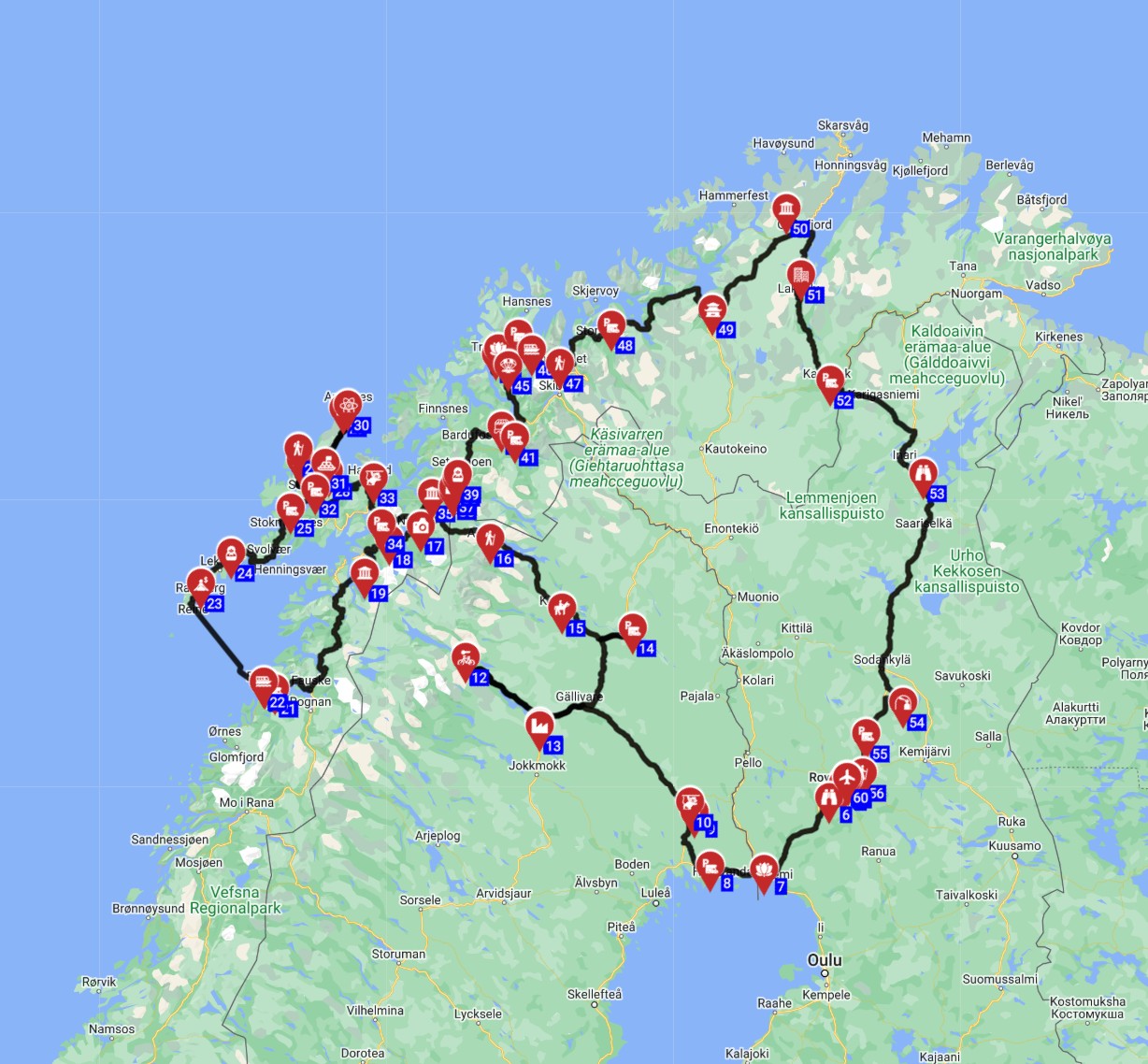
Rovaniemi Roundtrip - End of Europe scenic roads
Explore this route
Another excellent option is the "Toulouse Round trip - European Charms & Family Delights," a 15-day, 2088.7 km journey through France starting and ending in Toulouse. This route is designed for families, featuring 1 amusement park, 1 aquarium, 2 family activities, and 1 water park, along with 3 local industry visits and 4 traditional visits.
Explore this route
For those drawn to winter magic and cultural festivities, the "

Vienna Roundtrip - The epic Eastern European Christmas markets
Explore this route
Must-See Stops Along the Way (Avi Bandana Picks)
Looking for expert insights from Avi Bandana? Top 5 Adventures — recommendations from Avi Bandana:- Porjus Hydroelectric Power Station Museum, Sweden: Exploring local industry offers a unique glimpse into the engineering and economic backbone of a region, providing a fascinating educational stop on your journey towards Norway.
- Traditional Markets in Norway (e.g., Narvik or Tromsø): Visiting a traditional market allows for direct interaction with local vendors, sampling regional produce, and experiencing the vibrant daily life and culinary traditions of the Nordic communities.
- Fresh Seafood Eateries in Lofoten, Norway: Indulging in a traditional restaurant, perhaps a cozy establishment serving fresh seafood in Lofoten or hearty Lapland cuisine, is essential for truly savoring the local flavors and understanding regional gastronomy.
- Bardu Bygdetun, Norway: A traditional visit to sites like Bardu Bygdetun provides an immersive journey into historical rural life, showcasing heritage buildings and offering insights into the cultural past of Northern European communities.
- Eiffel Tower, Paris, France: One of the world's most iconic landmarks, offering breathtaking views of the city and a truly unforgettable experience.
- Colosseum, Rome, Italy: Step back in time at this ancient amphitheater, a testament to Roman engineering and history.
Daily Driving Distances & Drive Times in Europe
Avi Bandana, the founder of Bandana Caravan, recommends a maximum of 100 miles or 150 km per day on average when RVing in Europe to ensure a relaxed and immersive travel experience. This slow travel philosophy emphasizes taking your time to feel the place, connect to the culture, the food, and the scenery, rather than rushing between destinations. For instance, the drive from Florence to Siena in Italy is roughly 70 km (43 miles), taking about 1 hour of driving. A route like Munich (Germany) to Salzburg (Austria) covers approximately 140 km (87 miles) and typically takes 1.5 to 2 hours, illustrating comfortable daily segments. Prioritizing shorter drives allows more time for exploration, spontaneous discoveries, and truly appreciating the journey.Best RV Class for This Itinerary — Couple & Family Picks
Choosing the right motorhome or campervan for your European adventure depends greatly on your travel group size and preferences. Bandana Caravan is a true RV specialist, not a travel agency side department, and we're here to help you find the perfect fit.For Couples: Class B - Camper Van
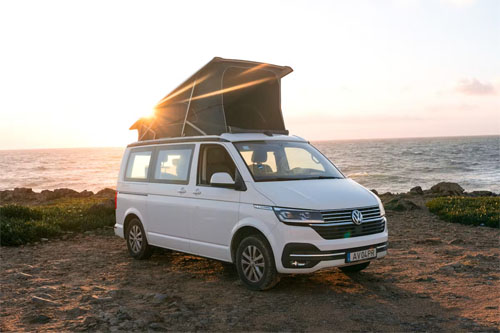
The Class B Camper Van is ideal for couples traveling in Europe due to its compact size, averaging around 5.8 meters (19 feet) in length. These vehicles, often featuring 3.2 sleeping places and 2.7 adult capacity, are highly maneuverable on narrow European roads and significantly easier to park in towns and cities. Many campervans consume approximately 8-10 liters of fuel per 100 km, offering both agility and efficiency for two travelers. You can compare campervan rental options in Europe easily with us.For Families: Class C - Alcove
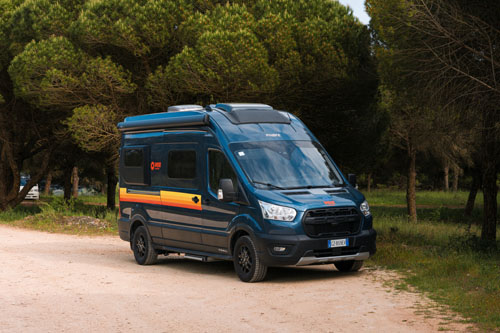
The Class C Alcove motorhome is an excellent choice for families, providing ample living and sleeping space. Our fleet typically features Alcove RVs averaging 7.5 meters (24.6 feet) in length, with an average of 5.8 sleeping places and 4.4 adult capacity, comfortably accommodating families with kids. While larger than campervans, they offer a comfortable home on wheels and typically consume around 10-12 liters per 100 km, making them a practical and spacious option for extended family adventures.Simplify Your Trip with Rent&Plan
Rent-motorhome offers a unique 'Rent&Plan' service, combining your RV rental with a ready-made itinerary crafted by travel professionals. This service provides full access to comprehensive trip-planning software, eliminating the headache of detailed route planning and allowing you to focus solely on the excitement of your European adventure. We believe in full transparency: what you see is what you pay, with no surprise fees at pickup, which is why we provide detailed breakdowns of all costs for planned routes on rvplan.net.What is the 3-3-3 rule for RV travel?
The 3-3-3 rule for RV travel is a widely adopted guideline that advises travelers to drive no more than 3 hours, cover no more than 300 miles (approximately 480 km), and arrive at their destination by 3 PM. In Europe, where distances between attractions are often shorter and roads can be narrower, it is generally recommended to adapt the mileage component, focusing more on the '3 hours driving' and 'arrive by 3 PM' aspects. This rule helps prevent driver fatigue, allows ample time to set up camp, explore the surroundings before dark, and troubleshoot any potential issues, enhancing safety and enjoyment. The rule is particularly useful for new RVers or those navigating unfamiliar European road conditions, diverse toll systems (vignettes vs. gates), and potentially limited parking in historic city centers.What are the best camper road trips in Europe?
Europe offers an incredible variety of camper road trips, with popular choices including the stunning coastal routes of the Amalfi Coast in Italy, the majestic Norwegian Fjords, and the historical charm of the Romantic Road in Germany. Other highly-rated routes encompass the dramatic landscapes of the Scottish Highlands, the picturesque vineyards and villages of France's Alsace Wine Route, and the rugged beauty of the Dolomites in Italy. These trips not only provide breathtaking scenery but also offer deep cultural and experiential opportunities, from sampling local wines to engaging with distinct village traditions and overcoming language barriers with basic phrases or translation apps. Many of these routes are supported by extensive networks of campsites, Aires in France, and Stellplätze in Germany, making RV logistics like waste disposal and water refills manageable. If you're considering a "Cheap RV Rental in Europe - Budget Guide 2026", these regions often have budget-friendly options too.Is Europe RV friendly?
Yes, Europe is generally very RV friendly, offering excellent infrastructure and diverse landscapes, but it requires understanding specific local nuances regarding vehicle size, road rules, and logistics. Many European countries boast extensive networks of campsites, designated RV parking areas (Aires in France, Stellplätze in Germany), and even unique local opportunities like farm stays or vineyard stops, addressing waste disposal protocols (grey/black water, chemical toilets) and water refill points. Navigating diverse toll systems (vignettes in some countries, pay-as-you-go gates in others), finding LPG/propane availability and compatibility, and managing parking challenges, especially in historical city centers, are key logistical considerations. Understanding varied driving laws, low emission zones (LEZ) which can be navigated using specific apps, and having necessary documents like an International Driving Permit (IDP) are crucial for a smooth journey, alongside ensuring proper insurance coverage including top-level deductible reimbursement for peace of mind. Drive slowly and carefully, and you can drive almost anywhere without issues. No need to stress - just use common sense and pay attention.What is the 444 rule for RV?
The 4-4-4 rule for RV travel is a variant of the 3-3-3 rule, suggesting that travelers aim to drive no more than 4 hours, cover no more than 400 miles (approximately 640 km), and arrive at their destination by 4 PM. This rule allows for slightly longer travel days compared to the 3-3-3 rule, potentially suitable for more experienced RVers or those covering longer distances, though its 400-mile component is often impractical for typical European RV trips due to closer attractions and slower road speeds. Similar to the 3-3-3 rule, the core intent is to ensure sufficient time for safe travel, leisurely setup at the campsite, and enjoying the destination without rushing, especially important given varied road conditions from autobahns to narrow village streets. When RVing in Europe, emphasizing the '4 hours driving' and 'arrive by 4 PM' is more pragmatic than the mileage component, allowing for flexible exploration while minimizing fatigue.What is the 333 rule for campervan?
The 3-3-3 rule applies equally to campervan travel, advising drivers to limit their daily journey to 3 hours of driving, ideally covering no more than 300 miles (though this mileage is significantly reduced for European roads), and arriving at their overnight spot by 3 PM. This principle is particularly beneficial for campervan users who often favor a slower pace of travel and seek out scenic, less crowded spots, ensuring they have ample daylight to secure a suitable legal parking or camping spot. Adhering to this rule helps to prevent driver burnout, allows time for navigating specific European campervan challenges like finding internet/SIM card solutions, smaller parking spaces in villages, and avoiding peak traffic times. For campervans, which are generally more compact, the 3-3-3 rule promotes an agile and relaxed exploration style, enabling authentic engagement with local cultures through spontaneous stops at local markets or traditional eateries. Compare "RV Rental in Europe - Prices and Best Deals 2026" for different campervan options.What countries are best for RV travel?
Several European countries stand out as exceptional destinations for RV travel, each offering unique experiences and infrastructure. Germany is highly recommended for its extensive network of Stellplätze (dedicated RV parking spots), well-maintained roads, and easy access to iconic routes like the Romantic Road and the Bavarian Alps. France boasts thousands of Aires de Service (service areas for RVs), offering convenient overnight stops, making it ideal for exploring varied landscapes from the glamorous Côte d'Azur to the charming Loire Valley. Norway stands out for its breathtaking fjords, dramatic coastal routes, and remote natural beauty, though wild camping regulations are stricter than in some other Nordic countries. Italy offers a blend of stunning coastlines, historical cities, and delicious cuisine, with a growing number of designated RV areas, perfect for cultural and culinary immersion. Portugal and Spain are excellent choices for warmer climates, beautiful beaches, and vibrant culture, with increasingly good RV infrastructure, making them top choices for shoulder season travel. You can also look into "One-Way RV Rental in Europe - Price Guide 2026" if you plan to explore multiple countries.Can you sleep anywhere in a campervan in Europe?
No, you generally cannot sleep anywhere in a campervan in Europe; 'wild camping' laws vary significantly by country and are often restricted or illegal in many popular tourist regions and national parks. While some Nordic countries like Norway, Sweden, and Finland have 'Allemansrätten' (Freedom to Roam) allowing wild camping for a night or two with certain rules, countries like Germany, France, Italy, and Spain have stricter regulations. It is crucial to utilize authorized overnight parking spots, such as Aires de Service in France, Stellplätze in Germany and Austria, or official campsites, which provide necessary amenities like waste disposal points and fresh water. Always check local regulations specific to the area you are visiting, as fines for illegal wild camping can be substantial, and respecting private property and environmental guidelines is paramount for responsible RV travel.What are some good RV trips in Europe?
Beyond specific itineraries, good RV trips in Europe often fall into thematic categories, offering diverse experiences for every traveler. Alpine Adventures through Switzerland, Austria, and the Dolomites provide stunning mountain passes, pristine lakes, and endless hiking opportunities. Coastal Drives along the Adriatic Sea, the Atlantic coast of Portugal, or the Mediterranean shores of France and Italy offer sun-drenched beaches, charming seaside towns, and fresh local cuisine. Historical and Cultural Tours can span from exploring the majestic châteaux of the Loire Valley in France to uncovering ancient Roman sites across Italy, or wandering through the medieval towns of Germany's Romantic Road. For a more unique experience, consider the Arctic Wilderness of Finland and Norway, as exemplified by the Rovaniemi Roundtrip itinerary, offering a chance to see the Northern Lights and diverse wildlife. Wine and Gastronomy Routes through regions like Bordeaux, Tuscany, or the Mosel Valley allow for culinary immersion, often with unique camping opportunities at vineyards or local farm stays.What is a must see in Europe?
Europe is brimming with must-see attractions, ranging from iconic landmarks like the Eiffel Tower in Paris and the Colosseum in Rome to natural wonders such as the Norwegian Fjords and the Swiss Alps. An RV rental uniquely allows access to both world-famous sights and a multitude of hidden gems, like quaint village markets, ancient castles nestled off the main routes, or serene national parks. Beyond the well-known destinations, Avi Bandana's picks often include immersing in local culture through traditional markets, family-run restaurants, and unique local industry tours, as highlighted in the "Must-See Stops Along the Way" section. Cultural experiences like visiting a local festival, exploring a traditional craft workshop, or simply enjoying a coffee in a historic town square also constitute essential 'must-sees' that RV travel facilitates. For travelers interested in premium experiences, our "Luxury RV Rental in Europe - Premium Prices 2026" guide provides excellent options.What is the most beautiful road trip in Europe?
While beauty is subjective, several European road trips are consistently lauded for their unparalleled scenic splendor. Norway's Atlantic Road and Trollstigen are famed for their dramatic coastal and mountain vistas, featuring incredible engineering marvels and breathtaking natural beauty. The Amalfi Coast Drive in Italy captivates with its cliffside towns, turquoise waters, and vibrant Mediterranean charm, though it requires careful navigation in a larger RV due to narrow, winding roads. For those seeking rolling hills and historical towns, Germany's Romantic Road offers a journey through picturesque medieval villages and castles, particularly stunning in spring and autumn. The Scottish Highlands provide a raw, untamed beauty with expansive lochs, dramatic glens, and ancient castles, making for an epic and atmospheric RV journey. Ultimately, the 'most beautiful' road trip often depends on personal preference, whether you seek dramatic mountains, serene coastlines, or charming cultural landscapes, all of which Europe offers in abundance for RV travelers.🎬 Video coming soon
Final Thoughts
Embarking on an RV adventure through Europe is more than just a trip; it's an opportunity to create unforgettable memories, explore diverse cultures, and connect with stunning natural beauty at your own pace. With Bandana Caravan, you have a partner dedicated to making your journey as seamless and enjoyable as possible. Our commitment to transparency, expert support, and a wide selection of quality motorhomes and campervans means you can set off with confidence. Whether you dream of a week-long immersion in the Austrian Alps or an extended exploration of the Italian coastline, Europe offers endless possibilities for RV travelers. Embrace the freedom of the open road, the joy of discovering charming villages, and the flexibility to truly experience each destination. Your European RV itinerary is waiting to be written, and we're here to help you get started. Discover top destinations, planning tips, all in one place! Plan a trip itinerary in advance with minimal effort and maximum enjoyment.On the routes offered through RV PLANET routes, you can itemize and track every expense along the way for easy budgeting.