In This Guide
- Best Central South US RV Itinerary for rv rental — Overview
- 7-Day Classic Route in Central South US
- 14-Day Extended Journey in Central South US
- Recommended RVPlan Trip for Central South US
- Must-See Stops Along the Way (Avi Bandana Picks)
- Daily Driving Distances & Drive Times in Central South US
- Best RV Class for This Itinerary — Couple & Family Picks
- What is the 3-3-3 rule for RV driving?
- What is the best RV road trip in the USA?
- What is the 4-4-4 rule for RV travel?
- Can Google Maps do RV routes?
- What state is most RV friendly?
- What is the best RV route planner?
- What are the best places to visit with an RV in the United States?
- What are the most scenic RV campgrounds in America?
- Top Cities for RV Rental in Central South US
- Practical Information for RV Travel in Central South US
- Why Book with Bandana Caravan
- Final Thoughts
- Frequently Asked Questions
Best Central South US RV Itinerary for rv rental — Overview
An RV journey through the Central South US offers a unique opportunity to immerse yourself in its rich cultural tapestry, historical landmarks, and distinct culinary traditions. This guide outlines multi-day itineraries, including a minimum 7-day classic route and an extended 14-day adventure, designed for slow travel enthusiasts who want to truly feel the spirit of the region. We at Bandana Caravan, with over 23 years of experience helping tens of thousands of travelers explore the world by RV, understand the desire for authentic experiences. Optimal travel seasons are typically spring (March-May) and fall (September-November) to avoid high humidity and intense summer heat, providing pleasant temperatures for outdoor activities and minimizing concerns during hurricane season. For live availability and current prices, start with our RV Rental Central South US - Complete Guide 2026 guide. We are committed to full transparency, ensuring no hidden fees or surprises throughout your booking process, so what you see is what you pay. Expect total driving distances tailored to leisurely travel, emphasizing immersion over rapid transit, typically keeping daily drives under 100 miles (150 km) to truly connect with the culture, food, and scenery.7-Day Classic Route in Central South US
A week-long RV adventure in the Central South US offers a taste of its rich heritage and vibrant culture, focusing on blues, history, and Southern charm. This itinerary emphasizes slow travel, ensuring you have ample time to explore each destination deeply. You can find excellent options for your journey by checking out "Weekly RV Rental in Central South US - Pricing 2026".- Day 1: Memphis, TN (Explore Beale Street's music, visit Graceland, and reflect at the National Civil Rights Museum). Sleep: Memphis area RV park.
- Day 2: Memphis, TN → Clarksdale, MS (Approx. 70 miles / 110 km). Highlight: Immerse yourself in the Delta Blues Museum and stand at the historic Crossroads. Sleep: Local campground near Clarksdale.
- Day 3: Clarksdale, MS → Vicksburg, MS (Approx. 100 miles / 160 km). Highlight: Delve into Civil War history at the Vicksburg National Military Park. Sleep: Vicksburg area RV park.
- Day 4: Vicksburg, MS → Natchez, MS (Approx. 70 miles / 110 km). Highlight: Tour stunning historic antebellum homes like Longwood or Rosalie. Sleep: Natchez RV park with river views.
- Day 5: Natchez, MS → Baton Rouge, LA (Approx. 90 miles / 145 km). Highlight: Explore the Old State Capitol and embark on an unforgettable swamp tour. Sleep: Baton Rouge area campground.
- Day 6: Baton Rouge, LA → Lafayette, LA (Approx. 60 miles / 95 km). Highlight: Immerse yourself in Cajun culture, visit Acadian Village, and enjoy live Zydeco music. Sleep: Lafayette campground.
- Day 7: Lafayette, LA (Savor local Cajun cuisine, explore Vermilionville Living History Museum, or take another bayou tour). For culinary inspiration, check our RV-friendly recipes playlist. Sleep: Lafayette campground.
14-Day Extended Journey in Central South US
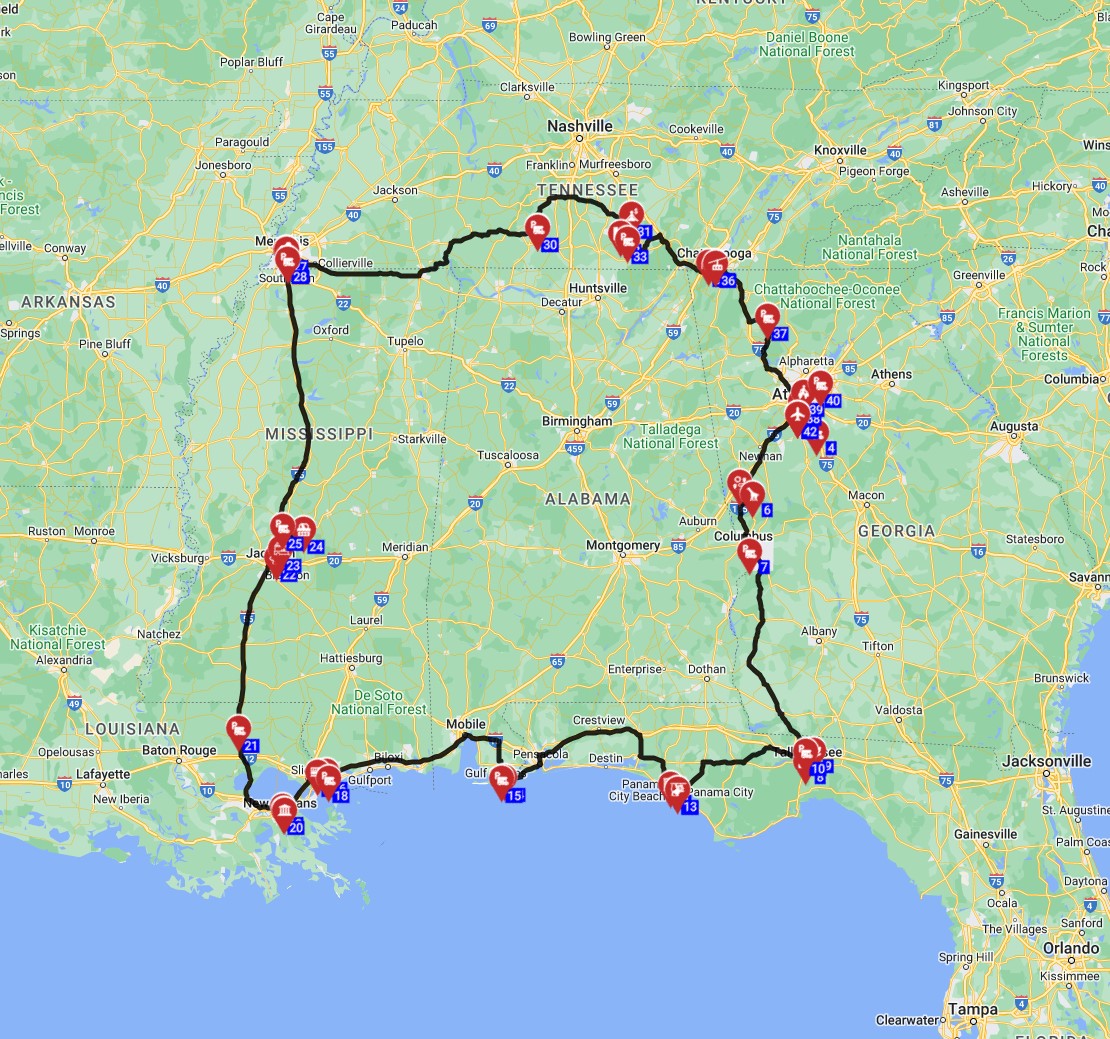
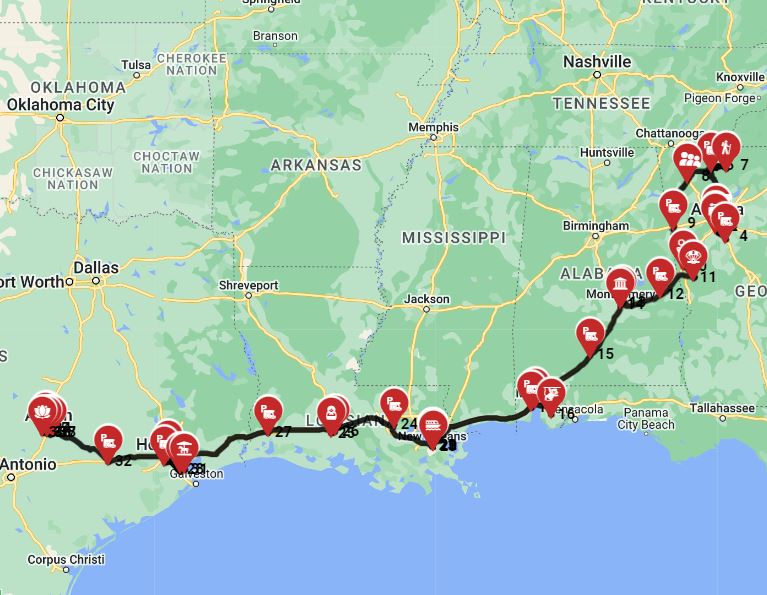
For those with more time, a two-week RV adventure allows for a deeper dive into the Central South's diverse landscapes and narratives, connecting iconic cities with charming small towns. Planning an extended trip like this is easier than you might think with the right tools.- Days 1-2: Nashville, TN (Immerse yourself in 'Music City' – visit the Country Music Hall of Fame, Ryman Auditorium, and experience the lively Honky Tonk Highway). Sleep: Nashville RV resort.
- Day 3: Nashville, TN → Florence, AL (Approx. 80 miles / 130 km). Highlight: Explore the 'Shoals' area's rich music history at Muscle Shoals Sound Studio and FAME Studios. Sleep: Florence area campground.
- Day 4: Florence, AL → Birmingham, AL (Approx. 90 miles / 145 km). Highlight: Discover the impactful Civil Rights District, including the 16th Street Baptist Church and the Civil Rights Institute. Sleep: Birmingham RV park.
- Day 5: Birmingham, AL → Montgomery, AL (Approx. 90 miles / 145 km). Highlight: Visit the Rosa Parks Museum, the Civil Rights Memorial, and the State Capitol. Sleep: Montgomery campground.
- Day 6: Montgomery, AL → Mobile, AL (Approx. 100 miles / 160 km). Highlight: Explore historic Mobile and visit the impressive USS Alabama Battleship Memorial Park. Sleep: Mobile area RV park.
- Day 7: Mobile, AL → Gulfport/Biloxi, MS (Approx. 60 miles / 95 km). Highlight: Enjoy the Mississippi Gulf Coast beaches, casinos, and fresh seafood. Sleep: Gulf Coast RV resort.
- Day 8: Gulfport/Biloxi, MS → New Orleans, LA (Approx. 90 miles / 145 km). Highlight: Begin your exploration of the iconic French Quarter with its unique architecture and vibrant street life. Sleep: New Orleans area RV park.
- Days 9-10: New Orleans, LA (Dedicate full days to exploring the French Quarter, Garden District, taking a streetcar ride, and enjoying world-renowned Creole and Cajun cuisine and live jazz). Sleep: New Orleans area RV park.
- Day 11: New Orleans, LA → Baton Rouge, LA (Approx. 80 miles / 130 km). Highlight: Visit the LSU Rural Life Museum or take a scenic swamp tour to experience Louisiana's unique ecosystems. Sleep: Baton Rouge area campground.
- Day 12: Baton Rouge, LA → Natchez, MS (Approx. 90 miles / 145 km). Highlight: Experience the charming historic district of Natchez and its elegant antebellum homes. Sleep: Natchez RV park.
- Day 13: Natchez, MS → Vicksburg, MS (Approx. 70 miles / 110 km). Highlight: Delve deeper into Civil War history at the Vicksburg National Military Park. Sleep: Vicksburg area RV park.
- Day 14: Vicksburg, MS → Jackson, MS (Approx. 45 miles / 70 km). Highlight: Visit the Mississippi Civil Rights Museum and the State Capitol, then prepare for departure or extend your stay. Sleep: Jackson area RV park.
Recommended RVPlan Trip for Central South US
While a specific pre-designed RVPlan trip for the Central South US is not available at this moment, you can easily create your custom itinerary using our comprehensive RV trip planning tools at rvplan.net. Our sister company, RV PLANET (rvplan.net), offers over 1,300 pre-planned routes across 5 continents, demonstrating our deep expertise in RV travel planning. The platform allows you to map out routes, discover campgrounds, and integrate unique points of interest specific to your journey through states like Louisiana, Mississippi, Alabama, and Tennessee. Plus, with RV PLANET routes, you can itemize and track every expense along the way for easy budgeting of your ancillary trip costs. You can also enjoy a 25% planning discount when you use rvplan.net for your detailed route planning. Explore the diverse options available at Bandana RV to build an RV adventure that perfectly matches your preferences for the Central South.Must-See Stops Along the Way (Avi Bandana Picks)
Looking for expert insights from Avi Bandana? Here are his top 5 adventures and recommendations for your Central South US RV rental trip:- Music Heritage: Avi Bandana recommends visiting the Blues Trail markers in the Mississippi Delta (e.g., Clarksdale, MS) and the legendary music studios in Muscle Shoals, AL, beyond just the major cities. These smaller, authentic locations truly capture the essence of American music.
- Civil Rights History: Prioritize stops at the National Civil Rights Museum in Memphis, TN, the 16th Street Baptist Church in Birmingham, AL, and the Rosa Parks Museum in Montgomery, AL, for powerful, in-depth learning experiences that resonate deeply.
- Culinary Delights: Don't miss out on local BBQ joints in Memphis, TN, or Birmingham, AL; savor authentic Cajun and Creole cuisine in Lafayette or New Orleans, LA, especially at smaller, family-run eateries. It’s an adventure for your taste buds!
- Natural Wonders: Explore the unique bayou ecosystems with local guided tours in Louisiana (e.g., from Houma or near Baton Rouge) to truly experience the region's distinctive wildlife and landscapes, offering a hidden gem experience away from the crowds.
- Historic Parkway Charm: Drive the Natchez Trace Parkway, a 444-mile scenic route that connects Natchez, MS, to Nashville, TN. It's an incredible stretch of road specifically designed for leisure, with historical markers and natural beauty at every turn, offering a tranquil RV experience.
Daily Driving Distances & Drive Times in Central South US
To truly savor your journey and avoid rushing, Avi Bandana recommends a maximum of 100 miles or 150 km per day on average when RVing, especially in the Central South US. This slower pace allows ample time to navigate unique regional challenges like historic town roads or unpaved rural paths, manage varying cellular connectivity, and enjoy local wildlife encounters, including spotting alligators in bayou areas. For example, driving from Memphis, TN, to Clarksdale, MS (approx. 70 miles / 110 km) typically takes around 1.5 to 2 hours, leaving much of the day for exploration and relaxation. Similarly, the journey from New Orleans, LA, to Baton Rouge, LA (approx. 80 miles / 130 km) is usually a 1.5 to 2.5-hour drive, depending on traffic and route, perfect for a relaxed day. This approach also helps manage the region's characteristic humidity by allowing earlier arrival at campgrounds for setup and provides flexibility during potentially challenging weather conditions.Best RV Class for This Itinerary — Couple & Family Picks
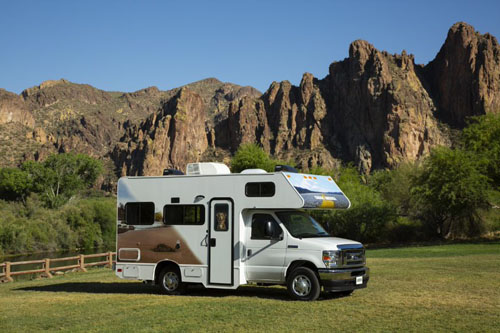
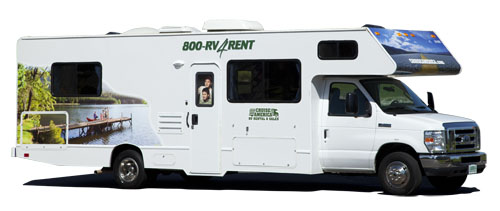
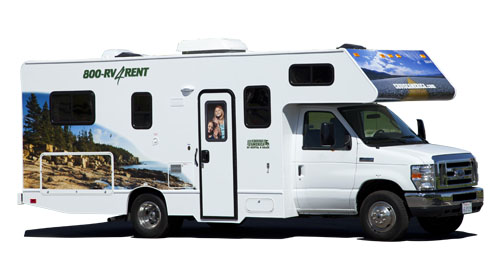
Choosing the right motorhome for your adventure in Central South US is key to a comfortable and memorable trip. For couples exploring the unique culture of the region, Avi Bandana recommends a Class B - Camper Van due to its compact size, ease of maneuverability through historic towns and rural roads, and better fuel efficiency. Bandana's fleet typically features Class B Camper Vans with an average length of 5.8 meters and sleeping places for 3.2, comfortably accommodating an average of 2.7 adults, making it ideal for intimate exploration and nimble navigation in the Central South US. These smaller units are often equipped with front air conditioning, a shower, and a toilet, offering all the essentials. For families, Avi Bandana suggests a Class C - Alcove RV, which offers more living space and sleeping capacity, making it comfortable for longer trips with children. Bandana's global fleet averages for Class C Alcove RVs show an average length of 7.5 meters with sleeping places for 5.8, perfectly suited for an average of 4.4 adults, providing ample room for family activities and managing gear while touring the Central South. Many Class C options include features like a gas stove with 3 burners, a large refrigerator, and even a microwave, ensuring you can prepare delicious meals on the go. To streamline your adventure, remember Bandana RV's 'Rent&Plan' service, which combines RV rental with a ready-made itinerary curated by travel experts, offering full access to trip-planning software and removing the headache of initial planning. We also offer top-level deductible reimbursement, so you can travel with extra peace of mind, knowing you're covered. You can find options perfect for your family by looking at "Family RV Rental in Central South US - Pricing Guide 2026".What is the 3-3-3 rule for RV driving?
The 3-3-3 rule for RV driving is a popular guideline recommending that RVers drive no more than 300 miles a day, arrive at their campsite by 3 PM, and stay for at least 3 nights. This rule promotes a more relaxed and safer travel experience, preventing driver fatigue and allowing ample time for campsite setup and local exploration. Adhering to the 3-3-3 rule helps minimize stress, especially when navigating unfamiliar roads or dealing with unexpected RV-specific challenges in diverse regions like the Central South US. It encourages deeper immersion into destinations, allowing travelers to truly experience the culture, history, and culinary delights, rather than simply passing through.What is the best RV road trip in the USA?
While subjective, the best RV road trip in the USA often depends on personal interests, with iconic choices ranging from breathtaking National Parks tours to scenic coastal drives, or culturally rich journeys through the Central South US. For those seeking a blend of music history, civil rights landmarks, unique bayou landscapes, and unparalleled culinary experiences, a Central South US RV road trip offers a distinct and deeply immersive adventure. Unlike generic national park routes, the Central South provides a rich narrative through its specific music trails (like the Mississippi Blues Trail), significant historical sites, and regional cuisine (Cajun, Creole, Southern BBQ). When considering a broader US trip, our "RV Rental USA - Complete Guide 2026" offers a great starting point for inspiration. Remember to consider seasonal guidance for this region, as spring and fall offer ideal weather for exploring, minimizing the challenges of summer humidity or potential hurricane season issues.What is the 4-4-4 rule for RV travel?
The 4-4-4 rule for RV travel is a variation of the 3-3-3 rule, suggesting that travelers drive no more than 400 miles a day, aim to stop driving by 4 PM, and ideally stay at least 4 nights at a destination. This rule is often adopted by RVers who prefer to cover slightly more ground daily while still prioritizing safe driving practices and allowing sufficient time for setting up camp and relaxing. While allowing for longer drives than the 3-3-3 rule, the 4-4-4 approach still emphasizes the importance of avoiding nighttime driving and allocating time for enjoying the chosen stop. For the Central South US, which features a mix of rural roads and vibrant cities, managing daily distances wisely helps mitigate potential challenges like navigating historic downtowns or unexpected road conditions.Can Google Maps do RV routes?
Google Maps provides general navigation, but it does not natively offer specialized RV routing that accounts for critical factors like vehicle dimensions (height, weight, length), propane restrictions, or specific road conditions unsuitable for large vehicles. Relying solely on Google Maps for RV routes can lead to hazardous situations, such as encountering low bridges, weight-restricted roads, or routes through residential areas unsuitable for large RVs. For safe and efficient RV travel, especially in areas with varied infrastructure like the Central South US, it is highly recommended to use dedicated RV GPS devices or specialized RV planning apps such as RV LIFE Trip Wizard or our own rvplan.net. These specialized tools consider RV-specific constraints, ensuring routes are safe and compliant, helping avoid costly detours or dangerous situations.What state is most RV friendly?
The most RV-friendly state is subjective, but popular contenders like Florida, Arizona, and California are often cited for their abundant state parks, diverse landscapes, and welcoming RV infrastructure; however, states within the Central South US such as Tennessee, Louisiana, and Alabama also offer exceptional RV-friendly environments. These Central South states boast numerous state parks and private campgrounds, often providing unique bayou camping experiences or sites with easy access to major cultural and historical attractions. RV friendliness extends beyond just campgrounds to include factors like reasonable fuel prices, clear signage for RVs, and a generally welcoming attitude towards travelers in larger vehicles. The Central South is particularly RV-friendly for those interested in cultural immersion, offering a dense network of historical sites, music venues, and culinary destinations accessible via well-maintained road networks, alongside opportunities to find hidden gems.What is the best RV route planner?
The best RV route planner is one that caters to the specific needs of RVers, with top choices often including dedicated applications like RV LIFE Trip Wizard, Campendium, or Roadtrippers, all offering features beyond standard GPS systems. These specialized planners incorporate critical RV-specific data such as low-clearance warnings, propane tunnel restrictions, weight limits, and extensive databases of RV-friendly campgrounds and dump stations. For navigating the Central South US, an effective RV route planner is crucial for identifying suitable roads, locating unique bayou camping spots, and managing cellular connectivity expectations in more rural areas. Our own RV PLANET (rvplan.net) is another excellent resource, offering 1,300+ pre-planned routes and tools for creating your custom itinerary. Many of these platforms also allow users to read reviews, filter campgrounds by amenities, and plan multi-day itineraries that respect daily driving distance recommendations, enhancing the overall RV experience.What are the best places to visit with an RV in the United States?
The best places to visit with an RV in the United States encompass a wide range of experiences, from exploring iconic National Parks and scenic coastal highways to immersing oneself in the rich cultural and historical tapestry of regions like the Central South US. For those drawn to deep history, vibrant music scenes, and distinctive culinary adventures, the Central South US offers unparalleled RV destinations, including the historic streets of New Orleans, the Civil Rights sites of Alabama, and the birthplace of blues and country music in Mississippi and Tennessee. Renting a motorhome provides the flexibility to discover both major attractions and hidden gems, such as lesser-known state parks and unique roadside attractions, often unavailable to traditional travelers. Planning an RV trip to the Central South US allows for an intimate engagement with its unique cultural heritage, from exploring the Blues Trail to experiencing Cajun hospitality, all at your own pace. For pricing insights, check "RV Rental in Central South US - Prices and Best Deals 2026".What are the most scenic RV campgrounds in America?
The most scenic RV campgrounds in America are typically situated within or adjacent to national parks, along stunning coastlines, or nestled in unique natural landscapes; however, the Central South US also harbors numerous hidden gems offering picturesque settings. In the Central South, scenic campgrounds can range from tranquil lakeside spots in Tennessee and Arkansas to unique bayou-adjacent sites in Louisiana, providing immersive natural experiences distinct to the region. These campgrounds often offer more than just a place to park; they are gateways to regional attractions, providing opportunities for hiking, fishing, and observing local wildlife, including alligators in bayou areas. When planning, look for state parks or private campgrounds with natural features like mature trees for shade, waterfront access, and proximity to cultural sites, ensuring a blend of relaxation and exploration. Always call ahead before driving to ensure availability.Top Cities for RV Rental in Central South US
The Central South US offers numerous vibrant cities that serve as excellent starting points or key stops for a memorable RV rental adventure. Each city provides a unique flavor of the region's rich culture and history. You can find great choices for your trip by looking into "RV Rental Deals in Central South US - Latest Offers 2026".- Memphis, Tennessee: Known as the Home of the Blues and the Birthplace of Rock & Roll, Memphis offers iconic music sites like Beale Street and Graceland. It's a fantastic hub for music lovers.
- Nashville, Tennessee: "Music City" is famous for its country music scene, with the Country Music Hall of Fame and the Ryman Auditorium. RVers will find plenty of welcoming campgrounds nearby.
- New Orleans, Louisiana: A city unlike any other, New Orleans captivates with its French Quarter, vibrant jazz clubs, and distinctive Creole and Cajun cuisine. Drive slowly and carefully, and you can drive almost anywhere without issues. No need to stress - just use common sense and pay attention.
- Birmingham, Alabama: This city played a pivotal role in the Civil Rights Movement and now offers powerful historical sites like the 16th Street Baptist Church and the Civil Rights Institute.
- Jackson, Mississippi: The capital city is a key stop for Civil Rights history, featuring the Mississippi Civil Rights Museum and the State Capitol.
- Baton Rouge, Louisiana: Explore Louisiana's political history at the Old State Capitol and experience the natural beauty of a swamp tour from this lively city.
- Natchez, Mississippi: Perched on a bluff overlooking the Mississippi River, Natchez is renowned for its beautifully preserved antebellum homes and deep Southern charm.
- Mobile, Alabama: A historic port city with a rich French and Spanish colonial past, Mobile offers beautiful architecture, the USS Alabama Battleship Memorial Park, and vibrant Mardi Gras traditions.
Practical Information for RV Travel in Central South US
Planning a motorhome trip in Central South US involves understanding a few key practicalities to ensure a smooth journey.🎬 Video coming soon
Road Rules and Driving: In the Central South US, like the rest of the United States, you will drive on the right side of the road. Speed limits generally range from 25-45 mph (40-70 km/h) in urban areas and 55-70 mph (90-110 km/h) on highways and interstates. A standard car driver's license is sufficient for driving any Class A, Class B, or Class C motorhome you rent. No special license or CDL is required. For international visitors, an International Driving Permit (IDP) is recommended but usually not mandatory if your home country's license is in English. Always use common sense and pay attention while driving, especially when navigating larger vehicles through city streets; drive slowly and carefully, and you can drive almost anywhere without issues. There is no need to stress about city driving.
Fuel Types: Most rental motorhomes in the US run on gasoline, though some larger Class A units may be diesel. Always confirm the fuel type of your rented RV at pickup. Fuel prices can vary, and can be tracked using RV PLANET routes planning tools.
Emergency Numbers: The universal emergency number for police, fire, and medical services throughout the US is 911.
National and State Park Permits: Most state parks and national parks in the Central South US charge an entrance fee per vehicle. You might consider purchasing an America the Beautiful Pass if you plan to visit multiple national parks across the US, as it offers annual entry for one vehicle. Campground fees are separate and usually require advance reservations or are available first-come, first-served. Many national/state parks reserve only 25-30% of spots, with the rest being first-come-first-serve. You'll find a spot; if not at the first campground, then the next one. Always call ahead before driving to check availability. On the routes offered through RV PLANET routes, you can itemize and track every expense along the way for easy budgeting.
Camping Laws and Wild Camping: While designated campgrounds are plentiful in the Central South, wild camping (also known as boondocking or dry camping) can be restricted. Always check local regulations, particularly in national forests or BLM lands, if you plan to camp outside established campgrounds. Private property should never be used without explicit permission. For finding campsites and campgrounds during your trip, we recommend using RV PLANET (rvplan.net) — a great resource for locating available spots along your route.
Cellular Connectivity: Cellular service can be spotty in some of the more rural or remote areas of the Central South, particularly in the bayous or dense forest regions. Major highways and cities typically have good coverage from major carriers (Verizon, AT&T, T-Mobile). Consider a local SIM card if you need consistent data for navigation or communication, or plan for offline maps.