For live availability and current prices, start with our RV Rental Canada - Complete Guide 2026 guide.
In This Guide
- Best Canada RV Itinerary for RV Rental Deals — Overview
- 7-Day Classic Route in Canada
- 14-Day Extended Journey in Canada
- Recommended RVPLAN Trip for Canada
- Must-See Stops Along the Way (Avi Bandana Picks)
- Daily Driving Distances & Drive Times in Canada
- Best RV Class for This Itinerary — Couple & Family Picks
- How much does an RV rental in Canada cost per day?
- Can you RV camp for free on Crown Land in Canada?
- What are essential wildlife safety tips for RVing in Canada?
- How is cell service for RVers in remote Canada?
- What are Leave No Trace principles for RVing in Canada?
- Are there unique driving laws for RVs in Canadian provinces?
- Top Cities for RV Rental in Canada
Best Canada RV Itinerary for RV Rental Deals — Overview
Exploring Canada's diverse landscapes by RV offers unparalleled freedom and is an excellent way to discover its majestic beauty. We recommend a minimum duration of 7 days for a taste of the country, but an ideal journey stretches 14+ days to truly immerse yourself in the culture and scenery. The best seasons for RV travel in Canada are summer and early fall (June to September), offering pleasant weather and access to most national parks and scenic coastal routes. If you're looking for expert itineraries and current prices, our comprehensive RV Rental Canada - Complete Guide 2024 is an excellent starting point.Imagine yourself cruising along a winding highway, the Canadian Rockies rising majestically around you, or the vibrant fall foliage painting the landscape in vivid hues. A rented motorhome gives you the flexibility to chase the sun, explore hidden gems, and create your own schedule. From Vancouver's coastal charm to the vastness of the prairies and the historic cities of the East, Canada is an RV traveler's dream. At Bandana RV, we specialize in helping you find the easiest, safest, and most affordable way to rent an RV, comparing final prices across over 50 leading suppliers like El Monte and Cruise America, with full transparency and no hidden fees.
7-Day Classic Route in Canada
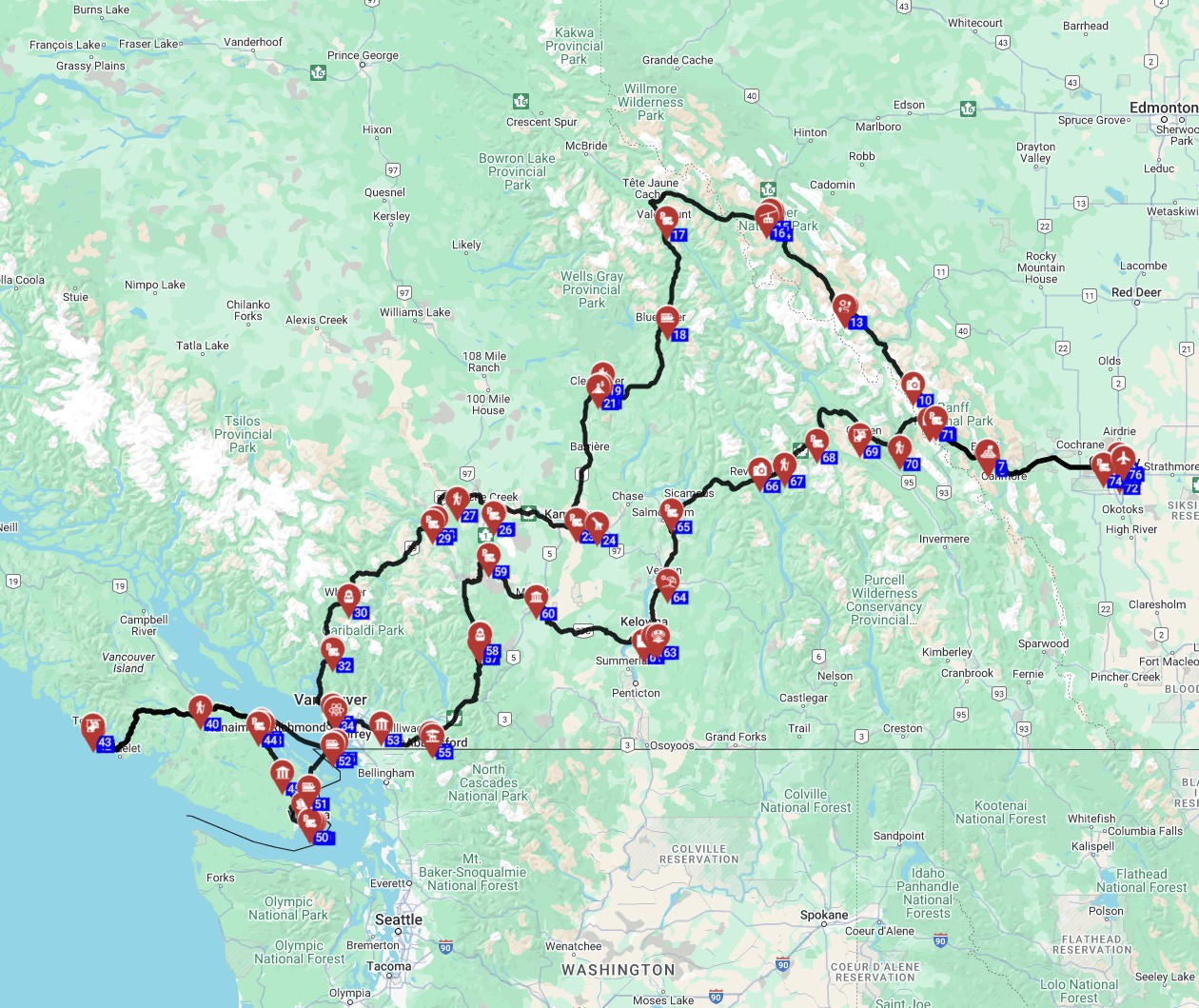
A 7-day RV rental adventure in Canada is perfect for exploring a concentrated region, such as British Columbia's stunning Sea-to-Sky corridor. This itinerary provides a balance of scenic drives and engaging activities, keeping daily travel manageable at around 60-150 km.- Day 1: Vancouver → Squamish (65 km) - Begin your adventure by picking up your rented motorhome in Vancouver and driving north on the Sea to Sky Highway to Squamish. Enjoy the breathtaking views, and take the Sea to Sky Gondola for panoramic vistas. Settle into Mamquam River Campground for your first night.
- Day 2: Squamish → Whistler (60 km) - Continue to the world-renowned Whistler Village. Explore the pedestrian village, take a gondola up the mountains, or enjoy some easy hiking. Riverside RV Resort offers convenient parking and amenities.
- Day 3: Whistler → Joffre Lakes Prov. Park area (70 km) - Drive to the Joffre Lakes Provincial Park area for an iconic hike to three turquoise lakes. This is an excellent opportunity for immersion in nature. Find a nearby public or private campground for the night.
- Day 4: Joffre Lakes → Harrison Hot Springs (150 km) - Head south to Harrison Hot Springs, famous for its therapeutic mineral waters. Relax at the hot springs and enjoy the lakeside village atmosphere. Harrison Lakefront Resort is a great place to stay.
- Day 5: Harrison Hot Springs → Fraser Valley Wine Route (80 km) - Discover the burgeoning Fraser Valley Wine Route, sampling local wines and visiting charming farms. This region offers a delightful culinary experience. Consider staying at Fort Camping in Fort Langley.
- Day 6: Fraser Valley → Vancouver (60 km) - Return to Vancouver and spend the day exploring iconic landmarks like Stanley Park, Gastown, and Granville Island Market. Park your RV at Burnaby Cariboo RV Park, known for its accessibility to city attractions.
- Day 7: Vancouver Departure - Return your rented RV in Vancouver, concluding your week-long Canadian journey.
This route averages approximately 81 km of driving per day, adhering to our recommendation for slow travel to truly savor each location. For live availability and current prices, start with our RV Rental Canada - Complete Guide 2024 guide.
14-Day Extended Journey in Canada
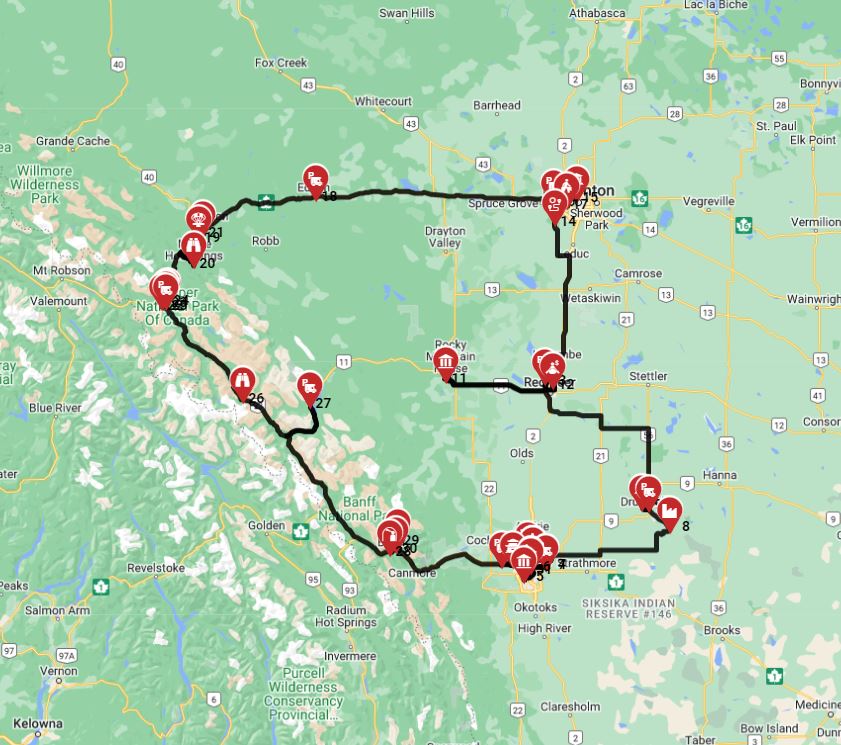
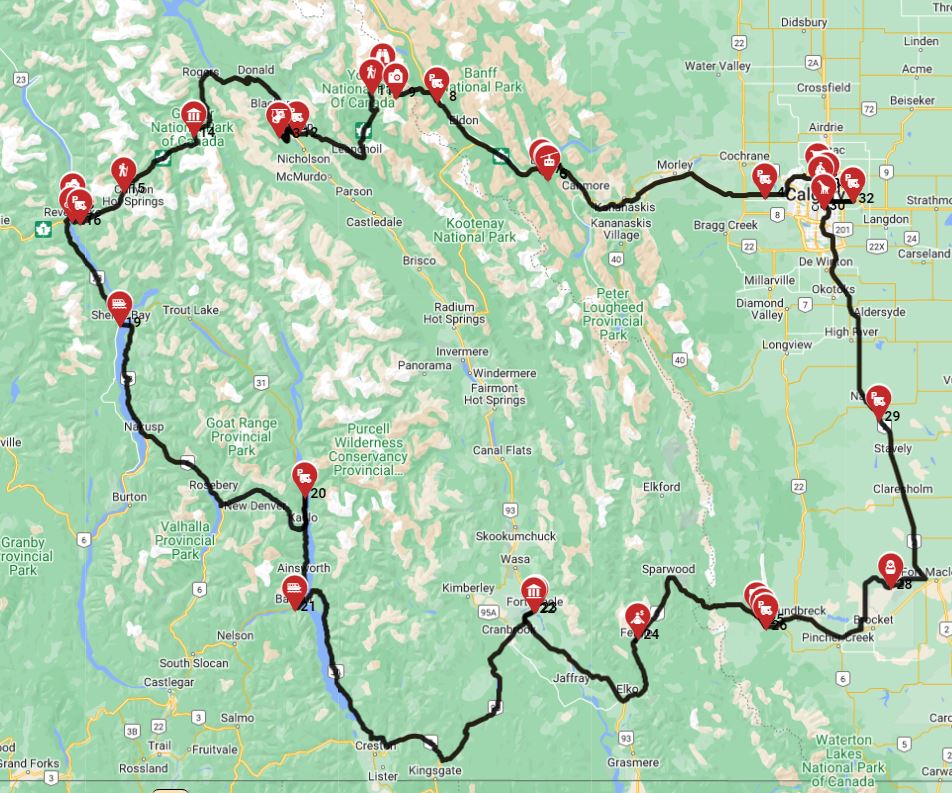
An extended 14-day RV adventure through Canada allows for a deeper exploration of diverse regions, such as Alberta's Badlands and majestic Rockies, while keeping daily driving below 150 km. This route ensures ample time for exploration and relaxation.- Days 1-3: Southern Alberta Badlands & Dinosaurs - Start your journey in Calgary, picking up your rented motorhome. Spend the first three days exploring the unique landscapes of the Southern Alberta Badlands, including Drumheller, the Dinosaur Capital of the World, and the charming town of High River. You'll encounter stunning geological formations and rich paleontological history, with plenty of opportunities for hiking and photography.
- Days 4-10: Canadian Rockies Exploration - Dedicate a full week to the awe-inspiring Canadian Rockies. Drive to Banff National Park (approximately 125 km from Calgary), then explore Lake Louise, and embark on the iconic Icefields Parkway, a 232 km scenic route connecting Banff and Jasper National Parks. This is a must-do, with over 100 glaciers, stunning waterfalls, and crystal-clear lakes. Allow plenty of time for wildlife spotting and short hikes. Continue to Jasper and then to Hinton.
- Days 11-13: Central Alberta Lakes & Foothills - Head towards Central Alberta, discovering lesser-known but equally beautiful areas like Nordegg and Sylvan Lake. Enjoy lakeside activities, local towns, and the peaceful foothills before making your way back towards Calgary.
- Day 14: Departure from Calgary - Return your RV in Calgary, concluding a memorable two-week expedition through some of Canada's most iconic landscapes.
This extended journey respects Avi Bandana's recommended maximum of 150 km driving per day on average, ensuring you have the time to truly feel the place, connect to the culture, the food, and the scenery, instead of rushing through. This slower pace is key to an authentic RV travel experience.
Recommended RVPLAN Trip for Canada
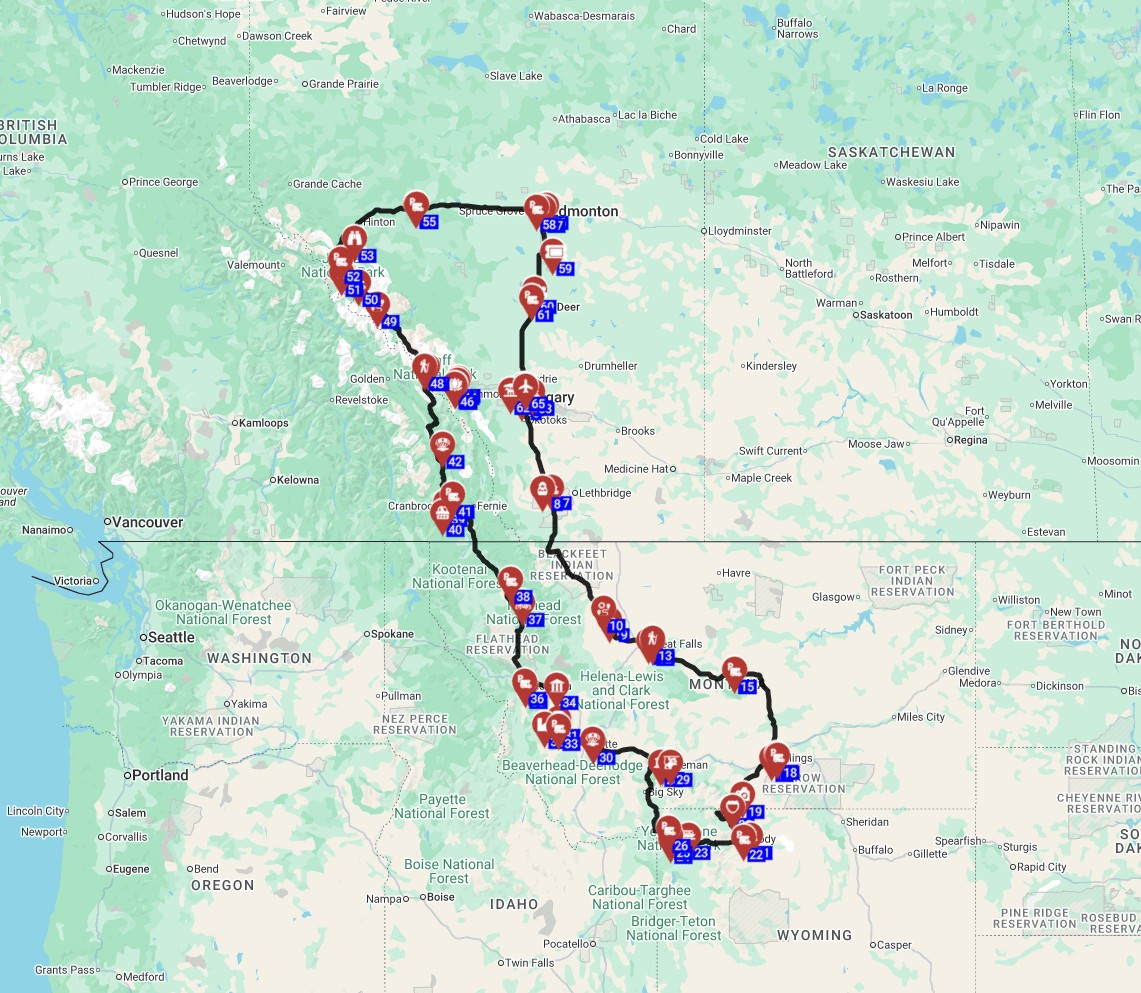
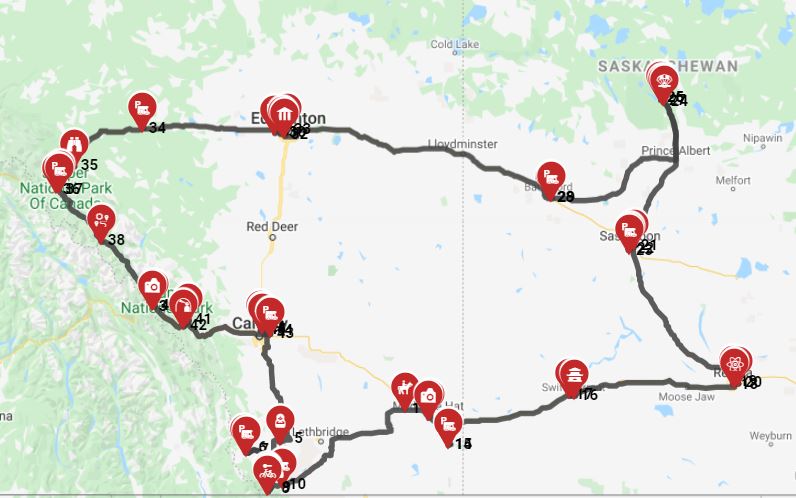
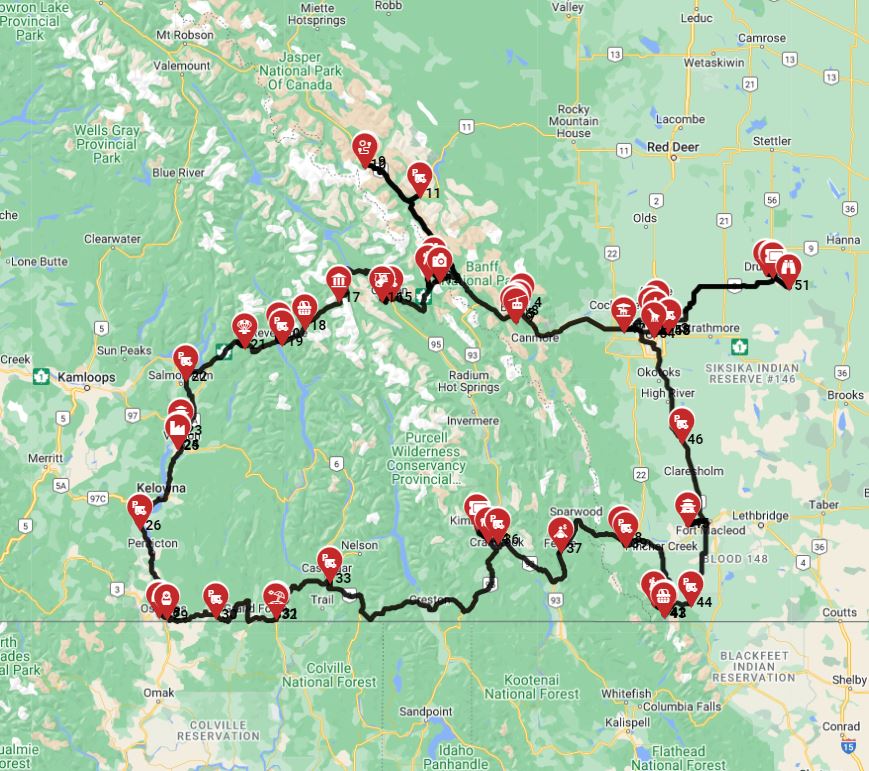
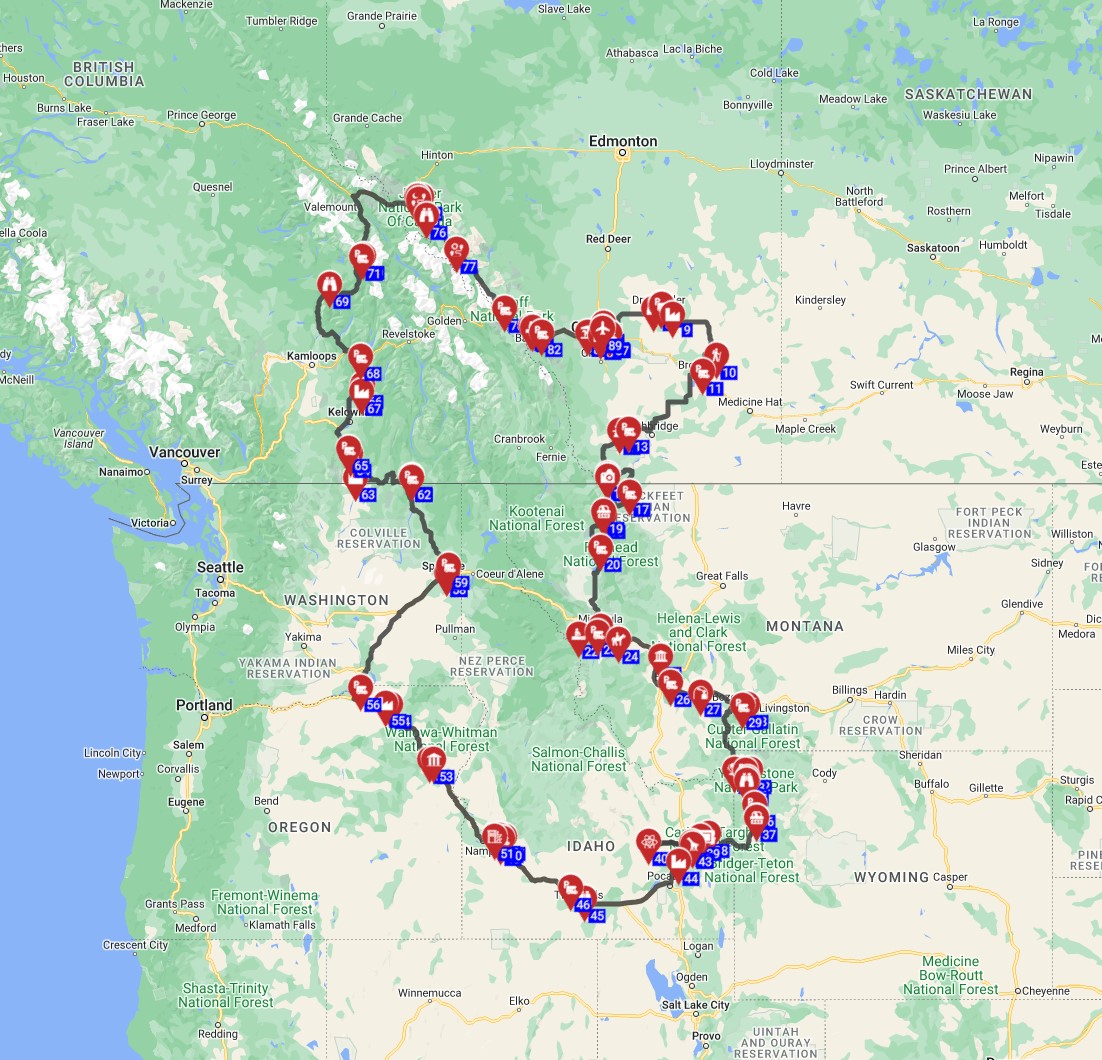
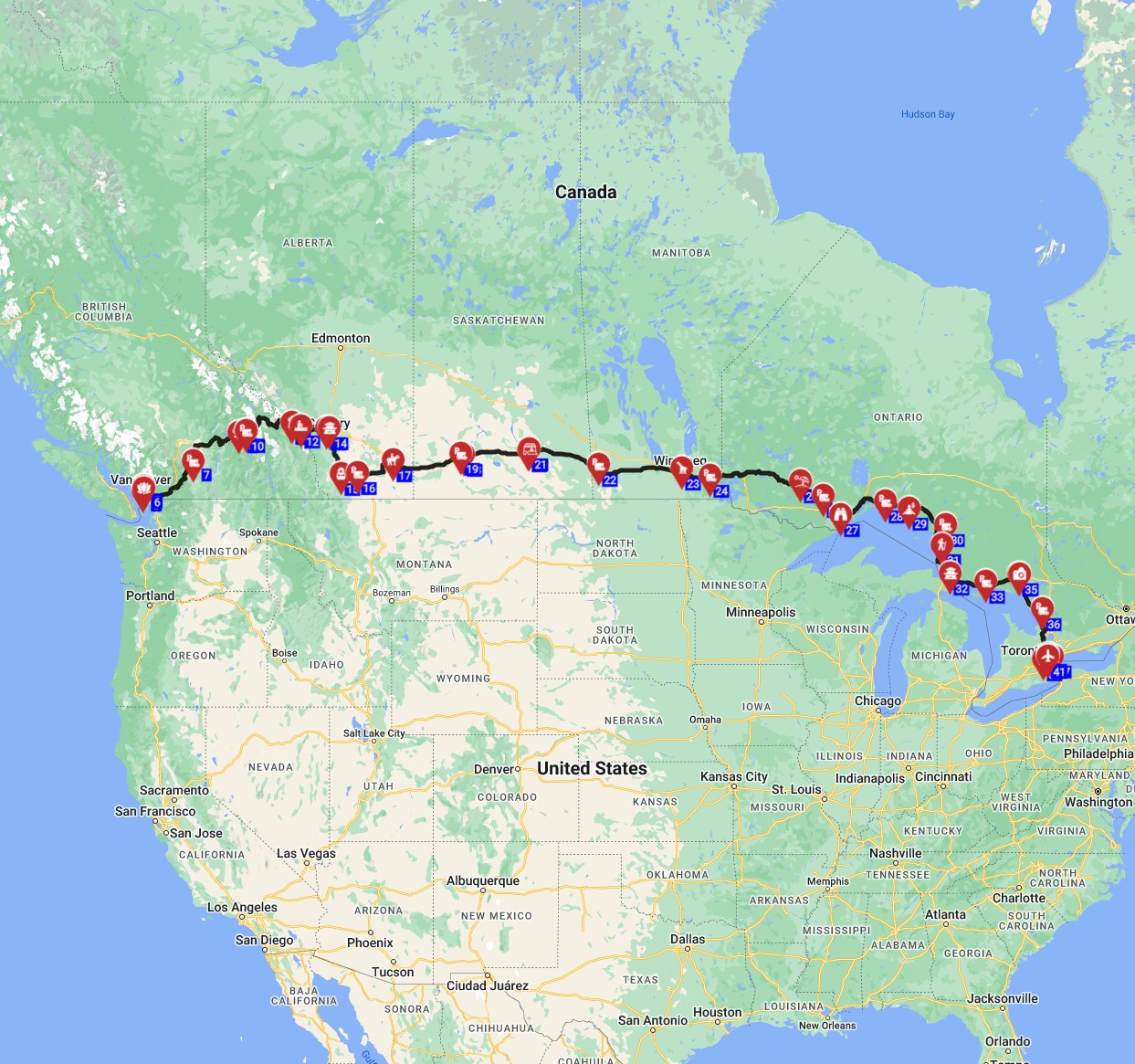
For an epic cross-country RV adventure in Canada, the "Halifax to Whitehorse - Exploring Canada’s Heartland in a Motorhome" trip on RV PLANET offers an extensive, professionally planned itinerary. This monumental 37-day journey spans an impressive 9199.1 km, guiding you from the Atlantic coast in Halifax all the way to Whitehorse in the Yukon Territory, showcasing a truly comprehensive view of Canada. It includes a rich blend of 1 Amusement Park, 1 Animals Show / Wildlife watch, 1 Aquarium, 3 Art Gallery, 2 Beach, 1 Bike Rental, 1 Botanical garden, 1 Cable Railway, 1 Canoe / Kayak / Rafting, 2 cave, 1 Cruise Terminal / Sailing, 2 Day Tour, 1 Extreme Activity, 1 Family Activity, 1 Heritage, 4 hiking area, 3 Historical Site, 1 Horseback Riding, 2 Local Industry, 6 Museum, 4 Natural Feature, 2 Park, 2 Picnic Area, 5 Point Of Interest, 1 Scenic Route, 2 Science Site, 1 Swimming, 1 Tourist Attraction, 2 Traditional Market, 3 Traditional Restaurant / Fine Dining, 4 Traditional Visit, and 2 Zoo experiences.For those seeking shorter, regional adventures, RV PLANET also features other meticulously crafted routes like the "

Another popular option is the "
Must-See Stops Along the Way (Avi Bandana Picks)
Canada is filled with incredible sights, and for an RV traveler, some spots stand out for their accessibility and unique charm. Here are some of Avi Bandana's top recommendations for your Canadian motorhome journey.🎬 Video coming soon
Looking for expert insights from Avi Bandana? Top 5 Adventures - recommendations from Avi Bandana
- Halifax Waterfront: This bustling waterfront in Nova Scotia offers historic ships, vibrant markets, and delicious seafood. It's a fantastic starting or ending point for an East Coast adventure.
- Hopewell Rocks Provincial Park: Located in New Brunswick, witness the dramatic "Flowerpot Rocks" sculpted by the Bay of Fundy's extreme tides—the highest in the world, with tidal ranges up to 16 meters.
- Canadian Rockies (Banff, Lake Louise, Jasper): No trip to Western Canada is complete without visiting these iconic national parks in Alberta. Marvel at turquoise lakes, towering peaks, and abundant wildlife. The Icefields Parkway is a scenic route that connects them.
- Stanley Park, Vancouver: A sprawling urban oasis of 405 hectares in British Columbia, offering walking trails, beaches, and stunning city and ocean views. It’s a perfect blend of nature and city life.
- Drumheller's Badlands & Dinosaurs: In Alberta's Red Deer River Valley, explore the moon-like badlands, home to the Royal Tyrrell Museum of Palaeontology and its incredible dinosaur fossils.
- Site d'Interprétation Micmac de Gespeg: Located in Quebec, this site offers an immersive experience into the rich culture and history of the Micmac (Mi'kmaq) Indigenous people.
- Fort William Historical Park: In Thunder Bay, Ontario, step back in time to the 19th-century fur trade era at one of North America's largest living history sites.
- Lake of the Woods Brewing Company: Found in Kenora, Ontario, enjoy local craft beverages and delicious food, a perfect stop to unwind and taste regional flavors. For more culinary inspiration, check out our RV-friendly recipes playlist.
- Fort Nelson Farmers Market: In British Columbia, experience local produce, crafts, and the friendly atmosphere of a traditional market.
- Canadian Bushplane Heritage Centre: Located in Sault Ste. Marie, Ontario, delve into Canada's fascinating aviation history, especially its unique bushplane legacy.
Daily Driving Distances & Drive Times in Canada
Avi Bandana recommends travelers aim for a maximum of 100 miles or 150 km of driving per day on average when exploring Canada by RV to truly appreciate the journey. This philosophy encourages slow travel, allowing for spontaneous stops, deep immersion in local experiences, and flexibility to adapt to weather or unexpected discoveries. For instance, the drive from Calgary to Banff is approximately 125 km, taking about 1.5-2 hours, which leaves plenty of time to set up camp and explore the area. Similarly, the 120 km route from Vancouver to Whistler typically takes 2-2.5 hours. Even the journey from Toronto to Niagara Falls, about 130 km, is a pleasant 1.5-2 hour drive, providing ample opportunity to visit wineries or attractions along the way. Driving slowly and carefully, you can drive almost anywhere without issues. No need to stress - just use common sense and pay attention to road signs and conditions. This mindful approach transforms your RV rental trip into a relaxed adventure rather than a race against the clock.Best RV Class for This Itinerary — Couple & Family Picks
Choosing the right RV class for your Canadian adventure depends on your travel group and desired comfort level. Bandana RV offers a wide range of motorhomes and campervans to suit every need.For couples, a Class B Campervan is often the ideal choice, offering superior agility and impressive fuel efficiency, typically consuming 8-10 Liters/100 km. These compact vehicles, like a rv rental denver example Category Van, often average 5.8 meters in length and comfortably sleep 3.2 people, making them perfect for navigating smaller roads and urban areas with ease. They include features like front air conditioning, a shower, and a toilet, providing all the essentials in a nimble package.
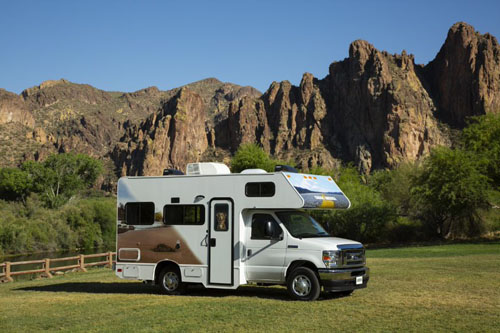
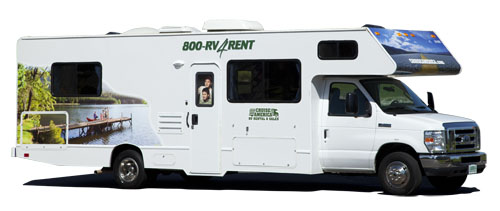
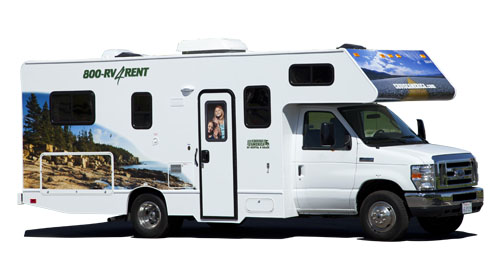
For families, a Class C Alcove motorhome provides ample space and dedicated sleeping areas, ensuring comfort for everyone. These family-friendly RVs, such as the rv rentals example Comfort Class, typically average 7.5 meters in length, comfortably sleeping 5.8 people, and consume around 10-12 Liters/100 km. They often come equipped with three double beds, a shower, and a toilet. Larger options, like a 29' Class C Motorhome, may include slide-outs for even more living space, a generator, and can be pet friendly. When comparing options for your RV rental in Canada, consider what features are included versus paid add-ons to ensure full transparency in your booking. Bandana RV's 'Rent & Plan' service combines your RV rental with expert-crafted itineraries from RV PLANET, simplifying your trip planning and offering full access to our trip-planning software, along with a 25% planning discount for using rvplan.net.
How much does an RV rental in Canada cost per day?
Daily RV rental costs in Canada typically range from $150 CAD to $400+ CAD, excluding fuel and campground fees, and are heavily influenced by the RV class, rental season, and trip duration. Smaller Camper Vans (Class B) are generally more affordable, while larger Class A or C motorhomes command higher daily rates. For example, a 7-day trip in a Class B campervan in the shoulder season might start around $1050 CAD (approx. $150/day), whereas a 2-week family trip in a Class C during peak summer could easily reach $5600 CAD or more (approx. $400/day). For a month-long rental, the daily rate may decrease, but the total cost will be substantial, averaging $4500-$9000+ CAD depending on the RV and season.Peak summer season (July-August) consistently sees the highest prices and lowest availability, so booking 3-6 months in advance is crucial to secure the best rates and desired models. Better deals for a campervan rental in Canada are often found in shoulder seasons (May-June, September-October), offering pleasant weather and fewer crowds. Last-minute RV rental deals in Canada can sometimes be found due to cancellations or fleet repositioning, but prices are dynamic and availability is not guaranteed. Flexibility with your travel dates and pick-up/drop-off locations is key to finding cheaper rates. Using Bandana RV's comparison platform allows you to compare final prices across 50+ leading RV suppliers, ensuring you see what you pay, with no surprise fees at pickup.
Beyond the daily rental rate, budgeting for ancillary trip costs is crucial. Fuel, averaging 10-12 Liters/100 km for many RVs, will be a significant expense. Campground fees in Canada can range from $30-$70+ CAD per night for basic sites to premium spots with full hookups. Additional costs include propane, dump fees, tolls, and groceries. On RV PLANET routes, travelers can itemize and track every expense along the way for easy budgeting, giving you full control over your total trip cost.
🎬 Video coming soon
Can you RV camp for free on Crown Land in Canada?
Yes, free RV camping, commonly known as boondocking or dispersed camping, is generally permissible on much of Canada's extensive Crown Land, provided provincial regulations are strictly followed and 'Leave No Trace' principles are applied. Crown Land refers to public land managed by provincial governments, often designated for multiple uses including recreation, though access rules vary significantly by province and specific areas, with British Columbia and Alberta offering vast opportunities. To successfully find Crown Land suitable for boondocking, utilize specialized apps like iOverlander or consult Backroad Mapbooks, and always verify current regulations, access restrictions, and fire bans on provincial government websites for the specific region you plan to visit. Boondocking demands self-sufficiency, as there are no services like water, power, or sewage connections, so ensure your rented RV is equipped for off-grid living and diligently practice responsible waste management by packing out everything you pack in.What are essential wildlife safety tips for RVing in Canada?
Essential wildlife safety for RVing in Canada includes meticulously storing all food and scented items in bear-resistant containers or securely inside your rented RV, never leaving attractants outside, and absolutely never feeding any animals. When hiking or exploring away from your motorhome, make consistent noise to avoid surprising wildlife, always travel in groups, and carry bear spray, knowing precisely how to deploy it effectively and safely. Always maintain a safe and respectful distance from all wildlife, typically at least 30 meters (100 feet) from most animals and 100 meters (330 feet) from bears, wolves, and cougars; if an animal approaches, make yourself appear large, make noise, and slowly back away without making direct eye contact. Researching the common wildlife in your specific travel regions, such as bears in the Rockies or moose in the Maritimes, and understanding their typical behaviors and warning signs is crucial for a safe and enjoyable trip.How is cell service for RVers in remote Canada?
Cell service for RVers in remote areas of Canada is frequently unreliable or entirely non-existent, especially outside of major towns, national parks, and along vast stretches of highways in less populated provinces and territories, making offline preparation absolutely crucial. Major Canadian carriers like Bell, Rogers, and Telus offer the widest coverage, but even their networks have significant gaps in wilderness regions, deep mountain passes, and throughout the far North, such as the Dempster Highway. Always download offline maps (e.g., Google Maps, Maps.me, or dedicated RV navigation apps) and critical information like campground details and emergency contacts before heading into areas with anticipated poor signal or no connectivity. For enhanced safety and communication in truly remote locations, consider investing in or renting a satellite communication device, such as a Garmin InReach, or utilizing Starlink for RVs, to ensure emergency contact capability and basic internet access when cell towers are out of reach.What are Leave No Trace principles for RVing in Canada?
The Leave No Trace (LNT) principles for RVing in Canada encompass planning and preparing thoroughly, traveling and camping on durable surfaces, properly disposing of waste, leaving what you find, minimizing campfire impacts, respecting wildlife, and being considerate of other visitors, all of which are vital for preserving Canada's pristine natural environments. For RV renters specifically, this means always staying on designated roads and established campsites, properly disposing of all gray and black water at authorized dump stations, and diligently packing out all trash and food waste. Minimize campfire impacts by using existing fire rings, keeping fires small, and ensuring they are completely extinguished before leaving, always adhering to local fire bans which are common in dry seasons. Furthermore, respect local regulations, including noise restrictions and generator usage times at campgrounds, to ensure a peaceful experience for all visitors and to protect the natural soundscape for wildlife.Are there unique driving laws for RVs in Canadian provinces?
While general traffic laws are largely consistent across Canada, some provinces do have unique driving laws or specific considerations for RVs that travelers should be aware of. These can include varying speed limits for larger vehicles, specific ferry booking requirements, or regulations concerning propane tank transport. For example, in Quebec, road signs are predominantly in French, and in Montreal, it is generally illegal to turn right on a red light (with a few exceptions), a unique traffic rule that often catches visitors by surprise. Provinces like British Columbia have specific recommendations for mountain driving, including lower gear usage on descents to prevent brake overheating and special lane usage for slower vehicles. For ferry travel, especially to popular destinations like Vancouver Island or Newfoundland, booking well in advance is crucial, and RVs often incur additional charges based on their length, height, and specifications for propane tanks. Be aware of weight and height restrictions, particularly when navigating tunnels or older towns with narrow streets. For cold-weather travel, understand provincial requirements for winter tires or chains and familiarize yourself with how to potentially winterize your rented RV to protect its systems from freezing temperatures.Top Cities for RV Rental in Canada
Canada offers numerous excellent starting points for your RV rental adventure, with major cities providing access to a wide range of rental options and proximity to stunning natural landscapes. Here are 5-8 top cities for RV rental:- Vancouver, British Columbia: Known for its mild climate and spectacular coastal and mountain scenery, Vancouver is a prime starting point for exploring the Canadian Rockies, Vancouver Island, or the Okanagan Valley. Major RV suppliers are readily available here.
- Calgary, Alberta: As the gateway to the Canadian Rockies, Calgary offers convenient access to world-renowned national parks like Banff and Jasper. It’s ideal for an authentic Western Canadian experience.
- Toronto, Ontario: This vibrant metropolis is a great base for exploring the Great Lakes region, Niagara Falls, and the historic sites of Eastern Canada. You can easily find a campervan rental here.
- Montreal, Quebec: Offering a unique blend of European charm and North American dynamism, Montreal is perfect for starting a tour of Quebec’s stunning landscapes and rich history.
- Halifax, Nova Scotia: For an East Coast adventure, Halifax provides access to picturesque coastal drives, charming fishing villages, and historic lighthouses along the Cabot Trail. Our "Halifax to Whitehorse - Exploring Canada’s Heartland in a Motorhome" itinerary starts here.
- Abbotsford, British Columbia: Situated in the Fraser Valley, Abbotsford is a practical pick-up location, offering easy access to both Vancouver's attractions and the scenic routes heading east.
- Bolton, Ontario: North of Toronto, Bolton serves as another convenient option for beginning your Ontario RV journey, avoiding some of the city traffic.
- Dartmouth, Nova Scotia: Directly across from Halifax, Dartmouth provides an alternative pick-up point for exploring the Maritime provinces.
Other cities like Bellingham, Burlington, Churchville, Coquitlam, Delta, and Gibsons also offer convenient access to beautiful regions, often serving as smaller, more local pick-up points or destinations for unique itineraries. Whether you choose a Class A or Class C motorhome, each location opens up a new chapter for your Canadian journey. If you are considering a trip across the border, our RV Rental USA - Complete Guide 2024 offers valuable insights for planning your itinerary. Also check out "RV Rental Deals in Canada - Latest Offers 2024" for more info on maximizing your budget.
Final Thoughts
An RV rental adventure in Canada is more than just a trip; it's an opportunity to truly connect with one of the world's most breathtaking and diverse countries. Whether you opt for a week-long dash along a scenic coast or a month-long trans-Canadian epic, the freedom of a motorhome allows you to immerse yourself in nature and culture at your own pace. With flexible planning options, transparent pricing, and robust support, Bandana RV makes it easy to embark on your dream journey without a hitch.Don't let the details overwhelm you. We are here to guide you through every step, from comparing the perfect campervan for couples to finding a spacious Class C motorhome for families. The majestic mountains, pristine lakes, and vibrant cities of Canada await your discovery. Get inspired for your next trip and embrace the open road!
Compare Motorhome Rentals for Canada Now!