In This Guide
- Best Alaska RV Itinerary for rv rental - Overview
- 7-Day Classic Route in Alaska
- 14-Day Extended Journey in Alaska
- Recommended RVPlan Trip for Alaska
- Must-See Stops Along the Way (Avi Bandana Picks)
- Daily Driving Distances & Drive Times in Alaska
- Best RV Class for This Itinerary - Couple & Family Picks
- What is the 3-3-3 rule for RV travel?
- What is the best route to Alaska by RV?
- What is the best time of year to RV to Alaska?
- What is the 4-4-4 rule for RV travel?
- What should I not miss in Alaska?
- Can I park my RV anywhere in Alaska?
- Practical Information for RVing in Alaska
Embarking on a rented RV adventure through Alaska is an unparalleled experience, offering the freedom to explore vast wilderness and stunning landscapes at your own pace. For live availability and current prices, start with our RV Rental Alaska - Complete Guide 2026 guide. This comprehensive guide helps you plan your journey from pickup at an Alaska airport to the open road, ensuring a seamless and memorable trip. Bandana Caravan, founded in 2001, has over 23 years of experience helping tens of thousands of travelers discover the world by motorhome, making us your trusted partner for an Alaskan escapade.
Best Alaska RV Itinerary for rv rental - Overview
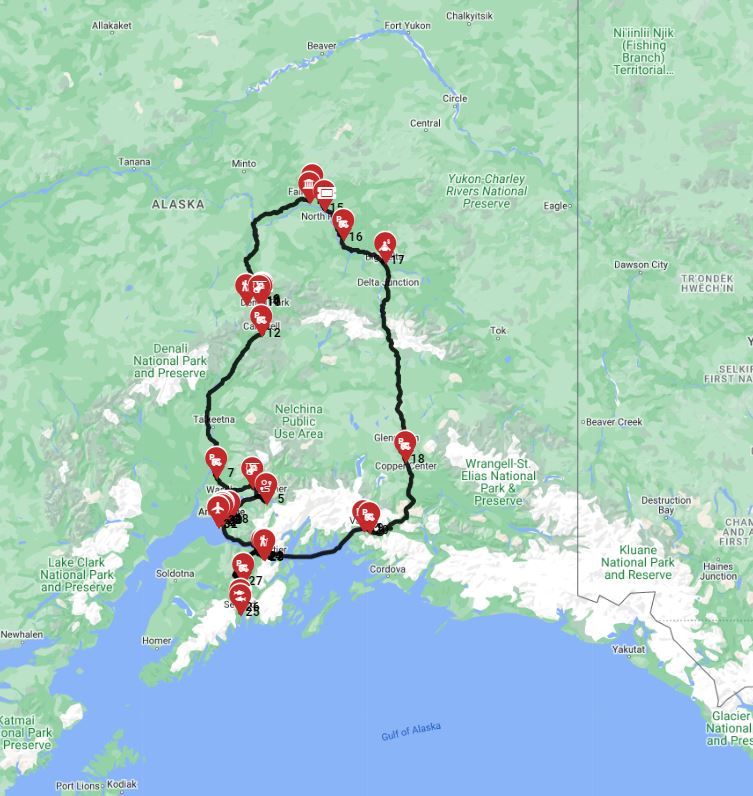
Exploring Alaska by rented RV is an adventure best experienced over a minimum of 7 days, though a two-week trip, or 14 days, allows for a more comprehensive journey through its majestic scenery. A classic 7-day loop typically covers approximately 1,100 km (680 miles), focusing on key destinations like Anchorage, Denali National Park, and Fairbanks, offering a taste of Alaska's diverse attractions. The ideal season for RV travel in Alaska is from late May through early September, which provides the warmest weather, extensive daylight hours, and the widest range of open services and attractions. During this time, you can expect truly scenic drives, abundant wildlife viewing opportunities for moose and bears, and many chances for hiking and cultural immersion.
Planning your RV rental in Alaska means anticipating dynamic prices, much like flight tickets, which change daily based on availability, seasonality, and supplier marketing decisions. Your final price is always set at the actual booking time. Bandana Caravan prides itself on full transparency, ensuring no hidden fees or surprises throughout your booking process. We partner directly with over 50 leading RV suppliers worldwide, including trusted names like El Monte and Cruise America, to offer you the best selection and value. For those seeking detailed cost breakdowns beyond just the RV rental itself, such as fuel, campground fees, propane, dump fees, and tolls, remember that RV PLANET routes allow you to itemize and track every expense for easy budgeting, giving you a complete picture of your total trip cost. On the routes offered through RV PLANET routes, you can itemize and track every expense along the way for easy budgeting.
7-Day Classic Route in Alaska
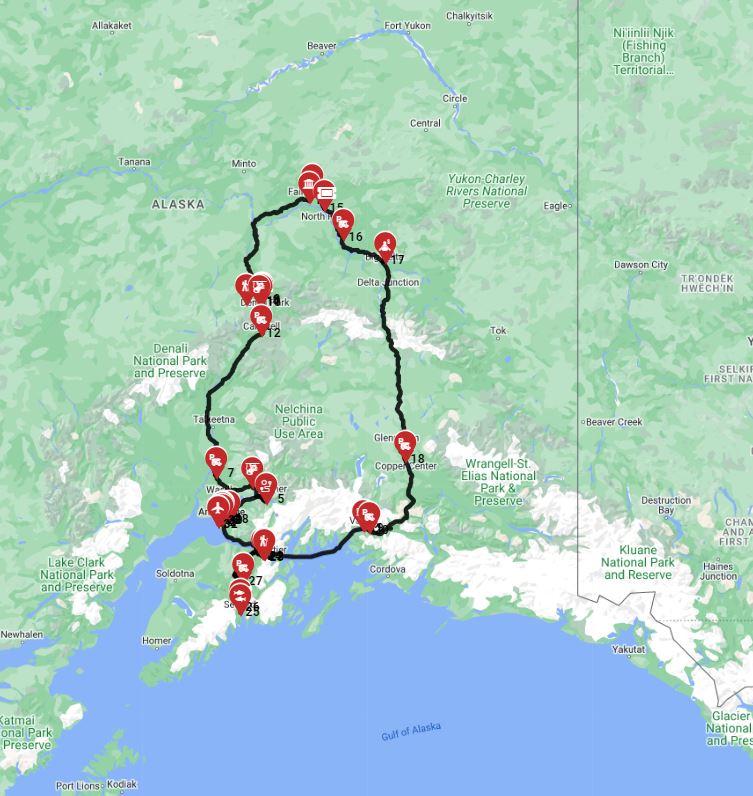
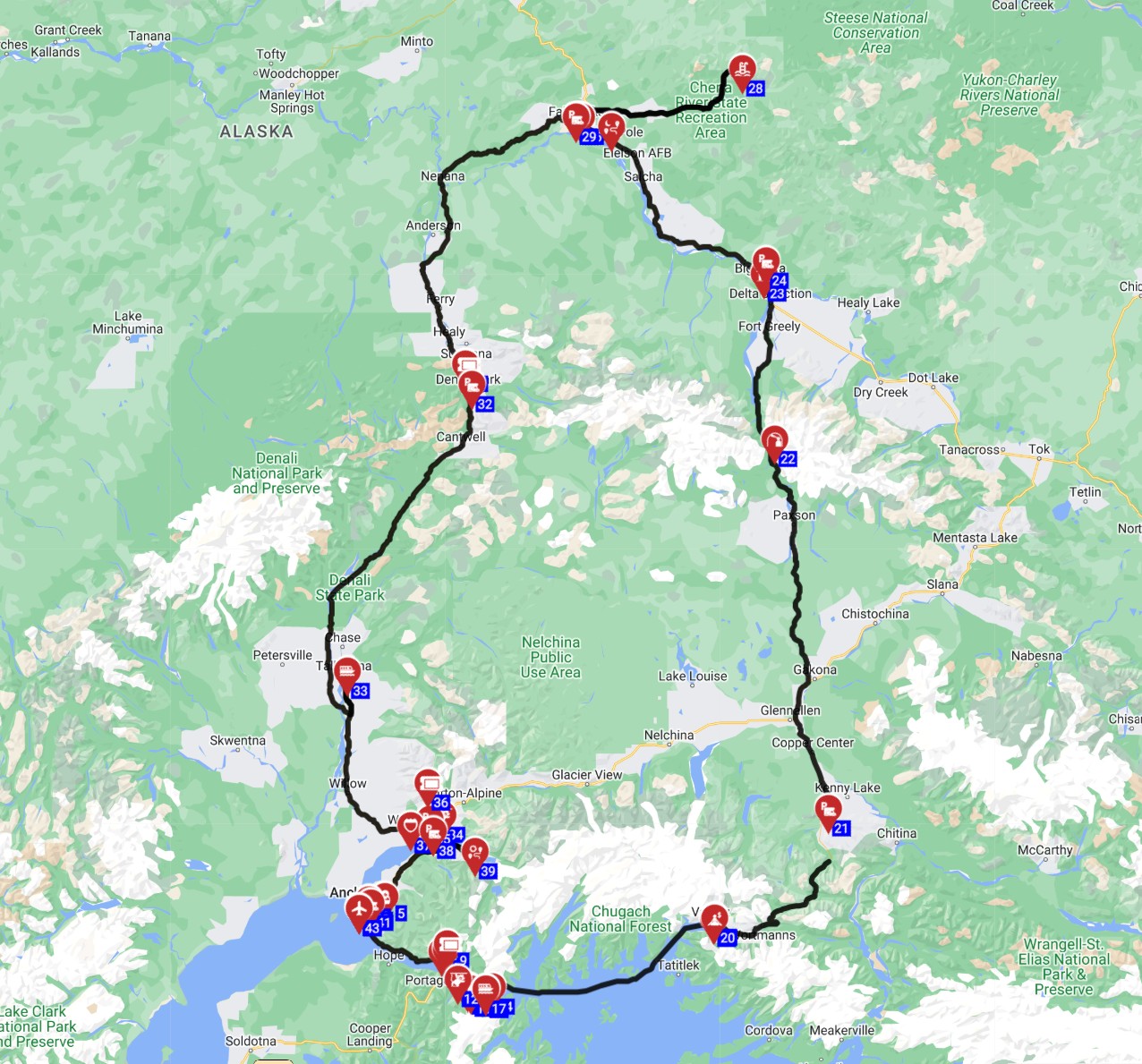
A classic 7-day RV itinerary through Alaska focuses on the major highlights, offering a condensed yet unforgettable experience for your rented motorhome. This route is designed to maximize your time in Alaska's most iconic locations, covering approximately 1,100 km (680 miles).
- Day 1: Anchorage to Talkeetna (180 km / 110 miles): After picking up your motorhome in Anchorage and stocking up on groceries (for some delicious RV-friendly recipes playlist), drive north to the charming, quirky town of Talkeetna, known as the gateway to Denali. Settle in for the night at Talkeetna Campground.
- Day 2: Talkeetna to Denali National Park (250 km / 155 miles): Enjoy morning views of Denali (weather permitting) before heading to the entrance of Denali National Park. Spend time exploring the visitor center and accessible trails before staying at Riley Creek Campground, where reservations are essential during peak season.
- Day 3: Denali National Park Exploration (0 km / 0 miles): Dedicate this day to a park bus tour deeper into Denali for unparalleled wildlife viewing of moose, caribou, and bears, alongside stunning mountain vistas. Remember, RV driving is restricted beyond mile 15 without special permits. Return to Riley Creek Campground.
- Day 4: Denali to Fairbanks (200 km / 125 miles): Drive north to Fairbanks, often called Alaska's 'Golden Heart City.' Explore its gold rush history and visit the University of Alaska Museum of the North. River's Edge RV Park is a recommended overnight stop.
- Day 5: Fairbanks to Matanuska Glacier (450 km / 280 miles): This day involves a longer, scenic drive, but focuses on breathtaking glacier access. You will experience parts of the Richardson Highway, which offers incredible views. Consider an overnight stop in Glennallen to break up the drive if desired, allowing for a slower pace as suggested for RV travelers. Sleep at a campground near Matanuska Glacier.
- Day 6: Matanuska Glacier Exploration (0 km / 0 miles): Spend the day exploring the Matanuska Glacier, perhaps even taking a guided walk on the ice. This provides an up-close encounter with one of Alaska's most accessible glaciers. You might also find opportunities for nearby hiking.
- Day 7: Matanuska Glacier to Anchorage (160 km / 100 miles): Enjoy a final scenic drive back to Anchorage along the Glenn Highway before returning your rented RV.
Even with longer driving days like Day 5, we encourage you to travel slowly, averaging a maximum of 100-150 km per day. This allows you to truly feel the place, connect to the culture, the food, and the scenery. You can often find a spot at campgrounds; if not at the first one, then the next. Always call ahead before driving to check availability.
14-Day Extended Journey in Alaska
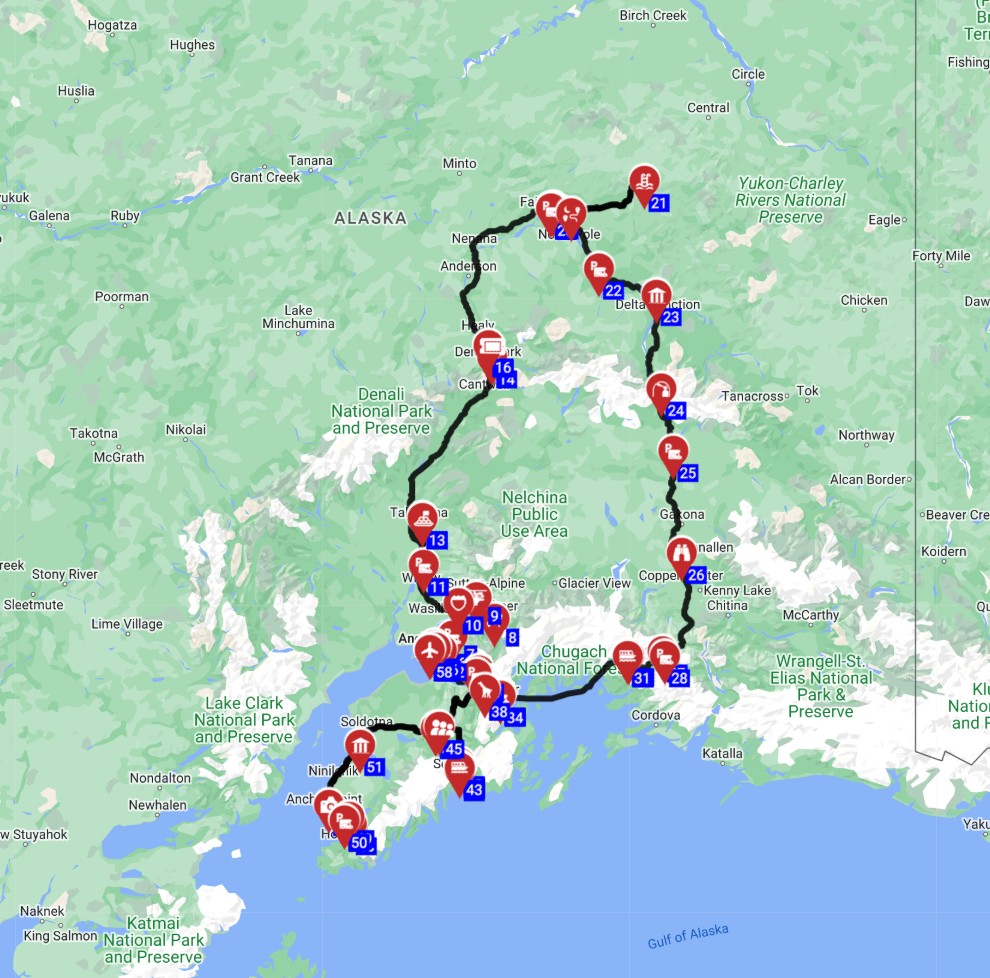
An extended 14-day RV journey in Alaska allows for a deeper dive into the state's diverse regions, covering approximately 1,928.5 to 1,929.9 km (1,200 miles) and offering more time for exploration at each stop. This itinerary provides a comprehensive Alaskan experience, giving you the flexibility to savor each moment.
- Days 1-3: Anchorage & Kenai Peninsula (Approx. 350 km / 215 miles): Arrive in Anchorage, pick up your rented RV, and immediately head south to the breathtaking Kenai Peninsula. Explore Seward, the gateway to Kenai Fjords National Park, perfect for glacier cruises and wildlife watching, and Homer, famously known as the 'Halibut Fishing Capital of the World.' Consider camping at Seward City Campground and Homer Spit Campground.
- Days 4-6: Kenai Peninsula to Talkeetna & Denali (Approx. 500 km / 310 miles): Journey from the Kenai Peninsula up to Talkeetna, a historic gold-mining town with stunning views. Continue north to the entrance of Denali National Park. Dedicate a full day to a park bus tour to maximize wildlife viewing opportunities and marvel at North America's highest peak. Popular camping spots include Talkeetna Camper Park and Riley Creek Campground.
- Days 7-8: Denali to Fairbanks (Approx. 200 km / 125 miles): Head north to Fairbanks. Discover its rich gold rush history, visit the informative Museum of the North, and during the summer months, experience the enchanting midnight sun. River's Edge RV Park is a convenient camping option.
- Days 9-10: Fairbanks to McCarthy/Kennicott (Approx. 480 km / 300 miles drive on mostly paved roads, followed by 100 km / 60 miles on gravel McCarthy Road): For the truly adventurous, drive the rugged McCarthy Road (always ensure your RV rental agreement allows travel on gravel roads) to explore the historic Kennicott Mine and McCarthy ghost town in Wrangell-St. Elias National Park, the largest national park in the U.S. This drive, covering about 580 km (360 miles) for the full segment, requires careful attention to road conditions and carrying an emergency kit. Camp at private campgrounds just outside the park or near McCarthy.
- Days 11-12: McCarthy/Kennicott to Valdez (Approx. 250 km / 155 miles): Return along McCarthy Road and then drive the stunning Edgerton Highway, connecting to the Richardson Highway, which leads to the coastal town of Valdez. Enjoy a captivating glacier and wildlife cruise in Prince William Sound. Valdez Glacier Campground offers excellent views for your stay.
- Days 13-14: Valdez to Anchorage (Approx. 480 km / 300 miles): Take the truly stunning Glenn Highway back to Anchorage. Enjoy one last Alaskan meal aboard your rented motorhome, perhaps using your well-equipped kitchen. Then, return your RV and depart, filled with memories of your grand Alaskan adventure.
This extended itinerary, as well as the 7-day option, are excellent ways to fully embrace RV rental in Alaska. Bandana is comprised of true RV specialists, not just a travel agency side department, meaning we genuinely know RV travel and love helping people discover it. Our support team is always ready to assist you before and after your booking, ensuring peace of mind.
Recommended RVPlan Trip for Alaska
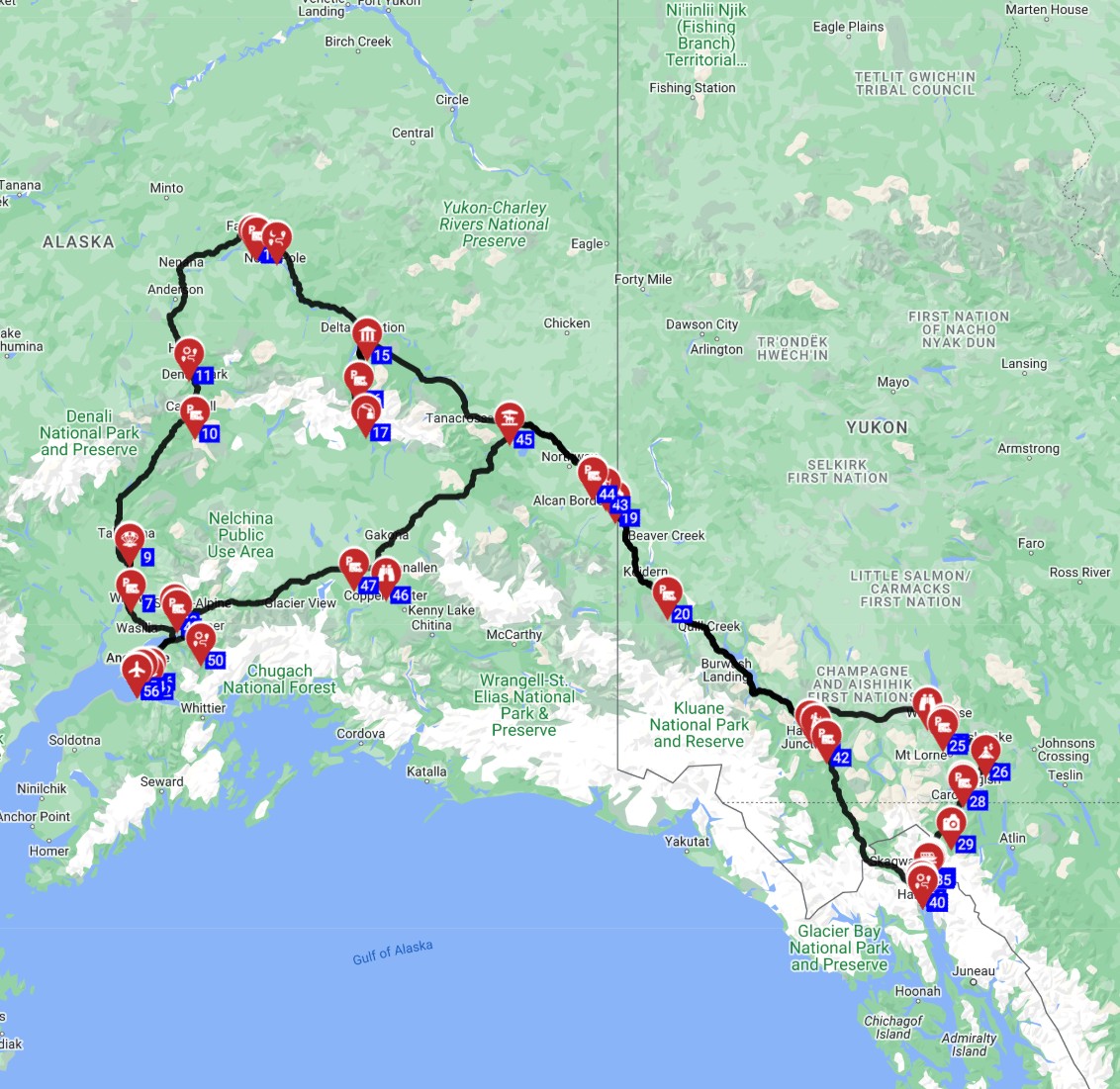
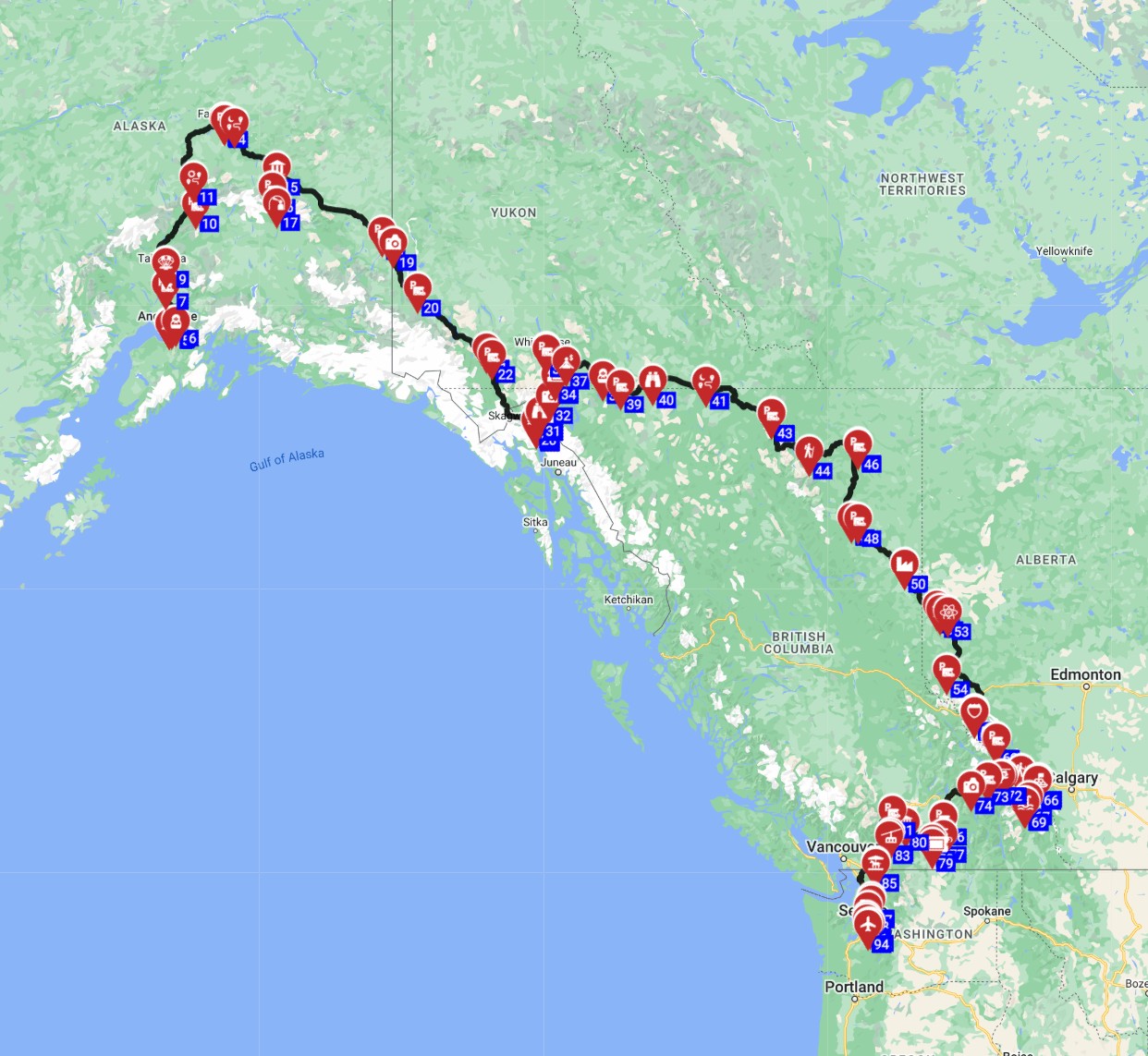
For an even more extensive Alaskan and Yukon adventure, consider the "Anchorage Round Trip - Alaska-Yukon Discovery Trail" from RV PLANET. This comprehensive journey totals 3539.2 kilometers over 23 days, starting and ending conveniently in Anchorage. This meticulously curated itinerary provides a detailed exploration of both the Alaskan wilderness and the Canadian Yukon, blending natural beauty with rich gold rush history.
This route plan includes a balanced mix of experiences, such as 1 amusement park, 1 botanical garden, opportunities for canoe/kayak/rafting, 3 cruise terminal/sailing excursions, 3 day tours, 1 extreme activity, 1 family activity, 1 heritage site, 3 hiking areas, 1 historical site, 3 museums, 2 natural features, 1 night tour, 1 park, 3 points of interest, 1 science site, 1 tourist attraction, 1 traditional restaurant/fine dining experience, and 1 traditional visit. The trip's longer duration allows for a deep dive into both Alaskan wilderness and Canadian Yukon's pristine parks like Kluane National Park, as well as its captivating gold rush history.
Another excellent option is the "
Must-See Stops Along the Way (Avi Bandana Picks)
Alaska offers a treasure trove of experiences, and Avi Bandana, founder of Bandana Caravan and a seasoned RV traveler, has some top recommendations to ensure your RV rental trip is truly exceptional. Drawing inspiration from the vast "Alaska-Yukon Discovery Trail" route plan, these picks combine natural wonders, historical insights, and unique local experiences.
- A visit to the Alaska Native Heritage Center in Anchorage is highly recommended for a deep dive into the rich indigenous cultures of Alaska, offering a powerful traditional visit experience.
- Exploring the Independence Mine State Historical Park provides a fascinating glimpse into Alaska's gold mining past, with well-preserved buildings and historical exhibits that transport you back in time.
- For a taste of local fare and unique ambiance, seek out a Traditional Restaurant / Fine Dining experience, as often listed in RV PLANET itineraries, to savor fresh Alaskan seafood and other regional delicacies.
- Don't miss a Cruise Terminal / Sailing excursion from places like Seward or Valdez to witness glaciers calving into the sea and spot incredible marine wildlife such as whales, sea otters, and puffins.
- The Kluane National Park and Reserve Visitor Centre in the Canadian Yukon provides essential context and trail information for exploring this UNESCO World Heritage Site's vast wilderness.
- For an unforgettable natural feature, hike (with proper precautions and local advice) to the Castner Glacier Ice Cave, where you can marvel at stunning blue ice formations.
- Experience a thrilling perspective at the Yukon Suspension Bridge, offering spectacular views over the tumultuous river below, a truly unique point of interest.
These hand-picked stops are designed to help you connect to the culture, the food, and the scenery of Alaska and the Yukon, making your motorhome adventure truly unforgettable. Remember, with a rented RV, you have the flexibility to adjust your itinerary and spend more time in places that capture your imagination.
🎬 Video coming soon
Daily Driving Distances & Drive Times in Alaska
For a truly enjoyable and immersive RV travel experience in Alaska, Avi Bandana recommends a maximum average of 100-150 km (60-90 miles) per day. This slow travel philosophy is crucial for appreciating Alaska's stunning scenery, its abundant wildlife, and for navigating the sometimes unpredictable road conditions, including frost heaves that can give your rented camper a jolt.
For example, the 180 km (110 miles) drive from Anchorage to Talkeetna typically takes about 2.5-3 hours of actual driving time, but with recommended stops for scenic overlooks, photo opportunities, or a quick meal, it can easily extend to 4-5 hours. The 250 km (155 miles) journey from Talkeetna to the Denali National Park entrance might require 3.5-4 hours behind the wheel, excluding time spent spotting wildlife or stretching your legs on a short trail. Longer distances, such as the 480 km (300 miles) from Valdez to Anchorage, could easily take 6-7 hours of dedicated driving, making it a full day on the road even without significant breaks. Maintaining flexible travel plans is always advised.
When planning your itinerary, consider potential connectivity challenges in remote areas. Cell service blackouts are common outside of major towns, so offline navigation strategies and carrying a satellite communication device are highly recommended for safety and peace of mind. Fuel availability can also be sparse on some stretches of road, requiring careful planning of stops. Always ensure your fuel tank is topped up before embarking on longer remote segments. Remember, the focus is on the journey, not just the destination, allowing ample time for unexpected discoveries and avoiding any rush.
Best RV Class for This Itinerary - Couple & Family Picks
Choosing the right RV class significantly enhances your Alaskan adventure, providing comfort and functionality whether you're traveling as a couple or with a family. Bandana offers a wide range of motorhome and campervan rentals to suit various needs and preferences, all available for your journey from an Alaska airport pickup point.
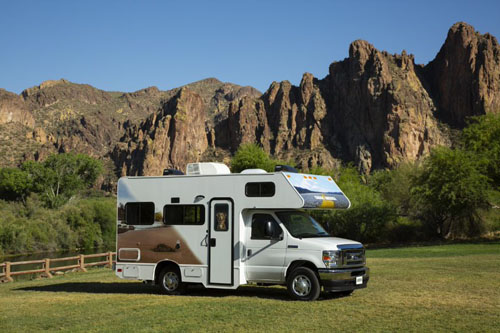
For couples, the **Class B - Camper Van** is an excellent choice, offering superior maneuverability and better fuel efficiency, which is ideal for Alaska's diverse roads, including narrower scenic byways. Our global fleet averages for Class B camper vans typically feature lengths around 5.8 meters and comfortably accommodate 2.7 adults. These smaller, agile units, such as an `alaska rv rental example Paradise S/T` (featuring automatic transmission, front air conditioning, shower, and toilet), are perfect for two travelers seeking flexibility, ease of parking, and a cozy mobile home base. They are often recent models and are easy to drive.
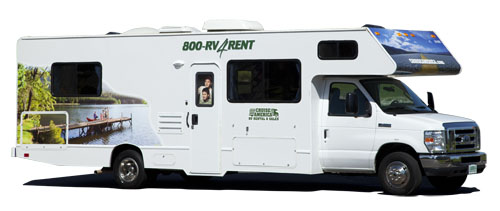
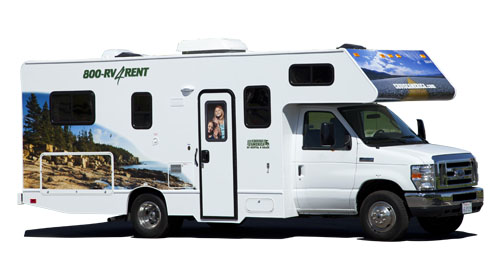
For families with kids or larger groups, a **Class C - Alcove** motorhome provides ample space and comfort for longer trips with multiple passengers. These vehicles are very popular for exploring the USA and offer a great blend of sleeping capacity and living area. Our Class C vehicles average 7.5 meters in length, with sleeping places for 5.8 and capacity for 4.4 adults, ensuring everyone has room to relax after a day of Alaskan exploration. A `cruise america rv rental example Explorer`, for example, is a Class C motorhome ideal for families, offering 4 sleeping places, an 82 Liter fresh water tank, a 90 liter refrigerator, and a 4-burner gas stove. Another good option is a `24 Class C Motorhome` which can sleep 5, has 166 Liters of fresh water, a 283 liter refrigerator and includes a microwave. Opting for a spacious Class C ensures that even with gear for diverse activities, you'll have a comfortable home on wheels.
To simplify your trip, consider our "Rent & Plan" service. This combines your chosen RV rental with a ready-made itinerary by travel experts and full access to trip-planning software, removing the headache of meticulous planning and providing a 25% planning discount when you use rvplan.net.
What is the 3-3-3 rule for RV travel in Alaska?
The 3-3-3 rule for RV travel is a widely cited guideline for a comfortable and relaxed journey, suggesting that you drive no more than 300 miles (approximately 480 km) a day, arrive at your destination by 3 PM, and stay for a minimum of 3 nights. Adhering to this rule, particularly the 'arriving by 3 PM' aspect, is especially beneficial in remote areas of Alaska where prime campsite availability can be limited, and services like water, dump stations, and fuel might be scarce.
The 'stay for 3 nights' aspect encourages deeper exploration of each area, fostering responsible tourism and allowing travelers to truly immerse themselves in Alaska's delicate environment. Given Alaska's vastness and potential connectivity challenges with cell service blackouts, arriving early allows for setting up camp, exploring the local area, and troubleshooting any immediate needs while daylight and support are readily available. This approach promotes slow travel, maximizing enjoyment and minimizing stress.
What is the best route to Alaska by RV?
The best and most common route to Alaska by RV is via the iconic Alaska Highway, also known as the ALCAN Highway, which officially starts in Dawson Creek, British Columbia, Canada. This legendary route, stretching over 2,200 km (1,387 miles), offers stunning scenery but requires specific RV preparation for Alaskan road conditions, particularly for stretches of gravel and unpaved sections.
Travelers must be prepared for comprehensive border crossing requirements for Canada-US, including specific document checklists for all passengers and pets, which should be thoroughly researched well in advance. RV-specific maintenance and repair resources in remote Alaskan and Canadian towns can be sparse, so bringing an emergency kit (including satellite communication options for areas without cell service), being knowledgeable about basic DIY tips for common issues, and checking tire types suitable for gravel stretches are crucial. Strategies for managing water, dump station, and fuel availability in vast, remote stretches with limited services are also vital; always fill up whenever possible and carry extra water if planning to boondock. For a broader perspective on North American RV travel, our "RV Rental USA - Complete Guide 2026" offers useful insights.
What is the best time of year to RV to Alaska?
The best time of year to RV to Alaska is generally from late May to early September, as this period offers the warmest weather, longest daylight hours (including the famous Midnight Sun in northern areas), and the fullest range of open services and attractions. During this peak season, wildlife is most active and visible, requiring adherence to in-depth wildlife safety protocols beyond general advice, such as understanding bear behavior, carrying bear spray, using proper food storage techniques to prevent attracting bears and other animals, and knowing how to react in various wildlife encounters.
Traveling outside of these months, in the shoulder seasons of late spring or early autumn, can present unique challenges with road closures, limited campground availability, and reduced daylight, though it offers spectacular opportunities for aurora borealis viewing. Health and medical preparedness for remote travel, including an advanced first aid kit and understanding access to emergency services, is paramount regardless of the season, but even more so when services are limited. Always check local weather and road conditions before heading out, as they can change rapidly in Alaska.
What is the 4-4-4 rule for RV travel in Alaska?
The 4-4-4 rule for RV travel is a variation of the popular 3-3-3 rule, suggesting that you drive no more than 400 miles (approximately 640 km) a day, arrive at your destination by 4 PM, and stay for a minimum of 4 nights. While similar to the 3-3-3 rule, the 4-4-4 rule allows for slightly longer driving days and stays, which can be advantageous for covering greater distances in expansive regions like Alaska without feeling excessively rushed. However, for new RVers or those desiring a more leisurely pace in Alaska's challenging terrain and remote areas, the 3-3-3 rule often provides a more relaxed and manageable rhythm.
Regardless of which rule is followed, the core principle is to avoid over-scheduling and allow ample time for unexpected stops, scenic enjoyment, and sufficient rest. This approach is particularly important in Alaska where the scenery itself is a major part of the experience, and rushing through it means missing out. Both planning styles- pre-planners who like everything organized and spontaneous travelers who book day-to-day - can find success in Alaska, as many national and state parks reserve 25-30% of spots for first-come-first-serve visitors. You'll find a spot; if not at the first campground, then the next one. Just remember to call ahead before driving.
What should I not miss in Alaska?
When RVing in Alaska, you should not miss experiencing the majestic beauty of Denali National Park, which offers unparalleled opportunities for wildlife viewing and breathtaking mountain vistas. A detailed cost breakdown beyond just fuel is essential for planning your trip, as specific campsite fees, potential ferry costs for unique destinations like Juneau, and activity pricing for excursions like glacier cruises or fishing charters can add up significantly, alongside a realistic food budget for remote areas.
Exploring the Kenai Peninsula, including the vibrant towns of Seward and Homer, for marine wildlife cruises and world-class fishing, is another highlight not to be overlooked on your rented motorhome adventure. Engage in responsible tourism and Leave No Trace principles specifically adapted for Alaska's delicate environment and respectful interaction with local communities, ensuring minimal impact on the pristine wilderness. Don't overlook the rich cultural experiences available in towns like Talkeetna or Fairbanks, which offer fascinating insights into Alaskan history and local life. For more travel tips and top spots, consider consulting a "RV Travel Guide to Alaska - Tips and Top Spots 2026".
Can I park my RV anywhere in Alaska?
No, you cannot park your RV anywhere in Alaska; parking regulations vary significantly by land type, and while dispersed camping (boondocking) is permitted in some public areas, it requires strict adherence to specific rules and common sense. Specific boondocking/dispersed camping regulations and locations exist on public lands such as Bureau of Land Management (BLM) land, National Forests, and some State Parks, but these areas often lack amenities like water, dump stations, and fuel, necessitating careful planning and self-sufficiency.
Always respect private property boundaries and seek permission before parking on private land to avoid issues. When parking in remote areas, robust wildlife safety protocols are essential, including proper food storage techniques to prevent attracting bears and other animals, and understanding what to do in various wildlife encounters. Strategies for managing water, dump station, and fuel availability in vast, remote stretches with limited services are crucial when choosing to boondock or stay outside established campgrounds, as these amenities may be many miles apart. Drive slowly and carefully, and you can drive almost anywhere without issues. No need to stress - just use common sense and pay attention.
Practical Information for RVing in Alaska
Navigating Alaska in a rented RV offers incredible freedom, but a few practical considerations will ensure a smoother trip. Firstly, Alaska drives on the right side of the road, just like the rest of the USA. Speed limits are generally 55 mph (approximately 88 km/h) on rural highways and 30 mph (48 km/h) in urban areas, though always adhere to posted signs. The universal emergency number for police, fire, and medical assistance is 911.
For connectivity, while major towns like Anchorage, Fairbanks, and Juneau have reliable cell service and Wi-Fi, expect significant blackouts in remote wilderness areas. Consider purchasing a local SIM card upon arrival for better coverage in populated zones and invest in satellite communication devices (like a satellite phone or Garmin InReach) for emergency use in the backcountry. When it comes to RV-specific maintenance and repair resources, these are more readily available in larger towns. It's wise to carry a basic toolkit for minor DIY fixes and be aware of your vehicle's features like the `cruise america rv rental example Explorer`'s 82 Liter fresh water tank for managing resources between dump stations. Also, one-way RV rentals from an Alaska airport are often available, allowing for flexible itineraries. Compare "One-Way RV Rental in Alaska - Price Guide 2026" to plan your perfect route. Additionally, you can upgrade to a top-level deductible for extra peace of mind, an optional enhancement for your rental insurance.
What You Shouldn't Miss
- **Denali National Park Bus Tour:** Venture deep into the park's interior for the best wildlife viewing and unparalleled views of Denali, North America's tallest peak.
- **Kenai Fjords National Park Cruise:** Depart from Seward to witness tidewater glaciers, marine wildlife like whales and sea otters, and dramatic coastal scenery.
- **Alaska Native Heritage Center, Anchorage:** Immerse yourself in the rich cultures of Alaska's indigenous peoples through exhibits, demonstrations, and traditional village sites.
- **Matanuska Glacier Guided Walk:** Experience walking on an active glacier, a truly unique and breathtaking activity just a few hours' drive from Anchorage.
- **Fairbanks Gold Mining History:** Explore the legacy of the gold rush at sites like the Gold Dredge 8 or the University of Alaska Museum of the North.
- **Flightseeing Tour:** Consider a bush plane tour to see remote areas, land on a glacier, or get a bird's-eye view of Denali - an unforgettable splurge.
Looking for expert insights from Avi Bandana? Top 5 Adventures - recommendations from Avi Bandana
Final Thoughts
An RV rental trip from an Alaska airport to the open road is more than just a vacation; it's an invitation to an unforgettable adventure. With the flexibility of your own mobile home, you can truly embrace the spirit of exploration, lingering in breathtaking landscapes and discovering hidden gems at your own pace. Whether you opt for a week-long journey or an extended two-week adventure, Alaska's grandeur awaits.
Remember that Bandana Caravan is with you every step of the way, providing transparent pricing and expert support to ensure your planning is as smooth as your scenic drives. Imagine waking up to a new, stunning view each morning, with the freedom to create your perfect day. This is the magic of RV travel in Alaska, and we're here to help you unlock it. Discover top destinations, planning tips, all in one place!
So, are you ready to answer the call of the wild? Start dreaming, start planning, and get ready for the adventure of a lifetime. Plan a trip itinerary in advance with minimal effort and maximum enjoyment.