In This Guide
- Can You Drive an RV in Madrid? License & Age Rules
- Road Conditions & Terrain in Madrid
- RV Size Limits, Bridges & Restricted Zones
- Fuel: Diesel vs. Petrol & Cost per 100 km
- Tolls, Vignettes & Border Rules
- Driving Tips for rv rental Travelers
- Recommended RV Class for Madrid Roads
- Should I Choose a Compact Van Instead of a Large RV in Madrid?
- Can I Park Anywhere? Free & Wild Camping Rules in Madrid
- Can I Drive an RV Into the City Center? Heights, Tunnels & Local Signage
- What do I need to drive my motorhome in Spain?
- Can I drive in Madrid with a US license?
- What are the new motorhome rules in Spain?
- What requirements do you need to drive an RV?
- Is Spain camper van friendly?
- Do you need a license to get an RV?
- What is the typical cost of RV insurance?
- What is the best insurance company in Spain?
- What You Shouldn't Miss
- Why Book with Bandana Caravan
- Final Thoughts
- Frequently Asked Questions
Imagine yourself exploring the vibrant heart of Spain, navigating historical routes and scenic landscapes from the comfort of your own rented motorhome. Madrid offers an incredible starting point for such an adventure, especially for senior travelers seeking a blend of comfort, flexibility, and discovery. With a rented RV, you have the freedom to set your own pace, delve into local culture, and truly savor the journey. For live availability and current prices, start with our RV Rental Madrid - Complete Guide 2026 guide.
Can You Drive an RV in Madrid? License & Age Rules
Yes, you can absolutely drive an RV in Madrid, and the licensing requirements are generally straightforward, making it accessible for many travelers. To drive most campervans and smaller semi-integrated motorhomes up to 3,500 kg, a standard B-category driving license is sufficient in Spain. For larger motorhomes, such as a Class C Alcove like the "MHC28" or a Class A Integrated model, which typically exceed 3,500 kg but remain under 7,500 kg, an upgraded C1 license category is required. Drivers from EU/EEA countries can use their national license without issue. Non-EU drivers, including those with a US license, should carry an International Driving Permit (IDP) alongside their valid national license, which serves as an official translation and is recommended for smooth interactions with authorities.
The minimum driver age for RV rentals in Madrid is generally 21 years old. Unlike some other destinations, Bandana RV prides itself on transparency, so there are no hidden young driver surcharges and no vehicle class restrictions based on age in Madrid. This means a 21-year-old can rent a Class A motorhome just as easily as a Class B campervan, provided they hold the correct license for the vehicle's weight.
Road Conditions & Terrain in Madrid
Madrid's road conditions are generally excellent, with well-maintained main roads and highways (autovías) providing a smooth and comfortable driving experience for rented RVs. The immediate terrain around Madrid is relatively flat to gently rolling, which is ideal for comfortable RV travel. However, within a short drive, you'll encounter the majestic Sierra de Guadarrama mountains, where roads become winding and can present steeper inclines, requiring careful driving for larger motorhomes. Secondary and rural roads in regions outside the city may vary in quality, with some being narrower or less perfectly paved, but these often lead to charming smaller towns or picturesque natural parks, offering a more authentic Spanish experience.
Within Madrid's urban areas, traffic density is higher, and some streets can be narrower, particularly in the historic city center. Peripheral roads are generally wider and more RV-friendly. Driving slowly and carefully, and using common sense and attention, allows you to drive almost anywhere without issues, regardless of your RV size. Always be mindful of your vehicle's dimensions, especially when navigating residential areas or seeking parking. Many travelers choose to park their RVs on the outskirts and use Madrid's efficient public transport to explore the city's core.
RV Size Limits, Bridges & Restricted Zones
In Madrid, rented RVs must strictly adhere to standard Spanish road regulations for height, width, and weight, ensuring safe and lawful travel. General vehicle limits in Spain are 4 meters high, 2.55 meters wide, and 18.75 meters long (including any trailers, though Bandana only rents motorhomes and campervans). It is crucial to be aware that individual tunnels, bridges, or historic city entrances, especially in and around central Madrid, may have lower specific restrictions, which will always be indicated by clear signage. For example, some older underpasses or parking garages can have height limits as low as 2 meters (approximately 6 feet 6 inches), making them unsuitable for most motorhomes. Always check signs carefully.
Madrid also operates several Low Emission Zones (ZBEs) where vehicle access is restricted based on environmental labels, known as 'Distintivo Ambiental'. Most modern rental RVs will have a B or C label, allowing access to many ZBEs. However, the central 'Madrid Zona de Bajas Emisiones' (ZBE) has stricter rules, often requiring CERO or ECO labels for non-resident access, which can affect older or larger RVs. Always consult up-to-date ZBE maps and regulations before entering central Madrid to avoid fines. Planning your route to park on the periphery and using public transport is often the most stress-free option for exploring the city's core. For those considering an RV rental near Madrid airport, pickup locations are generally outside the strictest ZBEs, offering an easy start to your adventure.
Fuel: Diesel vs. Petrol & Cost per 100 km
Most rented RVs in Bandana's global fleet, including those typically available for hire in Madrid, run on Diesel fuel, which is readily available at petrol stations throughout Spain. Diesel is generally more fuel-efficient for larger vehicles and is widely preferred for motorhomes and campervans. Regarding fuel consumption, our Class B - Camper Vans, such as the "Combi Van", are typically more efficient, consuming around 8-10 Liters/100 km. Class SI - Semi-integrated RVs like the "EcoLine 2" average 10-11 Liters/100 km, while Class C - Alcove RVs, for example, the "CA-25", average 10-12 Liters/100 km. Larger Class A - Integrated models may also fall within the 8-12 Liters/100 km range, depending on the specific model and driving conditions.
As of 2026, the average cost of Diesel in Spain hovers around €1.60 - €1.80 per liter. This means that a Class SI RV could cost approximately €16-€20 to travel 100 km, not including other ancillary costs. When budgeting for your journey, it's wise to account for these expenses. For finding campsites and campgrounds during your trip, we recommend using RV PLANET (rvplan.net) - a great resource for locating available spots along your route. Additionally, on RV PLANET routes, travelers can itemize and track every expense along the way for easy budgeting, which can be invaluable for managing your overall trip cost in Madrid. On the routes offered through RV PLANET routes, you can itemize and track every expense along the way for easy budgeting.
Tolls, Vignettes & Border Rules
Spain utilizes a toll road system, primarily on its major routes known as 'autopistas', which are typically paid per-use directly at toll booths. There are no vignette systems in Spain, unlike those found in some other European countries; you only pay for the specific toll roads you use. For rented RVs, toll costs are usually higher than for standard cars, as they are classified under categories such as 'light vehicle with trailer' or 'heavy vehicle' depending on the vehicle's total height and number of axles. For instance, a medium-sized Class C motorhome might fall into a higher category than a compact campervan.
When planning an extended road trip from Madrid that might include international travel, be aware that neighboring countries like Portugal and France have their own distinct toll systems, which may involve vignettes or electronic payment devices. However, within the Schengen Area, border crossings generally have no physical checkpoints, allowing for seamless travel between countries. Some Bandana partner suppliers offer the option to pre-purchase toll passes or provide onboard electronic toll devices, allowing for smoother travel through toll sections and potentially avoiding fines for non-payment.
Driving Tips for rv rental Travelers
Planning your route carefully is the most crucial driving tip for RV rental travelers in Madrid. Utilize GPS systems that allow for RV dimensions (height/weight) to avoid restricted areas, especially around Madrid's urban center and charming, yet compact, historic towns. Mastering parking and maneuvering is another essential skill; practice backing up and parking in open spaces before navigating crowded city streets or campsite spots. Consider parking your rented motorhome outside Madrid's strictest ZBEs, perhaps at a campground like Camping Osuna, and then using public transport for city exploration to reduce stress. Always adhere to Spanish speed limits; RVs have different maximums than cars (e.g., 90 km/h on autovías/autopistas, 80 km/h on conventional roads), so observe posted signs and be mindful of your vehicle's weight and size.
Staying fueled up is also important; while fuel stations are plentiful on main routes from Madrid, always ensure you have ample fuel before heading into more rural or mountainous regions, particularly in the Sierra de Guadarrama. Finally, familiarize yourself with local regulations on overnight parking to avoid fines. While 'parking' an RV is generally permitted where a car can park, 'wild camping' (deploying external amenities) is largely prohibited outside designated campsites or authorized parking areas. Use resources like Park4Night to locate legal spots. Remember our motto: travel slowly, averaging a maximum of 100-150 km per day, to truly feel the place, connect to the culture, the food, and the scenery.
Recommended RV Class for Madrid Roads
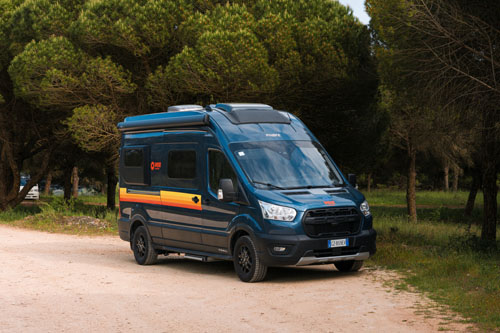
For navigating Madrid's varied roads and exploring the beautiful surrounding region, a Class B - Camper Van or a Class SI - Semi-integrated RV is often recommended for its optimal balance of comfort and maneuverability. Bandana's Class B - Camper Vans, such as the "V3" model (average length 6.36 meters), are exceptionally agile for urban navigation and accessing smaller villages or winding mountain roads in the Sierra de Guadarrama, offering superb flexibility while still providing essential amenities like a shower and toilet. These vehicles often consume around 8-10 Liters/100 km, making them quite fuel-efficient for extended trips.
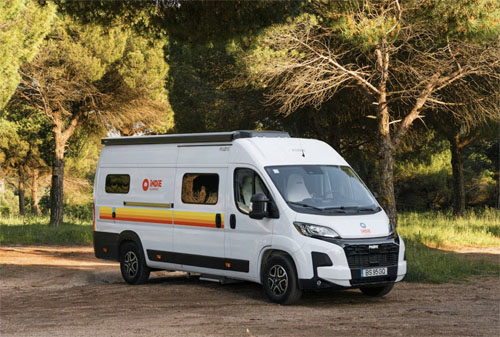
If you desire more interior space and comfort for a week-long trip or traveling with family, Class SI - Semi-integrated RVs from Bandana's fleet, like the "B 2 - Classic" (average length 6.5 meters), are an excellent choice. These models provide ample living space, larger kitchens, and more storage, without being overly cumbersome on Spanish highways and most secondary roads. They generally offer sufficient ground clearance for diverse Spanish road conditions and are less likely to encounter restrictive height or width limits compared to the very largest Class C Alcove or Class A Integrated models. The additional space for preparing meals is a definite plus for many travelers. For cooking enthusiasts, check out our RV-friendly recipes playlist for inspiration.
Should I Choose a Compact Van Instead of a Large RV in Madrid?
While a compact campervan (Class B) might seem more agile for city centers and narrow streets, most RV sizes can generally be driven without significant issues in Madrid and its surrounding areas, especially on major highways. The primary benefit of a compact van, such as Bandana's "Combi Van" (average length 5 meters), is indeed easier parking in crowded urban environments and typically lower fuel consumption (around 9-12 Liters/100 km). However, larger RVs like a Class SI semi-integrated (average length 6.9 meters) or Class C alcove (average length 7.5 meters) offer significantly more indoor space, comfort, and amenities such as larger bathrooms and more extensive kitchen facilities. These benefits often outweigh the slight maneuverability trade-off for many travelers seeking an extended adventure.
Choosing a larger rented RV is advisable if comfort, ample living space, and comprehensive amenities are priorities for your trip, especially for longer journeys or groups of 4-6 people. Most of your driving will occur on Spain's well-maintained regional roads and autopistas where RV size is less of a hindrance. When approaching Madrid, consider utilizing park-and-ride options or parking at designated RV-friendly spots on the outskirts, like those near the M-40 ring road or Camping Osuna. This strategy allows you to enjoy the spaciousness of a larger motorhome while still conveniently exploring the city center via public transport.
Can I Park Anywhere? Free & Wild Camping Rules in Madrid
In Spain, the distinction between 'parking' and 'wild camping' for RVs is critical, particularly around Madrid, and greatly influences where you can legally stay overnight. While 'parking' a rented RV is generally permitted anywhere a standard car can park (provided it occupies a single parking space without deploying external elements like awnings or leveling jacks), 'wild camping' or 'overnight stopping with camping amenities deployed' outside of designated areas is largely prohibited and can result in significant fines. Many municipalities in Spain, including those near popular natural sites close to Madrid, have specific bylaws prohibiting overnight RV parking or wild camping to protect the environment and manage tourism.
For Madrid and its surrounding region, designated campsites and legal RV parking areas (áreas de autocaravanas) are the safest and most recommended options for overnight stays, offering amenities such as water, electricity, and waste disposal. A popular choice for Madrid is Camping Osuna, which offers facilities and good public transport links into the city center. Rules vary significantly by region and even by municipality, so always check local regulations and follow local law before parking overnight. Utilizing apps and websites like Park4Night is highly recommended for locating authorized spots and reading recent traveler reviews on specific locations. For broader trip planning, remember to check out RV Travel Guide to Madrid - Tips and Top Spots 2026 for more ideas.
Can I Drive an RV Into the City Center? Heights, Tunnels & Local Signage
Generally, you can drive a rented RV into most city centers in Spain, including Madrid, but it requires careful attention to local signage, especially concerning height limits, environmental zones, and resident-only streets. Madrid has strict Low Emission Zones (ZBEs) where access is restricted based on your vehicle's environmental label. The central 'Madrid ZBE' has the tightest controls, and larger, older RVs may be prohibited or incur fines if entered without the correct permit or label. Drivers must always pay close attention to signs indicating height restrictions for tunnels, which are common in Madrid, and almost all underground parking garages are too low for RVs (typically maxing out at 2 meters). Certain historic arches or narrow streets within Madrid's core may also have explicit width or height restrictions.
Many central streets in Madrid are narrow or pedestrianized, and some areas are designated for residents-only, so planning your routes carefully and utilizing peripheral parking with public transport connections is often the most practical and enjoyable approach for city exploration. For instance, consider parking your RV at a dedicated lot near the M-30 ring road, such as the parking areas around Ciudad Universitaria or near the Chamartín train station, and then taking the Metro or a bus into sights like the Prado Museum or Plaza Mayor. Drive slowly and carefully, and you can drive almost anywhere without issues. No need to stress - just use common sense and pay attention.
What do I need to drive my motorhome in Spain?
To drive a rented motorhome in Spain, you need a valid driving license, which will depend on the vehicle's weight: a Category B license is sufficient for motorhomes up to 3,500 kg, covering most campervans and smaller Class C models. For larger motorhomes between 3,500 kg and 7,500 kg, a Category C1 license is required. Along with your license, you should carry your vehicle registration, insurance documents, and a valid ID (such as your passport). EU/EEA citizens can use their national driving license without additional permits. Non-EU drivers, particularly from the US, must typically carry an International Driving Permit (IDP) alongside their national license, as it serves as an official translation.
Furthermore, Spanish law requires certain safety equipment to be present in your rented motorhome, including a reflective vest (to be worn if you exit the vehicle on the roadside), two warning triangles, and spare bulbs for external lights. Always ensure your rental motorhome is equipped with these items. All drivers must also adhere to Spanish traffic laws, including specific speed limits for RVs, strict alcohol limits, and rules regarding environmental zones (ZBEs) in cities like Madrid. Bandana RV ensures all our partner suppliers provide vehicles that meet these legal requirements for a worry-free journey.
Can I drive in Madrid with a US license?
Yes, you can generally drive a rented RV in Madrid with a valid US license, but it is strongly recommended that you also carry an International Driving Permit (IDP). While an IDP is not mandatory for short stays in most cases, it acts as an official translation of your US license and is widely recognized internationally, simplifying communication with Spanish law enforcement or rental agencies. It is crucial to carry both your physical US driver's license and the IDP at all times while driving in Spain. This dual documentation helps avoid potential misunderstandings or delays, ensuring a smoother travel experience. For detailed requirements regarding license categories and vehicle weights, you can refer to the "Can You Drive an RV in Madrid? License & Age Rules" section earlier in this guide.
What are the new motorhome rules in Spain?
Recent motorhome rules in Spain have largely focused on refining regulations for parking, wild camping, and access to Low Emission Zones (ZBEs) in urban areas such as Madrid. Authorities are increasingly enforcing the distinction between 'parking' (where the RV is simply parked like any other vehicle without deploying camping equipment) and 'camping' (where amenities like awnings are extended, which is generally restricted to campsites). This distinction is critical for rented RVs to avoid fines. Many cities, including Madrid, have expanded or implemented ZBEs, requiring vehicles to have an environmental label (Distintivo Ambiental) for entry, with stricter rules for older or higher-emission motorhomes in central areas. These rules can affect an RV rental near Madrid Airport, for example, if you plan to drive directly into the city center after pickup.
Specific regulations for overnight stays and wild camping continue to be determined at the municipal level, leading to varying rules across different regions, making it essential for RV rental travelers to check local bylaws. It's not uncommon for coastal towns or popular natural parks to have stricter rules about overnight parking outside designated areas. Always use dedicated RV parking areas (áreas de autocaravanas) or official campsites for overnight stays. For the most up-to-date information and to plan compliance, consult local tourism boards or reliable RV travel apps.
What requirements do you need to drive an RV?
To drive a rented RV in Spain, you need a valid driver's license appropriate for the vehicle's weight: a Category B license for motorhomes up to 3,500 kg, and a Category C1 license for RVs between 3,500 kg and 7,500 kg. Drivers must be at least 21 years old for most rental companies. Bandana Caravan does not impose any young driver surcharges or vehicle class restrictions based on age, making RV travel accessible for younger adults who meet the minimum age. International drivers must carry an International Driving Permit (IDP) in conjunction with their national license to ensure smooth interactions with authorities.
Furthermore, you'll need to have the vehicle's registration documents and valid insurance, which are typically provided by your rental company. It's also important to confirm that you meet any specific rental company requirements regarding driving experience, although Bandana RV's partners generally focus on the license and age criteria. Our transparent booking process ensures you know all requirements upfront, with no hidden fees or surprises.
Is Spain camper van friendly?
Spain is generally considered very campervan friendly, offering an abundance of scenic routes, dedicated 'áreas de autocaravanas' (RV areas), and numerous campsites, making it an ideal destination for exploring by rented RV or campervan. The country boasts incredibly diverse landscapes, from the sun-drenched coastal roads of Andalusia to the dramatic mountainous regions of the Pyrenees and historic towns like Toledo, all perfect for road trips. RV PLANET (rvplan.net) offers more than 1,300 pre-planned routes across 5 continents, including many tailored for Spain, making planning your adventure effortless.
However, navigating major cities like Madrid requires careful planning due to Low Emission Zones (ZBEs), limited parking for larger vehicles, and strict rules against wild camping within city limits. Outside of major cities, Spain offers a welcoming environment for campervans and motorhomes, with many services and infrastructure catering to RV travelers. Adherence to local parking and camping regulations is crucial, but with a little foresight, your Spanish RV rental adventure will be memorable and hassle-free. Rent a Campervan in Madrid and see for yourself!
Do you need a license to get an RV?
Yes, you absolutely need a valid driving license to rent and drive an RV in Spain, as RVs are motor vehicles subject to the same licensing laws as cars, albeit with specific weight categories. As previously outlined, a standard Category B license is sufficient for RVs up to 3,500 kg, which includes most campervans and many smaller motorhomes such as the "Active Classic." For heavier RVs exceeding 3,500 kg but not more than 7,500 kg, a Category C1 license is required, typically for larger Class C or Class A models.
Rental companies will rigorously check your license type and validity, along with age requirements, before allowing you to rent an RV. Bandana Caravan works with direct partners who prioritize clear communication, ensuring you understand all the necessary documentation before you finalize your booking. We are true RV specialists, not just a travel agency side department, meaning we genuinely know what's involved in getting you on the road safely and legally.
What is the typical cost of RV insurance?
The typical cost of RV insurance in Spain, specifically for a rental, varies significantly based on factors like the type and value of the RV, the driver's age and experience, the level of coverage chosen, and the rental period. When renting an RV through Bandana, basic third-party liability insurance is usually included in the initial rental price, covering damages to other vehicles or property. This provides essential protection but often comes with a substantial deductible for damages to your rental RV.
Many rental companies offer additional comprehensive insurance packages or collision damage waivers (CDW) that significantly reduce your deductible (excess) for damages to the rental RV. These optional upgrades typically cost an extra €15-€40 per day, providing extra peace of mind during your trip. Bandana offers top-level deductible reimbursement as an optional upgrade, allowing you to travel with confidence, knowing you're well-protected against unexpected costs. It's crucial to thoroughly review the insurance policy offered by your rental company, understand what is covered and what is excluded, and consider these optional add-ons for a truly transparent and surprise-free experience.
What is the best insurance company in Spain?
Identifying the "best" insurance company in Spain for RV rentals is subjective and depends heavily on individual needs, coverage preferences, and the specific rental supplier you choose. When renting an RV through a comparison platform like Bandana, your primary insurance coverage will be provided by the rental company itself. Therefore, rather than seeking a separate insurance company, your focus should be on thoroughly understanding the policy offered by your selected rental supplier through Bandana's transparent booking process.
We work with over 50 leading RV suppliers worldwide, including trusted names, and each provides their own insurance options. Look for policies that offer comprehensive coverage tailored to RVs, including roadside assistance, theft protection, and coverage for various types of damage (e.g., collision, fire, vandalism). It is advisable to read all terms and conditions carefully, especially regarding exclusions and the claims process, to ensure you have the peace of mind you deserve. Our team of true RV specialists can help clarify any details during your pre-booking comparison and booking support stages.
What You Shouldn't Miss
Madrid and its surroundings offer a rich tapestry of experiences perfect for a comfortable RV adventure, especially for seniors seeking cultural immersion and scenic beauty without excessive driving.
- Explore Madrid's Royal Palace and Plaza Mayor: After parking your rented motorhome at a peripheral campsite like Camping Osuna, take public transport directly to the heart of Madrid. Spend a day wandering through the opulent Royal Palace, enjoying the grandeur of Plaza Mayor, and strolling through the beautiful Sabatini Gardens.
- Day Trip to Toledo - The City of Three Cultures: Drive your RV south from Madrid for about an hour (approximately 75 km) to the historic city of Toledo. This UNESCO World Heritage site, perched on a hill, offers stunning views and a rich history of Christian, Muslim, and Jewish influences. Park your campervan outside the city walls and explore its narrow streets, cathedral, and synagogues on foot.
- Discover the Sierra de Guadarrama National Park: Head north from Madrid in your Class SI semi-integrated RV for a scenic drive into the Sierra de Guadarrama. This national park offers picturesque mountain villages like Navacerrada, hiking trails suitable for various fitness levels, and stunning natural features like the Peñalara Lake. You'll find designated RV parking spots and campsites within easy reach of these natural wonders. Consider the
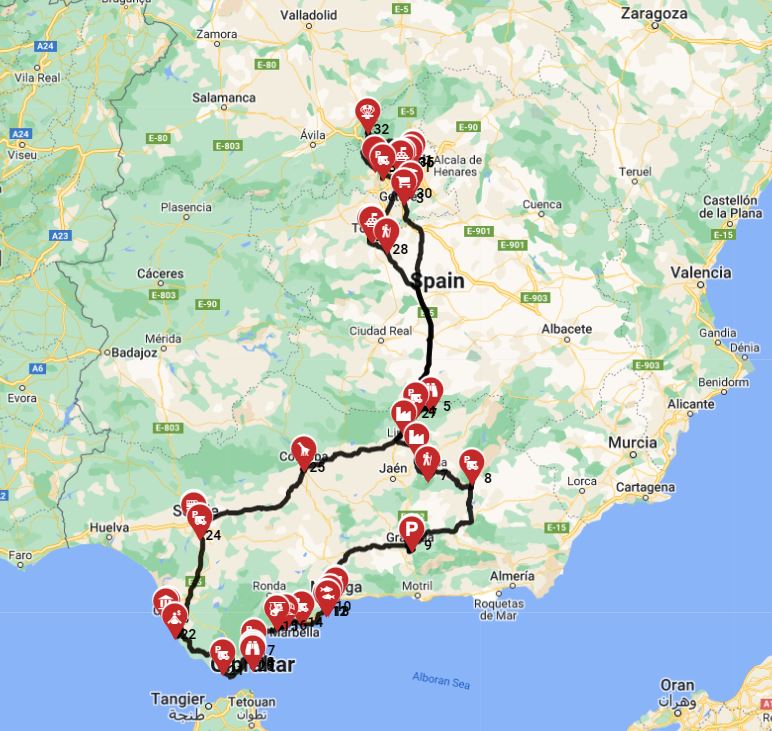
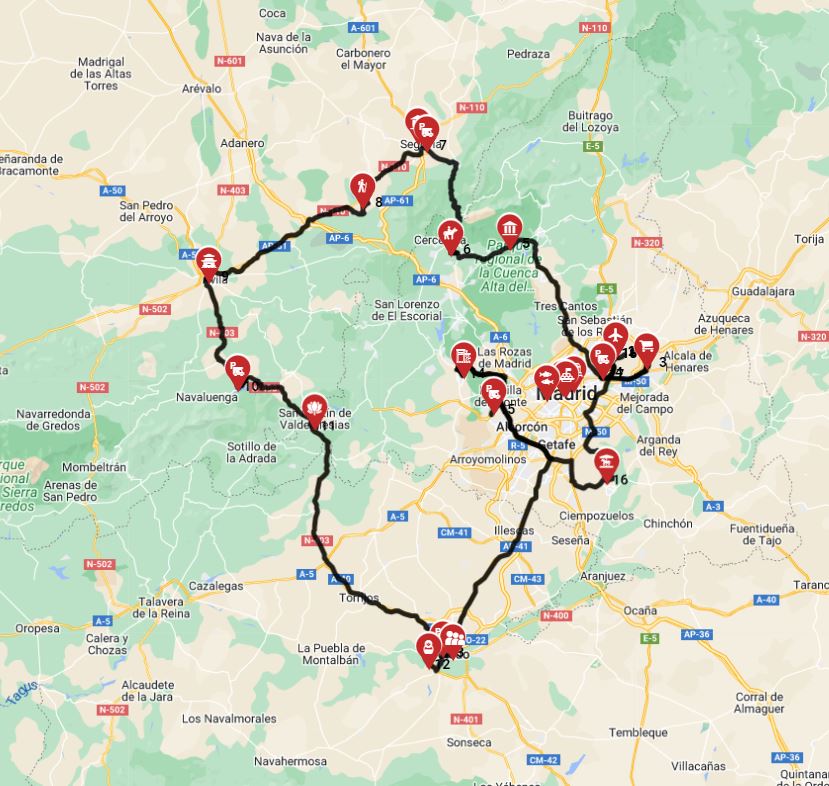
- Southern Spain Explore the Madrid Roundtrip - Southern Spain Route itinerary which includes 2 hiking areas and 2 Natural Features.
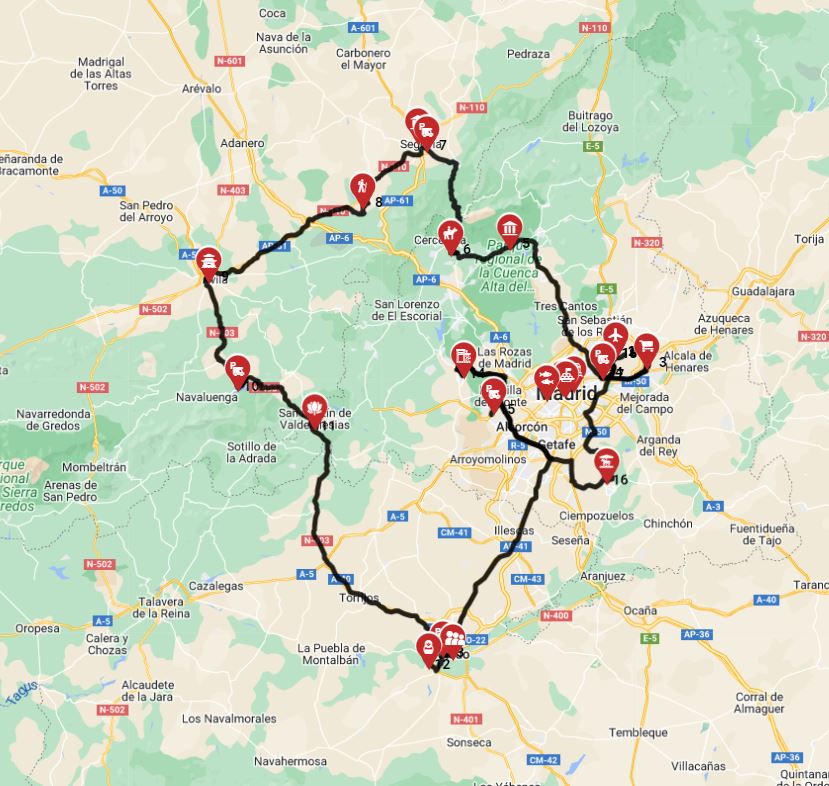
 Madrid Roundtrip
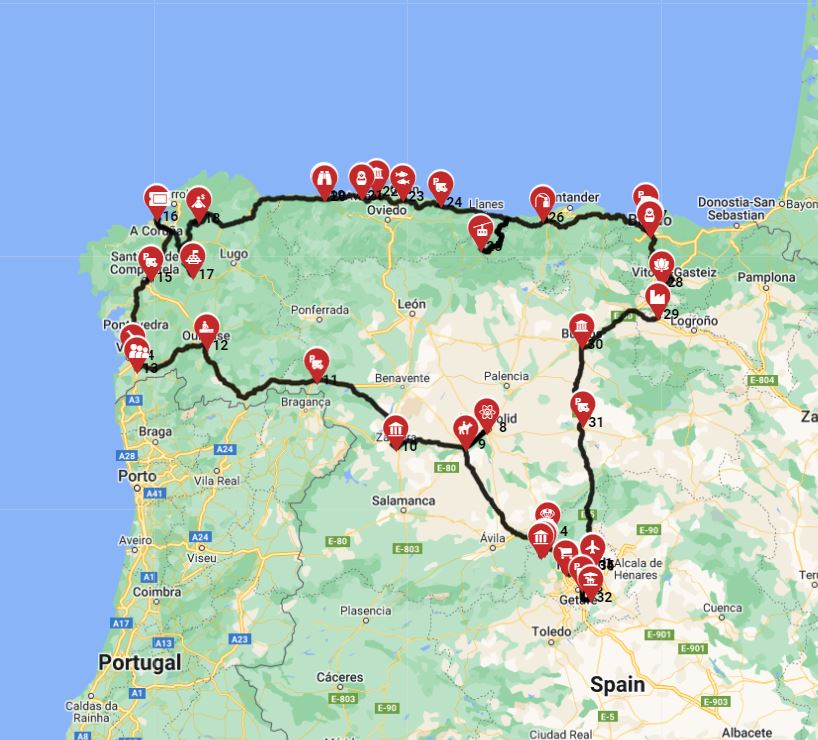
 - Wine Tasting in Ribera del Duero: For a more relaxed pace, take your rented RV on a several-day trip north-east from Madrid to the renowned Ribera del Duero wine region. Enjoy leisurely drives through vineyards, stop at charming bodegas for tastings, and savor the local cuisine. Many bodegas offer RV-friendly parking. Our "Madrid Roundtrip" (8 days, 562.4 km) offers 2 Traditional Restaurant / Fine Dining experiences.
- Visit the Royal Site of San Lorenzo de El Escorial: A must-see, this grand monastery, palace, and basilica complex is about 50 km northwest of Madrid. Easily accessible by RV, it offers ample parking and a fascinating glimpse into Spanish history and architecture. The
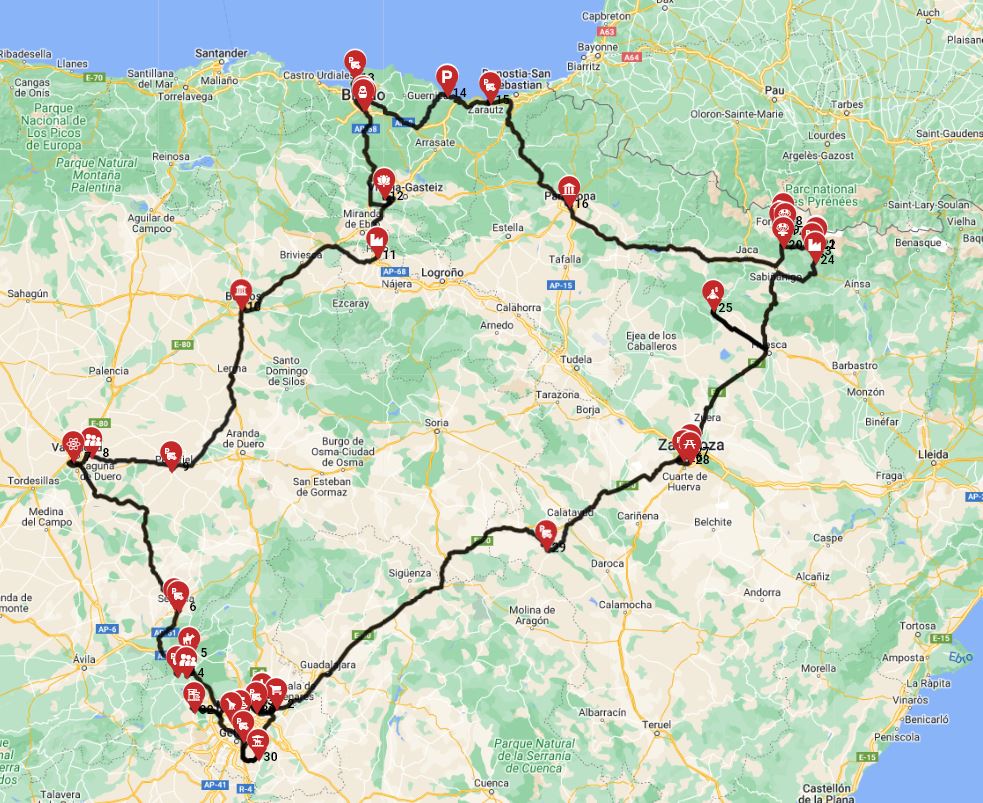
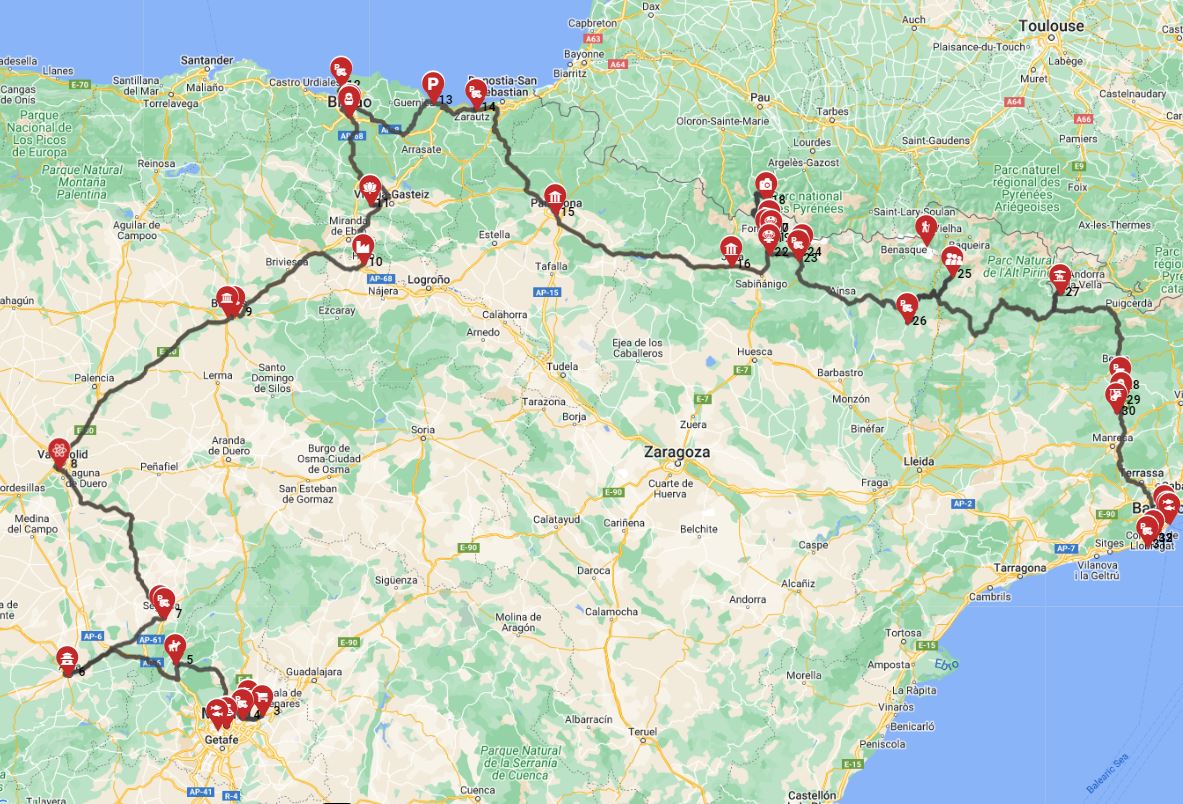
Explore the Madrid to Barcelona - including the Basque Country and the Pyrenees Route itinerary features 4 Historical Sites including the monastery.
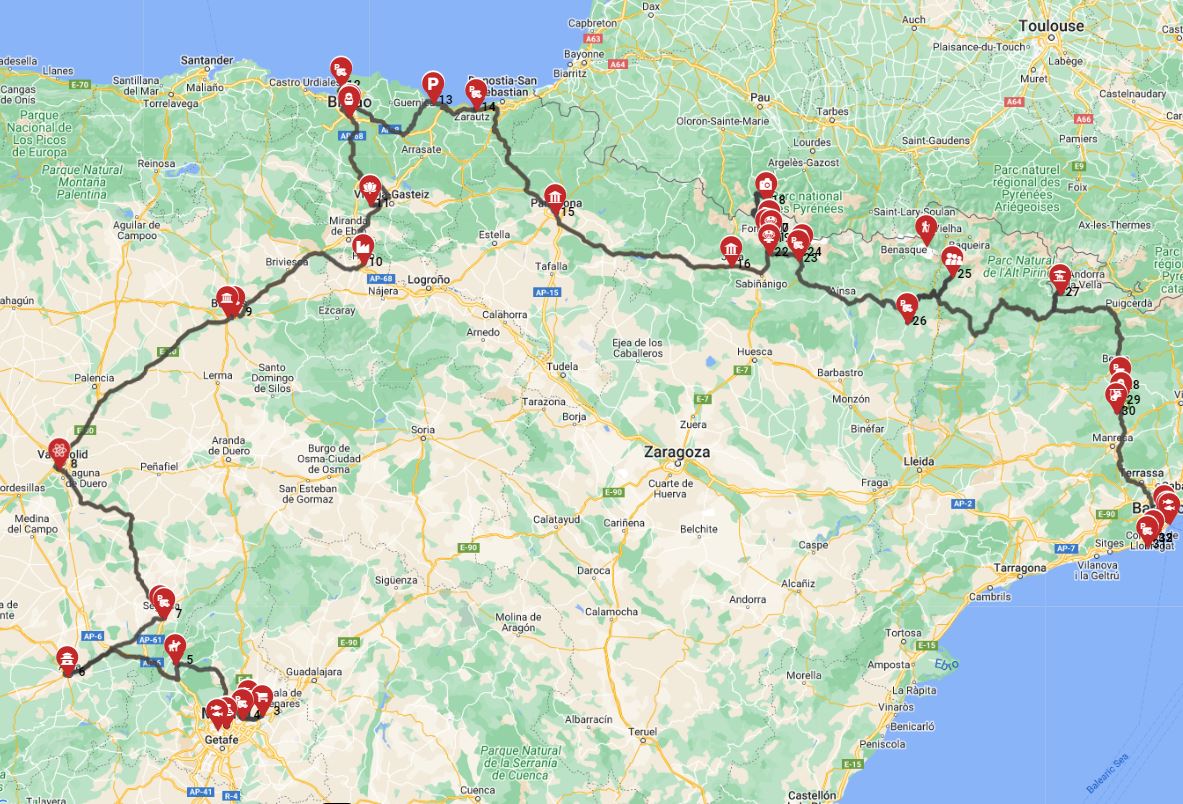 Madrid to Barcelona - including the Basque Country and the Pyrenees
Looking for expert insights from Avi Bandana? Top 5 Adventures - recommendations from Avi Bandana
🎬 Video coming soon
Final Thoughts
Madrid, with its rich history, vibrant culture, and proximity to stunning natural landscapes, is an exceptional destination for an RV rental adventure, particularly for senior travelers seeking comfort and freedom. From navigating the city's accessible outskirts to embarking on week-long trips into the mountains or wine country, a rented motorhome offers the perfect mobile headquarters for exploration. Remember to travel slowly, enjoying each moment and connecting with the local culture and scenery, aiming for an average of no more than 100-150 km per day.
With Bandana Caravan, you’re not just renting a vehicle; you’re gaining a partner dedicated to making your journey seamless, transparent, and memorable. Our expertise, 24/7 support during the booking process, and commitment to no hidden fees mean you can focus on the joy of discovery. So, embrace the open road, discover the comfort routes around Madrid, and embark on an unforgettable Spanish adventure!
Find Motorhome Rentals in Madrid