
In This Guide
- Can You Drive an RV in Osaka? License & Age Rules
- Road Conditions & Terrain in Osaka
- RV Size Limits, Bridges & Restricted Zones
- Fuel: Diesel vs. Petrol & Cost per 100 km
- Tolls, Vignettes & Border Rules
- Driving Tips for rv rental deals Travelers
- Recommended RV Class for Osaka Roads
- Should I Choose a Compact Van Instead of a Large RV in Osaka?
- Can I Park Anywhere? Free & Wild Camping Rules in Osaka
- Can I Drive an RV Into the City Center? Heights, Tunnels & Local Signage
- Where can I find RV services (dump stations, water, repairs) in Osaka?
- What are the typical costs associated with RV travel in Osaka?
- Are there specific RV-friendly day trip itineraries from Osaka?
- What are the cultural nuances and specific etiquette for RVers in Japan and Osaka?
- What unique experiences does an RV unlock in Osaka compared to train/hotel travel?
- What are the best times of year to rent an RV in Osaka for specific events or weather?
- How do I navigate Osaka's urban environment with an RV?
Embarking on an RV adventure in Osaka, Japan, offers a fantastic blend of vibrant city exploration and serene natural escapes. Imagine the freedom of waking up to the sounds of nature, then driving a short distance to explore historic temples, bustling markets, or tranquil hot springs. At Bandana Caravan, we've been helping tens of thousands of travelers discover the world by RV since 2001, and Osaka is a destination where a rented motorhome truly shines.
For live availability and current prices, start with our RV Rental Osaka - Complete Guide 2026 guide. We are true RV specialists, not just a travel agency side department, which means we bring unmatched personal experience and attention to the smallest details, ensuring your trip is smooth and enjoyable from the moment you start planning.
Can You Drive an RV in Osaka? License & Age Rules
Yes, you can absolutely drive a rented RV in Osaka, and the licensing requirements are straightforward for international visitors. Foreign drivers require an International Driving Permit (IDP) alongside their home country's valid driver's license to legally operate an RV in Japan.
The minimum driving age for an RV in Japan is generally 18 years, but rental companies typically set a higher minimum of 21 years old for their motorhome and campervan fleets. There are no young driver surcharges and no vehicle class restrictions based on age when renting with our partners. Most standard RVs, including Class A, Class B, and Class C models (up to 3.5 tons gross vehicle weight), can be driven with a regular Class 1 Japanese license or an equivalent foreign license when accompanied by an IDP. This makes an RV rental in Osaka accessible for many travelers.
Road Conditions & Terrain in Osaka
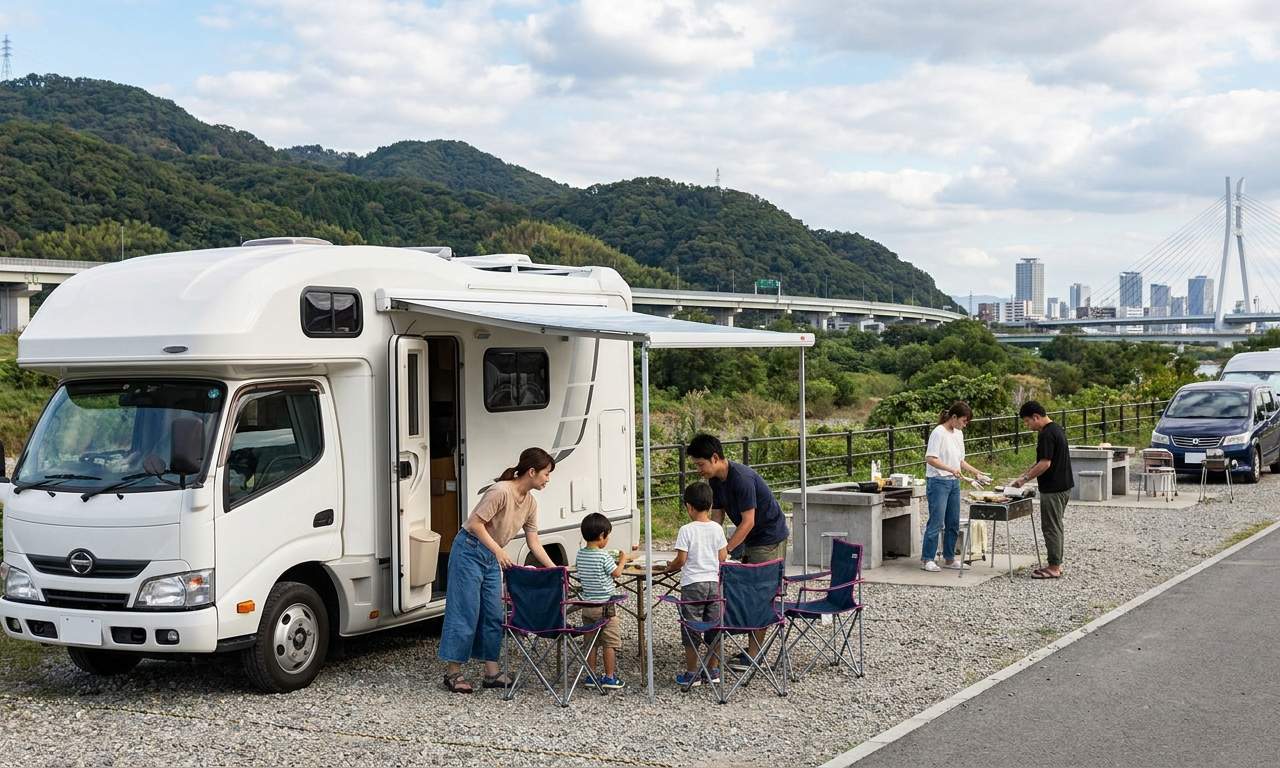
Osaka Prefecture boasts excellent road quality, including meticulously maintained expressways and local roads, making them highly suitable for any rented RV travel. While the immediate Osaka city area is largely flat and urban, the surrounding Kansai region offers diverse terrain, including mountainous routes towards Nara, Wakayama, and Hyogo that feature winding roads and scenic overlooks.
Driving a rental motorhome in Japan encourages a slower, more scenic pace of travel, typically averaging 100-150 km per day. This allows you to truly feel the place, connect to the local culture, savor the regional food, and appreciate the stunning scenery beyond the immediate city, maximizing the flexibility of your RV rental in Osaka. Always remember that Japan drives on the left side of the road, so take a little extra time to adjust your driving habits.
RV Size Limits, Bridges & Restricted Zones
While there are no universal 'RV-specific' size limits for general roads in Osaka, drivers must be aware of vehicle height restrictions, which can typically range from 2.5m to 3.5m, especially for tunnels, underpasses, and multi-story car parks. Major bridges and expressways in and around Osaka, like sections of the Hanshin Expressway or routes leading to the Akashi Kaikyō Bridge, are well-designed to accommodate large vehicles, ensuring smooth passage for most rental motorhomes.
However, caution is always advised in older, narrower urban areas or historical districts where streets can be significantly tighter. Environmental zones are not typically a widespread concern for standard RVs in Osaka, but it's always prudent to check local signage for any specific restrictions or permits, especially if venturing into very sensitive natural areas. Drive slowly and carefully, and you can drive almost anywhere without issues. No need to stress - just use common sense and pay attention.
Fuel: Diesel vs. Petrol & Cost per 100 km
Most rental RVs in Bandana Caravan's global fleet typically run on diesel fuel, which is widely available at service stations across Japan. Smaller campervans, such as Class B models (e.g., a "Camper Van" with a 75 Liter fuel tank for a 2-person trip, averaging 8-10 Liters/100 Km), often use petrol, while larger Class C (e.g., a "MH-A" with a 208 Liter fuel tank for a family of 6, averaging 10-12 Liters/100 km) and Class SI (averaging 10-11 Liters/100 km) motorhomes are usually diesel.
While fuel costs vary, renters can expect average consumption rates for Bandana's fleet: Class A motorhomes typically consume 8-12 Liters/100 Km, and larger Class C models like the "24 Class C Motorhome" with a 208 Liter fuel tank might be around 11 Liters/100 km. Keeping an eye on fuel efficiency is a great way to manage your overall trip budget, as fuel is one of the main ancillary costs of RV travel. You can track all these expenses when planning your RV PLANET routes. On the routes offered through RV PLANET routes, you can itemize and track every expense along the way for easy budgeting.
Tolls, Vignettes & Border Rules
Japan's extensive expressway network is tolled, and these fees can be a significant part of an RV travel budget in Osaka and beyond. Vignettes are not used in Japan; tolls are collected either at booths, requiring cash or credit card, or more conveniently via Electronic Toll Collection (ETC) cards.
Many Bandana partner RVs offer ETC cards for seamless payment and potential discounts, avoiding the need for cash at every toll gate and speeding up your journey. Always inquire about ETC card availability when booking your RV rental in Osaka. Since Japan is an island nation, border rules are not a concern for domestic RV travel, allowing for hassle-free exploration across the main islands.
Driving Tips for rv rental deals Travelers
For RV rental travelers in Osaka, remember that Japan drives on the left side of the road; take extra time to adjust, especially at intersections and roundabouts. Utilizing a GPS system with English capabilities is crucial, and consider one that allows input of vehicle dimensions to avoid unsuitable routes, particularly when navigating toward Osaka's Umeda or Namba districts.
Be mindful of narrow streets in residential areas and older towns, which require careful maneuvering and slower speeds. Always adhere to local parking regulations, which are strictly enforced in cities like Osaka; be prepared to pay for parking in urban centers and look for designated RV-friendly surface lots. Familiarize yourself with Japanese road signs, many of which use standard international symbols but can also include Japanese text. Drive slowly and carefully, and you can drive almost anywhere without issues. No need to stress - just use common sense and pay attention.
🎬 Video coming soon
Recommended RV Class for Osaka Roads
For optimal maneuverability in Osaka's urban areas and access to slightly narrower roads, a Class B - Camper Van (averaging 5.8m in length) from Bandana's fleet, such as the "2 Berth Hi Top" or a "Category Van" (max 4 people, often 5.8m long), is highly recommended. These compact rental campervans offer superior agility for navigating city streets while still providing essential amenities like a sleeping area, a small kitchen, and often a toilet and shower.
If more comfort and interior space are desired without significant compromise on handling, a Class SI - Semi-integrated RV (averaging 6.9m in length), like the "2 Berth Rover" or a "Category Small" (max 3 people), offers a good balance for Osaka and the surrounding Kansai region. Both Class B and Class SI rented motorhomes provide sufficient amenities for a comfortable journey while being manageable on Japan's well-maintained but occasionally compact road network.
Should I Choose a Compact Van Instead of a Large RV in Osaka?
While a compact camper van (like a Class B rental such as the "Juliette Family 5" or "Paradise S/T") offers superior maneuverability for navigating extremely narrow streets and easier parking in congested Osaka city centers, larger RVs (like a Class C "Explorer" or a "Category Large" with dimensions like 7.1m length, 2.78m width) are generally manageable in Osaka for most travelers. For families or groups of 4-6 people prioritizing indoor space, amenities, and comfort, the trade-off of a slightly larger rented motorhome is often worth it.
Major roads and highways in Osaka and the wider Japan region accommodate all standard RV sizes, meaning you won't be overly restricted. Opt for a compact van if your itinerary heavily involves historic districts with tight alleys or if you are specifically looking to minimize vehicle size for quick city stops. Otherwise, a larger rental RV provides a more comfortable travel experience without significant navigational issues on primary routes.
Can I Park Anywhere? Free & Wild Camping Rules in Osaka
Wild camping, which involves parking overnight outside of designated areas, is generally not permitted in Japan and is strongly discouraged in Osaka. RVers should instead utilize designated campsites and RV parks, which offer essential facilities like electricity, fresh water, and waste disposal. For example, local campgrounds like Hoshida Park Campground or the Auto Campsite in neighboring Nara offer excellent amenities.
Michi-no-Eki (roadside stations), identifiable by specific signage, can be used for short overnight stops for rest, but they are primarily for daytime breaks and usually do not allow full 'camping' setups with awnings extended or long-term stays. Always consult our RV Camping in Osaka - Best Campgrounds 2026 guide for recommendations on legal and safe overnight parking options for your rented campervan.
Can I Drive an RV Into the City Center? Heights, Tunnels & Local Signage
Yes, it is generally possible to drive a rented RV into Osaka's city center, but drivers must exercise caution and plan routes carefully using a reliable GPS system that accounts for vehicle dimensions. Pay close attention to local signage for height restrictions, particularly for underground car parks, tunnels on routes like the Hanshin Expressway, and elevated expressways that might have lower clearances (e.g., some underpasses might be 2.8m). Many public parking garages in central Osaka have height restrictions well below typical RV heights, so research RV-friendly parking options, which are often surface lots or dedicated RV spaces near major attractions like Osaka Castle, before entering the busiest areas.
Our goal at Bandana is full transparency, so we always recommend thorough pre-trip planning. Drive slowly and carefully, and you can drive almost anywhere without issues. No need to stress - just use common sense and pay attention to signage. For more navigation tips, consult our RV Travel Guide to Osaka - Tips and Top Spots 2026.
Where can I find RV services (dump stations, water, repairs) in Osaka?
Designated campgrounds and RV parks throughout Osaka Prefecture and neighboring Kansai regions are the primary locations for dump stations, fresh water refills, and electrical hookups. Many of these facilities, such as the Osaka Nanko Kita Campground (although primarily for tent camping, they sometimes offer limited RV services), are well-equipped to handle typical RV needs.
Some larger Michi-no-Eki (roadside stations) may offer basic facilities like restrooms and occasionally water, but they rarely provide dump stations for black/grey water, so plan accordingly. For emergency repairs or specialized RV supplies, consulting with your Bandana rental provider or using online maps to locate specific RV dealers or reputable auto repair shops in the wider Osaka area, such as those along Route 26 near Sakai, is recommended. Always remember that real people are behind you with 24/7 support for your pre-booking comparison, booking process, and post-booking coordination with suppliers.
What are the typical costs associated with RV travel in Osaka?
Key costs for RV travel in Osaka include the dynamic daily rental fee, expressway tolls (which can add up quickly, especially on routes like the Hanshin Expressway), and fuel expenses, which for a typical Class C motorhome might be around 11 Liters per 100 km. Expect to budget for campsite fees, which can range from ¥2,000-¥5,000 ($13-$35 USD) per night at designated RV parks, and potentially city parking garage rates, especially for larger vehicles. Remember that prices are dynamic like flight tickets, changing daily based on availability, seasonality, and supplier decisions.
Food costs can be significantly managed by utilizing your rented RV's kitchen to prepare meals. Cooking on board can make your trip a more budget-friendly option than constant dining out. For inspiration, check out our RV-friendly recipes playlist. This contributes to overall savings on accommodation and meals. For budgeting, on the routes offered through RV PLANET routes, travelers can itemize and track every expense along the way for easy budgeting, ensuring full transparency in your trip costs.
Are there specific RV-friendly day trip itineraries from Osaka?
An RV provides unparalleled flexibility for memorable day trips from Osaka, unlocking experiences not easily replicated by public transport. Imagine driving your rented motorhome to Nara, famous for its wild deer and ancient temples like Todai-ji, allowing you to access sites outside the immediate city center easily. For live pricing on suitable vehicles, check our RV Rental in Osaka for Couples - Pricing 2026 guide.
You can also explore the spiritual mountain retreat of Koyasan, a UNESCO World Heritage site, where an RV offers convenience for reaching remote temples and carrying hiking gear for a full day of exploration. Coastal areas in Wakayama Prefecture or rural Hyogo, like Awaji Island via the Akashi Kaikyō Bridge, offer scenic drives, fresh seafood, and relaxing hot springs (onsen) that are easily accessible with the freedom of a rented motorhome. Our Rent&Plan service even offers pre-planned routes by professionals to help you discover these gems with minimal effort and maximum enjoyment.
What are the cultural nuances and specific etiquette for RVers in Japan and Osaka?
RVers in Japan and Osaka should always be mindful of noise levels, especially when staying overnight at Michi-no-Eki or designated campgrounds, to respect local residents and other travelers. Japan enforces strict waste separation rules; your rented RV should be equipped to sort garbage into burnable, non-burnable, plastics, and recyclables, as local disposal practices are very precise.
Respect private property and avoid parking overnight in unauthorized areas; always seek out designated campsites or RV parks. Show politeness and consideration in all interactions, as Japanese etiquette values harmony and respect. Following these simple rules ensures a smooth and enjoyable experience for everyone.
What unique experiences does an RV unlock in Osaka compared to train/hotel travel?
A rented RV provides unparalleled flexibility for spontaneous itinerary changes, allowing you to explore hidden gems and less accessible parts of Osaka Prefecture, such as the tranquil countryside of Minoh Park or the historic town of Sakai, not easily reached by public transport. The ability to carry specialized gear for hobbies like cycling along the Yodo River, surfing in Wakayama, or photography excursions directly enhances your exploration of rural Hyogo or coastal Wakayama.
Imagine enjoying the convenience of late-night event access, perhaps after a festival in Osaka Castle Park, without worrying about train schedules, or the freedom to cook your own meals, making your extended road trip more personal and often more economical. Your RV becomes a mobile headquarters, letting you tailor your adventure exactly to your desires. Discover top destinations and planning tips all in one place with Bandana!
What are the best times of year to rent an RV in Osaka for specific events or weather?
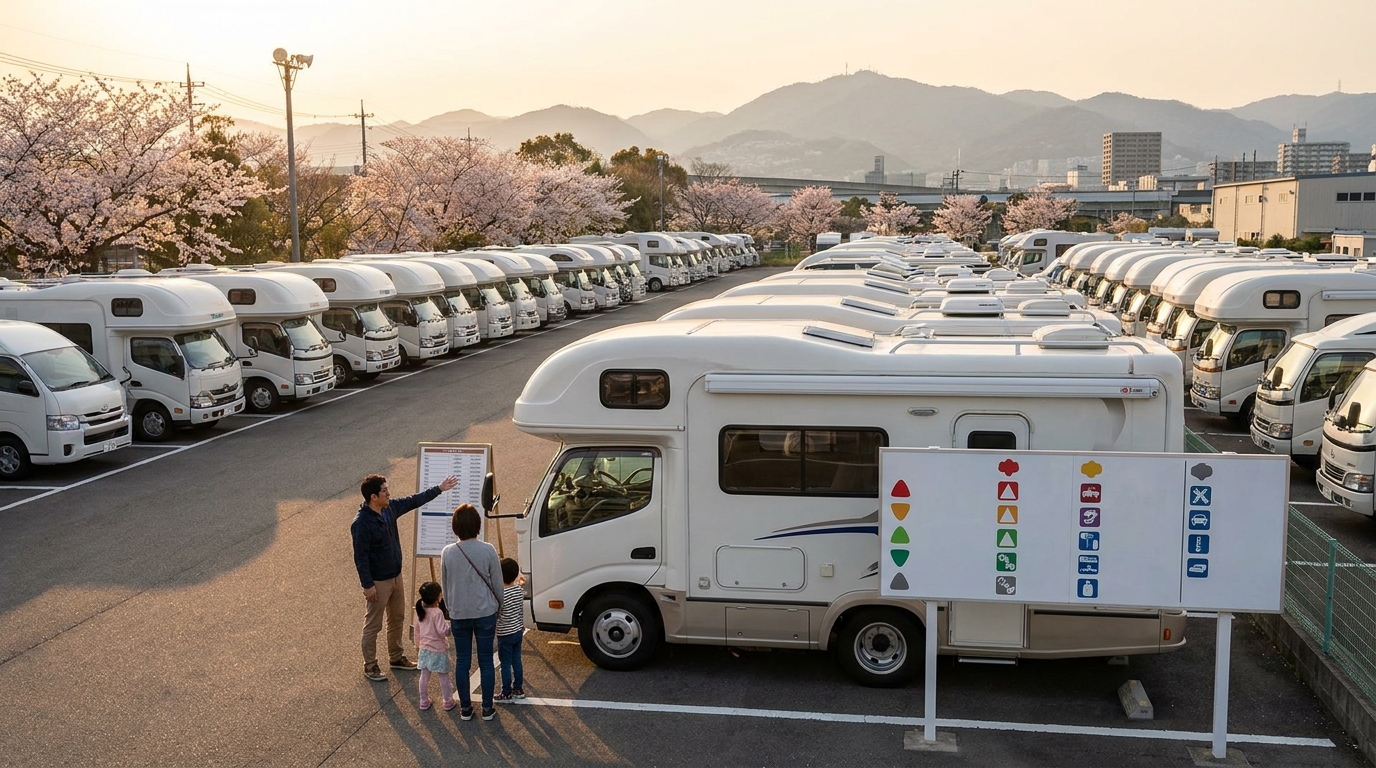
Spring (March to May) is an ideal time for experiencing the stunning cherry blossom season with an RV rental in Osaka, allowing you to visit various viewing spots like Osaka Castle Park or Kema Sakuranomiya Park at your own pace. Autumn (September to November) offers pleasant weather and vibrant fall foliage, making it perfect for scenic drives through mountainous regions near Osaka, such as Kongo-Ikoma-Kisen Quasi-National Park.
Consider late autumn to early spring to avoid the intense humidity and potential typhoon season of summer, though winter RV travel is certainly possible for those interested in nearby ski resorts in Shiga or Hyogo prefectures. For specific pricing and availability during different seasons, refer to our Winter RV Rental in Osaka - Pricing Guide 2026 and RV Rental in Osaka - Prices and Best Deals 2026.
How do I navigate Osaka's urban environment with an RV?
Navigating Osaka's urban environment with a rented RV requires careful planning, but it's entirely manageable. Using a reliable GPS system that allows input of vehicle dimensions (height, length, weight) is crucial to avoid narrow streets, low bridges, and unsuitable routes in Osaka's dense urban areas. Many modern RVs, such as the "Active Standard Auto" or "Comfort Standard Select Auto" (both Class SI), come with advanced navigation features to assist you.
Plan your entry and exit from the city center during off-peak hours (early morning or late evening) to avoid heavy traffic congestion, especially around major hubs like Umeda Station or Namba. Utilize apps or websites dedicated to RV parking in Japan to locate suitable parking spots, as many multi-story parking garages in Osaka will have height restrictions. Surface lots or designated RV parking areas, often found closer to major attractions or transport hubs, are your best bet. Remember to travel slowly, ensuring maximum enjoyment of your journey.
What You Shouldn't Miss
- **Osaka Castle Park:** Explore the iconic Osaka Castle and its extensive grounds. Park your RV in one of the larger lots surrounding the park and enjoy a walk through history.
- **Dotonbori District:** Immerse yourself in the neon-lit food and entertainment hub. Finding RV parking nearby might be a challenge, so consider parking slightly outside and using public transport for this area.
- **Nara Park & Todai-ji Temple:** Take an easy day trip from Osaka (approx. 45-60 minutes drive) to meet the wild deer of Nara Park and marvel at the Great Buddha inside Todai-ji Temple. RV parking is available at the edges of the park.
- **Koyasan (Mount Koya):** Drive your rented motorhome to this sacred Buddhist mountain, about 2 hours from Osaka. Stay overnight at a local campground and explore the tranquil Okunoin Cemetery and numerous temples.
- **Kongo-Ikoma-Kisen Quasi-National Park:** Just outside Osaka, this park offers scenic drives, hiking trails, and a refreshing escape from the city bustle. Look for smaller campgrounds or Michi-no-Eki for a restful stop with your RV.
- **Awaji Island via Akashi Kaikyō Bridge:** Enjoy a spectacular scenic drive across the world's second-longest suspension bridge to Awaji Island, offering beautiful coastal views, flower parks, and delicious local produce.
Looking for expert insights from Avi Bandana? Top 5 Adventures - recommendations from Avi Bandana
Final Thoughts
A rented motorhome adventure in Osaka and the wider Kansai region promises an unforgettable experience, blending bustling city life with serene natural beauty at your own pace. With Bandana Caravan, you're not just renting a vehicle; you're gaining a partner who handles the details, ensuring you can simply live the journey. From understanding local driving nuances to discovering hidden gems, we're here to support you before, during, and after your booking.
Imagine the freedom to chase cherry blossoms in spring, explore ancient temples, or relax in a secluded onsen, all with the comfort and convenience of your home on wheels. Our full transparency means no hidden fees, and our expertise as true RV specialists ensures you're well-prepared for the road ahead. Start planning your incredible Japanese road trip today.
Find Motorhome Rentals in Osaka