For live availability and current prices, start with our RV Rental North Canada - Complete Guide 2026 guide.
In This Guide
- Can You Drive an RV in North Canada? License & Age Rules
- Road Conditions & Terrain in North Canada
- RV Size Limits, Bridges & Restricted Zones
- Fuel: Diesel vs. Petrol & Cost per 100 km
- Tolls, Vignettes & Border Rules
- Driving Tips for RV Rental Deals Travelers
- Recommended RV Class for North Canada Roads
- Should I Choose a Compact Van Instead of a Large RV in North Canada?
- Can I Park Anywhere? Free & Wild Camping Rules in North Canada
- Can I Drive an RV Into the City Center? Heights, Tunnels & Local Signage
- What are the requirements for bringing an RV into Canada from the US?
- What is the 3-3-3 rule for RV travel?
- Can I drive a rental RV in Canada with a US driver's license?
- Can you rent an RV to drive across Canada?
- Can Americans RV in Canada?
- Is it easy to drive an RV in Canada?
- Do you need a different license to drive an RV in Canada?
- What kind of license do I need to rent an RV?
- What do you need to rent an RV in Canada?
- What kind of insurance do I need to rent an RV?
- Top Cities for RV Rental in North Canada
- What You Shouldn't Miss
- Why Book with Bandana Caravan
- Final Thoughts
- Frequently Asked Questions
Embarking on a motorhome adventure through North Canada offers unparalleled freedom to explore some of the world's most pristine wilderness and rugged landscapes. From the Yukon to the Northwest Territories, a rented RV is your perfect home on wheels, providing comfort and flexibility as you journey through stunning vistas, discover unique cultures, and encounter abundant wildlife. For live availability and current prices, start with our RV Rental North Canada - Complete Guide 2024 guide, which provides extensive details for planning your trip.
Can You Drive an RV in North Canada? License & Age Rules
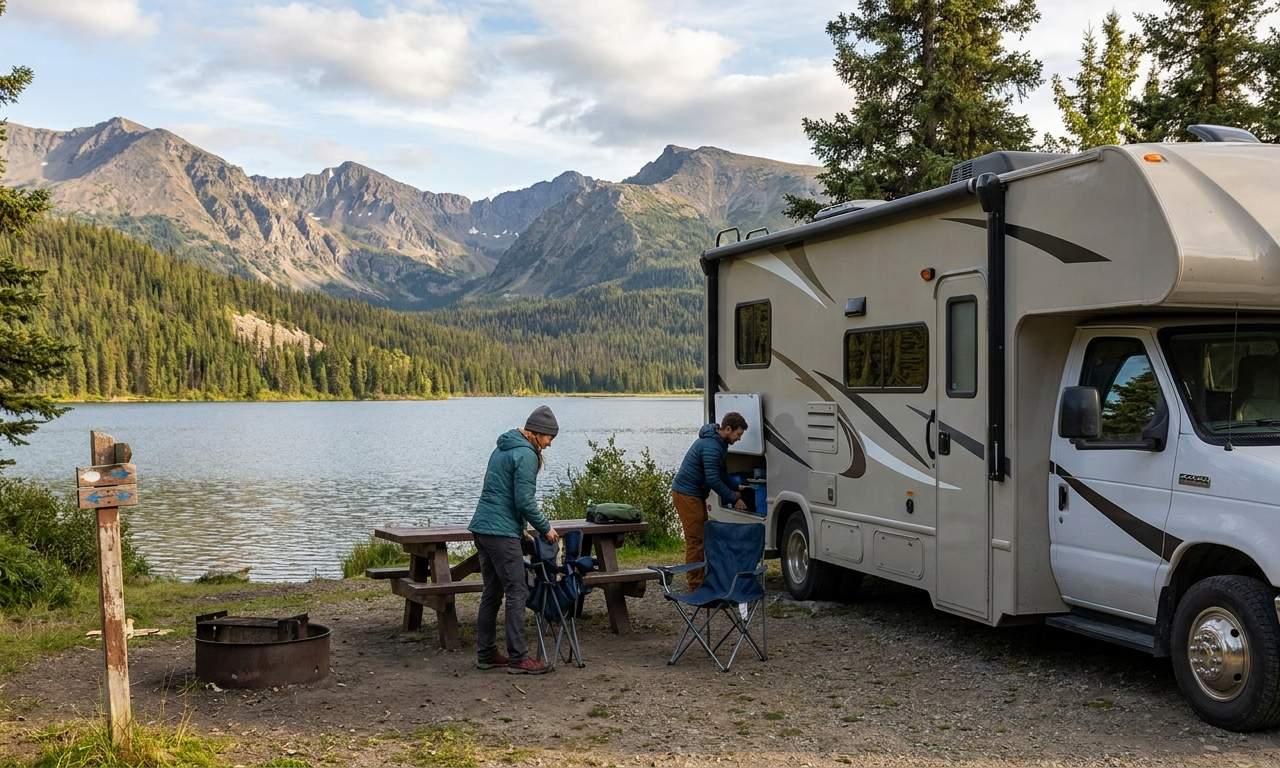
Yes, you can drive a rented RV in North Canada with a standard driver's license from most North American jurisdictions, provided the RV’s Gross Vehicle Weight Rating (GVWR) is under 11,000 kg (approximately 24,250 lbs). For most Bandana RV rental options, including Class B, Class C, and Class SI motorhomes, a regular passenger vehicle license is perfectly adequate. Rental companies typically require drivers to be a minimum age of 21, and thankfully, there are no young driver surcharges or vehicle class restrictions based on age with Bandana's partners. For foreign drivers from non-English speaking countries, an International Driving Permit (IDP) is recommended to accompany your valid home country license, though it is not legally mandatory in all Canadian provinces or territories.
Vehicles exceeding 11,000 kg GVWR, primarily larger Class A motorhomes, might require a commercial or specialized license category depending on specific provincial or territorial regulations. However, the vast majority of available rental RVs fall within the standard license weight limits. Always verify the specific requirements with your chosen supplier and familiarize yourself with local driving laws to ensure a smooth journey.
Road Conditions & Terrain in North Canada
North Canada's road conditions vary significantly, ranging from well-maintained paved highways, such as sections of the Alaska Highway, to extensive stretches of gravel and unpaved roads when venturing off main routes. The diverse terrain includes vast boreal forests, rugged mountainous regions, rolling hills, and expansive tundra, often requiring slower driving speeds and increased vigilance due to wildlife and unpredictable weather patterns.
While major arteries are generally navigable for most rented RVs, some smaller, more remote roads might be more challenging for exceptionally large or low-clearance motorhomes. We always encourage slow, scenic driving in North Canada to fully appreciate the remote wilderness and to navigate variable road surfaces safely. Patience is key when encountering gravel roads, and reducing speed helps prevent stone chips and maintains vehicle control. Imagine yourself meandering through the landscape, taking in every vista - that's the spirit of northern RV travel.
RV Size Limits, Bridges & Restricted Zones
Strict overall RV size limits are uncommon on North Canada's major highways; however, drivers must remain aware of potential height and weight restrictions on older bridges, particularly on secondary roads and in smaller, historic communities. While low bridges are rare on primary routes, always pay close attention to posted signage for specific height clearances, especially when navigating under railway passes or through older town centers. When driving a rented motorhome, using common sense and paying attention to signs will allow you to drive almost anywhere without issues.
Unlike some European cities, environmental zones based on emissions standards are not typically a concern for RV travel in North Canada. However, access to certain protected wilderness areas or national parks might be restricted to smaller vehicles or require specific permits due to ecological sensitivity or road conditions. For those planning to utilize marine routes, such as ferries to remote coastal communities, be aware that ferry limits can impose restrictions on RV length and weight, and often require advance booking. Always check ferry operator rules well ahead of your travel dates to avoid any surprises. For more planning resources, consider our "RV Travel Guide to North Canada - Tips and Top Spots 2024".
Fuel: Diesel vs. Petrol & Cost per 100 km
In North Canada, both petrol (gasoline) and diesel are available, though fuel stations can be widely spaced in remote areas, and prices are generally higher than in southern regions or the US. Petrol is more commonly available, while diesel may be limited to larger towns or specific service stations along major routes, requiring careful planning of fuel stops. Bandana's diverse fleet offers various vehicle types to suit your needs. For instance, Class B Camper Vans typically consume 8-10 Liters/100 km, while Class SI Semi-integrated and Class C Alcove RVs average 10-12 Liters/100 km. Larger Class A Integrated RVs usually consume 8-12 Liters/100 km, and Class TC Truck Campers are generally 12-17 Liters/100 km, depending on driving conditions and vehicle load. It's always a good practice to fill up your tank whenever you see a fuel station in remote northern regions.
Fuel-card perks are less prevalent or effective in these remote northern areas, so relying on cash or major credit cards is advisable. For very remote stretches, consider carrying extra fuel in approved containers for remote travel preparedness, ensuring you never run short. Remember, when planning your budget for a rented motorhome trip in North Canada, fuel will be a significant factor due to the vast distances. For tracking all your trip expenses, including fuel and campground fees, explore RV PLANET routes, which allow you to itemize and track every cost for easy budgeting. On the routes offered through RV PLANET routes, you can itemize and track every expense along the way for easy budgeting.
Tolls, Vignettes & Border Rules
Tolls and vignettes are virtually non-existent on roads in North Canada, which simplifies budgeting and route planning for RV travelers. The primary focus for those entering from the US is adhering to smooth and compliant border crossing procedures. When crossing the US-Canada border with a rented RV, ensure all occupants have valid passports, the RV has current registration, and you possess proof of insurance. A Canadian non-resident insurance card or a letter from your insurer confirming coverage in Canada is highly recommended.
Be prepared to declare all goods to the Canada Border Services Agency (CBSA), including food, alcohol, and tobacco. Be aware of restrictions on certain agricultural products, meats, and firearms – many are prohibited or require strict declarations to avoid fines or delays. For rental RVs originating in the US, always confirm your rental agreement explicitly permits cross-border travel into Canada and that the rental company provides all necessary documentation for border officials. The "10-year rule for RVs in Canada" primarily applies to permanently *importing* an older vehicle, not to temporary tourist visits; for a visit, your rented motorhome simply needs to be roadworthy and properly documented for travel in its home country.
Driving Tips for RV Rental Deals Travelers
When traveling through North Canada in a rented motorhome, prioritize safety and preparedness. **Wildlife Awareness** is crucial: drive defensively, especially at dawn and dusk, as large animals like moose, caribou, and even bears are common along northern roads; reduce speed and be prepared to stop suddenly. **Fuel Planning & Services** are equally vital; always top off your fuel tank when passing a station, as services can be extremely sparse in remote Northern Canada. Carry extra water, non-perishable food, and emergency supplies in your RV.
**Communication** can be challenging, as cell service is unreliable or non-existent in many northern areas. Consider renting or bringing a satellite phone or a personal locator beacon (PLB) for emergencies, addressing remote travel preparedness. Regularly check provincial and territorial **Road Conditions** reports for gravel sections, construction, and weather-related closures, adjusting your itinerary as needed. Finally, **Pace Yourself**: northern driving is about the journey, not speed. Allow ample time for travel between destinations, aiming for an average of 100-150 km per day. Take frequent breaks and truly immerse yourself in the vast, untamed landscapes. Our "RV Rental USA - Complete Guide 2024" can provide additional insights for broader North American trips.
Recommended RV Class for North Canada Roads
For varied North Canada roads, Class B Camper Vans or Class SI Semi-integrated RVs are often recommended, balancing maneuverability with comfort, while Class C Alcove models also provide excellent space for families. Class B Camper Vans, averaging 5.8m in length, are agile, offer better fuel economy (typically 8-10 Liters/100 km for Bandana's fleet), and often good ground clearance, making them ideal for exploring diverse northern routes, including smaller side roads. Consider an `rv rental denver example Category Van` for ideal compact travel.
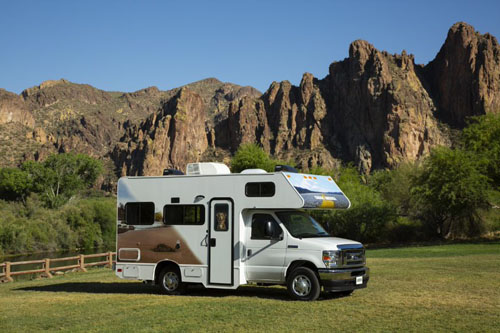
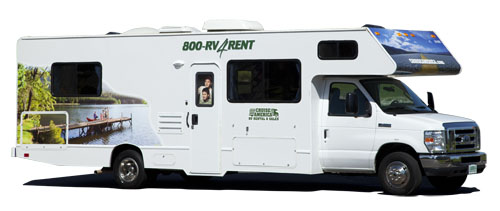
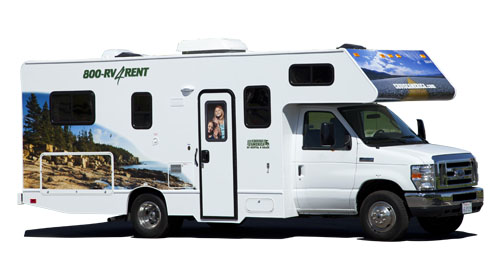
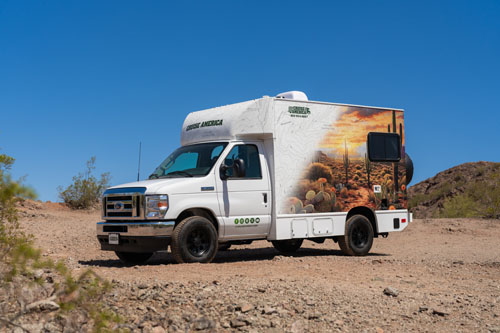
Class SI Semi-integrated RVs, averaging 6.9m in length, provide more interior space and amenities than vans while remaining manageable on most northern highways, typically consuming 10-11 Liters/100 km. For families, Class C Alcove RVs, averaging 7.5m in length, are excellent due to their generous sleeping capacity (e.g., a `MHC24` offers 6 sleeping places) and are robust enough for major Canadian routes, with fuel consumption typically 10-12 Liters/100 km. While larger Class A Integrated RVs (average length 7.5m) and Class TC Truck Campers (average length 5.5m like a `TC-A`) are also suitable, their size or elevated center of gravity may require more cautious driving on unpaved or winding northern roads. All rented motorhomes from our direct partners like El Monte, Cruise America, Apollo, and Britz are well-maintained for your adventure.
Should I Choose a Compact Van Instead of a Large RV in North Canada?
For most major routes in North Canada, there is no inherent issue driving a larger RV; the choice between a compact van and a large RV often comes down to personal comfort, desired amenities, and the specific nature of your itinerary. A compact campervan, like a Class B Camper Van with an average length of 5.8m, offers easier maneuverability, potentially better fuel economy (typically 8-10 Liters/100 km), and greater flexibility for navigating smaller towns or finding parking. Many travelers enjoy the cozy intimacy and nimble nature of a smaller vehicle like the `camper for rent example Jackpot` or a `HiLite` on a week-long trip.
However, larger RVs, such as a Class C Alcove (like the `MH-A`) or a Class SI Semi-integrated (like a `2 Berth Tamar`) with average lengths of 7.5m and 6.9m respectively, provide significantly more indoor space, larger kitchens, dedicated sleeping areas, and more storage. These extra comforts can be invaluable for longer trips or if you're traveling with family (e.g., a `MHC30` can sleep 9 people) in remote areas where external services are limited. While a compact van might seem appealing for perceived 'rough' roads, many larger motorhomes handle gravel sections well; prioritizing comfort and self-sufficiency often outweighs minimal maneuverability gains for the vast open spaces of North Canada.
Can I Park Anywhere? Free & Wild Camping Rules in North Canada
In North Canada, free camping (often referred to as 'boondocking' or 'wild camping') is generally permitted on vast tracts of Crown Land, provided you adhere to 'leave no trace' principles and respect local signage. This allows for incredible opportunities to experience the serene wilderness directly from your rented motorhome. Rules vary significantly by region and specific land designation; national parks, provincial parks, and private lands strictly prohibit unauthorized overnight parking. Always ensure you are on public land and not trespassing.
Look for designated pull-offs, rest areas, or publicly accessible Crown Land areas. It's crucial to always verify local regulations and check for any posted restrictions before parking overnight. Local bylaws or Indigenous land regulations can supersede general Crown Land rules, so exercising common sense and doing a quick check with local authorities if unsure is always a good idea. Remember, preparation is key when planning to cook in remote areas; you can find inspiration for your onboard meals on our RV-friendly recipes playlist. Rules vary by region - check local regulations and follow local law before parking overnight.
Can I Drive an RV Into the City Center? Heights, Tunnels & Local Signage
Yes, you can drive almost anywhere without issues, including driving a rented RV into city centers in North Canada. Most urban areas are accustomed to larger vehicles, though specific height and parking restrictions may apply. Drive slowly and carefully, paying close attention to local signage indicating height limits for tunnels, underpasses, and low bridges, especially in older parts of cities or on secondary roads. There's no need to stress – just use common sense and pay attention.
Unlike some European cities, North Canadian city centers typically do not have environmental zones that restrict RV access based on emissions standards. Parking can be the main challenge; look for designated RV parking areas, larger municipal lots, or consult your GPS for truck-friendly routes and parking options when entering smaller, more compact northern towns. For example, in Whitehorse or Yellowknife, finding suitable parking for a Class C motorhome is generally manageable with a little planning.
What are the requirements for bringing an RV into Canada from the US?
To bring an RV into Canada from the US for temporary tourist purposes, you must present a valid passport, the original vehicle registration, and proof of insurance, such as a Canadian Non-Resident Insurance Card or a letter from your US insurer confirming coverage. The Canada Border Services Agency (CBSA) requires all goods to be declared upon entry, including food items, alcohol, and tobacco. Be aware of restrictions on certain agricultural products, meats, and firearms, as many are prohibited or require strict declarations to avoid fines or delays. If traveling with pets, ensure you have current vaccination records (especially for rabies) and that your pet is microchipped; additional requirements may apply depending on the animal. For rental RVs originating in the US, ensure your rental agreement explicitly permits cross-border travel into Canada and that the rental company provides all necessary documentation for border officials. The '10-year rule for RVs in Canada' primarily applies to permanently *importing* a vehicle, not to temporary tourist visits; for a visit, the RV simply needs to be roadworthy and properly documented for travel in its home country.
What is the 3-3-3 rule for RV travel?
The 3-3-3 rule for RV travel is a widely recommended guideline for safe and enjoyable trips, particularly relevant for navigating the vast distances and varying conditions of North Canada. This rule advises driving no more than 300 miles (approximately 500 km) per day, stopping by 3 PM each day, and staying at each campsite for a minimum of 3 nights. Following this rule helps prevent driver fatigue, allows ample time to find and set up camp before dark, and provides ample opportunities to explore the local area, reducing stress on remote northern routes.
While a helpful guideline, adapting the rule to North Canada's unique context might mean reducing daily mileage even further due to slower speeds on gravel roads, or choosing to stay longer at fewer, more remote locations to truly soak in the tranquility. It’s about slow travel and connecting with the place, the culture, the food, and the scenery, as we always recommend. This approach ensures you're refreshed and ready for adventure each day, without the pressure of rushing. For inspiration on planning your adventure, check out "Winter RV Rental in North Canada - Pricing Guide 2024" if you're thinking of a cold-weather trip.
Can I drive a rental RV in Canada with a US driver's license?
Yes, generally you can drive a rented RV in Canada with a valid US driver's license, as Canadian provinces and territories recognize US-issued licenses for temporary visits. Ensure your US driver's license is current, in good standing, and covers the class of vehicle you are operating; most standard licenses are sufficient for typical RVs (under 11,000 kg GVWR). It is always advisable to carry an International Driving Permit (IDP) alongside your US license, especially if your license is not in English or French, though it is not legally required for US citizens in Canada. Rental companies, like our direct partners such as El Monte and Cruise America, will require a valid driver's license, often a major credit card, and usually have minimum age requirements (typically 21 years old) to rent an RV.
Can you rent an RV to drive across Canada?
Yes, you can rent an RV with the intention of driving it across Canada; many Bandana partner rental companies offer one-way rentals or allow extensive travel plans throughout the country, including northern regions. It is crucial to inform the rental company of your full itinerary, including any plans for extended travel into remote northern territories or any potential cross-border trips (e.g., to Alaska through the Yukon). Be aware that one-way rentals often incur significant surcharges, and specific limitations or additional insurance requirements may apply for remote travel, especially for destinations like the Dempster Highway.
Always confirm the rental company's mileage policies, geographic restrictions, and any 'Northern Surcharge' fees (which might cover enhanced roadside assistance or specific vehicle preparation for rugged terrain) before booking your motorhome. We compare final prices across 50+ suppliers so you don't have to, ensuring full transparency with no hidden fees, no surprises. For additional considerations on planning, you might find "Family RV Rental in North Canada - Pricing Guide 2024" helpful if traveling with a larger group.
Can Americans RV in Canada?
Yes, Americans can absolutely RV in Canada, and it is a popular way for US citizens to explore Canada's diverse landscapes, including the vast wilderness of the North. US citizens need a valid passport to enter Canada and must ensure their rented RV is properly registered and insured for international travel. Familiarize yourself with Canadian driving laws, which are similar to those in the US but may have slight differences in speed limits (posted in km/h), road signs, and provincial regulations. RVing in Canada offers access to stunning national and provincial parks, vibrant cities, and serene natural environments, making it a highly recommended travel experience for Americans. For those interested in extended travel, our "RV Rental USA - Complete Guide 2024" provides valuable information on broader North American adventures.
Is it easy to drive an RV in Canada?
Driving a rented RV in Canada is generally considered easy, especially on major highways, but requires adaptation to varying road conditions and distances, particularly in the northern regions. Canadian roads are well-maintained on main routes, and speed limits are posted in kilometers per hour; larger RVs are common, so infrastructure like gas stations and campgrounds is generally accommodating. In North Canada, ease of driving depends on your route; major arteries like the Alaska Highway are generally straightforward, but remote roads can feature gravel, potholes, and require slower speeds due to wildlife and limited services. Preparation is key to ease: ensure your RV is well-maintained, plan your fuel and supply stops carefully (addressing availability of services in remote northern areas), and be mindful of the significant distances between communities in the North. Remember to drive slowly and carefully, and you can drive almost anywhere without issues. No need to stress - just use common sense and pay attention.
Do you need a different license to drive an RV in Canada?
No, most standard RVs (those with a Gross Vehicle Weight Rating under 11,000 kg or 24,250 lbs) do not require a different license than a standard passenger vehicle license to drive in Canada. For the vast majority of RV renters, including those from the US, a valid Class 5 (or equivalent in other provinces/territories) or Class G (Ontario) driver's license is sufficient. Only very large RVs, such as some heavy-duty Class A models that exceed specific weight thresholds, might necessitate a commercial or higher-class license. Always confirm with your rental provider and review the specific provincial/territorial licensing requirements for the RV's weight class to ensure you are appropriately licensed for your rented motorhome.
What kind of license do I need to rent an RV?
To rent an RV in Canada, you typically need a valid driver's license from your home country (e.g., a standard US driver's license) that permits you to operate a passenger vehicle. Rental companies usually require the primary driver to be at least 21 years old, regardless of the legal driving age for a standard vehicle in that province or territory. For most RV classes, including Class B Camper Vans (like the `rent rv example MiniVan`), Class C Alcove models (such as a `24' Class C Motorhome`), and many Class SI Semi-integrated RVs, a regular driver's license is sufficient as they fall below weight thresholds requiring specialized licenses. It's advisable to have held your license for at least one year with a clean driving record, and some rental companies may recommend an International Driving Permit (IDP) if your license is not in English or French.
What do you need to rent an RV in Canada?
To rent an RV in Canada, you will typically need a valid driver's license, a major credit card in the primary renter's name, and proof of sufficient insurance coverage. Rental companies generally require drivers to be at least 21 years old and may ask for a driving record check. You will also need to review and agree to the rental agreement's terms and conditions, which include mileage limits, geographic restrictions (especially for northern travel), and fuel policies. It's recommended to book your chosen motorhome in advance, especially for peak seasons in North Canada (June to September), and to understand the rental company's deposit requirements and cancellation policies. We offer full transparency, so there are no hidden fees, no surprises when you book through us.
What kind of insurance do I need to rent an RV?
When renting an RV in North Canada, you typically need both liability insurance (to cover damages to third parties) and collision/comprehensive insurance (to cover damages to the rental RV itself). Many personal auto insurance policies do not extend full coverage to RV rentals, so it's crucial to check with your existing provider to see if your policy offers any transferable coverage. Bandana partners with leading RV suppliers worldwide, including El Monte and Cruise America, who almost always offer their own insurance packages, which can include varying levels of deductibles and coverage. This is often the most straightforward option for peace of mind. Additionally, you can upgrade to a top-level deductible reimbursement through Bandana, providing extra security.
Alternatively, some credit cards offer rental vehicle insurance benefits, but these often have restrictions on vehicle type (RVs may be excluded) and duration, so always confirm directly with your card provider. Understanding your insurance options is a vital step in preparing for your incredible North Canada RV journey.
Top Cities for RV Rental in North Canada
North Canada offers several fantastic starting points for your rented motorhome adventure, each providing access to unique northern landscapes. When planning your route, consider these key cities:
- Whitehorse, Yukon: As the capital of Yukon, Whitehorse is a popular hub for RV rentals, offering direct access to the Alaska Highway and routes leading to stunning national parks like Kluane, home to Canada's highest mountains. It's an ideal base for exploring the vast wilderness of the territory.
- Yellowknife, Northwest Territories: Yellowknife, the capital of the Northwest Territories, provides a gateway to the Canadian Shield and the vast tundra. It's a prime location for viewing the Northern Lights in season and accessing routes further north.
- Dawson City, Yukon: Rich in Gold Rush history, Dawson City is an excellent starting or stopping point, particularly for those looking to experience the Dempster Highway, one of North Canada's iconic gravel roads.
- Inuvik, Northwest Territories: Located north of the Arctic Circle, Inuvik is a unique destination and the northern terminus of the Inuvik-Tuktoyaktuk Highway, offering an extraordinary opportunity to drive to the Arctic Ocean.
Each of these locations offers a distinctive experience, allowing you to tailor your RV rental journey to the specific adventures you seek in North Canada. Whether you're seeking the scenic beauty of the Yukon or the rugged charm of the Northwest Territories, Bandana connects you with the perfect motorhome for your travels.
What You Shouldn't Miss
- **Drive the Dempster Highway:** Experience the legendary 737 km (458 mi) all-weather gravel road that takes you across the Arctic Circle, offering unparalleled access to remote wilderness and breathtaking landscapes of the Yukon and Northwest Territories.
- **Explore Kluane National Park and Reserve:** In Yukon, witness Canada's largest icefields and highest mountains. Enjoy hiking, wildlife viewing (grizzly bears, Dall sheep), and picturesque campgrounds like Kathleen Lake.
- **Witness the Northern Lights:** From late August to April, North Canada provides some of the world's best viewing opportunities for the Aurora Borealis. Plan your overnight stays away from city lights for the most spectacular display.
- **Visit Dawson City's Gold Rush History:** Immerse yourself in the vibrant history of the Klondike Gold Rush in this charming Yukon town, with its preserved historic buildings and unique atmosphere.
- **Journey to Tuktoyaktuk:** Drive the Inuvik-Tuktoyaktuk Highway to reach the Arctic Ocean, an incredible achievement for any RVer, offering a rare opportunity to dip your toes in the Beaufort Sea.
- **Experience the Midnight Sun:** During summer months, especially north of the Arctic Circle, enjoy 24 hours of daylight, allowing for endless exploration and unique photo opportunities in your rented campervan.
Looking for expert insights from Avi Bandana? Top 5 Adventures - recommendations from Avi Bandana.
Final Thoughts
Exploring North Canada in a rented RV is an adventure that promises unforgettable experiences, vast natural beauty, and a sense of freedom unlike any other. With the right preparation and a reliable vehicle, you're set to discover stunning landscapes, encounter incredible wildlife, and create memories that will last a lifetime. Remember, it's about the journey – so take your time, embrace the slow travel philosophy, and let the open roads of North Canada inspire you.
At Bandana, we're here to support you before, during, and after your booking, ensuring a seamless and transparent rental experience. We're true RV specialists who genuinely love helping people discover the joys of motorhome travel. We compare final prices across 50+ suppliers so you don't have to, providing the easiest, safest, and most affordable way to rent an RV.
Ready to begin your northern expedition? Find motorhome rentals in North Canada and start planning your epic road trip today!