In This Guide
- Can You Drive an RV in Netherlands? License & Age Rules
- Road Conditions & Terrain in Netherlands
- RV Size Limits, Bridges & Restricted Zones
- Fuel: Diesel vs. Petrol & Cost per 100 km
- Tolls, Vignettes & Border Rules
- Driving Tips for RV Rental Travelers in Netherlands
- Recommended RV Class for Netherlands Roads
- Should I Choose a Compact Van Instead of a Large RV in Netherlands?
- Can You Wild Camp in the Netherlands?
- Can I Drive an RV Into the City Center? Heights, Tunnels & Local Signage
- How do I plan an RV trip to the Netherlands?
- What is the best time to visit Netherlands by RV?
- Where can I rent an RV in the Netherlands?
- What is the best RV rental company in the Netherlands?
- How much does it cost to rent an RV in the Netherlands?
- What is the cheapest way to travel in the Netherlands?
- What are the rules for motorhomes in the Netherlands?
- What is the best app for camping in the Netherlands?
- Top Cities for RV Rental in Netherlands
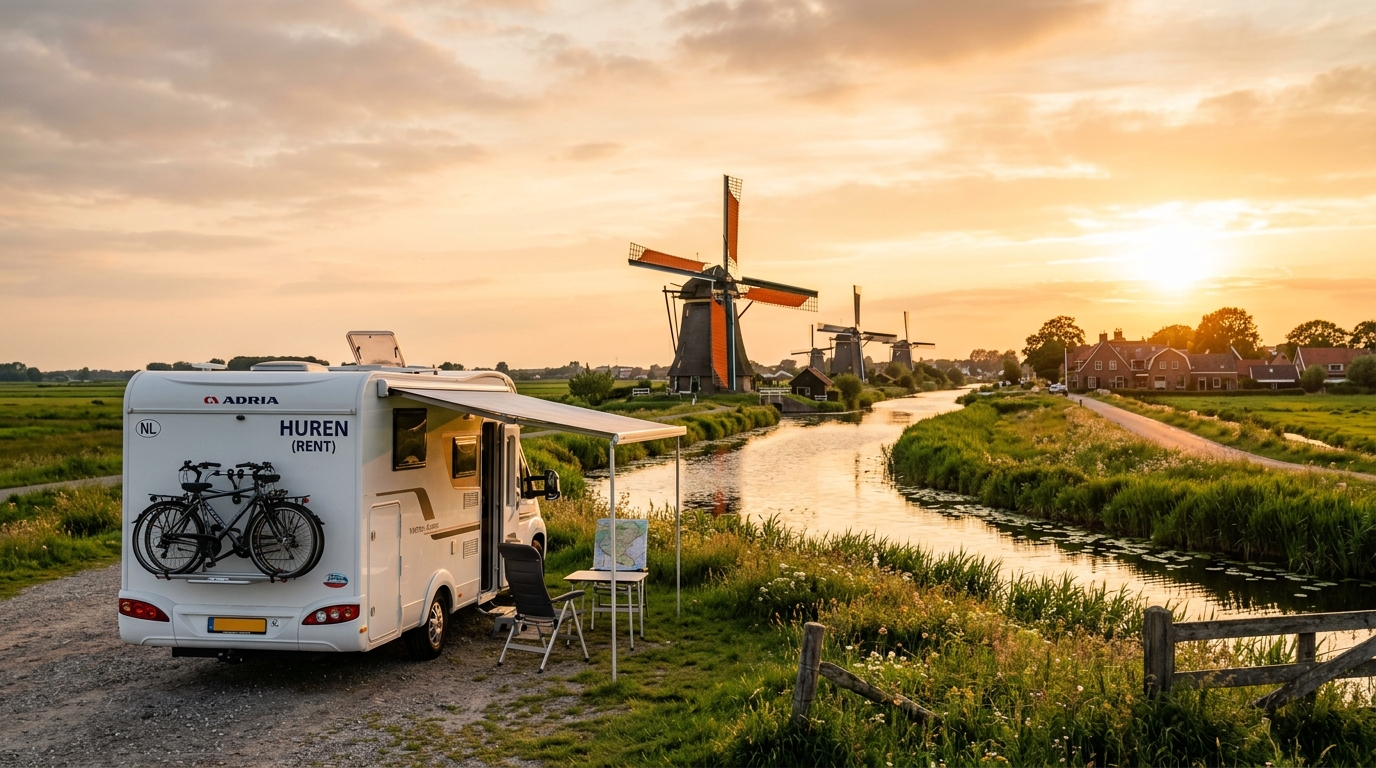
The Netherlands, with its picturesque canals, vibrant tulip fields, and charming windmills, offers an unforgettable backdrop for a motorhome adventure. Imagine yourself navigating idyllic polder landscapes in a rented RV, waking up to fresh country air, and exploring historic cities at your own pace. With Bandana RV, we help make these dreams a reality, ensuring full transparency with no hidden fees and 24/7 support before and after your booking. For live availability and current prices, start with our RV Rental Netherlands - Complete Guide 2026 guide.
Can You Drive an RV in Netherlands? License & Age Rules
Drivers holding a standard B driving license can operate most rented RVs in Netherlands, specifically those with a maximum authorized mass (MAM) up to 3,500 kg, which includes many popular campervans and semi-integrated motorhomes. For larger RVs exceeding 3,500 kg MAM, a C1 or C license is required, depending on the exact weight. The minimum driver age for RV rentals is typically 21 years old, with some suppliers requiring 1-3 years of driving experience, but generally, there are no young driver surcharges or vehicle class restrictions based solely on age. Foreign drivers should possess a valid national driving license, and if it is not from an EU/EEA country or not in English, an International Driving Permit (IDP) is highly recommended for clarity.
Road Conditions & Terrain in Netherlands
The Netherlands boasts excellent road quality, characterized by smooth asphalt, clear signage, and a predominantly flat, lowland terrain that makes RV travel straightforward and exceptionally comfortable. You can expect well-maintained highways connecting major cities like Amsterdam and Rotterdam, along with scenic country roads leading to charming villages and expansive national parks, all largely free of steep inclines or challenging mountain passes. While urban areas can present dense traffic and narrow streets, the flat landscape encourages a slow, careful pace, allowing travelers to fully appreciate the picturesque polder landscapes, iconic windmills, and extensive cycling networks without stress. There are no unpaved gravel roads to contend with on typical routes, ensuring a smooth journey for all types of rented motorhomes and campervans.
RV Size Limits, Bridges & Restricted Zones
While the Netherlands has no universal RV size limits beyond standard road regulations, drivers of a rented motorhome must be particularly mindful of environmental zones, low bridges, and narrow streets, especially when venturing into historic city centers. Many Dutch cities, including Amsterdam, Rotterdam, and Utrecht, have 'milieuzones' (environmental zones) that restrict older, more polluting vehicles, including some RVs; it's always crucial to check the specific zone requirements for your rented RV's emission class before entering. Typical road clearances and bridge heights generally accommodate standard RVs, but drivers should always pay close attention to local signage, especially on secondary roads or when entering tunnels, with common minimums around 3.5 to 4 meters. Additionally, some smaller ferries, particularly those providing access to the beautiful Wadden Islands, may have length or weight restrictions and often require advance booking for larger vehicles, so plan accordingly.
Fuel: Diesel vs. Petrol & Cost per 100 km
Diesel is the predominant fuel type for rented RVs in the Netherlands, readily available at all service stations across the country, while petrol is also widely accessible for smaller campervans. Based on Bandana's global fleet averages, an RV's fuel consumption typically ranges between 8 and 17 liters per 100 km, leading to an estimated cost of approximately €17 to €32 per 100 km, depending on the specific RV class and current fuel prices. For instance, a compact Class B Camper Van like a "Category Van" averages 8-10 Liters/100 km, while a larger Class C Alcove motorhome, such as an "Explorer" with its 11 Liter / 100 Km. consumption, typically uses 10-12 Liters/100 km. Some Bandana partner suppliers may even include fuel discount cards, offering potential savings at partner stations throughout your Netherlands adventure. When planning your budget for an RV rental trip, remember that RV PLANET routes allow you to itemize and track every expense, including fuel, for easy budgeting. On the routes offered through RV PLANET routes, you can itemize and track every expense along the way for easy budgeting.
Tolls, Vignettes & Border Rules
The Netherlands generally does not have road tolls or a vignette system for private vehicles and rented RVs on its national road network, a welcome relief compared to some neighboring countries. The main exceptions are a few specific tunnels or bridges, such as the Westerscheldetunnel, where a small toll applies, but these instances are always clearly signposted. Travelers planning an extended week-long trip to neighboring Germany or Belgium will find similar toll-free systems for most roads, though it's important to note that Germany has an environmental sticker (Umweltplakette) requirement for certain city zones, and countries like France, Austria, or Switzerland utilize tolls or vignettes. While no vignettes are typically required for Dutch roads themselves, always ensure your rented motorhome meets the necessary emission standards if you plan to enter environmental zones within specific Dutch cities.
Driving Tips for RV Rental Travelers in Netherlands
Driving a rented RV in Netherlands is a delightful experience, but a few local nuances can make your journey even smoother. First, familiarize yourself with local etiquette: always yield to cyclists, who have significant priority on their dedicated paths (fietspaden), and be acutely aware of their presence when turning or merging. When navigating urban areas, especially major cities like Amsterdam or Utrecht, it is highly recommended to utilize Park & Ride (P+R) facilities located on city outskirts, as city centers feature narrow streets, environmental zones, and extremely limited RV parking. Plan your route with RV-specific apps that account for vehicle dimensions to avoid low bridges or restricted zones, particularly on charming but smaller, scenic country roads. Lastly, adhere strictly to posted speed limits, which are rigorously enforced; these are typically 130 km/h on highways (often reduced to 100 km/h during the day), 80 km/h on provincial roads, and 50 km/h in urban areas. Drive slowly and carefully, and you can drive almost anywhere without issues. No need to stress - just use common sense and pay attention.
Recommended RV Class for Netherlands Roads
For navigating the Netherlands' diverse landscape, from charming villages to bustling cities, a Class B Camper Van or Class SI Semi-integrated RV offers an ideal balance of maneuverability and comfort. Class B Camper Vans, often averaging around 5.8 meters in length like the popular "Category Van" models, are highly recommended for their exceptional ease of parking, ability to access smaller roads with grace, and better fuel efficiency, making them perfect for couples or small families embarking on a week-long or two-week adventure. Class SI Semi-integrated models, such as the "2 Berth Rover" or "2 Berth Tamar" with average lengths around 6.9 meters, provide more generous living space and amenities without significantly compromising maneuverability on main roads. These are well-suited for families requiring more sleeping places (averaging 3.8 in our fleet) and ample load capacity (around 72.2 kg). Both classes offer comfortable driving experiences on the Netherlands' flat, well-maintained roads while remaining manageable for accessing most campsites and even utilizing city outskirts via Park & Ride facilities.
Should I Choose a Compact Van Instead of a Large RV in Netherlands?
While a compact campervan like the "RV rental denver example Category Van" offers superior maneuverability in tight spaces and urban environments, a larger RV generally presents no significant driving issues in the Netherlands and often provides enhanced comfort and indoor space for extended road trips. The flat Dutch terrain and excellent road infrastructure can easily accommodate larger motorhomes, such as Class C Alcove models (averaging 7.5 meters in length like the "24' Class C Motorhome"), allowing travelers to prioritize interior amenities like larger bathrooms, separate sleeping areas, or more extensive kitchens. A compact van or Class B Camper Van (averaging 5.8 meters) genuinely helps when frequent city center visits, navigating very narrow village streets, or seeking out smaller, remote campsites are priorities, as they are inherently easier to park and less intimidating to drive. However, for families or friend groups of 4-7 planning a longer trip and seeking a 'home-away-from-home' experience with greater storage and living comfort, a larger RV often represents a better trade-off, especially when utilizing Park & Ride facilities for city access. Drive slowly and carefully, and you can drive almost anywhere without issues. No need to stress - just use common sense and pay attention.
Can You Wild Camp in the Netherlands?
Wild camping is generally illegal throughout the Netherlands, with strict regulations against overnight parking outside designated campsites or 'camperplaatsen'. Instead of seeking illegal wild camping spots, travelers should fully utilize the extensive network of 'camperplaatsen' (dedicated motorhome service points), which are often free or low-cost and provide essential facilities like fresh water, waste disposal, and sometimes electricity. Exploring 'mini-campings' or 'boerencampings' (small, often family-run farm campsites) offers a legal and culturally enriching alternative, providing unique rural experiences, often with fresh local produce like eggs or cheese, and directly supporting local businesses. Always check local regulations and follow specific local laws before parking overnight, as rules can vary by municipality and nature reserve. We recommend using apps like Campercontact or NKC for reliable, up-to-date information on legal parking and camping options across the Netherlands.
Can I Drive an RV Into the City Center? Heights, Tunnels & Local Signage
Driving a rented RV into Dutch city centers, including popular destinations like Amsterdam, is generally possible but often proves challenging due to narrow streets, restricted access zones, and extremely limited suitable parking. For this reason, utilizing Park & Ride (P+R) facilities on city outskirts, coupled with efficient public transport, is the recommended alternative. Major cities like Amsterdam enforce environmental zones ('milieuzones') which may restrict older or larger RVs, and many central areas have inherent height restrictions, low bridges, or tunnels that are unsuitable for larger vehicles. Always pay close attention to local signage, which clearly indicates height limits, weight restrictions, environmental zones, and 'residents-only' streets to avoid fines or getting stuck. For Amsterdam specifically, it is highly advised to park your RV rental at a designated P+R facility on the city outskirts, such as Amsterdam-Noord or Zeeburg, and then use the city's excellent public transport system (trams, buses, metro) to reach the vibrant city center. Drive slowly and carefully, and you can drive almost anywhere without issues. No need to stress - just use common sense and pay attention.
How do I plan an RV trip to the Netherlands?
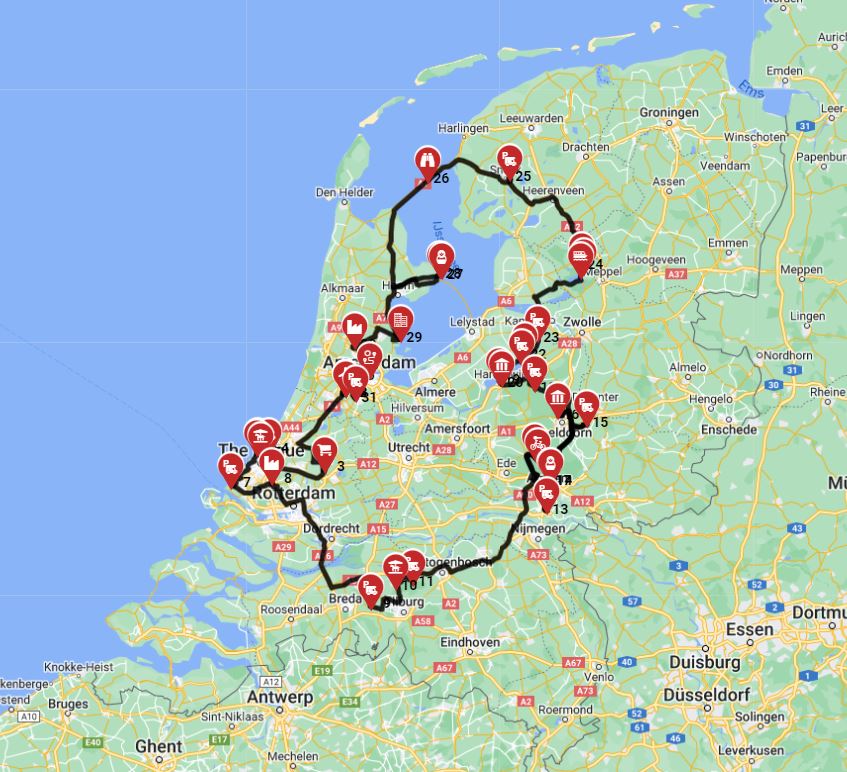
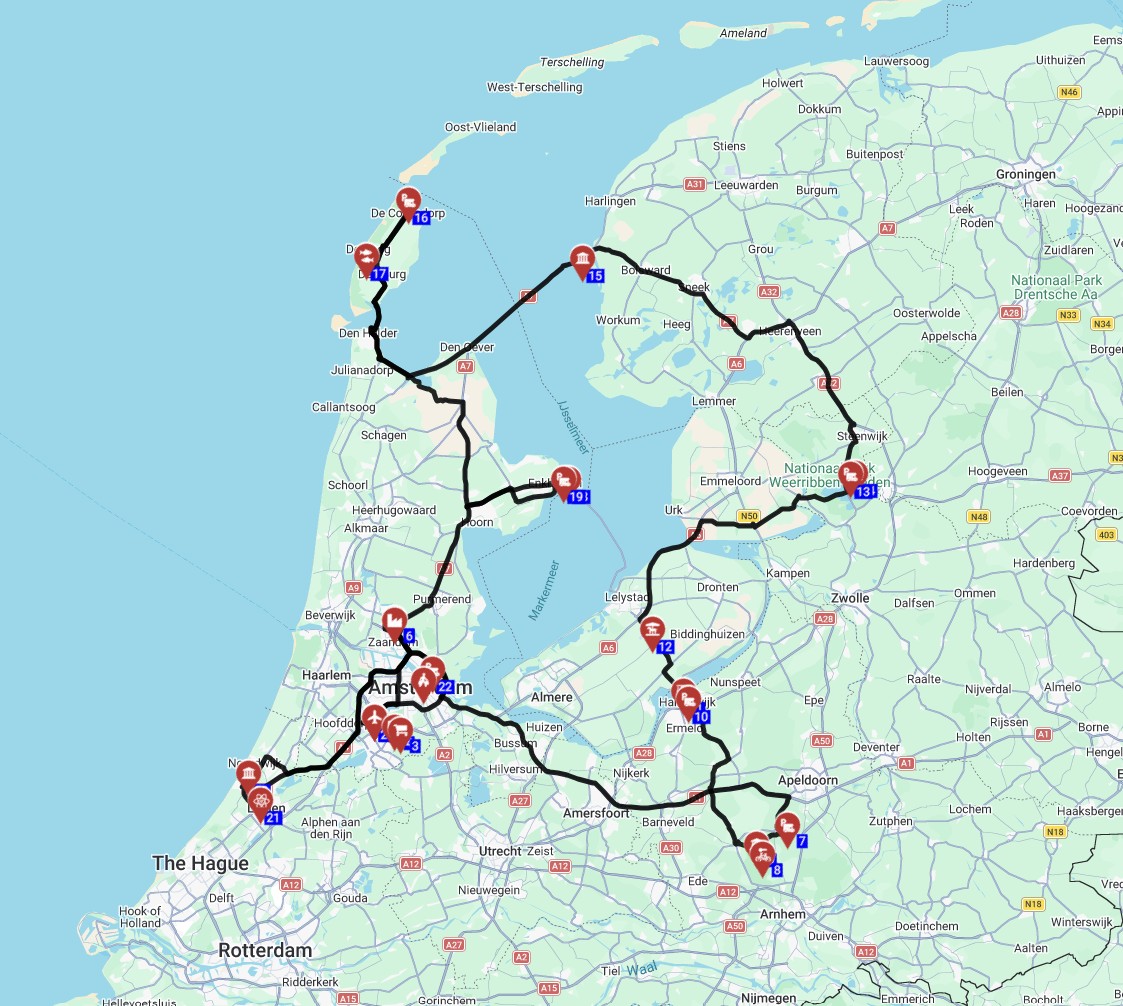
Planning an RV trip to the Netherlands involves mapping out a flexible itinerary that balances popular attractions with opportunities for deep cultural immersion and responsible travel practices. Consider exploring niche and themed routes, such as a 'Dutch Art & History by RV' tour that visits the Rijksmuseum and historic cities like Leiden and Delft, a 'Windmill & Water Management Tour' to Kinderdijk and the Delta Works, or 'Nature & Birdwatching Routes' through Veluwe National Park and the Wadden Sea islands, to tailor your journey to specific interests. Beyond major sights, prioritize cultural immersion by staying at local 'mini-campings' on farms, visiting regional markets for fresh ingredients, attending local festivals, and engaging with Dutch residents in smaller towns. Integrate sustainability into your planning by choosing eco-friendly campsites, properly disposing of waste and greywater at designated points, and minimizing your environmental impact in this densely populated country. Our sister company, RV PLANET (rvplan.net), offers professionally pre-planned routes to assist you. One example of such a route is Dusseldorf Roundtrip - Germany / Netherlands / Belgium, an 8-day, 1076.2 km adventure that includes 1 Amusement Park, 1 Aquarium, 1 Bike Rental, 2 Cruise Terminal / Sailing, 2 Family Activity, 1 Historical Site, 3 Local Industry, 1 Museum, 1 Point Of Interest, 1 Traditional Market, 1 Traditional Restaurant / Fine Dining, and 1 Traditional Visit. Planning ahead with these expert itineraries makes it easy to discover top destinations with minimal effort and maximum enjoyment.
Another excellent pre-planned option from RV PLANET is the
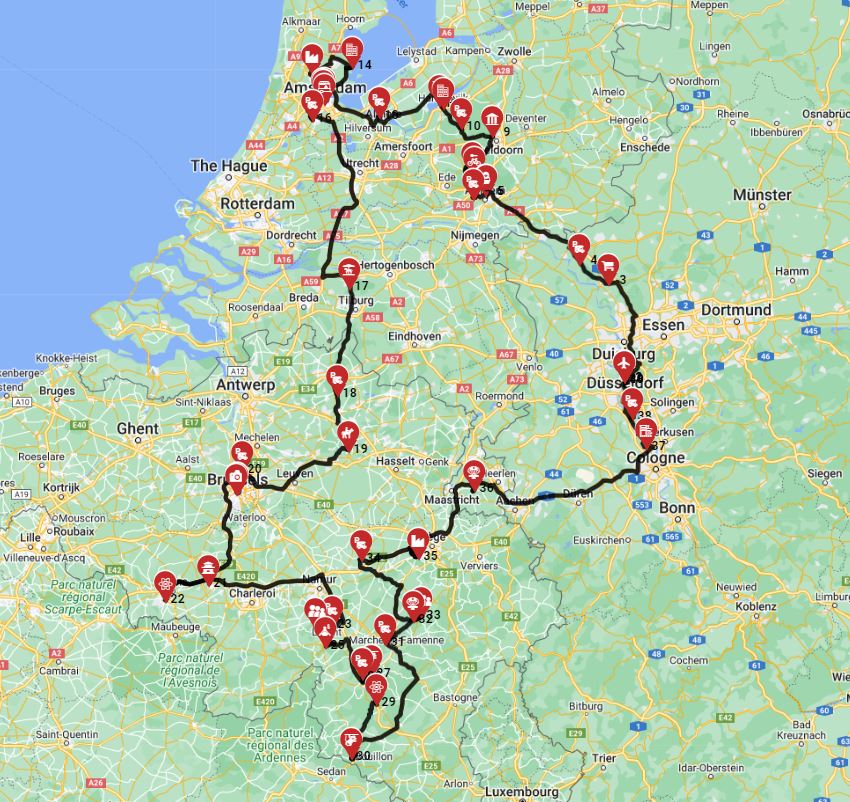
For a truly expansive adventure, consider the Frankfurt Roundtrip - North West -Exploring Germany, Belgium, and the Netherlands, a 22-day, 2254.5 km itinerary covering 2 Amusement Parks, 3 Animals Show / Wildlife watch, 1 Aquarium, 1 Beach, 1 Bike Rental, 1 Canoe / Kayak / Rafting, 1 Cave, 2 Cruise Terminal / Sailing, 2 Extreme Activity, 4 Family Activities, 1 Heritage site, 1 Historical Site, 6 Local Industry visits, 2 Museums, 1 Natural Feature, 2 Points Of Interest, 1 Scenic Route, 3 Science Sites, 1 Traditional Market, 2 Traditional Restaurant / Fine Dining experiences, 2 Traditional Visits, 1 Water Park, and 1 Zoo.
You can discover additional professionally designed itineraries for RV trips to the Netherlands and beyond on rvplan.net.
What is the best time to visit Netherlands by RV?
The best time to visit Netherlands by RV is during the shoulder seasons of late April to early June and September to October, offering pleasant weather, fewer crowds, and vibrant natural beauty. Spring (April-May) is particularly ideal for experiencing the famous tulip fields in full bloom around Keukenhof, and enjoying mild temperatures perfect for cycling and other outdoor activities. Early autumn (September-October) provides comfortable temperatures for touring in your rented motorhome, with significantly fewer tourists than the peak summer months, and allows you to appreciate the changing foliage and harvest festivals. While summer (July-August) offers the warmest weather and longest daylight hours, it also brings the largest crowds and higher prices for campsites and attractions. Remember, many national and state parks reserve only 25-30% of spots for advance booking, with the rest available first-come-first-serve, so you'll always find a spot. If not at the first campground, then the next one; just call ahead before driving.
Where can I rent an RV in the Netherlands?
RV rentals in the Netherlands are primarily available through international and local rental companies conveniently located near major airports and cities like Amsterdam, Rotterdam, and Eindhoven. Bandana, as a specialist in RV rentals, offers a wide selection of motorhomes and campervans from various trusted suppliers across different locations in the Netherlands, providing options from compact Class B campervans like the "Juliette 2-3" to spacious Class C alcove models. Rental hubs are often strategically placed for easy access upon your arrival, with many companies offering transfer services or convenient public transport links to their depots. Utilizing online platforms like Bandana allows you to compare options and secure the best deals in advance, ensuring you have the perfect mobile home for your week-long or extended Dutch adventure.
What is the best RV rental company in the Netherlands?
The 'best' RV rental company in the Netherlands ultimately depends on your individual needs regarding budget, preferred vehicle type, and specific included services, with Bandana being a leading platform offering a wide array of choices from trusted partners such as El Monte, Cruise America, Apollo, and Britz. When choosing a company for your motorhome rental, consider crucial factors such as comprehensive insurance options, reliable 24/7 roadside assistance (during the rental period, as offered by many suppliers), transparent pricing with no hidden fees, and positive customer reviews. Look for suppliers that offer a diverse fleet, whether you need a maneuverable Class B Camper Van (like the "Active Classic") or a spacious Class C Alcove model (like the "4 Berth Deluxe") for a family. Comparing deals on platforms that consolidate multiple local providers, like Bandana, can help you identify the best fit for your specific travel style and requirements. We pride ourselves on being true RV specialists, not just a travel agency side department, ensuring expert advice and support.
How much does it cost to rent an RV in the Netherlands?
The cost to rent an RV in the Netherlands typically ranges from €70 per night for a compact campervan like a "Category Van" during the low season to over €200 per night for a large, luxury motorhome in peak season, excluding additional expenses. Prices are dynamic, similar to flight tickets, changing daily based on availability, seasonality, and supplier marketing decisions; the final price is always set at the actual booking time. A realistic, detailed budget breakdown for a week-long trip should include the daily rental rate (e.g., a Class C motorhome like the "Explorer" might be around €150-€180/day in shoulder season), fuel (approximately €17-€32 per 100 km for Bandana's fleet, varying with diesel or petrol prices), varying campsite fees (€15-€50+ per night depending on whether you choose a basic 'camperplaats', a 'mini-camping', or a full-service commercial site), food costs (e.g., €30-€60/day for supermarket groceries if cooking most meals versus €80-€150+ dining out), and attraction fees. Expect higher prices during peak summer months (July-August) and major holidays, with shoulder seasons offering better value for your RV rental.
RV Rental Cost for Couples vs. Families with Kids in Netherlands
RV rental costs in the Netherlands vary significantly depending on the group type and the size of the motorhome needed. Couples often find budget-friendly options in smaller Class B campervans, such as a "Category Van" (ideal for a couple, small size RV), which typically range from €70-€120 per night in the shoulder season, offering features like a shower and toilet. These compact units are efficient and easy to maneuver for two travelers. Families with kids, particularly those of 2+2 or larger groups, will likely require a Class C alcove or a larger semi-integrated motorhome, such as a "Glamys 40" or a "Motorhome MC6 Gold" (ideal for a big family / group of friends, large size RV, 3 double beds), which can range from €150-€250+ per night during peak season. These larger RVs provide more sleeping places, greater storage, and enhanced living space, making them suitable for longer trips averaging 100-150 km per day. While the initial rental cost is higher, the ability to cook RV-friendly recipes playlist on board and save on restaurant meals can balance the overall trip budget for families.
Can I Find Last-Minute RV Rental Deals in Netherlands?
While RV rental prices in the Netherlands are dynamic and generally favor early bookings, it is possible to find last-minute deals, though availability might be limited, especially for popular models or peak travel periods. Prices change daily based on supply and demand, so a last-minute cancellation could open up an unexpected opportunity. Being flexible with your pick-up and drop-off locations, as well as your travel dates, significantly increases your chances of snagging a deal. We always recommend checking our comparison platform regularly, as new availability or promotional offers can appear without much notice. Bandana ensures full transparency, so you'll always see the final price without hidden fees or surprises.
I'm Flexible - How Do I Find the Cheapest RV Rental?
If you have flexibility in your travel plans, finding the cheapest RV rental in the Netherlands becomes much easier. The most impactful tip is to be flexible with your travel dates, aiming for off-peak seasons like late April, early June, September, or October, where daily rates for a campervan or motorhome rental can be significantly lower. Consider traveling mid-week rather than starting on a weekend, as demand often drives up prices. Utilizing a comprehensive comparison platform like Bandana allows you to easily compare final prices across 50+ suppliers, helping you identify the most affordable options across various vehicle classes and locations. You can also explore different pick-up cities in the Netherlands or even neighboring countries if you're open to a one-way trip, which sometimes yields better rates, though it might incur a drop-off fee. For example, comparing options from Amsterdam, Almere, or Eindhoven could reveal savings. Embrace slow travel, limiting your average daily distance to 100-150 km per day to save on fuel and truly connect with the local culture and scenery, further enhancing your overall value.
What is the cheapest way to travel in the Netherlands?
The cheapest way to travel in the Netherlands by RV involves opting for smaller, more fuel-efficient camper vans, utilizing budget-friendly camping alternatives, and consistently self-catering your meals. Renting a Class B Camper Van, like those averaging 5.8 meters from Bandana's fleet (e.g., "Active Standard" or "Hi5 Camper"), often has lower daily rental rates and significantly better fuel economy (typically 8-10 Liters/100 km) compared to larger motorhomes. Prioritize staying at 'camperplaatsen' (motorhome service points) or 'mini-campings' (farm campsites), which are typically much cheaper than commercial campsites, with some camperplaatsen even being free. Save substantially on food costs by shopping at local supermarkets and cooking most meals in your RV's kitchen. Take advantage of free or low-cost activities like cycling the extensive network of bicycle paths, exploring nature parks, and visiting free museums or outdoor markets to keep daily expenses down. Choosing to plan your trip using RV PLANET routes also allows you to itemize and track every expense, making budgeting simple and transparent.
What are the rules for motorhomes in the Netherlands?
Rules for motorhomes in the Netherlands encompass general traffic laws, specific camping regulations, and local etiquette to ensure a smooth and respectful travel experience. Drivers must adhere to posted speed limits, which are strictly enforced: typically 130 km/h on highways (often reduced to 100 km/h during the day), 80 km/h on provincial roads, and 50 km/h in urban areas. It is also crucial to always give priority to cyclists, especially when turning or crossing dedicated cycle paths, as they are a fundamental part of Dutch traffic culture. Wild camping is generally illegal; rented motorhomes must park overnight at designated campsites, official 'camperplaatsen,' or welcoming 'mini-campings' (farm campsites) – always checking local rules before settling in, as regulations can vary by municipality and natural reserve. Practice local etiquette by keeping noise down at campsites, properly disposing of waste and greywater at designated points, respecting quiet hours, and being mindful of residential areas when parking during the day. Drive slowly and carefully, and you can drive almost anywhere without issues. No need to stress - just use common sense and pay attention.
What is the best app for camping in the Netherlands?
For finding the best camping spots and motorhome facilities in the Netherlands, apps like Campercontact and NKC (Nederlandse Kampeer Auto Club) are highly recommended. Campercontact offers a vast database of over 30,000 motorhome sites, including thousands of 'camperplaatsen,' campsites, and private parking areas across Europe, with detailed information, photos, and user reviews. This makes it an invaluable resource for locating legal overnight parking and essential facilities. The NKC app provides similar robust functionality, specifically tailored to Dutch and European motorhome travelers, offering comprehensive details on thousands of campsites and service points. Both apps are invaluable for planning your route effectively, locating legal overnight parking, finding facilities for fresh water and waste disposal, and reading up-to-date user experiences to ensure a hassle-free RV rental trip in the Netherlands.
Top Cities for RV Rental in Netherlands
The Netherlands offers several excellent starting points for your RV adventure, each providing easy access to both urban attractions and scenic routes. From cultural hotspots to tranquil countryside getaways, a rented motorhome allows you the flexibility to explore it all. Here are some top cities to consider for your RV rental in Netherlands:
- Amsterdam: The capital city is a vibrant hub, offering a great starting point for those looking to immerse themselves in Dutch culture, museums, and canals. While driving directly into the city center is best avoided with an RV (use Park & Ride facilities), nearby rental depots and access to major highways make it convenient for onward travel.
- Rotterdam: Known for its modern architecture and impressive port, Rotterdam provides a dynamic contrast to Amsterdam. It’s well-connected for motorhome travel, with various rental pick-up locations and excellent infrastructure.
- Eindhoven: Located in the south, Eindhoven is a technology and design hub, offering a different flavor of Dutch innovation. Its strategic location makes it a great base for exploring the southern provinces and even crossing into Belgium or Germany for a broader RV Rental Europe - Complete Guide 2026 adventure.
- Utrecht: A charming city with a beautiful historic center and a lively student population, Utrecht is centrally located and offers a more relaxed urban experience compared to Amsterdam. It’s a fantastic starting point for exploring the heart of the Netherlands in your rented campervan.
- Maastricht: Situated in the very south, Maastricht boasts a rich Roman history, ancient fortifications, and a distinctly Burgundian atmosphere. It’s an ideal gateway to explore the Limburg region and is close to both the German and Belgian borders.
- Groningen: In the northern part of the country, Groningen is a vibrant university city with a young, energetic vibe. It offers a unique starting point for discovering the serene northern landscapes, including the Wadden Sea coast and islands.
Each of these cities serves as a convenient launchpad for an unforgettable RV rental experience, allowing you to tailor your journey from bustling urban centers to peaceful rural retreats.
What You Shouldn't Miss
- Cycle Through the Veluwe National Park: Park your RV rental and explore over 5,400 hectares of diverse landscapes, from dense forests to sand dunes, on two wheels. There are often RV-friendly campsites within or adjacent to the park, making it easy to combine your motorhome trip with the extensive cycling network.
- Visit the Kinderdijk Windmills: Witness a UNESCO World Heritage site featuring 19 iconic windmills, a testament to Dutch water management. You can park your campervan nearby and explore the area by boat or bicycle for an authentic experience.
- Explore the Canals of Amsterdam from a Distance: While direct RV driving into Amsterdam is challenging, park at a P+R facility (e.g., Amsterdam-Noord) for just €8-€15/day and take public transport (tram/metro) into the city to enjoy canal cruises and world-class museums.
- Stay at a 'Boerencamping' or 'Camperplaats': Experience true rural Dutch life by choosing a farm campsite. These intimate sites (typically 10-25 pitches) often offer local produce, like fresh eggs, and a peaceful atmosphere, far from the crowds of larger campgrounds.
- Indulge in a Seafood Feast at the Coast: Drive your RV rental to a coastal town like Scheveningen or Volendam and savor fresh herring, kibbeling (fried fish), or mussels. Many coastal areas have well-equipped campsites or camperplaatsen.
- Experience a 'Below Sea Level' Overnight Stay: Find a campsite in a polder region, such as Flevoland, and literally camp in land reclaimed from the sea, offering unique flat landscapes and views of dikes that are a marvel of engineering.
- Looking for expert insights from Avi Bandana? Top 5 Adventures - recommendations from Avi Bandana
Final Thoughts
Exploring the Netherlands in a rented RV offers unparalleled freedom and a unique perspective on this charming country. From its flat, scenic roads to its welcoming 'camperplaatsen' and 'mini-campings', every mile promises a new discovery. Whether you're a couple seeking a romantic week-long getaway in a nimble campervan or a family planning an extended two-week adventure in a spacious motorhome, the Dutch landscape is ready to enchant you.
At Bandana RV, we're dedicated to making your journey seamless, transparent, and memorable. We provide the tools and expertise to compare prices, choose the perfect vehicle, and embark on a well-planned itinerary. So, pack your bags, set your sights on the windmills and tulip fields, and prepare for an RV experience that blends cultural immersion with the open road.
Get inspired for your next trip! Discover top destinations and planning tips, all in one place with Bandana RV.