For live availability and current prices, start with our RV Rental Zurich - Complete Guide 2026 guide.
In This Guide
- Where to Camp in Zurich — Top Options
- Campground Types in Zurich (National, Private, Wild)
- Featured RV Park or Campground in Zurich
- Hookups & Amenities — What to Expect
- Booking Windows & Reservations in Zurich
- Nearby Supermarkets & Resupply Points
- Best RV Class for Camping in Zurich
- How to Save on Campgrounds in Zurich
- Is it worth renting an RV in Switzerland?
- How much does it cost to rent an RV in Zurich?
- How to plan an RV trip in Switzerland?
- What do you need to drive an RV in Switzerland?
- Do you need a vignette for an RV in Switzerland?
- What are the road rules for RVs in Switzerland?
- Can you park an RV in Zurich city?
- How much is a campsite in Zurich?
Where to Camp in Zurich — Top Options
Top camping options near Zurich typically involve well-equipped campgrounds situated around Lake Zurich or those with excellent public transport connections to the city center. Consider sites that offer a blend of natural beauty, like lakeside access for recreation, and convenient access to Zurich's urban amenities via bus or tram. Many prefer to look for campgrounds slightly outside the immediate city to avoid congestion, while ensuring they have direct public transport links to minimize the need to drive your RV into Zurich itself. This strategy allows for a more relaxed experience, combining the convenience of your rented RV with the ease of public transit for city exploration.
Campground Types in Zurich (National, Private, Wild)
In Zurich and throughout Switzerland, RVers primarily choose between private campgrounds and municipal sites, as there are no designated 'national park' campgrounds, and wild camping legality is highly restricted. Private campgrounds are the most common, offering extensive amenities like full hookups, modern sanitary facilities, and often on-site shops or restaurants, with reservations highly recommended, especially during peak season. Municipal/regional campsites, run by local communities, often provide a more basic yet affordable option, frequently located in scenic areas near lakes or rivers. Wild camping or unauthorized overnight parking in Switzerland is generally forbidden below the tree line and in protected areas, with strict cantonal and communal regulations; while some municipalities might tolerate a single overnight stay to 'restore fitness to drive' in designated parking areas, actual 'camping behavior' (e.g., setting out awnings, chairs) is not permitted and can lead to fines.
Featured RV Park or Campground in Zurich
A typical featured RV park near Zurich would offer excellent facilities, serene surroundings, and crucial public transport links to the city, providing a convenient base for exploration. Expect well-maintained pitches with essential hookups including 230V electricity (CEE blue plug), fresh water, and grey/black water disposal points. High-quality shower and toilet facilities, laundry services, and often a small shop or restaurant are standard amenities, with Wi-Fi usually available (sometimes for a fee). The most desirable feature would be direct bus or tram connections to Zurich city center, enabling visitors to explore urban attractions without driving or parking their RV in congested areas.
Hookups & Amenities — What to Expect
RV campgrounds in Zurich and across Switzerland maintain a high standard of hookups and amenities, typically providing electricity, fresh water, and waste disposal for a comfortable stay. Standard electric hookups are 230V with a CEE blue two-pin plug, typically supplying 6 to 16 amps, so international travelers may need an adapter. Fresh water taps are readily available at individual pitches or communal points, and dedicated grey water and black water dump stations are universally provided for waste disposal. Expect very clean and modern shower and toilet facilities, with showers sometimes token-operated or included in the overnight fee, alongside coin-operated laundry machines and Wi-Fi access (which may be an additional charge). On the routes offered through RV PLANET routes, you can itemize and track every expense along the way for easy budgeting.
Booking Windows & Reservations in Zurich
For RV camping in Zurich, especially during peak season (June-August) and holidays, booking well in advance is highly recommended to secure your preferred spot, though spontaneous travel is often possible outside these periods. Popular campgrounds near Zurich can be fully booked months ahead, making reservations 3-6 months prior essential for summer trips, while shoulder seasons (April-May, September-October) offer more flexibility, requiring bookings a few weeks out. During the off-season (November-March), many campgrounds may be closed, but those operating typically have ample availability, accommodating spontaneous arrivals. While some campgrounds might reserve a small percentage of spots for walk-ins, Swiss private and municipal campgrounds predominantly operate on a reservation system; it is always best to call ahead before driving directly to a site if you haven't booked, as "you will almost certainly find a place — if not the first campground, then the next" with prior confirmation.
Nearby Supermarkets & Resupply Points
Resupplying your RV in Zurich is convenient due to the widespread availability of major supermarket chains like Migros, Coop, and Denner across the city and its surrounding areas, often within a short drive or public transport ride from most campgrounds. Migros and Coop, Switzerland's largest supermarket chains, offer extensive ranges of groceries, fresh produce, and household items, with many larger stores providing parking suitable for RVs (though checking specific store parking for oversized vehicles is advised). Denner, along with international discount chains like Lidl and Aldi, provides budget-friendly options for staples, while local bakeries (Bäckerei), butchers (Metzgerei), and farmers' markets (Wochenmarkt) offer fresh, regional specialty products. Most campgrounds are strategically located to ensure easy access to these shopping facilities, whether by a short drive, a bicycle ride, or via public transport connections.
Best RV Class for Camping in Zurich
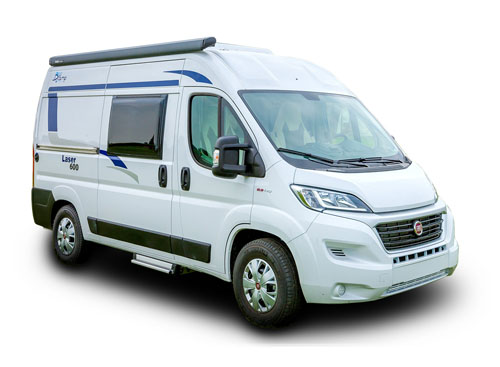
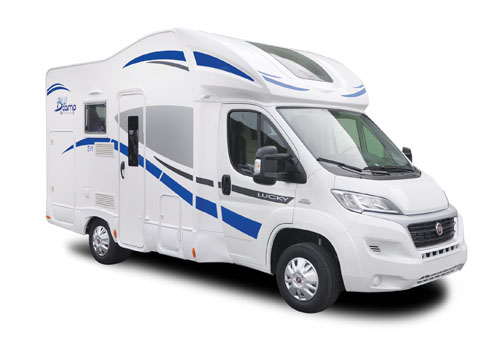
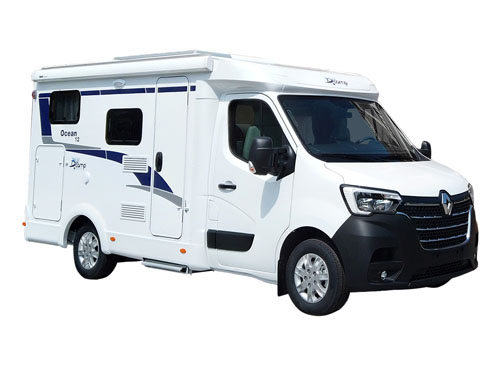
The best RV class for camping in Zurich depends on your travel group size, desired comfort, and the balance between city exploration and scenic driving, with Class B Camper Vans and Class SI Semi-integrated models often providing the most suitable versatility for Swiss roads. A Class B - Camper Van (average length 5.8m, 3.2 sleeping places, 2.7 adults, 8-10 L/100km fuel consumption based on Bandana's global fleet avg) are ideal for couples or small families due to their excellent maneuverability on Swiss roads and easier parking in towns and at campsites. A Class SI - Semi-integrated (average length 6.9m, 3.8 sleeping places, 3.4 adults, 10-11 L/100km fuel consumption based on Bandana's global fleet avg) offer more living space than camper vans while remaining manageable on Swiss roads, striking a good balance between comfort and agility. A Class C - Alcove (average length 7.5m, 5.8 sleeping places, 4.4 adults, 10-12 L/100km fuel consumption based on Bandana's global fleet avg) are best for larger families needing more sleeping capacity, though their greater length and height require more caution on narrow mountain roads and for city access. A Class A - Integrated (average length 7.5m, 4.4 sleeping places, 4 adults, 8-12 L/100km fuel consumption based on Bandana's global fleet avg) provide the most luxury and space but their large size can be challenging on smaller Swiss roads and in urban settings, making them better suited for longer stays at destination campsites. A Class TC - Truck Camper (average length 5.5m, 2.4 sleeping places, 2.1 adults, 12-17 L/100km fuel consumption based on Bandana's global fleet avg) are suitable for adventurous couples, offering compact dimensions and potential off-road access where permitted, though with fewer interior amenities.
How to Save on Campgrounds in Zurich
Saving money on RV campgrounds in Zurich and throughout Switzerland is achievable by leveraging discount cards, scheduling trips during shoulder seasons, and opting for municipal or regional camping sites. Utilize international camping discount cards (e.g., ACSI, CampingCard International), often accessible through RV rental platforms like Bandana, which can offer significant savings (up to 50%) on nightly rates at participating campgrounds during off-peak periods. Traveling in the shoulder season (late spring or early autumn) not only avoids the highest prices but also the largest crowds, while still providing pleasant weather for exploration. Choosing municipal or regional campgrounds over private resorts often results in lower nightly rates, although their amenities might be more basic. Consider booking longer stays, as many campgrounds offer discounted weekly rates compared to individual nightly bookings, or explore 'Bauerntourismus' (farm tourism) for unique, often cheaper, overnight parking options at farms.
Is it worth renting an RV in Switzerland?
Renting an RV in Switzerland is highly worthwhile for travelers seeking unparalleled flexibility, immersive natural experiences, and the convenience of a mobile base from which to explore the country's breathtaking landscapes. It offers significant freedom to customize itineraries, discover remote scenic spots, and change plans spontaneously, providing a unique perspective of the Swiss Alps, lakes, and charming villages. For families or groups, an RV can be a cost-effective alternative to combining separate car rental, hotel accommodations, and dining out, especially when utilizing the RV's self-catering capabilities. While Switzerland's higher cost of living (fuel, tolls, some campsites) and potential driving challenges with larger vehicles should be considered, the benefits of a comfortable 'home on wheels' often outweigh these for many adventurers.
How much does it cost to rent an RV in Zurich?
The cost of renting an RV in Zurich varies considerably based on the RV class, rental duration, season, and inclusions, generally ranging from CHF 100-250 per day during off-peak periods to CHF 200-400+ per day in peak summer. Fuel costs are significant in Switzerland; a Class SI Semi-integrated RV (averaging 10-11 L/100 km) traveling 200 km would consume 20-22 liters, potentially costing CHF 36-44 per day at current prices (CHF 1.80-2.00/liter). For RVs under 3.5 tonnes, an annual motorway vignette costing CHF 40 is mandatory, while RVs over 3.5 tonnes are subject to a more expensive, distance-dependent Heavy Vehicle Charge (LSVA) instead of a vignette. Self-catering within your RV, though groceries are comparatively expensive in Switzerland, offers substantial savings over dining out, which can easily cost CHF 30-60+ per person per meal. Additional expenses include campsite fees (typically CHF 30-70/night), insurance deductibles, potential mileage limits, and fees for extra equipment like bike racks, all of which should be factored into a comprehensive budget. For ideas you can prep on the road, watch our RV-friendly recipes playlist on YouTube.
How to plan an RV trip in Switzerland?
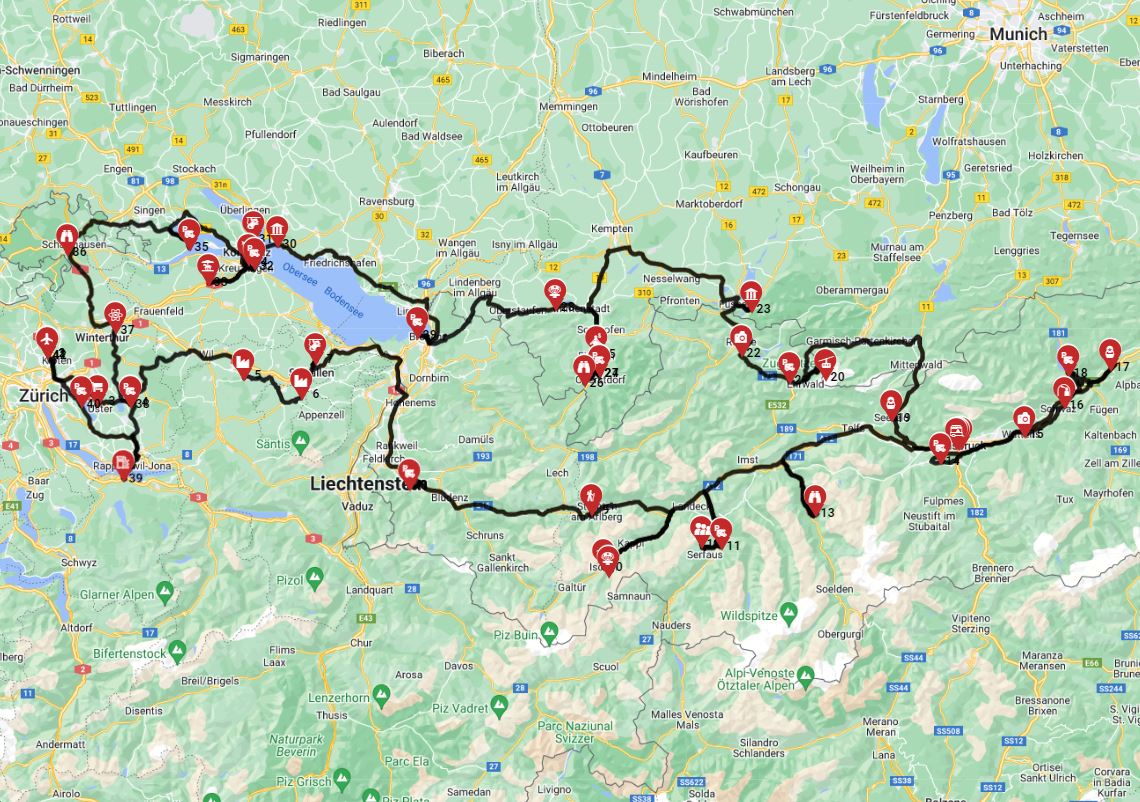
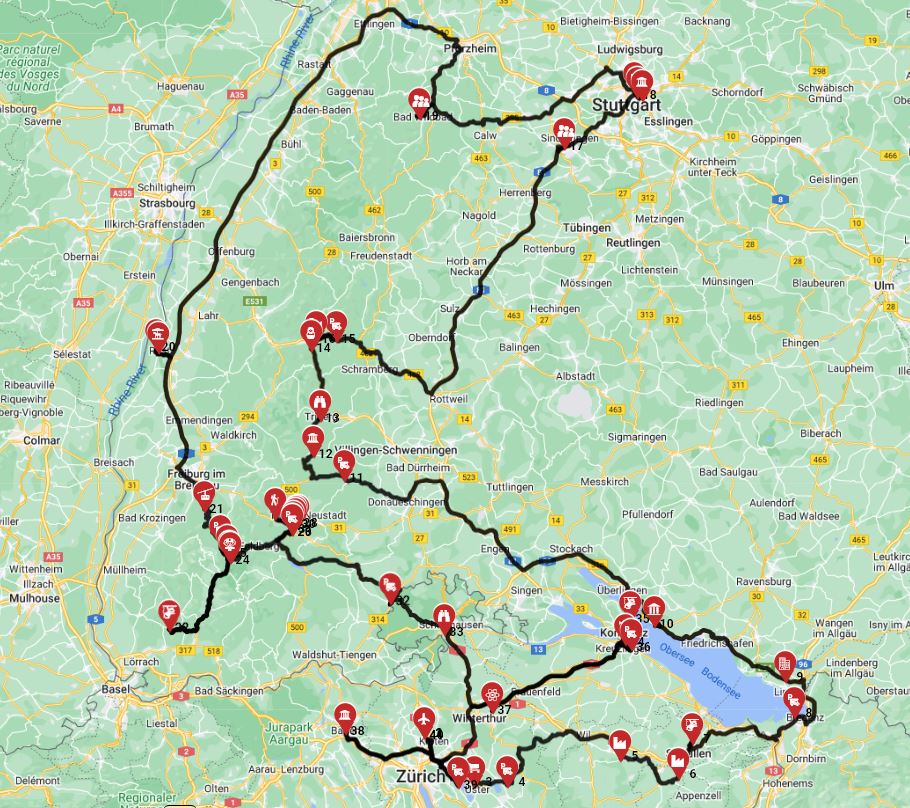
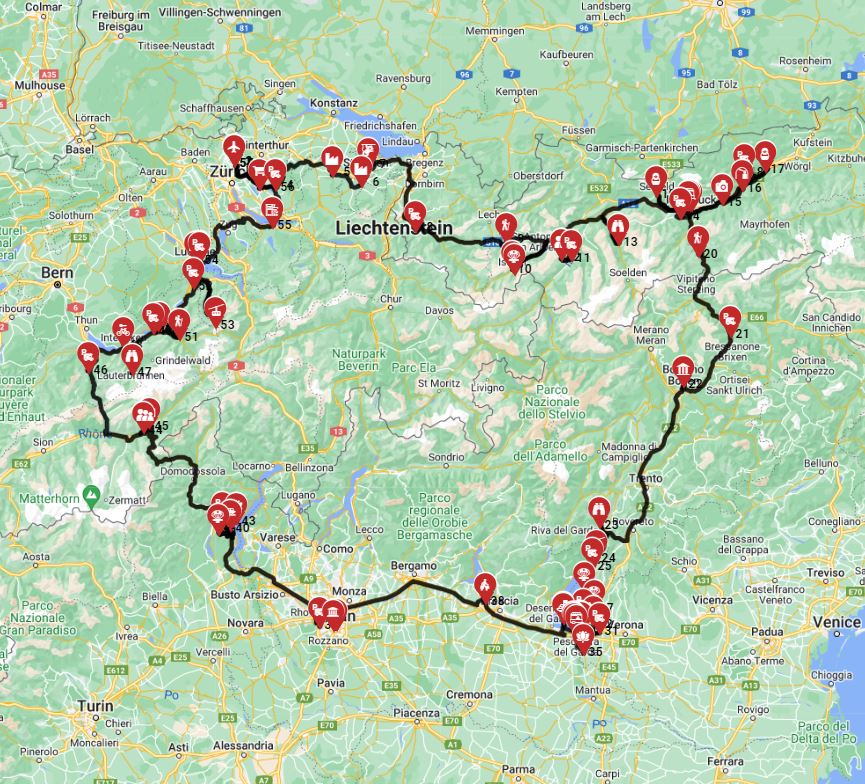
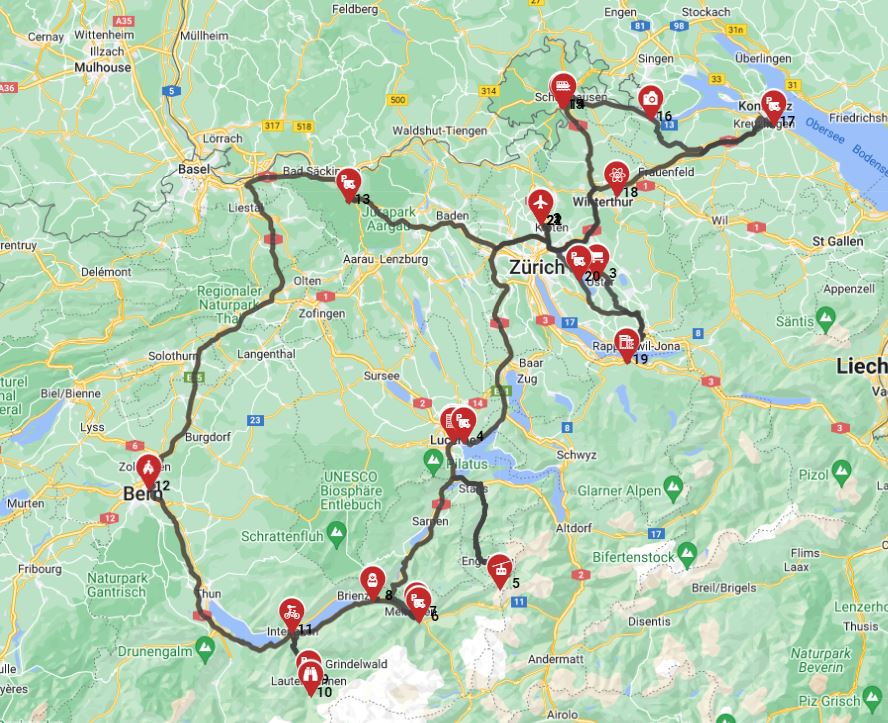
Planning an RV trip in Switzerland involves selecting an appropriate vehicle, meticulously mapping out an RV-friendly itinerary that balances urban exploration with scenic routes, securing campground reservations, and understanding all pertinent local driving regulations. Prioritize an RV class that suits your group size and comfort preferences, bearing in mind that smaller RVs (like Class B or SI) offer greater ease of navigation on Switzerland's often narrow and winding roads. Craft itineraries that include RV-friendly attractions and allow for day trips from a well-located campsite (e.g., exploring Zurich via public transport from a lakeside campground, then embarking on alpine drives to iconic passes like Susten or Grimsel). Always make campground reservations well in advance, especially for peak season, and utilize GPS systems capable of factoring in RV dimensions to avoid unsuitable routes. Budget for all costs, including rental, fuel, tolls (vignette/LSVA), and groceries, while embracing the flexibility inherent in RV travel to discover unexpected gems. For a structured approach, consider pre-planned routes like the "Zurich Roundtrip - South - Austria Tirol, Italy, Switzerland" (22 days, 1866 km) which includes diverse activities and historical sites, or the "Zurich Roundtrip - East - Tirol Austria, German Alps" (15 days, 1228 km) for a mix of natural and cultural exploration.
What do you need to drive an RV in Switzerland?
To legally drive an RV in Switzerland, you generally need a valid driving license (typically a standard B license for RVs under 3.5 tonnes), mandatory vehicle insurance, and a thorough understanding of Swiss road laws, especially those pertinent to larger vehicles. A Category B driving license suffices for most rental RVs up to 3,500 kg Gross Vehicle Weight (GVW), covering many Class B and Semi-integrated models, but a Category C1 or C license is required for RVs exceeding 3.5 tonnes. While not always legally required for short visits by non-EU/EFTA license holders, an International Driving Permit (IDP) is strongly recommended to facilitate communication with authorities. All vehicles using Swiss motorways (Autobahnen) under 3.5t GVW require an annual vignette, while RVs over 3.5t are subject to a Heavy Vehicle Charge (LSVA) instead. Mandatory equipment includes a reflective vest, warning triangle, and first-aid kit; drivers must also be acutely aware of their RV's dimensions when navigating mountain passes, narrow roads, and tunnels, ideally using GPS systems that allow for vehicle dimension input.
Do you need a vignette for an RV in Switzerland?
Yes, you generally need a vignette for an RV in Switzerland if its total gross vehicle weight (GVW) is 3.5 tonnes or less and you intend to use the national motorways (Autobahnen); for RVs exceeding 3.5 tonnes, a distinct Heavy Vehicle Charge (LSVA) applies instead of a vignette. For RVs up to 3.5 tonnes, an annual vignette is mandatory for motorway use, costing CHF 40 and valid for a 14-month period (from December 1st of the previous year to January 31st of the following year), with no shorter-term options available. RVs over 3.5 tonnes do not use a vignette but instead incur the LSVA, a performance-related heavy vehicle fee calculated based on distance and emissions, which foreign vehicles must declare at the border or utilize an on-board unit for payment. It is crucial to factor the appropriate charge (vignette or LSVA) into your budget, as driving on Swiss motorways without the correct payment can lead to significant fines. Vignettes must be purchased at border crossings, post offices, or petrol stations, and correctly affixed to the inside of the windscreen.
What are the road rules for RVs in Switzerland?
Road rules for RVs in Switzerland largely adhere to standard European traffic laws, but specific considerations apply to vehicle dimensions, speed limits, mountain driving etiquette, and parking, which are vital for safe and legal travel. Speed limits generally include 120 km/h on motorways (100 km/h for RVs over 3.5t), 100 km/h on highways, 80 km/h outside built-up areas, and 50 km/h (often 30 km/h in specific zones) within urban areas, with adherence to all local signage being critical. When driving in mountainous regions, always yield priority to PostBuses (yellow buses) on narrow roads, and utilize lower gears for both ascending and descending to maintain control and prevent brake overheating. Mandatory rules include wearing seatbelts for all occupants, using dipped headlights during the day, observing a legal blood alcohol content limit of 0.05%, and driving on the right side of the road. RVers must pay close attention to traffic signs indicating height, weight, and length restrictions, especially on mountain passes, in tunnels, and through villages, and be aware of potential local environmental zones or specific RV parking signage.
Can you park an RV in Zurich city?
Parking an RV directly within Zurich city center is generally challenging and not recommended due to severe space limitations, restrictive height and weight regulations, and dense urban traffic, making it more practical to use out-of-city campsites and public transport. Zurich's inner city offers very few parking spots suitable for larger vehicles, and those that exist are often expensive, time-limited, and may have height or weight restrictions that exclude most RVs. Navigating a large RV through Zurich's busy urban traffic can be stressful and time-consuming, while the city, although not having broad low-emission zones for all RVs, employs general traffic calming measures and local restrictions that affect larger vehicles. The most effective strategy for exploring Zurich is to park your RV at a designated campsite on the city's outskirts or in a nearby canton, then utilize Zurich's excellent and efficient public transport network (trams, buses, trains) to reach the city center. This approach not only alleviates city parking stress and costs but also contributes to a more relaxed and enjoyable travel experience by integrating effectively with the city's infrastructure.
How much is a campsite in Zurich?
Campsite fees in Zurich typically range from CHF 30-60 per night for a standard pitch with electricity, with the final cost varying based on the campsite's location, amenities, the season, and the number of occupants. During the off-season or at more basic sites, expect to pay around CHF 30-40 per night for two people with an RV and electricity, while peak season or premium lakeside locations can cost CHF 50-70+ per night. Additional costs often include a per-person tourist tax (e.g., CHF 2-4 per night), fees for extra adults or children (CHF 5-15 each), and potential charges for showers (CHF 1-2 per token) or Wi-Fi (CHF 5-10 per day). Pet fees (CHF 3-7 per pet) may also apply, so always review the specific pricing structure of your chosen campsite online or by phone before booking. To save money, consider utilizing camping discount cards, opting for municipal sites, or traveling during the shoulder season, as these strategies can significantly reduce overall camping expenses.
What You Shouldn't Miss
- Explore the charming Old Town (Altstadt) of Zurich, a UNESCO World Heritage site, and wander through its narrow cobblestone streets, discovering hidden squares and historic buildings.
- Visit the Kunsthaus Zurich, one of Switzerland's most important art museums, housing an impressive collection of Swiss art and international masterpieces.
- Enjoy a scenic boat trip on Lake Zurich, offering stunning views of the city and the surrounding Alps, with various cruise options available for different durations and experiences.
- Take advantage of Zurich's efficient public transport from your campsite to visit iconic landmarks like the Grossmünster church, Fraumünster church with its Chagall windows, and the National Museum Zurich.
- Discover the natural beauty of Uetliberg, Zurich's local mountain, accessible by train from the city center, offering panoramic views and hiking trails perfect for a day trip.
- Experience the vibrant culinary scene by trying Swiss specialties like fondue or raclette at a traditional restaurant, or explore local markets for fresh produce and regional delicacies.
Final Thoughts
Renting an RV offers an incredible way to experience the beauty and efficiency of Switzerland, with Zurich serving as an excellent gateway to diverse landscapes and cultural experiences. By choosing the right vehicle and planning your stays at strategically located campgrounds, you can seamlessly blend urban exploration with the tranquility of nature.
Remember, Bandana Caravan is here to support your planning every step of the way, ensuring a transparent and stress-free booking process. For finding the perfect RV and planning your itinerary, start your journey with us!
Find Motorhome Rentals in Zurich