In This Guide
- Where to Camp in Tokyo - Top Options
- Campground Types in Tokyo (National, Private, Wild)
- Featured RV Park or Campground in Tokyo
- Hookups & Amenities - What to Expect
- Booking Windows & Reservations in Tokyo
- Nearby Supermarkets & Resupply Points
- Best RV Class for Camping in Tokyo
- How to Save on Campgrounds in Tokyo
- What are the requirements for RV rental in Tokyo?
- Can foreigners drive an RV in Japan?
- What should I know about driving an RV in Japan?
- Where can I park an RV in Tokyo?
- How do I dispose of waste from an RV in Japan?
- What are the rules for camping in Japan?
- What is the best time to rent an RV in Tokyo?
- Are there specific RVs suited for Japan's roads?
- Is RV travel a good way to see Tokyo?
- How do RVs compare to other transportation in Tokyo?
- How much does it cost to rent an RV in Tokyo?
- What You Shouldn't Miss
- Why Book with Bandana Caravan
- Final Thoughts
- Frequently Asked Questions
🎬 Video coming soon
Where to Camp in Tokyo - Top Options
Directly within central Tokyo, designated RV camping options are limited, requiring travelers to look to nearby prefectures like Chiba, Kanagawa, or Yamanashi for accessible RV parks and campgrounds. Popular areas easily reachable from Tokyo include campgrounds near Lake Tanzawa in Kanagawa or Futtsu Park in Chiba, offering a balance of nature and proximity to urban centers. Many suitable RV parks are within a 1-2 hour drive of central Tokyo, providing convenient bases for city day trips. For example, Pica Sagamiko, located southwest of Tokyo in Kanagawa Prefecture, offers a range of RV sites with electrical hookups, showers, and proximity to Lake Sagami, making it a popular choice for families. This approach allows you to seamlessly combine Tokyo’s urban wonders with tranquil natural escapes.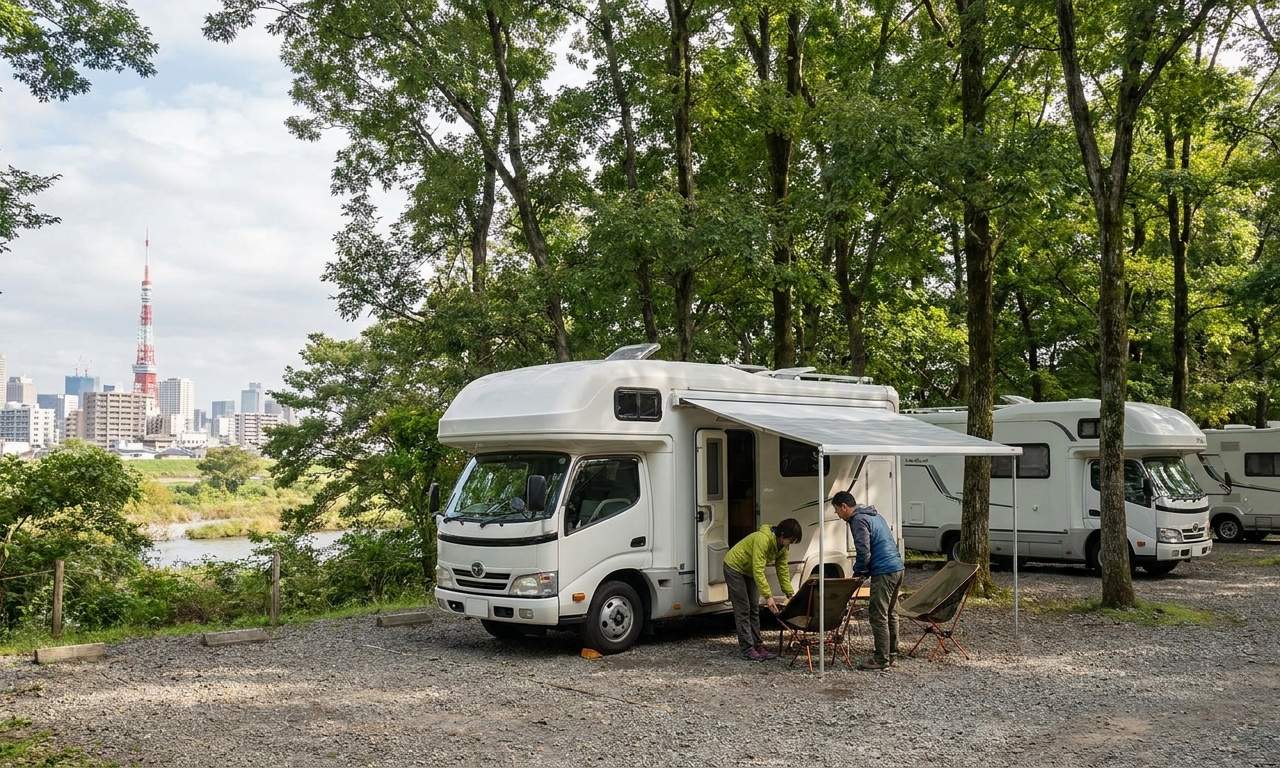
Campground Types in Tokyo (National, Private, Wild)
Japan offers diverse campground types, including public (prefectural/municipal) and private sites, with 'wild camping' or boondocking generally discouraged and often illegal due to land ownership regulations. National park areas might have designated campgrounds with basic facilities, but truly wild camping is typically restricted to preserve nature. Michi-no-Eki (Roadside Stations) are common and generally tolerated for overnight parking, provided campers are respectful and do not set up full camp with awnings or chairs. Private campgrounds typically offer the most amenities, including hookups, clean restrooms, and laundry facilities, while public sites might be more basic but also more affordable, often ranging from ¥2,000 to ¥6,000 ($13-$40 USD) per night.Featured RV Park or Campground in Tokyo
When selecting an RV park near Tokyo, prioritize locations offering easy access to public transport for city exploration, essential hookups like electricity and water, and amenities such as clean restrooms and laundry facilities. Look for parks slightly outside the immediate urban core, in neighboring prefectures like Chiba or Kanagawa, which provide a balance of natural surroundings and convenient access to the city. For instance, Auto Campsite Nagatoro in Saitama Prefecture, about 1.5 hours from central Tokyo, provides river access, a children's playground, and powered sites, making it a family-friendly option. Ideal features also include spacious lots and secure environments to minimize urban RV driving stress.Hookups & Amenities - What to Expect
RV campgrounds near Tokyo typically offer essential hookups such as 100V electricity (requiring a Type A or B adapter), fresh water, and often grey/black water dump stations. Modern facilities may also provide Wi-Fi access, coin-operated laundry services, clean showers, and communal cooking areas. Always confirm specific amenities and voltage requirements directly with your rental provider and chosen campground, as infrastructure can vary significantly. For example, some private parks like Camping Trailer Park Tokyo-wan provide full hookups and an on-site manager, while smaller municipal sites might offer only basic facilities. You'll find many opportunities to prepare delicious meals right in your rented campervan; check out our RV-friendly recipes playlist for inspiration!Booking Windows & Reservations in Tokyo
For RV camping near Tokyo, planning ahead is highly recommended, especially during peak seasons like Golden Week (May), Obon (August), and autumn foliage periods, though spontaneous travelers can often find spots with some flexibility. Many popular campgrounds release reservation slots several months in advance. However, some national park-affiliated sites might only offer a limited percentage (e.g., 25-30%) for advance booking, with the remainder available first-come, first-served. Calling ahead on the day of travel is a wise strategy to confirm availability before driving, particularly if you are a spontaneous traveler. Even during busy times, being flexible with your travel dates and willing to explore slightly less popular areas can often secure a spot. Remember, you'll find a spot; if not at the first campground, then the next one.Nearby Supermarkets & Resupply Points
When RVing near Tokyo, you can easily resupply at major supermarket chains such as Aeon, Ito-Yokado, and Seiyu, which are widely available in suburban and semi-rural areas. For quick convenience or smaller items, 7-Eleven, Lawson, and FamilyMart stores are ubiquitous across Japan, offering a range of groceries, snacks, and essential household items for your rented camper. Look for larger supermarkets typically found near train stations or along main roads for comprehensive shopping needs and fresh local produce. Don't forget that many Michi-no-Eki also feature fantastic local markets for fresh, regional ingredients. Our RV PLANET routes can help you itemize and track every expense, including groceries, for easy budgeting.Best RV Class for Camping in Tokyo
For camping in and around Tokyo, a compact Class C Alcove RV is highly recommended due to Japan's narrower roads and smaller parking spaces. Bandana's fleet typically features models averaging around 5 meters in length and sleeping up to 6 people, though they are often more comfortable for 3-4 adults or a family of 2+2. This size offers an optimal balance of interior comfort and maneuverability, making it suitable for both navigating Japanese roads and accessing many campgrounds. Smaller RVs, such as the `cruise america example EX-Group A` (5.99m length) or the `MHC24` (7.3m length but still manageable), are also more economical on fuel and tolls, which are significant considerations for travel in Japan.How to Save on Campgrounds in Tokyo
To save on RV campground costs near Tokyo, consider leveraging discount cards offered by rental companies like Bandana, which can provide savings at participating parks. Booking during shoulder seasons (spring and late autumn outside of major holidays), choosing municipal or regional campgrounds over private resorts, and opting for longer stays (three or more nights for potential weekly rates) can significantly reduce expenses. Sharing hookups with another group or selecting basic non-electric sites are also cost-effective strategies. For an even more budget-friendly option, remember that Michi-no-Eki often allow free overnight parking for self-contained campervans, provided you respect the rules. For more financial planning, exploring "Cheap RV Rental in Tokyo - Budget Guide 2026" can offer additional tips.What are the requirements for RV rental in Tokyo?
Renting an RV in Tokyo primarily requires a valid International Driving Permit (IDP) issued under the 1949 Geneva Convention, presented alongside your original driver's license. The minimum rental age is typically 21 years old across all vehicle classes, with no young driver surcharges. A valid credit card for the rental deposit and identification (like your passport) are also standard requirements. Familiarity with Japanese traffic laws, including driving on the left and understanding local road signage, is essential for a safe rental experience.Can foreigners drive an RV in Japan?
Yes, foreigners can legally drive a rented RV in Japan, provided they possess an International Driving Permit (IDP) issued under the 1949 Geneva Convention, which must be presented alongside their original valid driver's license. Travelers from countries that do not issue IDPs under the 1949 Geneva Convention (e.g., Germany, France, Switzerland, Belgium, Taiwan) may need to obtain an official Japanese translation of their domestic license through the Japan Automobile Federation (JAF) or their country's embassy/consulate in Japan prior to arrival. It's crucial to confirm the specific requirements based on your country of origin well in advance of your trip.What should I know about driving an RV in Japan?
Driving a rented RV in Japan requires familiarity with left-hand traffic, often narrow urban and rural roads, strict parking regulations, and high toll road costs, making smaller RVs highly advantageous. Cultural nuances dictate precise adherence to traffic rules, quiet behavior in residential areas and at Michi-no-Eki, and meticulous waste separation. Drive slowly and carefully, and you can drive almost anywhere without issues. No need to stress - just use common sense and pay attention. Be prepared for potential natural disasters like earthquakes by knowing safety protocols, have roadside assistance details readily available, and consider mobile data solutions for reliable GPS navigation (e.g., Google Maps, Apple Maps) and communication. Understanding basic Japanese road signs or using a Japanese-speaking GPS can significantly ease navigation. For a comprehensive overview, consult our "RV Travel Guide to Tokyo - Tips and Top Spots 2026".Where can I park an RV in Tokyo?
Parking a rented RV directly within central Tokyo is highly challenging due to limited space, high parking fees, and restrictions on larger vehicles. Dedicated RV parks or Michi-no-Eki (roadside stations) in outer areas or neighboring prefectures, such as Chiba or Kanagawa, are the most practical solution. For city exploration, it is advisable to park your RV at an outlying campground or Michi-no-Eki and utilize Japan's efficient public transportation system to access urban attractions, as this avoids the stress and cost of city RV parking. Some shopping malls or large attractions on the outskirts of Tokyo might offer oversized vehicle parking, but always verify in advance and be mindful of height restrictions.How do I dispose of waste from an RV in Japan?
Disposing of RV waste in Japan requires strict adherence to local regulations, primarily by utilizing designated dump stations ('dumping stations' or 'black water disposal' areas) found at many RV parks and some larger Michi-no-Eki. For general trash, follow Japan's rigorous separation rules, typically sorting into burnable, non-burnable, plastics, and recyclables, using transparent bags and disposing at designated collection points or Michi-no-Eki facilities where available. It is crucial to never dump grey or black water illegally, as environmental protection is taken very seriously in Japan. You can find detailed disposal information and locations on RV PLANET (rvplan.net).What are the rules for camping in Japan?
Camping in Japan is generally restricted to designated campgrounds and RV parks, where rules regarding quiet hours (typically 9-10 PM), strict trash disposal (meticulous sorting is mandatory), and campfires (often limited to designated pits or not allowed) must be followed. While 'wild camping' or boondocking is largely discouraged and often illegal on private or public lands without explicit permission, overnight parking is generally tolerated at Michi-no-Eki (Roadside Stations) provided campers are respectful, do not set up full campsites (awnings, tables, chairs), and do not stay for extended periods. Onsen (hot springs) etiquette is also important for RV travelers, requiring prior washing and respect for quiet environments. Always travel slowly, aiming for a maximum of 100-150 km per day on average, to truly connect with the culture, food, and scenery.What is the best time to rent an RV in Tokyo?
The best time to rent an RV in Tokyo is typically during the spring (late March to May) for cherry blossoms and mild weather, or autumn (September to November) for vibrant fall foliage and comfortable temperatures. These shoulder seasons avoid the hot, humid summer and the colder, sometimes snowy winter, while also offering a balance between tourist crowds and RV availability compared to peak holiday weeks like Golden Week or Obon, when demand and prices surge. Booking during these periods allows for pleasant driving conditions and ideal weather for outdoor activities around the Tokyo region. For seasonal pricing, check "RV Rental in Tokyo - Prices and Best Deals 2026".Are there specific RVs suited for Japan's roads?
Yes, smaller motorhomes and campervans are particularly well-suited for Japan's infrastructure, characterized by narrower urban streets, compact parking spaces, and winding rural roads. 'Kei-campers' (mini-RV conversions based on kei-cars) and compact Class C Alcove models, like the `cruise america example EX-Group A` at 5.99 meters in length, are highly recommended for their maneuverability and ease of navigation compared to larger, North American-style RVs. These smaller vehicles also benefit from better fuel efficiency and lower toll costs on Japan's extensive expressway network, making a rented `Combi Van` or `Active Pop Top` an excellent choice.Is RV travel a good way to see Tokyo?
RV travel offers a unique way to experience the broader Tokyo region and its surrounding prefectures, providing unparalleled flexibility for day trips to natural attractions and smaller towns, though it is not ideal for directly exploring central Tokyo itself due to significant parking and traffic challenges. By parking your rented RV on the outskirts (e.g., at a campground or Michi-no-Eki) and utilizing Japan's efficient public transportation system for city exploration, you can combine urban sightseeing with the freedom and scenic experiences of an RV adventure. This approach allows for exploration of off-the-beaten-path destinations near Tokyo that are less accessible by public transport.How do RVs compare to other transportation in Tokyo?
Compared to Japan's extensive and efficient public transportation system (trains, subways, buses), rented RVs offer unparalleled flexibility for exploring regions *outside* central Tokyo, especially for families or those seeking off-the-beaten-path experiences. While public transport is superior for direct city-to-city travel and urban exploration within Tokyo due to speed and convenience, an RV provides the freedom to stop spontaneously, carry more luggage, and stay overnight in scenic locations not serviced by rail. A rented motorhome trip allows access to remote hiking trails, hidden onsen, and rural cultural sites that are challenging to reach without a private vehicle, offering a different depth of experience.How much does it cost to rent an RV in Tokyo?
The cost to rent an RV in Tokyo varies widely based on RV class, rental duration, season, and included amenities. A compact Class C Alcove, like those averaging 5 meters, typically ranges from approximately ¥15,000 to ¥35,000 (roughly $100-$250 USD) per day. This base rental fee does not include additional expenses such as high Japanese toll road fees (which can accumulate rapidly), fuel costs (which are significant), campground fees (ranging from ¥2,000 to ¥6,000 per night), and food budgeting. A comprehensive cost breakdown should account for these variable expenses to avoid surprises during your RV adventure in Japan. For detailed pricing information, refer to "RV Rental in Tokyo - Prices and Best Deals 2026" or "RV Rental Deals in Tokyo - Latest Offers 2026".What You Shouldn't Miss
- Explore Hakone National Park: Drive your rented campervan to the scenic Hakone area, just a 1.5-hour drive southwest of Tokyo. Enjoy views of Mount Fuji, cruise Lake Ashi, and relax in traditional onsen. Many campgrounds in the area cater to RVs, offering a peaceful retreat.
- Visit the Fuji Five Lakes Region: Spend a few days around Lake Kawaguchiko or Lake Yamanakako, offering stunning views of Mount Fuji and numerous campsites suitable for your motorhome. Enjoy hiking, boating, and exploring the charming lakeside towns.
- Discover Chiba's Coastal Beauty: Head east from Tokyo to Chiba Prefecture for a coastal RV adventure. Explore the beaches of Kujukuri or the dramatic cliffs of Cape Nosappu. Campgrounds here often offer ocean views and a refreshing escape from the city bustle.
- Experience Rural Yamanashi: Drive your RV into the Yamanashi Prefecture, known for its fruit orchards, vineyards, and the picturesque Shosenkyo Gorge. This region provides excellent opportunities for slow travel, enjoying local cuisine and serene natural landscapes.
- Relax at a Michi-no-Eki with Onsen: Seek out a Michi-no-Eki roadside station that includes an onsen (hot spring) for a unique and relaxing overnight experience. Many offer ample parking for RVs and a chance to experience local culture and cuisine.
Looking for expert insights from Avi Bandana? Top 5 Adventures - recommendations from Avi Bandana
Final Thoughts
Embarking on an RV camping adventure around Tokyo and its surrounding prefectures is an incredible way to experience Japan beyond the usual tourist paths. It offers the freedom to chase cherry blossoms, discover serene onsen, or simply enjoy the convenience of your home on wheels. While central Tokyo presents its own challenges for larger vehicles, strategic planning allows you to seamlessly blend urban exploration with peaceful natural escapes. Remember, we're here to support you before, during, and after your booking, ensuring your journey is as smooth and enjoyable as possible.Discover top destinations, planning tips, all in one place! Imagine yourself on the route, taking in the stunning scenery and enjoying the freedom only a rented RV can offer. God is in the small details, and we take care of them. That's what makes the big difference. Find your perfect RV rental and start planning your unforgettable trip to Tokyo today!
Find Motorhome Rentals in TokyoOn the routes offered through RV PLANET routes, you can itemize and track every expense along the way for easy budgeting.