In This Guide
- Where to Camp in North Canada - Top Options
- Campground Types in North Canada (National, Private, Wild)
- Featured RV Park or Campground in North Canada
- Hookups & Amenities - What to Expect
- Booking Windows & Reservations in North Canada
- Nearby Supermarkets & Resupply Points
- Best RV Class for Camping in North Canada
- How to Save on Campgrounds in North Canada
- Can a US citizen go camping in North Canada?
- What is the 3-3-3 rule for RV travel in North Canada?
- Can you park up anywhere in an RV in North Canada?
- Where can I park my RV for free in North Canada?
- How much does it cost to park an RV in North Canada?
- Do you need to book campsites in North Canada?
- What is the best camping app for North Canada?
Embarking on a motorhome adventure in North Canada offers an unparalleled journey through some of the world's most pristine wilderness. Imagine the freedom of waking up to breathtaking northern landscapes right outside your window, with endless possibilities for exploration at your fingertips. From the rugged beauty of the Yukon to the vast expanses of the Northwest Territories and Nunavut, renting an RV provides the perfect mobile basecamp for families, couples, and friends seeking an unforgettable experience. For live availability and current prices, start with our RV Rental North Canada - Complete Guide 2026 guide.
Where to Camp in North Canada - Top Options
North Canada offers diverse camping experiences, ranging from rustic wilderness sites in remote territorial parks to well-equipped campgrounds near regional population centers. Popular destinations for rented RVs include Whitehorse, Yukon, and Yellowknife, NWT, which serve as excellent launching points for exploring the surrounding natural beauty. These hubs provide access to territorial parks and private campgrounds, ensuring you have a comfortable spot after a day of adventure.
For example, in Yukon, Tombstone Territorial Park offers spectacular wilderness camping, while the Caribou Crossing Trading Post Campground near Carcross provides a unique blend of amenities and local history. In the Northwest Territories, Fred Henne Territorial Park near Yellowknife is a favored choice, featuring sites with electrical hookups and easy access to Long Lake. Planning your route is essential in these vast regions; our true RV specialists at Bandana Caravan are here to help you compare options and ensure you find the perfect rented motorhome for your journey, supported by full transparency with no hidden fees or surprises.
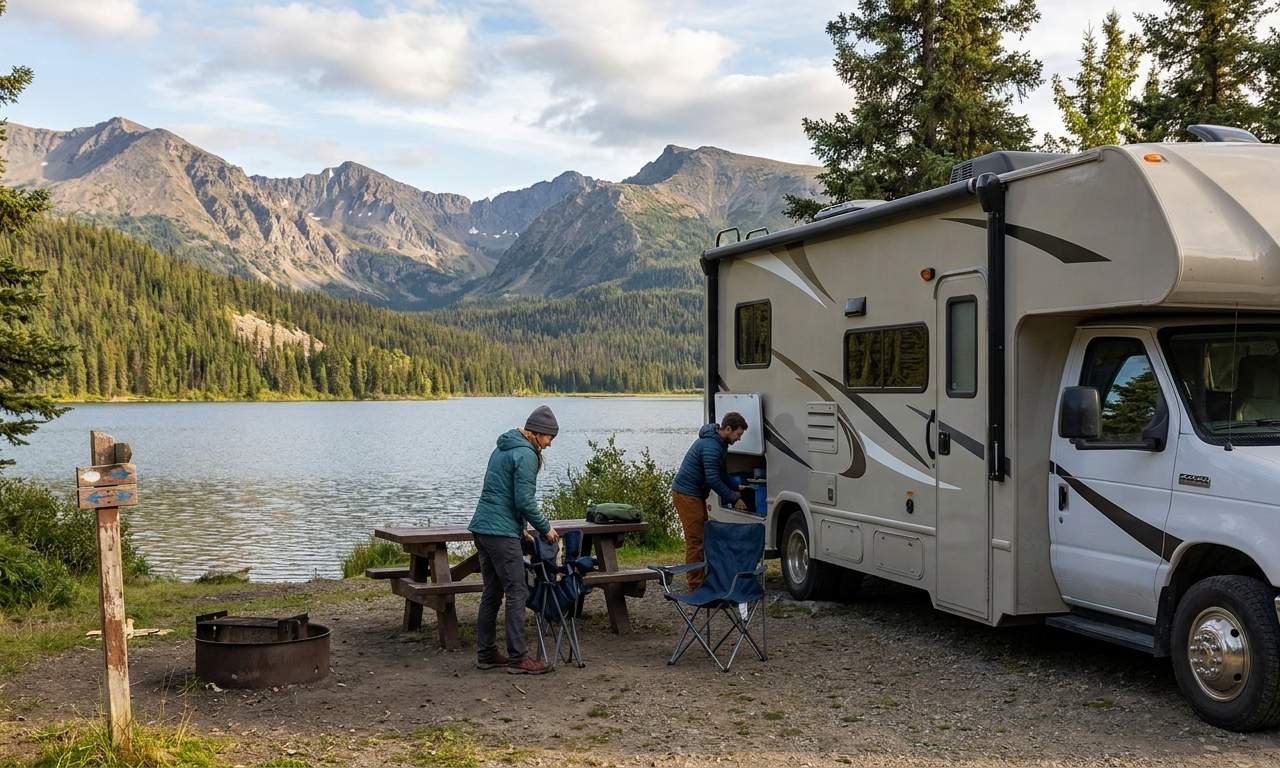
Campground Types in North Canada (National, Private, Wild)
When planning your rented RV trip through North Canada, understanding the different types of campgrounds available is key to a smooth journey. National Parks like Kluane National Park and Reserve in Yukon provide well-maintained sites, often with basic amenities such as pit toilets and water, and usually require reservations during the bustling peak summer season (June to September). Provincial and territorial parks also offer managed camping, frequently with a mix of reservable and first-come, first-served spots.
Private campgrounds, often found closer to towns or along major routes, provide a wider range of amenities, including full hookups (electricity, water, sewer), showers, laundry facilities, and sometimes even Wi-Fi, offering a more comfortable experience. For the adventurous, wild camping, also known as boondocking or freedom camping, is generally permitted on Crown land (public land) across North Canada. However, it is always crucial to check specific territorial and regional regulations before setting up camp and to practice strict Leave No Trace principles to preserve the pristine environment. When mapping out your journey and accounting for these various fees, remember that RV PLANET routes allow you to itemize and track every expense along the way for easy budgeting. On the routes offered through RV PLANET routes, you can itemize and track every expense along the way for easy budgeting.
Featured RV Park or Campground in North Canada
A prime example of a quality northern campground that epitomizes the RV camping experience in North Canada is Fred Henne Territorial Park in the Northwest Territories. This popular park offers scenic views of Long Lake, spacious sites suitable for various RV sizes, and convenient access to outdoor activities like swimming, fishing, and hiking trails. Campgrounds like Fred Henne typically feature essential hookups such as 15-amp or 30-amp electrical service, potable water, and a sani-dump station, which is especially welcome after extended periods of boondocking.
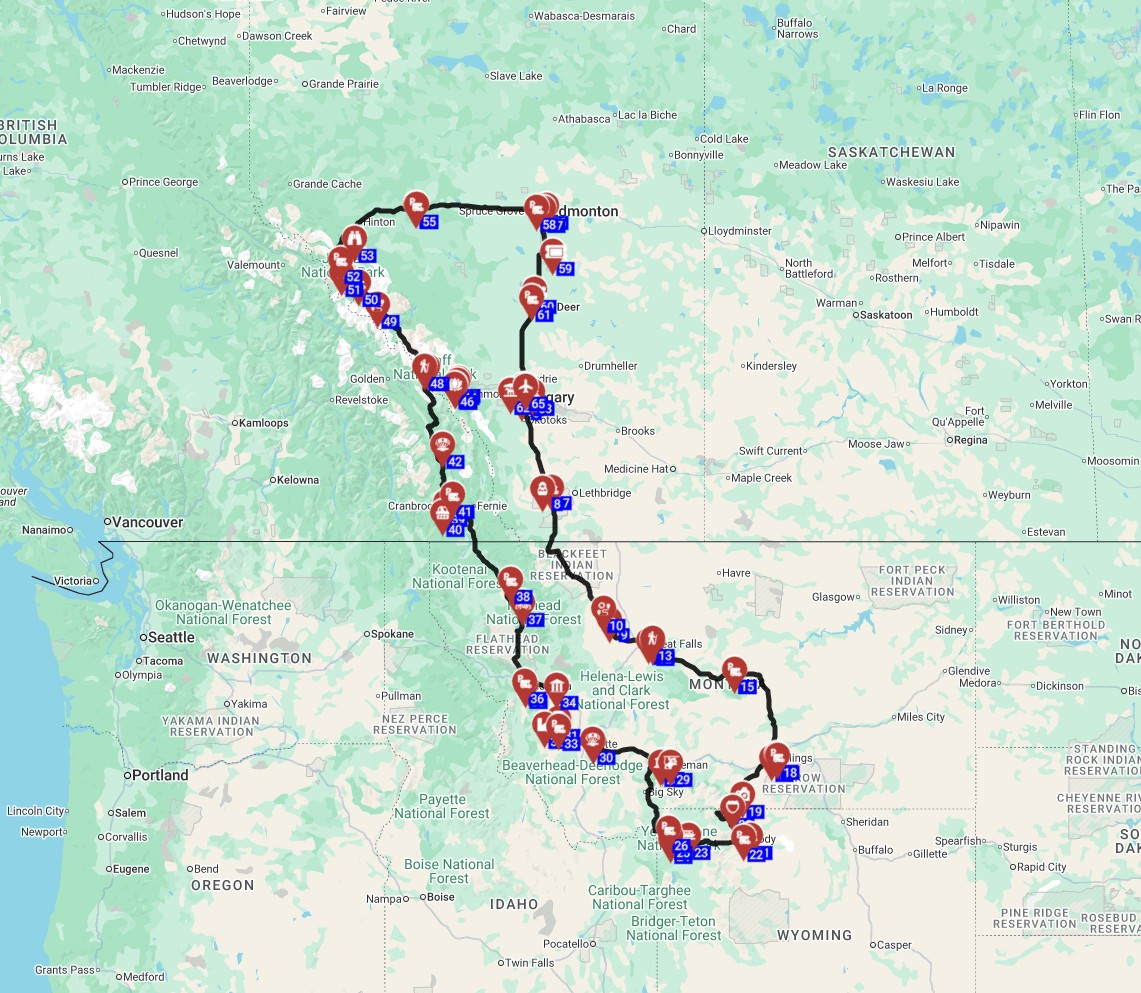
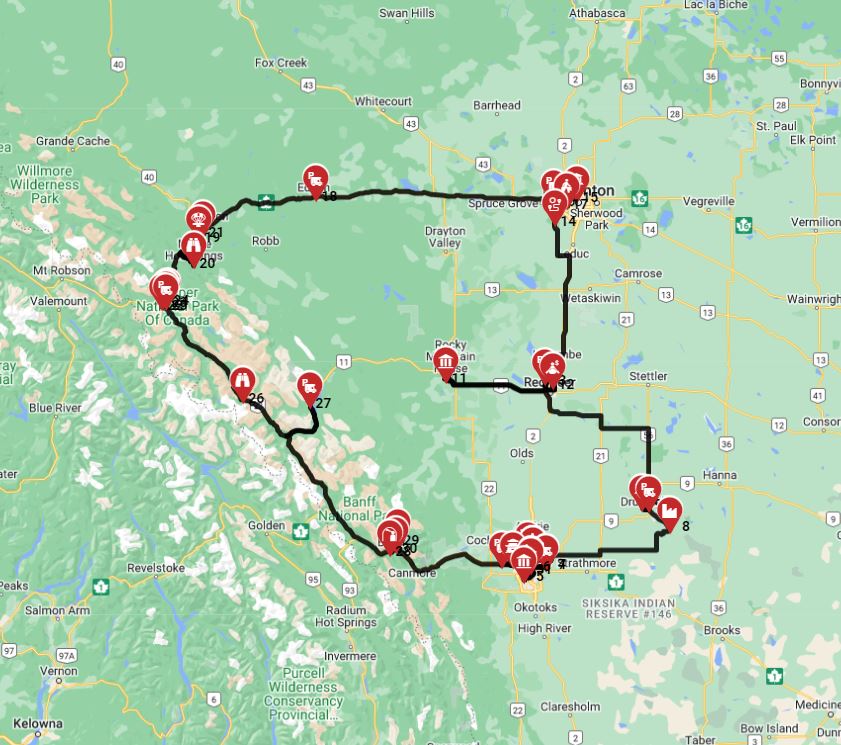
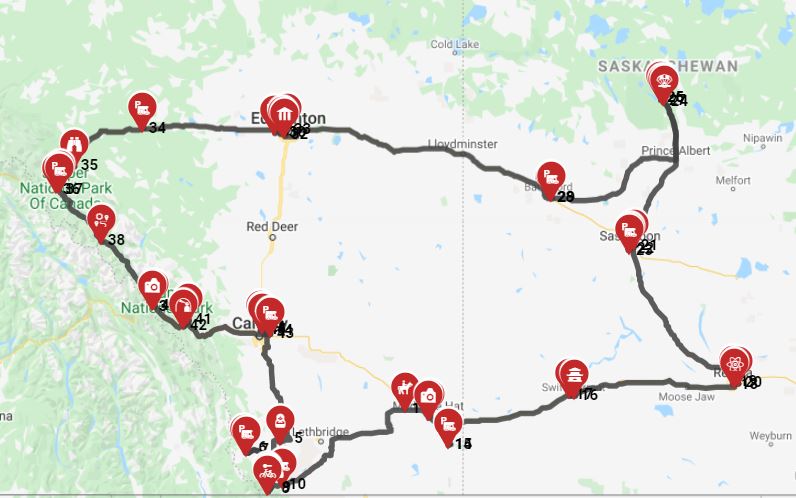
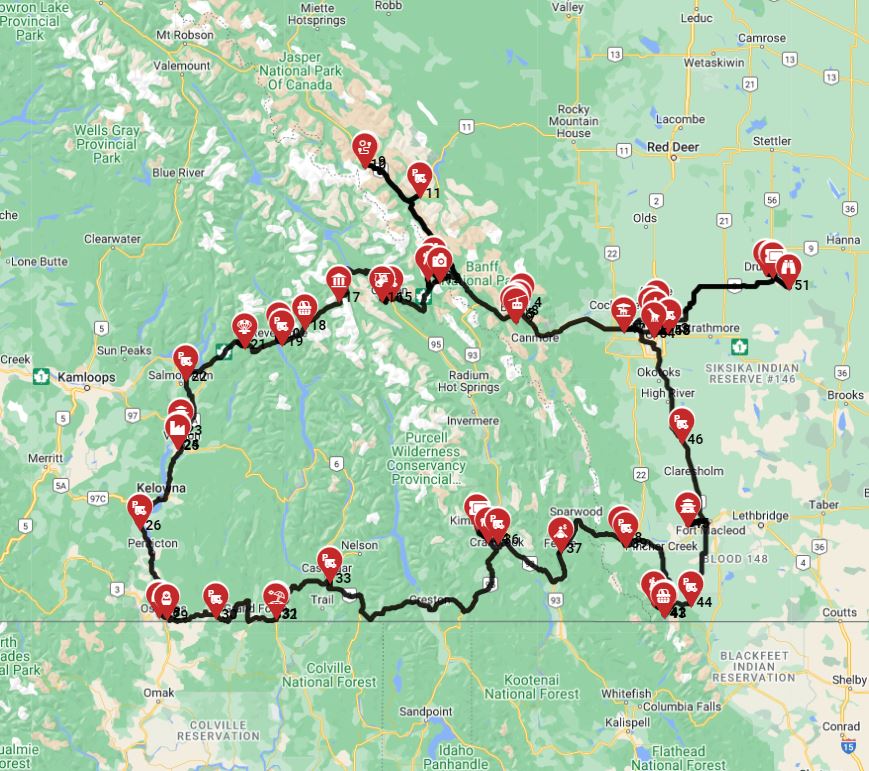
Many top northern campgrounds are strategically situated near lakes or rivers, enhancing opportunities for fishing, kayaking, and serene nature walks. These locations often include amenities like picnic tables, fire pits, and clean restrooms. Utilizing resources like RV PLANET (rvplan.net) is highly recommended for finding campsites and campgrounds during your trip, as it helps locate available spots and details their amenities along your chosen route. This proactive planning, combined with Bandana Caravan's 25% planning discount when using rvplan.net, makes your adventure both enjoyable and cost-effective.
Hookups & Amenities - What to Expect
In North Canada, RV campgrounds generally provide a range of essential hookups to ensure a comfortable stay. You can typically expect to find sites offering 15-amp, 30-amp, or sometimes even 50-amp electrical service, providing ample power for your rented motorhome's systems. Potable water connections are commonly available, allowing you to easily refill your fresh water tank, along with convenient dump stations for wastewater disposal.
Beyond hookups, many campgrounds, especially private ones or larger territorial parks, include common amenities such as clean restrooms and coin-operated showers. Laundry facilities are also often available, a welcome convenience on longer trips. While Wi-Fi can be spotty or limited to communal areas, especially in more remote locations, and cell service may be intermittent, these minor challenges are part of the true northern wilderness experience. Preparing delicious meals in your rented RV's kitchen is a great way to enjoy your trip; for inspiration, check out our RV-friendly recipes playlist.
Booking Windows & Reservations in North Canada
For popular national and territorial parks in North Canada, reserving campsites well in advance is highly advisable, often 3-5 months out, particularly for the peak summer months of June to September. These sought-after locations, especially those with full hookups or prime scenic spots, fill up quickly. Many national park campgrounds, in fact, only release a portion (typically 25%-30%) of their sites for advance reservations, leaving the remainder available on a first-come, first-served (FCFS) basis.
This means spontaneous travelers can often still find FCFS spots, especially if they are flexible with their dates or visiting less-trafficked areas or during shoulder seasons like late spring or early fall. Always remember to call ahead to the specific campground before driving long distances to confirm availability, as alternatives might be sparse in remote northern regions. Bandana Caravan supports both pre-planners who like everything organized and spontaneous adventurers, ensuring you have the flexibility to explore North Canada your way.
Nearby Supermarkets & Resupply Points
When planning a rented RV trip in North Canada, it is absolutely crucial to identify your resupply points well in advance, as the distances between towns and services can be significant. Major grocery store chains like Save-On-Foods or Superstore are typically found in regional centers such as Whitehorse (Yukon), Yellowknife (NWT), or Inuvik (NWT).
It's always a good practice to stock up on essentials like food, potable water, propane, and vehicle fuel whenever possible, as smaller communities may have limited selection, higher prices, or unexpected closures. Remember that a well-stocked pantry in your motorhome is your mobile lifeline in these remote areas. Bandana Caravan, with its focus on supporting travelers, encourages thorough planning to ensure you're always prepared for the stunning, yet vast, landscapes of North Canada.
Best RV Class for Camping in North Canada
For camping in North Canada, a Class B Camper Van or a Class C Alcove RV often provides the ideal balance of maneuverability, comfort, and self-sufficiency. Class B Camper Vans, typically averaging 5.8 meters in length and sleeping 3.2 people (ideal for 2.7 adults), are excellent for navigating smaller roads and offer impressive fuel efficiency, often around 8-10 Liters/100 km, making them well-suited for both remote campsites and more discreet city camping. These nimble campervans, like a Category Van, are equipped with amenities like front air conditioning, a shower, and a toilet, perfect for couples.
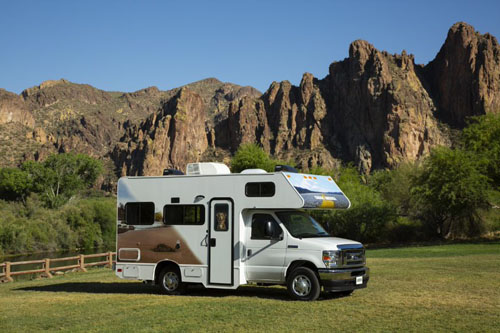
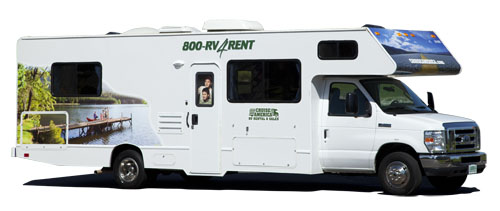
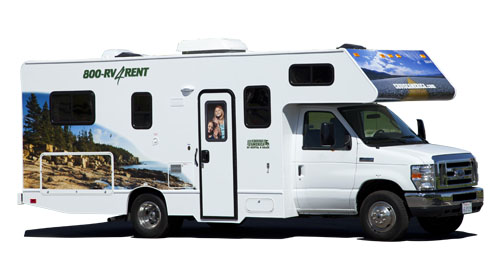
Class C Alcove RVs, which are larger, generally measure around 7.5 meters long and comfortably accommodate 5.8 sleepers (ideal for 4.4 adults). They provide more living space and storage, consuming around 10-12 Liters/100 km of fuel. A Class C, such as the Explorer with a 82-liter fresh water tank and 4 sleeping places, is perfect for families or groups who prefer more robust amenities and are likely to frequent full-service campgrounds. Regardless of your choice, you can upgrade to a top-level deductible for extra peace of mind, allowing you to focus on the adventure without unnecessary worry.
How to Save on Campgrounds in North Canada
Saving on campground costs in North Canada involves strategic planning and flexibility. One excellent way is to inquire about any campground discount cards or programs that your RV rental provider, like Bandana Caravan, might offer, as these can provide significant savings. Another smart tip is to consider traveling during the shoulder season (late spring or early fall) when daily rates are often lower and the crowds are noticeably thinner, providing a more peaceful camping experience amidst stunning scenery.
Opting for municipal or regional campgrounds over more expensive private RV resorts can also significantly reduce your per-night costs, as they often provide basic amenities at more affordable prices. Additionally, if your itinerary allows, staying 3 or more nights at a single location can sometimes qualify you for weekly rates, which are typically more economical than booking day-to-day. At Bandana Caravan, we believe in full transparency, so you'll always see what you pay, with no surprise fees at pickup, helping you budget accurately for your incredible North Canada journey.
Can a US citizen go camping in North Canada?
Yes, US citizens can absolutely go camping in North Canada, provided they meet standard entry requirements for Canada. This includes having a valid US passport and complying with any current border regulations, which may involve additional health or travel advisories. It is always wise to ensure all your rented RV documents are in order and easily accessible when crossing the border, and be prepared to declare any goods you are bringing into the country.
Staying informed about the latest travel information is important; official government websites, such as the Government of Canada's travel page, are excellent resources to check before your trip. The journey from the USA to North Canada can be an epic one, offering a seamless transition into vast wilderness. For those planning an even broader North American adventure, our "RV Rental USA - Complete Guide 2026" provides essential information for travel south of the border.
What is the 3-3-3 rule for RV travel in North Canada?
The "3-3-3 rule" is a widely recommended guideline for RV travel designed to ensure a safe, relaxed, and enjoyable journey, especially relevant for the vast distances of North Canada. It suggests driving no more than 300 miles (or roughly 500 kilometers) per day, arriving at your campground or destination by 3 PM, and staying at least 3 nights in each spot. Adhering to the '300 miles' component helps prevent driver fatigue, which is crucial on long northern roads that can be less predictable and have fewer services.
Arriving by '3 PM' provides ample daylight to set up your rented motorhome, explore your immediate surroundings, and relax before dusk, allowing you to truly immerse yourself in the northern experience. Staying at least '3 nights' offers a chance to fully experience an area without the constant stress of packing and unpacking, encouraging slow travel. This philosophy aligns perfectly with our "Rent&Plan" service, offering pre-planned routes by professionals that incorporate these principles, ensuring you take time to feel the place, connect to the culture, the food, and the scenery.
Can you park up anywhere in an RV in North Canada?
No, you generally cannot park up anywhere in a rented RV in North Canada; unauthorized overnight parking on public roads, private property without permission, or within restricted areas is typically prohibited and can result in fines. Regulations regarding overnight parking vary significantly by municipality, province, and territory, so always look for designated RV parking areas, established campgrounds, or inquire with local authorities before settling in for the night.
However, boondocking (also known as wild camping) is often permitted on vast tracts of Crown land (public land) in the northern territories, offering incredible opportunities for remote and serene experiences. It's crucial to thoroughly research and understand specific territorial rules and regulations regarding Crown land use and to always practice Leave No Trace principles to protect the environment. Responsible RV travel ensures that everyone can continue to enjoy the breathtaking beauty of North Canada.
Where can I park my RV for free in North Canada?
Free RV parking in North Canada is primarily found on Crown land, where boondocking or wild camping is generally permitted, particularly abundant in the northern territories of Yukon, Northwest Territories, and Nunavut. These vast public lands offer incredible opportunities for secluded and immersive wilderness experiences, but always be sure to research specific local regulations and adhere to Leave No Trace principles.
In more developed areas, some big-box store parking lots, such as Walmart, occasionally allow overnight RV parking. However, it is essential to always ask store management for permission first, as policies vary by individual location and are subject to change. Designated rest stops or pull-offs along highways may also permit short-term overnight parking for weary travelers, but these are typically for limited hours and not intended for multi-day stays. For finding campsites and campgrounds during your trip, we recommend using RV PLANET (rvplan.net) - a great resource for locating available spots, including free options along your route.
How much does it cost to park an RV in North Canada?
The cost to park a rented RV in North Canada varies significantly based on the type of site and amenities, ranging from free for boondocking on Crown land to over $100 CAD per night for premium private RV resorts with full hookups and extensive facilities. National and territorial park campgrounds typically charge between $20 and $70 CAD per night, depending on the park's popularity, the location of the site, and the services offered (e.g., electrical hookups vs. unserviced sites).
Private campgrounds generally fall into the $40-$100+ CAD range, providing a wider array of services such as full electrical, water, and sewer hookups, Wi-Fi access, laundry facilities, and recreational amenities like playgrounds or picnic areas. These prices are dynamic, changing daily based on availability, seasonality, and supplier marketing decisions, so the final price is set at actual booking time. For more details on budgeting, check our "RV Rental in North Canada - Prices and Best Deals 2026" guide.
Do you need to book campsites in North Canada?
Yes, booking campsites in North Canada is highly recommended, especially if your trip is planned for the peak summer season (June to September) or if you intend to visit popular national and territorial parks. Many desirable campgrounds, particularly those offering electrical hookups or scenic lakeside views, can be fully booked several months in advance, making spontaneous arrival a risky proposition during busy periods. However, it’s important to know that many national and provincial/territorial parks reserve only 25-30% of their spots for advance booking, with the remainder available on a first-come, first-served (FCFS) basis.
This means you'll often find a spot, even if not at your first choice campground, then likely at the next one. For spontaneous travelers, calling ahead to the specific campground before driving long distances is always a smart move to confirm FCFS availability. Our goal is to ensure you feel supported before, during, and after your booking, so don't stress, just use common sense and pay attention to local regulations.
What is the best camping app for North Canada?
Several camping apps are highly useful for RV travel and camping in North Canada, with iOverlander often cited as one of the best for finding both established campgrounds and free boondocking spots. This community-sourced app offers extensive details and user reviews for a wide array of sites, which is invaluable in remote northern regions where information might be scarce.
Other popular apps that provide detailed information on amenities, reviews, and reservation links include Campendium, AllStays Camp & RV, and ParkAdvisor, which is particularly helpful for locating national and provincial parks. A critical feature of these apps is their ability to function offline, which is invaluable in remote northern regions where cell service may be unavailable or unreliable, allowing you to navigate and locate suitable campsites without an active internet connection.
What You Shouldn't Miss
- Drive the Dempster Highway: Experience the true Arctic by taking your rented RV across the Arctic Circle on this iconic 737 km unpaved highway from Dawson City, Yukon, to Inuvik, NWT.
- Explore Kluane National Park and Reserve: Discover majestic mountains, vast icefields, and diverse wildlife in Yukon's premier national park. Enjoy hiking, wildlife viewing, and scenic drives.
- Visit Yellowknife's Old Town: In the Northwest Territories, wander through this charming historic area, learn about its mining past, and enjoy unique floating houses and local culture.
- Experience the Northern Lights: From late August to April, North Canada offers some of the best viewing opportunities for the Aurora Borealis. Find a dark sky location and watch the spectacular display.
- Paddle the Yukon River: Even if you don't undertake the full historical journey, enjoy a shorter canoe or kayak trip on sections of the Yukon River, experiencing its calm waters and rich history.
- Looking for expert insights from Avi Bandana? Top 5 Adventures - recommendations from Avi Bandana
Final Thoughts
Exploring North Canada by rented RV is an adventure unlike any other, offering the freedom to discover vast, untouched landscapes and vibrant northern communities at your own pace. Whether you're captivated by the serene beauty of territorial parks or the thrill of encountering wildlife, a motorhome provides the perfect blend of comfort and flexibility for your journey.
Remember to embrace slow travel, allowing yourself to truly connect with the unique culture, incredible food, and breathtaking scenery of this majestic region. With careful planning and the right rented vehicle, your North Canada RV adventure will be filled with unforgettable moments and cherished memories. Ready to chart your course through the stunning North?
Discover top destinations, planning tips, and all you need in one place. Find your ideal RV and embark on an extraordinary journey through North Canada. Compare Motorhome Prices for North Canada now and begin your ultimate northern expedition!