For live availability and current prices, start with our RV Rental Asia - Complete Guide 2026 guide.
In This Guide
- Where to Camp in Asia — Top Options
- Campground Types in Asia (National, Private, Wild)
- Featured RV Park or Campground in Asia
- Hookups and Amenities — What to Expect
- Booking Windows and Reservations in Asia
- Nearby Supermarkets and Resupply Points
- Best RV Class for Camping in Asia
- How to Save on Campgrounds in Asia
- What is the 3-3-3 rule for RVs?
- Where can I park and live in my RV for free?
- What is the 4-4-4 rule for RV travel?
- Where can I park my campervan for free in Japan?
- What is the 3-3-3 rule for RV camping?
- Which countries are RV friendly?
- What is the 10 year RV rule?
- How much does an RV cost in Malaysia?
- Can you rent an RV for one-way travel?
- What are Cruise America's mileage policies?
Where to Camp in Asia — Top Options
Asia offers a diverse range of RV camping experiences, with popular destinations including Japan's Hokkaido region for its stunning national parks and Malaysia's coastlines and highlands like the Cameron Highlands, providing varied natural landscapes for one-way RV journeys.
Consider scenic routes in Japan like Hokkaido's Shiretoko National Park or the Mount Fuji area for breathtaking views and accessible camping. For those exploring Malaysia, the Cameron Highlands offer cooler temperatures and lush tea plantations, while coastal areas like Port Dickson provide prime RV camping with beach access.
Northern Thailand, particularly around Chiang Mai, presents mountainous routes for more adventurous RVers, though road conditions can be challenging. When planning your specific route, always research proximity to essential amenities and local road conditions to ensure a smooth and enjoyable one-way RV trip.
Campground Types in Asia (National, Private, Wild)
RV campers in Asia can choose from structured national park campgrounds, amenity-rich private RV resorts, and various forms of wild camping, although regulations for the latter vary significantly by country and region.
National Park campgrounds typically provide basic facilities such as electric hookups, water, and dump stations, focusing on nature immersion at lower prices. Booking in advance is highly recommended, especially during peak seasons to secure a spot. On the routes offered through RV PLANET routes, you can itemize and track every expense along the way for easy budgeting.
Private Campgrounds and RV Parks usually offer more extensive amenities, including full hookups, Wi-Fi, laundry facilities, and private showers, at a higher cost but with enhanced comfort and security. These are often ideal for longer stays or when a more relaxed experience is desired.
Wild Camping or Boondocking is generally less common or officially sanctioned in much of Asia. However, Japan's 'Michi-no-Eki' (roadside stations) often permit overnight parking without hookups, providing a convenient alternative. In countries like Malaysia, wild camping might be tolerated in remote areas, but it is crucial to understand local customs, respect private property, prioritize safety, and be aware that legal wild camping is rare across the continent.
Featured RV Park or Campground in Asia
When searching for an RV park in Asia, prioritize locations that offer essential amenities such as secure parking, reliable utility hookups, and convenient access to local attractions and resupply points to ensure a comfortable and practical camping experience.
Look for parks that provide 24/7 security, which is particularly important when traveling with a one-way rental in unfamiliar areas or during extended journeys.
Ensure the availability of essential utility hookups, including electricity, potable water, and waste disposal facilities, as these are crucial for self-sufficient travel.
Choosing locations with good proximity to supermarkets, local restaurants, and cultural or natural sites can significantly enhance your travel experience, allowing for easy exploration and immersion.
Always take the time to read recent traveler reviews to gauge the park's cleanliness, staff helpfulness, and overall atmosphere before making a booking.
Hookups and Amenities — What to Expect
RV hookups and amenities in Asia vary widely, but typically include options for electric, water, and dump stations, with Wi-Fi, laundry, and shower facilities being common in private campgrounds.
Electric hookups are standard in private parks, usually offering 220V in most Asian countries (e.g., Japan, Malaysia), necessitating appropriate adapters for non-local appliances.
Potable water hookups are generally available at designated campgrounds; however, using a water filter is always a good practice to ensure water quality.
Dump stations for grey and black water waste are found at most formal RV parks and some larger roadside stations, which are crucial for proper waste management during your travels.
Wi-Fi is often provided, especially in private campgrounds, but speed and reliability can differ significantly. Supplementing your connectivity with local SIM cards for personal use is highly recommended for a dependable connection.
Laundry and shower facilities are frequently offered at private RV resorts, providing essential conveniences for longer one-way RV trips across diverse landscapes.
For reliable navigation and communication throughout Asia, securing local SIM cards with data plans is crucial, as international roaming can be costly and less dependable.
Booking Windows and Reservations in Asia
For one-way RV rentals in Asia, planners should aim to book popular campgrounds well in advance, especially during peak seasons. However, spontaneous travelers can often find same-day or next-day spots by calling ahead to confirm availability.
Advance booking is essential for national park campgrounds and highly sought-after private parks, particularly during major holidays or popular travel periods like cherry blossom season in Japan or summer in Malaysia.
Many national park campgrounds release only 25%–30% of their spots for advance reservations, leaving the majority available on a first-come, first-served basis, which can be a good option for flexible travelers.
If you prefer flexibility, you will almost certainly find a place to park—if not at the first campground, then at the next—but calling ahead before driving long distances is highly recommended to confirm availability, especially with a fixed one-way rental itinerary.
Given the often-fixed nature of a one-way rental route, pre-booking critical stops can prevent detours and ensure a smoother travel experience, allowing you to focus on enjoying the journey.
Nearby Supermarkets and Resupply Points
For convenient resupply during a one-way RV rental in Asia, travelers should look for well-known supermarket chains like Aeon, FamilyMart, or 7-Eleven in Japan, and Giant, Tesco (now Lotus's), or local hypermarkets in Malaysia.
In Japan, major cities and even smaller towns host large supermarkets such as Aeon, Ito-Yokado, and Seiyu. Ubiquitous convenience stores like 7-Eleven, FamilyMart, and Lawson are also excellent for quick provisions and snacks.
Malaysia offers widespread grocery options through chains like Giant, Tesco (Lotus's), Mydin, and Econsave, providing a comprehensive range of groceries and household items.
Local markets in various Asian countries are ideal for fresh produce, spices, and unique regional foods, but be mindful of perishables and their storage needs within your RV.
It is advisable to research specific local supermarket chains for your planned route, as brand availability and product selection can vary significantly by country and region within Asia.
Best RV Class for Camping in Asia
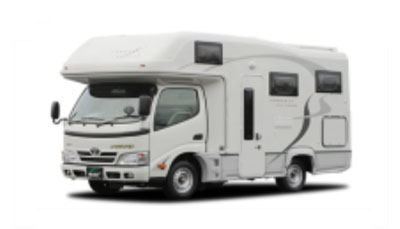
For one-way RV camping in Asia, the Class B - Camper Van is often ideal due to its maneuverability on varied road conditions, while the Class SI - Semi-integrated offers a good balance of space and handling for longer trips.
Class B - Camper Van: These compact vehicles, with Bandana's global fleet averaging 5.8 meters in length and accommodating 3-4 sleeping places, are highly maneuverable for narrower Asian roads and urban navigation. They are fuel-efficient, typically consuming 8-10 liters per 100 km, making them suitable for both boondocking and designated campsites.
Class SI - Semi-integrated: Offering more living space than a Class B, Bandana's global fleet of Class SI RVs averages 6.9 meters in length and can sleep 4-5 people comfortably. With fuel consumption around 10-11 liters per 100 km, they provide a comfortable balance of amenities and drivability for Asia's diverse infrastructure.
Larger Class C or Class A RVs, while offering more luxury and space, may encounter challenges with parking availability, tighter roads, and specific infrastructure limitations outside of major tourist hubs in some Asian regions.
How to Save on Campgrounds in Asia
To save on campgrounds during a one-way RV rental in Asia, leverage discount cards, opt for shoulder seasons, choose municipal or regional sites over private resorts, and consider longer stays for weekly rates.
Inquire about campground discount cards offered by your rental company or partner programs, which can provide significant savings on daily rates at participating campgrounds.
Traveling during the shoulder seasons (e.g., April-May or September-October) typically offers lower campground rates and fewer crowds compared to peak tourist periods, allowing for a more budget-friendly experience.
Opt for municipal or regional campgrounds over private RV resorts, as they often provide essential facilities at a fraction of the cost, making them a budget-friendly alternative for your one-way adventure.
Many campgrounds offer reduced weekly or monthly rates; planning to stay 3 or more nights at a single location can lead to substantial savings on your overall accommodation costs.
If traveling with a group, sharing hookups or campsites where permitted can also help reduce individual expenses.
What is the 3-3-3 rule for RVs?
The 3-3-3 rule for RVs is a popular guideline suggesting travelers drive no more than 300 miles, arrive by 3 PM, and stay for at least 3 nights, promoting a relaxed and enjoyable travel pace.
Driving no more than 300 miles (approximately 480 kilometers) aims to prevent driver fatigue and allows for unexpected delays or stops, which is crucial for navigating diverse Asian road conditions.
Arriving at your destination by 3 PM ensures ample daylight for setting up camp, exploring the immediate area, and dealing with any unforeseen issues before dark.
Staying for at least 3 nights encourages travelers to slow down, fully experience each location, and reduces the frequency of packing and unpacking, which is particularly beneficial when exploring new regions in Asia.
This rule is a recommendation for a less rushed RV experience, providing a framework for managing travel logistics and maximizing leisure time and cultural immersion.
Where can I park and live in my RV for free?
Free RV parking, often referred to as boondocking or wild camping, is generally more restricted in Asia compared to some Western countries. However, designated roadside stations (like Japan's Michi-no-Eki) and certain remote areas might tolerate overnight stays without services.
In Japan, 'Michi-no-Eki' (roadside rest stations) are widely accepted for overnight parking, offering restroom facilities and often local shops, though they typically lack utility hookups.
In countries like Malaysia or Thailand, some remote beach areas or mountainous regions might be suitable for discreet wild camping. However, always prioritize safety, check local regulations, and respect private property.
Always research specific local laws and customs regarding overnight parking, as legal wild camping is rare across much of Asia. Erring on the side of caution and avoiding isolated or unlit areas is advised.
'Stealth camping' in large parking lots (e.g., supermarkets) might be an option in urban areas, but this is at your own risk and subject to property owner rules.
What is the 4-4-4 rule for RV travel?
The 4-4-4 rule for RV travel is a less common variation of travel pacing, suggesting driving no more than 400 kilometers (roughly 250 miles) per day, arriving by 4 PM, and staying for a minimum of 4 days, aiming for an even more leisurely pace than the 3-3-3 rule.
Driving no more than 400 kilometers per day encourages shorter driving days, minimizing fatigue and maximizing sightseeing opportunities, which is particularly beneficial when exploring new regions.
Arriving at your destination by 4 PM allows ample time for comfortable campsite setup, relaxation, and initial exploration before evening sets in.
Staying for a minimum of 4 days promotes a deeper engagement with each destination, significantly reducing travel stress and allowing for more in-depth cultural and natural experiences.
This guideline emphasizes a slow travel philosophy, which is ideal for those looking to immerse themselves in Asia's diverse cultures and landscapes without feeling rushed.
Where can I park my campervan for free in Japan?
In Japan, the most reliable and socially accepted option for free overnight campervan parking is at 'Michi-no-Eki' (roadside stations). These offer restroom facilities and often local shops, though they typically do not provide utility hookups.
Michi-no-Eki (道の駅) are government-designated rest areas that explicitly welcome travelers for short breaks and overnight vehicle stays, though they are not formal campgrounds.
These stations usually provide clean toilets, vending machines, and often feature local produce markets, restaurants, and occasionally even hot springs.
It is essential to observe proper etiquette at Michi-no-Eki: do not set up awnings, barbecue, or display extensive camping gear, and keep noise to a minimum while ensuring you leave no trace.
While other free parking spots might exist, Michi-no-Eki are the safest and most culturally accepted choice for free overnight parking in Japan. Always check for specific 'no overnight parking' signs before settling in.
What is the 3-3-3 rule for RV camping?
The 3-3-3 rule for RV camping is a practical guideline recommending that RVers drive no more than 300 miles, aim to arrive at their campsite by 3 PM, and plan to stay for at least 3 nights, to enhance relaxation and enjoyment of each location.
The mileage component (300 miles or ~480 km) advises against overly long driving days, reducing fatigue and allowing for more leisurely travel, which may need adjustment for varied Asian road conditions.
The arrival time of 3 PM provides ample daylight to comfortably set up camp, allowing time to explore the campground and surrounding area before sunset.
The duration component of 3 nights encourages a slower pace, enabling campers to fully experience the destination, utilize campground amenities, and avoid the constant setup and breakdown associated with daily moves.
This rule is particularly useful when navigating a new region like Asia, providing a framework for managing travel logistics and maximizing leisure time and cultural immersion.
Which countries are RV friendly?
While North America, Australia, New Zealand, and Europe are traditionally known as highly RV-friendly, certain Asian countries like Japan offer increasingly good infrastructure for RV travel. Others, like Malaysia and Thailand, present opportunities for adventurous overlanders.
Japan is notably RV-friendly, boasting excellent infrastructure with Michi-no-Eki (roadside stations), well-maintained roads, and a growing number of dedicated RV parks, often with increasing English support.
Malaysia has a developing RV scene, especially for local tourism, with a good road network between major cities. However, rural roads can be challenging, and only some private campgrounds are available.
Thailand is popular for overlanding, particularly in its northern regions, where road quality varies. While formal facilities are less common than in Japan, local hospitality is high, requiring careful planning for routes and overnight stops.
It's important to note that 'RV friendly' in Asia often implies readiness for smaller vehicles, strong cultural awareness, and a willingness to adapt to varying levels of infrastructure and local customs.
What is the 10 year RV rule?
The '10-year RV rule' is a common policy at some private RV parks and resorts, particularly in North America, which restricts older RVs (typically those manufactured more than 10 years ago) from staying on their premises. This is to maintain a certain aesthetic or quality standard.
This rule is less prevalent in Asia's nascent RV camping scene, where the focus is often on vehicle availability and basic amenities rather than strict age restrictions.
Parks primarily enforce this rule to maintain a well-kept appearance, prevent dilapidated vehicles from deterring other guests, and occasionally to ensure older RVs meet certain safety or environmental standards.
If you are planning an international RV trip or bringing your own older RV, it is always prudent to check directly with any private campground you intend to visit. However, for typical one-way rental vehicles in Asia, this rule is generally not a concern as they are usually newer and well-maintained by rental companies.
For one-way RV rentals within Asia, the vehicles provided are typically newer and well-maintained by rental companies, making this specific rule less relevant for renters.
How much does an RV cost in Malaysia?
The cost of an RV in Malaysia varies significantly depending on whether you are buying or renting. Rentals typically range from RM 300 to RM 800 per day for smaller campervans or semi-integrated models.
One-way RV rental costs for a smaller Class B Camper Van (Bandana's global fleet averages ~5.8m) or Class SI Semi-integrated model (Bandana's global fleet averages ~6.9m) can range from approximately RM 300-500 per day for basic options, and up to RM 800+ for larger, more luxurious models or during peak seasons.
Rental prices are influenced by the RV class, rental duration, seasonality, included mileage packages, insurance choices, and any specific one-way fees.
Beyond the rental fee, factor in fuel costs. Bandana's semi-integrated RVs typically consume around 10-11 liters per 100 km, and camper vans 8-10 liters per 100 km, plus any applicable tolls and road taxes.
Be aware of potential additional costs such as one-way drop-off fees, cleaning fees, security deposits, and expenses for camping site fees, food, and activities.
For those considering purchase, buying an RV in Malaysia can range from approximately RM 150,000 for a used, smaller campervan conversion to over RM 500,000 for new, larger motorhomes or imported models.
Can you rent an RV for one-way travel?
Yes, it is possible to rent an RV for one-way travel in certain regions of Asia, though availability and associated fees vary significantly by rental company and specific routes. This often requires advance planning and coordination.
One-way RV rentals are more common in established markets but are increasingly offered by specialized rental companies in emerging Asian RV destinations, particularly within a single country like Japan or Malaysia.
Expect to pay a one-way fee, also known as a drop-off fee, which covers the logistical cost of returning the vehicle to its original depot. These fees can be substantial.
It is crucial to book one-way rentals well in advance, as fleet availability for specific drop-off locations can be limited and highly sought after.
The primary benefit of one-way travel is immense flexibility for exploring a region without backtracking, allowing for a more linear and efficient itinerary. This is ideal for experiencing diverse Asian landscapes on a single trip.
Always confirm the specific one-way rental policies, including any mileage restrictions, available drop-off locations, and all associated fees, directly with the rental provider before finalizing your booking.
What are Cruise America's mileage policies?
Cruise America, a major RV rental company primarily operating in North America, typically offers mileage in packages or as an unlimited option. Specific policies vary by rental type and duration, though these policies are not directly applicable to RV rentals within Asia.
Cruise America's operations and associated mileage policies, such as 100-mile packages, unlimited mileage options, or per-mile charges for overages, are specific to its fleet and rental agreements exclusively in the United States and Canada.
For one-way RV rentals in Asia, mileage policies will be dictated by the local rental providers you choose, not by Cruise America's terms.
Local Asian rental companies typically include a certain amount of free kilometers/miles per day, with additional charges for exceeding that limit, or occasionally offer an unlimited mileage option at a premium.
When booking an RV in Asia for a one-way trip, it is crucial to inquire directly about the specific mileage allowances, any per-kilometer/mile overage charges, and if unlimited mileage packages are available from your chosen local rental company for accurate budgeting.
What You Shouldn't Miss
- Experience the serene beauty of Japan's national parks with a scenic drive through Hokkaido, perhaps stopping at Shiretoko National Park for a glimpse of wildlife.
- Explore the lush, rolling hills of Malaysia's Cameron Highlands, enjoying the cooler climate and visiting tea plantations.
- Drive the historic Ring Road in Japan, a 1,322 km journey that showcases diverse landscapes and connects over 170 campsites, 85% of which offer electrical hookups.
- Discover the vibrant street food culture and mountainous terrain around Chiang Mai in Thailand, navigating routes that offer a true taste of adventure.
- Embrace the concept of slow travel by dedicating at least 3 nights to each key location in your itinerary, allowing for deeper exploration and connection with the local culture and environment.
- Utilize Japan's extensive 'Michi-no-Eki' (roadside stations) for free overnight parking, discovering local markets and unique regional products along your route.
Final Thoughts
Embarking on a one-way RV adventure through Asia promises an unparalleled journey of discovery, blending incredible landscapes with rich cultural experiences. From the serene national parks of Japan to the vibrant coastlines of Malaysia, the possibilities for exploration are vast.
By choosing the right vehicle, planning your route thoughtfully, and leveraging resources like Bandana Caravan for transparent bookings, you can ensure a smooth and memorable trip. Embrace the freedom of the open road and create lasting memories as you traverse the diverse terrains and cultures of this captivating continent.
Ready to start planning your Asian RV adventure? Compare rental options and discover your perfect vehicle today!
Get inspired for your next trip! Discover top destinations, planning tips, all in one place! Plan a trip itinerary in advance with minimal effort and maximum enjoyment.