In This Guide
- Where to Camp in Alaska - Top Options
- Campground Types in Alaska (National, Private, Wild)
- Featured RV Park or Campground in Alaska
- Hookups & Amenities - What to Expect
- Booking Windows & Reservations in Alaska
- Nearby Supermarkets & Resupply Points
- Best RV Class for Camping in Alaska
- How to Save on Campgrounds in Alaska
- Can I park my RV anywhere in Alaska
- What is the 3-3-3 rule for RVs and campers
- Where is the best place to park an RV for free
- Is boondocking legal in Alaska
- What does FF mean in camping
- What is the best time of year to RV to Alaska
- How much are campsites in Alaska
- What is the 200 rule for camping
Embarking on a one-way RV trip through Alaska offers an unparalleled opportunity to explore its vast, untamed wilderness at your own pace. Imagine waking up to a glacier view one day and fishing for salmon on a wild river the next, all from the comfort of your rented motorhome or campervan. This guide will cover everything you need to know about RV camping for one-way trips in Alaska, ensuring a seamless and unforgettable adventure. For live availability and current prices, start with our RV Rental Alaska - Complete Guide 2026 guide.
Where to Camp in Alaska - Top Options
Alaska provides an incredible array of camping experiences, from established national park sites to remote state park retreats and private RV resorts, allowing travelers to immerse themselves in stunning landscapes. You can explore popular regions like the Kenai Peninsula for coastal views, Denali National Park for iconic wildlife, or the vast interior for solitude. State park campgrounds often provide a great balance of essential amenities and natural beauty, while private RV parks near towns offer full hookups and convenient access to services.
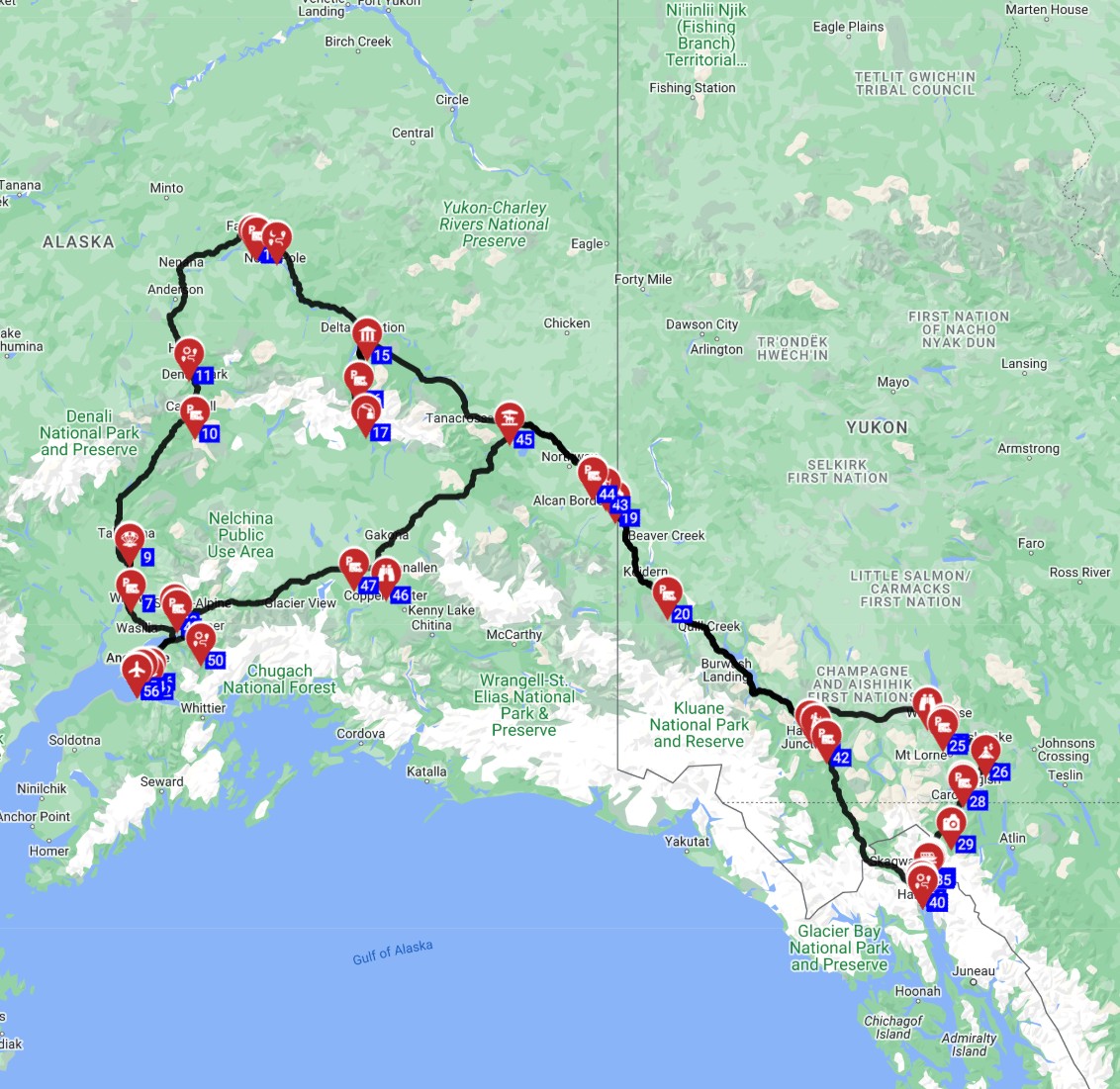
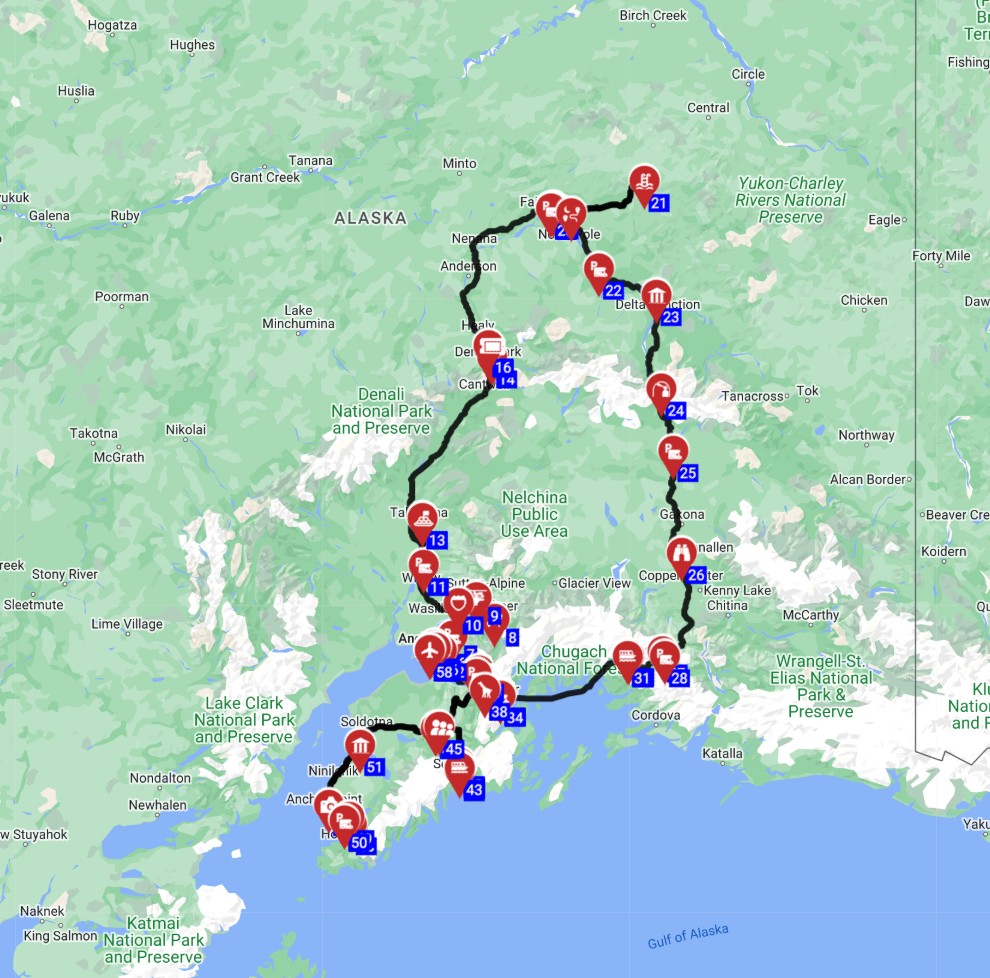
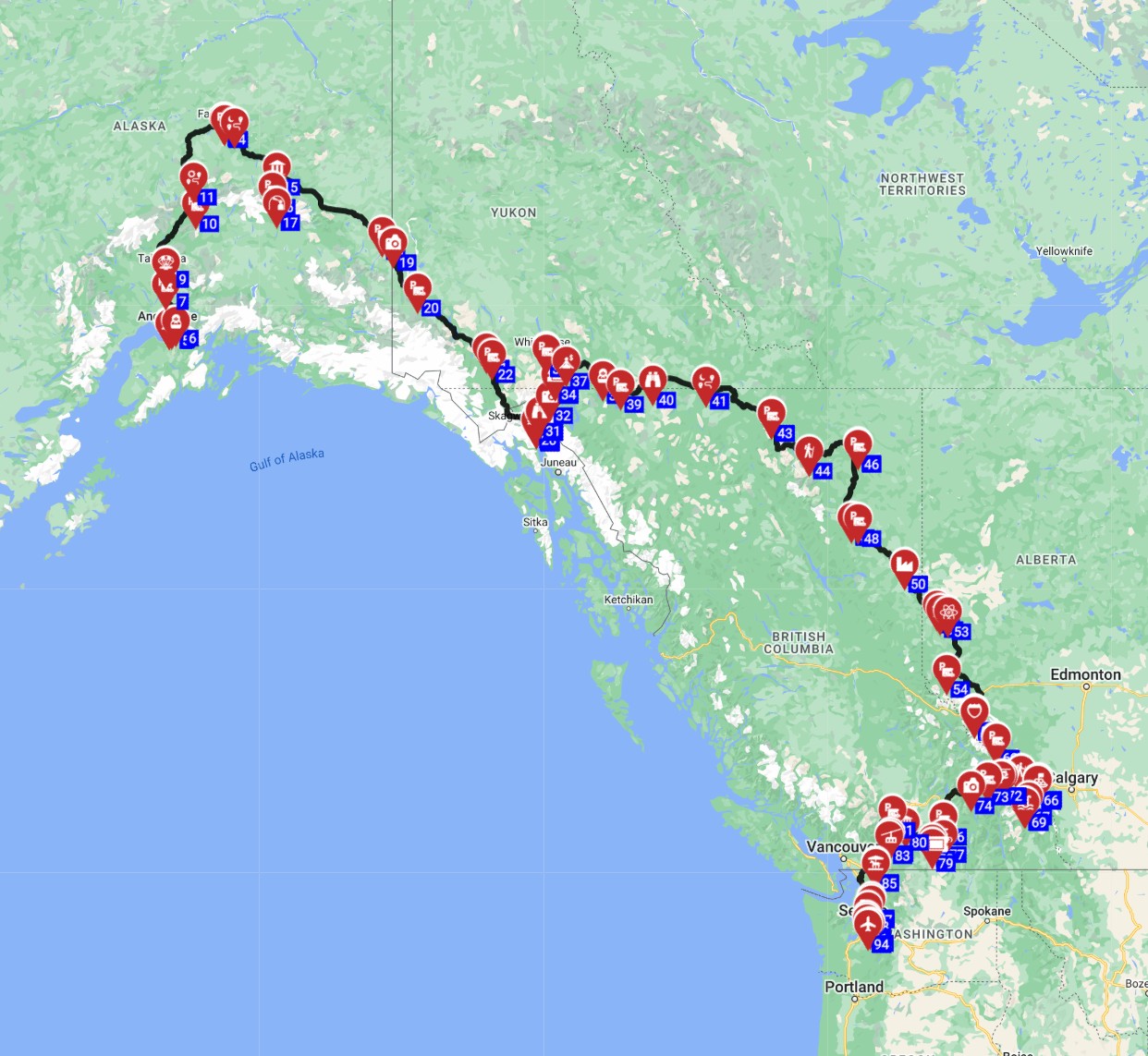
For example, a trip like the Anchorage Round Trip - Alaska-Yukon Discovery Trail (23 days, 3539.2 km) highlights several unique camping locations. This route plan includes 3 hiking areas, 3 museums, and 2 natural features, ensuring diverse experiences.
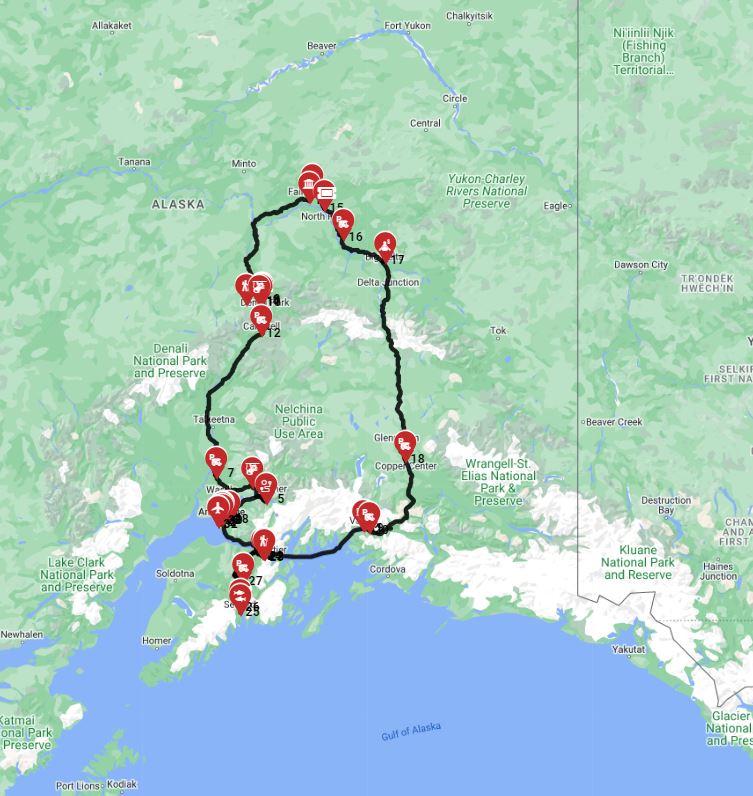
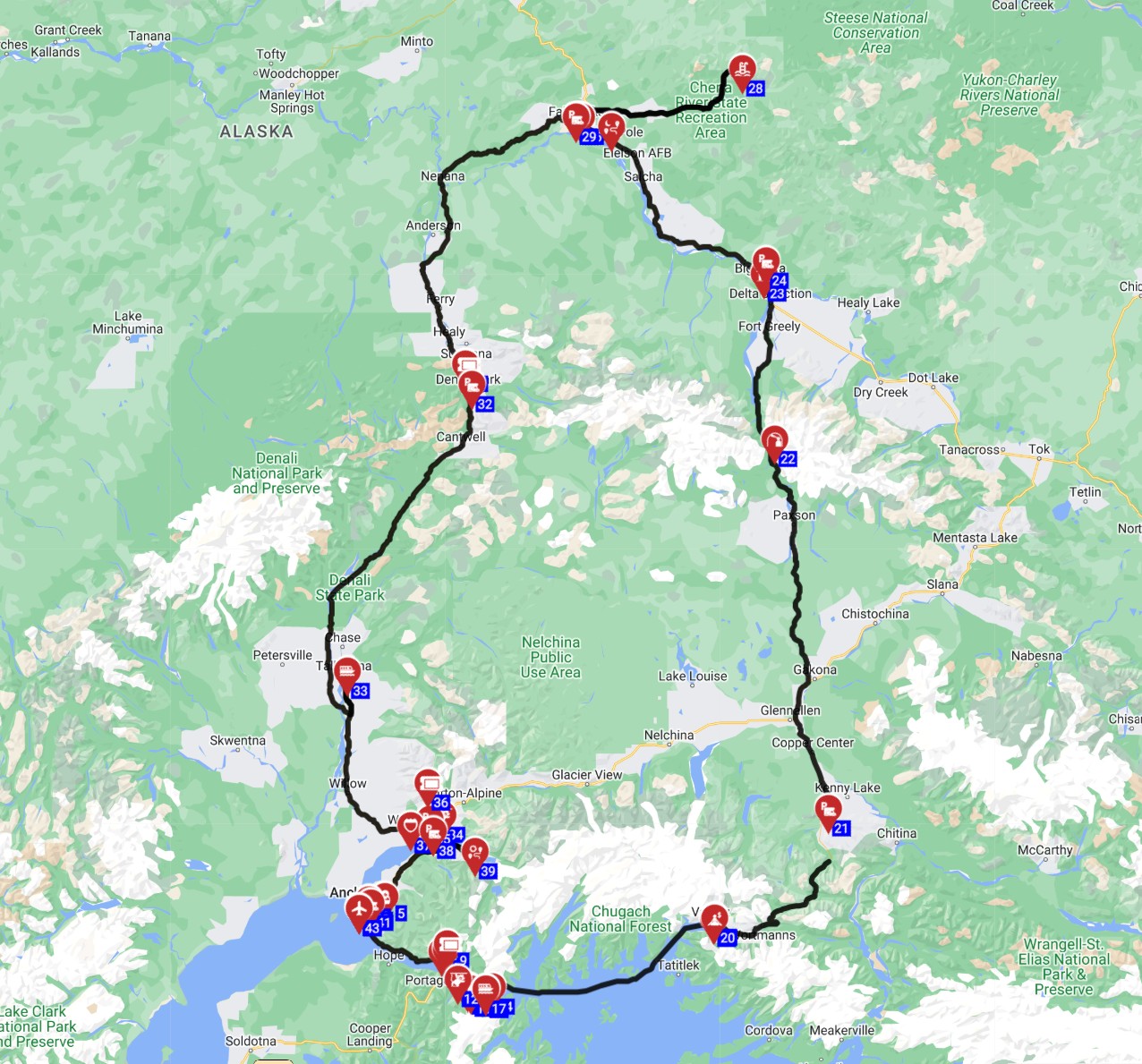
Another excellent option is the Anchorage Roundtrip Heading North - The Great Alaskan Wilderness Road Trip (15 days, 1929.9 km), which includes 2 wildlife viewing spots and 2 museums, making it ideal for nature lovers. Remember to travel slowly, averaging a maximum of 100-150 km per day, to truly appreciate the culture, food, and scenery.
Campground Types in Alaska (National, Private, Wild)
Alaska offers a spectrum of RV camping options, primarily categorized into national/state park campgrounds, private RV resorts, and designated dispersed or 'wild' camping areas, each with distinct rules and amenities. National and state parks, such as Denali National Park and Chugach State Park, are often highly scenic and regulated, with reservations for spots like Riley Creek Campground in Denali highly recommended, offering limited or no hookups.
Private RV parks are found in or near towns like Anchorage, Fairbanks, and Seward, typically offering full hookups (water, sewer, electric), Wi-Fi, laundry facilities, and a wider range of amenities. Wild camping, also known as boondocking or dispersed camping, is legal on vast tracts of public lands (Bureau of Land Management - BLM, National Forests), provided you follow regulations and Leave No Trace principles, which usually means no amenities and requires a self-sufficient rented RV.
Featured RV Park or Campground in Alaska
When selecting an RV park in Alaska, travelers should look for establishments that balance essential amenities with convenient access to natural attractions, providing a comfortable base for adventures. Prioritize parks offering full hookups (electric, water, sewer) for convenience, especially during extended stays. For instance, the Seward Waterfront Park, a popular municipal campground, offers a mix of dry sites and electric hookups with stunning views of Resurrection Bay.
Check for additional amenities like laundry facilities, hot showers, and dump stations; Wi-Fi connectivity can be spotty outside of major towns. Consider the park's location relative to desired activities, such as spots near national park entrances like the one for Denali, fishing areas, or major trailheads. Reading recent reviews on platforms like Campendium or RV PLANET (rvplan.net) is crucial for insights into cleanliness, noise levels, and overall guest experience before you book your chosen spot. Our 1,300+ pre-planned routes across 5 continents via RV PLANET (rvplan.net), our sister company, also include detailed campground information. On the routes offered through RV PLANET routes, you can itemize and track every expense along the way for easy budgeting.
Hookups & Amenities - What to Expect
When RV camping in Alaska, travelers should expect a range of hookup options and amenities depending on their chosen campground type, with full-service private parks contrasting with more rustic public sites. Electric (shore power) connections, typically 30-amp and 50-amp, are common at private RV parks; however, state and National Forest campgrounds may have limited electric sites or none at all.
Water hookups are available at full-service sites, but fresh water fill-up stations are generally present at most established campgrounds for convenience. Sewer hookups are primarily found at private RV parks, though dump stations for grey and black water disposal are common at nearly all established campgrounds. Wi-Fi and reliable cell service are spotty outside of major towns, so considering satellite communication devices like Starlink or a satellite phone is highly recommended for remote travel. Laundry facilities and hot showers are prevalent at private RV parks but rarer in public campgrounds, where some municipal facilities or towns may offer pay-per-use options. Standard amenities across most campgrounds include picnic tables and fire rings, with propane refills often available at private parks or nearby gas stations.
Booking Windows & Reservations in Alaska
For RV camping in Alaska, planning ahead is advisable for popular destinations and peak season (June-August), as many campgrounds operate on a reservation system, though spontaneous options exist. Pre-planners should secure reservations 6-12 months in advance for highly sought-after national park campgrounds, such as those in Denali, or prime spots during the peak summer months.
Spontaneous travelers, however, will almost certainly find a place; if not at the first campground, then the next one. Many national and state park campgrounds release 25-30% of their spots for same-day or next-day first-come, first-served (FCFS) arrivals. Always call ahead or check online resources, such as Recreation.gov or individual campground websites, to confirm availability before driving long distances. For Bandana RV renters, being flexible with your itinerary can open up more opportunities, especially during shoulder seasons in May or September.
🎬 Video coming soon
Nearby Supermarkets & Resupply Points
Resupplying your rented RV in Alaska is crucial given the vast distances between towns, so planning stops at major supermarkets in hubs like Anchorage, Fairbanks, or Juneau (if accessed via ferry) is essential. Major chains such as Fred Meyer (Kroger), Safeway, and Carrs are common in larger Alaskan cities, offering comprehensive grocery selections for your on-board meals, whether you're planning a quick breakfast or a hearty dinner. Check out our RV-friendly recipes playlist for inspiration!
Smaller towns may have independent grocers or convenience stores with more limited and often pricier options. It's always wise to stock up on non-perishables, dry goods, and specialized items before venturing into more remote areas. Consider visiting local farmers' markets for fresh produce in season, and budget for higher food costs in remote areas. For easy budgeting and tracking every expense along the way, RV PLANET routes allow you to itemize all ancillary costs.
Best RV Class for Camping in Alaska
The best RV class for camping in Alaska depends largely on your travel style and desired level of comfort and off-grid capability, with Class B Campervans and Class C Motorhomes being popular choices. Class B Campervans, with an average length of 5.8m and sleeping for 3.2 people in Bandana's fleet, are ideal for agile travel and boondocking. Their compact size allows easier navigation on smaller roads and access to more secluded spots, offering excellent fuel efficiency of approximately 8-10 Liters/100 km.
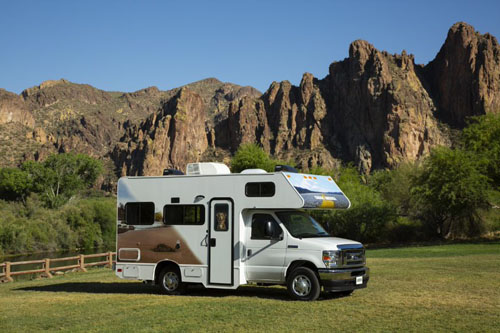
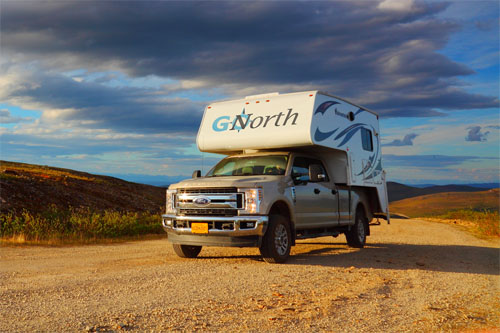
Class C Alcove motorhomes, averaging 7.5m in length and sleeping 5.8 people, are perfect for families or groups seeking more space and amenities. They offer a good balance of comfort and maneuverability, though they might be less suited for highly rugged off-road boondocking, with typical fuel consumption of 10-12 Liters/100 km. While larger Class A motorhomes provide ample living space, they might face restrictions in some national park campgrounds or be challenging on unpaved roads. Consider an "alaska rv rental example Category C" for families, or a compact "alaska rv rental example Category Van" for couples.
How to Save on Campgrounds in Alaska
Saving money on RV campgrounds in Alaska is achievable through strategic planning, leveraging discount programs, and opting for less amenity-rich sites. Inquire about available discount cards, such as Passport America or Good Sam, through your Bandana RV rental, which can offer significant savings on participating private RV parks. Traveling during the shoulder seasons of May or September often means lower rates, fewer crowds, and easier access to popular spots.
Municipal and regional campgrounds typically offer more affordable rates compared to private resorts, though their amenities might be more basic. Many campgrounds provide weekly or monthly rates that are significantly cheaper per night than daily rates; consider extended stays of three or more nights in one location to maximize these savings. Finally, utilizing legal free camping on public lands whenever possible can eliminate nightly fees entirely. Our Rent&Plan service can help you identify these cost-saving opportunities along your route.
Can I park my RV anywhere in Alaska
No, you cannot park your rented RV just anywhere in Alaska; parking is generally restricted to designated campgrounds, private properties with explicit permission, or public lands specifically open to dispersed camping. On private property, you must always obtain explicit permission from the landowner before parking overnight. Public lands, particularly vast areas managed by the Bureau of Land Management (BLM) and within National Forests, are open to dispersed camping (boondocking) for up to 14 days in one spot, but specific regulations vary by management area.
You should use apps like iOverlander or Gaia GPS to identify legal areas and understand local rules. Within National and State Parks, parking is limited to designated campsites, and overnight parking outside these areas is typically prohibited. Roadside pull-offs are generally discouraged and often illegal for overnight stays, especially on state highways, so always look for clear signage. Many cities and towns in Alaska also have specific ordinances against overnight RV parking on streets or in retail parking lots. Additionally, be mindful of wildlife; always park in areas that allow for safe distances from animals, never block migration paths or water sources, and secure all food inside your RV to prevent bear encounters.
What is the 3-3-3 rule for RVs and campers
The '3-3-3 rule' is a popular guideline for RVers, especially those new to extended travel or boondocking, recommending that you drive no more than 300 miles a day, arrive by 3 PM, and stay for at least 3 nights. Driving no more than 300 miles (or roughly 3 hours) a day ensures you're not rushing, allowing ample time for scenic stops, dealing with unexpected road conditions common in Alaska like gravel sections or construction delays, and significantly reducing driver fatigue.
Arriving by 3 PM provides ample daylight to find your campsite, set up your rented motorhome, scout the immediate area, and relax before dusk, which is particularly crucial in remote Alaskan locations lacking artificial lighting. Staying for at least 3 nights encourages a slower pace of travel, reducing the frequency of setup and takedown, saving fuel, and allowing for deeper exploration of a region. This also helps conserve battery and water/waste tank capacity if you're boondocking. While the 300-mile limit might be flexible due to Alaska's immense distances and varied road conditions, the 'arrive by 3 PM' and 'stay 3 nights' aspects are especially valuable for enjoying the unique Alaskan environment and ensuring safety and preparedness.
Where is the best place to park an RV for free
The best places to park a rented RV for free in Alaska are primarily on public lands managed by the Bureau of Land Management (BLM) and within National Forests, provided you adhere to local regulations and Leave No Trace principles. Large swaths of BLM land across Alaska are open to dispersed camping, which offers excellent opportunities for boondocking. Resources like the BLM website, iOverlander app, or Gaia GPS can help you identify legal and accessible areas.
National Forests, including Chugach National Forest and Tongass National Forest, also offer numerous opportunities for free dispersed camping, but often have specific rules for designated areas, so always check local signage. Some state-maintained waysides (rest areas) may permit overnight parking for a single night, but this is less common for multi-night stays and should be confirmed with posted signs. Unlike some other regions, casino or large retailer parking lots (e.g., Walmart) are less prevalent and generally not recommended in Alaska due to local ordinances and potential safety concerns. When boondocking, always practice responsible habits: pack out everything you pack in, minimize your environmental impact, be prepared for no services, and dispose of waste properly. Crucially in Alaska, be highly aware of wildlife, secure all food items, and make noise when walking to avoid startling animals.
Is boondocking legal in Alaska
Yes, boondocking, also known as dispersed or wild camping, is largely legal and common in Alaska on extensive public lands, particularly those managed by the Bureau of Land Management (BLM) and within National Forests, under specific regulations. It is generally legal on most undeveloped public lands unless otherwise posted with restrictive signage. Key regulations typically limit stays to 14 days within a 30-day period in one location, after which you must move a certain distance, usually 25-50 miles.
Boondocking means no hookups, water, or trash services, requiring you to be entirely self-sufficient by carrying all your water, managing waste, and packing out all trash. Wildlife preparedness is essential in Alaska; secure all food and scented items inside your rented RV to prevent bear encounters, carry bear spray, and know how to use it. Make noise when outside your vehicle to avoid startling animals. You can find permissible boondocking sites using apps like iOverlander, Campendium, and government agency maps (BLM, USFS). Be prepared for no cell service in many remote areas, making satellite communicators highly recommended for safety and off-grid preparation.
What does FF mean in camping
In camping terminology, 'FF' commonly stands for 'Full Hookups,' indicating that a campsite provides electric, water, and sewer connections for your rented RV. Full Hookups (FHU) offer the ultimate convenience, allowing you to connect your motorhome directly to shore power for electricity, a freshwater supply for your tanks, and a sewer drain for your grey and black water tanks. This is ideal for longer stays, enabling hot showers, full use of RV appliances without worrying about battery drain, and avoiding frequent trips to dump stations.
FHU sites are typically the most expensive type of campsite due to the comprehensive amenities provided. In Alaska, full hookup sites are most commonly found in private RV parks and some larger state campgrounds, but are less common in national park or remote public land sites where services are more limited. When planning your route, be aware of the "cruise america rv rental example Explorer" with its 82-liter fresh water tank and 82-liter waste water tank, which benefits greatly from full hookups during longer stays.
What is the best time of year to RV to Alaska
The best time of year to RV to Alaska is generally during the summer months, from late May through early September, when daylight hours are longest, weather is warmest, and all services and attractions are open. Peak season, encompassing June, July, and August, offers the warmest temperatures, most accessible roads with minimal snow or ice, and prime wildlife viewing opportunities. During this period, all campgrounds, tours, and visitor centers are fully operational, though you should expect larger crowds and higher prices for everything from tours to one-way RV rental options.
Shoulder seasons, particularly late May and early September, are excellent for RV travel, offering fewer crowds, potentially lower rates for your campervan rental, and still pleasant weather. Early May might see some campgrounds still closed or roads impacted by lingering snow; late September brings vibrant fall colors but colder temperatures and potential early closures. During mid-summer, you can experience nearly 24 hours of daylight, allowing for incredibly long exploration days, but ensure your rented RV has effective blackout blinds for restful sleep. Late spring and early fall are also superb for wildlife viewing as animals are more active.
How much are campsites in Alaska
Campsite prices in Alaska vary significantly based on the type of campground, amenities offered, and location, ranging from free boondocking to over $100 per night for premium private RV resorts. Free camping is available on designated BLM lands or National Forests, requiring complete self-sufficiency. State and National Park campgrounds typically range from $15-$35 per night for basic sites, which often have no hookups or limited electric connections; reservations may incur additional fees.
Private RV parks usually cost $40-$80+ per night for sites with full hookups (electric, water, sewer), Wi-Fi, and other amenities, with premium locations or resorts potentially exceeding $100. Beyond nightly fees, remember to factor in fuel costs, which are among the highest in Alaska due to vast distances and remote locations, ferry fees if using the Alaska Marine Highway System, activity costs for tours or fishing licenses, national park entrance fees, and provisioning. Groceries can be more expensive in remote areas, so budgeting is key. Utilizing discount cards, traveling in shoulder seasons, choosing municipal or state parks, and embracing boondocking where appropriate can help manage your total trip cost.
What is the 200 rule for camping
The '200 rule' for camping is a guideline that suggests you should aim to stay within 200 miles of your home base or a major resupply point when adventuring, primarily relevant for shorter trips or when exploring a specific region. This rule is more applicable to weekend warriors or those with a specific regional focus, ensuring they are never too far from familiar territory, supplies, or assistance if needed. For Alaska, given its vastness, the literal 200-mile limit from a 'home base' might often be exceeded.
However, the principle can be adapted; consider staying within 200 miles of a major town like Anchorage, Fairbanks, or Seward when exploring a specific region. This allows for easy resupply, fuel, and access to repairs or medical facilities, which is vital in remote areas. Regardless of distance, safety and preparation are paramount in Alaska. Always ensure your rented RV is well-maintained, carry emergency supplies, and have communication devices for off-grid travel. The 200 rule complements the 3-3-3 rule by focusing on overall trip logistics rather than just daily travel pace.
What You Shouldn't Miss
- Drive the Seward Highway: This 200 km stretch from Anchorage to Seward is a National Scenic Byway, offering stunning views of Turnagain Arm, glaciers, and wildlife. Perfect for a rented campervan, take your time and stop at scenic pull-offs.
- Explore Denali National Park: While private vehicles can only go so far, a rented motorhome allows you to access the entrance, and then take park buses deeper into the wilderness for incredible wildlife viewing of grizzly bears and moose.
- Visit the Kenai Peninsula: Discover the charming towns of Homer, Seward, and Kenai, offering world-class fishing, glacier cruises in Kenai Fjords National Park, and abundant marine wildlife.
- Experience the Alaska Marine Highway System: For a truly unique adventure, consider putting your rented RV on a ferry to explore coastal communities and islands inaccessible by road, like Juneau or Sitka.
- Hike in Chugach State Park: Easily accessible from Anchorage, this vast park offers numerous hiking trails for all skill levels, with breathtaking mountain vistas and opportunities for spotting Dall sheep.
- Discover the Matanuska Glacier: Located just a couple of hours from Anchorage, you can take a guided walk directly on this impressive glacier. It's a truly unforgettable experience that highlights Alaska's immense natural power.
Looking for expert insights from Avi Bandana? Top 5 Adventures - recommendations from Avi Bandana
Final Thoughts
Exploring Alaska in a rented RV is truly a bucket-list adventure, offering unparalleled freedom and breathtaking scenery around every bend. Whether you opt for a week-long trip through the Kenai Peninsula or an extended road trip covering the vast interior, a motorhome or campervan provides a comfortable home base that moves with you.
Remember to embrace the spirit of slow travel, allowing yourself the luxury of lingering in places that captivate you. With Bandana RV, you get the support of true RV specialists, transparent pricing, and the ability to plan fantastic routes through RV PLANET (rvplan.net). We handle the details, so you can focus on living the journey and making memories that will last a lifetime.
Don't wait any longer to start planning your Alaskan dream trip. Discover top destinations, planning tips, all in one place, and prepare for an adventure like no other!