For live availability and current prices, start with our RV Rental Tokyo - Airport - Complete Guide 2026 guide.
In This Guide
- Where to Camp in Tokyo - Airport — Top Options
- Campground Types in Tokyo - Airport (National, Private, Wild)
- Featured RV Park or Campground in Tokyo - Airport
- Hookups & Amenities — What to Expect
- Booking Windows & Reservations in Tokyo - Airport
- Nearby Supermarkets & Resupply Points
- Best RV Class for Camping in Tokyo - Airport
- How to Save on Campgrounds in Tokyo - Airport
- What is the cheapest RV to rent in Tokyo - Airport?
- How much does it cost to rent an RV in Tokyo - Airport?
- What is the best RV rental company in Tokyo - Airport?
- What is the average gas mileage for an RV?
- Can you sleep in an RV in Tokyo - Airport?
- What is the best time of year to rent an RV in Tokyo - Airport?
- Do I need an international driver's license to rent an RV in Japan?
- Is it hard to drive an RV in Japan?
- Where can I park an RV in Tokyo?
- Class SI - Semi-integrated RVs in Tokyo - Airport
- Class C - Alcove RVs in Tokyo - Airport
- Class B - Camper Vans in Tokyo - Airport
- Class A - Integrated RVs in Tokyo - Airport
- Class TC - Truck Campers in Tokyo - Airport
Where to Camp in Tokyo - Airport — Top Options
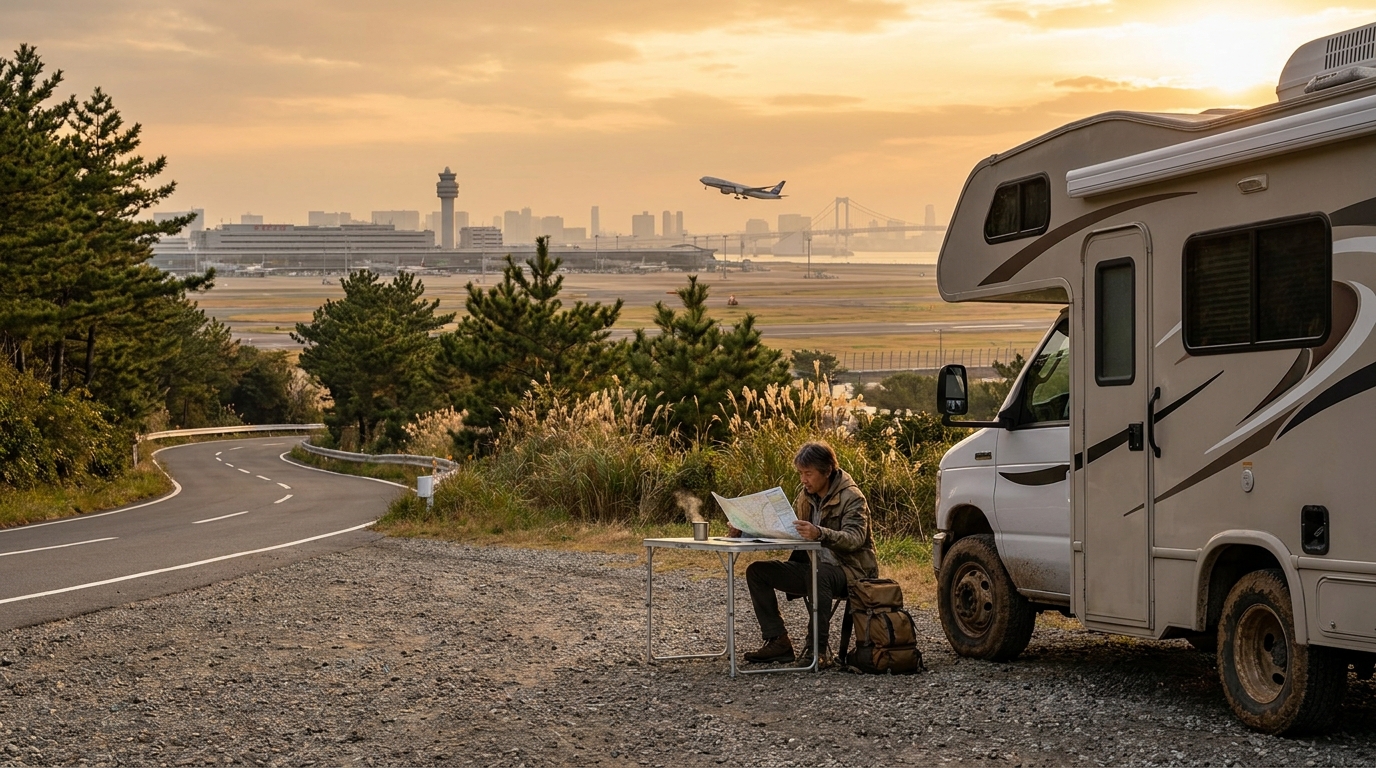
Finding suitable RV camping near Tokyo's airports, whether Narita (NRT) or Haneda (HND), often requires looking slightly outside the immediate urban sprawl due to the region's high population density and limited space. While dedicated campgrounds are scarce directly within the airport vicinity, accessible areas in neighboring prefectures like Chiba and Yamanashi offer viable options. For a more culturally integrated and convenient overnight experience, consider leveraging Japan's widespread "Michi-no-Eki" (Roadside Stations). These government-designated facilities are welcoming to RVs, provide clean restrooms, and often offer overnight parking, especially on routes leading away from the heavily urbanized city center.
Campground Types in Tokyo - Airport (National, Private, Wild)
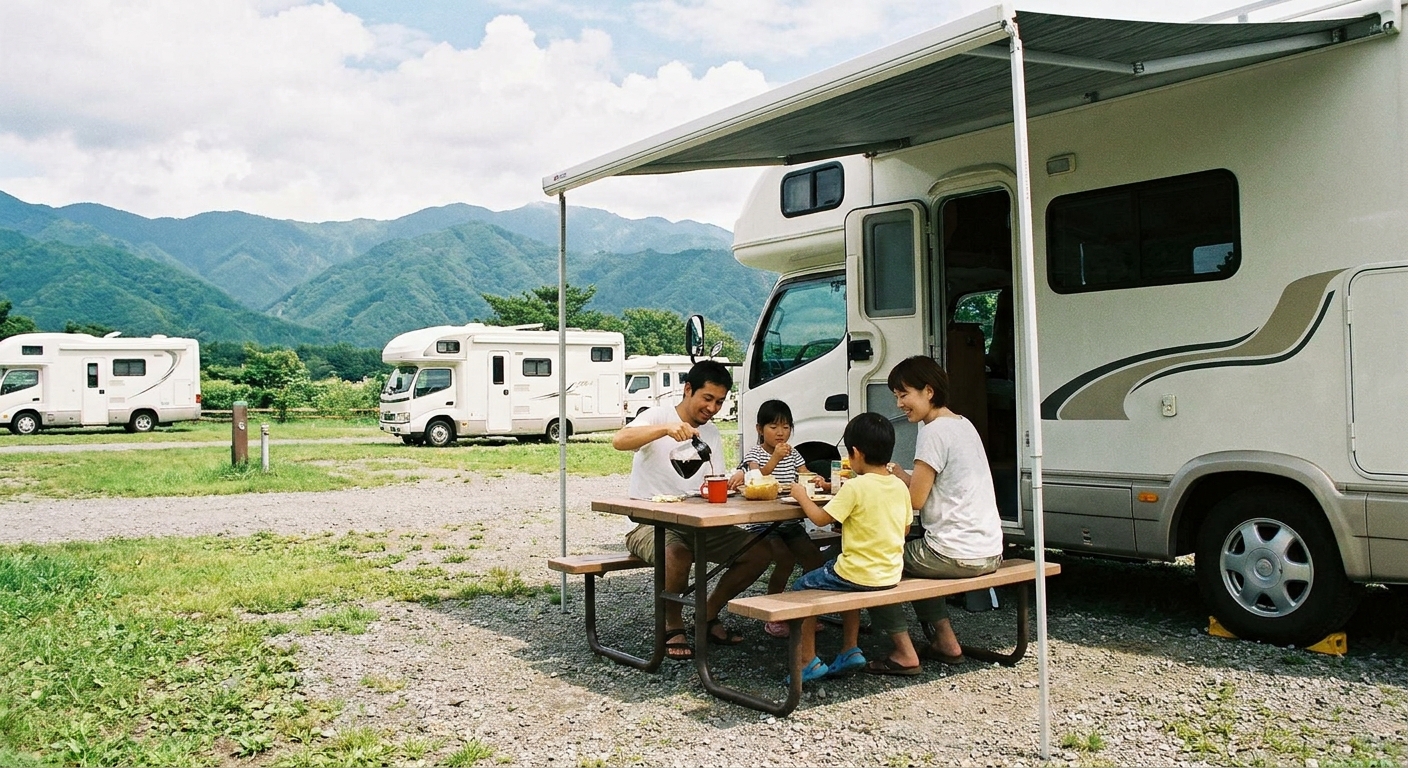
Japan offers distinct systems for RV overnight stays, primarily revolving around Michi-no-Eki (Roadside Stations) and a growing network of dedicated RV Parks. Michi-no-Eki are government-designated, free-to-use facilities that reliably offer overnight parking, clean restrooms, and local amenities, serving as a culturally accepted and common method for safe RV stops across the country. In contrast, the RV Park Japan (RVPJ) network comprises privately operated facilities that provide more amenities, such as electric hookups, fresh water, and dump stations, typically for a fee and often requiring reservations. It's important to note that "wild camping" or boondocking is generally frowned upon and often prohibited in Japan due to cultural norms, private land ownership, and a lack of designated public lands. Therefore, opting for Michi-no-Eki or RVPJ parks are the preferred and legally compliant choices for RVers. On the routes offered through RV PLANET routes, you can itemize and track every expense along the way for easy budgeting.
Featured RV Park or Campground in Tokyo - Airport
When seeking a featured RV park near Tokyo's airports, prioritize locations that offer clear English instructions, essential hookups, and convenient access to major expressways leading out of the metropolitan area. Look for well-equipped parks featuring electrical hookups, fresh water supply, gray/black water dump stations, and potentially laundry facilities and showers for a comfortable extended stay. In the absence of specific named data for the Tokyo - Airport area, researching options within the 'RV Park Japan' (RVPJ) network in nearby Chiba, Saitama, or Yamanashi prefectures is highly recommended, as these often cater specifically to RV travelers with robust amenities and reservation systems.
Hookups & Amenities — What to Expect
Most dedicated RV Parks in Japan, particularly those part of the RV Park Japan (RVPJ) network, provide essential hookups including electricity (typically 100V, requiring an adapter for 120V US appliances), fresh water, and gray/black water dump stations. Amenities often extend to clean restrooms, coin-operated showers, and laundry facilities, though Wi-Fi speed and availability can vary by location. Michi-no-Eki (Roadside Stations), on the other hand, reliably offer free parking and clean restrooms but typically do not provide hookups or dump stations, focusing more on basic resting facilities and the sale of local products.
Booking Windows & Reservations in Tokyo - Airport
For RV camping in Japan, especially at private RV parks or during peak travel seasons like Golden Week or Obon, planners should book well in advance to secure preferred spots. Many dedicated RV Park Japan (RVPJ) locations require reservations, which can often be made online or via phone, and popular sites tend to fill up quickly. Spontaneous travelers will find more flexibility with Michi-no-Eki (Roadside Stations), as these generally operate on a first-come, first-served basis for overnight parking and do not require reservations. While you will almost certainly find a place—if not the first campground, then the next Michi-no-Eki—it is always recommended to call ahead or check online for availability, especially for private RV parks, before driving a significant distance.
Nearby Supermarkets & Resupply Points
Stocking your rented RV with groceries and essentials is convenient near Tokyo's airports, with numerous large supermarket chains accessible within a short drive. Look for prominent Japanese supermarket chains such as AEON, Ito-Yokado, Seiyu (known for its affiliation with Walmart), and Life, all of which offer a wide array of fresh produce, pantry staples, and household goods. Ubiquitous convenience stores like 7-Eleven, FamilyMart, and Lawson also provide excellent options for quick snacks, drinks, and ready-to-eat meals, although for full provisioning, a larger supermarket is generally recommended. For ideas you can prep on the road, watch our RV-friendly recipes playlist on YouTube.
Best RV Class for Camping in Tokyo - Airport
For navigating Tokyo's urban fringes, narrower Japanese roads, and fitting into Michi-no-Eki or smaller RV park spots, compact RV classes like Class B Camper Vans and Class SI Semi-integrated models are highly recommended. Bandana's Class B Camper Vans, averaging 5.8 meters in length, offer superior maneuverability and fuel efficiency (around 10 L/100 km), making them ideal for solo travelers or couples and easier for city navigation. Class SI Semi-integrated RVs, averaging 6.9 meters in length, strike a good balance, providing more interior space and sleeping capacity for approximately 3 adults while still being manageable on most Japanese roads, with fuel consumption around 10-11 L/100 km. Larger RVs such as Class C Alcove (avg. 7.5m) or Class A Integrated (avg. 7.5m) can offer more amenities but may face significant challenges with parking, tight turns, and navigating specific routes in Japan.
How to Save on Campgrounds in Tokyo - Airport
The most significant saving lever for RV camping in Japan is to prioritize utilizing the extensive network of free Michi-no-Eki (Roadside Stations) for overnight stays whenever possible. Consider renting your RV during the shoulder seasons (e.g., late spring excluding Golden Week, early autumn) when campground fees may be lower and destinations less crowded. When opting for paid accommodations, choose municipal or regional RV parks over private resorts, as they often offer more budget-friendly rates. Look for RV parks that provide discounts for longer stays (e.g., 3+ nights) or weekly rates, allowing for more economical extended trips. While Bandana offers campground discount cards in various regions, inquire with your rental provider about any specific partner discounts or programs applicable to RV Park Japan (RVPJ) locations.
What is the cheapest RV to rent in Tokyo - Airport?
The cheapest RVs to rent in Tokyo - Airport are typically smaller, more fuel-efficient models such as Class B Camper Vans or compact Class SI Semi-integrated RVs. These smaller vehicle classes generally incur lower daily rental rates due to their reduced size, simpler amenities, and better fuel economy, making them ideal for budget-conscious travelers. For instance, Bandana's Class B Camper Vans, averaging 5.8 meters in length, are often among the most economical choices, featuring common fuel consumption around 10 L / 100 Km. Rental prices are highly dependent on factors like the season, booking lead time, rental duration, and specific vehicle features, with off-peak season rentals typically offering the best deals.
How much does it cost to rent an RV in Tokyo - Airport?
Renting an RV in Tokyo - Airport typically ranges from ¥15,000 to ¥35,000 per day (approximately $100-$250 USD), influenced significantly by the RV class, rental duration, season, and included services. A comprehensive budget for an RV trip in Japan must extend beyond rental fees to include potentially high costs for fuel (Bandana's Class C Alcove averages 10-12 L/100 km), Japan's notoriously expensive toll roads (an ETC card is critical), campground or RV park fees (free at Michi-no-Eki, but ¥1,000-¥5,000+ per night at private parks), and urban parking fees. Additional expenses might cover insurance upgrades, one-way rental fees (if applicable), linen kits, and personal travel insurance, all contributing to the total financial outlay. Travelers should anticipate these 'hidden' costs to form a realistic financial expectation for their Japanese road trip.
What is the best RV rental company in Tokyo - Airport?
The "best" RV rental company in Tokyo - Airport depends on individual traveler needs, but providers like Bandana offer a diverse fleet, transparent pricing, and robust support tailored for international visitors. When selecting a company, assess fleet diversity (e.g., Bandana offers Class A, B, C, SI, TC models), customer reviews, comprehensive insurance options, English language support, and convenient pickup/drop-off services near Narita or Haneda airports. Key considerations include the availability of essential Japanese-specific add-ons, such as an ETC (Electronic Toll Collection) card, portable Wi-Fi devices, and GPS navigation systems with English functionality, which are vital for a seamless experience. Compare policies on mileage limits, emergency roadside assistance, and specific guidelines for driving an RV on Japan's unique road infrastructure before finalizing your choice.
What is the average gas mileage for an RV?
The average gas mileage for an RV, based on Bandana's global fleet, varies significantly by class, with smaller models generally offering better fuel efficiency. Class B Camper Vans typically achieve around 10 L / 100 Km, providing excellent economy for extensive travel in Japan. Class SI Semi-integrated RVs usually consume 10 – 11 L/100 km, representing a balanced option for both space and fuel efficiency. Larger Class C Alcove models average 10 – 12 L/100 km, while Class A Integrated RVs can range from 8-12 L/100 Km, with actual consumption depending heavily on driving style, terrain, and vehicle load. Given Japan's higher fuel prices, understanding an RV's specific fuel consumption is a critical component of trip budgeting.
Can you sleep in an RV in Tokyo - Airport?
Yes, you can legally and safely sleep in an RV in Tokyo and throughout Japan by utilizing designated overnight parking areas, primarily Michi-no-Eki (Roadside Stations) and private RV Parks. Michi-no-Eki are widely recognized government-designated rest stops that permit free overnight parking and offer essential facilities like restrooms, making them a common and culturally appropriate choice for RVers. The RV Park Japan (RVPJ) network provides paid, amenity-rich overnight stays, often including hookups, showers, and enhanced security, suitable for longer or more comfortable stops. Wild camping (boondocking) is generally not permitted or culturally accepted in Japan; it's crucial to respect local customs and regulations by avoiding overnight parking in undesignated areas such as public parking lots, residential streets, or national parks unless explicitly allowed.
What is the best time of year to rent an RV in Tokyo - Airport?
The best time of year to rent an RV in Tokyo - Airport is typically during spring (March-May) and autumn (September-November), which offer the most pleasant weather for touring and scenic beauty. Spring features comfortable temperatures and the iconic cherry blossoms, although Golden Week (early May) sees intense domestic travel, leading to higher prices and crowded attractions. Autumn is ideal for enjoying vibrant fall foliage and generally cooler, dry weather, perfect for outdoor activities and comfortable driving. Summer (June-August) can be hot and humid, coinciding with typhoon season, while winter (December-February) brings cold temperatures and snow in mountainous regions, potentially limiting travel routes, though it offers unique experiences like hot springs and winter sports.
Do I need an international driver's license to rent an RV in Japan?
Yes, foreigners absolutely require an International Driving Permit (IDP) issued under the 1949 Geneva Convention to legally rent and drive an RV in Japan, in conjunction with their valid domestic driver's license. The IDP must be obtained in your home country *before* your arrival in Japan, as it cannot be issued within Japan, and it must always be presented alongside your original, valid driver's license from your home country. While some countries (e.g., Germany, Switzerland, France, Belgium, Monaco, Taiwan) have special bilateral agreements with Japan allowing the use of a Japanese translation of their domestic license, an IDP remains the most common and universally accepted requirement for most international visitors. Ensure your IDP remains valid for the entire duration of your RV rental, as driving without a valid IDP or with an expired one is illegal and can void your insurance coverage.
Is it hard to drive an RV in Japan?
Driving an RV in Japan can present specific challenges for foreign visitors, including adapting to left-hand traffic, navigating narrow roads, interpreting Japanese signage, and managing the complex toll system. Many Japanese roads, particularly in rural areas, older towns, and even some urban sections, are significantly narrower than those in many Western countries, making larger RVs particularly difficult to maneuver and park. Vehicles drive on the left side of the road, with the steering wheel on the right, which requires an adjustment period for drivers accustomed to left-hand drive. Japan's expressway network is extensive but costly; an ETC (Electronic Toll Collection) card, often available through rental companies, is highly recommended to streamline payments and potentially access discounts. While major highways often have English signage, many local signs are exclusively in Japanese, making a reliable English-speaking GPS or a smartphone navigation app with offline maps essential. Japanese drivers are generally courteous and follow rules; practicing polite driving, adhering to speed limits, and understanding local customs like yielding to pedestrians and avoiding excessive honking are important.
Where can I park an RV in Tokyo?
Parking an RV directly within central metropolitan Tokyo is extremely challenging due to severe space limitations, high parking fees, and restrictions on oversized vehicles. For daytime visits to Tokyo, the best strategy is to park your RV at an outlying Michi-no-Eki or a designated RV park located outside the central city (e.g., in nearby Chiba or Saitama prefectures) and then utilize Japan's efficient public transportation system to access urban attractions. Overnight RV parking in Tokyo should strictly occur at designated Michi-no-Eki or private RV parks that explicitly allow overnight stays, as street parking an RV is generally illegal, not tolerated, and could result in fines. Utilize specialized apps such as 'RV Park Japan' or 'Park4Night' (filtering for Japan) to locate suitable RV-friendly parking spots and Michi-no-Eki outside the immediate city center, noting that multi-story parking garages are rarely suitable for RVs due to height and length restrictions.
Class SI - Semi-integrated RVs in Tokyo - Airport
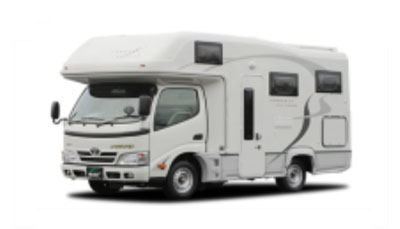
Bandana's global fleet includes numerous Class SI - Semi-integrated RVs, with an average length of 6.9 meters, offering a good balance between comfort and maneuverability for Japanese roads. These RVs typically provide around 3.8 sleeping places, comfortably accommodating about 3.4 adults, making them suitable for couples or small families. Common fuel consumption for Class SI models is approximately 10 – 11 L/100 km, providing reasonable efficiency for extended travel across Japan.
Class C - Alcove RVs in Tokyo - Airport
Bandana's global fleet of Class C - Alcove RVs average 7.5 meters in length, making them a popular choice for larger families or groups, typically sleeping 5.8 people (about 4.4 adults). While offering generous interior space and amenities, their larger size can pose challenges on Japan's narrower roads and in urban parking situations. These RVs generally have a common fuel consumption of 10 – 12 L/100 km, providing a comparable range to semi-integrated models despite their larger dimensions.
Class B - Camper Vans in Tokyo - Airport
Class B - Camper Vans from Bandana's global fleet average 5.8 meters in length, making them an excellent choice for navigating Japan due to their compact size and agility. These vans typically offer sleeping space for 3.2 people (around 2.7 adults), ideal for solo travelers, couples, or small families seeking easy maneuverability in city fringes and tighter parking spots. Known for their fuel efficiency, Class B Camper Vans commonly consume around 10 L / 100 Km, making them a cost-effective option for exploring Japan.
Class A - Integrated RVs in Tokyo - Airport
Bandana's global fleet of Class A - Integrated RVs average 7.5 meters in length, offering the most spacious and luxurious accommodations for approximately 4.4 sleeping places (4 adults). Despite their comfort, Class A RVs can be particularly challenging to drive and park on Japan's often-congested and narrow road infrastructure.
Class TC - Truck Campers in Tokyo - Airport
Bandana's global fleet includes Class TC - Truck Campers, averaging 5.5 meters in length, which combine the versatility of a pickup truck with a compact living space for approximately 2.4 sleeping places (2.1 adults). Their design allows for greater accessibility to more remote or off-road areas and easier parking compared to larger RV classes. Fuel consumption for Truck Campers typically ranges from 12 – 17 L/100 km, which is generally on the higher side due to the vehicle's unique design and weight distribution.
What You Shouldn't Miss
- Drive slowly and carefully – you can navigate urban areas and narrow streets with any RV size by exercising caution and awareness.
- Utilize Michi-no-Eki (Roadside Stations) for convenient and free overnight parking, offering a genuine glimpse into local life and produce.
- Consider the RV Park Japan (RVPJ) network for sites with essential amenities like hookups and showers, ideal for more extended stays.
- When driving in Tokyo's outskirts, opt for smaller vehicles like Class B campervans or Class SI semi-integrated models for easier maneuverability.
- Take advantage of Japan's efficient public transportation when visiting central Tokyo; park your RV outside the city center and explore via train or subway.
- Look for 'drive-in' onsen (hot springs) that offer ample RV parking for a relaxing cultural experience after a day on the road.
Final Thoughts
Renting an RV offers unparalleled freedom to explore Japan at your own pace, and with careful planning, navigating the unique aspects of RV travel in the Tokyo area is incredibly rewarding. By prioritizing Michi-no-Eki and understanding the nuances of Japanese road etiquette, you can craft an unforgettable journey. We're here to help you every step of the way, ensuring your adventure is as seamless as it is spectacular.
Ready to start planning your Japanese road trip? Explore our extensive range of motorhomes and discover the freedom of RV travel.
Find Motorhome Rentals in Tokyo - Airport