In This Guide
- Where to Camp in North Canada — Top Options
- Campground Types in North Canada (National, Private, Wild)
- Featured RV Park or Campground in North Canada
- Hookups & Amenities — What to Expect
- Booking Windows & Reservations in North Canada
- Nearby Supermarkets & Resupply Points
- Best RV Class for Camping in North Canada
- How to Save on Campgrounds in North Canada
- Where can I park my RV for free in Canada?
- What is the 3-3-3 rule for RV travel?
- Can you park up anywhere in an RV in Canada?
- Can you sleep overnight at rest stops in Canada?
- What is the 3 3 3 rule for RV camping?
- Can a US citizen go camping in Canada?
- How much does it cost to park an RV in Canada?
- How much does it cost to rent an RV in Canada for a week?
- What is the cheapest way to rent an RV?
- Can you sleep anywhere in a campervan in Canada?
Where to Camp in North Canada — Top Options
When planning your RV adventure in North Canada, focus your camping on the Yukon and Northwest Territories for the most accessible RV experiences, with limited road access in Nunavut. You'll find stunning scenery and well-maintained sites in National Parks like Kluane National Park in Yukon or Wood Buffalo National Park in the Northwest Territories. For a balance of convenience and wilderness, Territorial Parks (e.g., Yukon Parks, NWT Parks) are strategically located along major highways, offering a more rustic experience. Gateway towns such as Whitehorse (Yukon) and Yellowknife (NWT) provide private RV parks that often come with full hookups and a range of amenities, ideal for resupplying and relaxing.
Campground Types in North Canada (National, Private, Wild)
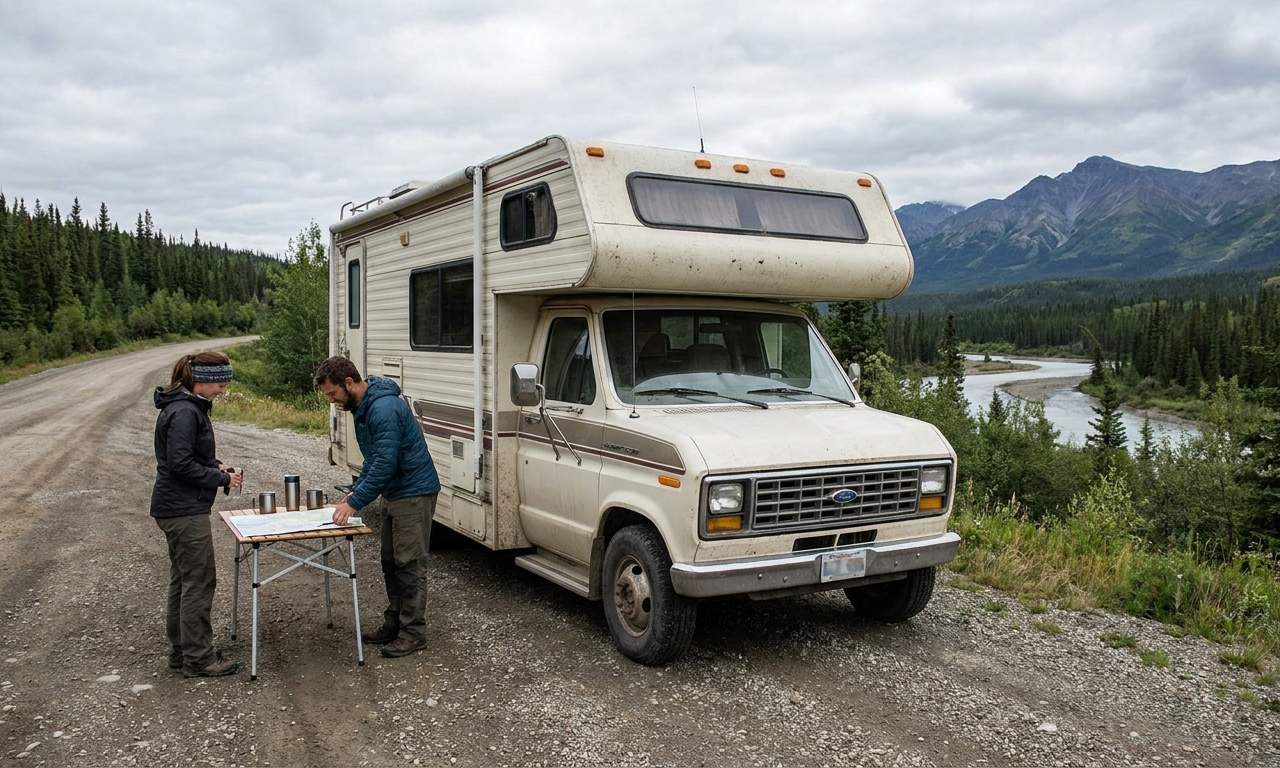
North Canada offers a diverse range of camping experiences, from fully serviced private RV parks in larger towns to remote wild camping on vast tracts of Crown land. National Park campgrounds, managed by Parks Canada, often require reservations and offer basic to moderate amenities, with fees applying. Territorial Parks provide a good balance of amenities and wilderness, typically with lower fees than private parks, and many operate on a first-come, first-served basis, offering flexibility for spontaneous travelers. Wild camping, or boondocking, is widely available on Crown land across the North, presenting free stays for those who are completely self-sufficient and adhere to "Leave No Trace" principles. While the "10-Year RV Rule" is less common in Northern private parks compared to some southern regions, it's always wise to check with individual campgrounds, as a few might have age restrictions on RVs.
Featured RV Park or Campground in North Canada
When selecting an RV park or campground in North Canada, aim for a location that offers a good mix of accessibility, essential amenities, and proximity to natural attractions. An ideal northern RV park should feature a variety of serviced and unserviced sites, be easily reachable from major routes like the Alaska Highway, and be situated near fuel and resupply points. Prioritize parks with robust infrastructure that can handle the unique northern weather conditions, and seek out those with staff possessing local knowledge to enhance your travel experience. Consider campgrounds that serve as convenient bases for exploring nearby wilderness areas, accessing hiking trails, or visiting significant Indigenous cultural sites.
Hookups & Amenities — What to Expect
In North Canada, you'll encounter a varied range of amenities. Private RV parks in larger towns often provide full hookups (electric, water, sewer), but many territorial and national park campgrounds offer more basic services, such as pit toilets and hand-pump water. Electric hookups are typically 15-amp or 30-amp where available; 50-amp connections are rare. Potable water spigots are common, but it's wise to fill your fresh water tanks whenever possible, as availability can be sparse between communities. Dump stations are available at most private parks and some larger territorial/national parks, so planning your routes with these in mind is crucial. Wi-Fi and cell connectivity are generally limited to private parks or public areas in larger towns; satellite communication is highly recommended for remote travel. Laundry and shower facilities are usually found in private parks or municipal centers, not commonly at more remote camping spots. Expect standard North American 120V systems with 3-prong (15A) or TT-30 (30A) connectors for electrical hookups. On the routes offered through RV PLANET routes, you can itemize and track every expense along the way for easy budgeting.
Booking Windows & Reservations in North Canada
For popular national and territorial parks in North Canada, especially during the peak summer months, it's advisable to book reservations several months in advance. However, many sites also operate on a first-come, first-served basis, offering flexibility. Planners aiming for National Parks (via Parks Canada) and popular Territorial Parks (Yukon Parks, NWT Parks) should target booking as early as January or February for summer travel. Spontaneous travelers can often find first-come, first-served sites, particularly in smaller territorial parks or outside the busiest peak season. Reassure yourself that you will almost certainly find a place to camp; if not at your first choice campground, then likely at the next one. However, it is always recommended to call ahead before driving long distances to confirm availability, especially in remote areas.
Nearby Supermarkets & Resupply Points
Resupplying your RV in North Canada requires careful planning, as major supermarkets and general stores are primarily located in larger hubs like Whitehorse (Yukon) and Yellowknife (NWT). Smaller communities along your route will offer more limited provisions. It's recommended to stock up significantly in larger centers such as Whitehorse (e.g., at Superstore, Save-On-Foods) or Yellowknife (e.g., at Independent Grocer, Co-op) before venturing into more remote areas. Expect smaller, often higher-priced general stores with limited selections in towns like Dawson City, Watson Lake, or Inuvik. Fuel is a critical consideration; stations can be hundreds of kilometers apart, so always fill up whenever you have the chance, and consider carrying extra fuel if you plan to venture off main highways. Potable water sources can also be limited between towns, so ensure your fresh water tanks are full and consider bringing a water filter for emergencies.
Best RV Class for Camping in North Canada
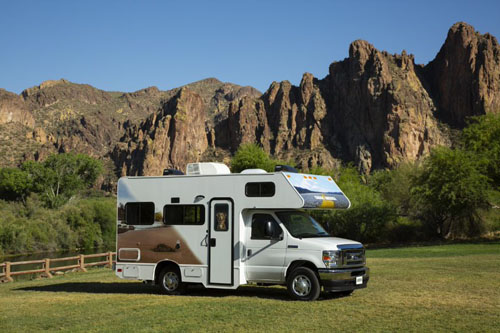
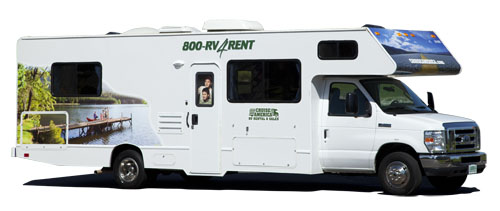
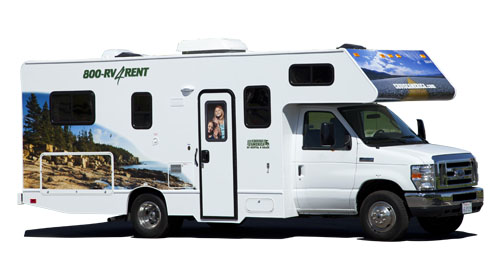
For camping in North Canada, Class B Camper Vans and Class SI Semi-integrated RVs offer an excellent balance of maneuverability, fuel efficiency, and comfort, making them suitable for both established campgrounds and extensive boondocking on northern roads. Class B Camper Vans, typically around 5.8m in length and sleeping 3.2 on average, are ideal for couples or small families, offering superior fuel economy (8-10 Liters/100 Km) and easy parking, perfect for exploring remote areas and smaller sites. Class SI Semi-integrated RVs, around 6.9m long and sleeping 3.8 on average, are a good mid-range option, providing more space and amenities than a campervan while remaining manageable on northern roads (10-11 Liters/100 km). Class C Alcove RVs, typically 7.5m in length and sleeping 5.8 on average, are suitable for families needing more sleeping capacity, though their larger size can be less agile on rougher or narrower northern roads (10-12 Liters/100 km). For those seeking true remoteness, Class TC Truck Campers, averaging 5.5m in length and sleeping 2.4 on average, offer potential off-road capability (especially if on a 4x4 truck) but with a smaller living space (12-17 Liters/100 km fuel consumption). While spacious, Class A Integrated RVs, averaging 7.5m in length and sleeping 4.4 on average, are generally less suited for extensive boondocking or rougher terrain due to their larger size and higher fuel consumption (8-11 Liters/100 km).
How to Save on Campgrounds in North Canada
To save on campground costs in North Canada, employ strategies such as using campground discount cards, opting for municipal or territorial parks, traveling during the shoulder season, and extending stays for potential weekly rates. Inquire about campground discount cards from your RV rental provider, like Bandana, which can offer significant savings at participating private campgrounds. Choosing municipal or territorial campgrounds is often more economical, as they typically have lower nightly fees than private RV resorts, though amenities may be more basic. Traveling during the shoulder seasons (late spring/early summer or early fall) allows you to benefit from lower rates and fewer crowds compared to the peak summer months. Consider longer stays; many campgrounds offer discounted weekly or monthly rates, which can make extended explorations more affordable. Embracing boondocking or wild camping on Crown land is the most cost-effective option, as it is free, but it requires complete self-sufficiency and strict adherence to local regulations.
Where can I park my RV for free in Canada?
In North Canada, you can widely park your RV for free on Crown land, which constitutes the majority of the land base, as well as in designated informal pull-offs or certain municipal areas, provided you adhere to local regulations and respect private property. Extensive opportunities for "boondocking" or "wild camping" are available on publicly owned Crown land, particularly in the Yukon and Northwest Territories, making it a legal and common practice. Always check for specific local prohibitions or restricted access, such as within town limits, protected wildlife areas, or active mining claims, to ensure compliance. Practice strict "Leave No Trace" principles: pack out all trash, use designated fire rings responsibly, and properly dispose of all waste. For safety in remote areas, choose level, visible spots, avoid blocking roads, and always be bear aware by carrying bear spray and knowing how to use it. While prevalent in Southern Canada, "Walmart" or casino parking for overnight stays is less common in North Canada, and permission should always be sought from management first.
What is the 3-3-3 rule for RV travel?
The "3-3-3 rule" for RV travel, often recommended for safety and enjoyable pacing, suggests driving no more than 300 miles (approximately 500 km) in a day, arriving at your destination by 3 PM, and staying for a minimum of 3 nights. This guideline helps prevent driver fatigue, allows for comfortable travel and scenic stops, and helps manage unexpected delays, which are common on Northern Canadian roads due to potential gravel sections, wildlife, and vast distances. Arriving by 3 PM provides ample daylight to find your campsite, set up your RV, and relax before dark, a crucial aspect in Northern regions with significant wildlife activity and extended daylight during summer. Staying for a minimum of 3 nights encourages a slower travel pace, allowing for deeper exploration of an area rather than constantly moving, which is particularly rewarding for experiencing the unique Northern environment and minimizing travel stress. In North Canada, due to potentially slower average speeds, unpaved roads, and vast distances between services, travelers might even consider adjusting the "300 miles" to a shorter distance or a specific driving duration, such as 6-7 hours.
Can you park up anywhere in an RV in Canada?
No, you cannot park an RV just anywhere in Canada. While extensive opportunities exist for free overnight parking on Crown land in remote Northern regions, parking on private property, in urban areas, or within designated national/territorial parks generally requires permission or adherence to specific regulations. Overnight parking on Crown land is typically permitted for short-term stays in the North (Yukon, NWT), but it's always best to confirm local bylaws or restrictions in specific areas. Parking on private property, such as a business's parking lot, always requires explicit permission from the landowner or manager. Within National and Territorial Parks, overnight stays are strictly restricted to designated campgrounds, which require applicable fees and permits. Most municipalities across Canada, including Northern towns, have bylaws that prohibit overnight RV parking on streets or in public lots. When parking in any area, especially near wildlife corridors or sensitive habitats, be particularly mindful of your impact, practice extreme caution, and strictly adhere to "Leave No Trace" principles.
Can you sleep overnight at rest stops in Canada?
In North Canada, the legality of sleeping overnight at rest stops varies by jurisdiction. Generally, pull-offs and designated rest areas along major highways, like the Alaska Highway or Dempster Highway, often permit overnight RV parking for tired travelers, but it's essential to look for signage and be aware of local regulations. The Yukon and Northwest Territories tend to be more lenient regarding overnight parking at rest stops or large highway pull-offs, given the vast distances between services and limited alternatives. Always check for "no overnight parking" or "no camping" signs at rest stops and strictly respect these prohibitions. Rest stops are intended for temporary rest and rejuvenation, not for extended camping, and typically lack amenities such as water hookups or dump stations. For safety, choose well-lit, visible spots, especially if traveling solo, and remain vigilant for wildlife, particularly bears, ensuring all food and attractants are securely stored.
What is the 3 3 3 rule for RV camping?
The "3-3-3 rule for RV camping" is generally the same as the RV travel rule, advocating for driving no more than 300 miles (500 km) in a day, arriving at your campsite by 3 PM, and staying a minimum of 3 nights. This approach emphasizes a relaxed and immersive camping experience. This rule is particularly beneficial for camping as it encourages a slower pace, allowing sufficient time to set up camp, explore the immediate surroundings, and fully enjoy the camping location rather than merely using it as a transient stopover. In the unique Northern Canadian context, adhering to this rule is even more valuable; it provides ample opportunity to appreciate phenomena like the Midnight Sun or Northern Lights and to properly implement bear safety protocols. Following this rule significantly reduces travel stress, enhances overall safety by preventing late-night setups in unfamiliar areas, and fosters a deeper connection with the stunning natural landscapes of North Canada. It supports a more immersive travel style, allowing for a thorough enjoyment of each destination rather than a rushed itinerary focused solely on covering distance.
Can a US citizen go camping in Canada?
Yes, US citizens can absolutely go camping in Canada, including the Northern territories, provided they meet standard Canadian entry requirements, possess valid identification, and adhere to all Canadian laws and park regulations. A valid US passport is generally required for entry into Canada; always check current border crossing regulations with the Canada Border Services Agency (CBSA) for any 2026 travel advisories. Ensure your US-based RV insurance policy extends to cover travel in Canada; if you are renting an RV in Canada, the rental company will provide the appropriate coverage. Be aware that US citizens with certain criminal offenses, including DUIs, may be denied entry to Canada; it's crucial to check Canadian immigration policies well in advance if this applies to you. Stay updated on any specific health or border-related travel restrictions that may be in effect. If you are driving your own RV from the US, ensure it is thoroughly prepared for Northern Canadian conditions, including having spare tires, an emergency kit, and appropriate winterization if traveling in shoulder seasons.
How much does it cost to park an RV in Canada?
The cost to park an RV in Canada, specifically in the North, ranges from free for boondocking on Crown land to approximately $20-$40 CAD per night for basic territorial/national park sites, and $40-$80+ CAD per night for private RV parks with full hookups. Free camping is widely available on Crown land in the Yukon and Northwest Territories, requiring no nightly fees. Territorial and National Parks typically charge between $20-$40 CAD per night for unserviced or partially serviced sites, often including access to basic facilities like pit toilets and water pumps. Private RV Parks, found in larger towns like Whitehorse or Yellowknife, generally charge $40-$80+ CAD per night for full hookups (electric, water, sewer), showers, laundry, and Wi-Fi. Additionally, National Parks require a Parks Canada Discovery Pass for annual access or a daily entry fee. Prices can fluctuate based on location, amenities, and the time of year, with peak summer months generally seeing higher rates.
How much does it cost to rent an RV in Canada for a week?
Renting an RV in Canada for a week, particularly for travel in the North, can cost anywhere from $1,000 to $3,000+ CAD per week. This price range depends on the RV class, time of year, rental duration, and included amenities. Class B Camper Vans, such as those in Bandana's fleet (avg length 5.8m, avg sleeps 3.2), typically offer the lowest weekly rates, starting around $1,000-$1,500 CAD in the shoulder season. Class SI Semi-integrated RVs (avg length 6.9m, avg sleeps 3.8) and Class C Alcove RVs (avg length 7.5m, avg sleeps 5.8) generally range from $1,500-$2,500+ CAD per week. During peak season (July-August), prices can be significantly higher, often 30-50% more, and availability is limited, necessitating early booking. Most rentals include a certain number of free kilometers, with exceeding this limit incurring extra charges; inquire about unlimited mileage options, which might be available at a premium. Budget for additional costs such as insurance, preparation fees, cleaning fees, provincial taxes, and optional add-ons like kitchen kits or linen packages. Fuel is a crucial consideration for Northern travel, as prices are higher and distances between stations are vast; for example, a Class C RV typically consumes 10-12 Liters per 100 km. For ideas you can prep on the road, watch our RV-friendly recipes playlist on YouTube.
What is the cheapest way to rent an RV?
The most cost-effective way to rent an RV often involves booking well in advance during the shoulder season, opting for smaller, more fuel-efficient RV classes like a Class B Camper Van, taking advantage of one-way deals, and comparing prices across multiple rental platforms. Secure early bird discounts by booking several months ahead, or look for last-minute deals, although these are less common for popular Northern routes. Travel during the shoulder season (May-June or September) to avoid the higher prices and larger crowds of peak summer months. Choose smaller RVs, such as Class B Camper Vans (e.g., Bandana's fleet avg length 5.8m), which are generally the most affordable due to lower rental costs and superior fuel economy (8-10 Liter/100 Km). Explore peer-to-peer rental platforms, which can sometimes offer competitive rates compared to traditional rental companies. Keep an eye out for "relocation deals" or one-way specials, where rental companies offer highly discounted rates or free mileage to move RVs between locations. Minimize additional costs by bringing your own linens, cooking gear, and camping essentials to avoid rental fees for these items. Prioritize fuel-efficient RVs to manage the significant costs of fuel in the North, where prices are higher and distances between stations are extensive.
Can you sleep anywhere in a campervan in Canada?
While campervans offer more stealth and flexibility than larger RVs, you generally cannot sleep anywhere in a campervan in Canada. Regulations typically prohibit overnight parking in many urban areas, on private property without permission, and within national/territorial parks outside of designated campgrounds. Campervans are exceptionally well-suited for boondocking on the vast tracts of Crown land in the Yukon and Northwest Territories, where opportunities for free, permissible overnight stays are abundant. Most towns and cities across Canada, including those in the North, have bylaws that prohibit overnight parking of any recreational vehicle on public streets or in public lots. Always prioritize designated overnight parking areas, truck stops, or inquire with local businesses (such as gas stations or small hotels) for permission to park overnight. While "stealth camping" in discreet urban spots might be attempted, it is often illegal and not recommended for reasons of safety and potential legal repercussions; always aim for designated or clearly permissible areas. The maneuverability of campervans, like those in Bandana's Class B fleet, makes it easier to find smaller, less official pull-offs or roadside spots where temporary overnight rest may be tolerated, particularly in less populated areas.
What You Shouldn't Miss
- Drive a portion of the historic Alaska Highway, appreciating the immense scale of its construction and the vast landscapes it traverses.
- Experience the phenomenon of the Midnight Sun in the Yukon or Northwest Territories during summer, enjoying extended daylight for exploration.
- Travel the Dempster Highway to the Arctic Ocean – a true bucket-list adventure for any RVer, showcasing the raw beauty of the North.
- Visit Kluane National Park in the Yukon for unparalleled mountain scenery and opportunities for wildlife viewing, including grizzly bears and Dall sheep.
- Explore the unique geological formations of the Carcross Desert near Carcross, Yukon, for a surprising and surreal landscape experience.
- Keep an eye out for the Northern Lights if traveling during the shoulder seasons (late August to September), a spectacular natural phenomenon in the North.
Final Thoughts
Embarking on an RV journey through North Canada is an unparalleled adventure, offering a chance to connect with some of the planet's most stunning and remote landscapes. While the distances are vast and services can be sparse, the rewards—from witnessing the Midnight Sun to navigating the Arctic Circle—are truly extraordinary.
Planning is key to a successful Northern RV trip. By choosing the right vehicle class, booking accommodations in advance where possible, and preparing for the unique conditions of the North, you'll be well on your way to an unforgettable experience. Remember to travel slowly, savor the journey, and embrace the spirit of adventure that defines this incredible region.
Get inspired for your next trip! Discover top destinations, planning tips, all in one place. Plan a trip itinerary in advance with minimal effort and maximum enjoyment.
For finding campsites and campgrounds during your trip, we recommend using RV PLANET (rvplan.net) — a great resource for locating available spots along your route.