In This Guide
- Can You Drive an RV in Alaska? License & Age Rules
- Road Conditions & Terrain in Alaska
- RV Size Limits, Bridges & Restricted Zones
- Fuel: Diesel vs. Petrol & Cost per 100 km
- Tolls, Vignettes & Border Rules
- Driving Tips for RV Rental Travelers
- Recommended RV Class for Alaska Roads
- Should I Choose a Compact Van Instead of a Large RV in Alaska?
- Can I Park Anywhere? Free & Wild Camping Rules in Alaska
- Can I Drive an RV Into the City Center? Heights, Tunnels & Local Signage
- Do you need a special license to drive an RV in Alaska?
- Do you have to have a special license to drive a 30 ft RV?
- Can I drive my RV to Alaska?
- Can I park my RV anywhere in Alaska?
- What is the 3-3-3 rule for RV living?
- Can you sleep in an RV while driving in the USA?
- Can I take my RV to Alaska?
- Can you turn left on a red light in Alaska?
- How do I transfer my license to Alaska?
- Do I need to register my trailer in Alaska?
- What You Shouldn't Miss
- Why Book with Bandana Caravan
- Final Thoughts
- Frequently Asked Questions
Imagine yourself on a romantic RV adventure through Alaska, with endless horizons, towering mountains, and breathtaking wildlife as your backdrop. This land of epic beauty is a dream destination for couples seeking connection and unforgettable experiences on the road. From the moment you pick up your rented motorhome in Alaska, you're not just traveling; you're crafting a story, one scenic mile at a time. For live availability and current prices, start with our RV Rental Alaska - Complete Guide 2026 guide, offering comprehensive insights into planning your ultimate Alaskan escape.
At Bandana RV, we believe that discovering the wonders of the world by motorhome is one of life's greatest pleasures, and Alaska is truly a jewel. We've been helping tens of thousands of travelers explore destinations across 50+ countries since 2001, providing direct partnerships with over 50 leading RV suppliers worldwide, including trusted names like El Monte, Cruise America, Apollo, and Britz. Our mission is to ensure your journey is seamless, transparent, and filled with joy.
Can You Drive an RV in Alaska? License & Age Rules
A standard Class D driver's license is typically sufficient for driving non-commercial recreational vehicles (RVs) in Alaska, provided the Gross Vehicle Weight Rating (GVWR) is under 26,001 pounds (11,793 kg).
Most rental motorhomes, including Class B campervans, Class C alcove models, and even larger Class A integrated motorhomes available from Bandana's direct partners, fall well within these standard licensing requirements. This means you don't need any special commercial driver's license (CDL) or additional permits to embark on your Alaskan RV adventure. Drivers must generally be at least 21 years old to rent an RV in Alaska; Bandana RV proudly offers rentals without young driver surcharges or vehicle class restrictions based on age, making it accessible for a wider range of adventurers. Foreign visitors with a valid driver's license from their home country and, if not in English, an International Driving Permit (IDP) can legally drive a rented RV in Alaska for up to 90 days, ensuring a smooth start to your journey.
Road Conditions & Terrain in Alaska
Alaska's roads offer a diverse mix of paved highways, gravel sections, and rugged terrain, often characterized by dramatic elevation changes, especially on iconic routes like the Denali Highway or Richardson Highway.
Travelers should expect varying road quality, including notable frost heaves, which are bumps caused by thawing permafrost and can be severe, requiring reduced speeds to prevent vehicle damage. Many remote areas feature unpaved or gravel roads, so vehicles should be prepared for dusty conditions and the potential for minor stone chips, especially during the summer months. Wildlife encounters, particularly with moose, caribou, and bears, are incredibly common on Alaskan roads, necessitating vigilant driving and strict adherence to posted speed limits. Due to the vast distances between towns, be prepared for long stretches without services, cell signal, or even other vehicles, especially when venturing off main highways. We always recommend you travel slowly, max 100-150 km per day on average, to truly take time to feel the place, connect to the culture, the food, and the scenery.
RV Size Limits, Bridges & Restricted Zones
Alaska generally does not impose stringent overall length or height restrictions for non-commercial RVs on most state highways, making it suitable for a wide range of rented motorhome sizes.
However, drivers should always be mindful of specific bridge clearances or tunnels on smaller, less-traveled roads, consistently watching for posted signage. Access to certain areas, particularly within national parks like Denali, may have length restrictions; for instance, beyond Savage River in Denali National Park, private vehicles over 27 feet (8.2 meters) are restricted to bus travel for wildlife viewing. When planning ferry travel, such as on the Alaska Marine Highway System, RV length and height are critical for booking and determining fares, as larger vehicles naturally incur higher costs. Unlike some European cities, there are no widespread environmental zones that restrict RV access based on emissions here in Alaska.
Fuel: Diesel vs. Petrol & Cost per 100 km
Both diesel and petrol (gasoline) are widely available in Alaska, though petrol stations can be sparse in very remote areas, making it essential to plan your fuel stops carefully.
Many larger RVs, particularly Class C Alcove and Class SI Semi-integrated models from Bandana's global fleet, commonly use diesel fuel, while Class B Campervans often run on petrol. Based on Bandana's global fleet averages and a hypothetical fuel cost of $1.10 per liter, typical fuel costs per 100 km can range from approximately $9.90 for a Class B Campervan (averaging 9 L/100km) to $15.95 for a Class TC Truck Camper (averaging 14.5 L/100km). Petrol prices in Alaska are generally higher than in the Lower 48 and can fluctuate significantly, especially in rural towns, so budgeting for fuel is crucial. For tracking all your trip expenses, from fuel to campground fees, RV PLANET routes allow travelers to itemize and track every expense along the way for easy budgeting. On the routes offered through RV PLANET routes, you can itemize and track every expense along the way for easy budgeting.
Tolls, Vignettes & Border Rules
Alaska has no traditional road tolls or vignette systems for RVs; the primary 'toll' equivalent for many travelers is the cost of ferry services, such as the Alaska Marine Highway System.
For those driving their rented motorhome to Alaska from the Lower 48, traversing Canada requires strict adherence to Canadian customs and immigration rules, including potentially declaring firearms, alcohol, and certain food items. Ensure all occupants have valid passports or enhanced driver's licenses for border crossings, and confirm your RV insurance is valid in Canada. While not a toll, crossing the border into Canada with pets requires up-to-date vaccination records, particularly for rabies, and potentially an international health certificate. Bandana works with suppliers like El Monte and Cruise America who can provide advice for US-Canada crossings, ensuring full transparency and no surprises.
Driving Tips for RV Rental Travelers
Alaska's vastness demands a mindful approach to driving; pace yourself, allowing ample time for scenic stops, wildlife viewing, and unexpected road conditions like construction or frost heaves.
Always drive defensively, especially at dawn, dusk, and night, as moose, bears, and other animals are common on roads, making it crucial to be prepared to brake suddenly. In remote areas, cell service is often nonexistent outside major towns, so carry physical maps, download offline navigation, and consider a satellite communication device for emergencies. Regularly check tire pressure, fluid levels, and ensure your emergency kit is fully stocked. For colder seasons, confirm your rented RV is equipped with appropriate winterization and emergency supplies. Drive slowly and carefully, and you can drive almost anywhere without issues. No need to stress - just use common sense and pay attention.
🎬 Video coming soon
Recommended RV Class for Alaska Roads
For navigating Alaska's diverse roads, including potential gravel sections and varying conditions, Class SI - Semi-integrated and Class C - Alcove RVs are highly recommended due to their excellent balance of comfort and maneuverability.
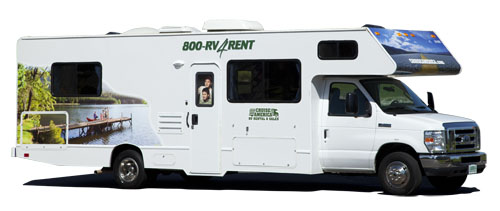
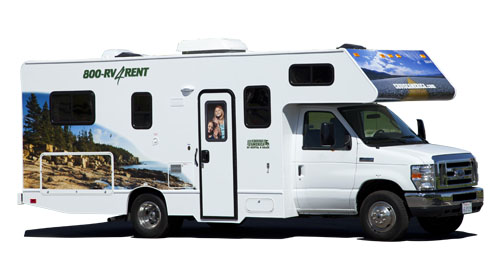
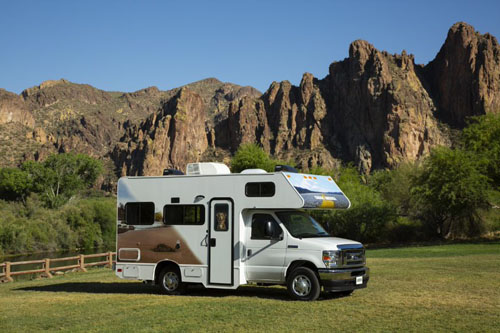
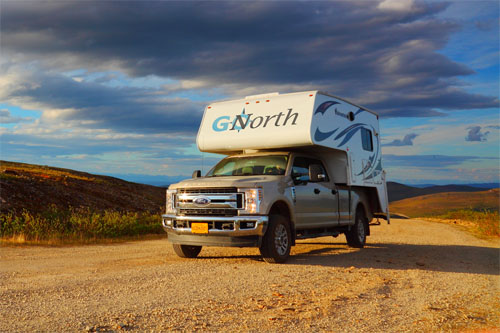
Class SI Semi-integrated motorhomes, averaging around 6.9 meters (22.6 feet) in length, offer a compact design while providing comfortable living spaces for typically 3-4 adults, making them ideal for couples who enjoy extra room or small families. Class C Alcove RVs, with an average length of 7.5 meters (24.6 feet), provide more sleeping capacity, comfortably accommodating around 5-6 people, and boast robust construction, which can be beneficial on longer, more adventurous Alaskan journeys. For those seeking maximum versatility and off-grid capability on rougher terrain, a Class TC - Truck Camper, averaging 5.5 meters (18 feet) like the "4x4 Scout Adventure Truck Camper Gold", offers a good balance of compact size and higher ground clearance, though with less interior space. While larger Class A Integrated RVs (averaging 7.5 meters or more) offer luxury and space, their size might be less ideal for some narrower or unpaved routes, or specific park restrictions like those in Denali National Park, where vehicles over 27 feet are restricted beyond Savage River.
Should I Choose a Compact Van Instead of a Large RV in Alaska?
While compact vans (Class B Campervans) offer superior maneuverability and are easier to park, most Alaskan roads, including major highways and many state park roads, are entirely navigable by larger motorhomes.
The primary advantage of a compact van, averaging 5.8 meters (19 feet), is easier access to tight parking spots in city centers and potentially slightly better fuel efficiency (e.g., some Class B Campervans average 9 L/100km). However, for an Alaskan adventure, a larger RV typically provides significantly more living space, enhanced storage for gear, and improved comfort for extended trips or inclement weather, which can be crucial in the wilderness. The trade-off often leans towards the comfort and amenities of a larger Class C or Class A rented RV for Alaska, as genuine issues with maneuverability are rare unless specifically seeking very rugged, off-road trails not recommended for standard rentals. Consider a compact van if your itinerary prioritizes extreme flexibility, very remote dispersed camping on rough tracks, or if you are primarily traveling solo or as a couple with minimal gear.
Can I Park Anywhere? Free & Wild Camping Rules in Alaska
In Alaska, free or wild camping (boondocking) is generally permitted on vast tracts of public land managed by the Bureau of Land Management (BLM) and within National Forests, provided you adhere strictly to 'Leave No Trace' principles.
Specific regulations vary by location; always look for posted signs or check with local ranger stations for rules on dispersed camping, fire restrictions, and length of stay limits. Designated campgrounds within National Parks, State Parks, and other protected areas often require reservations and fees, and may have specific rules regarding RV length, generators, and pet policies. Private property is strictly off-limits for camping without explicit owner permission, and overnight parking in city limits (e.g., store parking lots) often depends on local ordinances. Crucially, wildlife safety protocols, especially bear awareness and proper food storage in bear-resistant containers, are paramount when wild camping anywhere in Alaska. Always check local regulations and follow local law before parking overnight.
Can I Drive an RV Into the City Center? Heights, Tunnels & Local Signage
Yes, you can drive almost any rented RV into Alaskan city centers like Anchorage or Fairbanks without issues; the main challenge typically lies with finding suitable parking rather than strict access restrictions.
Always pay close attention to local signage for any specific height or weight restrictions, although low bridges or tunnels are rare on main city routes in Alaska. Parking for larger RVs can be limited, especially in downtown areas. Utilize designated RV-friendly parking lots or consider public transportation from out-of-town campgrounds to explore city attractions. Unlike some European cities, Alaska does not employ widespread environmental zones or residents-only streets that commonly restrict RV access. Be aware of one-way streets and narrow lanes in older parts of cities, and plan your route in advance to minimize complex turns with a larger vehicle. No need to stress - just use common sense and pay attention.
Top Cities for RV Rental in Alaska
When planning your romantic RV getaway in Alaska, several cities serve as excellent starting points, offering convenient pickup locations and access to incredible routes.
- Anchorage: As Alaska's largest city, Anchorage is the primary hub for RV rentals, offering the widest selection of motorhomes from major suppliers. It provides easy access to the Kenai Peninsula, Denali National Park, and the vast interior.
- Fairbanks: Located further north, Fairbanks is a great choice for exploring Interior Alaska, including Denali, the Arctic Circle, and is a prime spot for aurora borealis viewing.
- Seward: While smaller, Seward on the Kenai Peninsula is a popular pickup spot for exploring coastal fjords, glaciers, and marine wildlife, often chosen for specific week-long trips.
- Juneau: As the state capital, Juneau is accessible primarily by air or ferry, offering a unique starting point for exploring Southeast Alaska's archipelago by smaller campervan.
These cities provide diverse opportunities to launch your Alaskan adventure, whether you're seeking rugged wilderness, coastal beauty, or a mix of both. Consider what kind of experience you're hoping for as a couple to choose the perfect starting point.
Recommended RV Routes for Couples in Alaska
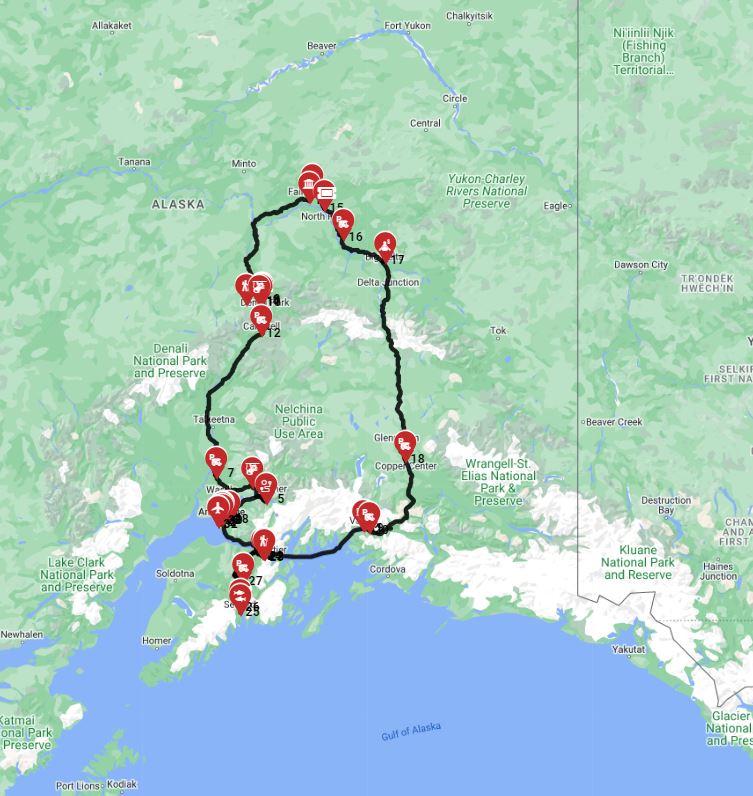
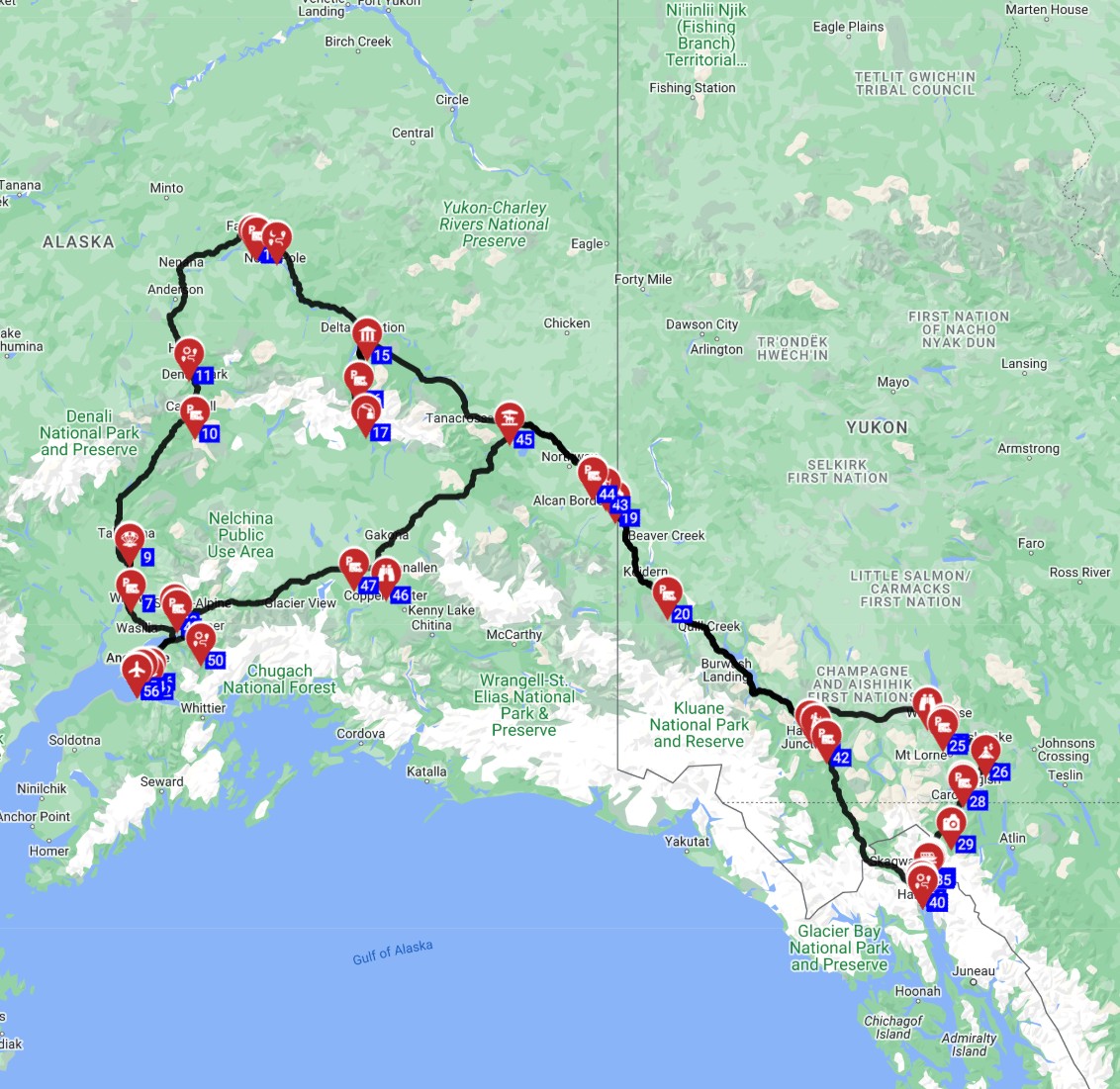
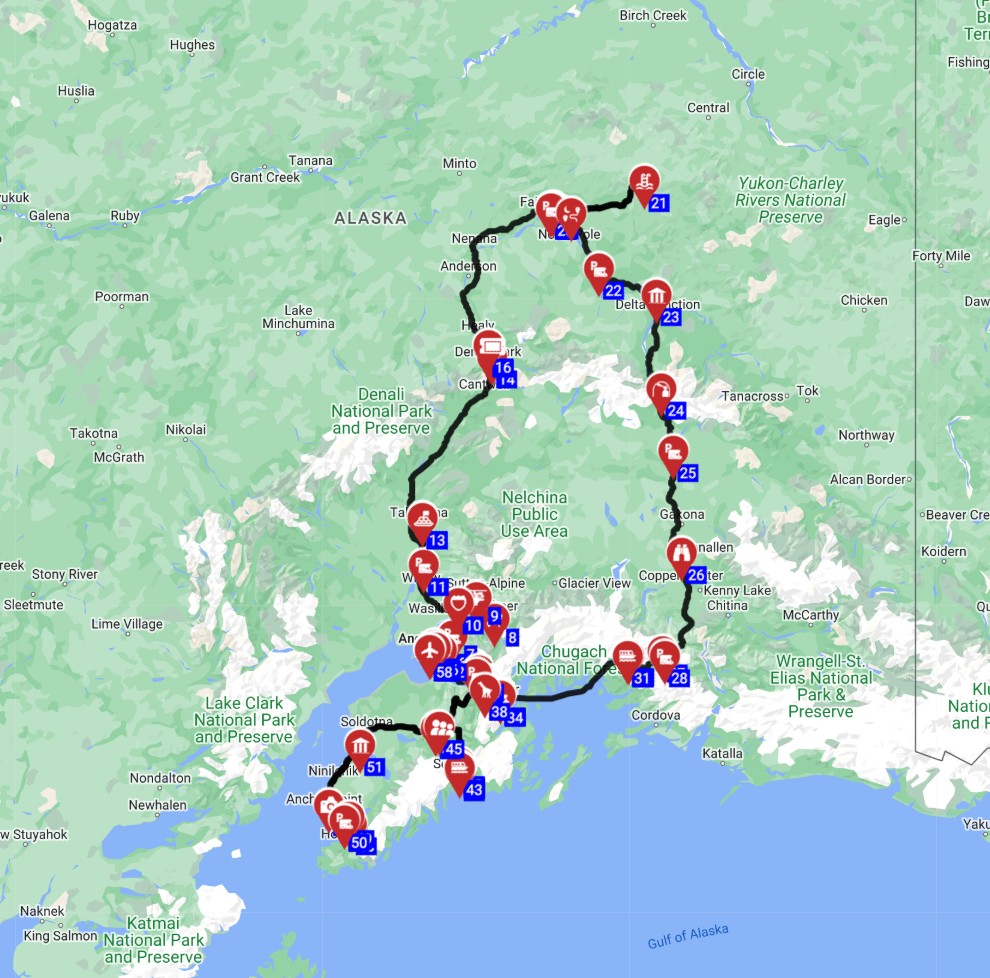
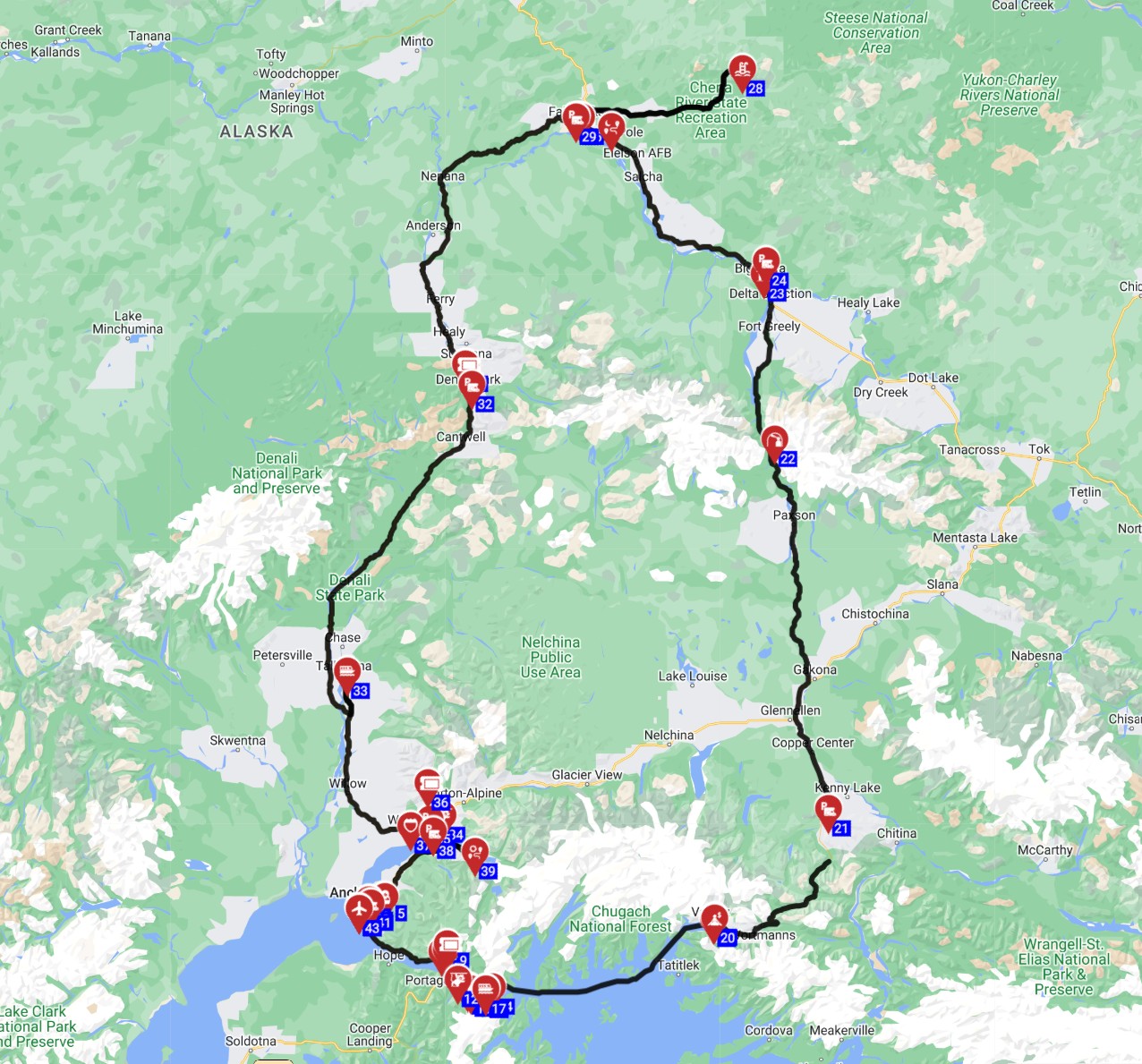
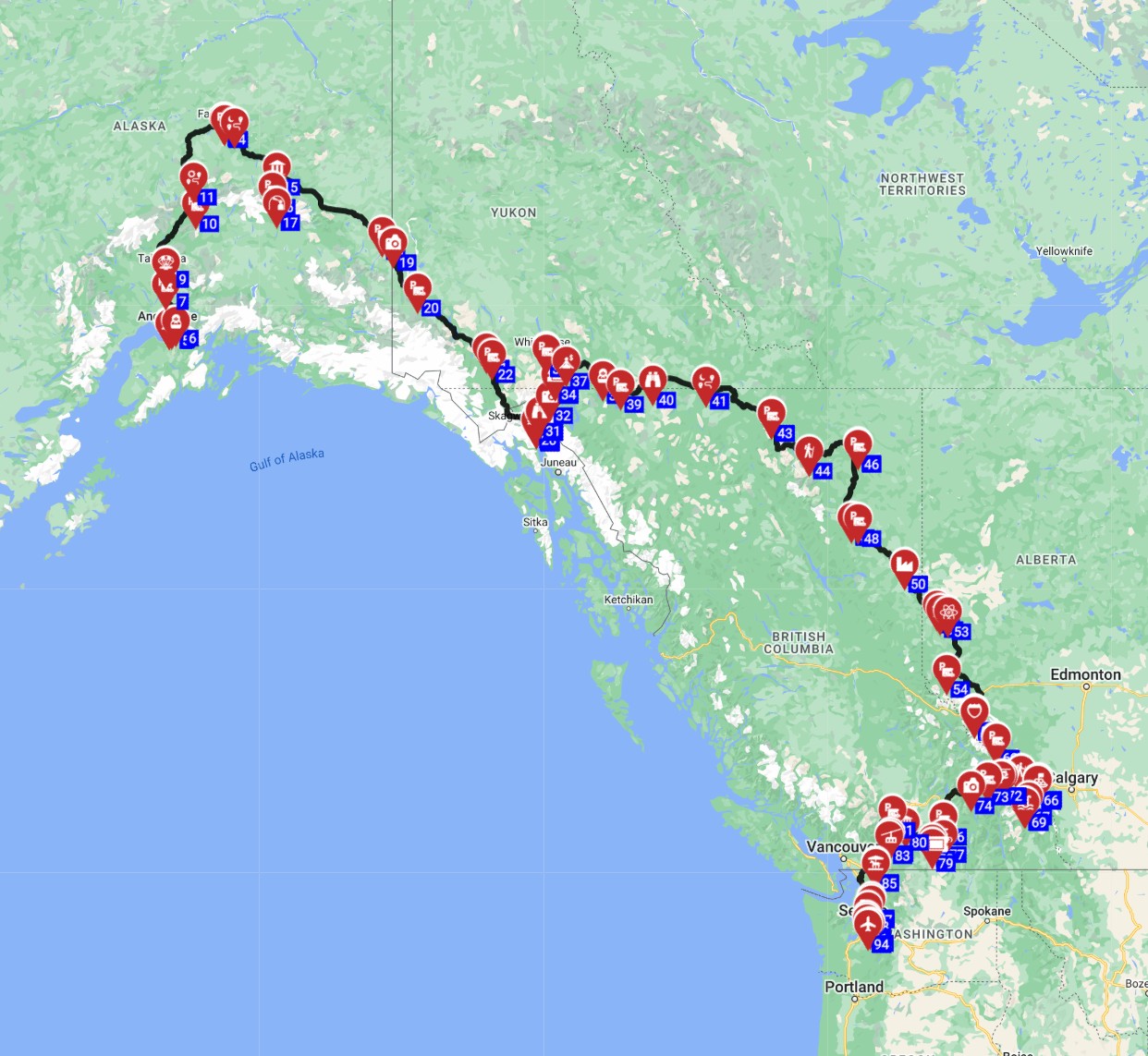
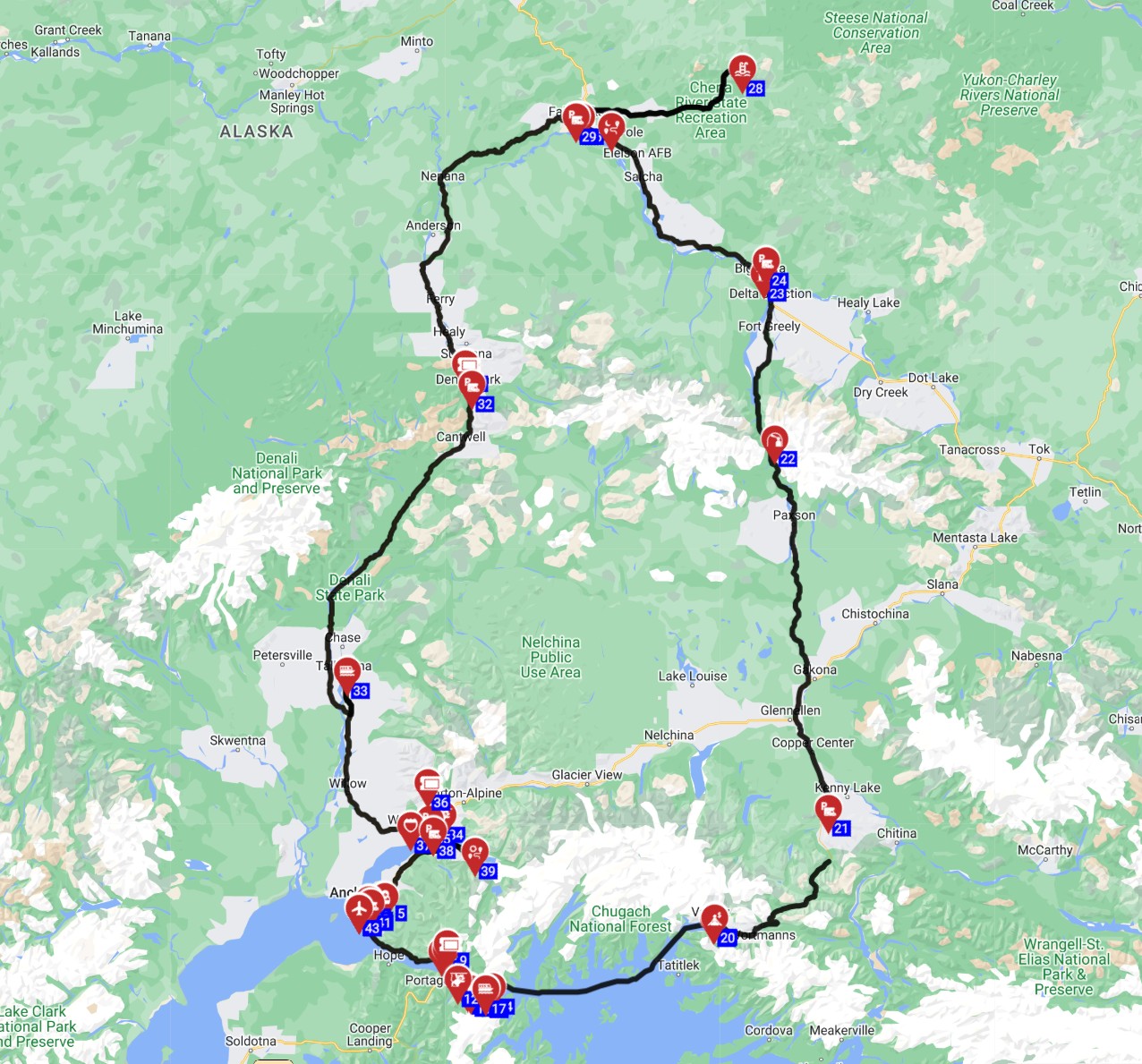
Alaska offers incredible routes perfect for a romantic RV trip, allowing you to immerse yourselves in nature and create lasting memories. Consider pre-planned routes developed by professionals via RV PLANET (rvplan.net) for a stress-free journey.
For an epic, extended adventure, the
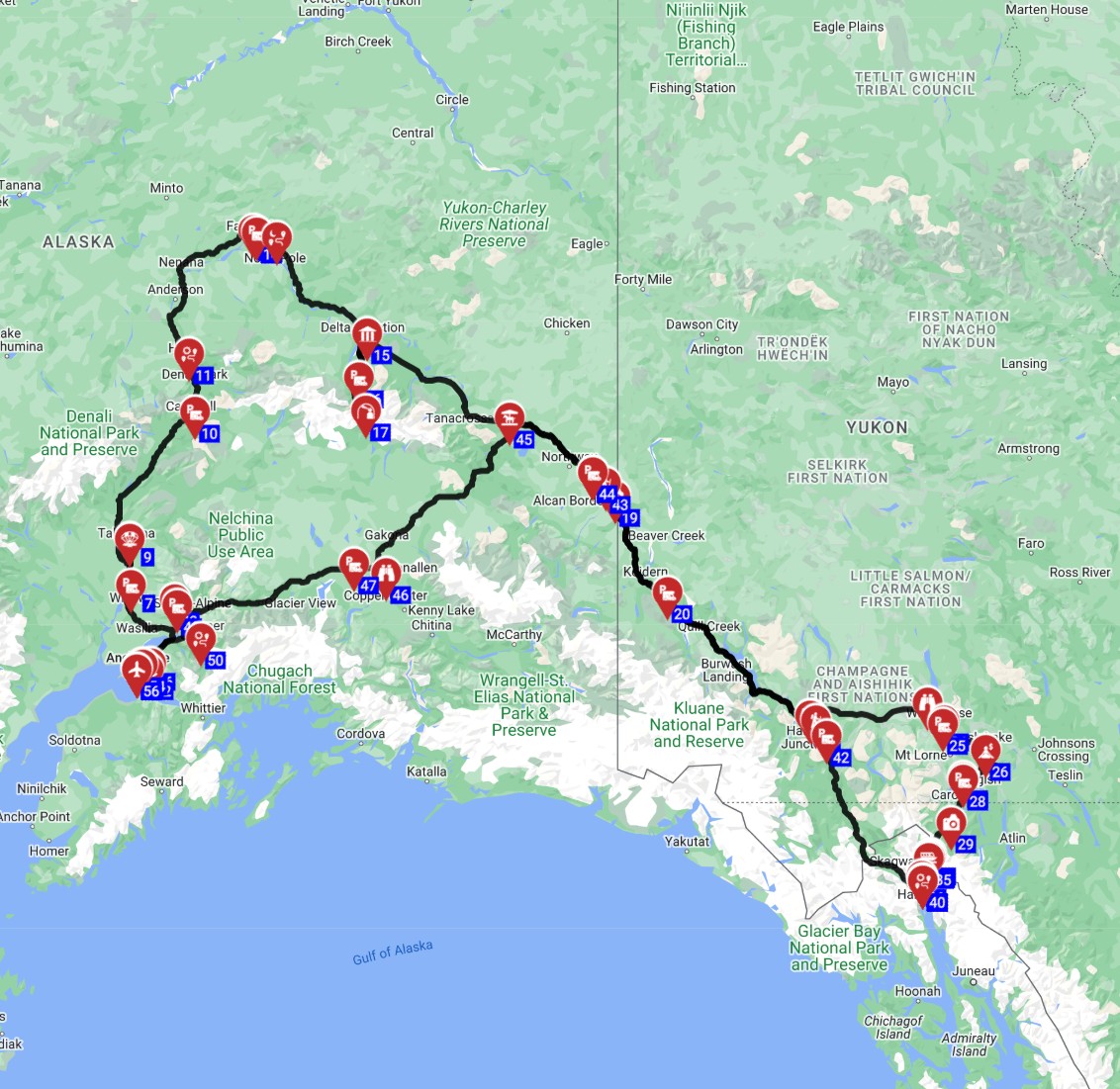
If you prefer a more focused week-long trip, the
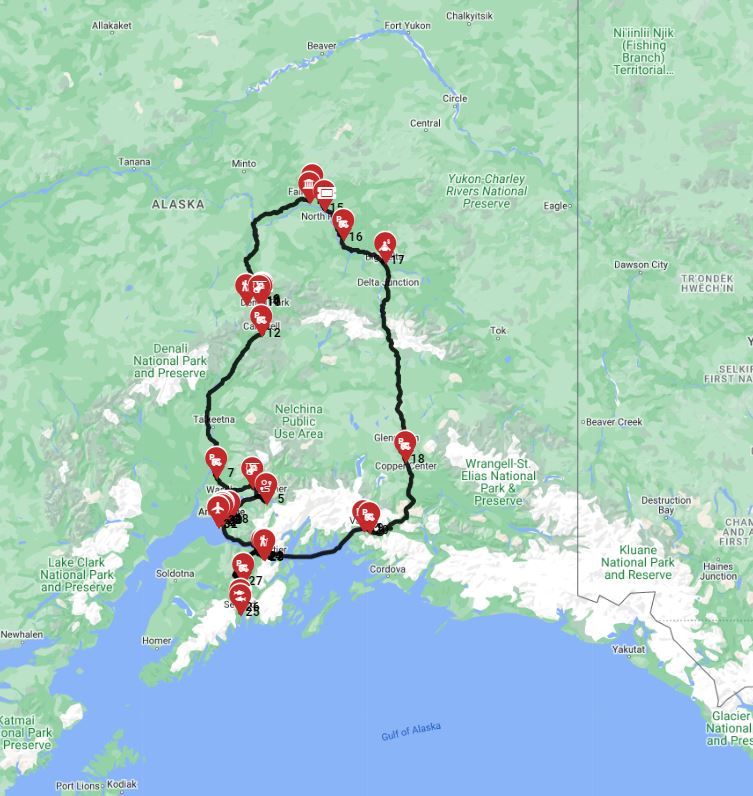
For couples dreaming of a true wilderness road trip heading north, the
Do you need a special license to drive an RV in Alaska?
No, in most cases, a standard Class D driver's license from your home state or country is sufficient to drive a recreational vehicle (RV) in Alaska.
A special commercial driver's license (CDL) is only required if the RV has a Gross Vehicle Weight Rating (GVWR) of 26,001 pounds (11,793 kg) or more and is used for commercial purposes, or if towing a trailer exceeding 10,000 pounds (4,536 kg) with a combined GVWR over 26,001 pounds. The majority of rental motorhomes, including Class B, C, and Semi-integrated models offered by Bandana, fall well below these commercial weight thresholds. Drivers should always verify the specific license requirements based on the rented RV's actual GVWR, though this is rarely an issue for personal RV travel.
Do you have to have a special license to drive a 30 ft RV?
No, you do not typically need a special license solely because a rented RV is 30 feet (approximately 9.1 meters) long in Alaska or most other U.S. states.
License requirements are primarily based on the RV's Gross Vehicle Weight Rating (GVWR), not its length. A standard Class D driver's license is sufficient for driving a non-commercial 30-foot RV, as most vehicles of this length have a GVWR below the 26,001-pound (11,793 kg) threshold that would necessitate a Commercial Driver's License (CDL). While longer RVs require more driving skill and awareness, particularly on narrow roads or when parking, this does not translate to a different license class. Always confirm the specific GVWR of your rental RV to ensure compliance with licensing regulations.
Can I drive my RV to Alaska?
Yes, you can absolutely drive your RV to Alaska, with the most common route being through Canada via the Alaska Highway (ALCAN).
This journey requires careful planning, including ensuring all occupants have valid passports for crossing the U.S.-Canada border, and checking Canadian entry requirements. Vehicle preparation is crucial for the long drive; ensure your rented RV is in excellent mechanical condition, with good tires, and carry spare parts and emergency supplies for remote stretches. Be prepared for varying road conditions in Canada and Alaska, including potential gravel sections, frost heaves, and limited services between towns. Consider driving conditions during different seasons; summer offers the best weather but also peak tourist traffic, while shoulder seasons can present fewer crowds but more unpredictable weather. Bandana ensures your rented motorhome is ready for such an adventure, and our 24/7 support is there for you before, during, and after your booking.
Can I park my RV anywhere in Alaska?
No, you cannot park your RV just anywhere in Alaska; while options for dispersed camping are extensive, specific rules and regulations apply depending on the land type.
Free camping (boondocking) is generally permitted on Bureau of Land Management (BLM) and National Forest lands, but it requires adherence to 'Leave No Trace' principles, including proper waste disposal and fire safety. Private property, city parks, and many designated campgrounds require permission or payment for overnight parking, and violating these rules can result in fines. National Parks like Denali have very specific rules regarding where and how RVs can be parked or camped, often requiring reservations for designated sites and limiting vehicle access on certain roads. Always consult local ordinances, park regulations, and land management agency rules before parking overnight to ensure compliance and safety, especially concerning wildlife.
What is the 3-3-3 rule for RV living?
The '3-3-3 rule' is a popular guideline among RVers for safe and enjoyable travel, advising: drive no more than 300 miles a day, arrive at your destination by 3 PM, and stay for at least 3 nights.
Driving no more than 300 miles (approximately 480 km) helps prevent driver fatigue, allowing for leisurely travel and unexpected stops, especially important on Alaska's scenic and challenging roads. Arriving by 3 PM provides ample daylight to find and set up your campsite, particularly crucial in Alaska where prime spots fill quickly, and twilight extends late in summer or shortens dramatically in shoulder seasons. Staying for at least 3 nights allows for thorough exploration of the area, reduces the stress of constant packing and unpacking, and provides a deeper immersion into the Alaskan landscape. While a useful guideline, Alaska's vast distances may sometimes necessitate longer driving days, but prioritizing safe speeds and frequent breaks remains paramount.
Can you sleep in an RV while driving in the USA?
No, it is illegal and extremely unsafe for passengers to sleep in the rear sections of an RV (such as beds or dinettes) while the vehicle is in motion in the USA, including Alaska.
All passengers must be seated in designated seats with seatbelts securely fastened whenever the RV is being driven, similar to any other passenger vehicle. Sleeping in non-seatbelted areas during travel poses a severe risk of injury or death in the event of a sudden stop, collision, or even a sharp turn. While some larger RVs, like a Class C "cruise america rv rental example Explorer" with 4 seat belts, may have multiple belted seating positions, these are typically in the cab or designated passenger areas, not in the permanent sleeping quarters. Ensure all travelers understand and comply with seatbelt laws for their safety throughout the journey.
Can I take my RV to Alaska?
Yes, you can take your RV to Alaska, whether it's your personal RV or a rental, but it requires significant planning and preparation for the unique Alaskan environment.
Ensure your RV is mechanically sound and equipped for potentially long stretches between services, diverse road conditions (paved, gravel, frost heaves), and extreme weather variations. For personal RVs, verify your insurance coverage extends to Canada if driving through, and research specific park regulations regarding RV size and access, such as in Denali National Park. Rentals obtained within Alaska are typically already prepared for local conditions, but ensure you understand any mileage limits, generator usage policies, and emergency support available. Key preparations include carrying adequate supplies, understanding wildlife safety protocols (especially bear country food storage), and planning for limited cell service in remote areas. We handle the details, you live the journey, with personal service from day one until your booking is confirmed.
Can you turn left on a red light in Alaska?
No, in Alaska, you generally cannot turn left on a red light, mirroring standard traffic laws across the United States.
The only exception typically allowed in the U.S. is a left turn on red from a one-way street onto another one-way street, provided there is no sign prohibiting it and the intersection is clear. Alaska primarily follows the Uniform Vehicle Code, which adheres to this standard rule for left turns on red. Always wait for a green light or a specific 'Left Turn Yield on Green' signal before making a left turn, unless explicit signage indicates otherwise in very specific circumstances. It's crucial for RV drivers to be aware of and strictly follow all traffic signals and signage, especially in larger vehicles like a Class C "29′ Class C Motorhome".
How do I transfer my license to Alaska?
Transferring a driver's license to Alaska is a process specifically for new residents establishing residency in the state, not for tourists or temporary visitors planning an RV rental.
New residents must apply for an Alaska driver's license within 90 days of becoming an Alaska resident. The process typically involves visiting a Division of Motor Vehicles (DMV) office, presenting proof of identity, legal presence, residency, and your existing out-of-state license. You may be required to pass a knowledge test and a vision screening, but typically the driving skills test is waived if your out-of-state license is valid and unexpired. There are associated fees for the application and issuance of the new Alaska driver's license. As a renter, your valid home country license (plus IDP if needed) is generally sufficient for your rental period.
Do I need to register my trailer in Alaska?
If you are a new resident of Alaska and plan to keep your trailer in the state, you generally need to register it with the Alaska Division of Motor Vehicles (DMV).
Trailers brought into Alaska by temporary visitors for a vacation or short-term stay, and which are already legally registered in their home state or country, typically do not need to be re-registered in Alaska. The requirement to register applies to trailers that will be principally operated or permanently based within the state by a resident. For rented motorhomes and campervans, the rental company is responsible for ensuring the vehicle is properly registered in accordance with Alaskan law, so you don't need to worry about this detail. Bandana RV takes care of all the necessary vehicle details so you can focus on your journey.
What You Shouldn't Miss
- Drive the Seward Highway: Often called one of the most scenic drives in America, this 200 km route from Anchorage to Seward offers stunning views of Turnagain Arm, mountain glaciers, and wildlife viewing opportunities, perfect for a romantic drive.
- Explore Denali National Park: Take your rented RV to the entrance of Denali, then hop on a shuttle bus for a deeper dive into the park's interior for unparalleled wildlife viewing and views of North America's highest peak. Remember the 27-foot vehicle restriction beyond Savage River.
- Visit the Kenai Peninsula: Cruise around the Kenai Peninsula Loop, stopping at towns like Homer (the "Halibut Fishing Capital of the World") and Seward, and enjoy marine wildlife cruises from Resurrection Bay.
- Witness the Northern Lights: If traveling in the shoulder seasons (late August to April), head north to Fairbanks, one of the best places on Earth to see the aurora borealis dance across the night sky.
- Take a Glacier Cruise: From Valdez or Seward, embark on a boat tour to see massive tidewater glaciers calve into the ocean, a truly awe-inspiring experience for two.
Looking for expert insights from Avi Bandana? Top 5 Adventures - recommendations from Avi Bandana.
Final Thoughts
A romantic RV driving trip through Alaska offers an unparalleled opportunity for couples to connect with each other and the raw, magnificent beauty of the Last Frontier. From the towering peaks to the serene coastal fjords, every turn in the road reveals a new vista, a new memory waiting to be made. With a rented motorhome, you gain the freedom to explore at your own pace, lingering in spots that capture your hearts and moving on when wanderlust calls.
At Bandana RV, we’re passionate about helping you craft these unforgettable journeys. We stand by our commitment to full transparency and genuine support, ensuring your planning and travel experience is as smooth and enjoyable as possible. So, start dreaming, start planning, and prepare to embark on the adventure of a lifetime with your loved one in a rented RV across Alaska.
Discover top destinations, planning tips, all in one place! Plan a trip itinerary in advance with minimal effort and maximum enjoyment. Your romantic Alaskan adventure awaits!