In This Guide
- Where to Camp in North Canada - Top Options
- Campground Types in North Canada (National, Private, Wild)
- Featured RV Park or Campground in North Canada
- Hookups & Amenities - What to Expect
- Booking Windows & Reservations in North Canada
- Nearby Supermarkets & Resupply Points
- Best RV Class for Camping in North Canada
- How to Save on Campgrounds in North Canada
- Where can I park my RV for free in Canada?
- What is the 3-3-3 rule for RV travel?
- Can you park an RV anywhere in Canada?
- How much does it cost to park an RV in Canada?
- What is the 3-3-3 rule for RV camping?
- Can US citizens camp in Canada?
- How much does it cost to rent an RV in Canada?
- What is the cheapest way to rent an RV?
- Is RVing cheaper than hotels?
- What You Shouldn't Miss
- Why Book with Bandana Caravan
- Final Thoughts
- Frequently Asked Questions
Imagine yourself and your partner on an unforgettable adventure through the pristine wilderness of North Canada, where endless landscapes, incredible wildlife, and breathtaking natural phenomena await. RV camping offers couples the ultimate freedom and intimacy to explore this vast and beautiful region at your own pace. With a rented RV, you have a mobile headquarters to venture out to national parks, discover hidden gems, and create memories that will last a lifetime. For live availability and current prices, start with our RV Rental North Canada - Complete Guide 2026 guide.
At Bandana RV, we believe in full transparency: what you see is what you pay, with no hidden fees or surprises at pickup. Our commitment to 24/7 support means real people are behind you before, during, and after your booking, ensuring a smooth and stress-free journey. We are true RV specialists, not just a side department of a travel agency, and our deep knowledge of RV travel in destinations like North Canada means we genuinely know what we're talking about.
Where to Camp in North Canada - Top Options
Couples exploring North Canada can discover diverse camping options, from serviced parks to secluded wilderness sites. Territorial parks in Yukon, such as those near Kluane National Park and Reserve or around Whitehorse, offer designated campgrounds with basic amenities. In the Northwest Territories, look for access points to Nahanni National Park Reserve and campgrounds surrounding Yellowknife. Additionally, Northern British Columbia, particularly along the Alaska Highway, provides numerous provincial parks and private campgrounds for comfortable stays. For those truly seeking solitude and cost savings, embracing remote, unserviced camping on vast tracts of Crown land, especially abundant in the Yukon and NWT, offers unparalleled freedom. While full hookups are less common in the most remote Northern locations, many sites still provide essential amenities like fire pits and picnic tables, ensuring a comfortable experience for any rented RV.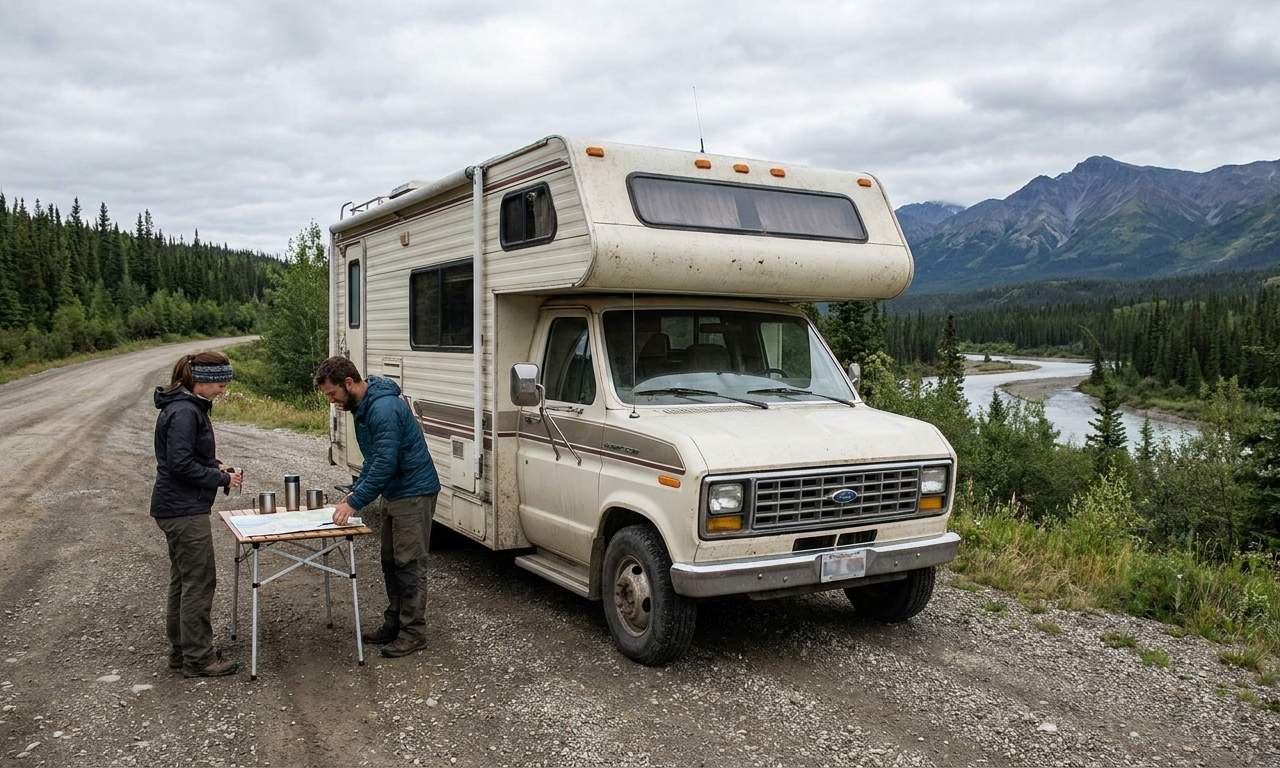
Campground Types in North Canada (National, Private, Wild)
North Canada offers three primary types of campgrounds for couples renting a motorhome, each with distinct advantages. National and Territorial Parks feature scenic, often well-maintained campgrounds with basic amenities like outhouses and water pumps, sometimes requiring advance reservations or park passes. Private campgrounds, typically located in or near larger towns such as Whitehorse, Yukon, or Yellowknife, NWT, provide more comprehensive amenities like full hookups (electrical, water, sewer), hot showers, laundry facilities, and Wi-Fi. For the ultimate freedom and immersion in nature, wild camping (also known as boondocking or dispersed camping) on Crown land is widely available and legal in many Northern regions of Canada. This allows couples to find secluded spots without facilities, provided they adhere to 'leave no trace' principles and territorial duration limits, which typically range from 14 to 21 days in one location. While popular national park sites might require advance booking, many remote campgrounds still operate on a first-come, first-served basis, offering flexibility for spontaneous travelers. Finding the right spot is easier with resources like rvplan.net, which features 1,300+ pre-planned routes across 5 continents, including North Canada, making planning a breeze.Featured RV Park or Campground in North Canada
Selecting an RV park in North Canada involves prioritizing a balance of essential amenities and access to incredible wilderness experiences. Couples should look for parks that offer reliable potable water sources and convenient dump stations, as these are critical infrastructure, especially in remote Northern areas. To enhance your Northern adventure, consider campgrounds that provide direct access to hiking trails, fantastic fishing opportunities, or stunning scenic viewpoints, allowing for daily explorations directly from your rented campervan. It’s also important to prioritize parks with clear safety protocols, such as bear-safe food storage, particularly when venturing into deeper wilderness areas. Many campgrounds in the Yukon and Northwest Territories are situated to maximize natural beauty, offering sites close to lakes, rivers, or mountain ranges, providing a perfect backdrop for a romantic escape.Hookups & Amenities - What to Expect
When renting an RV for a trip through North Canada, expect campground amenities to vary significantly, reflecting the region's diverse landscapes and levels of development. At private RV parks near towns, you'll typically find full hookups providing electric (15, 30, or 50 amp), water, and sewer connections. However, many territorial and national park sites, especially those further off the main routes, primarily offer dry camping or limited services such as central water pumps and dump stations. Wi-Fi and reliable cell service are often scarce or non-existent outside of larger communities, so couples planning to explore remote areas should consider bringing satellite communication devices for emergencies. Laundry facilities and hot showers are usually available in private campgrounds or larger town service centers but are less common at government-operated parks. Always check specific campground details in advance to ensure your rented motorhome has everything you need for a comfortable stay.Booking Windows & Reservations in North Canada
For popular North Canada campgrounds, particularly those within National and Territorial Parks, reserving spots well in advance is highly recommended to secure your preferred dates. Planners often aim to book 3-6 months ahead for peak season, which runs from June through August, especially at sought-after locations like those in Kluane National Park or near Dawson City. However, spontaneous travelers need not worry, as many national park campgrounds reserve only 25-30% of their spots, with the remaining 70-75% available on a first-come, first-served basis. This means you'll find a spot; if not at the first campground, then at the next one. Always call ahead to check availability before driving long distances, particularly in remote regions. With Bandana, you get a 25% planning discount when you utilize RV PLANET (rvplan.net) for your itinerary, offering a seamless experience from planning to booking your perfect RV rental for couples.Nearby Supermarkets & Resupply Points
Strategic planning is essential for couples on an RV trip through North Canada, as resupply points are often much more spread out than in southern regions. Larger towns like Whitehorse in Yukon and Yellowknife in the Northwest Territories offer major grocery chains such as Superstore, Co-op, or Independent Grocer, where you can find a comprehensive selection of provisions. Smaller communities along the main routes will have general stores, but expect more limited selections and often higher prices. It’s wise to plan for extended stretches of travel without services by carrying extra non-perishable food, potable water, and fuel, as distances between resupply points can be significant. When planning your route and budgeting for these ancillary trip costs, remember that RV PLANET routes allow travelers to itemize and track every expense along the way for easy budgeting, ensuring no surprises on your journey. Plus, if you enjoy cooking on the road, check out our RV-friendly recipes playlist for delicious meal ideas!Best RV Class for Camping in North Canada
For couples RVing in North Canada, a Class B Camper Van or a Class SI Semi-integrated RV often strikes an ideal balance of maneuverability, fuel efficiency, and comfort for exploring remote areas and varied road conditions. Bandana offers excellent options like a Class B Camper Van with features for "Ideal for a couple", "Front Air condition", "Shower", and "Toilet", making it easy to navigate smaller roads and find secluded boondocking spots. For a bit more space, consider a Class SI Semi-integrated RV from our fleet, which typically offers more interior room and comfort while remaining agile enough for Northern travel. A standard car driver's license is sufficient for operating all Class A, Class B, and Class C motorhomes, so no special permits are required, making it easy to hit the road. Drive slowly and carefully, and you can drive almost anywhere without issues. No need to stress - just use common sense and pay attention. If you're comparing rental options, our "RV Rental in North Canada for Couples - Pricing 2026" guide can help you find the perfect vehicle.How to Save on Campgrounds in North Canada
Couples can significantly reduce campground costs in North Canada by utilizing various strategies, including discount programs, opting for off-peak travel, choosing municipal or territorial sites, and embracing wild camping where permitted. Many RV rental companies, including Bandana, offer discount cards or affiliations that can secure lower rates at participating private campgrounds. Traveling during the shoulder seasons, typically May-early June and September-October, offers the dual benefit of reduced rates and fewer crowds compared to the peak summer months. Municipal or territorial campgrounds are generally more affordable than private RV resorts and often provide a more rustic, authentic Northern experience. Furthermore, embracing dispersed camping on Crown land, where legal, allows for free overnight stays, requiring self-sufficiency and strict adherence to 'leave no trace' principles.Where can I park my RV for free in Canada?
Couples can generally park their RV for free in Canada on vast tracts of Crown land (public land), particularly abundant in North Canada, while adhering to provincial and territorial regulations. Extensive areas of Crown land in the Yukon, Northwest Territories, and Northern BC allow for dispersed camping (boondocking), often with duration limits of 14 to 21 days in one spot, and an expectation of complete self-sufficiency. Additionally, some big-box retailers, such as Walmart or Canadian Tire, may permit overnight RV parking in their lots; always check with store management upon arrival to confirm their specific policies. Small roadside pull-offs and designated rest areas on highways can also sometimes accommodate overnight parking for a single night, though they are not designed for extended camping.What is the 3-3-3 rule for RV travel?
The '3-3-3 rule' for RV travel, a popular guideline among experienced RVers, suggests driving no more than 300 miles (approximately 500 km) a day, arriving at your destination by 3 PM, and staying for a minimum of 3 nights. This rule is particularly relevant for couples exploring North Canada, as it promotes a relaxed and safer travel pace across vast, remote landscapes. Limiting daily driving helps prevent driver fatigue and allows ample time for spontaneous stops to enjoy scenic Northern routes and unexpected discoveries. Arriving by 3 PM ensures you have sufficient daylight to comfortably set up your rented motorhome, explore your surroundings, and prepare for the evening without rush, which is crucial in areas with limited services. Staying for at least 3 nights at each location reduces the stress of constant packing and unpacking, encouraging a deeper immersion in local experiences and minimizing fuel consumption, an important consideration in the North.Can you park an RV anywhere in Canada?
No, you cannot legally park an RV anywhere in Canada; parking regulations for a rented campervan vary by province, territory, and municipality. Overnight parking on public streets in urban areas is generally prohibited, and fines can be issued for non-compliance, so always check local bylaws before settling in for the night. While vast areas of Crown land in Northern Canada offer extensive opportunities for dispersed camping, there are often duration limits, typically 14-21 days, and strict requirements to adhere to 'leave no trace' principles. National and Territorial Parks only permit RV parking in designated campgrounds, which often require permits or reservations, and strictly prohibit unauthorized overnight stays. Always research local regulations for your specific destination in North Canada to ensure a hassle-free trip.How much does it cost to park an RV in Canada?
The cost to park a rented RV in Canada varies widely, from free on Crown land or at some retail lots, to $30-$80+ CAD per night for serviced sites in private or national/territorial campgrounds. In North Canada, prices can sometimes be slightly higher due to the remoteness of locations and logistical challenges. Free options include dispersed camping on Crown land in the Yukon, Northwest Territories, and Northern BC, provided you follow local regulations and embrace self-sufficiency. Opportunistic overnight parking at some large retail stores is also possible, but always confirm with store management. Basic provincial or territorial campgrounds, often equipped with minimal services like vault toilets and water pumps, typically range from $20-$40 CAD per night. Serviced sites in National Parks (which also require a park pass) or private campgrounds with electrical hookups, water, and dump stations can cost $40-$60+ CAD per night. Premium private RV resorts offering full hookups and extensive amenities might exceed $80 CAD per night, especially in popular tourist areas or during peak season. For detailed cost breakdowns and budgeting for your North Canada trip, consult our "RV Rental in North Canada - Prices and Best Deals 2026" guide.What is the 3-3-3 rule for RV camping?
The '3-3-3 rule' for RV camping, an excellent guideline for enjoying a more relaxed and less stressful journey, advises couples to limit daily driving to around 300 miles (approximately 500 km), arrive at their chosen campground by 3 PM, and stay for at least 3 nights at each location. This rule is especially beneficial when navigating the unique conditions and vast landscapes of North Canada, where services can be sparse and travel demanding. Adhering to the 3-3-3 rule ensures you have plenty of time to set up your rented mobile home, unwind, and fully explore the surrounding nature or local communities rather than constantly rushing. For couples, this guideline fosters a more relaxed and immersive camping experience, allowing for deeper connection with the serene environment and each other at every stop. This approach aligns perfectly with our philosophy at Bandana, encouraging slow travel: "Travel slowly, max 100-150 km per day on average. Take time to feel the place, connect to the culture, the food, and the scenery."Can US citizens camp in Canada?
Yes, US citizens can absolutely camp in Canada, provided they meet all Canadian border entry requirements and adhere to local, provincial, and territorial camping regulations. A valid US passport is essential for all US citizens entering Canada by any mode of transport. It's crucial to ensure your US RV insurance policy extends coverage to Canada; if not, acquire a temporary rider or a separate Canadian insurance policy before crossing the border. Be prepared to declare all items to Canadian customs officials, as specific restrictions apply to firearms, certain food products (like fresh fruits, vegetables, and meats), and cannabis. If traveling with pets, ensure all vaccination records are current and accessible, particularly rabies certificates, which are required for entry. We’ve been helping tens of thousands of travelers explore the world by RV since 2001, and our 24/7 support means we're here to assist with pre-booking comparisons and post-booking coordination, making border crossing and trip planning as smooth as possible.How much does it cost to rent an RV in Canada?
The cost to rent an RV in Canada for couples typically ranges from $100-$300+ CAD per night, heavily influenced by the chosen RV class, rental season, duration, and included amenities. For instance, smaller RV classes like Bandana's Class B Camper Vans (e.g., "Active Standard", "Ideal for a couple", "RV size - Small") or Truck Campers are generally the most affordable, often starting around $100-$200 CAD per night for a couple. Mid-sized options, such as Bandana's Class SI Semi-integrated or Class C Alcove RVs tailored for couples, usually fall into the $150-$250+ CAD per night range. Prices are highest during the peak summer months (June-August) and can be significantly lower during the shoulder seasons (May, September, October). Remember to factor in additional costs like mileage packages, insurance, preparation fees, and optional add-ons like kitchen kits or linen kits, which are often not included in the base nightly rate. As true RV specialists, we offer full transparency, comparing final prices across 50+ suppliers, so you always know what you're paying. For a detailed breakdown of costs, check out "Family RV Rental in North Canada - Pricing Guide 2026" or "Luxury RV Rental in North Canada - Premium Prices 2026".What is the cheapest way to rent an RV?
The cheapest way for couples to rent an RV for a North Canada adventure usually involves opting for smaller RV classes, booking during shoulder seasons, securing longer rental periods, and utilizing comparison tools. Choosing a compact RV such as a Class B Camper Van (e.g., "HiTop", "Ideal for a couple", "RV size - Small") or a basic Class C motorhome will generally result in lower rental rates and better fuel efficiency, which is crucial for budget-conscious travel in the vast Northern landscapes. Booking your RV rental during the shoulder seasons, like May, early June, September, or October, will see demand and nightly rates significantly lower than in peak summer. Many rental companies offer discounted daily rates for longer rental durations, so consider a week-long trip or two-week adventure instead of shorter ones. Always use a platform like Bandana to compare final prices across numerous suppliers, ensuring you find the best deal with no hidden fees, and keep an eye out for early bird discounts, often available 3-6 months in advance, or last-minute deals if your travel dates are flexible. You might also find great offers in our "RV Rental Deals in North Canada - Latest Offers 2026".Is RVing cheaper than hotels?
For couples embarking on an extended road trip or traveling extensively throughout North Canada, RVing can often prove to be a more cost-effective option than staying in hotels. While the upfront cost of a rented RV can be substantial, nightly campground fees (ranging from free on Crown land to $80+ CAD for fully serviced sites) are generally lower than typical hotel rates in North Canada, which often fall between $100-$300+ CAD per night in major towns. The ability to prepare your own meals in a fully equipped RV kitchen significantly reduces food expenses compared to consistently dining at restaurants. With our RV-friendly recipes playlist, cooking becomes part of the adventure! RVing also offers unparalleled flexibility to access remote and scenic locations, allowing for camping at less expensive or free spots that hotels simply cannot reach. However, it’s important to factor in additional RV-related costs such as fuel (which can be a significant expense in the North), propane, dump fees, and potentially higher insurance or preparation fees, to make a comprehensive cost comparison.What You Shouldn't Miss
- **Kluane National Park and Reserve, Yukon:** Drive the Alaska Highway through this UNESCO World Heritage Site. Hike to scenic viewpoints, take a flightseeing tour over icefields, and spot grizzly bears and Dall sheep.
- **The Dempster Highway:** Conquer Canada's only all-season road to the Arctic Ocean. Experience the unique landscape, cross the Arctic Circle, and reach Tuktoyaktuk for views of pingos and the Beaufort Sea.
- **Whitehorse, Yukon:** Explore the territorial capital, visit the SS Klondike National Historic Site, walk the Millennium Trail, and enjoy local breweries and restaurants.
- **Nahanni National Park Reserve, NWT (Gateway Towns):** While direct RV access is limited, visit gateway communities like Fort Simpson to learn about the park and potentially arrange a flightseeing tour for a breathtaking aerial perspective of Virginia Falls.
- **Northern Lights Viewing:** From late August to April, find a dark spot away from city lights, set up your rented campervan, and witness the mesmerizing Aurora Borealis dance across the Northern sky.
- **Dawson City, Yukon:** Step back in time to the Klondike Gold Rush era. Pan for gold, explore historic buildings, and take a stroll along the Yukon River.
Looking for expert insights from Avi Bandana? Top 5 Adventures - recommendations from Avi Bandana
Final Thoughts
A romantic RV adventure through North Canada is a journey of discovery, offering unparalleled access to wild beauty and serene landscapes perfect for couples. From the majestic mountains of the Yukon to the vast expanses of the Northwest Territories, a rented motorhome provides the freedom and comfort to explore at your leisure, creating intimate moments and unforgettable memories. We encourage you to embrace slow travel, allowing yourselves to truly absorb the unique culture, incredible food, and breathtaking scenery of this spectacular region.
With Bandana RV as your trusted partner, you benefit from our full transparency, dedicated support, and expertise as true RV specialists. We're here to help you navigate every step of the planning and booking process, ensuring your focus remains on the adventure ahead. So, pack your bags, choose your perfect rented campervan, and set off on the Northern Canadian road trip of your dreams. Life is now - go explore!
🎬 Video coming soon
On the routes offered through RV PLANET routes, you can itemize and track every expense along the way for easy budgeting.