For live availability and current prices, start with our RV Rental Tokyo - Airport - Complete Guide 2026 guide.
In This Guide
- Best Tokyo - Airport RV Itinerary for pet friendly rv rental — Overview
- 7-Day Classic Route in Tokyo - Airport
- 14-Day Extended Journey in Tokyo - Airport
- Recommended RVPlan Trip for Tokyo - Airport
- Must-See Stops Along the Way (Avi Bandana Picks)
- Daily Driving Distances & Drive Times in Tokyo - Airport
- How do I pick up and drop off a pet-friendly RV at Narita (NRT) or Haneda (HND) airports?
- Where can I legally park my RV overnight near Tokyo and its airports?
- How do Japan's toll road systems work for RV travelers?
- What are the best strategies for navigating Tokyo's urban environment with an RV?
- How do I manage waste and access utilities like fresh water and propane in a Japanese RV?
- Is RV travel in Japan worth it compared to trains or rental cars for a pet-friendly trip?
- What are the cultural etiquette rules for RV camping and road-tripping in Japan?
Best Tokyo - Airport RV Itinerary for pet friendly rv rental — Overview
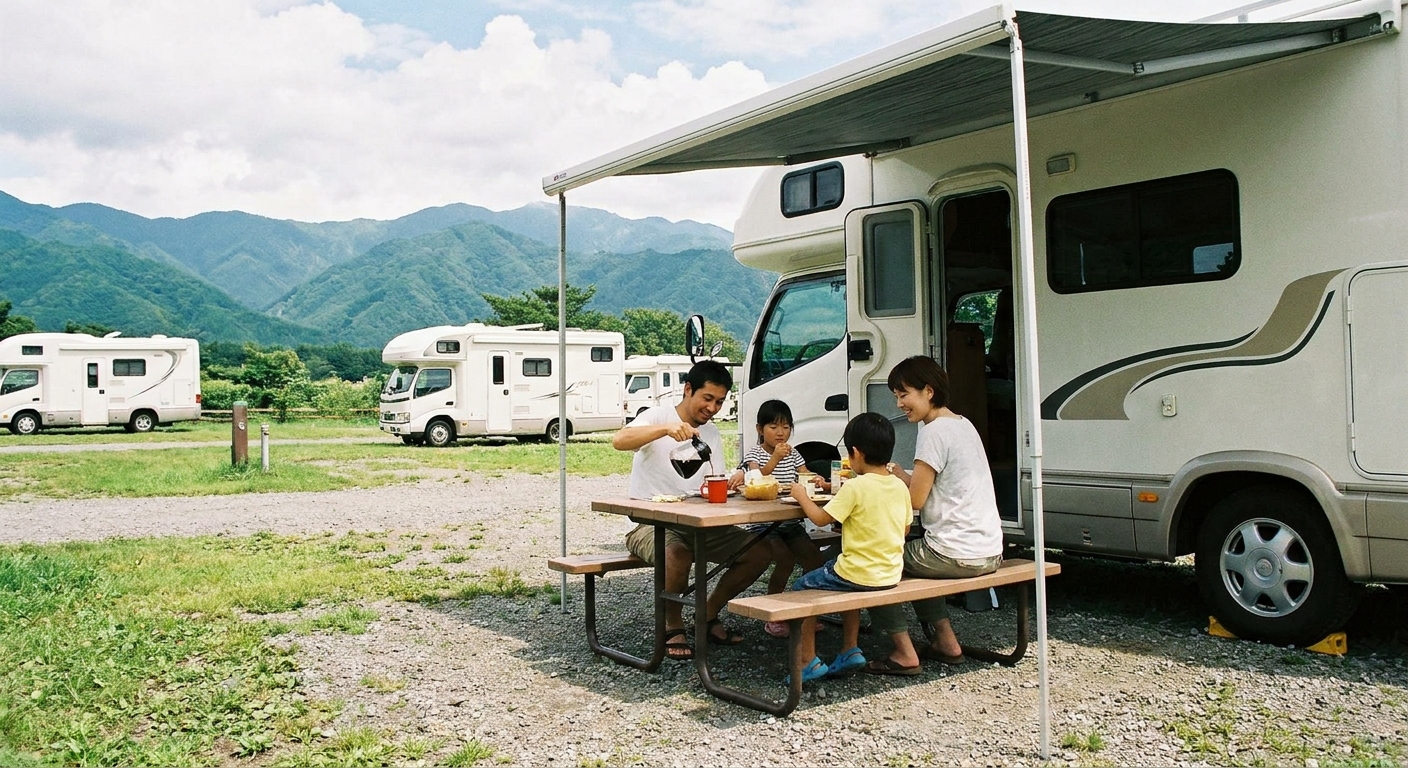
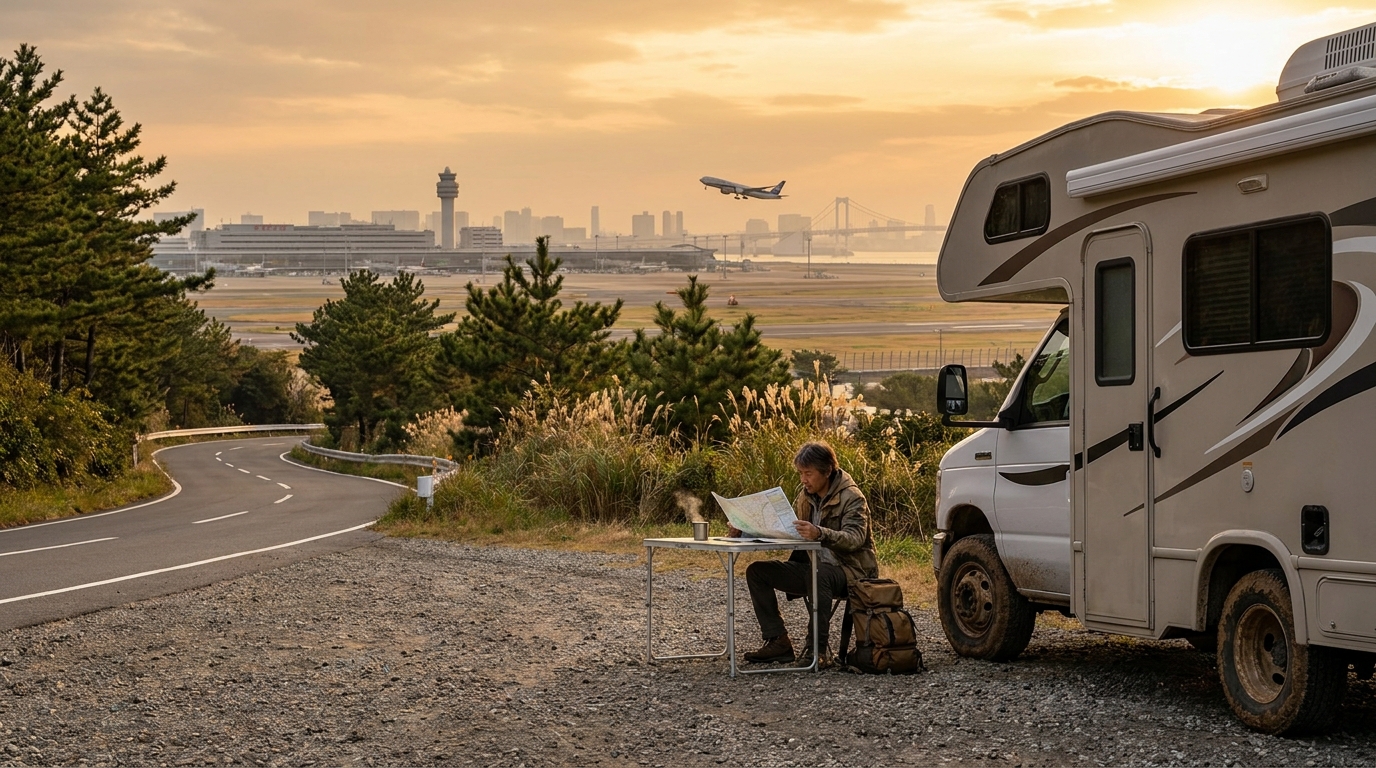
Discovering Tokyo and its surrounding pet-friendly natural escapes by RV is an ideal way to travel at your own pace, offering unparalleled freedom for you and your furry companion. This suggested itinerary covers approximately 600-900 km (370-560 miles) over a recommended minimum duration of 7 days, ideally extended to 14 days for a more comprehensive and relaxed experience. The best season for an RV trip around Tokyo with pets is spring (March-May) for the enchanting cherry blossoms and mild weather, or autumn (September-November) for the vibrant fall foliage. Both periods offer comfortable conditions for outdoor activities with your four-legged friend.
For live availability and current prices, start with our RV PLANET routes for Tokyo - Airport guide. Renting a motorhome allows you to explore diverse landscapes, from coastal beauty to mountain vistas, all while ensuring your pet is a comfortable and welcome part of the adventure. Bandana RV specializes in making these journeys seamless, offering transparent pricing and dedicated support.
7-Day Classic Route in Tokyo - Airport
This classic 7-day route from Tokyo's airports balances city access with scenic pet-friendly escapes, covering essential highlights for a memorable RV journey.
Day 1: Tokyo Narita (NRT) or Haneda (HND) Airport → Kujukuri Beach (Chiba). The distance is approximately 60 km. Your first highlight is relaxing on the pet-friendly parts of the beach. Overnight at a designated RV park or a Michi-no-Eki near Kujukuri.
Day 2: Kujukuri → Lake Kawaguchiko (Fuji Five Lakes). Covering about 150 km, this day offers iconic Mt. Fuji views and leisurely walks with your pet around the lake. Find overnight accommodation at an RV-friendly campsite or Michi-no-Eki.
Day 3: Lake Kawaguchiko → Hakone. A short 50 km drive brings you to Hakone. Explore the Hakone Open-Air Museum (note: some outdoor areas are pet-friendly, so verify specific rules) and enjoy scenic drives. Stay overnight at a Michi-no-Eki or a campsite in Hakone.
Day 4: Hakone → Izu Peninsula (eastern coast). Journey 80 km along the coast, enjoying scenic drives, pet-friendly beaches, and picturesque fishing villages. Overnight in an RV-friendly spot near Ito or Atami.
Day 5: Izu Peninsula → Yokohama. Cover 100 km to Yokohama. Explore Minato Mirai's waterfront and visit some pet-friendly parks (again, check specific park regulations). Park your RV on the city outskirts with good public transport access.
Day 6: Yokohama → Tokyo (outskirts). A 40 km drive returns you towards the airport region. Enjoy last-minute souvenir shopping or visit a pet park. Settle in at a Michi-no-Eki or RV park within an hour's drive of your drop-off airport.
Day 7: Tokyo (outskirts) → Narita (NRT) or Haneda (HND) Airport. Complete the final 30-70 km drive to drop off your RV and prepare for departure.
For those planning a broader exploration, our guide RV PLANET routes for Tokyo - Airport offers more detailed itineraries.
14-Day Extended Journey in Tokyo - Airport
An extended 14-day journey allows for deeper exploration of pet-friendly destinations around Tokyo and into neighboring regions, respecting an average daily drive of 100 miles (150 km) for a truly immersive experience. This itinerary is perfect for those who love to travel slowly and savor each destination.
Days 1-3 (Coastal Chiba & Fuji Five Lakes): Pick up your rented RV from NRT/HND, explore the pet-friendly Kujukuri Beach for a relaxing start, then head to Lake Kawaguchiko for stunning Mt. Fuji views and peaceful lakeside walks with your dog. Overnight stays can be at designated RV parks or convenient Michi-no-Eki.
Days 4-6 (Hakone & Izu Peninsula): Discover Hakone's natural beauty and its pet-friendly outdoor art installations, then drive along the scenic Izu Peninsula, enjoying charming coastal towns and dog-friendly cafes. Continue overnighting at campsites or Michi-no-Eki for convenience.
Days 7-9 (Nagano - Japan Alps): Head northwest to Nagano Prefecture, famed for its breathtaking Japan Alps. Explore pet-friendly hiking trails in areas like Karuizawa, a popular resort town with many dog-friendly facilities and accommodations. Look for mountain-view RV parks or Michi-no-Eki for your overnight stays.
Days 10-12 (Nikko & Tochigi): Journey to Nikko, a UNESCO World Heritage site. While the shrines themselves may have pet restrictions, the surrounding Nikko National Park offers beautiful pet-friendly nature trails and waterfalls like Kegon Falls. Explore the region's hot springs and local crafts. Overnight at a Michi-no-Eki or a well-equipped private campsite.
Days 13-14 (Return to Tokyo & Departure): Begin your relaxed drive back towards Tokyo's airport region. Spend your final night at a convenient RV park near the airport, facilitating an easy RV drop-off and departure. Consider using RV PLANET routes to fine-tune this extended journey.
Recommended RVPlan Trip for Tokyo - Airport
While a specific RVPlan trip perfectly matching 'pet friendly RV rental in Tokyo - Airport' isn't dynamically available at this exact moment, Bandana Caravan, through its sister company RVPlan (rvplan.net), offers a diverse selection of meticulously planned RV trips across numerous destinations. These itineraries are designed to maximize your experience while minimizing planning stress.
We highly recommend visiting the RVPlan section on our website to explore pre-designed itineraries that can be fully customized to include pet-friendly accommodations and activities. You can filter by duration, interests, and even specific pet-friendly criteria.
Alternatively, our travel experts can assist you in tailoring an existing route or creating a bespoke journey that perfectly suits your desire for a pet-friendly RV adventure starting from Tokyo's airports, ensuring your trip is everything you dreamed of.
Must-See Stops Along the Way (Avi Bandana Picks)
Looking for expert insights from Avi Bandana? Top 5 Adventures — recommendations from Avi Bandana often focus on authentic local experiences that make RV travel truly special. His personal picks for an unforgettable pet-friendly RV trip around Tokyo emphasize experiencing local culture and nature beyond the usual tourist trails.
- Look for 'Michi-no-Eki' (Roadside Stations): These government-designated rest areas are invaluable. They often feature local markets brimming with fresh produce, restaurants serving regional specialties, and always clean restrooms. They are excellent spots for a refreshing break and to sample regional delights, frequently offering designated pet relief areas.
- Seek out 'DOG RUN' facilities: Many areas around Tokyo and in the more rural prefectures have dedicated dog parks or runs where your pet can safely play off-leash, providing a much-needed opportunity for them to stretch their legs and socialize.
- Explore coastal fishing villages on the Izu Peninsula or Chiba: These charming areas offer incredibly fresh seafood, scenic walks along the harbor, and a genuine glimpse into traditional Japanese life, all away from the city bustle. Many are surprisingly welcoming to leashed pets.
- Visit local markets ('Asaichi' or 'Ichiba'): Engage with local vendors, sample regional delicacies, and discover unique souvenirs. Many outdoor markets are dog-friendly, allowing your leashed pet to accompany you as you explore the vibrant stalls.
Daily Driving Distances & Drive Times in Tokyo - Airport
Avi Bandana recommends a maximum of 100 miles or 150 km per day on average for RV travel in Japan. This mindful approach ensures a relaxed pace, allowing ample time to enjoy pet-friendly stops, explore local culture, and avoid rushing.
Driving in Japan is generally efficient, but urban areas and popular routes can experience significant traffic, particularly during peak hours and holidays. Therefore, expect drive times to be longer than estimated by distance alone. Factors like potential tolls, scenic detours, and the time it takes to find suitable parking for your RV and pet should always be factored in. On the routes offered through RV PLANET routes, you can itemize and track every expense along the way for easy budgeting.
- Example 1: Narita Airport (NRT) to Lake Kawaguchiko (~150 km / 93 miles) can take approximately 2.5 to 3.5 hours, excluding any stops.
- Example 2: Haneda Airport (HND) to Hakone (~100 km / 62 miles) typically takes about 1.5 to 2.5 hours, heavily dependent on traffic conditions.
- Example 3: Lake Kawaguchiko to the Izu Peninsula (~80 km / 50 miles) usually takes 1.5 to 2 hours, offering picturesque coastal routes perfect for slow travel.
Remember to check our RV PLANET routes for detailed route planning and estimated travel times.
How do I pick up and drop off a pet-friendly RV at Narita (NRT) or Haneda (HND) airports?
Picking up and dropping off a pet-friendly RV at Narita (NRT) or Haneda (HND) airports typically involves a pre-arranged shuttle service or a direct meeting point facilitated by your rental provider, ensuring a smooth transition from your flight to your adventure.
Narita (NRT) Pickup/Drop-off: For NRT, rental companies often arrange to meet you at a designated airport parking area (e.g., P3 or P5 for larger vehicles) or provide a shuttle to their nearby depot. It's crucial to confirm the exact meeting point, terminal exit, and contact person with your rental agency well in advance, as signage for RV-specific services can sometimes be limited. Processing times can range from 45-90 minutes for paperwork, vehicle inspection, and a thorough walkthrough of the RV's features, especially important if pet-specific cleaning protocols are part of the preparation.
Haneda (HND) Pickup/Drop-off: HND's more central location might mean depots are slightly further, necessitating a shuttle. Rental agencies will typically specify a meeting point outside your arrival terminal (e.g., near bus stops or designated pick-up zones). Expect similar processing times as NRT. It's advisable to consider potential luggage storage needs; while the RV offers ample space, inquire about any secure storage options for excessive luggage before or after your rental, as some depots might offer this service for a fee or temporary hold.
VAlways communicate your pet's presence during booking to ensure the RV is appropriately prepared and that you have all necessary pet-related documentation (vaccination records, microchip information) ready, as Japanese regulations are quite strict. Confirming exact GPS coordinates for pick-up/drop-off points and having a direct contact number for your rental agent is also highly recommended, as airport layouts can be complex.
Where can I legally park my RV overnight near Tokyo and its airports?
Legal overnight RV parking near Tokyo and its airports is primarily found at designated 'Michi-no-Eki' (Roadside Stations), private campsites, and specific RV parks. Wild camping is generally prohibited, so understanding these options is key to a successful trip.
Michi-no-Eki: These government-run rest stops are an excellent and popular choice, frequently offering free overnight parking for RVs. They typically feature clean restrooms, vending machines, and often local produce markets, providing a safe place to rest. Look for facilities a bit further from the immediate airport vicinity, such as 'Michi-no-Eki Kujukuri' (Chiba, near NRT) or 'Michi-no-Eki Shonan' (Kanagawa, accessible from HND). Always respect local etiquette: avoid extending awnings, setting up outdoor furniture, or making excessive noise.
Designated RV Parking Areas (RV Parks/Campgrounds): Japan has a growing network of private RV parks and campgrounds, many of which are pet-friendly. These offer essential amenities like electricity hook-ups, fresh water, and sometimes dump stations for greywater/blackwater. Websites like 'RV Park Japan' or 'Japan Camp Site' can help you locate these facilities. Booking in advance is highly recommended, especially during peak travel seasons.
Peripheral Train Stations: For convenient city access, consider parking your RV at larger paid parking lots near train stations on the outskirts of Tokyo (e.g., in Chiba, Saitama, or Kanagawa prefectures). These lots may have height and length restrictions, so verify suitability beforehand. From these hubs, you can easily utilize Japan's excellent public transportation system (trains, subways) to explore the city center, avoiding the challenges of urban RV navigation and parking. Ensure the parking lot explicitly permits overnight RV stays.
Avoid parking overnight in convenience store parking lots, residential areas, or general public parking areas unless specifically designated for RVs. This respects local regulations and ensures peace within the community. For more detailed location information, check out RV PLANET routes.
How do Japan's toll road systems work for RV travelers?
Japan's extensive toll road system, primarily managed by NEXCO, is highly efficient and offers a smooth travel experience. Understanding how it works, especially regarding the Electronic Toll Collection (ETC) card, is key for RV travelers.
ETC (Electronic Toll Collection) Card: Acquiring an ETC card is highly recommended for RV travel. It allows for cashless passage through toll gates, often providing discounted rates compared to manual payment. Most RV rental companies offer ETC cards as an optional rental item, usually with a small daily fee plus the actual toll charges. The card is inserted into an on-board unit in the RV. When approaching an ETC-enabled toll gate, simply use the green ETC lane without stopping.
Estimated Costs: Toll costs can be significant for longer journeys. For instance, a trip from Narita Airport to Lake Kawaguchiko can cost around ¥4,000-¥6,000 (approx. $25-$40 USD) one-way, varying by route and RV class. An ETC card may also offer weekend or late-night discounts. It's wise to budget approximately ¥500-¥1,000 per 50 km on major expressways.
Navigation Strategies for Manual Toll Booths: If you opt out of an ETC card, you'll need to use the yellow or blue lanes marked '一般' (Ippan - General) or '一般/ETC' (General/ETC). At the entry gate, take a ticket from the machine; at the exit, present the ticket and pay using cash or credit card. Have small yen denominations ready, as some older booths might prefer cash transactions. RVs are typically classified as 'Medium' (中型車) or 'Large' (大型車) depending on their dimensions, which affects toll rates. Always confirm the correct classification with your rental company.
What are the best strategies for navigating Tokyo's urban environment with an RV?
Navigating Tokyo's urban environment with an RV requires strategic planning due to the city's narrow streets, size limitations in many areas, and scarce central parking availability.
Avoid Central Tokyo: The most effective strategy is to avoid driving your RV directly into central Tokyo. Many streets are extremely narrow, and parking is virtually non-existent or prohibitively expensive for larger vehicles. For example, a Class C motorhome, averaging 7.5 meters, will find most central Tokyo streets challenging.
Park on Outskirts with Public Transport Connections: Park your RV at designated RV parks or large paid parking lots situated on the city's periphery in surrounding prefectures like Chiba, Saitama, or Kanagawa. Ensure these lots have no height or length restrictions applicable to your specific RV class. From these convenient bases, utilize Japan's excellent public transportation system (trains, subways) to access the city center efficiently.
Use GPS with Height/Weight Restrictions: Employ a GPS system or navigation app that allows you to input your RV's dimensions (height, width, weight) to avoid routes with low bridges, tunnels, or restricted roads. Google Maps or dedicated RV navigation apps are invaluable tools for this.
Research Parking in Advance: If driving into a specific area is unavoidable, research parking garages or open-air lots (often found near larger shopping centers or attractions) that can accommodate RV sizes. Always check for height limits, typically marked as '車高制限' (shakou-seigen). Consider the size of your rented RV; Bandana's Class B Camper Vans average 5.8m in length, offering more maneuverability than larger models.
Time Your Drives: If driving in urban areas is necessary, plan your routes for early mornings or late evenings to bypass peak traffic congestion.
How do I manage waste and access utilities like fresh water and propane in a Japanese RV?
Managing waste and accessing utilities for an RV in Japan, especially near major cities and airports, requires an understanding of local facilities and etiquette to ensure a smooth and responsible trip.
Waste Management (Trash): Japan has strict rules for trash separation. RV parks and some Michi-no-Eki provide designated trash disposal areas with separate bins for burnable waste, non-burnables, plastics, and recyclables. Never leave trash bags outside your RV at Michi-no-Eki. If you are overnighting in unserviced areas, plan to hold onto your trash until you find a suitable disposal point, or use public trash bins judiciously for very small items.
Greywater & Blackwater Disposal: Designated dump stations for greywater (from sinks and showers) and blackwater (from toilets) are primarily available at private RV parks and larger campgrounds. Some Michi-no-Eki might offer greywater disposal facilities, but blackwater disposal is less common. Never dump waste directly onto the ground or into storm drains, as this is illegal and environmentally harmful. Plan your route to include stays at fully serviced RV parks every few days to manage these tanks effectively.
Fresh Water Access: Fresh water refill points are readily available at RV parks and some Michi-no-Eki. Many public parks or rest areas may also have potable water taps, but always confirm their suitability for RV tanks. It's wise to start your journey with a full tank from your rental pick-up point.
Propane Refills: Propane (LPG) refills for cooking and heating can be less straightforward than in some other countries. Instead of exchanging tanks, Japanese propane tanks often require refilling at specialized LPG stations, which can be scarce outside major urban centers. Your rental company will typically provide a full tank. For extended trips, inquire about the tank's capacity and the nearest refill points from your rental provider, or plan your cooking habits to minimize propane usage.
Is RV travel in Japan worth it compared to trains or rental cars for a pet-friendly trip?
RV travel in Japan offers distinct advantages over trains or standard rental cars, particularly for those prioritizing a pet-friendly experience, making it an optimal choice for specific travel styles and itineraries.
RV vs. Trains: While Japan's train system, including the Shinkansen, is incredibly efficient and fast, it presents significant limitations for pet travel. Pets typically must be contained in carriers and are restricted from many public areas, making spontaneous adventures challenging. An RV, however, provides unparalleled freedom to travel with your pet, allowing them to stretch their legs at every stop and join you in pet-friendly outdoor spaces without the stress of constant carrier confinement. RVs also grant access to remote natural areas, like national parks and scenic coastal routes, that are often not directly served by train lines.
RV vs. Rental Cars: A regular rental car offers flexibility, but you remain bound by hotel bookings—many of which do not permit pets or charge substantial fees. Finding pet-friendly accommodation that also aligns with your budget and desired locations can be a significant challenge. An RV elegantly solves this by serving as both your transport and lodging. This eliminates the need for hotel searches and provides a consistent, comfortable, and hygienic environment for your pet throughout your journey. This autonomy is particularly valuable in Japan, where pet-friendly lodging options can be scarce outside of specific resorts. Furthermore, the ability to prepare your own meals in an RV offers considerable cost savings and greater dietary control. For ideas you can prep on the road, watch our RV-friendly recipes playlist on YouTube.
When RV is Optimal: RV travel is the optimal choice for those who prioritize flexibility, seek budget-conscious travel (especially for families or extended trips), wish to explore Japan's natural beauty and rural areas at a slower pace, and, most importantly, desire seamless and comfortable travel with their pets. It's less ideal for travelers solely focused on rapid transit between major city centers or those who prefer luxury hotel amenities every night. For a truly pet-inclusive Japanese adventure, a rented RV provides the best balance of freedom, convenience, and memorable experiences.
What are the cultural etiquette rules for RV camping and road-tripping in Japan?
Adhering to Japan's deeply ingrained cultural etiquette is paramount for a respectful and enjoyable RV camping and road-tripping experience. Following these guidelines ensures harmonious interactions with local communities and enhances your overall journey.
- Noise Levels: Maintain quiet, especially in residential areas and at Michi-no-Eki during evening and early morning hours. Avoid loud music, talking loudly on phones, or allowing pets to bark excessively.
- Respect for Facilities: Keep all public facilities exceptionally clean. This includes restrooms at Michi-no-Eki or public parks, and always use designated trash bins according to local sorting rules. Leave no trace of your presence.
- Michi-no-Eki Usage: While Michi-no-Eki permit overnight parking, they are not campgrounds. Avoid setting up elaborate outdoor camps with awnings, tables, and chairs. These facilities are primarily for resting, not extended leisure. Keep your presence discreet and mobile.
- Pet Etiquette: Always keep your pet on a leash in public areas. Clean up after your pet immediately and thoroughly; carry ample waste bags. Be aware that pets are generally not permitted inside most stores, restaurants, temples, or shrines, even if carried. Research pet-friendly parks and cafes in advance.
- Onsen (Hot Springs) & Public Baths: RV travelers may wish to visit onsen. Remember that pets are strictly forbidden from entering onsen facilities. Always remove your shoes before entering buildings, and follow the specific onsen rules regarding washing thoroughly before entering the bath.
- Interactions with Locals: Be polite and respectful in all interactions. A simple 'arigato gozaimasu' (thank you very much) is always appreciated. If approached by a local, a friendly smile and an attempt at communication, even with gestures, are warmly received. If you receive guidance or correction regarding etiquette, accept it gracefully.
What You Shouldn't Miss
- Visit a 'Michi-no-Eki' for local delicacies and overnight stays.
- Drive the Tokyo Bay Aqua-Line and stop at the Umihotaru island for stunning bay views.
- Explore the pet-friendly outdoor sections of the Hakone Open-Air Museum.
- Enjoy the iconic views of Mt. Fuji from the shores of Lake Kawaguchiko with your dog.
- Discover charming, pet-friendly fishing villages along the Izu Peninsula for a taste of local life.
- Experience Japan's efficient public transport by parking your RV on Tokyo's outskirts and taking a train into the city center.
Final Thoughts
Embarking on an RV adventure from Tokyo's airports offers a unique and rewarding way to experience Japan, especially when traveling with your beloved pet. The flexibility, comfort, and immersion into nature that a rented RV provides are truly unparalleled.
Remember to plan ahead, utilizing resources like RV PLANET (rvplan.net) for route planning and campsite discovery. With Bandana Caravan's commitment to transparency and support, your pet-friendly Japanese road trip will be an unforgettable experience, filled with scenic beauty and cherished moments.
Find Motorhome Rentals in Tokyo - Airport