In This Guide
- Do you need a special license to drive an RV in Alaska?
- Road Conditions & Terrain in Alaska
- RV Size Limits, Bridges & Restricted Zones in Alaska
- Fuel: Diesel vs. Petrol & Cost per 100 km in Alaska
- Tolls, Vignettes & Border Rules for Alaska RV Travel
- Driving Tips for RV Rental Travelers in Alaska
- Recommended RV Class for Alaska Roads
- Should I Choose a Compact Van Instead of a Large RV in Alaska?
- Can I park my RV anywhere in Alaska?
- Can I Drive an RV Into the City Center? Heights, Tunnels & Local Signage in Alaska
- Can I drive my RV to Alaska?
- What is the 3-3-3 rule for RV living?
- Can you sleep in an RV while driving in the USA?
- Can you turn left on a red light in Alaska?
- How do I transfer my license to Alaska?
- Do I need to register my trailer in Alaska?
- What You Shouldn't Miss
Imagine yourself and your furry companion waking up to the crisp Alaskan air, surrounded by majestic wilderness, ready for a day of exploration. Renting a motorhome or campervan in Alaska is an unparalleled way to experience the Last Frontier, offering the freedom to roam at your own pace, with your beloved pets by your side. At Bandana RV, we are true RV specialists, with over 20 years of experience helping tens of thousands of travelers explore the world by RV, and we're here to help you plan an unforgettable pet-friendly adventure. For live availability and current prices, start with our RV Rental Alaska - Complete Guide 2026 guide.
Do you need a special license to drive an RV in Alaska?
No special license is required to drive most RVs in Alaska; a standard US Class D driver's license is sufficient for operating motorhomes and campervans, provided their Gross Vehicle Weight Rating (GVWR) is under 26,001 pounds (11,794 kg).
This means that Class A, Class B, and Class C motorhomes, which are the types available for rental, generally fall within these limits. A special Commercial Driver's License (CDL) is typically only necessary for vehicles exceeding the 26,001 pounds GVWR threshold or those designed to transport 16 or more passengers, neither of which applies to standard rental RVs. Even a 30-foot RV, such as a large Class C model like a "Denali Searcher 30 - Gold," typically falls within these standard Class D license requirements, as licensing is based on weight, not length alone.
For visitors from non-English speaking countries, an International Driving Permit (IDP) is highly recommended in conjunction with their valid home country license, ensuring ease of understanding for local authorities, though it is not mandatory in most cases. This straightforward licensing makes RV rental in Alaska accessible to a wide range of travelers, letting you focus on the breathtaking scenery ahead.
Road Conditions & Terrain in Alaska
Alaska's road conditions present a diverse and adventurous driving experience, ranging from meticulously maintained paved highways to expansive stretches of gravel and unpaved routes, often traversing mountainous terrain with winding sections.
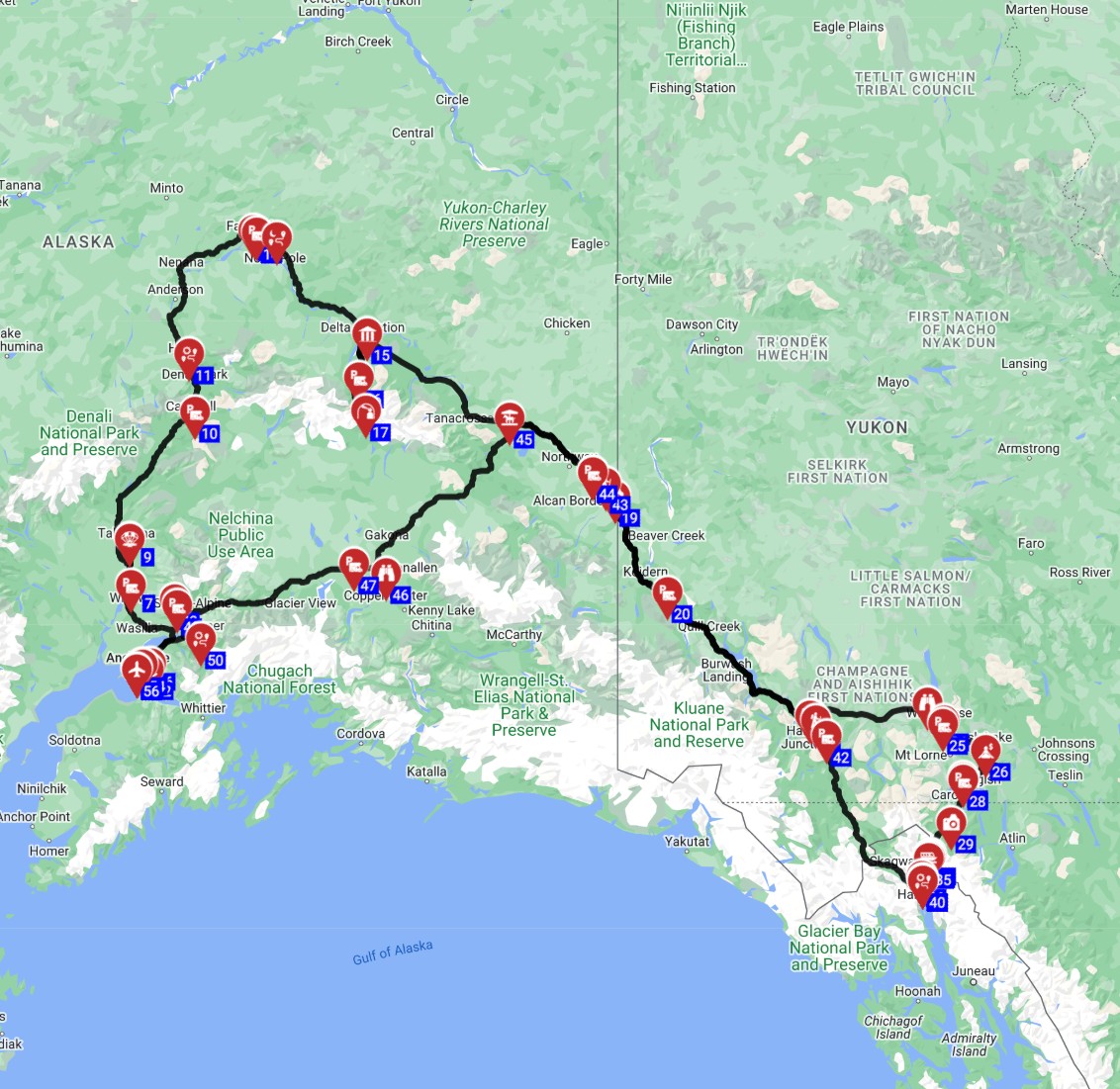
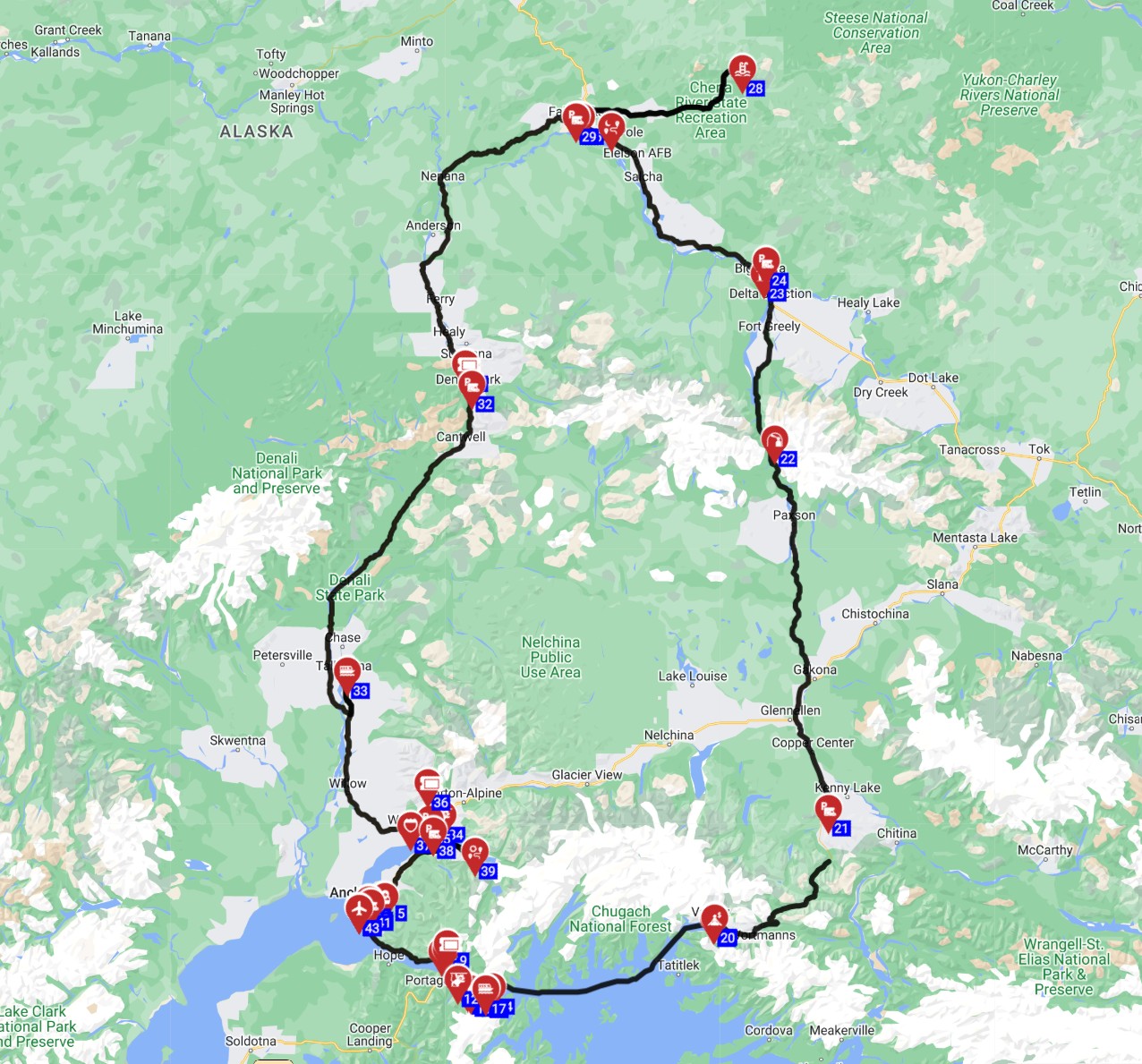
While major arteries like the Parks Highway, which connects Anchorage to Fairbanks and Denali National Park, offer smooth travel with breathtaking vistas, other routes, such as portions of the famous Dalton Highway (Haul Road), are rugged and require careful navigation due to their unpaved nature and remote character. RV travelers should always anticipate significant distances between service stops, particularly in the vast, remote regions, making it essential to plan fuel and supply stops diligently. For instance, when planning your "
Slow, scenic driving is not just recommended for safety, especially given the frequent wildlife crossings, but it's also the best way to truly absorb the stunning, expansive landscapes Alaska has to offer. Always consult local resources and road condition reports before and during your trip, especially if venturing onto less-traveled paths. Driving a rented motorhome like a robust "Adventure Truck" will equip you for these varied conditions.
RV Size Limits, Bridges & Restricted Zones in Alaska
Alaska's primary roadways are generally designed to accommodate a wide range of RV sizes, with few overarching length or height restrictions on major state highways, making it feasible to traverse the state in most rental motorhomes.
However, it is paramount for RV drivers to consistently observe posted height clearances for bridges, tunnels, and underpasses, particularly when venturing onto secondary roads or when entering smaller communities or specific park areas. While general weight limits are less frequently a concern for recreational RVs, it's wise to be mindful of any posted restrictions on smaller, older bridges or unpaved routes which may have lower load capacities. Strict environmental zones are relatively uncommon for general RV travel in Alaska, but specific restrictions may apply within national parks, state parks, or designated wilderness areas, especially concerning vehicle access or parking for pet owners.
One notable consideration for larger vehicles is ferry travel via the Alaska Marine Highway System, where RV length and height directly impact pricing and require advance booking due to limited space. Before embarking on a memorable trip, perhaps using a spacious "29′ Class C Motorhome," always check with your rental supplier and local park authorities for any specific vehicle limitations or pet policies in the areas you plan to visit, ensuring a smooth and compliant journey.
Fuel: Diesel vs. Petrol & Cost per 100 km in Alaska
Both diesel and petrol (gasoline) are widely available across Alaska, although fuel stations can be significantly spread out, especially in the more remote regions, demanding careful trip planning.
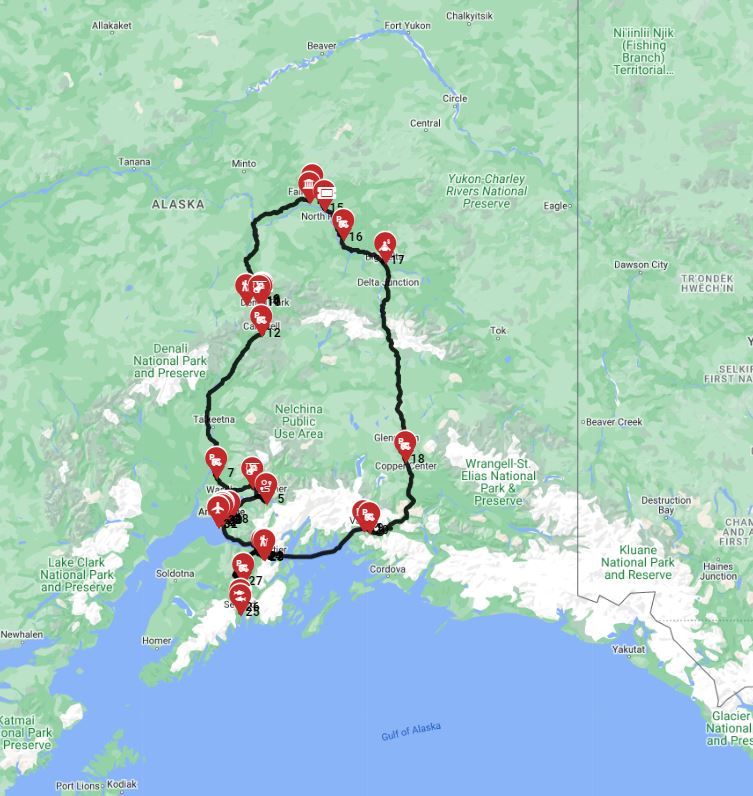
Based on Bandana's global fleet averages, Class SI (Semi-integrated) and Class C motorhomes typically consume around 10-12 Liters/100 km, while more compact Class B Camper Vans, like an "Active Compact Select," average a more fuel-efficient 8-10 Liters/100 km. It's crucial to acknowledge that fuel prices in Alaska are generally higher than in the contiguous United States, with costs escalating even further in isolated communities such as those found on an "
When you're mapping out your journey and considering all ancillary trip costs like fuel, campground fees, propane, and tolls, remember that RV PLANET routes allow you to itemize and track every expense for easy budgeting, ensuring no surprises. This comprehensive approach helps you manage your finances transparently.
Tolls, Vignettes & Border Rules for Alaska RV Travel
Alaska stands out for its lack of major toll roads or requirements for vignettes on its highways, making travel within the state refreshingly straightforward and free of unexpected fees.
However, for any RV traveler planning to drive a rental motorhome to Alaska from the Lower 48 states, crossing the US-Canada border is an unavoidable part of the adventure, necessitating strict adherence to Canadian entry regulations. All occupants must possess valid passports, and it's essential to have your vehicle registration and proof of insurance that explicitly extends coverage into Canada. This ensures full transparency and no surprises at the border. You must declare all goods at customs, including alcohol and tobacco, and be aware that firearms are highly restricted. It is critical to verify the most current Canadian border requirements for both vehicles and travelers well in advance of your trip, as these regulations can change. While not a common necessity for typical routes to Alaska, some RV rental companies may offer pre-purchased toll passes for any Canadian toll roads you might encounter on your way north, further simplifying your journey and embodying our commitment to full transparency.
Driving Tips for RV Rental Travelers in Alaska
Navigating Alaska in a rented RV offers unparalleled freedom, but careful preparation and mindful driving are key to a safe and enjoyable journey, especially with pets on board.
Always stay alert for wildlife; Alaska is teeming with animals like moose, bears, and caribou, so drive defensively and continuously scan the road, especially during dawn and dusk hours, and be prepared to stop quickly to avoid collisions. Due to the vast distances between towns and services, diligently plan your fuel stops, continuously monitor your fuel gauge, and fill up whenever possible. Alaskan weather can shift rapidly and unexpectedly; pack layers for yourself and your pets, and be ready for rain, wind, or cooler temperatures, even in summer. Always equip your motorhome with comprehensive emergency supplies, including a robust first-aid kit, extra water and food, and consider satellite communication devices for remote areas where cell service is unreliable, which is a common challenge throughout much of Alaska.
Pacing your journey is crucial; consider adopting the '3-3-3 rule' (or similar) to avoid driver fatigue, allowing ample time for stops, exploring attractions (like the 3 hiking areas in the "
Recommended RV Class for Alaska Roads
Most RV classes are generally well-suited for Alaska's main roads and highways, but choosing the right one for your adventure, especially if you're traveling with pets, depends on your priorities for comfort, maneuverability, and desired amenities.
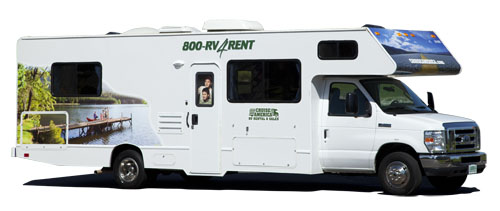
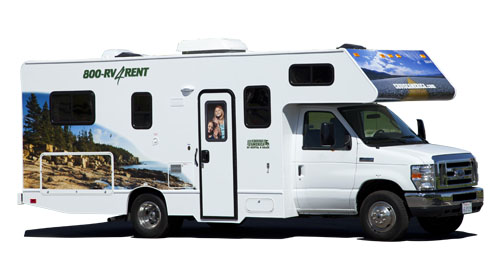
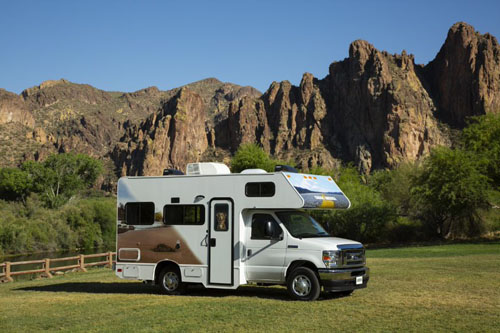
Class B Camper Vans, typically averaging 5.8 meters (19 feet) in length, like the "Active Bunk Auto," offer exceptional agility for navigating tighter spots, prove more fuel-efficient, and are ideal for 2-3 travelers seeking a versatile balance. Class SI (Semi-integrated) motorhomes, averaging 6.9 meters (23 feet) in length, provide more living and storage space, comfortably accommodating 3-4 adults and pets while remaining manageable on highways, and many offer features like a shower and toilet. For families or groups seeking maximum amenities and space for extended week-long trips or two-week adventures, larger Class C Alcove models (averaging 7.5 meters / 25 feet), such as the "24' Class C Motorhome" which is often pet-friendly, and Class A Integrated motorhomes (also around 7.5 meters / 25 feet), provide ample room and comfort.
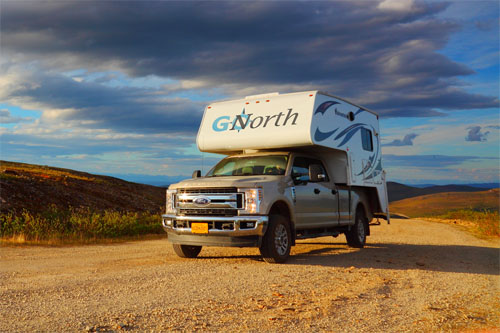
While we don't rent them, Class TC Truck Campers are also available through some suppliers, averaging 5.5 meters (18 feet) and providing excellent ground clearance for adventurers targeting more rugged, unpaved destinations, but they may offer less interior space. Ultimately, Bandana's network includes a wide variety of these vehicles, ensuring you find the perfect rented RV for your Alaskan journey.
Should I Choose a Compact Van Instead of a Large RV in Alaska?
When planning your RV rental in Alaska, the choice between a compact campervan and a larger motorhome ultimately depends on your travel style, group size, and comfort preferences.
While compact campervans (such as a Class B Camper Van like a "Deuce") certainly offer superior maneuverability and are easier to park, making them ideal for navigating very narrow roads or accessing smaller, more secluded campsites, larger motorhomes are generally well-suited for Alaska's primary highway routes and often provide significantly greater comfort for longer journeys. For most Alaskan highway travel, including visits to popular national and state parks, a larger RV (Class SI, Class C, or Class A) offers more generous living space, extensive storage capacity, and enhanced amenities, which can be particularly crucial for comfort during extended trips and in Alaska's highly variable weather conditions.
The decision boils down to balancing maximum agility and fuel efficiency for specific, off-the-beaten-path adventures against enhanced comfort and space for a more relaxed and amenity-rich travel experience, especially if you're bringing pets or a family. Consider what feels right for you; both options provide an incredible way to explore. If you're looking for RV Rental Deals in Alaska - Latest Offers 2026, you might find various sizes available, making it easier to compare.
Can I park my RV anywhere in Alaska?
No, you cannot legally park a rented RV anywhere you wish in Alaska; responsible parking necessitates adherence to a patchwork of local, state, and federal regulations.
Boondocking, often referred to as 'wild camping,' is generally permitted on federal lands, such as National Forests and Bureau of Land Management (BLM) areas, provided no specific restrictions are posted, and strict 'Leave No Trace' principles are followed. However, overnight parking is typically prohibited in Alaska State Parks and National Park areas outside of designated campgrounds, which often require fees and advance reservations, with only 25-30% of spots reservable at many popular sites, leaving the rest for first-come-first-serve. Always seek explicit permission before parking on private property, and be acutely aware of city ordinances that often restrict overnight RV parking on streets or in public lots.
Verifying specific local regulations is essential before parking overnight to avoid fines or other issues. For finding campsites and campgrounds during your trip, we recommend using RV PLANET (rvplan.net) - a great resource for locating available spots along your route.
Can I Drive an RV Into the City Center? Heights, Tunnels & Local Signage in Alaska
Yes, you can generally drive a rented RV into major Alaskan city centers like Anchorage or Fairbanks, but it's crucial to remain vigilant and apply common sense for safety and compliance.
Drive slowly and carefully, and you can drive almost anywhere without issues. No need to stress - just use common sense and pay attention. You'll need to pay close attention to posted height limits for parking garages, drive-throughs, and underpasses, as most motorhomes are too tall for standard urban infrastructure. While tunnels are not prevalent in Alaskan cities, always observe any vehicle restrictions for specific bridges or routes within city limits. Be aware of local signage indicating restricted parking, residents-only parking, or time-limited parking areas, especially when traveling with pets as some areas may have leash laws or pet restrictions.
For convenience, many RV travelers opt to park their rented RV on city outskirts at dedicated RV parks or large shopping center lots and then use public transportation or a smaller towed vehicle for exploring dense urban areas, offering peace of mind and easier navigation. Our 24/7 support means real people are behind you before, during, and after your booking, ready to assist with any pre-trip questions about navigation or vehicle suitability.
Can I drive my RV to Alaska?
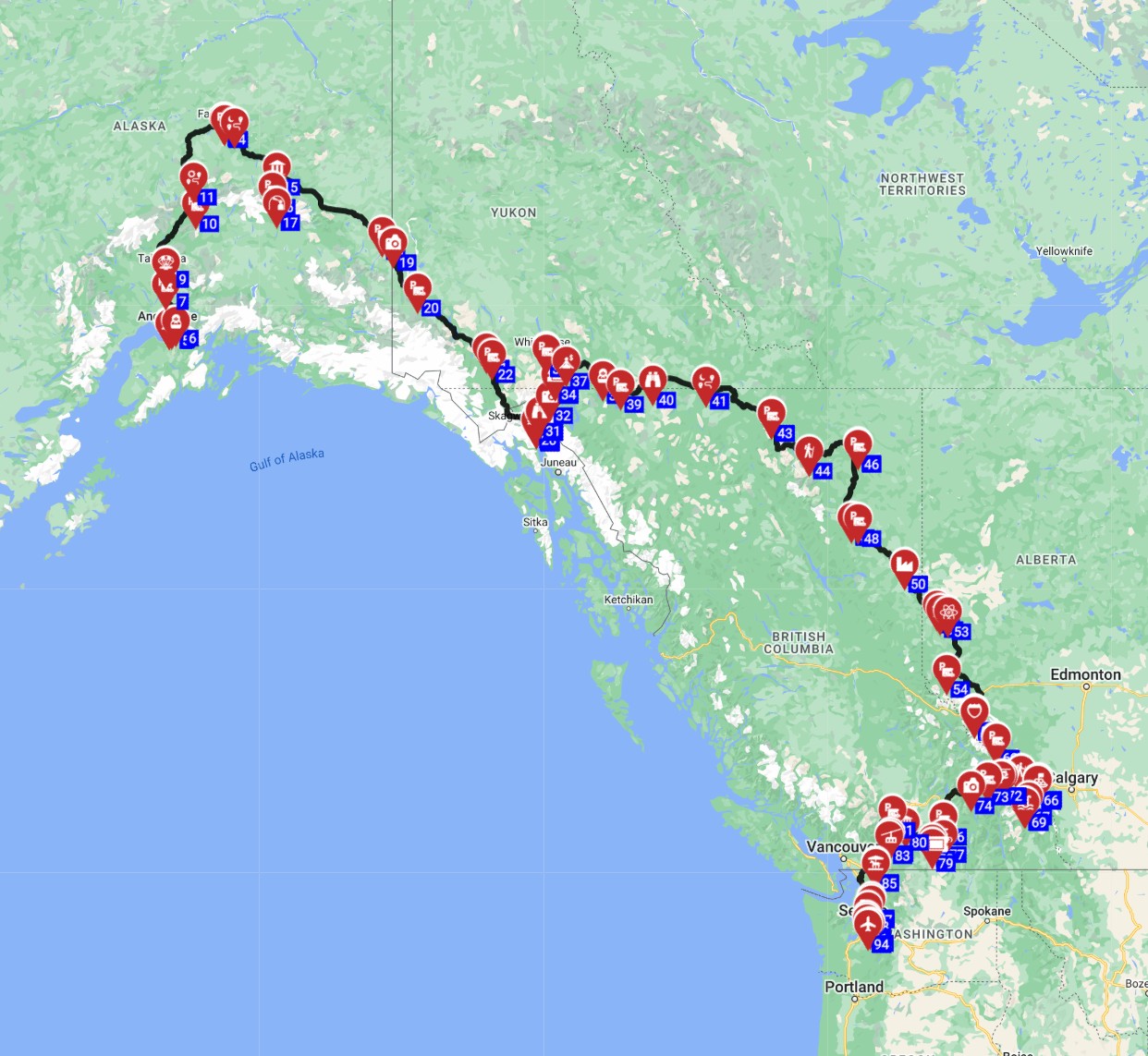
Yes, driving your own or a rented RV to Alaska is a popular and entirely feasible adventure, predominantly involving a scenic drive through Canada, often along the famous Alaska Highway.
Careful planning for international border crossings is essential, requiring valid passports for all occupants and ensuring your RV's registration and insurance policy provide comprehensive coverage in both the United States and Canada. You'll need to prepare your rented RV for the potentially long journey and varied road conditions, which may include extended gravel sections, ensuring it is in excellent mechanical condition before departure. Budget generously for fuel, food, and overnight accommodations along the route, as distances between services can be substantial, and prices can be higher in remote areas. For instance, comparing routes with our One-Way RV Rental in Alaska - Price Guide 2026 can give you an idea of logistical considerations.
Confirm with your insurance provider that your coverage extends to international travel, and consider any additional coverage for remote areas to ensure peace of mind. Remember, the journey itself through Canada is a significant part of the Alaskan adventure, offering incredible scenery and unique stops along the way.
What is the 3-3-3 rule for RV living?
The '3-3-3 rule' is a widely adopted guideline for RV travel, particularly beneficial for newcomers and those traveling with families or pets, designed to promote a relaxed and safer journey.
It typically recommends driving no more than 300 miles (approximately 480 km) in a day, arriving at your destination by 3 PM, and staying a minimum of 3 nights at each location. Adhering to this rule in Alaska allows ample time to enjoy the scenic routes, reduces driver fatigue on long stretches of highway, and minimizes the stress associated with rushing to arrive late at unfamiliar campgrounds, which can be particularly challenging in remote Alaskan settings. This guideline encourages a slower, more deliberate pace, which is ideal for truly experiencing Alaska's expansive wilderness, connecting to the local culture, and allowing plenty of time for outdoor activities with your pets, without feeling rushed. Traveling slowly, with a maximum of 100-150 km per day on average, lets you truly feel the place, connect to the culture, the food, and the scenery, and find the best spots for pet breaks.
Can you sleep in an RV while driving in the USA?
No, it is illegal and exceptionally dangerous for passengers to sleep or occupy the living area of a rented RV while the vehicle is in motion on US roads, including those within Alaska.
All occupants of a moving RV must be properly seated and secured with seatbelts in designated passenger seats, which are typically located in the driver's cabin area. The living area of a motorhome or campervan, while comfortable when parked, is not designed to provide adequate protection during a collision or sudden stop, making it unsafe for occupancy while the vehicle is underway. Ensuring everyone, including children and pets (who should be secured in appropriate carriers or harnesses), is safely buckled in the cabin is a fundamental safety requirement. Only individuals in the cabin with seatbelts engaged are considered safe and legal passengers when the RV is being driven, ensuring everyone's well-being during your Alaskan road trip.
Can you turn left on a red light in Alaska?
In Alaska, similar to most U.S. states, turning left on a red light is generally prohibited, with very specific and limited exceptions designed to ensure road safety.
The primary exception allows a left turn on a red light only when turning from a one-way street onto another one-way street, provided the intersection is clear and there is no sign explicitly prohibiting the turn. Drivers must always come to a complete stop, yield to all cross-traffic and pedestrians, and ensure the intersection is completely clear before proceeding cautiously if such a turn is permitted. When operating a rented RV, particularly a larger one like a "Comfort Family Select" model, extreme caution should be exercised for any non-standard turn maneuvers, always prioritizing safety and strict legal compliance. Most intersections in Alaskan cities do not permit left turns on red, so always wait for a green light unless clearly indicated otherwise.
How do I transfer my license to Alaska?
Transferring a driver's license to Alaska is a procedure exclusively for individuals who are establishing permanent residency in the state, not for temporary RV renters or visitors.
New Alaska residents are required to apply for an Alaska driver's license within 90 days of establishing their permanent residency, involving proof of identity, Alaska residency, Social Security number, and a vision test. For tourists or those on short-term RV rentals, a valid driver's license from their home state or country is perfectly sufficient for legally driving in Alaska, including operating any Class A, B, or C motorhome or campervan. An International Driving Permit (IDP) is recommended for visitors from non-English speaking countries to facilitate communication but is not mandatory for driving itself. Bandana RV works with travelers from over 50 countries, and we're here to help you understand the requirements for your specific situation.
Do I need to register my trailer in Alaska?
If you are renting a motorhome or campervan in Alaska, the rental company is solely responsible for the vehicle's registration; you will not need to concern yourself with registering a rental RV or any attached trailer.
Bandana RV directly partners with over 50 leading RV suppliers worldwide, including trusted names like El Monte and Cruise America, who ensure all their rental fleet vehicles are properly registered and insured. For personal trailers owned by Alaska residents, state registration with the Alaska Division of Motor Vehicles (DMV) is mandatory. Visitors towing their own personal trailer into Alaska from another state or country do not need to re-register it in Alaska for temporary recreational use, as long as it possesses valid registration from their home jurisdiction. This question pertains to vehicle ownership and residency requirements rather than typical RV rental scenarios for tourists, streamlining the process for your week-long trip or extended road trip.
What You Shouldn't Miss
- Drive the Seward Highway: This 204 km (127-mile) scenic byway from Anchorage to Seward is a must-do, offering stunning views of Turnagain Arm, glaciers, and abundant wildlife viewing opportunities. It's often included in popular routes like our "RV Travel Guide to Alaska - Tips and Top Spots 2026."
- Explore Denali National Park & Preserve: Venture deep into Denali, perhaps securing one of the first-come-first-serve RV spots, to witness North America's highest peak and diverse wildlife, including grizzly bears, moose, and caribou.
- Visit the Kenai Fjords National Park: Take a boat tour from Seward to see tidewater glaciers, marine wildlife like whales and puffins, and the dramatic coastal landscapes that define this region.
- Discover Fairbanks and the Arctic Circle: Head north to Fairbanks, where you can experience the midnight sun in summer or chase the Northern Lights in shoulder seasons, and even consider a drive up towards the Arctic Circle.
- Hike at Matanuska Glacier: Get up close and personal with Alaska's largest accessible glacier, offering guided tours suitable for most fitness levels, providing a unique perspective on glacial formations. Remember to check local pet policies if bringing your furry friends along for the hike.
Looking for expert insights from Avi Bandana? Top 5 Adventures - recommendations from Avi Bandana
🎬 Video coming soon
Final Thoughts
Embarking on a pet-friendly RV adventure through Alaska is truly a dream come true for many, offering an unparalleled sense of freedom and connection with nature. From the moment you pick up your comfortable Class C motorhome to the countless miles of breathtaking scenery you'll traverse, every aspect of your journey is an opportunity for discovery. We're here to ensure your planning is seamless and your trip is everything you imagined, supporting you with transparent pricing and expert advice.
Remember to embrace slow travel, allowing yourself and your beloved pets to fully immerse in the raw beauty and unique culture of Alaska. Whether you're chasing the midnight sun or simply enjoying a quiet evening under the vast Alaskan sky, your rented RV provides the perfect mobile basecamp. Get inspired for your next trip and discover all the planning tips you need in one place!
So, pack your bags, leash up your best friend, and get ready to create memories that will last a lifetime in the Great Alaskan Wilderness. Compare Motorhome Prices for Alaska and begin your incredible journey today.