In This Guide
- Top 5 Tips for rv rental RV Rental in Paris
- Before You Book - Class, Dates, Insurance
- Pre-Trip Prep - Packing Checklist for Paris
- On the Road - Driving, Fueling, Navigation
- At the Campground - Setup, Hookups & Etiquette
- rv rental-Specific Tips for Paris
- Common Mistakes to Avoid in Paris
- What are the new rules for motorhomes in France?
- Is France motorhome friendly?
- Do I need speed stickers on my motorhome in France?
- What is the 3-3-3 rule when rving?
- What is the 4 4 4 rule for rving?
- How much does it cost to rent an RV in France?
- What is the rule of 3 with an RV?
Planning a one-way rv rental adventure from or to Paris opens up a world of possibilities, allowing you to explore the City of Lights and beyond at your own pace. With Bandana RV, you're partnering with true RV specialists who understand the nuances of European road trips, ensuring you experience full transparency with no hidden fees. For live availability and current prices, start with our RV Rental Paris - Complete Guide 2026 guide.
Top 5 Tips for rv rental RV Rental in Paris
Navigating an rv rental in Paris requires strategic planning to ensure a smooth and enjoyable trip, especially given the city's unique driving regulations and vibrant atmosphere. First, always obtain a Crit'Air vignette for Paris's Low Emission Zone (ZFE) well in advance, as this sticker is mandatory for urban driving and can result in fines if not displayed correctly. Second, carefully plan your routes to skillfully navigate Parisian traffic, particularly the bustling Périphérique, or consider utilizing park-and-ride options outside the city center to access public transport.
Third, secure your campsites near Paris significantly ahead of time, especially during peak travel seasons like summer or school holidays, to guarantee a spot. Fourth, if your rented RV weighs over 3.5 tonnes, ensure it has the mandatory 'Angles Morts' (blind spot) stickers prominently displayed on the sides and rear, a crucial French regulation. Finally, budget comprehensively for all potential ancillary costs, including tolls (péages), fuel, and any urban parking fees you might encounter; for easy budgeting and expense tracking on your route, explore the RV PLANET routes. On the routes offered through RV PLANET routes, you can itemize and track every expense along the way for easy budgeting.
Before You Book - Class, Dates, Insurance
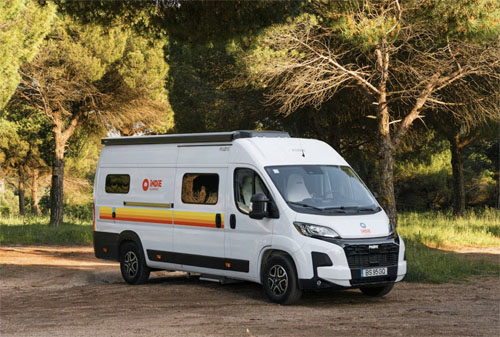
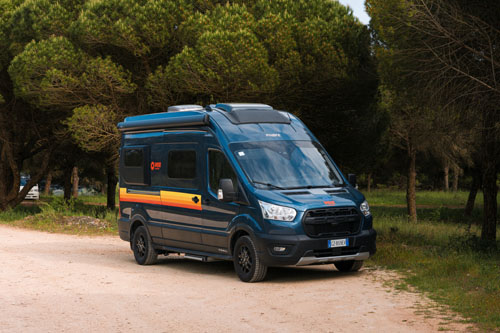
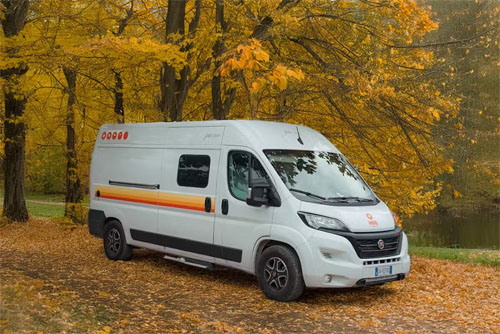
Choosing the right RV class for your Paris trip involves carefully considering your group size, desired amenities, and comfort level with vehicle dimensions, as larger motorhomes can pose navigation challenges in urban areas. For couples or small families of 2+2, a compact campervan like the "hire campervan example Paradise S/T" offers excellent maneuverability and essential comforts, including a shower and toilet, while a spacious "rv rentals example Comfort Class" with its three double beds is ideal for larger groups of 6-7. Locking in your rental dates as early as possible, especially for popular peak seasons such as summer holidays, is key to securing better rates and ensuring availability for your preferred vehicle type.
While basic third-party insurance is universally included with your rental, you can easily view prices that incorporate the most comprehensive coverage by selecting that option during your initial search on our platform; this ensures all relevant insurance options are clearly presented without any surprises. We believe in full transparency, so you'll always know exactly what you're paying for. You can also opt for a top-level deductible reimbursement for extra peace of mind throughout your journey.
Pre-Trip Prep - Packing Checklist for Paris
Preparing for your rv rental in Paris involves gathering essential items to ensure a comfortable, safe, and compliant journey with local regulations. Beyond your personal clothing and toiletries, several specific items are mandatory or highly recommended for RV travel in France. Ensure you have your valid driving license (note: a standard car driver's license is sufficient for all motorhome classes, minimum age 21), and an International Driving Permit (IDP) is advisable for visitors from non-English speaking countries, though not always mandatory.
Here’s a checklist to help you prepare:
- Lightweight, layered clothing for variable Paris weather
- Comfortable walking shoes
- Rain jacket or umbrella
- Reusable shopping bag (for the markets and bakeries!)
- European power adapter (Type E/F) for campground hookups
- GPS with up-to-date European maps, ideally RV-specific
- Basic first-aid kit
- High-visibility vest (mandatory in France, one per person)
- Warning triangle (mandatory in France)
- Valid driving license & International Driving Permit (if required)
- Passport/ID & Visa (if applicable)
- RV rental documents & insurance information
- Crit'Air vignette (if driving into Paris's ZFE, order online well in advance)
- Blind spot stickers (if RV > 3.5T, mandatory)
Remember, many campsites include basic cooking utensils, but for specific meals, you might want to bring your favorites. If you're looking for inspiration on what to cook in your rented mobile home, check out our RV-friendly recipes playlist.
On the Road - Driving, Fueling, Navigation
Navigating France with an rv rental, especially near Paris, demands a keen awareness of local road rules, fueling procedures, and effective navigation strategies. When driving around Paris, remember that you can drive slowly and carefully, and you can drive almost anywhere without issues. No need to stress- just use common sense and pay attention, particularly on busy routes like the Périphérique where vehicles entering often have priority. Motorhomes weighing over 3.5 tonnes typically have slightly lower speed limits (e.g., 90 km/h on motorways, 80 km/h on dual carriageways) compared to standard cars.
For fueling, 'Gazole' (diesel) is the most common type and widely available across France. Planning your fuel stops in advance is wise, especially in rural areas. Consider acquiring a 'Liber-t' tag for convenient automated toll payments ('péages') on French motorways, which can save considerable time. For navigation, an RV-specific GPS system is highly recommended to avoid low bridges, narrow streets, and restricted areas within urban centers like Paris. Utilize park-and-ride facilities located on the outskirts of Paris, such as those near Créteil-Préfecture or Saint-Quentin-en-Yvelines, for hassle-free city excursions using public transport.
🎬 Video coming soon
At the Campground - Setup, Hookups & Etiquette
Setting up your rv rental at a French campground usually involves parking, connecting utilities, and adhering to local etiquette for a peaceful and enjoyable stay. Upon arrival at a campsite, choose your pitch and park your motorhome, ensuring it is level using chocks or leveling blocks if the terrain isn't flat. The immediate task then shifts to connecting your utilities.
First, connect to the shore power supply, typically requiring a European standard adapter (Type E/F) which most rentals include. Next, attach your fresh water hose to the designated tap and your RV's inlet to replenish your tank. Finally, connect your waste hose for grey and black water disposal to the appropriate drainage point; proper disposal is crucial for environmental protection. Regarding etiquette, always observe designated quiet hours, generally between 10 PM and 7 AM, maintain a tidy pitch by managing your trash, responsibly dispose of all waste at the appropriate stations, and always respect the privacy and space of your fellow campers.
rv rental-Specific Tips for Paris
Tailoring your rv rental trip to specific traveler needs, such as accommodating a family, senior travelers, or adhering to a strict budget, significantly enhances the experience when visiting Paris. For families, selecting an RV with ample sleeping and living space is crucial; a Class C motorhome like the "cruise america rv rental example Explorer" with its 4 sleeping places and spacious interior is a great option. Consider campsites outside the immediate urban core that offer family-friendly amenities and easy access to attractions like Disneyland Paris via public transport.
Senior travelers might prefer a more ergonomic RV class with easier access, such as a campervan with automatic transmission, and should prioritize shorter driving days, averaging 100-150 km per day, to enjoy the scenery and culture without rushing. Opt for campsites offering enhanced comfort and facilities, possibly even luxury RV resorts with premium hookups. Budget-conscious travelers can significantly save by utilizing 'Aires de Camping-Car' for affordable or free overnight stays that often provide basic services like water and waste disposal, and by preparing meals in their RV's kitchen to cut down on dining costs. For luxury seekers, explore high-end RV models with premium features, ensuring your rented mobile home provides maximum comfort and convenience for your Parisian sojourn, potentially even with services like pre-stocked kitchens or private tour arrangements.
Common Mistakes to Avoid in Paris
Avoiding common pitfalls can significantly enhance your rv rental experience in Paris, ensuring a smoother and more enjoyable journey. A prevalent mistake is driving into central Paris's Low Emission Zone (ZFE) without the mandatory Crit'Air vignette; instead, ensure you order this sticker online well in advance of your trip, or plan to use park-and-ride facilities located outside the ZFE and rely on public transportation for city access.
Another common error is underestimating the complexity of Parisian traffic, especially on the Périphérique; to avoid stress, plan your routes carefully, consider staying at suburban campsites with easy public transport links, and steer clear of peak travel hours. Many first-timers also fail to budget adequately for all potential expenses such as tolls, specific RV parking fees (which can be expensive and hard to find in Paris), and higher European fuel costs; creating a comprehensive financial plan that includes a 'Liber-t' tag for automated toll payments will save time and hassle. Finally, overlooking specific French vehicle regulations, such as the mandatory blind spot stickers for rented RVs over 3.5 tonnes, can lead to unnecessary fines; ensure your rental motorhome is fully compliant with all required equipment and signage before you hit the road.
What are the new rules for motorhomes in France?
Several key rules have been updated or reinforced for motorhomes in France to improve road safety and address environmental concerns. The Crit'Air Vignette is now mandatory for all vehicles, including rented motorhomes, to enter Low Emission Zones (ZFE) in major cities like Paris; this sticker must be ordered online in advance and displayed on the windshield. Furthermore, 'Angles Morts' (blind spot) stickers are now legally required for motorhomes over 3.5 tonnes, which must be displayed on the sides and rear of the vehicle to alert other road users.
Specific, often lower, speed limits apply to motorhomes over 3.5 tonnes compared to cars; for instance, they are limited to 90 km/h on motorways and 80 km/h on dual carriageways. Regarding camping, wild camping is generally prohibited in protected natural areas, national parks, and often restricted near urban centers, with specific local municipal bylaws varying; travelers should always seek designated RV parks or official campsites, and resources like RV PLANET (rvplan.net) can help locate available spots.
Is France motorhome friendly?
France is generally very motorhome friendly, offering an extensive infrastructure to support RV travel. The country boasts thousands of 'Aires de Camping-Car,' which are dedicated stopover points often providing basic services like fresh water and waste disposal, sometimes for free or at a low cost. Beyond these aires, a wide array of commercial campsites, ranging from basic to luxurious, are available throughout the country, including numerous options conveniently located near major cities like Paris.
The overall road network in France is well-maintained, facilitating easy and comfortable travel between regions. However, navigating dense urban environments such as central Paris can present challenges due to heavy traffic, narrow streets, limited suitable parking, and specific emission zone regulations that require a Crit'Air vignette. While rural France is exceptionally accommodating for rented motorhomes, urban areas require careful planning and often suggest utilizing public transport from a well-located campsite.
Do I need speed stickers on my motorhome in France?
Foreign-registered motorhomes generally do not require specific speed *stickers* in France, but all RVs must strictly adhere to the speed limits appropriate for their weight and the specific road type, which can differ from car limits. Unlike the mandatory blind spot stickers for vehicles over 3.5 tonnes, there are no specific speed *stickers* that foreign rental RVs are legally compelled to display.
Motorhomes under 3.5 tonnes typically follow the same speed limits as passenger cars. However, for motorhomes over 3.5 tonnes, reduced speed limits apply, such as 90 km/h on motorways (Autoroutes) and 80 km/h on dual carriageways (Voies rapides). The critical factor is always to observe the posted speed limit signs, which will indicate the maximum permissible speed for your vehicle's weight class, and to be aware of your rented motorhome's specific weight category.
What is the 3-3-3 rule when rving?
The "3-3-3 rule" in RVing is a popular guideline designed to encourage a more relaxed and immersive travel pace, suggesting that campers drive no more than 300 miles a day, aim to arrive at their destination by 3 PM, and stay at least 3 nights in each location. This rule aims to prevent driver fatigue, allowing ample time for enjoyment of the journey and scenery, rather than rushing through stops. Arriving by 3 PM provides sufficient daylight to set up camp, explore the immediate area, or relax before evening activities begin.
Staying at least 3 nights at each spot encourages deeper exploration of a location, reduces the frequency of packing and unpacking, and fosters a more immersive cultural experience. While a valuable general principle, this rule might require adaptation for rv rental trips in France, especially near Paris, due to potentially shorter distances between points of interest, stricter urban regulations, or varied camping spot availability. European travel often emphasizes quality of experience over covering vast distances rapidly, making the spirit of slow travel essential.
What is the 4 4 4 rule for rving?
The "4-4-4 rule" is an alternative RVing guideline to the 3-3-3 rule, advising travelers to drive no more than 4 hours a day, aim to arrive at their campsite by 4 PM, and stay at least 4 nights in each location. This rule shifts the focus from distance to time spent driving, making it highly adaptable for varying road conditions or for those operating larger, slower rented motorhomes, thus prioritizing a less rushed and more comfortable journey.
Arriving by 4 PM ensures ample daylight for setting up the RV, familiarizing yourself with the campground facilities, and unwinding before dinner. Staying at least 4 nights promotes an even slower, more immersive travel experience, which is ideal for exploring regions in greater depth and reducing the logistical stress of frequent moves. This rule can be particularly beneficial for rv rental travel in France and Europe, where the emphasis is often on cultural immersion and experiencing local areas more thoroughly rather than covering vast distances quickly.
How much does it cost to rent an RV in France?
The cost to rent an RV in France typically ranges from €70 to €250 per day, but this can fluctuate significantly based on the motorhome class, rental duration, season, and optional extras like insurance or equipment. Economy campervans, suitable for 2-3 travelers, might start around €70-€100 per day, while larger or luxury motorhomes, ideal for families or groups of 4-6 like a "Group G" with 7 sleeping places, can range from €150-€250+ per day, with peak summer months often seeing higher prices and minimum rental periods. Additional costs beyond the rental fees include fuel, tolls (péages), campsite fees, and parking fees. You can itemize and track every expense for easy budgeting with RV PLANET routes.
Basic third-party insurance is usually included, but upgrading to comprehensive coverage with a lower deductible will increase the overall rental cost. Fuel prices in France are higher than in some other countries, so budget for diesel ('Gazole') around €1.80-€2.00 per liter. Motorway tolls can accumulate quickly; a 'Liber-t' tag is a convenient solution. Commercial campsites near Paris can range from €25-€50+ per night, depending on amenities and proximity to the city, while 'Aires de Camping-Car' often provide more basic services for €0-€15. Lastly, a mandatory Crit'Air vignette, required for Paris's Low Emission Zones, costs approximately €4.61 including postage.
What is the rule of 3 with an RV?
The "rule of 3 with an RV" refers to the 3-3-3 guideline, which suggests driving no more than 300 miles a day, arriving at your campsite by 3 PM, and staying at least 3 nights to ensure a relaxed and enjoyable rv rental travel experience. This rule is a common strategy for pacing an RV trip effectively, helping travelers avoid exhaustion and allowing ample time for vehicle setup, relaxation, and exploring each destination.
It emphasizes the importance of quality over quantity, encouraging deeper engagement with specific locations rather than merely rushing through a long list of stops. For a one-week or two-week rv rental adventure from Paris, adhering to this rule, or adapting it to the shorter distances and richer cultural experiences often found in France, can transform your trip into a truly memorable slow travel experience.
What You Shouldn't Miss
- **Stroll Along the Seine:** Drive your rented motorhome to a nearby park-and-ride and take public transport into central Paris. Spend a leisurely afternoon walking along the Seine River, admiring iconic landmarks like the Eiffel Tower and Notre Dame Cathedral.
- **Day Trip to Versailles Palace:** Park your campervan at a dedicated RV parking area outside Versailles, like the Parc des Expositions, and explore the opulent palace and its magnificent gardens. This historical site is an easy drive from Paris.
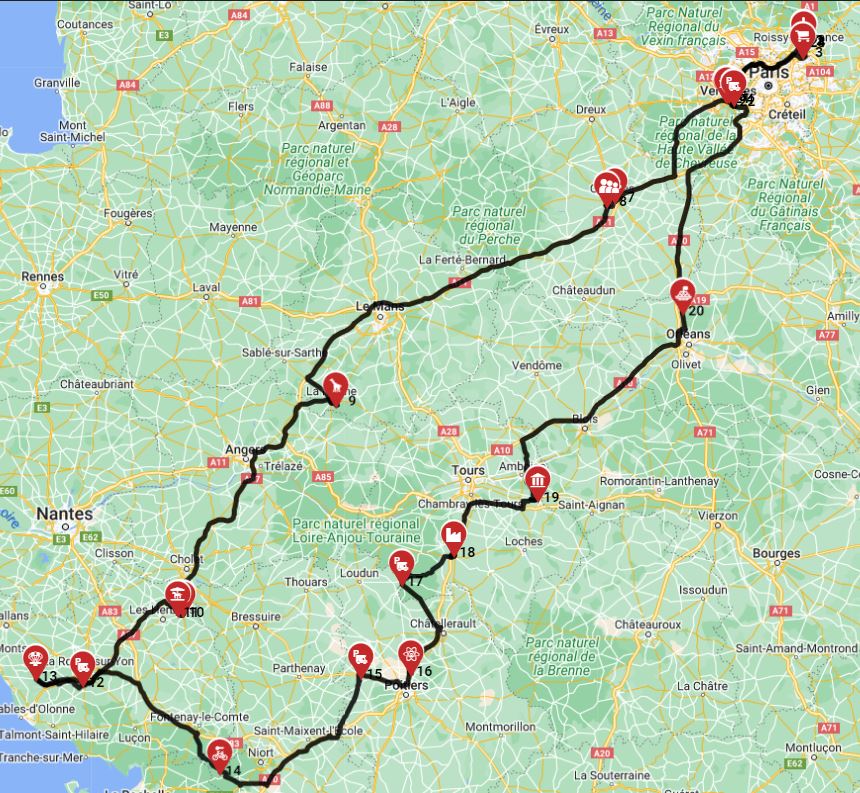
- **Explore the Loire Valley Châteaux:** Embark on a multi-day route plan southwest from Paris with your rented RV to discover the stunning châteaux of the Loire Valley. Our "
" itinerary guides you through 8 days and 1235 km, encompassing 1 amusement park, 1 botanical garden, and numerous heritage sites.
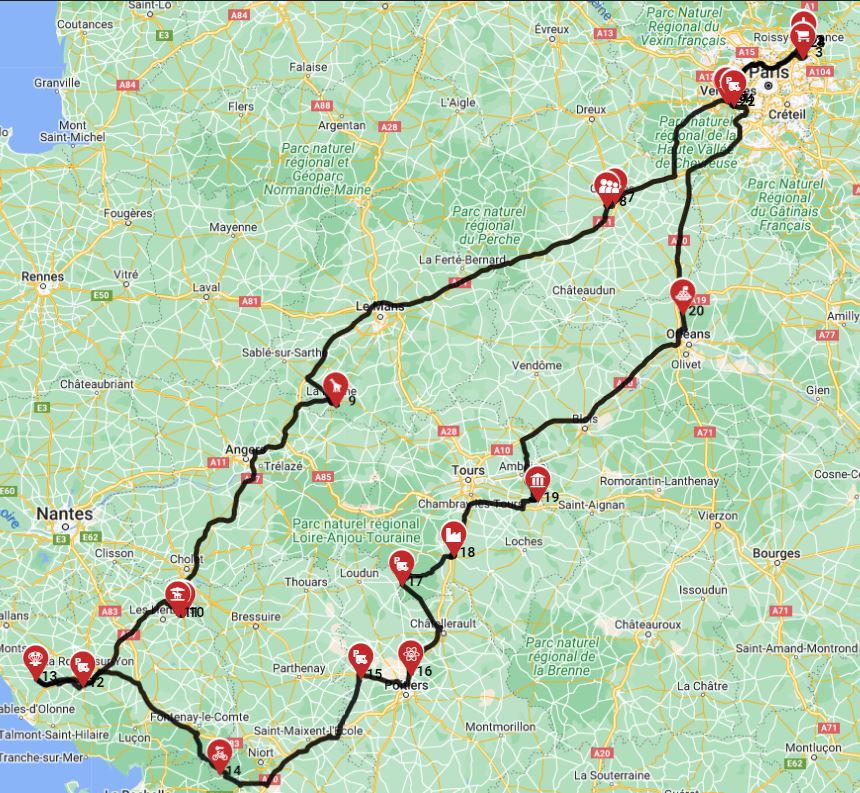 Paris Round trip - Heading Au fil de la Loire
 - **Indulge in Parisian Markets:** Visit a local market such as Marché des Enfants Rouges or a traditional food market to pick up fresh produce, local cheeses, and crusty baguettes for delicious meals in your motorhome.
- **Relax at a Lakeside Campground:** Drive your rv rental east of Paris to explore the Champagne region and find a tranquil lakeside campground, offering a perfect blend of nature and access to local industry, like vineyard tours.
Looking for expert insights from Avi Bandana?
Top 5 Adventures - recommendations from Avi Bandana
Discover Avi's Top 5 AdventuresFinal Thoughts
An rv rental trip to Paris, whether it's a one-way adventure or a round trip, offers an incredible way to experience the magic of France at your own pace. Imagine the freedom of waking up to fresh croissants and coffee in your cozy campervan, ready to explore ancient châteaux or bustling city markets. We handle the details, so you can truly live the journey, supported by our expertise from your first inquiry until your booking is confirmed.
Remember that planning is part of the fun, and with resources like RV PLANET (rvplan.net) and our dedicated support team, you're never alone. So, pack your bags, prepare for charming roads and unforgettable sights, and let Bandana RV help you unlock the ultimate motorhome adventure in and around Paris.
Find Motorhome Rentals in ParisIn This Guide
- Top 5 Tips for rv rental RV Rental in Paris
- Before You Book - Class, Dates, Insurance
- Pre-Trip Prep - Packing Checklist for Paris
- On the Road - Driving, Fueling, Navigation
- At the Campground - Setup, Hookups & Etiquette
- rv rental-Specific Tips for Paris
- Common Mistakes to Avoid in Paris
- What are the new rules for motorhomes in France?
- Is France motorhome friendly?
- Do I need speed stickers on my motorhome in France?
- What is the 3-3-3 rule when rving?
- What is the 4 4 4 rule for rving?
- How much does it cost to rent an RV in France?
- What is the rule of 3 with an RV?
Planning a one-way rv rental adventure from or to Paris opens up a world of possibilities, allowing you to explore the City of Lights and beyond at your own pace. With Bandana RV, you're partnering with true RV specialists who understand the nuances of European road trips, ensuring you experience full transparency with no hidden fees. For live availability and current prices, start with our RV Rental Paris - Complete Guide 2026 guide.
Top 5 Tips for rv rental RV Rental in Paris
Navigating an rv rental in Paris requires strategic planning to ensure a smooth and enjoyable trip, especially given the city's unique driving regulations and vibrant atmosphere. First, always obtain a Crit'Air vignette for Paris's Low Emission Zone (ZFE) well in advance, as this sticker is mandatory for urban driving and can result in fines if not displayed correctly. Second, carefully plan your routes to skillfully navigate Parisian traffic, particularly the bustling Périphérique, or consider utilizing park-and-ride options outside the city center to access public transport.
Third, secure your campsites near Paris significantly ahead of time, especially during peak travel seasons like summer or school holidays, to guarantee a spot. Fourth, if your rented RV weighs over 3.5 tonnes, ensure it has the mandatory 'Angles Morts' (blind spot) stickers prominently displayed on the sides and rear, a crucial French regulation. Finally, budget comprehensively for all potential ancillary costs, including tolls (péages), fuel, and any urban parking fees you might encounter; for easy budgeting and expense tracking on your route, explore the RV PLANET routes.
Before You Book - Class, Dates, Insurance
Choosing the right RV class for your Paris trip involves carefully considering your group size, desired amenities, and comfort level with vehicle dimensions, as larger motorhomes can pose navigation challenges in urban areas. For couples or small families of 2+2, a compact campervan like the "hire campervan example Paradise S/T" offers excellent maneuverability and essential comforts, including a shower and toilet, while a spacious "rv rentals example Comfort Class" with its three double beds is ideal for larger groups of 6-7. Locking in your rental dates as early as possible, especially for popular peak seasons such as summer holidays, is key to securing better rates and ensuring availability for your preferred vehicle type.
While basic third-party insurance is universally included with your rental, you can easily view prices that incorporate the most comprehensive coverage by selecting that option during your initial search on our platform; this ensures all relevant insurance options are clearly presented without any surprises. We believe in full transparency, so you'll always know exactly what you're paying for. You can also opt for a top-level deductible reimbursement for extra peace of mind throughout your journey.
Pre-Trip Prep - Packing Checklist for Paris
Preparing for your rv rental in Paris involves gathering essential items to ensure a comfortable, safe, and compliant journey with local regulations. Beyond your personal clothing and toiletries, several specific items are mandatory or highly recommended for RV travel in France. Ensure you have your valid driving license (note: a standard car driver's license is sufficient for all motorhome classes, minimum age 21), and an International Driving Permit (IDP) is advisable for visitors from non-English speaking countries, though not always mandatory.
Here’s a checklist to help you prepare:
- Lightweight, layered clothing for variable Paris weather
- Comfortable walking shoes
- Rain jacket or umbrella
- Reusable shopping bag (for the markets and bakeries!)
- European power adapter (Type E/F) for campground hookups
- GPS with up-to-date European maps, ideally RV-specific
- Basic first-aid kit
- High-visibility vest (mandatory in France, one per person)
- Warning triangle (mandatory in France)
- Valid driving license & International Driving Permit (if required)
- Passport/ID & Visa (if applicable)
- RV rental documents & insurance information
- Crit'Air vignette (if driving into Paris's ZFE, order online well in advance)
- Blind spot stickers (if RV > 3.5T, mandatory)
Remember, many campsites include basic cooking utensils, but for specific meals, you might want to bring your favorites. If you're looking for inspiration on what to cook in your rented mobile home, check out our RV-friendly recipes playlist.
On the Road - Driving, Fueling, Navigation
Navigating France with an rv rental, especially near Paris, demands a keen awareness of local road rules, fueling procedures, and effective navigation strategies. When driving around Paris, remember that you can drive slowly and carefully, and you can drive almost anywhere without issues. No need to stress- just use common sense and pay attention, particularly on busy routes like the Périphérique where vehicles entering often have priority. Motorhomes weighing over 3.5 tonnes typically have slightly lower speed limits (e.g., 90 km/h on motorways, 80 km/h on dual carriageways) compared to standard cars.
For fueling, 'Gazole' (diesel) is the most common type and widely available across France. Planning your fuel stops in advance is wise, especially in rural areas. Consider acquiring a 'Liber-t' tag for convenient automated toll payments ('péages') on French motorways, which can save considerable time. For navigation, an RV-specific GPS system is highly recommended to avoid low bridges, narrow streets, and restricted areas within urban centers like Paris. Utilize park-and-ride facilities located on the outskirts of Paris, such as those near Créteil-Préfecture or Saint-Quentin-en-Yvelines, for hassle-free city excursions using public transport.
🎬 Video coming soon
At the Campground - Setup, Hookups & Etiquette
Setting up your rv rental at a French campground usually involves parking, connecting utilities, and adhering to local etiquette for a peaceful and enjoyable stay. Upon arrival at a campsite, choose your pitch and park your motorhome, ensuring it is level using chocks or leveling blocks if the terrain isn't flat. The immediate task then shifts to connecting your utilities.
First, connect to the shore power supply, typically requiring a European standard adapter (Type E/F) which most rentals include. Next, attach your fresh water hose to the designated tap and your RV's inlet to replenish your tank. Finally, connect your waste hose for grey and black water disposal to the appropriate drainage point; proper disposal is crucial for environmental protection. Regarding etiquette, always observe designated quiet hours, generally between 10 PM and 7 AM, maintain a tidy pitch by managing your trash, responsibly dispose of all waste at the appropriate stations, and always respect the privacy and space of your fellow campers.
rv rental-Specific Tips for Paris
Tailoring your rv rental trip to specific traveler needs, such as accommodating a family, senior travelers, or adhering to a strict budget, significantly enhances the experience when visiting Paris. For families, selecting an RV with ample sleeping and living space is crucial; a Class C motorhome like the "cruise america rv rental example Explorer" with its 4 sleeping places and spacious interior is a great option. Consider campsites outside the immediate urban core that offer family-friendly amenities and easy access to attractions like Disneyland Paris via public transport.
Senior travelers might prefer a more ergonomic RV class with easier access, such as a campervan with automatic transmission, and should prioritize shorter driving days, averaging 100-150 km per day, to enjoy the scenery and culture without rushing. Opt for campsites offering enhanced comfort and facilities, possibly even luxury RV resorts with premium hookups. Budget-conscious travelers can significantly save by utilizing 'Aires de Camping-Car' for affordable or free overnight stays that often provide basic services like water and waste disposal, and by preparing meals in your RV's kitchen to cut down on dining costs. For luxury seekers, explore high-end RV models with premium features, ensuring your rented mobile home provides maximum comfort and convenience for your Parisian sojourn, potentially even with services like pre-stocked kitchens or private tour arrangements.
Common Mistakes to Avoid in Paris
Avoiding common pitfalls can significantly enhance your rv rental experience in Paris, ensuring a smoother and more enjoyable journey. A prevalent mistake is driving into central Paris's Low Emission Zone (ZFE) without the mandatory Crit'Air vignette; instead, ensure you order this sticker online well in advance of your trip, or plan to use park-and-ride facilities located outside the ZFE and rely on public transportation for city access.
Another common error is underestimating the complexity of Parisian traffic, especially on the Périphérique; to avoid stress, plan your routes carefully, consider staying at suburban campsites with easy public transport links, and steer clear of peak travel hours. Many first-timers also fail to budget adequately for all potential expenses such as tolls, specific RV parking fees (which can be expensive and hard to find in Paris), and higher European fuel costs; creating a comprehensive financial plan that includes a 'Liber-t' tag for automated toll payments will save time and hassle. Finally, overlooking specific French vehicle regulations, such as the mandatory blind spot stickers for rented RVs over 3.5 tonnes, can lead to unnecessary fines; ensure your rental motorhome is fully compliant with all required equipment and signage before you hit the road.
What are the new rules for motorhomes in France?
Several key rules have been updated or reinforced for motorhomes in France to improve road safety and address environmental concerns. The Crit'Air Vignette is now mandatory for all vehicles, including rented motorhomes, to enter Low Emission Zones (ZFE) in major cities like Paris; this sticker must be ordered online in advance and displayed on the windshield. Furthermore, 'Angles Morts' (blind spot) stickers are now legally required for motorhomes over 3.5 tonnes, which must be displayed on the sides and rear of the vehicle to alert other road users.
Specific, often lower, speed limits apply to motorhomes over 3.5 tonnes compared to cars; for instance, they are limited to 90 km/h on motorways and 80 km/h on dual carriageways. Regarding camping, wild camping is generally prohibited in protected natural areas, national parks, and often restricted near urban centers, with specific local municipal bylaws varying; travelers should always seek designated RV parks or official campsites, and resources like RV PLANET (rvplan.net) can help locate available spots.
Is France motorhome friendly?
France is generally very motorhome friendly, offering an extensive infrastructure to support RV travel. The country boasts thousands of 'Aires de Camping-Car,' which are dedicated stopover points often providing basic services like fresh water and waste disposal, sometimes for free or at a low cost. Beyond these aires, a wide array of commercial campsites, ranging from basic to luxurious, are available throughout the country, including numerous options conveniently located near major cities like Paris.
The overall road network in France is well-maintained, facilitating easy and comfortable travel between regions. However, navigating dense urban environments such as central Paris can present challenges due to heavy traffic, narrow streets, limited suitable parking, and specific emission zone regulations that require a Crit'Air vignette. While rural France is exceptionally accommodating for rented motorhomes, urban areas require careful planning and often suggest utilizing public transport from a well-located campsite.
Do I need speed stickers on my motorhome in France?
Foreign-registered motorhomes generally do not require specific speed *stickers* in France, but all RVs must strictly adhere to the speed limits appropriate for their weight and the specific road type, which can differ from car limits. Unlike the mandatory blind spot stickers for vehicles over 3.5 tonnes, there are no specific speed *stickers* that foreign rental RVs are legally compelled to display.
Motorhomes under 3.5 tonnes typically follow the same speed limits as passenger cars. However, for motorhomes over 3.5 tonnes, reduced speed limits apply, such as 90 km/h on motorways (Autoroutes) and 80 km/h on dual carriageways (Voies rapides). The critical factor is always to observe the posted speed limit signs, which will indicate the maximum permissible speed for your vehicle's weight class, and to be aware of your rented motorhome's specific weight category.
What is the 3-3-3 rule when rving?
The "3-3-3 rule" in RVing is a popular guideline designed to encourage a more relaxed and immersive travel pace, suggesting that campers drive no more than 300 miles a day, aim to arrive at their destination by 3 PM, and stay at least 3 nights in each location. This rule aims to prevent driver fatigue, allowing ample time for enjoyment of the journey and scenery, rather than rushing through stops. Arriving by 3 PM provides sufficient daylight to set up camp, explore the immediate area, or relax before evening activities begin.
Staying at least 3 nights at each spot encourages deeper exploration of a location, reduces the frequency of packing and unpacking, and fosters a more immersive cultural experience. While a valuable general principle, this rule might require adaptation for rv rental trips in France, especially near Paris, due to potentially shorter distances between points of interest, stricter urban regulations, or varied camping spot availability. European travel often emphasizes quality of experience over covering vast distances rapidly, making the spirit of slow travel essential.
What is the 4 4 4 rule for rving?
The "4-4-4 rule" is an alternative RVing guideline to the 3-3-3 rule, advising travelers to drive no more than 4 hours a day, aim to arrive at their campsite by 4 PM, and stay at least 4 nights in each location. This rule shifts the focus from distance to time spent driving, making it highly adaptable for varying road conditions or for those operating larger, slower rented motorhomes, thus prioritizing a less rushed and more comfortable journey.
Arriving by 4 PM ensures ample daylight for setting up the RV, familiarizing yourself with the campground facilities, and unwinding before dinner. Staying at least 4 nights promotes an even slower, more immersive travel experience, which is ideal for exploring regions in greater depth and reducing the logistical stress of frequent moves. This rule can be particularly beneficial for rv rental travel in France and Europe, where the emphasis is often on cultural immersion and experiencing local areas more thoroughly rather than covering vast distances rapidly.
How much does it cost to rent an RV in France?
The cost to rent an RV in France typically ranges from €70 to €250 per day, but this can fluctuate significantly based on the motorhome class, rental duration, season, and optional extras like insurance or equipment. Economy campervans, suitable for 2-3 travelers, might start around €70-€100 per day, while larger or luxury motorhomes, ideal for families or groups of 4-6 like a "Group G" with 7 sleeping places, can range from €150-€250+ per day, with peak summer months often seeing higher prices and minimum rental periods. Additional costs beyond the rental fees include fuel, tolls (péages), campsite fees, and parking fees. You can itemize and track every expense for easy budgeting with RV PLANET routes.
Basic third-party insurance is usually included, but upgrading to comprehensive coverage with a lower deductible will increase the overall rental cost. Fuel prices in France are higher than in some other countries, so budget for diesel ('Gazole') around €1.80-€2.00 per liter. Motorway tolls can accumulate quickly; a 'Liber-t' tag is a convenient solution. Commercial campsites near Paris can range from €25-€50+ per night, depending on amenities and proximity to the city, while 'Aires de Camping-Car' often provide more basic services for €0-€15. Lastly, a mandatory Crit'Air vignette, required for Paris's Low Emission Zones, costs approximately €4.61 including postage.
What is the rule of 3 with an RV?
The "rule of 3 with an RV" refers to the 3-3-3 guideline, which suggests driving no more than 300 miles a day, arriving at your campsite by 3 PM, and staying at least 3 nights to ensure a relaxed and enjoyable rv rental travel experience. This rule is a common strategy for pacing an RV trip effectively, helping travelers avoid exhaustion and allowing ample time for vehicle setup, relaxation, and exploring each destination.
It emphasizes the importance of quality over quantity, encouraging deeper engagement with specific locations rather than merely rushing through a long list of stops. For a one-week or two-week rv rental adventure from Paris, adhering to this rule, or adapting it to the shorter distances and richer cultural experiences often found in France, can transform your trip into a truly memorable slow travel experience.
What You Shouldn't Miss
- **Stroll Along the Seine:** Drive your rented motorhome to a nearby park-and-ride and take public transport into central Paris. Spend a leisurely afternoon walking along the Seine River, admiring iconic landmarks like the Eiffel Tower and Notre Dame Cathedral.
- **Day Trip to Versailles Palace:** Park your campervan at a dedicated RV parking area outside Versailles, like the Parc des Expositions, and explore the opulent palace and its magnificent gardens. This historical site is an easy drive from Paris.
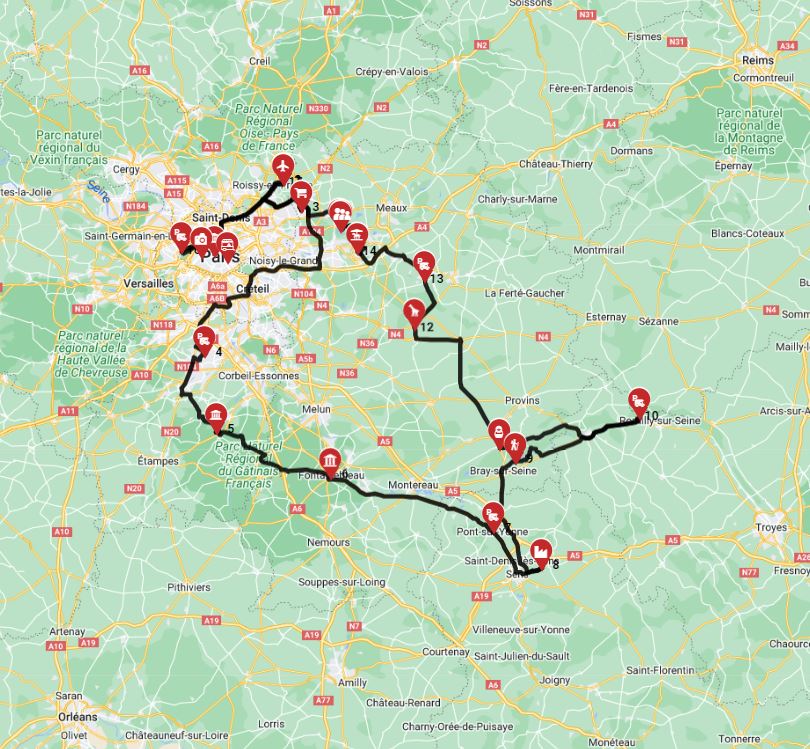
- **Explore the Loire Valley Châteaux:** Embark on a multi-day route plan southwest from Paris with your rented RV to discover the stunning châteaux of the Loire Valley. Our "Paris Round trip - Heading Au fil de la Loire" itinerary guides you through 8 days and 1235 km, encompassing 1 amusement park, 1 botanical garden, and numerous heritage sites.
- **Indulge in Parisian Markets:** Visit a local market such as Marché des Enfants Rouges or a traditional food market to pick up fresh produce, local cheeses, and crusty baguettes for delicious meals in your motorhome.
- **Relax at a Lakeside Campground:** Drive your rv rental east of Paris to explore the Champagne region and find a tranquil lakeside campground, offering a perfect blend of nature and access to local industry, like vineyard tours.
Looking for expert insights from Avi Bandana?
Top 5 Adventures - recommendations from Avi Bandana
Discover Avi's Top 5 AdventuresFinal Thoughts
An rv rental trip to Paris, whether it's a one-way adventure or a round trip, offers an incredible way to experience the magic of France at your own pace. Imagine the freedom of waking up to fresh croissants and coffee in your cozy campervan, ready to explore ancient châteaux or bustling city markets. We handle the details, so you can truly live the journey, supported by our expertise from your first inquiry until your booking is confirmed.
Remember that planning is part of the fun, and with resources like RV PLANET (rvplan.net) and our dedicated support team, you're never alone. So, pack your bags, prepare for charming roads and unforgettable sights, and let Bandana RV help you unlock the ultimate motorhome adventure in and around Paris.
Find Motorhome Rentals in Paris