In This Guide
- The 5 RV Families Compared for Japan
- Class A (Integrated) — Best For
- Price Comparison by RV Class in Japan
- Class SI (Semi-Integrated) — Best For
- Class C (Alcove) — Best For
- Class B (Campervan) — Best For
- Class TC (Truck Camper) — Best For
- Side-by-Side Comparison Table
- Our Recommendation for one way rv rental Travelers in Japan
- How much does it cost to rent an RV in Japan
- What is the best month to RV in Japan
- Is it easy to drive an RV in Japan
- Can you camp anywhere in Japan RV
- Do I need an international driver's license to drive an RV in Japan
- Can I sleep in my RV in Japan
- Where can I park an RV in Japan
- Is an RV worth it in Japan
- Can I use my credit card in Japan for RV rentals
- Is it difficult to find RV parks in Japan
- Do RVs have bathrooms in Japan
- What are the common rules for RV camping in Japan
- What are the best roads for RV travel in Japan
- Can you rent an RV for one way in Japan
The 5 RV Families Compared for Japan
Choosing the right RV family for your Japanese adventure is crucial, as it significantly impacts your experience on the often narrow roads and within urban parking constraints. Bandana Caravan's diverse fleet offers various classes, each with unique advantages tailored for exploring Japan. The size, insulation, and onboard facilities are key considerations, especially when planning for the varying climate across the country and the duration of your trip. Most importantly, the number of people traveling will dictate the necessary sleeping capacity and living space, ensuring comfort throughout your one-way journey.
For instance, Bandana's fleet typically features Class A integrated motorhomes averaging 7.5 meters in length, designed to sleep around 4.4 people, and consuming approximately 11-12 liters per 100 km. These are ideal for larger groups prioritizing luxury and extensive amenities for longer trips. However, their size can pose maneuverability challenges on Japan's narrower roads and in urban centers. On the other end of the spectrum, Class B campervans, averaging 5.8 meters and sleeping about 3.2 people, are highly maneuverable and fuel-efficient, perfect for navigating Japan's cities and scenic routes, though they offer less living space.
When comparing options, think about your group size, the level of comfort you desire, and the types of roads you anticipate traveling. For those seeking a balance, Class SI semi-integrated motorhomes (around 6.9 meters, sleeping 3.8 people) offer a good compromise between space and drivability. Class C alcove models (approximately 7.5 meters, sleeping 5.8 people) are excellent for maximizing sleeping capacity with their over-cab beds, ideal for families. Finally, Class TC truck campers (about 5.5 meters, sleeping 2.4 people) are versatile for adventurous travelers looking for off-grid capabilities and access to varied terrain, though they typically provide minimal interior space.
Class A (Integrated) — Best For
Bandana's fleet typically features Class A integrated motorhomes, averaging 7.5 meters in length, designed to sleep approximately 4.4 people, and consuming around 11-12 liters per 100 km. These spacious RVs are ideal for larger groups or families who prioritize luxury, extensive amenities, and a home-like feel for longer one-way trips across Japan. Their expansive living areas and comprehensive facilities ensure a comfortable journey, allowing travelers to truly immerse themselves in the experience.
A primary consideration when opting for a Class A integrated motorhome is the maneuverability. While offering unparalleled comfort, their considerable size can present challenges on Japan's famously narrower roads and in bustling urban centers. Navigating tight streets or finding suitable parking for a vehicle of this magnitude requires extra attention and planning. Despite these considerations, for those prioritizing space and comfort above all else, a Class A motorhome offers a truly luxurious way to explore the diverse landscapes of Japan.
Price Comparison by RV Class in Japan
Pricing for RV rentals in Japan varies significantly by RV class, rental duration, season, and the specific one-way routing chosen by the traveler. Since pricing operates on a flex-rate system, much like airline tickets, the table below pulls real example prices directly from Bandana's live search engine. This provides an estimate for various rental durations, helping you budget effectively for your Japanese road trip. It's important to remember that these prices are dynamic and update daily; therefore, always utilize Bandana's search tool at the top of the page for the most current, live figures tailored to your specific travel dates and preferences.
Live April Price Comparison — RV Class × Trip Length
| Trip length | Class A | Class B | Class C | Class SI | Class TC |
|---|---|---|---|---|---|
| 1 week 15/04 → 22/04 | 1,339.20 € EUR | 721.80 € EUR | 1,103.80 € EUR | 960.00 € EUR | Check prices |
| 2 weeks 15/04 → 29/04 | 2,498.40 € EUR | 1,333.60 € EUR | 2,037.60 € EUR | 1,765.00 € EUR | Check prices |
| 1 month 01/04 → 30/04 | 4,872.00 € EUR | 2,630.80 € EUR | 3,955.80 € EUR | 3,448.60 € EUR | Check prices |
Estimates only — flex-rate prices change daily based on availability and season.
Utilizing the comparison tool on Bandana Caravan allows you to see the final, all-inclusive prices upfront, eliminating any hidden fees or unexpected charges at pickup. This transparency is key to stress-free planning. By comparing options across different RV classes and suppliers, you can secure the best value for your chosen travel style, whether you're a solo adventurer, a couple, or a family exploring Japan's wonders.
Class SI (Semi-Integrated) — Best For
Bandana's fleet often includes Class SI semi-integrated motorhomes, which average 6.9 meters in length and are designed to sleep approximately 3.8 people, consuming around 10-11 liters per 100 km. These RVs are a popular choice for couples or small families embarking on one-way trips across Japan, offering a balanced blend of comfort, amenities, and improved maneuverability compared to larger classes.
They generally provide more internal living space and enhanced facilities than compact campervans, making them suitable for travelers who appreciate a bit more room to relax. While still requiring careful navigation on narrower roads, they are generally easier to handle than the larger Class A or C models. This makes them a versatile option for exploring both Japan's charming small towns and its more expansive scenic routes, providing a comfortable and convenient base for your adventures.
Class C (Alcove) — Best For
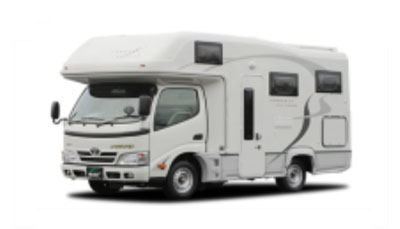
Bandana's fleet typically includes Class C alcove motorhomes, which average 7.5 meters in length and are designed to sleep approximately 5.8 people, consuming between 10-12 liters per 100 km. Their distinctive over-cab sleeping area, or 'alcove', makes them an excellent choice for families or groups seeking maximum sleeping capacity and the advantage of separate living and sleeping spaces for a one-way Japan adventure.
These motorhomes offer ample room, ensuring everyone has their own space to unwind. However, their considerable height and length can be a factor to consider, particularly on narrower Japanese roads, in urban areas with potential height restrictions, and when navigating smaller parking lots. Careful route planning and a mindful approach to driving are recommended to ensure a smooth and enjoyable journey when choosing a Class C motorhome for your travels in Japan.
Class B (Campervan) — Best For
Bandana's fleet typically features Class B campervans, which average 5.8 meters in length and are designed to sleep approximately 3.2 people, consuming a very efficient 8-10 liters per 100 km. These compact RVs are highly maneuverable, exceptionally fuel-efficient, and perfectly suited for solo travelers, couples, or small groups who plan to navigate Japan's vibrant urban centers and explore its scenic routes on a one-way trip.
Their compact footprint offers excellent flexibility for parking, even in tight city spaces, and allows for easy access to smaller towns and local attractions that might be inaccessible to larger motorhomes. While they provide less internal living space and fewer amenities compared to larger classes, their agility and ease of driving make them a top choice for experiencing the freedom of the open road in Japan with confidence.
Class TC (Truck Camper) — Best For
Bandana's fleet often includes Class TC truck campers, which average 5.5 meters in length and are designed to sleep approximately 2.4 people, with fuel consumption ranging from 12-17 liters per 100 km. These versatile units, often consisting of a camper shell mounted on a pickup truck base, are excellent for adventurous one-way travelers seeking off-grid capabilities and access to Japan's less-traveled, rugged areas.
Their compact footprint and often higher ground clearance can be advantageous when navigating varied Japanese terrain, from mountain passes to coastal trails. While they typically offer minimal internal space and amenities, prioritizing mobility and access over luxury, they are a great option for those who want to explore remote destinations and embrace a more rugged, independent travel style. Their unique design allows for easy detachment in some models, offering even more flexibility.
Side-by-Side Comparison Table
A direct comparison of RV classes highlights key differences in size, sleeping capacity, fuel efficiency, and overall suitability for various travel styles when exploring Japan. By considering your group size, desired comfort level, and the intended travel routes, particularly for a one-way journey that might cover diverse regions, you can identify the most suitable vehicle. This table offers a quick overview to aid in selecting the perfect RV for your specific needs and priorities, ensuring your Japanese road trip is both memorable and comfortable.
| Family | Avg Length (m) | Sleeps | Fuel Use (L/100km) | Best Use Case in Japan |
|---|---|---|---|---|
| Class A (Integrated) | 7.5 | 4.4 | 11-12 | Luxury, large groups, long one-way trips, spacious travel |
| Class SI (Semi-integrated) | 6.9 | 3.8 | 10-11 | Balanced comfort & maneuverability, couples/small families, varied routes |
| Class C (Alcove) | 7.5 | 5.8 | 10-12 | Families, groups needing max sleeping, cost-efficiency, dedicated living space |
| Class B (Campervan) | 5.8 | 3.2 | 8-10 | Solo/couples, urban navigation, fuel efficiency, flexibility, accessing small towns |
| Class TC (Truck Camper) | 5.5 | 2.4 | 12-17 | Adventure, off-grid travel, varied terrain, compact exploration |
Our Recommendation for one way rv rental Travelers in Japan
For most one-way RV travelers in Japan, a Class B Campervan is the primary recommendation. This suggestion stems from its unparalleled maneuverability on often-narrow roads, excellent fuel efficiency, and the ease with which it can be parked in both urban and rural settings, aligning perfectly with the practicalities of Japanese travel.
A close runner-up is the Class SI Semi-integrated RV. This type offers a comfortable balance of interior space and drivability, making it an excellent choice for couples or small families who desire more amenities without the bulk of larger motorhomes. These recommendations prioritize practical navigation and budget considerations unique to Japanese road conditions and travel styles, while still ensuring a comprehensive and enjoyable exploration of the country.
How much does it cost to rent an RV in Japan
The cost of renting a one-way RV in Japan can vary significantly based on the RV class selected, the duration of the rental, the season of travel, and the specific pick-up and drop-off locations. Generally, daily rates for mid-range models can be expected to fall between ¥15,000 and ¥30,000 (approximately $100-$200 USD). This base rate is just the starting point for your budgeting. On the routes offered through RV PLANET routes, you can itemize and track every expense along the way for easy budgeting.
Beyond the rental fee, travelers should allocate additional funds for essential expenses such as fuel. Bandana's fleet typically sees common models consuming 8-12 liters per 100 km. Toll road fees can also accumulate substantially, especially if you plan extensive travel without an ETC (Electronic Toll Collection) card. Campground fees typically range from ¥2,000 to ¥5,000 per night ($14-$35 USD). A comprehensive budget should also account for potential one-way drop-off fees, cleaning charges, and any additional equipment rentals you might need, making thorough planning crucial for various travel styles, from budget-conscious trips to more luxurious extended explorations.
What is the best month to RV in Japan
The most pleasant months to RV in Japan are typically spring, from April to May, when cherry blossoms are in bloom, and autumn, from October to November, known for its vibrant fall foliage. These periods offer ideal weather conditions for travel and showcase some of Japan's most iconic scenic routes in their full glory.
However, these peak seasons also mean that popular spots can become quite crowded, and booking your RV rental and campsites well in advance is highly recommended. During these times, specific travel expenses might also be higher due to increased demand. Travelers might consider late spring or early summer (June-July) for visiting Hokkaido, which offers a less crowded experience with its stunning lavender fields. It's advisable to avoid the rainy season (June-July) and typhoon season (August-September) if optimal driving conditions and outdoor activities are a priority.
Is it easy to drive an RV in Japan
Driving an RV in Japan can be a straightforward experience with proper preparation, though it does present some unique challenges that require awareness. These include navigating narrower roads than you might be accustomed to, adapting to right-hand drive, and understanding the country's intricate toll road system.
To make your journey smoother, it's essential to familiarize yourself with road signs, which often include English translations on major routes. Utilizing an ETC card for toll roads is highly recommended for streamlined passage and potential cost savings. Be mindful of the compact nature of many urban areas and rural roads, where larger RVs might present challenges with width and turning radius. Access to reliable connectivity, such as a local SIM card or pocket WiFi, is crucial for GPS navigation, as many Japanese GPS systems are primarily in Japanese. Apps like Google Maps are indispensable for real-time guidance and traffic updates, helping you overcome potential language barriers and navigate efficiently.
Can you camp anywhere in Japan RV
No, free camping anywhere is generally not permitted in Japan. Most RV travelers utilize designated campgrounds, 'michi-no-eki' (roadside stations), or specific RV parks for their overnight stays. These locations offer a safe and legal way to rest and recharge.
'Michi-no-eki' are particularly useful, providing free parking and basic amenities like restrooms and local produce. They often serve as excellent spots for a quick rest or an overnight stop. However, it's crucial to observe strict 'no camping' rules at these locations, which typically prohibit setting up awnings, cooking externally, or prolonged stays. Understanding and respecting local customs, such as meticulous waste sorting rules, onsen etiquette, and noise considerations, is vital for a positive experience. Thankfully, public facilities like onsen (hot springs) and sento (public baths) are widely available and serve as essential resources for showering and cultural immersion for RV travelers. For ideas you can prep on the road, watch our RV-friendly recipes playlist on YouTube.
Do I need an international driver's license to drive an RV in Japan
Yes, to legally drive an RV in Japan, foreign visitors typically need an International Driving Permit (IDP). This permit should be based on the 1949 Geneva Convention and obtained in your home country prior to your arrival in Japan.
It is crucial to carry your valid national driver's license alongside your IDP at all times, as the IDP alone is not sufficient under Japanese law. While some nationalities may have specific agreements allowing direct use of their national license with a Japanese translation, it is always best to verify the exact requirements for your country of origin before your trip. This ensures compliance with Japanese law and meets the common practices of most RV rental companies, allowing you to drive with peace of mind.
Can I sleep in my RV in Japan
Yes, you can sleep in your RV in Japan, but generally only in designated areas such as official campgrounds, RV parks, or 'michi-no-eki' (roadside stations). These locations are specifically equipped or permitted for overnight stays.
While 'michi-no-eki' allow overnight parking for rest, they are not designated campsites. Setting up an external camp, such as deploying awnings or cooking outside the vehicle, is typically prohibited. Adherence to cultural etiquette regarding quiet hours and maintaining cleanliness is paramount. For full camping amenities, including power hookups, water, and waste disposal, dedicated RV parks and campgrounds are the appropriate choice, offering comfortable and legal overnight stays with robust infrastructure.
Where can I park an RV in Japan
In Japan, RVs can be legally parked overnight in official campgrounds, dedicated RV parks, and 'michi-no-eki' (roadside stations), which are government-designated rest areas offering various amenities. These are the primary legal options for overnight parking.
For daytime parking, larger supermarkets, shopping malls, and popular tourist attractions often provide ample parking spaces that can accommodate RVs. However, it's essential to be aware that urban centers may have specific size restrictions and limited options for larger vehicles. Always check for signage indicating parking regulations and size limitations, especially in cities and at popular tourist spots. Utilizing apps or websites that list RV-friendly parking locations across the country can greatly simplify your navigation and planning.
Is an RV worth it in Japan
An RV rental in Japan is often worth it for travelers seeking flexibility, immersive experiences, and potential cost savings on accommodation, particularly for one-way journeys that cover diverse regions and attractions. It provides the freedom to explore off-the-beaten-path destinations at your own pace.
The ability to travel as you wish and enjoy stunning natural landscapes that are less accessible by public transport offers a unique cultural immersion. However, the overall value truly depends on your individual travel style, budget, and comfort level with navigating foreign roads. For the best experience, smaller RVs, such as Kei-vans or Class B campervans, are generally recommended for their superior ease of driving and parking in Japan, aligning well with common rental company practices regarding vehicle types.
Can I use my credit card in Japan for RV rentals
Yes, major international credit cards such as Visa, Mastercard, and American Express are widely accepted for RV rentals in Japan. You can typically use them for booking online and for payment at the rental desk.
It is advisable to inform your credit card company of your travel plans to Japan to prevent any potential transaction holds on your account. Always have a secondary payment method, such as another credit card or sufficient cash, available as a backup. While credit cards are commonly used for rental payments, cash remains frequently used for smaller purchases, tolls when an ETC card isn't used, and at some local 'michi-no-eki' facilities. Therefore, carrying a mix of payment methods is highly recommended for convenience throughout your trip.
Is it difficult to find RV parks in Japan
Finding RV parks in Japan is generally not difficult with proper planning and the use of dedicated resources. The country boasts a growing network of 'michi-no-eki' (roadside stations) and private campgrounds that cater specifically to RV travelers.
Utilizing Japanese RV park directories, which are often available online or via specialized apps like "Campervan Trip Japan" or "Roadside Station Navi," is highly recommended. Be aware that many of these resources might be primarily in Japanese, so some effort may be needed to navigate language barriers. While the number of fully equipped RV parks (with power, water, and sewage disposal) might be fewer compared to some Western countries, the extensive network of 'michi-no-eki' provides numerous convenient and safe overnight parking options across the country, reflecting a unique local custom that supports RV travelers.
Do RVs have bathrooms in Japan
Most larger RVs available for rent in Japan, particularly Class A, Class C, and Class SI models, typically come equipped with onboard bathrooms that include a toilet and often a shower. This provides essential convenience for travelers.
Smaller Class B campervans and Class TC truck campers may feature more compact or portable toilet solutions, or they might rely entirely on external facilities. For these smaller vehicles, readily available public restrooms, 'michi-no-eki' facilities, and especially the country's numerous onsen (hot springs) and sento (public baths) serve as excellent options for showering. These facilities are not only practical but also offer a unique cultural experience, highlighting their integral role in the Japanese RV travel experience.
What are the common rules for RV camping in Japan
Common rules for RV camping in Japan emphasize respect for local customs, environmental preservation, and maintaining public order, particularly concerning noise levels, meticulous waste sorting, and adhering strictly to designated camping areas. These guidelines ensure a harmonious experience for everyone.
Always aim to camp in official campgrounds or RV parks, or utilize 'michi-no-eki' responsibly for overnight rest without setting up an external camp. Wild camping is generally prohibited and can lead to fines. Key cultural etiquette includes diligent waste sorting into appropriate categories, minimizing noise, especially after dark, and leaving no trace to preserve Japan's pristine natural beauty and its community spaces. Being mindful of the proper use of facilities at 'michi-no-eki' is also essential.
What are the best roads for RV travel in Japan
The best roads for RV travel in Japan often include the extensive network of expressways, which are toll roads designed for efficient long-distance one-way travel. These routes offer well-maintained surfaces and clear signage, making them ideal for covering ground quickly and comfortably.
Beyond the expressways, travelers are encouraged to explore prefectural and national routes that wind through rural areas. While these roads can sometimes be narrower, they often lead to hidden gems and provide more picturesque drives. It is advisable to plan routes carefully, especially when driving larger RVs, to avoid extremely narrow mountain passes or city streets. Integrating stops at 'michi-no-eki' for rest, local produce, and unique cultural experiences along the way will enhance your journey, coupled with a good understanding of road signs and the toll road system.
Can you rent an RV for one way in Japan
Yes, one-way RV rentals in Japan are indeed possible, offering significant flexibility for travelers who wish to explore different regions without needing to backtrack to their original pick-up location. This allows for a more efficient and immersive itinerary.
While not all rental companies or vehicle classes may offer one-way options, Bandana partners with providers that facilitate these convenient journeys between major cities or regions. It's important to be aware that one-way rentals typically incur an additional fee, which varies depending on the distance between pick-up and drop-off points and the specific rental company's policy. Comparing these costs during the booking process is crucial to finding the best value for your trip.
What You Shouldn't Miss
- Drive the scenic coastal roads: Explore routes like the Izu Skyline or the Kii Peninsula for breathtaking ocean vistas and charming seaside towns.
- Visit a 'Michi-no-Eki': Experience these unique roadside stations for local crafts, delicious regional food, and a comfortable overnight stop.
- Experience a traditional Onsen: Relax and rejuvenate in Japan's famous hot springs, often found near campgrounds or in picturesque natural settings.
- Explore the Japanese Alps: Discover stunning mountain scenery, hiking trails, and cultural villages like Shirakawa-go, accessible with a well-chosen RV.
- Navigate charming villages: Utilize the maneuverability of a Class B campervan to explore hidden gems in smaller towns and rural areas.
- Indulge in local cuisine: Use your RV's kitchen facilities to try regional specialties or find local restaurants and markets along your route.
Final Thoughts
Renting a one-way RV in Japan offers an unparalleled level of freedom and flexibility to explore this captivating country. From the bustling cities to the serene countryside, your rented RV becomes your mobile home, allowing you to craft an itinerary that perfectly suits your interests.
By carefully choosing the right RV class for your needs—often a Class B campervan for its agility—and planning your route with resources like RV PLANET (rvplan.net), you can ensure a smooth and unforgettable adventure. Embrace the journey, savor the local culture, and enjoy the unique perspective that only RV travel can provide. Ready to start planning your Japanese road trip? Compare your options with Bandana Caravan today!