In This Guide
- Best Alaska RV Itinerary for rv rental — Overview
- 7-Day Classic Route in Alaska
- 14-Day Extended Journey in Alaska
- Recommended RVPlan Trip for Alaska
- Must-See Stops Along the Way (Avi Bandana Picks)
- Daily Driving Distances & Drive Times in Alaska
- Best RV Class for This Itinerary — Couple & Family Picks
- What is the 3-3-3 rule for RV travel?
- What is the best route to Alaska by RV?
- What is the best time of year to RV to Alaska?
- What is the 4-4-4 rule for RV travel?
- What should I not miss in Alaska?
- Can I park my RV anywhere in Alaska?
- What You Shouldn't Miss
- Why Book with Bandana Caravan
- Final Thoughts
- Frequently Asked Questions
Best Alaska RV Itinerary for rv rental — Overview
This guide outlines a breathtaking RV journey through Alaska, perfect for adventure seekers looking to explore the Last Frontier with a rented motorhome. The recommended duration for an Alaskan RV adventure ranges from a minimum of 7 days up to an extended 23-day exploration, allowing travelers to truly immerse themselves in the state's vast landscapes. For live availability and current prices, start with our RV Rental Alaska - Complete Guide 2026 guide. We are true RV specialists, not just a side department of a travel agency, meaning we genuinely know RV travel and love helping people discover it. For example, the comprehensive 23-day Anchorage Round Trip itinerary covers approximately 3,539 km (2,199 miles), providing an immersive family experience. Alaska is best visited during the summer months, from June to August, for optimal weather conditions and full access to most attractions and campgrounds. With Bandana RV, you'll find full transparency with no hidden fees or surprises throughout your planning and booking process.7-Day Classic Route in Alaska
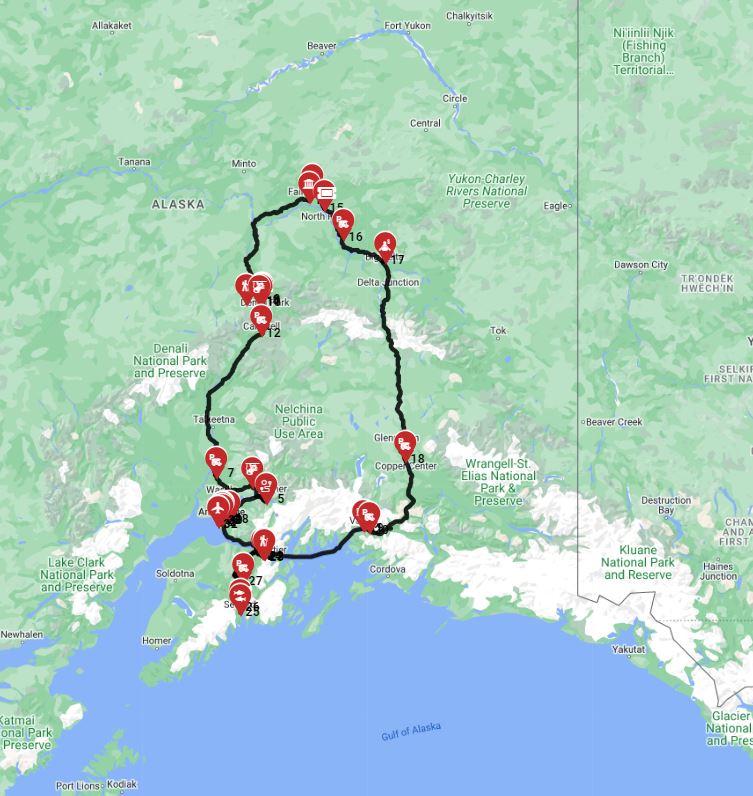
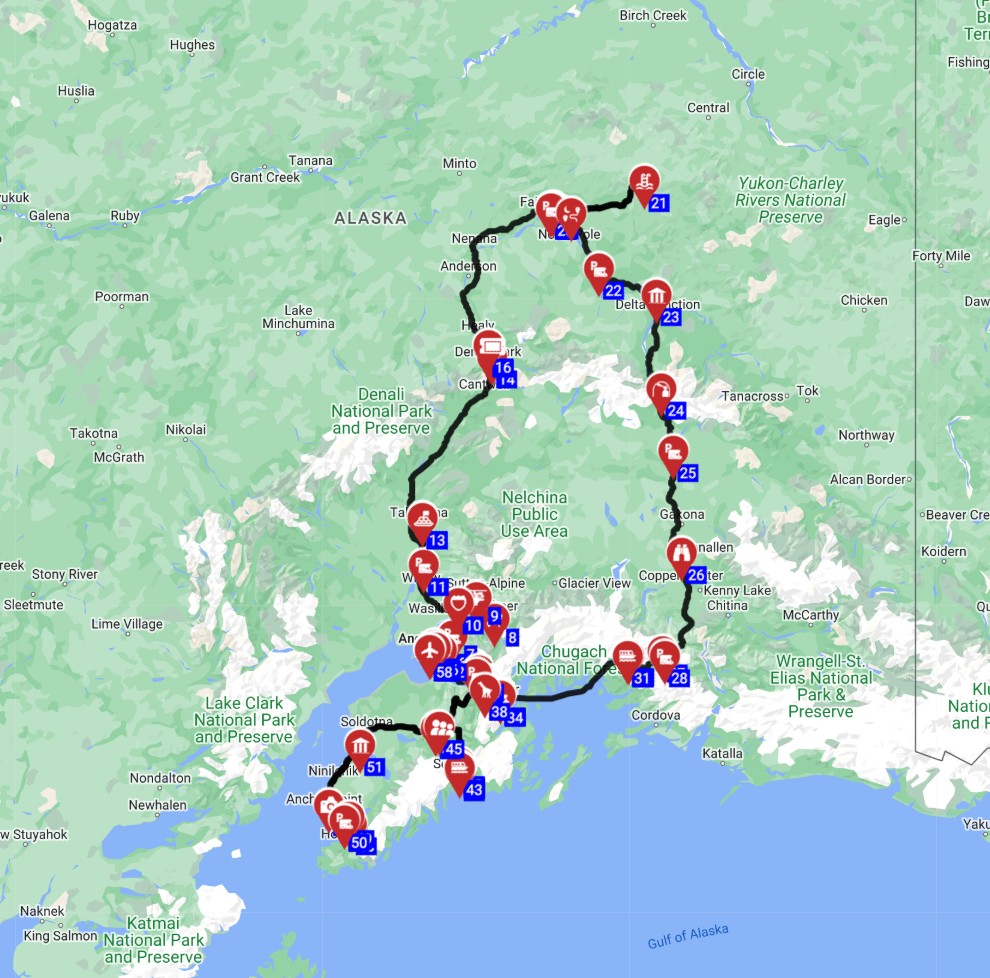
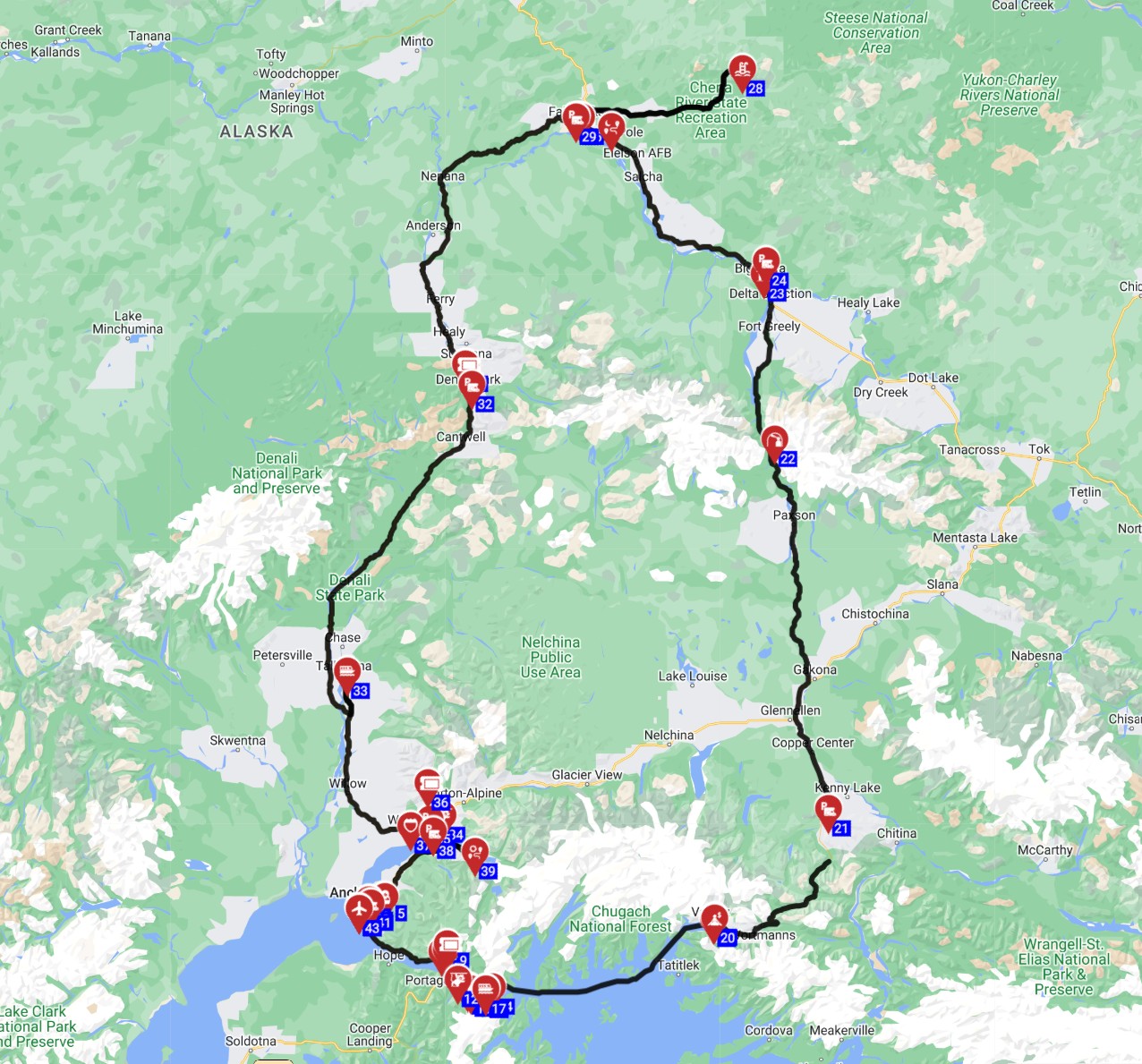
A popular 7-day classic RV route in Alaska starts in Anchorage, offering a perfect week-long trip to explore some of the state's most iconic sights. When driving your rented motorhome in Alaska, remember to travel slowly, ideally a maximum of 100-150 km (60-90 miles) per day on average, to truly take time to feel the place, connect to the culture, the food, and the scenery. For instance, the drive from Anchorage to Talkeetna on Day 1 is about 180 km (112 mi), highlighting the Alaska Railroad and historic Talkeetna town, with an overnight stay at Talkeetna Camper Park. Day 2 takes you 240 km (149 mi) to the entrance of Denali National Park for stunning views of Denali itself, followed by camping at Riley Creek Campground, where reservations are essential. Day 3 is dedicated to Denali National Park, including bus tours for wildlife viewing of bears, moose, and caribou, returning to Riley Creek Campground. On Day 4, you'll travel 200 km (124 mi) to Fairbanks to explore attractions like the University of Alaska Museum of the North and Pioneer Park, camping at Chena River Wayside. Day 5 involves beginning the exploration of the rugged Denali Highway (east end), a 200 km (124 mi) drive that may include gravel sections, so always check your rental agreement for restrictions, and consider Tangle Lakes Campground for the night. Day 6 offers stunning wilderness views and remote camping as you continue along the Denali Highway towards Glennallen, a 180 km (112 mi) journey to Tolsona Lake Campground. Finally, Day 7 is a scenic 290 km (180 mi) drive back to Anchorage, passing Matanuska Glacier views before returning your RV. If you're looking for more details, consider our "RV Travel Guide to Alaska - Tips and Top Spots 2026" which provides additional valuable information. When planning your stops, always call ahead to campgrounds before driving long distances, as many national and state parks reserve only 25-30% of spots, leaving the rest for first-come-first-serve. You'll find a spot; if not at the first campground, then the next one.14-Day Extended Journey in Alaska
For a more comprehensive two-week adventure in Alaska, an extended itinerary allows for deeper exploration of key regions and offers a flexible approach to RV travel. Days 1-3 focus on Anchorage and the Kenai Peninsula, starting in Anchorage, then driving approximately 200 km (124 mi) south to Seward for Kenai Fjords National Park cruises and Exit Glacier, followed by an approximate 270 km (168 mi) drive to Homer for fishing and "The Spit," utilizing multiple campgrounds in both locations. For example, many find that a comfortable rv rental in Alaska allows them to explore both popular spots and hidden gems. Days 4-6 involve traveling from Homer back north to the Wasilla/Palmer area, then to Denali National Park entrance, approximately 370 km (230 mi) total, split over two days, dedicating a full day to Denali bus tours and hiking before staying at campgrounds near Denali. Days 7-9 take you to Fairbanks (approx. 200 km / 124 mi) to explore city attractions and consider a guided Arctic Circle tour, with overnight stays at Fairbanks RV parks. During your planning for extended journeys, remember that cellular service can be limited in remote Alaskan areas, so downloading offline maps and considering satellite communication options is a wise preparedness step. Days 10-12 lead southeast from Fairbanks to Tok (approx. 320 km / 199 mi), known as the 'Gateway to Alaska,' then towards McCarthy/Kennicott (an additional 200 km / 124 mi to the McCarthy turnoff, accessible via gravel road, so verify rental agreement restrictions). This segment focuses on exploring Wrangell-St. Elias National Park & Preserve, America's largest national park, with camping options near Tok and McCarthy. Days 13-14 involve driving along the scenic Glenn Highway back towards Anchorage (approx. 320 km / 199 mi from Tok, split over two days), including a stop at Matanuska Glacier for a guided ice walk or simply stunning views, before returning your rented mobile home in Anchorage. When engaging with Alaska's wildlife, always adhere to strict safety protocols, such as proper food storage in bear-resistant containers, carrying bear spray, and knowing how to react in encounters with bears or moose in wilderness areas. Be aware that dump and fresh water stations, as well as propane availability, can be sparse in remote parts of Alaska, so plan your provisions and waste management carefully, practicing "Leave No Trace" principles to preserve the pristine wilderness.Recommended RVPlan Trip for Alaska
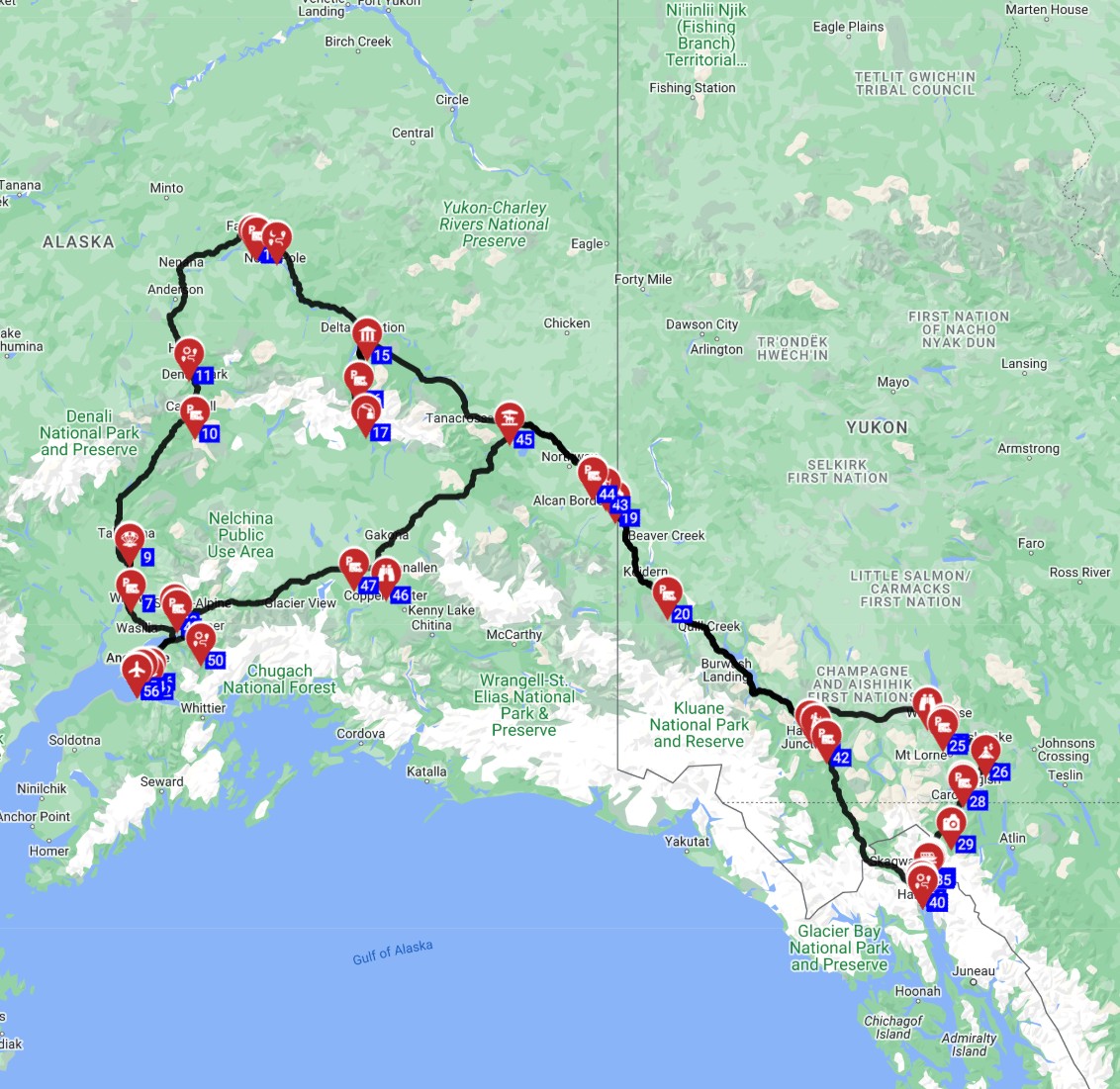
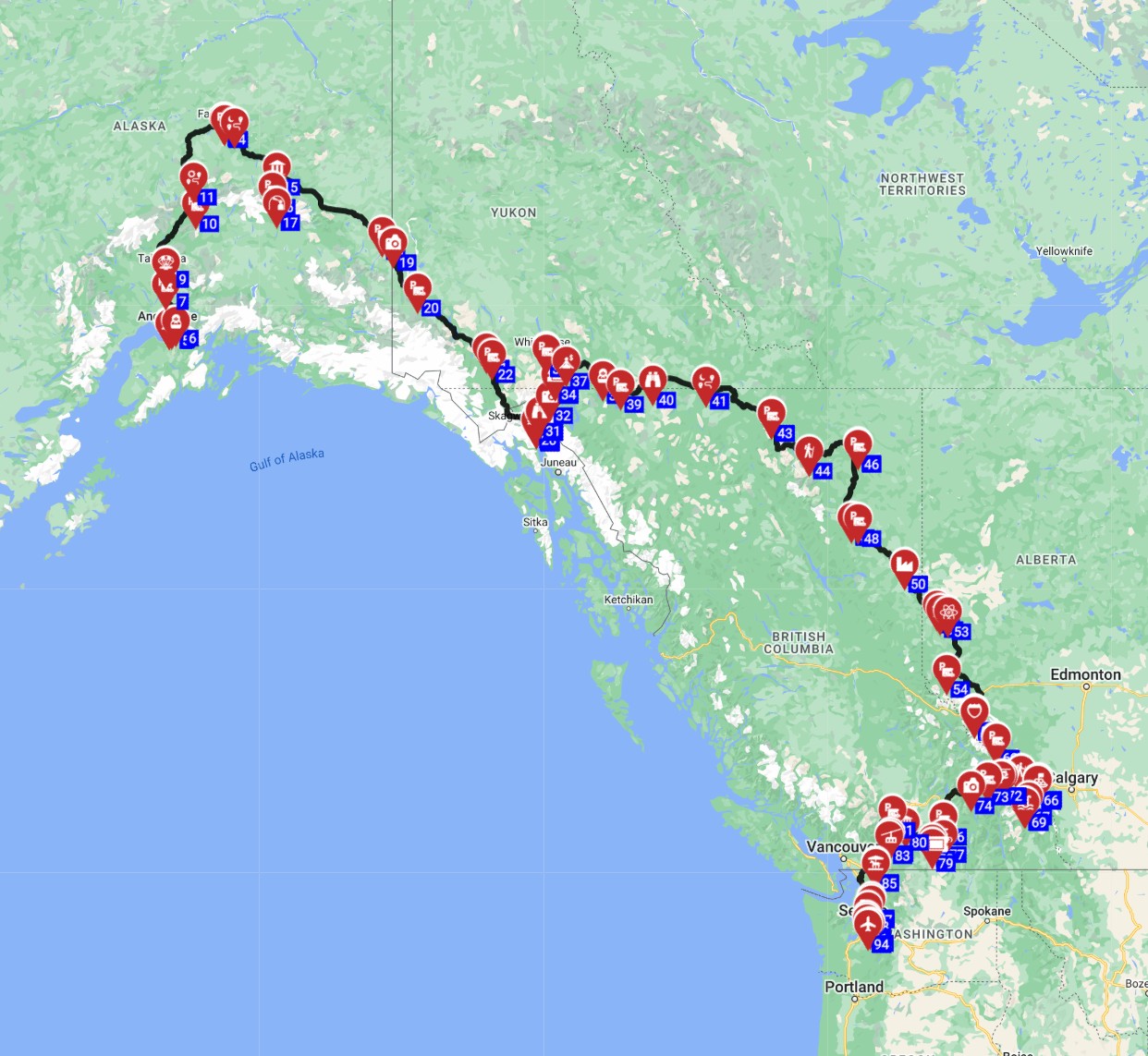
For a truly comprehensive and expertly curated RV adventure that spans both Alaska and the Yukon, the '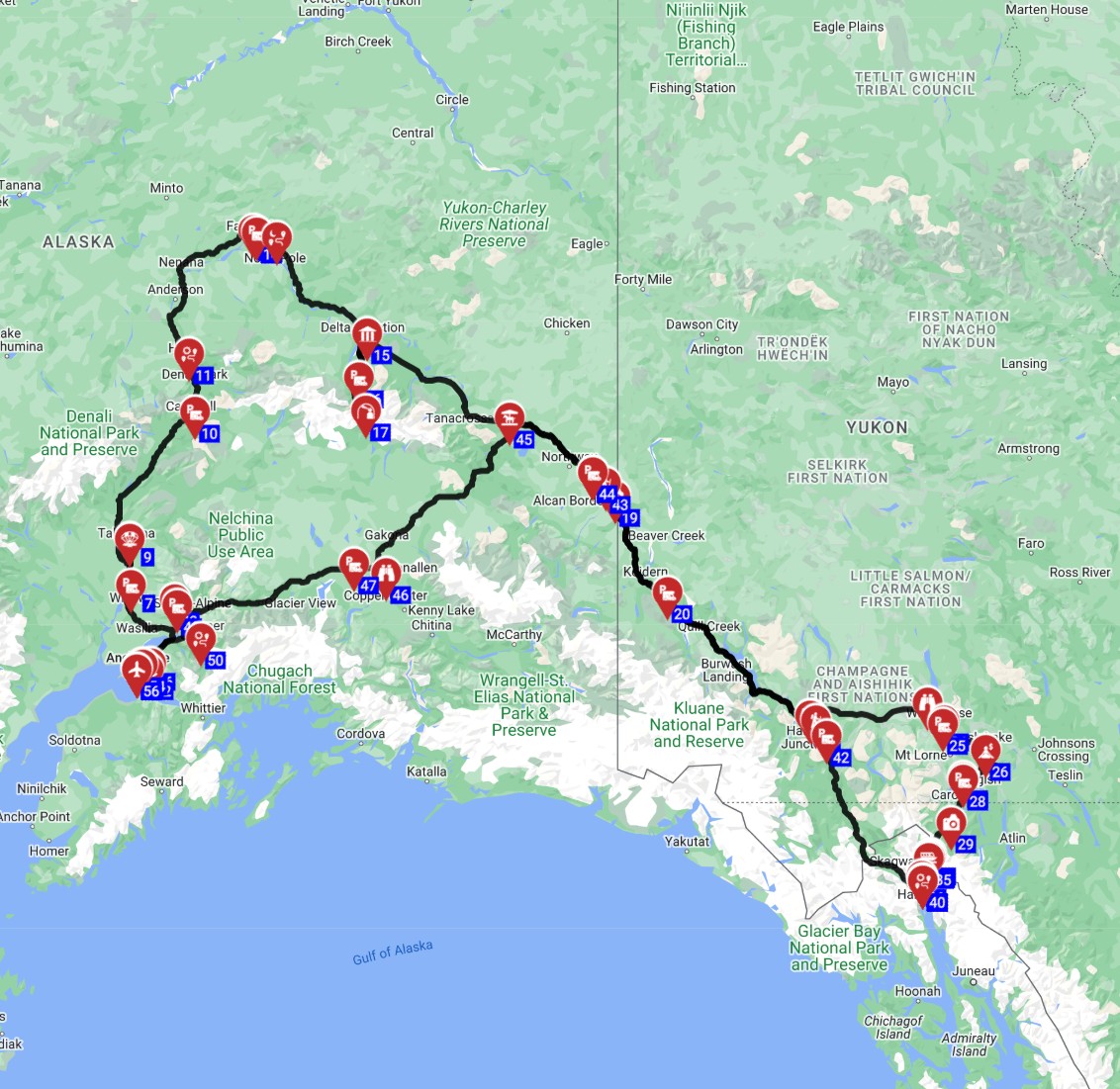
Anchorage Round Trip - Alaska-Yukon Discovery Trail
Must-See Stops Along the Way (Avi Bandana Picks)
Avi Bandana's personal picks for your Alaska and Yukon RV adventure go beyond the usual tourist traps, focusing on immersive cultural and natural experiences. For expert insights from Avi Bandana, check out our Top 5 Adventures – recommendations from Avi Bandana. A traditional visit to the Alaska Native Heritage Center in Anchorage is highly recommended to gain a deep appreciation for the indigenous cultures of the region. For an awe-inspiring natural feature, the Castner Glacier Ice Cave hike offers a truly unique exploration of frozen blue ice formations, a sight you won't soon forget. Indulge in local flavors and fine dining at a traditional restaurant, such as one recommended within your detailed RV PLANET itinerary, to savor authentic Alaskan cuisine. If you're looking to cook some of these local flavors in your rented RV's kitchen, check out our RV-friendly recipes playlist for inspiration. For a glimpse into the gold rush era and a pivotal part of the region's history, the S.S. Klondike National Historic Site in the Yukon is a fascinating stop. Lastly, for local industry and culture, a visit to the American Bald Eagle Foundation allows for an up-close encounter with these majestic birds and insight into crucial conservation efforts.Daily Driving Distances & Drive Times in Alaska
Avi Bandana, our founder, recommends a maximum of 100-150 km (60-90 miles) per day on average when RVing in Alaska, allowing ample time to soak in the scenery and explore without feeling rushed. This slower pace is crucial for enjoying Alaska's vast landscapes, frequent wildlife viewing opportunities, and unexpected stops, ensuring the journey is as enriching as the destination. For example, driving from Anchorage to Seward, a distance of approximately 200 km (124 mi), typically takes about 2.5 to 3 hours, not including stops for photos or scenic overlooks. The journey from Denali National Park entrance to Fairbanks, also around 200 km (124 mi), can take approximately 2.5 to 3.5 hours, depending on current road conditions and any construction. Traveling from Fairbanks to Tok, an approximate 320 km (199 mi) drive, requires a longer driving day, around 4 to 5 hours, necessitating careful planning to adhere to the recommended daily limits. Before any extended road trip, thoroughly check your rented motorhome's tire condition and ensure you carry essential emergency supplies. Given the often remote nature of Alaskan roads, having satellite communication options is a highly recommended preparedness measure.Best RV Class for This Itinerary — Couple & Family Picks
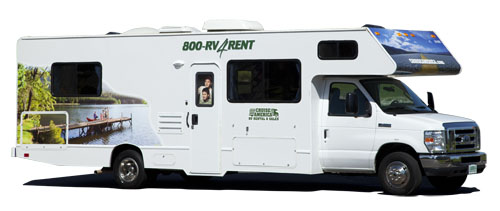
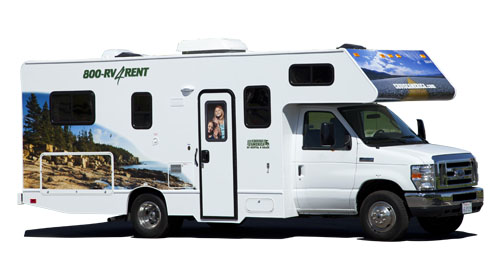
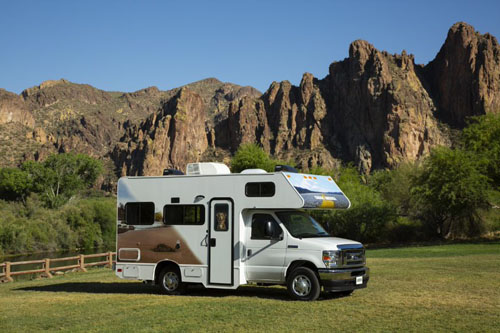
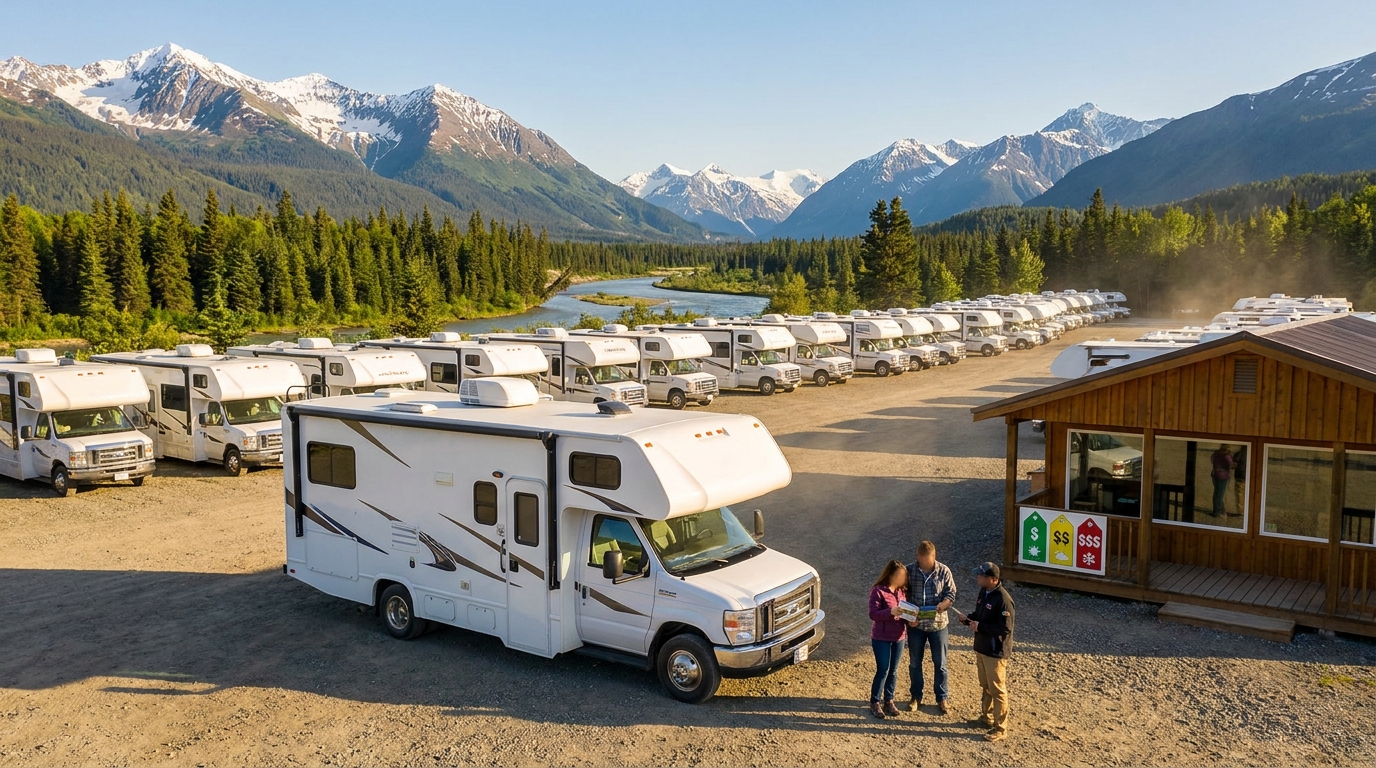
Choosing the right rented RV for your Alaskan adventure is crucial, and Bandana RV offers a diverse fleet of motorhomes and campervans to suit various group sizes and preferences. For couples, a Class B Camper Van is often the ideal choice, offering superior maneuverability and better fuel efficiency on Alaska's diverse roads, which can be beneficial when navigating smaller towns. Bandana's global fleet of Class B Camper Vans, like the "rv rental denver example Category Van," average 5.8 meters (19 feet) in length, comfortably accommodating 2-3 adults and 3-4 sleeping places, making them perfect for intimate travel with sufficient space for your gear. For families or larger groups up to 4-6 people, a Class C Alcove motorhome, such as the "rv rentals utah example Sunrise Escape" or "alaska rv rental example Category C," provides more space and amenities. These rented motorhomes average 7.5 meters (24.6 feet) in length, offering an average of 4-5 adult sleeping places and 5-6 total sleeping places, ensuring everyone has room to relax after a day of exploration. Drive slowly and carefully, and you can drive almost anywhere without issues. No need to stress - just use common sense and pay attention, even with larger Class C motorhomes. Remember, Bandana's 'Rent&Plan' service combines your RV rental with a ready-made itinerary crafted by travel experts, providing full access to trip-planning software to remove the planning headache entirely.What is the 3-3-3 rule for RV travel?
The '3-3-3 rule for RV travel' is a popular guideline designed to promote safe and enjoyable road trips, especially in vast areas like Alaska. This rule advises RVers to drive no more than 300 miles (approximately 480 km) per day, arrive at their destination by 3 PM, and stay for at least 3 nights. Adhering to this guideline helps prevent driver fatigue, allows ample time to set up camp and explore the surroundings, and provides a more relaxed travel pace, which is particularly beneficial when navigating Alaska's often remote and challenging roads. While the 3-3-3 rule offers a good framework, Avi Bandana's specific recommendation for Alaska is even slower, suggesting a maximum of 100-150 km (60-90 miles) per day to truly immerse oneself in the unique Alaskan environment and account for unexpected stops for wildlife viewing or scenic detours.What is the best route to Alaska by RV?
The best route to Alaska by RV for most travelers is the legendary Alaska Highway, also widely known as the Alcan Highway, which traverses through British Columbia and Yukon Territory in Canada before entering Alaska. This iconic route typically begins in Dawson Creek, British Columbia, and extends approximately 2,232 km (1,387 miles) to Delta Junction, Alaska, connecting to other major Alaskan highways. Travelers embarking on this journey with a rented motorhome should factor in comprehensive border crossing checklists for both Canadian and US customs, including required documentation for all passengers and pets, vehicle registration, and any declarations. Preparing your rented RV for the journey is crucial, including checking tire condition, carrying essential emergency supplies like a spare tire kit and basic repair tools, and having satellite communication options, as cellular service can be extremely limited in many remote sections of the Alcan and throughout Alaska.What is the best time of year to RV to Alaska?
The best time of year to RV to Alaska is generally during the summer months, from early June through late August, when road conditions are optimal, all attractions and campgrounds are open, and daylight hours are extensive. July offers the warmest temperatures and typically the least amount of rainfall, making it ideal for hiking, wildlife viewing, and water activities, though it is also the busiest and most expensive month for RV rental in Alaska. June and August provide a balance of pleasant weather, fewer crowds, and opportunities to witness spring blooms or early fall colors, respectively, with cooler temperatures potentially requiring layered clothing. Regardless of the specific month, travelers should be prepared for varying weather conditions; specific preparations for extreme cold weather are usually not required for summer RV travel, but a range of clothing from light jackets to warm layers is always advised for comfort.What is the 4-4-4 rule for RV travel?
The '4-4-4 rule for RV travel' is another helpful guideline for planning comfortable RV trips, suggesting driving no more than 400 miles (approximately 640 km) in a day, arriving at your destination by 4 PM, and staying for a minimum of 4 nights. This rule is similar to the 3-3-3 rule but allows for slightly longer driving days and extended stays, appealing to RVers who prefer a bit more ground coverage while still enjoying longer durations at each stop. For an Alaskan RV adventure, while the 4-4-4 rule offers more flexibility, the vast distances and unique challenges-such as variable road conditions, unexpected frost heaves, and the desire for deep exploration-often make the more conservative 3-3-3 rule or even Avi Bandana's 100-150 km (60-90 mile) daily limit more suitable for enjoying the journey. Always consider connectivity challenges in remote Alaskan areas; even shorter driving days allow more time to find Wi-Fi hotspots, utilize satellite communication, or simply embrace being disconnected if necessary.What should I not miss in Alaska?
When RVing through Alaska, do not miss the unparalleled natural beauty and unique cultural experiences that define the Last Frontier, ensuring your rented motorhome adventure is truly unforgettable. Key highlights include Denali National Park for its majestic peak and abundant wildlife, the stunning glaciers of Kenai Fjords National Park (accessible via a cruise from Seward), and the Matanuska Glacier for a walkable ice experience. Beyond major parks, immerse yourself in cultural and community engagement by visiting places like the Alaska Native Heritage Center in Anchorage or exploring local fishing towns such as Homer and Valdez. For specific Avi Bandana picks, consider the Castner Glacier Ice Cave hike for an unforgettable natural feature, and the American Bald Eagle Foundation in Haines for a unique wildlife encounter, while remembering to practice strict wildlife safety protocols like proper food storage and bear spray readiness in all wilderness areas.Can I park my RV anywhere in Alaska?
No, you cannot park your rented RV anywhere in Alaska; parking regulations vary significantly depending on the type of land (public vs. private) and specific local ordinances, though numerous designated options exist. Alaska offers abundant opportunities for both developed campgrounds (state parks, national parks, private RV parks) and dispersed camping, especially on federal lands managed by the Bureau of Land Management (BLM) and some national forests, where 'boondocking' or 'dry camping' is permitted under specific guidelines. Always check signage, local regulations, and consult land management maps before parking, as unauthorized parking can lead to fines or environmental damage, especially in delicate ecosystems. When parking in remote areas, be mindful of unique RV-specific challenges like limited dump and fresh water stations, propane availability, and proper trash management, adhering strictly to 'Leave No Trace' principles to protect Alaska's pristine wilderness. For finding campsites and campgrounds during your trip, we recommend using RV PLANET (rvplan.net) - a great resource for locating available spots along your route.What You Shouldn't Miss
- **Denali National Park:** Take a bus tour deep into the park for unrivaled wildlife viewing and breathtaking views of North America's tallest peak.
- **Kenai Fjords National Park:** Experience a glacier cruise from Seward to witness calving glaciers, sea lions, puffins, and whales in their natural habitat.
- **Matanuska Glacier:** Opt for a guided ice-walk on Alaska's largest road-accessible glacier, an unforgettable, hands-on natural experience.
- **Homer Spit:** Visit the "Halibut Fishing Capital of the World" for charter fishing, unique shops, and stunning Kachemak Bay views.
- **Alaska Native Heritage Center, Anchorage:** Discover Alaska's rich indigenous cultures through traditional dances, crafts, and village exhibits.
- **Fairbanks & the Arctic Circle:** Explore Fairbanks' gold rush history and consider a guided tour to the Arctic Circle for a truly unique northern experience.
Looking for expert insights from Avi Bandana? Top 5 Adventures - recommendations from Avi Bandana.
Final Thoughts
Embarking on a one-way RV adventure through Alaska is an experience unlike any other, offering freedom and immersion into one of the world's most spectacular natural environments. Whether you choose a week-long journey or an extended road trip, the key is to embrace the pace of the open road and let Alaska's wilderness unfold around you. Imagine yourself waking up to panoramic mountain views, with the crisp Alaskan air filling your lungs, ready for another day of exploration. At Bandana RV, we're passionate about making your dreams of an Alaskan motorhome rental come true. We provide the tools, expertise, and support to ensure your trip is as smooth and enjoyable as possible, from transparent pricing to expertly crafted itineraries. Our goal is to empower you to discover top destinations, plan your trip itinerary in advance with minimal effort, and maximize your enjoyment. So, what are you waiting for? Start planning your epic Alaskan RV journey today. The vast, untamed beauty of the Last Frontier is calling, ready to offer you unforgettable memories around every bend.On the routes offered through RV PLANET routes, you can itemize and track every expense along the way for easy budgeting.