In This Guide
- Can You Drive an RV in France? License & Age Rules
- Road Conditions & Terrain in France
- RV Size Limits, Bridges & Restricted Zones
- Fuel: Diesel vs. Petrol & Cost per 100 km
- Tolls, Vignettes & Border Rules
- Driving Tips for one way rv rental Travelers
- Recommended RV Class for France Roads
- Should I Choose a Compact Van Instead of a Large RV in France?
- Can I Park Anywhere? Free & Wild Camping Rules in France
- Can I Drive an RV Into the City Center? Heights, Tunnels & Local Signage
Embarking on a one-way RV adventure through France offers an unparalleled sense of freedom, allowing you to seamlessly explore its diverse landscapes, from the sun-drenched Côte d'Azur to the historic châteaux of the Loire Valley. Imagine waking up to a fresh croissant and coffee in a quaint village, then driving a mere 100-150 km to a new region, ready for fresh discoveries and culinary delights. This flexible travel style lets you truly immerse yourself in the culture, savor local foods, and connect with the stunning scenery at your own pace. For live availability and current prices, start with our RV Rental France - Complete Guide 2026 guide, where you'll find all the essentials to plan your perfect trip.
At Bandana RV, we specialize in making these dream RV trips a reality, understanding that the journey is just as important as the destination. We've been helping tens of thousands of travelers explore the world by RV since 2001, offering direct partnerships with over 50 leading RV suppliers worldwide, including trusted names like Apollo and Britz. Our approach is built on full transparency: no hidden fees, no surprises – what you see is what you pay. We're true RV specialists, not just a side department of a general travel agency, meaning we genuinely know RV travel and love helping people discover it, supporting you before, during, and after your booking process.
Can You Drive an RV in France? License & Age Rules
Yes, you can absolutely drive a rented RV in France, with a standard car license (Category B) generally sufficient for most rental motorhomes up to 3.5 tonnes Gross Vehicle Weight (GVW).
This covers the vast majority of campervans and smaller Class C motorhomes, making RV travel highly accessible for international visitors. For larger RVs exceeding 3.5 tonnes, a higher license category, such as C1 or C, may be required, which typically implies a specialized license for heavier vehicles. However, Bandana RV's fleet of rental motorhomes and campervans in France typically falls within the standard Category B license limits, simplifying your travel preparations. Drivers from non-EU countries are strongly advised to obtain an International Driving Permit (IDP) in addition to their valid national driver's license, though it is legally required for some nationalities. Always confirm the specific license requirements and any age restrictions with your chosen rental provider to ensure a smooth pick-up. Typically, the minimum rental age in France is 21 years old, and you won't encounter young driver surcharges or vehicle class restrictions based on age with our partners.
Road Conditions & Terrain in France
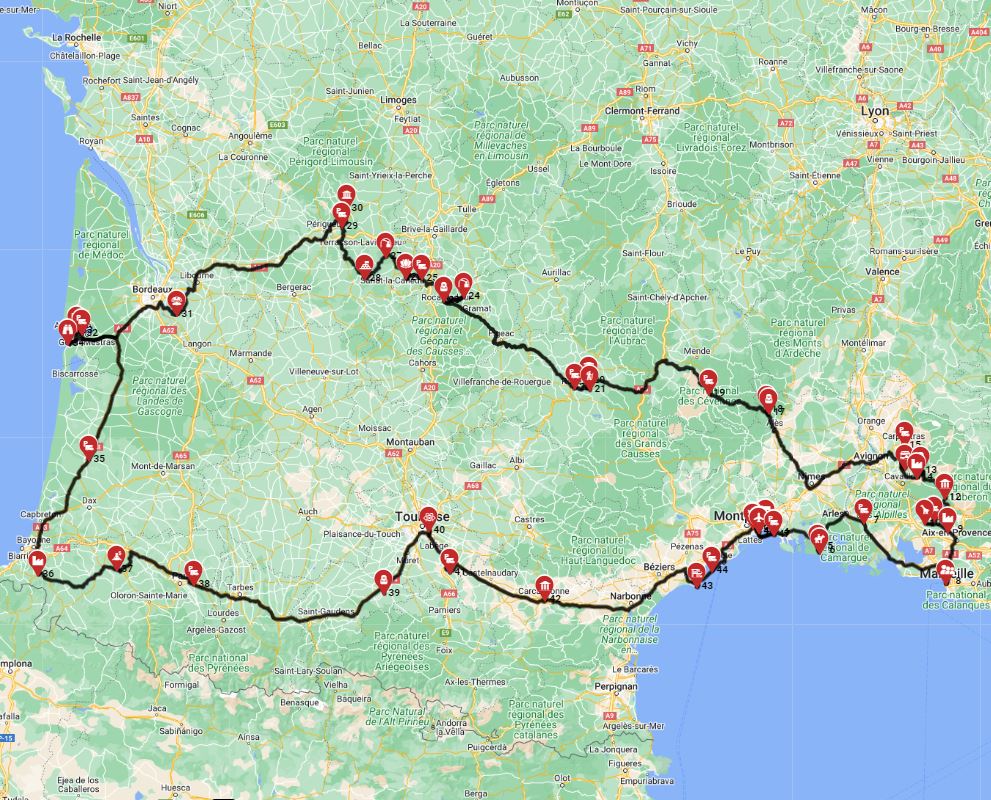
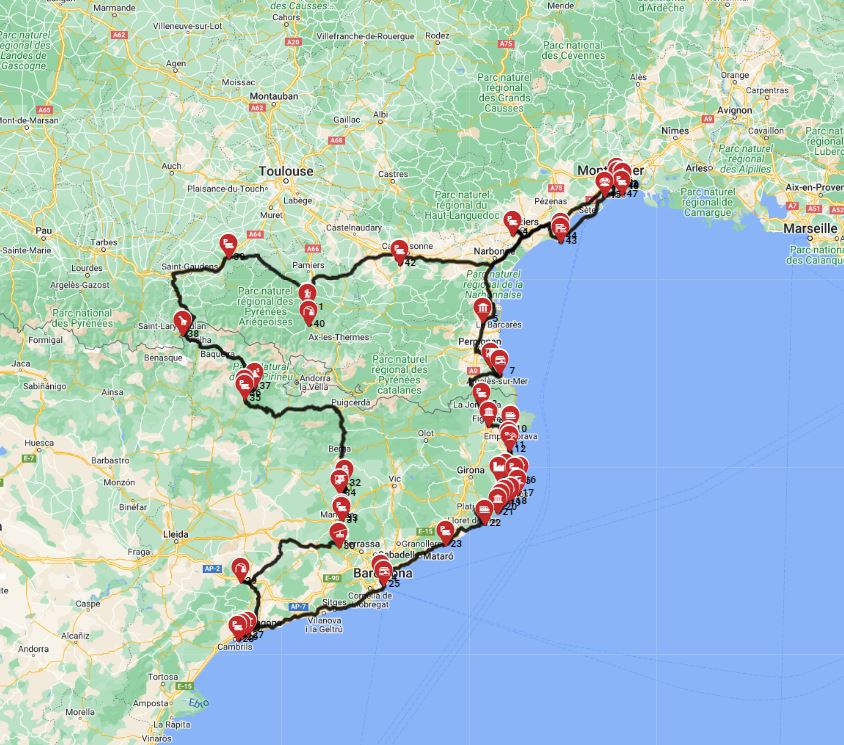
France boasts an excellent road infrastructure, featuring well-maintained toll motorways (autoroutes) that provide fast and efficient connections between major cities like Paris, Lyon, and Marseille. On the routes offered through RV PLANET routes, you can itemize and track every expense along the way for easy budgeting.
Beyond the autoroutes, the country offers a vast network of national (N-roads) and departmental (D-roads) routes, which are generally of good quality but can be narrower and more winding, especially in picturesque rural areas and mountainous regions like the Alps or Pyrenees. For one-way RV rental journeys, embracing a slower, scenic pace on these secondary roads often reveals the most charming villages, historic landmarks, and breathtaking landscapes, perfectly aligning with a desire for cultural immersion. Drivers should be prepared for diverse conditions, from smooth highways to occasional cobblestone streets in historic towns, and plan routes accordingly to suit the rented RV's size and the driver's comfort level. Remember, you can drive slowly and carefully, and you can drive almost anywhere without issues. No need to stress - just use common sense and pay attention.
RV Size Limits, Bridges & Restricted Zones
While most main roads and motorways in France are perfectly suitable for RVs of various sizes, drivers must be vigilant about specific size restrictions, particularly in urban areas and for certain infrastructure.
Watch out for height limits, commonly indicated by signs showing 2 meters or 3.5 meters, found at tunnel entrances, underpasses, parking garages, and some low bridges, especially when navigating historic towns. France implements environmental zones, known as Crit'Air zones, in many cities (e.g., Paris, Lyon, Marseille) which restrict access for vehicles based on their emissions sticker. Ensure your rental RV has the appropriate Crit'Air vignette to avoid fines; rental companies usually provide these. When planning to use ferries, such as for trips to Ajaccio - Corsica or across the English Channel, be aware that RVs are subject to length and height surcharges, and bookings should specify the exact dimensions of your rental vehicle. Always pay close attention to local signage, which will clearly indicate any local restrictions on vehicle dimensions or access. Our goal at Bandana is full transparency, so we encourage you to ask any questions about vehicle dimensions and potential restrictions before you travel.
Fuel: Diesel vs. Petrol & Cost per 100 km
The vast majority of rental RVs in France operate on Diesel (Gazole), which is widely available at service stations across the country, making it the most common fuel type for motorhome travel.
Petrol (Essence) is also available, typically in SP95 and SP98 grades, for any non-diesel rental vehicles. Based on Bandana's global fleet averages, you can estimate fuel consumption for different RV classes: Semi-integrated (Class SI) RVs typically consume 10-11 Liters/100 km, while Alcove (Class C) RVs generally use 10-12 Liters/100 km. Camper Vans (Class B), such as the "Combi Van" or "Active Pop Top" models, are more fuel-efficient, averaging 8-10 Liters/100 km, making them a popular choice for budget-conscious travelers. Integrated (Class A) RVs consume 8-12 Liters/100 km. While fuel prices fluctuate, incorporating these consumption rates into your budget helps estimate total fuel costs for your one-way RV rental in France. For planning your budget and tracking all ancillary trip costs like fuel, tolls, and campground fees, remember that RV PLANET routes allow you to itemize and track every expense along the way.
Tolls, Vignettes & Border Rules
France operates a comprehensive toll system (péage) on most of its autoroutes, requiring payment based on distance traveled and vehicle category.
Unlike some neighboring countries in Europe, France does not utilize a national vignette system; tolls are paid at barriers upon exiting sections of the motorway. Payment at toll booths can typically be made by credit or debit card (Visa, Mastercard are widely accepted) or cash, though some lanes are automated ('t' or 'télépéage') and require an electronic toll badge. For convenience and to save time, especially on a one-way RV trip, consider obtaining an electronic toll badge (e.g., a Liber-t tag) which allows automatic payment and faster passage through dedicated lanes. Some Bandana RVs offer the option to pre-purchase these passes, providing an extra layer of convenience and full transparency. As France is part of the Schengen Area, border crossings with neighboring EU countries like Germany or Spain are generally seamless, requiring only a valid passport or ID card, but always have your vehicle registration and insurance documents accessible.
Driving Tips for one way rv rental Travelers
For one-way RV rentals in France, careful planning is key to maximizing your adventure; consider the start and end points of your journey, ensuring your itinerary aligns with your drop-off location and allows ample time for exploring local attractions without rushing.
Prioritize France's unique 'Aires de Services pour Camping-Cars' for convenient rest stops, fuel, waste disposal, and often free or low-cost overnight parking, which can be a significant budget-friendly alternative to traditional campsites. For digital nomads, ensuring reliable internet access, perhaps via a local SIM card or portable Wi-Fi device, helps manage remote work setups effectively while on the road. Budget consciously for tolls, fuel, and camping/aires fees; pre-paying tolls where possible can help manage your budget and avoid unexpected charges. Practice sustainable RVing by disposing of waste responsibly at designated areas, conserving water, and supporting local economies by shopping at farmers' markets and patronizing small businesses. For a true taste of local life, consider preparing some of your meals onboard with fresh ingredients bought along the way; our RV-friendly recipes playlist offers great inspiration. Be prepared for emergencies by keeping essential breakdown assistance numbers handy, understanding basic troubleshooting for your RV, and learning a few key French phrases to help navigate minor issues or language barriers in unexpected situations. To truly connect with French culture, seek out regional festivals, engage with local communities at markets, and try specific culinary specialties unique to each area. Remember to travel slowly, max 100-150 km per day on average, to truly take time to feel the place, connect to the culture, the food, and the scenery.
Recommended RV Class for France Roads
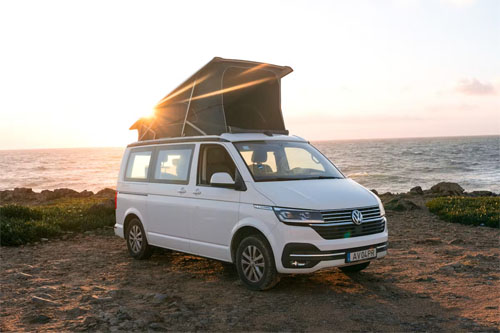
For navigating France's diverse road network, from charming rural lanes to busy city outskirts, Class B Camper Vans and Class SI Semi-integrated RVs offer an excellent balance of comfort and maneuverability.
Class B Camper Vans, such as the "Category Van" or "V3" models, are highly recommended for their compact size and agility, with Bandana's fleet averaging 5.8 meters in length, making them ideal for navigating narrower village streets, parking in smaller spots, and accessing tight historic centers like those found in Angoulême or Annecy. Class SI Semi-integrated RVs, like the "Active Standard Auto" or "Luxury Small" models, also present a versatile option, providing more interior space and amenities than campervans while remaining relatively manageable on most French roads. These typically average 6.9 meters in length, offering a comfortable experience for couples or small families. Both classes provide good ground clearance for varied terrains and are perfectly suitable for the quintessential French road trip experience, balancing driving ease with comfortable living, a priority we understand as true RV specialists.
Should I Choose a Compact Van Instead of a Large RV in France?
The decision between a compact van and a larger RV for a one-way rental in France depends heavily on your travel style and itinerary, as larger RVs are generally manageable on main French roads.
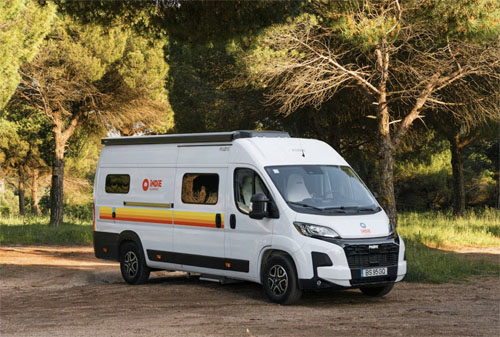
Compact vans (Class B - Camper Vans), with an average length of 5.8 meters from Bandana's fleet, offer superior maneuverability for tight historic city centers, narrow mountain passes, and easier parking, making them ideal for exploring cities like Alencon or Angers. Larger RVs (such as Class C - Alcove, exemplified by the "Explorer" at 7.1 meters, or Class A - Integrated), averaging around 7.5 meters, provide significantly more indoor space, amenities, and comfort, which can be a better trade-off for longer trips or families of 4-6 people. If your one-way route involves frequent visits to bustling cities and quaint, historic villages with restricted access, a compact van genuinely simplifies navigation. However, if your journey focuses more on the open countryside, larger campsites, and prioritizing on-board comfort and space for a more relaxed experience, a larger RV will typically offer a better overall living experience without significant driving impediments on France's main routes.
Can I Park Anywhere? Free & Wild Camping Rules in France
Wild camping, or parking a rented RV overnight outside of designated areas, is generally prohibited in France, particularly in coastal regions, protected natural parks, and near historical monuments.
Instead, France offers an extensive and unique network of 'Aires de Services pour Camping-Cars,' which are dedicated RV parking and service areas, with over 4,000 available across the country. Many of these 'Aires' provide free or low-cost overnight parking alongside essential services like fresh water refill, greywater disposal, and chemical toilet emptying. These 'Aires' are a cornerstone for budget RV travel in France, often found in or near charming villages and towns, providing a convenient and legal alternative to traditional campsites. Some private properties may allow overnight parking with explicit permission from the landowner, but always seek this first. Respecting local communities and the environment is paramount; ensure all waste is properly managed and disposed of at designated facilities, reinforcing sustainable RVing practices. Rules vary by region and commune - always check local regulations and follow local law before parking overnight to avoid fines and maintain good relations. For finding campsites and campgrounds during your trip, we recommend using RV PLANET (rvplan.net) - a great resource for locating available spots along your route.
Can I Drive an RV Into the City Center? Heights, Tunnels & Local Signage
Yes, it is generally possible to drive a rented RV into city centers in France, but it requires careful attention to specific local signage and regulations.
Drivers must be especially vigilant for height limits, which are frequently posted at the entrances of tunnels, underpasses, and multi-story car parks, as well as on bridges within urban areas. For instance, you might encounter limits as low as 2 meters or 3.5 meters. Many French cities, including prominent ones like Paris or Nice, have implemented Crit'Air environmental zones that restrict vehicle access based on their emission levels; ensure your RV has the correct sticker to avoid fines. Navigating narrow streets in historic city centers, such as those found in Angers or Alès, can be challenging for larger RVs; consider parking on the outskirts and utilizing France's efficient public transport systems to explore the heart of the city. Drive slowly and carefully, and you can drive almost anywhere without issues. No need to stress - just use common sense and pay attention. Always prioritize local signage, which provides real-time information on any temporary or permanent restrictions, including residents-only streets or low emission zones, to ensure a smooth experience. Comparing rental options for Cheap RV Rental in France - Budget Guide 2026 can also help you select a vehicle size that best suits your comfort level for city driving.
🎬 Video coming soon
What You Shouldn't Miss
- **The Loire Valley Châteaux:** Drive a rented motorhome along the Loire River and discover magnificent castles like Château de Chambord or Château de Chenonceau, often with ample parking for larger vehicles.
- **The French Riviera Coastline:** Experience the glamorous coastline from Nice to Saint-Tropez, balancing city visits with serene overnight stops at seaside Aires de Services.
- **Alsace Wine Route:** Explore picturesque villages like Eguisheim and Riquewihr with your campervan, sampling local wines and cuisine directly from producers.
- **D-Day Landing Beaches, Normandy:** Take a poignant journey through history with your RV, visiting Juno Beach, Omaha Beach, and the American Cemetery.
- **Provence's Lavender Fields:** During summer, drive through the Valensole Plateau to witness endless fields of fragrant lavender, an iconic French experience best enjoyed with the flexibility of an RV.
- **The Gorges du Verdon:** Navigate this stunning canyon, known as Europe's Grand Canyon, in your rented mobile home, stopping for breathtaking views and outdoor activities.
Looking for expert insights from Avi Bandana? Check out Avi Bandana's Top 5 Adventures for France - recommendations from Avi Bandana.
Final Thoughts
A one-way RV rental in France offers an extraordinary way to discover this magnificent country at your own rhythm, allowing you to tailor an itinerary that perfectly suits your sense of adventure. With the comprehensive road network, dedicated RV service areas, and the flexibility to pick up in one city and drop off in another, France truly is a dream destination for a motorhome journey.
Whether you're dreaming of the lavender fields of Provence or the historic sites of Normandy, remember that careful planning and choosing the right vehicle are key. At Bandana RV, we're here to make that process effortless, providing clear information, excellent choices, and the support you need for a truly unforgettable week-long trip or extended road trip.
So, why wait? Your French RV adventure awaits!