In This Guide
- Can You Drive an RV in South America? License & Age Rules
- Road Conditions & Terrain in South America
- RV Size Limits, Bridges & Restricted Zones
- Fuel: Diesel vs. Petrol & Cost per 100 km
- Tolls, Vignettes & Border Rules
- Driving Tips for Luxury RV Travelers
- Recommended RV Class for South America Roads
- Should I Choose a Compact Van Instead of a Large RV in South America?
- Can I Park Anywhere? Free & Wild Camping Rules in South America
- Can I Drive an RV Into the City Center? Heights, Tunnels & Local Signage
- What is the 3-3-3 rule for RV travel?
- What is the 333 rule for campervan?
- Can you technically drive from North America to South America?
- Can you drive a motorhome on the Million Dollar Highway?
- What part of South America can you not drive through?
- Which countries are RV friendly?
- Is it safe for Americans to go to South America right now?
- What is the 3-3-3 rule for RV living?
- Do you need a CDL to drive a luxury RV?
- What is the largest RV you can drive without a special license?
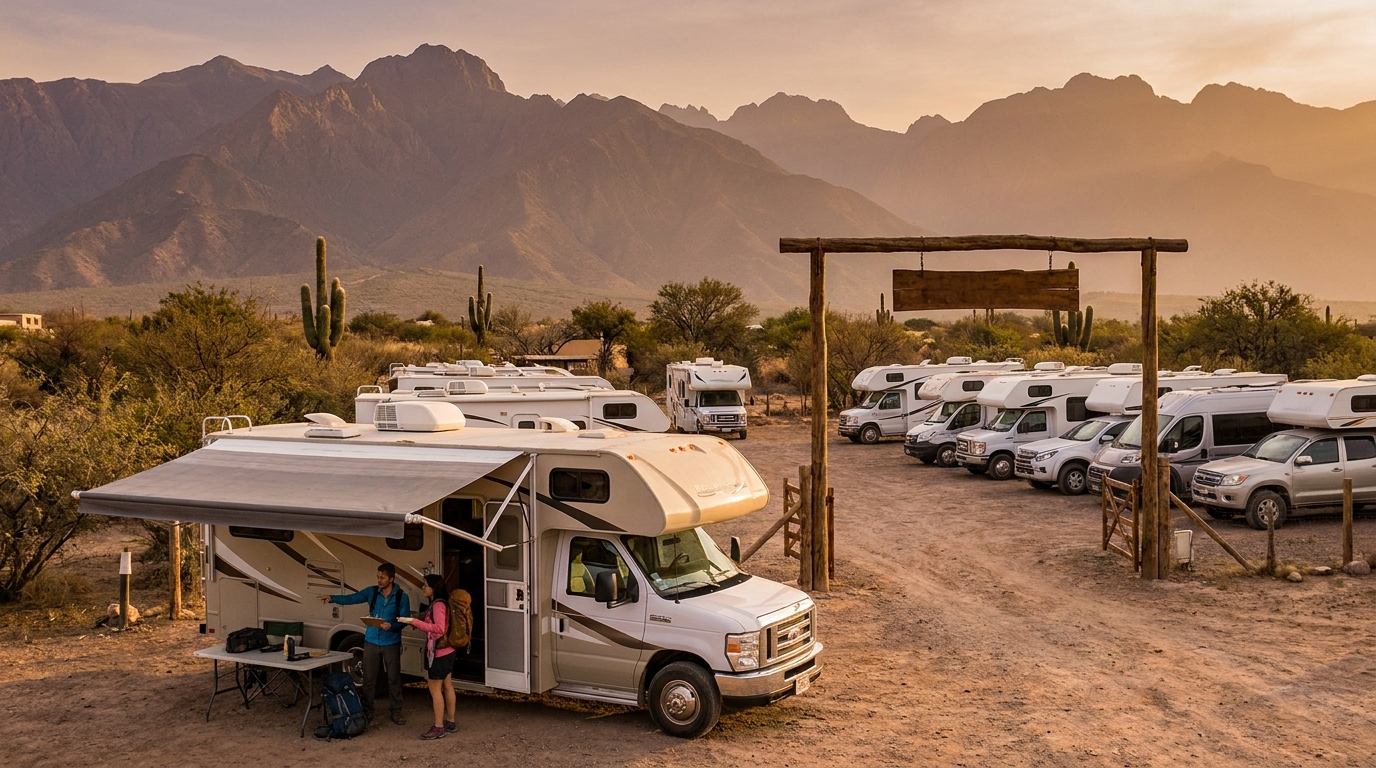
South America offers an unparalleled adventure for luxury RV travelers, blending majestic landscapes with vibrant cultures. Imagine waking up to a Patagonian sunrise or sipping coffee overlooking Andean peaks, all from the comfort of your rented motorhome. For live availability and current prices, start with our RV Rental South America - Complete Guide 2026 guide. At Bandana RV, we're true RV specialists, dedicated to ensuring your South American road trip is smooth, memorable, and filled with incredible moments. We believe in full transparency, which means no hidden fees or surprises throughout your booking process.
Can You Drive an RV in South America? License & Age Rules
Most RVs under 3.5 metric tons Gross Vehicle Weight Rating (GVWR) can be driven with a standard national car license (Class B equivalent) in South America. An International Driving Permit (IDP) is highly recommended and often legally required alongside your national license for foreign drivers across the continent, ensuring smooth interactions with local authorities. The minimum driver age for RV rentals in South America typically ranges from 21 years old, depending on the rental company and specific country, and you'll find no age-based vehicle class restrictions with Bandana RV, nor any young driver surcharges. For any rented motorhome exceeding 3.5 tons, a higher license class may be necessary, similar to a light truck license in some jurisdictions, so always confirm your vehicle's specifications before booking.
Road Conditions & Terrain in South America
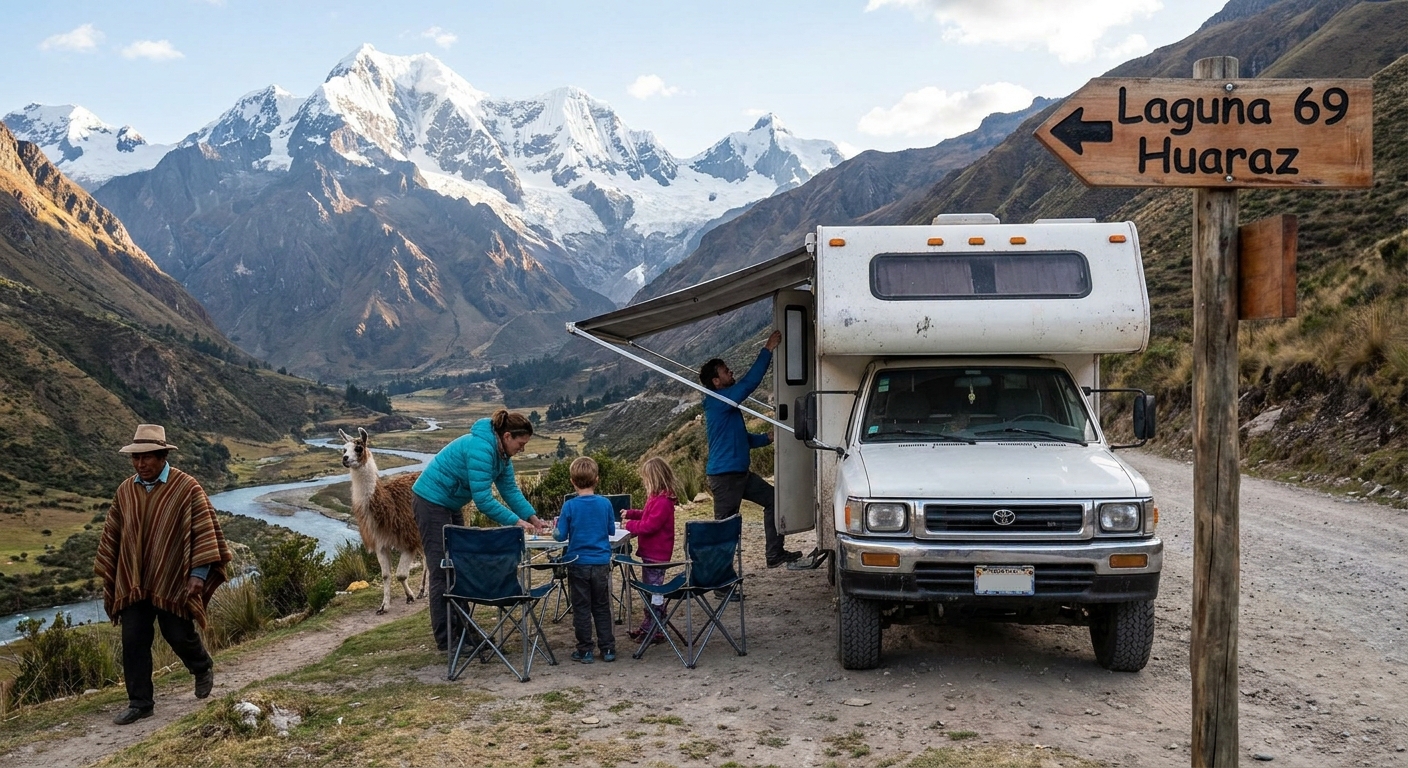
South America presents a diverse range of road conditions for luxury RV travelers, from well-maintained sections of the Pan-American Highway to challenging unpaved, gravel, or dirt roads in rural and mountainous areas like the Andes. You should expect varied terrain, including high-altitude mountain passes over 4,000 meters, coastal routes with dramatic ocean views, dense jungle fringes, and extensive flat plains like those found in Patagonia. Potholes, washboard surfaces, and sudden changes in road quality are common, necessitating robust vehicle choice and consistently cautious driving speeds. Traveling slowly, at a maximum of 100-150 km per day on average, allows for better appreciation of the breathtaking landscape and safer navigation of unpredictable conditions, connecting you more deeply to the culture, food, and scenery.
RV Size Limits, Bridges & Restricted Zones
Luxury RV travelers in South America should be mindful of potential size limitations, particularly regarding bridge height restrictions and narrow roads in older towns or mountain passes. While many main routes accommodate larger vehicles, like a Class C - Alcove motorhome which averages 7.5 meters in length, some rural or historic areas might pose challenges. Ferry crossings, essential for reaching certain regions such as southern Chile or the Darien Gap workaround, often have strict weight, length, or height limitations, and advance bookings are usually required for larger rented RVs. Urban areas in some South American cities might feature environmental zones or restricted access for larger vehicles during peak hours, identifiable by local signage; always research specific routes and local regulations for height, weight, and width limits, especially when planning to venture off main highways. We handle the details, so you can focus on living the journey without worrying about such specifics before you even book.
Fuel: Diesel vs. Petrol & Cost per 100 km
Diesel is the predominant fuel type for rented RVs in South America and is generally widely available, though quality can vary significantly, particularly in remote areas. Bandana's global fleet of semi-integrated RVs (Class SI), such as a "2 Berth Rover" (Class SI - Semi-integrated, RV size - Medium), typically consumes 10-11 Liters/100 km, while larger Class C - Alcove RVs average 10-12 Liters/100 km, indicating that fuel will be a substantial operational cost. Assuming an average fuel cost of $1.00 USD/liter, travelers should budget approximately $10-$12 USD per 100 km for fuel, making careful planning essential for longer trips. Payment is often cash-preferred in many gas stations, especially outside major cities, though credit cards are increasingly accepted; fuel discount cards, if offered by rental providers, can help manage expenses. For budgeting your ancillary costs, including fuel and campground fees, remember that RV PLANET routes allow travelers to itemize and track every expense along the way for easy financial planning. On the routes offered through RV PLANET routes, you can itemize and track every expense along the way for easy budgeting.
Tolls, Vignettes & Border Rules
Driving a rented RV in South America typically involves frequent toll payments on major highways, and while vignettes (pre-paid road use stickers) are less common than in Europe, specific border crossing logistics require meticulous planning. Border crossings between South American countries can be complex, involving multiple stops for immigration, customs, and vehicle temporary import permits; travelers should prepare for potential delays and bureaucratic processes that can take several hours. A Carnet de Passage en Douane (CPD) is often required for temporarily importing personal vehicles, including RVs, into certain South American countries (e.g., Venezuela, and sometimes others intermittently), serving as an international customs document that guarantees re-exportation. Research specific border requirements for each country pair, carry multiple copies of all vehicle and personal documents, and be aware of potential informal charges, as these are common challenges that emphasize the importance of our full price transparency.
Driving Tips for Luxury RV Travelers
Prioritize defensive driving and a slower pace; South American roads can be unpredictable with varying traffic laws, aggressive drivers, and unexpected obstacles like livestock. Plan your daily routes carefully, taking into account potential delays from road conditions, border crossings, and the need for frequent stops, especially for families. Ensure your luxury RV is well-maintained and equipped with robust tires, spare parts, and essential recovery gear; consider automatic transmission options, like those found in a "cruise america rv rental example Explorer", for easier navigation of hilly terrain. Prepare for practicalities: carry sufficient local currency, learn basic Spanish/Portuguese phrases to enhance your cultural integration, have multiple communication options like a local SIM card, and research how to source safe water, manage waste, and find reliable mechanics/parts in advance. God is in the small details, and we take care of them, making a big difference in your travel experience.
Recommended RV Class for South America Roads
For luxury RV travel in South America, a Class SI - Semi-integrated RV or a Class C - Alcove RV is often recommended, balancing comfort with practical maneuverability on diverse road conditions. Class SI vehicles, with an average length of 6.9 meters from Bandana's global fleet and amenities like a shower and toilet, offer a good compromise for navigating both highways and narrower routes while providing ample living space for 3-4 adults. Class C - Alcove RVs, averaging 7.5 meters in length and comfortably sleeping up to 4 adults, provide more interior space, often higher ground clearance, and features like a microwave and a 170-liter refrigerator, making them suitable for families seeking comfort on varied terrain. The robustness and manageable size of these categories, such as the "rv rentals example Comfort Class" (RV size - Large), allows access to a wider range of campsites and secondary roads without being overly cumbersome for ferries or tight turns, offering premium prices for a premium experience. For more insights on costs, see our Luxury RV Rental in South America - Premium Prices 2026 guide.
Should I Choose a Compact Van Instead of a Large RV in South America?
While a compact Class B - Camper Van (averaging 5.8m in length) offers superior maneuverability for tight city centers and very narrow mountain passes in South America, a larger luxury RV often provides significantly more comfort, living space, and amenities crucial for extended trips. For luxury travelers prioritizing comfort, a larger Class SI or Class C RV generally offers a better trade-off, providing adequate interior space, a full bathroom, and kitchen facilities, which are highly valued when wild camping or staying in remote areas. Imagine preparing a delicious meal in your full kitchen, complete with a gas stove and refrigerator. You can find inspiration and practical tips in our RV-friendly recipes playlist. The decision depends on your travel priorities: if extreme off-roading or navigating highly congested historic city centers is paramount, a compact campervan like a "2 Berth Hi Top" helps; otherwise, the enhanced living experience of a larger RV, such as a "4 Berth Deluxe" (RV size - Large), outweighs occasional maneuverability challenges on main routes and established campsites in South America.
Can I Park Anywhere? Free & Wild Camping Rules in South America
While free or wild camping is a common practice and often tolerated in many remote areas across South America, luxury RV travelers must understand that explicit rules and local enforcement vary significantly by country and even specific region. Popular options include designated campgrounds (privately owned or national parks), 'estacionamientos' (parking lots), or asking permission from landowners or local authorities before settling for the night. Many national parks in Argentina and Chile, for example, reserve only 25-30% of their spots in advance, with the rest available on a first-come, first-served basis, meaning you'll likely find a spot if you call ahead. For safety and respect for local communities, always seek permission if you are on private land, avoid areas clearly marked 'no camping,' and leave no trace of your stay. Rules vary by region, so always check local regulations and follow local law before parking overnight to avoid fines or unwelcome encounters. To discover more about places to stay, explore our RV Camping in South America - Best Campgrounds 2026 and Cheap RV Camping in South America - Budget Sites 2026 guides.
Can I Drive an RV Into the City Center? Heights, Tunnels & Local Signage
Yes, luxury RVs can generally be driven into most South American city centers, but drivers must exercise heightened vigilance for local signage indicating specific height restrictions, narrow streets, tunnels, or designated environmental zones. For instance, an RV with a height of 3.2 meters may clear most main roads but could encounter issues in older urban infrastructure. Drive slowly and carefully, and you can drive almost anywhere without issues. No need to stress - just use common sense and pay attention to your surroundings and posted signs. Pay close attention to overhead clearance signs for bridges and tunnels, as these can be lower than expected in older infrastructure or specific urban passages, especially in historic city centers. Some cities may also have resident-only parking zones or restricted vehicle access during certain hours, often indicated by clear local signage. Utilize navigation apps with RV-specific routing features where available, and always cross-reference with up-to-date local information to safely navigate urban environments.
What is the 3-3-3 rule for RV travel?
The 3-3-3 rule for RV travel is an informal guideline promoting a relaxed and enjoyable journey by suggesting you drive no more than 300 miles (approximately 480 km) in a day, stop driving and settle into your campsite by 3 PM, and stay for at least 3 nights at each location. This rule is particularly beneficial for luxury RV adventures in South America, allowing ample time to explore destinations, integrate with local culture, and avoid hurried, stressful travel days. Adhering to the 3-3-3 rule helps prevent driver fatigue, provides flexibility for unforeseen road conditions, and offers a deeper immersion into the travel experience. It encourages a slower pace, enabling travelers to truly appreciate the diverse landscapes and cultural richness of South America without rushing. Our approach to RV rental ensures you have the freedom to embrace this philosophy.
What is the 333 rule for campervan?
The '333 rule' for campervan travel is identical in principle to the 3-3-3 RV rule, advocating for a leisurely and immersive travel experience by recommending driving no more than 300 miles, settling in by 3 PM, and staying for a minimum of 3 nights at each destination. This rule applies equally to all types of recreational vehicles, from compact campervans to large luxury RVs, emphasizing sustainable and enjoyable travel over covering vast distances quickly. For South American journeys, following this rule ensures travelers have sufficient daylight for safe driving, time to set up camp comfortably, and extended periods to explore local attractions, relax, and conduct necessary vehicle maintenance. It’s a practical approach to avoid travel burnout and maximize the enjoyment of unique environments, providing peace of mind for an extended road trip.
Can you technically drive from North America to South America?
Technically, one cannot directly drive a vehicle from North America to South America due to the impassable Darien Gap, a vast and undeveloped region of dense jungle and swampland stretching approximately 100 kilometers between Panama and Colombia. This geographical barrier lacks roads, making overland passage by vehicle impossible; it is protected as a national park and contains challenging terrain, indigenous communities, and areas of illicit activity. To transport a rented RV from North to South America, vehicle shipping is the only viable option, typically involving roll-on/roll-off (RoRo) or container shipping from ports in Panama to Colombia (e.g., Cartagena or Barranquilla). The shipping process involves significant planning, customs paperwork (including a Carnet de Passage for some countries), substantial costs (ranging from thousands of dollars), and can take several days to weeks, representing a complex logistical challenge for RV travelers.
🎬 Video coming soon
Can you drive a motorhome on the Million Dollar Highway?
While the term 'Million Dollar Highway' typically refers to a specific scenic and challenging route in Colorado, USA, applying the concept to South America means that motorhomes can certainly navigate many stunning, high-altitude, and winding roads across the continent, particularly in the Andes. Many South American mountain roads, similar in character to the 'Million Dollar Highway' with steep ascents, descents, and narrow sections (e.g., portions of Peru's roads reaching over 4,900 meters), are accessible to motorhomes but demand extreme caution, low speeds, and experienced drivers. Travelers should thoroughly research specific routes for their RV's capabilities, paying attention to road surface, gradient, and potential blind corners, especially in regions like Peru, Bolivia, or Argentina's Ruta 40. Opting for a luxury RV with good engine braking capabilities and robust tires is highly advisable for tackling such challenging, yet rewarding, scenic drives in South America.
What part of South America can you not drive through?
The primary part of South America that you cannot drive through is the Darien Gap, a large undeveloped expanse of dense jungle and swamps located between Panama and Colombia, which effectively severs the Pan-American Highway. This region is biologically diverse but also poses significant challenges due to its lack of infrastructure, difficult terrain, and security concerns, making it impassable by conventional vehicle. Consequently, any overland journey attempting to traverse the Americas must account for shipping a rented RV around the Darien Gap via sea freight between Central and South American ports, a process that requires meticulous planning and can be costly. Beyond the Darien Gap, while most other parts of South America are theoretically traversable by RV, some remote or extremely rugged regions may lack suitable roads or infrastructure, making direct passage impractical or highly challenging, especially for a larger Class A - Integrated motorhome.
Which countries are RV friendly?
Several South American countries are increasingly considered RV-friendly, offering diverse landscapes, developing infrastructure, and a growing tourism sector, with Argentina, Chile, Peru, and Ecuador often highlighted for their suitability for motorhome adventures. Argentina and Chile boast extensive road networks, numerous national parks with well-equipped camping facilities, and a culture that generally welcomes RV travelers, particularly in the vast, open spaces of Patagonia. Peru offers a captivating blend of ancient history and stunning Andean scenery, with improving infrastructure around popular tourist circuits like the Sacred Valley, though some rural roads can be challenging. Ecuador provides a compact yet diverse RV experience, from Andean highlands to Amazonian fringes, with a good balance of paved roads and smaller towns equipped to handle visitors. When assessing 'RV friendly' for your rented campervan, consider factors like road quality, safety levels, availability of campgrounds and services, and the ease of obtaining fuel and vehicle repairs; comprehensive research for specific regions is always recommended. For couples planning their trip, our RV Rental in South America for Couples - Pricing 2026 provides tailored advice, and for the best offers, check out RV Rental Deals in South America - Latest Offers 2026.
Is it safe for Americans to go to South America right now?
Safety for Americans traveling to South America right now varies significantly by country, region, and current events, necessitating thorough research, adherence to official travel advisories, and vigilant personal safety practices. Reputable sources like the U.S. Department of State provide up-to-date travel advisories for each country, outlining specific risks such as crime, political instability, or natural disasters, which should always be consulted before planning your trip. General safety tips for luxury RV travelers include securing your vehicle with robust locking mechanisms, avoiding driving at night, being aware of your surroundings in urban areas and tourist spots, and safeguarding valuables. Learning basic Spanish or Portuguese can also significantly enhance safety and cultural integration, allowing for clearer communication with locals. While many areas are safe and welcoming, travelers should remain flexible, adaptable, and informed, prioritizing their well-being by choosing well-traveled routes and reputable campgrounds where possible, and always calling ahead to verify conditions and availability.
What is the 3-3-3 rule for RV living?
The 3-3-3 rule for RV living is an informal yet highly beneficial guideline, identical to the 3-3-3 rule for RV travel, which advocates for a slower and more enriching travel pace by recommending driving no more than 300 miles (480 km) a day, arriving at your destination by 3 PM, and staying a minimum of 3 nights. This rule is particularly pertinent for those embracing extended RV rental trips in South America, as it fosters deeper exploration of locations, allows for necessary errands and relaxation, and reduces the stress of constant movement. It promotes a more sustainable and enjoyable long-term travel rhythm, enabling travelers to truly connect with the diverse cultures and breathtaking natural environments across the continent. By adhering to this principle, RVers can minimize fatigue, maximize their experience at each stop, and better adapt to the unexpected challenges that can arise during extensive travel in South America.
Do you need a CDL to drive a luxury RV?
In most cases, a Commercial Driver's License (CDL) is not required to drive a luxury RV for personal use in South America, as these vehicles typically fall below the weight thresholds that mandate a commercial license. A standard national car license, usually a Class B equivalent in many South American countries or your home country's non-commercial equivalent, is generally sufficient for rented RVs under 3.5 metric tons (approximately 7,700 lbs) Gross Vehicle Weight Rating (GVWR). For non-commercial recreational vehicles, an International Driving Permit (IDP) obtained in conjunction with your valid national driver's license is almost always sufficient and often legally required for foreign drivers. Only exceptionally large or custom-built RVs that exceed specific national GVWR limits (often around 11,793 kg or 26,001 lbs in the US context, though local limits apply) for non-commercial vehicles might necessitate a higher classification of non-commercial license, but rarely a CDL.
What is the largest RV you can drive without a special license?
The largest RV you can generally drive without a special or commercial license in South America is typically limited by local regulations, which often align with a standard passenger car license (Class B or similar in many countries) for vehicles up to 3.5 metric tons (approximately 7,700 lbs) Gross Vehicle Weight Rating (GVWR). Many popular luxury RV models, including Bandana's Class SI - Semi-integrated, such as the "2 Berth Rover" (RV size - Medium), and Class C - Alcove types, such as the "cruise america rv rental example Explorer" (length 7.1m), fall within this 3.5-ton limit, making them accessible to drivers with standard licenses and an International Driving Permit (IDP). It is crucial for travelers to verify the specific GVWR of their chosen luxury RV and cross-reference it with the licensing requirements of each South American country they plan to visit. While some countries may have non-commercial licenses for heavier RVs (e.g., over 3.5 tons but under a higher threshold), a full commercial license (CDL) is rarely needed for personal recreational use.
What You Shouldn't Miss
- **Patagonia's Glaciers and Lakes:** Drive the Ruta de los Siete Lagos in Argentina, then venture into Chile to marvel at Torres del Paine National Park, offering breathtaking views from your rented motorhome.
- **Andean Mountain Passes in Peru:** Experience the exhilaration of high-altitude driving, navigating routes that traverse ancient Incan territories, leading to destinations like Machu Picchu.
- **The Amazon Rainforest (Gateway Cities):** Explore the fringes of the Amazon from cities like Manaus (Brazil) or Iquitos (Peru) by leaving your campervan in a secure lot and taking river tours.
- **Salar de Uyuni in Bolivia:** Discover the surreal landscape of the world's largest salt flat, a unique opportunity for remote camping and unparalleled stargazing.
- **Coastal Drives of Chile:** Journey along the diverse Pacific coast, from the Atacama Desert in the north to the lush Valparaíso region, enjoying fresh seafood and charming towns.
- **Brazilian Waterfall Wonders:** Witness the immense power and beauty of Iguazu Falls, easily accessible by a luxury RV, with ample parking and facilities nearby.
Looking for expert insights from Avi Bandana? Top 5 Adventures - recommendations from Avi Bandana
Final Thoughts
Embarking on a luxury RV adventure through South America is an experience like no other. Imagine the freedom of setting your own pace, exploring remote natural wonders, and connecting with diverse cultures, all from your comfortable mobile home. Whether you dream of Patagonia's vast landscapes or the vibrant Andean highlands, a rented motorhome provides the ultimate flexibility.
At Bandana RV, we're passionate about making these dreams a reality. We offer the expertise and transparent service you need to navigate the planning process, from selecting the right vehicle to understanding local driving conditions. With our support, you can focus on the journey, knowing that every detail is handled with care.
Ready to discover the breathtaking beauty of South America? Let us help you find the perfect luxury RV rental for your unforgettable road trip.
Compare Luxury RV Prices for South America