In This Guide
- Can You Drive an RV in Prague - Praha? License & Age Rules
- Road Conditions & Terrain in Prague - Praha
- RV Size Limits, Bridges & Restricted Zones
- Fuel: Diesel vs. Petrol & Cost per 100 km
- Tolls, Vignettes & Border Rules
- Driving Tips for Luxury RV Rental Travelers
- Recommended RV Class for Prague - Praha Roads
- Should I Choose a Compact Van Instead of a Large RV in Prague - Praha?
- Can I Park Anywhere? Free & Wild Camping Rules in Prague - Praha
- Can I Drive an RV Into the City Center? Heights, Tunnels & Local Signage
- What's the Driving Experience Like for Larger RVs in Prague and Czechia?
- What are the key logistics for RVs in Prague beyond parking and campsites?
- What are essential safety and security tips for RVs in Prague and Czechia?
- What are the rules and realities of wild camping for RVs in the Czech Republic?
- When is the best time to visit Prague and Czechia in an RV?
- What are the best RV-specific itineraries and day trips from Prague?
- How can RV travelers experience local Czech culture off the beaten path?
Can You Drive an RV in Prague - Praha? License & Age Rules
Yes, driving an RV in Prague and the Czech Republic is permissible, with standard European driving license requirements applying based on the vehicle's Gross Vehicle Weight (GVW). A standard B-category driving license typically suffices for RVs up to 3,500 kg (3.5 tonnes), covering most camper vans and smaller semi-integrated models. For RVs exceeding 3,500 kg but under 7,500 kg, a C1 license is required, which applies to some larger semi-integrated, alcove, and integrated models.
The minimum rental age for RVs is generally 21 to 25 years, often requiring several years of driving experience. Foreign drivers from EU/EEA countries can use their national licenses; others should carry an International Driving Permit (IDP) alongside their national license, though this is not always mandatory for all nationalities.
Road Conditions & Terrain in Prague - Praha
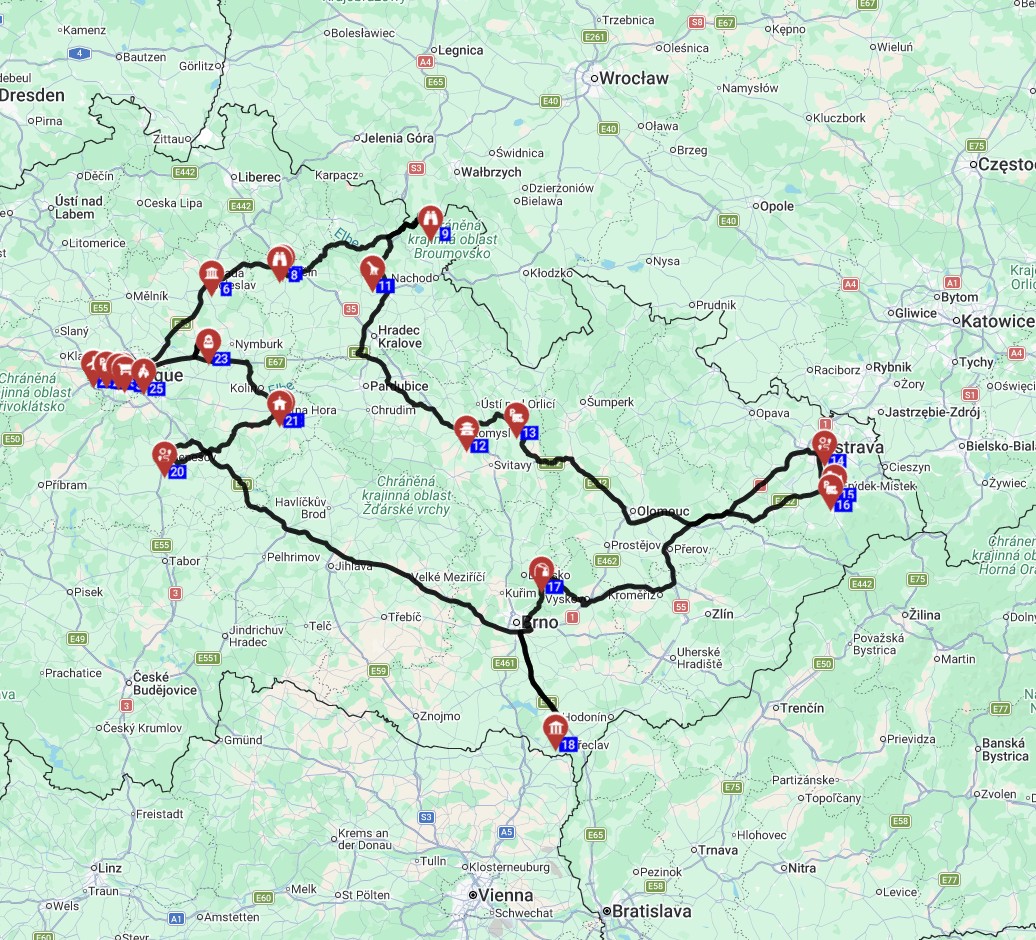
Road conditions in and around Prague are generally good, with well-maintained motorways and regional roads, though cobblestone streets in historic areas and winding routes in rural Czechia require careful RV navigation. The main motorways (D1, D5, D8, etc.) connecting Prague to other major cities and neighboring countries are smooth and suitable for all RV classes.
Within Prague, urban roads are generally well-paved, but historical districts feature uneven cobblestones which necessitate slower speeds and a smoother driving style for luxury RVs. The broader Czech Republic features a mix of flat plains, rolling hills, and mountainous regions (e.g., Krkonoše), with regional roads varying in width and quality, though rarely challenging for larger RVs. Drivers of luxury RVs are encouraged to embrace slower, scenic routes, allowing for a more immersive travel experience and easier navigation through smaller towns.
RV Size Limits, Bridges & Restricted Zones
While specific height and weight restrictions are primarily found in Prague's historic city centers and on older bridges, RV drivers should always heed local signage to avoid restricted zones. Most main routes and modern infrastructure in and around Prague are designed to accommodate large vehicles, but historic areas may have narrow streets and low bridges.
Pay close attention to road signs indicating maximum height (výška) and weight (váha) limits, especially when entering tunnels or older parts of towns. Prague also implements environmental zones (Low Emission Zones) that may restrict access for older, less environmentally friendly vehicles; ensure your rental RV meets current emission standards. There are no significant ferry limits to consider for domestic travel within the Czech Republic, but international travel might involve varying regulations depending on the destination country.
Fuel: Diesel vs. Petrol & Cost per 100 km
Diesel is the prevalent fuel type for luxury RV rentals in Prague and across the Czech Republic, readily available at most service stations. Most RVs in Bandana's local fleet, including Class B - Camper Vans, Class SI - Semi-integrated, Class C - Alcove, and Class A - Integrated, operate on diesel fuel.
Based on Bandana's local fleet data, common fuel consumption ranges from 9-11 Liters/100Km for Class B - Camper Vans and 9-13 L / 100 km for Class SI - Semi-integrated, Class C - Alcove, and Class A - Integrated RVs. Fuel prices in the Czech Republic fluctuate but are generally competitive with neighboring Central European countries; always check local prices upon arrival. Some rent-motorhome RVs may offer fuel discount cards or provide guidance on selecting optimal fuel stations, enhancing convenience and potentially reducing costs.
Tolls, Vignettes & Border Rules
Driving an RV in the Czech Republic requires adherence to the electronic vignette (e-vignette) system for vehicles up to 3.5 tonnes, while heavier RVs need an on-board unit for tolls on motorways and expressways. For RVs up to 3.5 tonnes, an e-vignette can be purchased online, at Czech Post offices, or at fuel stations near the border, and must be valid for the duration of your stay on toll roads. On the routes offered through RV PLANET routes, you can itemize and track every expense along the way for easy budgeting.
RVs exceeding 3.5 tonnes Gross Vehicle Weight (GVW) must use the Myto CZ electronic toll system, requiring an on-board unit (OBU) which can typically be rented from the toll operator or arranged through your rental provider. When traveling to neighboring countries, be aware of their respective toll systems: Austria and Slovakia also use vignettes (e-vignettes), while Germany has no general tolls for vehicles under 7.5t on motorways but does have environmental zones, and Poland uses an e-toll system (e-TOLL). Some rent-motorhome RVs allow pre-purchasing toll passes or provide OBUs, which can simplify travel and help avoid fines for non-compliance.
Driving Tips for Luxury RV Rental Travelers
To ensure a smooth luxury RV experience in Prague and Czechia, prioritize planning your route, understanding local road rules, and being mindful of vehicle size in urban areas. Plan your route carefully, utilizing GPS systems that allow for RV-specific dimensions to avoid low bridges, narrow streets, and weight-restricted areas, especially when navigating historical towns or rural roads.
Master local signage by familiarizing yourself with Czech road signs, which largely follow European standards, paying particular attention to parking restrictions, speed limits, and no-entry zones for larger vehicles. Embrace automatic transmission, as many luxury RVs offer it, which greatly simplifies driving on winding roads and in urban traffic, allowing for a more relaxed journey. Secure all internal fixtures, cupboards, and loose items before setting off to prevent damage or distraction while driving, particularly on uneven surfaces. Despite the comfort of luxury RVs, fatigue can set in; plan stops every few hours, especially for families, to stretch, refresh, and appreciate the scenic surroundings, enhancing the overall travel experience.
Recommended RV Class for Prague - Praha Roads
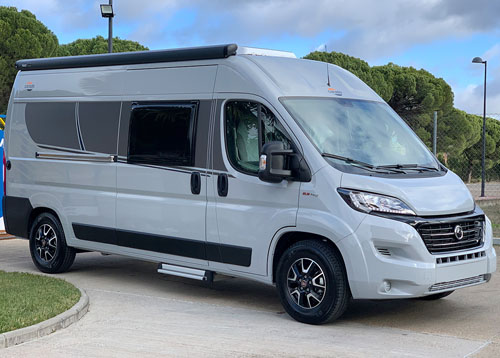
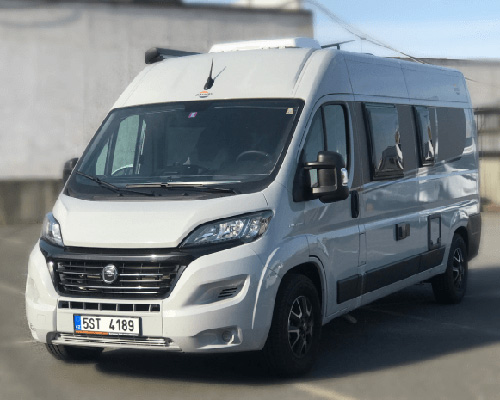
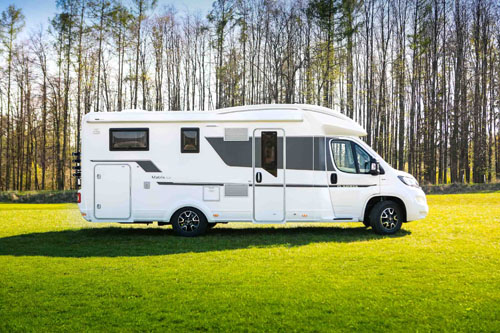
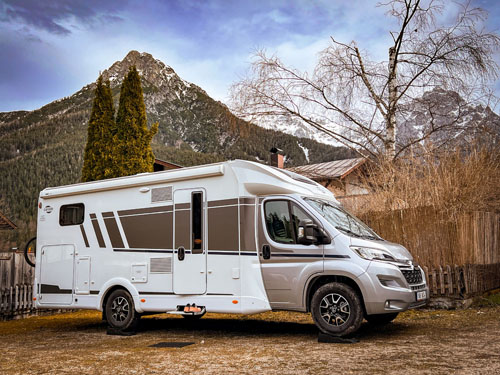
For driving in and around Prague, Class SI (Semi-integrated) and Class A (Integrated) RVs offer an excellent balance of comfort, amenities, and maneuverability, suiting most Czech roads. Bandana's local fleet includes Class SI (average length 7.4m) and Class A (average length 7m) models, which are generally well-suited for Czech motorways and regional routes.
These classes provide ample living space and luxury amenities without being excessively long, making them manageable for parking at campsites and navigating larger towns. Their typically higher ground clearance and robust build are advantageous on occasionally uneven regional roads compared to smaller vehicles. While Class B Camper Vans (average 6.1m) are excellent for urban agility, Class SI and A offer a superior 'luxury' experience with more space and features for extended stays in the Czech countryside.
Should I Choose a Compact Van Instead of a Large RV in Prague - Praha?
While compact camper vans offer slightly easier maneuverability in tight urban centers and parking, larger luxury RVs generally pose no significant issue on main Czech roads and provide superior comfort and amenities for extended trips. A compact van (like Bandana's Class B - Camper Van, averaging 6.1m) excels in navigating very narrow historic streets, finding smaller parking spots, and offering better fuel economy (9-11 Liters/100Km).
However, for a true luxury experience, the added space, comfort, and amenities of a Class SI (7.4m average), Class C (7.3m average), or Class A (7m average) RV often outweigh the marginal maneuverability benefits of a compact van. Main roads, highways, and designated RV campsites in the Czech Republic are well-equipped to handle larger vehicles, making the choice primarily about your desired level of interior comfort versus ultimate urban agility. If your itinerary focuses heavily on exploring the deepest parts of historical city centers, a compact van might offer a slight advantage; however, for a comprehensive tour of Prague and the wider Czech Republic, a larger luxury RV provides a significantly more comfortable 'home on wheels'.