In This Guide
- Can You Drive an RV in Paris? License & Age Rules
- Road Conditions & Terrain in Paris
- RV Size Limits, Bridges & Restricted Zones
- Fuel: Diesel vs. Petrol & Cost per 100 km
- Tolls, Vignettes & Border Rules
- Driving Tips for Rv Rental Travelers
- Recommended RV Class for Paris Roads
- Should I Choose a Compact Van Instead of a Large RV in Paris?
- Can I Park Anywhere? Free & Wild Camping Rules in Paris
- Can I Drive an RV Into the City Center? Heights, Tunnels & Local Signage
- Do I need a Crit'Air sticker for my motorhome in France?
- Are D-roads in France suitable for motorhomes?
- Do I have to pay Paris low emission zone?
- Is France motorhome friendly?
- Can I drive in Paris with a US driver's license?
- Can you own an RV in Europe?
- What kind of license is required for an RV?
- How much is insurance on a €200,000 RV?
- Does France have public liability insurance?
- What You Shouldn't Miss
- Why Book with Bandana Caravan
- Final Thoughts
- Frequently Asked Questions
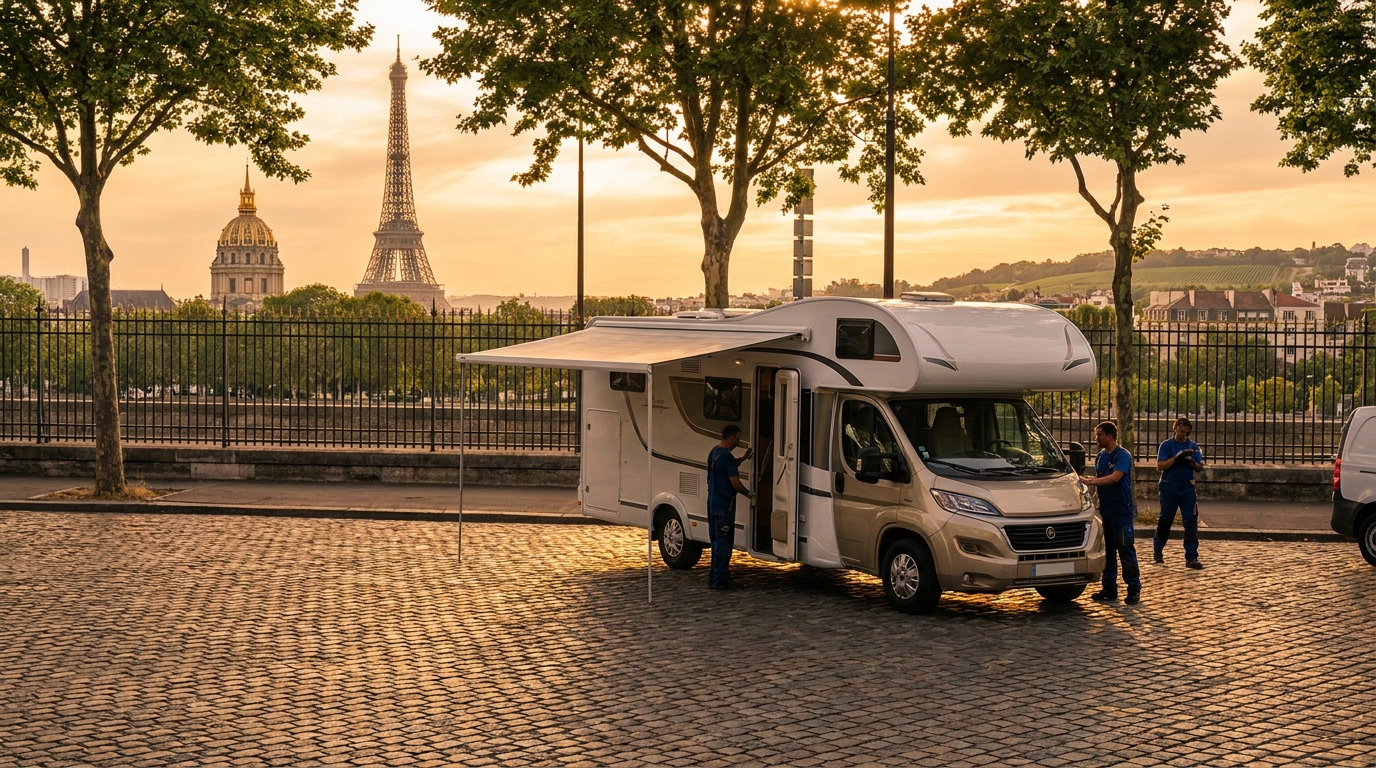
Imagine yourself cruising along the romantic streets of Paris, turning heads in a stylish, luxury rented motorhome. While Paris is famous for its intricate architecture and bustling city life, a luxury RV rental in Paris offers an unparalleled way to explore the City of Light and its stunning environs with ultimate comfort and flexibility. At Bandana RV, we believe that traveling by RV should be an inspiring and seamless experience, which is why we’ve curated this guide to help you navigate the scenic routes and practicalities of an unforgettable adventure. For live availability and current prices, start with our RV Rental Paris - Complete Guide 2026 guide.
Can You Drive an RV in Paris? License & Age Rules
Yes, you can absolutely drive a rented RV in Paris, and a standard B category driver's license is typically sufficient for motorhomes up to 3,500 kg (7,700 lbs) Maximum Authorized Mass (MAM) in France.
Most campervans and many Class C or Class SI motorhomes fall within this weight limit, making them accessible to a wide range of drivers. For example, a typical Class B - Camper Van such as the 'V3' model available through Bandana has a length of 6.36 meters, a width of 2.05 meters, and a maximum authorized mass well within the standard license requirements. If you're considering a larger vehicle, such as a full-sized Class A motorhome or a bigger Class C, vehicles exceeding 3,500 kg MAM may require a C1 or C category license, although these are less common for rentals in urban European settings. The minimum driver age for RV rentals in France is 21 years old, and Bandana ensures no young driver surcharges or vehicle class restrictions based on age, making luxury RV rental in Paris accessible for more travelers. Foreign drivers, including those from the US, can typically drive in France with their valid national driver's license for short stays (up to one year), but an International Driving Permit (IDP) is strongly recommended as a translation and is often required by rental agencies or for insurance purposes. We handle the details, you live the journey – personal service from day one until your booking is confirmed.
Road Conditions & Terrain in Paris
Parisian roads are generally well-maintained within the city, consisting primarily of paved streets and wide boulevards that are manageable for rented motorhomes.
The terrain within Paris is mostly flat, with only gentle inclines in some areas like Montmartre, making it generally easy for most RVs to navigate. Outside the immediate city center, roads smoothly transition into major highways (autoroutes) or picturesque departmental (D-roads) and national (N-roads) routes, all of which are typically suitable for various motorhome sizes. Urban driving, especially around the Périphérique (ring road), involves high traffic density, requiring careful navigation and attention to numerous lanes and merges, which can be part of the Parisian driving experience. For those looking to enjoy France's beautiful countryside at a more leisurely pace, encouraging slow, scenic driving on D-roads outside Paris offers a relaxed experience and access to charming villages and vineyards. Traveling slowly, with an average of max 100-150 km per day, allows you to truly feel the place, connect to the culture, the food, and the scenery around Paris.
RV Size Limits, Bridges & Restricted Zones
Paris, like many historic European cities, has specific height restrictions in older areas, tunnels, and underground parking garages, which can often be as low as 2 meters (6 ft 6 in) or 2.5 meters (8 ft 2 in).
Most standard rented RVs, especially Class C or Class SI motorhomes that can be up to 7.5 meters long, exceed these typical urban height limits, meaning drivers must always check signage for vehicle dimensions before entering restricted areas or parking facilities. For instance, the 'cruise america rv rental example Explorer' is 7.1 meters long, so awareness is key. The city also operates Low Emission Zones (ZFE), which restrict access for vehicles based on their Crit'Air sticker classification, meaning older or more polluting RVs may be prohibited from driving in certain areas or during specific times, including much of central Paris. There are no ferry limits specifically within Paris itself, but if you plan an extended two-week adventure that involves crossing the English Channel or other waterways, rented RV dimensions and weight will be a crucial factor for ferry bookings. Drive slowly and carefully, and you can drive almost anywhere without issues. No need to stress - just use common sense and pay attention.
Fuel: Diesel vs. Petrol & Cost per 100 km
Diesel fuel (known as Gazole or Gasoil) is the predominant fuel type for rented RVs in France, and it is readily available at all service stations, including those surrounding Paris.
Petrol (Essence or Sans Plomb) is also widely available, though less common for larger motorhomes. Based on Bandana's global fleet averages, a Class SI - Semi-integrated RV typically consumes around 10.5 liters/100 km, while a Class C - Alcove RV averages about 11 liters/100 km. A more compact Class B - Camper Van, such as the 'Active Classic' model, might achieve 9-10 liters/100 km, offering better fuel efficiency for urban exploration or shorter day trips from Paris. The average cost per 100 km in Paris will depend on current dynamic fuel prices, but using these consumption figures, travelers can easily estimate their budget; for example, if diesel is €1.80/liter, 10 liters/100km would cost approximately €18 per 100 km. When considering ancillary trip costs, know that with RV PLANET routes, you can itemize and track every expense along the way for easy budgeting. We always ensure full transparency with no hidden fees or surprises. On the routes offered through RV PLANET routes, you can itemize and track every expense along the way for easy budgeting.
Tolls, Vignettes & Border Rules
France primarily uses a toll road system (péage) for its extensive autoroute network, which you will certainly encounter when driving to and from Paris or on longer journeys across the country in your rented motorhome.
Tolls are typically paid at booths with cash or credit card, or more conveniently via an electronic tag system (e.g., Liber-t badge), which can often be pre-arranged with your rental provider. Unlike some other European countries, France does not use a vignette system for its general road network; tolls are applied directly to specific autoroutes, which keeps things clear. For border crossings into neighboring countries during your extended road trip, be aware that nations like Switzerland and Austria do require a vignette for highway use, and Germany has its own environmental zone rules, requiring prior research. Some Bandana partner suppliers allow pre-purchasing electronic toll passes to avoid stopping at toll booths and streamline travel, potentially preventing fines for missed payments. This attention to small details makes a big difference.
Driving Tips for Rv Rental Travelers
Successfully navigating Paris in a rented RV means mastering the Périphérique, the city's ring road, which can be daunting; prioritize the right-of-way rule ('priorité à droite') at intersections and maintain constant awareness for sudden merges and exits.
For families embarking on a week-long trip, planning regular breaks every 2-3 hours at designated rest areas (aires) along major routes is crucial to ensure comfort and safety for everyone onboard. Budgeting wisely for tolls is also essential, especially for budget-conscious travelers, as these costs can add up quickly on longer itineraries; consider pre-paying for toll passes to streamline expenses, or refer to resources like "RV Rental in Paris - Prices and Best Deals 2026" to understand potential costs. For parking in Paris, the best strategy is to utilize park-and-ride facilities on the outskirts of Paris and then use the city's excellent public transport into the city center, as on-street RV parking is very limited and often restricted. Always use an RV-specific GPS that accounts for vehicle dimensions (height, weight) to avoid low bridges, narrow streets, and restricted zones; this proactive approach ensures a stress-free experience.
Recommended RV Class for Paris Roads
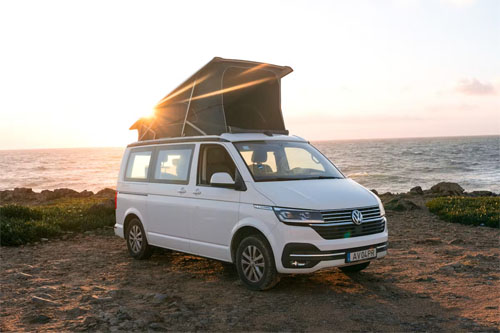
For navigating Paris and its surrounding areas, a Class B - Camper Van is often highly recommended due to its superior maneuverability and compact size.
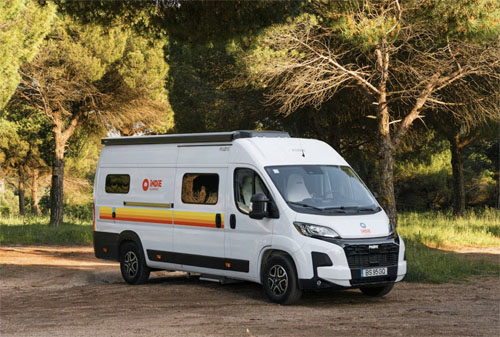
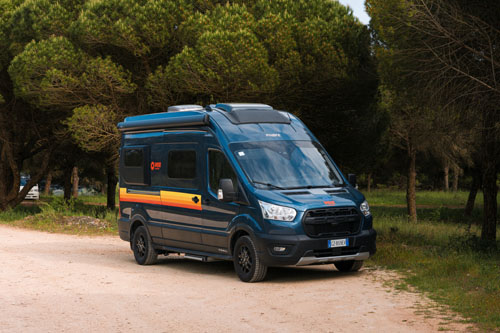
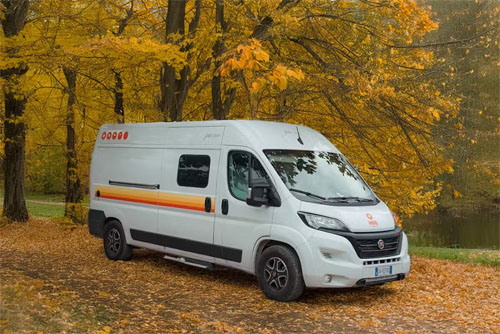
Bandana's Class B Camper Vans, like the 'Duo' or 'V2L' models, average around 5.99 meters in length and 2.05 meters in width, making them significantly easier to handle on narrower urban streets and to park compared to larger motorhome models. These smaller units are ideal for young couples or small families wanting to minimize urban driving stress. Alternatively, a Class SI - Semi-integrated motorhome, such as the 'K3' model (6.99 meters long, 2.32 meters wide), offers a good balance of comfort and a still-reasonable size for longer trips while remaining manageable for most French roads. It provides more living space, a full kitchen for preparing meals (check out our RV-friendly recipes playlist!), and amenities, without being overly cumbersome. Deciding between a Class B and a Class SI often depends on the duration of your trip and the number of travelers, though both are excellent choices for exploring Paris and beyond.
Should I Choose a Compact Van Instead of a Large RV in Paris?
While a compact campervan (like a Class B) offers genuine advantages in maneuverability and parking in dense urban areas like Paris, for many travelers, the enhanced comfort and indoor space of a larger rented RV (such as a Class SI or C) often outweigh these concerns for an extended road trip.
A compact van genuinely helps in navigating very tight historic city centers, extremely narrow village streets, or specific mountain passes where vehicle dimensions are critically limited. However, for general touring in and around Paris and across the wider French countryside, main roads and designated RV parking facilities are designed to accommodate larger vehicles without issues. Sticking with a larger RV means more amenities, more sleeping capacity (a Bandana Class C - Alcove, like the 'MHC24', typically offers 6 sleeping places), and greater comfort for longer journeys and inclement weather, making it the better trade-off for many families or groups of 4-6 people. You can find excellent options for both sizes by checking our RV Rental Deals in Paris - Latest Offers 2026 page.
Can I Park Anywhere? Free & Wild Camping Rules in Paris
In France, wild camping (camping sauvage) is generally prohibited, particularly in protected areas, along coastlines, and near classified historical sites, and this rule extends to the highly urbanized area of Paris.
Overnight parking in a rented RV is typically restricted to designated campsites (terrains de camping) or official motorhome service areas (aires de services pour camping-cars), ensuring you have proper facilities. Within Paris itself, free overnight parking for RVs is virtually nonexistent, and unauthorized parking can regrettably result in fines or towing, making planning ahead crucial. It is therefore essential to research and book RV-friendly campsites or aires on the outskirts of Paris, such such as Camping de Paris in the Bois de Boulogne, and then use the city’s excellent public transportation to access the city center. Rules for overnight parking and camping vary by region, so always check local regulations and follow local law before parking your rented motorhome overnight to avoid any surprises.
Can I Drive an RV Into the City Center? Heights, Tunnels & Local Signage
Yes, you can almost always drive a rented RV into or near Paris city center areas, though access is often restricted by specific local rules, particularly environmental zones and vehicle dimensions.
It is critical to pay close attention to local signage, which will clearly indicate height limits for tunnels and low bridges; some Parisian tunnels, especially those near the Seine, can be quite low, typically for cars only, with clearances sometimes as low as 2.7 meters (8 ft 10 in). You must also be aware of Paris's Low Emission Zone (ZFE), which restricts access for vehicles based on their Crit'Air sticker classification, sometimes prohibiting older RVs from the city center, as detailed in "Do I have to pay Paris low emission zone?". Many historic streets in central Paris are narrow, one-way, or designated as residents-only, making them impractical or off-limits for larger RVs. The best strategy is often to park your RV at a designated campsite or park-and-ride facility on the city's outskirts, then use Paris's excellent public transport system (Métro, RER, buses) to explore the core attractions like the Eiffel Tower, Louvre, and Notre Dame. Remember, drive slowly and carefully, and you can navigate almost anywhere without issue.
Do I need a Crit'Air sticker for my motorhome in France?
Yes, a Crit'Air sticker is mandatory for most vehicles, including rented motorhomes, to drive in designated Low Emission Zones (ZFE) in France, including the expansive area of Paris.
The Crit'Air vignette, a colored sticker displayed prominently on your windscreen, indicates your vehicle's emission class, ranging from green (cleanest) to grey (most polluting). Access to ZFEs is strictly restricted based on the sticker's classification, with older, more polluting vehicles often prohibited during certain hours or days. You can easily order the Crit'Air sticker online from the official French Ministry of Ecological Transition website before your trip to Paris, ensuring a smooth entry into urban areas.
Are D-roads in France suitable for motorhomes?
Yes, D-roads (Departmental roads) in France are generally very suitable and often preferred for rented motorhomes due to their scenic routes and access to charming smaller towns and villages.
These roads typically offer a more relaxed driving experience compared to the busier autoroutes, providing opportunities to travel slowly and often passing through picturesque countryside, making them ideal for an extended road trip. While generally well-maintained, D-roads can sometimes be narrower or windier than national or regional roads, requiring cautious driving, especially for larger motorhomes, but they are perfectly navigable. They frequently lead to charming local attractions, hidden gem campsites, and convenient motorhome service points that are often inaccessible from major highways.
Do I have to pay Paris low emission zone?
Vehicles, including rented RVs, driving within the Paris Low Emission Zone (Zone à Faibles Émissions – ZFE) must display a valid Crit'Air vignette, and access is restricted based on the sticker's classification and the day of the week, with older, more polluting vehicles often prohibited.
The ZFE covers Paris within the A86 motorway (excluding the Bois de Boulogne and Bois de Vincennes), and specific access rules vary depending on the Crit'Air sticker category your rented motorhome holds. Generally, stricter restrictions are in place on weekdays from 8 AM to 8 PM, and these rules are often tightened for older vehicles on weekends or during pollution peaks, without a direct "payment" to enter. Non-compliance by not displaying an appropriate Crit'Air sticker can result in fines ranging from €68 for light vehicles to €135 for heavier ones, so planning is essential.
Is France motorhome friendly?
France is widely considered a highly motorhome-friendly country, offering extensive and well-developed infrastructure specifically for RV travelers, including numerous campsites, dedicated service areas (aires de services), and scenic routes.
The country boasts thousands of dedicated 'aires de services' where rented RVs can conveniently park, empty waste, and refill water, many of which are free or available at very low cost, making self-contained travel straightforward. French regulations generally allow overnight parking for self-contained RVs where not explicitly forbidden, though wild camping is more restricted, particularly in urban and protected areas. The incredible variety of landscapes, from the stunning coastlines to the majestic mountains and charming historic villages, combined with excellent road networks, makes France an ideal destination for a memorable RV rental adventure.
Can I drive in Paris with a US driver's license?
Yes, US citizens can generally drive in France, including Paris, for short visits (typically up to one year) with a valid US driver's license, though an International Driving Permit (IDP) is highly recommended and sometimes required by rental companies or insurance providers.
The IDP serves as an official translation of your US license into several languages, which can prevent misunderstandings with local law enforcement and simplify interactions with rental agencies or in case of an accident. You can obtain an IDP from AAA or AATA before your trip to Paris. While not always legally mandated for short stays, having an IDP provides an extra layer of reassurance. Always carry both your valid US driver's license and your IDP (if obtained) when driving your rented motorhome in France.
Can you own an RV in Europe?
Yes, non-EU residents can own an RV in Europe, but the process involves navigating complex vehicle registration, insurance, and residency requirements, which are often simplified by opting for rental or long-term lease options for vacation travel.
Registering a vehicle in a European country typically requires a permanent address there, making it challenging for non-residents. Insurance for a foreign-owned vehicle can also be significantly more complex and expensive for non-EU citizens. For those planning an extended European adventure, many non-EU residents find that long-term rentals through platforms like Bandana, or specialized lease-back programs, offer a more straightforward and hassle-free way to experience RV travel in Europe without the complexities of ownership. Our focus is exclusively on RV rental, providing the easiest, safest, and most affordable way to rent an RV.
What kind of license is required for an RV?
In France, a standard B category driver's license is typically sufficient for driving most rented RVs up to 3,500 kg Maximum Authorized Mass (MAM), which includes many common campervans and semi-integrated motorhomes.
For rented RVs with a MAM between 3,500 kg and 7,500 kg, a C1 category license is legally required, while vehicles exceeding 7,500 kg MAM necessitate a full C category license. It is always essential to verify the specific MAM of your chosen rental RV and ensure your driver's license category is appropriate for its weight, especially if you are considering a larger Class C - Alcove or Class A - Integrated model from our diverse fleet. Bandana's partners generally provide vehicles that can be driven with a standard B license, making RV travel accessible for almost everyone.
How much is insurance on a €200,000 RV?
The cost of insurance for a €200,000 RV in France can vary significantly based on factors such as the driver's history, the type and extent of coverage, the duration of rental, and the specific insurer, typically ranging from several hundred to over a thousand euros annually for comprehensive coverage for an owned vehicle.
For rented RVs, essential public liability insurance is always included in the rental price, but it's crucial for travelers to understand the deductible amount. Many renters opt to purchase supplementary coverage, such as a top-level deductible reimbursement, for extra peace of mind during their trip. You can find out more about these options when comparing motorhome prices for Paris through our platform, ensuring full transparency without hidden fees.
Does France have public liability insurance?
Yes, France has a robust and mandatory system for public liability insurance (assurance responsabilité civile), which is a crucial component of all vehicle insurance policies and covers damages or injuries caused to third parties by the insured vehicle.
This essential insurance protects the driver against financial liabilities arising from accidents where they are at fault, providing coverage for both bodily injury and property damage to others. When you rent an RV in France through Bandana, public liability insurance is always included as part of the vehicle's mandatory insurance policy, ensuring you are covered for basic third-party risks. We make sure all the details are transparent, so you can embark on your "RV Travel Guide to Paris - Tips and Top Spots 2026" knowing you're supported.
🎬 Video coming soon
What You Shouldn't Miss
- **Cruise the Seine by Night:** Experience Paris's iconic landmarks like the Eiffel Tower and Notre Dame illuminated against the night sky, a truly magical view from the comfort of your rented motorhome parked nearby or from a scenic overlook.
- **Explore the Loire Valley Châteaux:** Drive your campervan west from Paris along the picturesque D-roads (Departmental roads) into the Loire Valley, discovering magnificent castles like Château de Chambord and Château de Chenonceau.
- **Indulge in Parisian Markets:** Visit local markets like Marché des Enfants Rouges, the oldest covered market in Paris, to gather fresh ingredients for delicious meals in your RV's kitchen, sampling French cheeses, fresh bread, and regional produce.
- **Day Trip to Versailles Palace:** Park your rented RV in one of the designated areas near Versailles and spend a day immersing yourself in the opulent history of the Palace of Versailles and its sprawling gardens, just a short drive from Paris.
- **Discover Giverny and Monet's Gardens:** Head northwest from Paris to the charming village of Giverny, where Claude Monet lived and painted, and wander through his famous water lily gardens, a serene escape for an RV trip.
- **A Week-Long Trip through Normandy:** Extend your Paris RV adventure into a week-long journey through Normandy, visiting historic D-Day beaches, Mont Saint-Michel, and charming coastal towns, experiencing rich history and breathtaking landscapes.
Final Thoughts
Embarking on a luxury RV driving adventure in Paris and its scenic surroundings is an experience unlike any other. It offers you the freedom to explore the enchanting city at your own pace, delve into the rich culture, and savor exquisite food, all while enjoying the comforts of your home on wheels. Whether you choose a compact campervan for urban agility or a spacious motorhome for a family getaway, Bandana RV is here to ensure your journey is seamless and filled with joy.
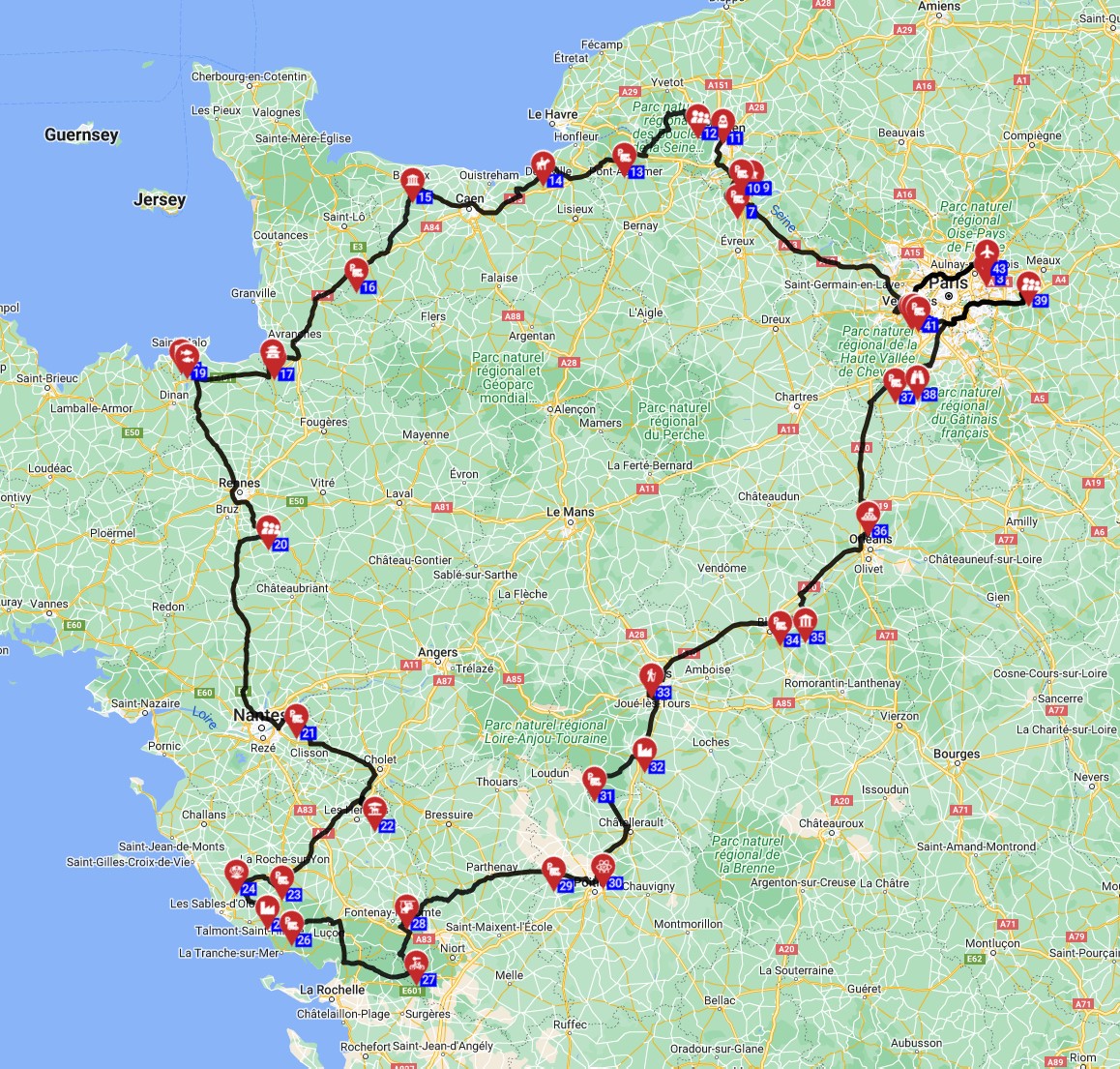
Remember to embrace slow travel, dedicating ample time to truly connect with each destination, from historic landmarks to quaint French villages. With our transparent pricing, expert support, and comprehensive resources like RV PLANET for route planning, you're well-equipped for an unforgettable vacation. Let us help you unlock the magic of Paris and beyond with a perfect rented RV for your next great escape. Discover top destinations, planning tips, all in one place!
Find Motorhome Rentals in ParisIn This Guide
- Can You Drive an RV in Paris? License & Age Rules
- Road Conditions & Terrain in Paris
- RV Size Limits, Bridges & Restricted Zones
- Fuel: Diesel vs. Petrol & Cost per 100 km
- Tolls, Vignettes & Border Rules
- Driving Tips for Rv Rental Travelers
- Recommended RV Class for Paris Roads
- Should I Choose a Compact Van Instead of a Large RV in Paris?
- Can I Park Anywhere? Free & Wild Camping Rules in Paris
- Can I Drive an RV Into the City Center? Heights, Tunnels & Local Signage
- Do I need a Crit'Air sticker for my motorhome in France?
- Are D-roads in France suitable for motorhomes?
- Do I have to pay Paris low emission zone?
- Is France motorhome friendly?
- Can I drive in Paris with a US driver's license?
- Can you own an RV in Europe?
- What kind of license is required for an RV?
- How much is insurance on a €200,000 RV?
- Does France have public liability insurance?
- What You Shouldn't Miss
- Why Book with Bandana Caravan
- Final Thoughts
- Frequently Asked Questions
Imagine yourself cruising along the romantic streets of Paris, turning heads in a stylish, luxury rented motorhome. While Paris is famous for its intricate architecture and bustling city life, a luxury RV rental in Paris offers an unparalleled way to explore the City of Light and its stunning environs with ultimate comfort and flexibility. At Bandana RV, we believe that traveling by RV should be an inspiring and seamless experience, which is why we’ve curated this guide to help you navigate the scenic routes and practicalities of an unforgettable adventure. For live availability and current prices, start with our RV Rental Paris - Complete Guide 2026 guide.
Can You Drive an RV in Paris? License & Age Rules
Yes, you can absolutely drive a rented RV in Paris, and a standard B category driver's license is typically sufficient for motorhomes up to 3,500 kg (7,700 lbs) Maximum Authorized Mass (MAM) in France.
Most campervans and many Class C or Class SI motorhomes fall within this weight limit, making them accessible to a wide range of drivers. For example, a typical Class B - Camper Van such as the 'V3' model available through Bandana has a length of 6.36 meters, a width of 2.05 meters, and a maximum authorized mass well within the standard license requirements. If you're considering a larger vehicle, such as a full-sized Class A motorhome or a bigger Class C, vehicles exceeding 3,500 kg MAM may require a C1 or C category license, although these are less common for rentals in urban European settings. The minimum driver age for RV rentals in France is 21 years old, and Bandana ensures no young driver surcharges or vehicle class restrictions based on age, making luxury RV rental in Paris accessible for more travelers. Foreign drivers, including those from the US, can typically drive in France with their valid national driver's license for short stays (up to one year), but an International Driving Permit (IDP) is strongly recommended as a translation and is often required by rental agencies or for insurance purposes. We handle the details, you live the journey - personal service from day one until your booking is confirmed.
Road Conditions & Terrain in Paris
Parisian roads are generally well-maintained within the city, consisting primarily of paved streets and wide boulevards that are manageable for rented motorhomes.
The terrain within Paris is mostly flat, with only gentle inclines in some areas like Montmartre, making it generally easy for most RVs to navigate. Outside the immediate city center, roads smoothly transition into major highways (autoroutes) or picturesque departmental (D-roads) and national (N-roads) routes, all of which are typically suitable for various motorhome sizes. Urban driving, especially around the Périphérique (ring road), involves high traffic density, requiring careful navigation and attention to numerous lanes and merges, which can be part of the Parisian driving experience. For those looking to enjoy France's beautiful countryside at a more leisurely pace, encouraging slow, scenic driving on D-roads outside Paris offers a relaxed experience and access to charming villages and vineyards. Traveling slowly, with an average of max 100-150 km per day, allows you to truly feel the place, connect to the culture, the food, and the scenery around Paris.
RV Size Limits, Bridges & Restricted Zones
Paris, like many historic European cities, has specific height restrictions in older areas, tunnels, and underground parking garages, which can often be as low as 2 meters (6 ft 6 in) or 2.5 meters (8 ft 2 in).
Most standard rented RVs, especially Class C or Class SI motorhomes that can be up to 7.5 meters long, exceed these typical urban height limits, meaning drivers must always check signage for vehicle dimensions before entering restricted areas or parking facilities. For instance, the 'cruise america rv rental example Explorer' is 7.1 meters long, so awareness is key. The city also operates Low Emission Zones (ZFE), which restrict access for vehicles based on their Crit'Air sticker classification, meaning older or more polluting RVs may be prohibited from driving in certain areas or during specific times, including much of central Paris. There are no ferry limits specifically within Paris itself, but if you plan an extended two-week adventure that involves crossing the English Channel or other waterways, rented RV dimensions and weight will be a crucial factor for ferry bookings. Drive slowly and carefully, and you can drive almost anywhere without issues. No need to stress - just use common sense and pay attention.
Fuel: Diesel vs. Petrol & Cost per 100 km
Diesel fuel (known as Gazole or Gasoil) is the predominant fuel type for rented RVs in France, and it is readily available at all service stations, including those surrounding Paris.
Petrol (Essence or Sans Plomb) is also widely available, though less common for larger motorhomes. Based on Bandana's global fleet averages, a Class SI - Semi-integrated RV typically consumes around 10.5 liters/100 km, while a Class C - Alcove RV averages about 11 liters/100 km. A more compact Class B - Camper Van, such as the 'Active Classic' model, might achieve 9-10 liters/100 km, offering better fuel efficiency for urban exploration or shorter day trips from Paris. The average cost per 100 km in Paris will depend on current dynamic fuel prices, but using these consumption figures, travelers can easily estimate their budget; for example, if diesel is €1.80/liter, 10 liters/100km would cost approximately €18 per 100 km. When considering ancillary trip costs, know that with RV PLANET routes, you can itemize and track every expense along the way for easy budgeting. We always ensure full transparency with no hidden fees or surprises.
Tolls, Vignettes & Border Rules
France primarily uses a toll road system (péage) for its extensive autoroute network, which you will certainly encounter when driving to and from Paris or on longer journeys across the country in your rented motorhome.
Tolls are typically paid at booths with cash or credit card, or more conveniently via an electronic tag system (e.g., Liber-t badge), which can often be pre-arranged with your rental provider. Unlike some other European countries, France does not use a vignette system for its general road network; tolls are applied directly to specific autoroutes, which keeps things clear. For border crossings into neighboring countries during your extended road trip, be aware that nations like Switzerland and Austria do require a vignette for highway use, and Germany has its own environmental zone rules, requiring prior research. Some Bandana partner suppliers allow pre-purchasing electronic toll passes to avoid stopping at toll booths and streamline travel, potentially preventing fines for missed payments. This attention to small details makes a big difference.
Driving Tips for Rv Rental Travelers
Successfully navigating Paris in a rented RV means mastering the Périphérique, the city's ring road, which can be daunting; prioritize the right-of-way rule ('priorité à droite') at intersections and maintain constant awareness for sudden merges and exits.
For families embarking on a week-long trip, planning regular breaks every 2-3 hours at designated rest areas (aires) along major routes is crucial to ensure comfort and safety for everyone onboard. Budgeting wisely for tolls is also essential, especially for budget-conscious travelers, as these costs can add up quickly on longer itineraries; consider pre-paying for toll passes to streamline expenses, or refer to resources like RV Rental in Paris - Prices and Best Deals 2026 to understand potential costs. For parking in Paris, the best strategy is to utilize park-and-ride facilities on the outskirts of Paris and then use the city's excellent public transport into the city center, as on-street RV parking is very limited and often restricted. Always use an RV-specific GPS that accounts for vehicle dimensions (height, weight) to avoid low bridges, narrow streets, and restricted zones; this proactive approach ensures a stress-free experience.
Recommended RV Class for Paris Roads
For navigating Paris and its surrounding areas, a Class B - Camper Van is often highly recommended due to its superior maneuverability and compact size.
Bandana's Class B Camper Vans, like the 'Duo' or 'V2L' models, average around 5.99 meters in length and 2.05 meters in width, making them significantly easier to handle on narrower urban streets and to park compared to larger motorhome models. These smaller units are ideal for young couples or small families wanting to minimize urban driving stress. Alternatively, a Class SI - Semi-integrated motorhome, such as the 'K3' model (6.99 meters long, 2.32 meters wide), offers a good balance of comfort and a still-reasonable size for longer trips while remaining manageable for most French roads. It provides more living space, a full kitchen for preparing meals (check out our RV-friendly recipes playlist!), and amenities, without being overly cumbersome. Deciding between a Class B and a Class SI often depends on the duration of your trip and the number of travelers, though both are excellent choices for exploring Paris and beyond.
Should I Choose a Compact Van Instead of a Large RV in Paris?
While a compact campervan (like a Class B) offers genuine advantages in maneuverability and parking in dense urban areas like Paris, for many travelers, the enhanced comfort and indoor space of a larger rented RV (such as a Class SI or C) often outweigh these concerns for an extended road trip.
A compact van genuinely helps in navigating very tight historic city centers, extremely narrow village streets, or specific mountain passes where vehicle dimensions are critically limited. However, for general touring in and around Paris and across the wider French countryside, main roads and designated RV parking facilities are designed to accommodate larger vehicles without issues. Sticking with a larger RV means more amenities, more sleeping capacity (a Bandana Class C - Alcove, like the 'MHC24', typically offers 6 sleeping places), and greater comfort for longer journeys and inclement weather, making it the better trade-off for many families or groups of 4-6 people. You can find excellent options for both sizes by checking our RV Rental Deals in Paris - Latest Offers 2026 page.
Can I Park Anywhere? Free & Wild Camping Rules in Paris
In France, wild camping (camping sauvage) is generally prohibited, particularly in protected areas, along coastlines, and near classified historical sites, and this rule extends to the highly urbanized area of Paris.
Overnight parking in a rented RV is typically restricted to designated campsites (terrains de camping) or official motorhome service areas (aires de services pour camping-cars), ensuring you have proper facilities. Within Paris itself, free overnight parking for RVs is virtually nonexistent, and unauthorized parking can regrettably result in fines or towing, making planning ahead crucial. It is therefore essential to research and book RV-friendly campsites or aires on the outskirts of Paris, such such as Camping de Paris in the Bois de Boulogne, and then use the city’s excellent public transportation to access the city center. Rules for overnight parking and camping vary by region, so always check local regulations and follow local law before parking your rented motorhome overnight to avoid any surprises.
Can I Drive an RV Into the City Center? Heights, Tunnels & Local Signage
Yes, you can almost always drive a rented RV into or near Paris city center areas, though access is often restricted by specific local rules, particularly environmental zones and vehicle dimensions.
It is critical to pay close attention to local signage, which will clearly indicate height limits for tunnels and low bridges; some Parisian tunnels, especially those near the Seine, can be quite low, typically for cars only, with clearances sometimes as low as 2.7 meters (8 ft 10 in). You must also be aware of Paris's Low Emission Zone (ZFE), which restricts access for vehicles based on their Crit'Air sticker classification, sometimes prohibiting older RVs from the city center, as detailed in Do I have to pay Paris low emission zone?. Many historic streets in central Paris are narrow, one-way, or designated as residents-only, making them impractical or off-limits for larger RVs. The best strategy is often to park your RV at a designated campsite or park-and-ride facility on the city's outskirts, then use Paris's excellent public transport system (Métro, RER, buses) to explore the core attractions like the Eiffel Tower, Louvre, and Notre Dame. Remember, drive slowly and carefully, and you can navigate almost anywhere without issue.
Do I need a Crit'Air sticker for my motorhome in France?
Yes, a Crit'Air sticker is mandatory for most vehicles, including rented motorhomes, to drive in designated Low Emission Zones (ZFE) in France, including the expansive area of Paris.
The Crit'Air vignette, a colored sticker displayed prominently on your windscreen, indicates your vehicle's emission class, ranging from green (cleanest) to grey (most polluting). Access to ZFEs is strictly restricted based on the sticker's classification, with older, more polluting vehicles often prohibited during certain hours or days. You can easily order the Crit'Air sticker online from the official French Ministry of Ecological Transition website before your trip to Paris, ensuring a smooth entry into urban areas.
Are D-roads in France suitable for motorhomes?
Yes, D-roads (Departmental roads) in France are generally very suitable and often preferred for motorhomes due to their scenic routes and access to charming smaller towns and villages.
These roads typically offer a more relaxed driving experience compared to the busier autoroutes, providing opportunities to travel slowly and often passing through picturesque countryside, making them ideal for an extended road trip. While generally well-maintained, D-roads can sometimes be narrower or windier than national or regional roads, requiring cautious driving, especially for larger motorhomes, but they are perfectly navigable. They frequently lead to charming local attractions, hidden gem campsites, and convenient motorhome service points that are often inaccessible from major highways.
Do I have to pay Paris low emission zone?
Vehicles, including rented RVs, driving within the Paris Low Emission Zone (Zone à Faibles Émissions – ZFE) must display a valid Crit'Air vignette, and access is restricted based on the sticker's classification and the day of the week, with older, more polluting vehicles often prohibited.
The ZFE covers Paris within the A86 motorway (excluding the Bois de Boulogne and Bois de Vincennes), and specific access rules vary depending on the Crit'Air sticker category your rented motorhome holds. Generally, stricter restrictions are in place on weekdays from 8 AM to 8 PM, and these rules are often tightened for older vehicles on weekends or during pollution peaks, without a direct "payment" to enter. Non-compliance by not displaying an appropriate Crit'Air sticker can result in fines ranging from €68 for light vehicles to €135 for heavier ones, so planning is essential.
Is France motorhome friendly?
France is widely considered a highly motorhome-friendly country, offering extensive and well-developed infrastructure specifically for RV travelers, including numerous campsites, dedicated service areas (aires de services), and scenic routes.
The country boasts thousands of dedicated 'aires de services' where rented RVs can conveniently park, empty waste, and refill water, many of which are free or available at very low cost, making self-contained travel straightforward. French regulations generally allow overnight parking for self-contained RVs where not explicitly forbidden, though wild camping is more restricted, particularly in urban and protected areas. The incredible variety of landscapes, from the stunning coastlines to the majestic mountains and charming historic villages, combined with excellent road networks, makes France an ideal destination for a memorable RV rental adventure.
Can I drive in Paris with a US driver's license?
Yes, US citizens can generally drive in France, including Paris, for short visits (typically up to one year) with a valid US driver's license, though an International Driving Permit (IDP) is highly recommended and sometimes required by rental companies or insurance providers.
The IDP serves as an official translation of your US license into several languages, which can prevent misunderstandings with local law enforcement and simplify interactions with rental agencies or in case of an accident. You can obtain an IDP from AAA or AATA before your trip to Paris. While not always legally mandated for short stays, having an IDP provides an extra layer of reassurance. Always carry both your valid US driver's license and your IDP (if obtained) when driving your rented motorhome in France.
Can you own an RV in Europe?
Yes, non-EU residents can own an RV in Europe, but the process involves navigating complex vehicle registration, insurance, and residency requirements, which are often simplified by opting for rental or long-term lease options for vacation travel.
Registering a vehicle in a European country typically requires a permanent address there, making it challenging for non-residents. Insurance for a foreign-owned vehicle can also be significantly more complex and expensive for non-EU citizens. For those planning an extended European adventure, many non-EU residents find that long-term rentals through platforms like Bandana, or specialized lease-back programs, offer a more straightforward and hassle-free way to experience RV travel in Europe without the complexities of ownership. Our focus is exclusively on RV rental, providing the easiest, safest, and most affordable way to rent an RV.
What kind of license is required for an RV?
In France, a standard B category driver's license is typically sufficient for driving most rented RVs up to 3,500 kg Maximum Authorized Mass (MAM), which includes many common campervans and semi-integrated motorhomes.
For rented RVs with a MAM between 3,500 kg and 7,500 kg, a C1 category license is legally required, while vehicles exceeding 7,500 kg MAM necessitate a full C category license. It is always essential to verify the specific MAM of your chosen rental RV and ensure your driver's license category is appropriate for its weight, especially if you are considering a larger Class C - Alcove or Class A - Integrated model from our diverse fleet. Bandana's partners generally provide vehicles that can be driven with a standard B license, making RV travel accessible for almost everyone.
How much is insurance on a €200,000 RV?
The cost of insurance for a €200,000 RV in France can vary significantly based on factors such as the driver's history, the type and extent of coverage, the duration of rental, and the specific insurer, typically ranging from several hundred to over a thousand euros annually for comprehensive coverage for an owned vehicle.
For rented RVs, essential public liability insurance is always included in the rental price, but it's crucial for travelers to understand the deductible amount. Many renters opt to purchase supplementary coverage, such as a top-level deductible reimbursement, for extra peace of mind during their trip. You can find out more about these options when comparing motorhome prices for Paris through our platform, ensuring full transparency without hidden fees.
Does France have public liability insurance?
Yes, France has a robust and mandatory system for public liability insurance (assurance responsabilité civile), which is a crucial component of all vehicle insurance policies and covers damages or injuries caused to third parties by the insured vehicle.
This essential insurance protects the driver against financial liabilities arising from accidents where they are at fault, providing coverage for both bodily injury and property damage to others. When you rent an RV in France through Bandana, public liability insurance is always included as part of the vehicle's mandatory insurance policy, ensuring you are covered for basic third-party risks. We make sure all the details are transparent, so you can embark on your RV Travel Guide to Paris - Tips and Top Spots 2026 knowing you're supported.
🎬 Video coming soon
What You Shouldn't Miss
- **Cruise the Seine by Night:** Experience Paris's iconic landmarks like the Eiffel Tower and Notre Dame illuminated against the night sky, a truly magical view from the comfort of your rented motorhome parked nearby or from a scenic overlook.
- **Explore the Loire Valley Châteaux:** Drive your campervan west from Paris along the picturesque D-roads (Departmental roads) into the Loire Valley, discovering magnificent castles like Château de Chambord and Château de Chenonceau.
- **Indulge in Parisian Markets:** Visit local markets like Marché des Enfants Rouges, the oldest covered market in Paris, to gather fresh ingredients for delicious meals in your RV's kitchen, sampling French cheeses, fresh bread, and regional produce.
- **Day Trip to Versailles Palace:** Park your rented RV in one of the designated areas near Versailles and spend a day immersing yourself in the opulent history of the Palace of Versailles and its sprawling gardens, just a short drive from Paris.
- **Discover Giverny and Monet's Gardens:** Head northwest from Paris to the charming village of Giverny, where Claude Monet lived and painted, and wander through his famous water lily gardens, a serene escape for an RV trip.
- **A Week-Long Trip through Normandy:** Extend your Paris RV adventure into a week-long journey through Normandy, visiting historic D-Day beaches, Mont Saint-Michel, and charming coastal towns, experiencing rich history and breathtaking landscapes.
Final Thoughts
Embarking on a luxury RV driving adventure in Paris and its scenic surroundings is an experience unlike any other. It offers you the freedom to explore the enchanting city at your own pace, delve into the rich culture, and savor exquisite food, all while enjoying the comforts of your home on wheels. Whether you choose a compact campervan for urban agility or a spacious motorhome for a family getaway, Bandana RV is here to ensure your journey is seamless and filled with joy.
Remember to embrace slow travel, dedicating ample time to truly connect with each destination, from historic landmarks to quaint French villages. With our transparent pricing, expert support, and comprehensive resources like RV PLANET for route planning, you're well-equipped for an unforgettable vacation. Let us help you unlock the magic of Paris and beyond with a perfect rented RV for your next great escape. Discover top destinations, planning tips, all in one place!
Find Motorhome Rentals in Paris