In This Guide
- Can You Drive an RV in Netherlands? License & Age Rules
- Road Conditions & Terrain in Netherlands
- RV Size Limits, Bridges & Restricted Zones
- Fuel: Diesel vs. Petrol & Cost per 100 km
- Tolls, Vignettes & Border Rules
- Driving Tips for luxury rv rental Travelers
- Recommended RV Class for Netherlands Roads
- Should I Choose a Compact Van Instead of a Large RV in Netherlands?
- Can I Park Anywhere? Free & Wild Camping Rules in Netherlands
- Can I Drive an RV Into the City Center? Heights, Tunnels & Local Signage
- Detailed regulatory information for RVs (e.g., specific Dutch road rules, environmental zones, parking rules for larger vehicles, legality of overnight parking beyond campsites)
- Specific, transparent cost breakdowns beyond general 'budgeting' (e.g., fuel prices, potential tolls, varied campsite pricing structures, parking fees, average food costs, attraction entry fees)
- In-depth logistics and practicalities of driving an RV in the Netherlands (e.g., navigating narrow city streets and historical towns, dealing with numerous canals and bridges, efficient waste disposal and water refill points, gas bottle compatibility for international travelers)
- Cultural integration and etiquette for RV travelers (e.g., how to interact respectfully with locals, understanding Dutch hospitality, unique local experiences beyond major tourist sites, RV-friendly grocery shopping and local markets)
- Comprehensive guides on integrating cycling (a fundamental aspect of Dutch life) into an RV trip, including tips for carrying bikes, accessing the extensive national bike path network from campsites, and bike rental options.
- Off-the-beaten-path destinations and hidden gems, moving beyond the well-known cities and attractions to explore lesser-known regions and unique local spots.
- Detailed multi-day RV itineraries tailored to different trip durations (e.g., 5, 7, 10, 14 days) and specific interests (e.g., historical routes, nature exploration, coastal drives, artistic tours).
- Season-specific RV travel guides, highlighting unique experiences, challenges, and preparation tips for each time of year (e.g., tulip season in spring, beach trips in summer, forest colors in autumn, unique winter experiences).
Can You Drive an RV in Netherlands? License & Age Rules
Most standard driver's licenses (B category) are sufficient for driving RVs up to 3,500 kg in the Netherlands, making it accessible for many. For RVs exceeding 3,500 kg, a C1 or C license is legally required. While specific licensing requirements exist for heavier vehicles, most rental companies typically set their own minimum driver age, which is generally between 21 and 25 years old, depending on the vehicle class and supplier. Foreign drivers need a valid national license, and an International Driving Permit (IDP) is highly recommended for non-EU licenses to ensure smooth communication with local authorities.
Road Conditions & Terrain in Netherlands
The Netherlands boasts an excellent and meticulously maintained road infrastructure, ensuring smooth RV travel across the country. The terrain is predominantly flat, presenting no challenging mountain passes, which makes driving an RV relatively straightforward and enjoyable. While main roads are generally wide and well-suited for larger vehicles, be prepared for narrower streets in historic city centers and picturesque villages. The scenic routes, often winding alongside canals and through beautiful polder landscapes, naturally encourage a slower, more leisurely driving pace, allowing you to soak in the charming Dutch scenery.
RV Size Limits, Bridges & Restricted Zones
Standard RVs are generally accommodated on Dutch roads, but it's essential to pay strict attention to height, width, and weight limits, particularly when navigating older towns. Low bridges are a common feature of the Dutch landscape, especially over canals; always heed signage for clearance heights to avoid any issues. Several major Dutch cities, including Amsterdam, Rotterdam, and Utrecht, have environmental zones (milieuzones) that restrict access for older, higher-emission vehicles, so it's crucial to verify your RV's emission class against local regulations. Always verify specific vehicle restrictions and potential ferry limits before planning routes through sensitive or restricted areas to ensure a smooth journey.
Fuel: Diesel vs. Petrol & Cost per 100 km
The majority of luxury RVs available through Bandana's partners are diesel-powered, with diesel widely available at fuel stations across the Netherlands. Based on global fleet averages, a Class SI - Semi-integrated RV typically consumes around 10-11 liters per 100 km. Estimating an average diesel price of approximately €1.80 per liter in 2026, the cost per 100 km for such an RV would be around €18.90. To help manage travel expenses, some rental RVs include fuel discount cards, which can offer savings on your overall journey.
Tolls, Vignettes & Border Rules
The Netherlands is largely toll-free for passenger vehicles and RVs on its national road network, which simplifies travel within the country. The only notable toll applies to the Westerscheldetunnel, which connects Zeelandic Flanders to the rest of Zeeland. When planning cross-border trips to neighboring countries like Germany or Belgium, it's important to be aware that they may have their own toll systems, such as environmental vignettes in Germany, or specific road charges. To streamline international travel and avoid potential fines, some rental RVs offer the option to pre-purchase toll passes for nearby countries. On the routes offered through RV PLANET routes, you can itemize and track every expense along the way for easy budgeting.
Driving Tips for luxury rv rental Travelers
Before setting off, familiarize yourself with your luxury RV's dimensions and automatic transmission for comfortable navigation through the Netherlands. Utilize GPS systems specifically designed for RVs, which can help you avoid low bridges, narrow roads, and restricted zones, ensuring a stress-free journey. Always be mindful of the ubiquitous cyclists in the Netherlands; they have priority in many situations and share roads extensively, so give them ample space and respect. Plan regular stops, especially when traveling with family, to enjoy the scenic Dutch landscapes and prevent driver fatigue. When parking in urban areas, prioritize designated RV parking or consider parking on the outskirts and utilizing the Netherlands' excellent public transport connections for efficient city exploration.
Recommended RV Class for Netherlands Roads
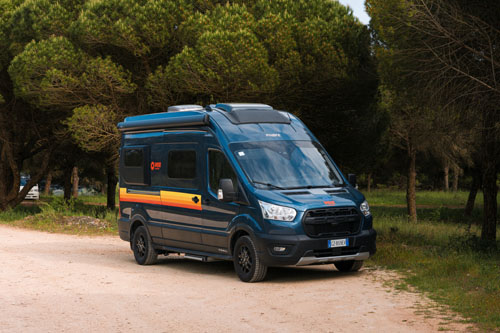
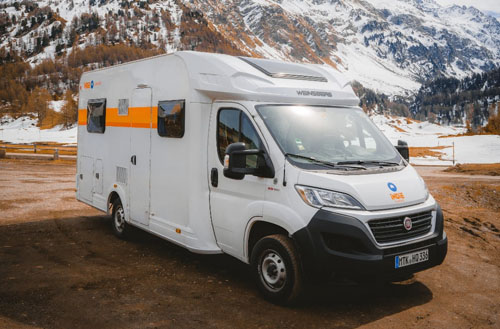
For an optimal blend of comfort, amenities, and maneuverability on Netherlands roads, a Class SI - Semi-integrated RV or a Class B - Camper Van is highly recommended. Class SI (Semi-integrated) RVs, averaging around 6.9m in length within Bandana's fleet, offer generous living space suitable for families without being overly cumbersome. Alternatively, Class B (Camper Van) RVs, averaging about 5.8m in length, provide superior agility for navigating narrower village streets and easier parking, making them ideal for couples or smaller families. Both classes deliver a luxurious and comfortable driving experience across the Netherlands' flat, well-maintained road network.
Should I Choose a Compact Van Instead of a Large RV in Netherlands?
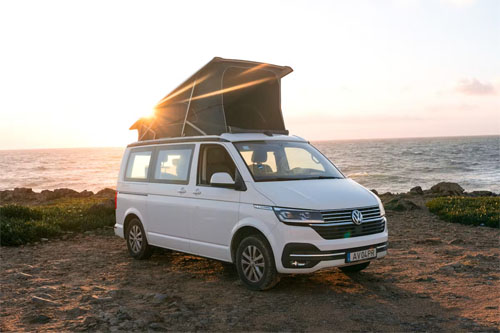
While a compact van (Class B - Camper Van) undeniably offers superior maneuverability for navigating extremely tight city centers and easier street parking, a larger RV provides significantly more indoor space, amenities, and overall comfort. The Netherlands' predominantly flat terrain and excellent road infrastructure mean that even larger RVs, such as Class SI or C models, are not inherently difficult to drive on main routes. Opt for a compact van if your itinerary heavily features navigating very specific, highly historic, and narrow city cores or if you prioritize discreet parking in urban environments. However, for most luxury travelers prioritizing spacious living, separate sleeping areas, full bathrooms, and extended comfort during their Dutch exploration, a larger RV like a Class SI or A offers a superior trade-off in luxury and convenience.
Can I Park Anywhere? Free & Wild Camping Rules in Netherlands
Wild camping or free overnight parking outside of officially designated campsites is generally prohibited across the Netherlands. The country maintains strict rules to preserve its natural beauty, manage public spaces, and ensure public order. Travelers should exclusively utilize official campsites, recognized RV parks (known as 'camperplaatsen'), or specific overnight parking spots to remain compliant with local regulations. While rules can vary slightly by municipality, it's always advisable to check local regulations and follow local law before parking overnight to ensure a pleasant and trouble-free trip.
Can I Drive an RV Into the City Center? Heights, Tunnels & Local Signage
It is generally possible to drive an RV into city centers in the Netherlands, though careful attention to local signage, particularly regarding vehicle dimensions, is absolutely crucial. Drivers must pay close attention to signs indicating height restrictions, especially for tunnels, car parks, and underpasses that are prevalent in older urban areas. Be aware of environmental zones (milieuzones) in major cities that may restrict access based on vehicle emissions, which could affect older RV models. Navigating narrow streets and finding suitable parking for larger RVs can be challenging; consider parking on the outskirts and utilizing the Netherlands' excellent public transport system for city exploration.
Detailed regulatory information for RVs (e.g., specific Dutch road rules, environmental zones, parking rules for larger vehicles, legality of overnight parking beyond campsites)
Operating an RV in the Netherlands requires adherence to standard Dutch road rules, which include driving on the right side of the road, observing strict speed limits (e.g., 100-130 km/h on motorways, 80 km/h on provincial roads), and respecting priority rules for cyclists. Environmental zones are present in several major cities and restrict older diesel vehicles, necessitating that travelers verify their RV's emission class against local regulations. Specific parking rules for larger vehicles often dictate that RVs must use designated oversized parking bays or areas on the outskirts of towns, as street parking in residential zones can be limited or restricted. The legality of overnight parking beyond official campsites or designated 'camperplaatsen' is generally prohibited, with severe fines for wild camping to protect nature and maintain public order.
Specific, transparent cost breakdowns beyond general 'budgeting' (e.g., fuel prices, potential tolls, varied campsite pricing structures, parking fees, average food costs, attraction entry fees)
RV trip costs in the Netherlands typically involve fuel expenses of approximately €18-€22 per 100km for diesel RVs, based on 2026 estimates, and minimal tolls primarily for the Westerscheldetunnel. Campsite pricing structures fluctuate significantly, ranging from €25-€60 per night for a family of four, depending on the season, location, and amenities, with popular sites often requiring advance booking. Parking fees in urban centers can be substantial, often €3-€6 per hour, necessitating strategic parking on city outskirts or at P+R (Park and Ride) facilities. Average food costs are moderate; grocery shopping at supermarkets like Albert Heijn, Jumbo, or Lidl allows for cost-effective self-catering, while a restaurant meal typically ranges from €15-€30 per person. Attraction entry fees vary, with major museums or theme parks generally costing €15-€25 per adult, though combination tickets or museum passes can offer potential savings. For ideas you can prep on the road, watch our RV-friendly recipes playlist on YouTube.
In-depth logistics and practicalities of driving an RV in the Netherlands (e.g., navigating narrow city streets and historical towns, dealing with numerous canals and bridges, efficient waste disposal and water refill points, gas bottle compatibility for international travelers)
Navigating Dutch cities, particularly historical towns like Leiden or Delft, often involves very narrow streets and intricate layouts, where smaller RVs or careful planning to avoid direct city center driving is advisable. The Netherlands' extensive network of canals and bridges requires constant vigilance for height, width, and weight restrictions, as many older bridges have specific limitations. Efficient waste disposal (grey and black water) and fresh water refill points are widely available at nearly all official campsites and dedicated RV service stations ('camperplaatsen') throughout the country. International travelers should note gas bottle compatibility; European-standard gas bottles are prevalent, and non-EU travelers may need specific adapters or consider exchanging bottles at specialized gas suppliers.
Cultural integration and etiquette for RV travelers (e.g., how to interact respectfully with locals, understanding Dutch hospitality, unique local experiences beyond major tourist sites, RV-friendly grocery shopping and local markets)
To interact respectfully with locals, embrace direct communication, punctuality, and a generally reserved yet friendly demeanor, particularly in rural communities. Understanding Dutch hospitality involves appreciating understated gestures; engaging in local traditions like coffee time ('koffietijd') or visiting a 'brown café' (traditional pub) can offer authentic cultural insights. Beyond major tourist sites, seek unique local experiences such as exploring the fortified towns of the 'Nieuwe Hollandse Waterlinie,' participating in regional festivals, or visiting a traditional cheese market like Alkmaar for a taste of local life. RV-friendly grocery shopping is effortless at major supermarket chains; for truly local flavors and fresh produce, visit weekly markets ('weekmarkten') in towns and villages, where ample parking is usually available on the outskirts.
Comprehensive guides on integrating cycling (a fundamental aspect of Dutch life) into an RV trip, including tips for carrying bikes, accessing the extensive national bike path network from campsites, and bike rental options.
Integrating cycling is a fundamental aspect of experiencing the Netherlands, with many luxury RVs equipped with bike racks or sufficient storage space for bicycles. For those without personal bikes, numerous rental shops ('fietsverhuur') are ubiquitous in towns, cities, and even at major campsites, offering daily or weekly rental options for all ages. The Netherlands boasts an extensive, meticulously signposted national bike path network (the 'fietsknooppunten' system), which is easily accessible directly from most campsites and allows for seamless exploration. Plan your cycling routes using dedicated apps like 'Fietsknoop' or 'Route.nl' to discover picturesque villages, iconic tulip fields, and serene coastal paths, often leaving your RV securely at the campsite.
Off-the-beaten-path destinations and hidden gems, moving beyond the well-known cities and attractions to explore lesser-known regions and unique local spots.
Beyond the popular hubs of Amsterdam and Keukenhof, the Netherlands offers numerous off-the-beaten-path destinations ideal for RV exploration, such as the historic Hanseatic cities along the IJssel river (e.g., Zutphen, Deventer, Kampen). Discover the tranquility of national parks like Hoge Veluwe or Biesbosch for immersive nature experiences, offering unique wildlife and serene landscapes, with well-equipped RV campsites nearby. Explore the Frisian Lakes region in the north for water sports, charming island villages, and a distinct cultural experience away from the typical tourist routes. Visit the picturesque village of Giethoorn, often dubbed the 'Venice of the North,' where canals replace roads, or the historic fortified town of Naarden for unique architectural and cultural insights.
Detailed multi-day RV itineraries tailored to different trip durations (e.g., 5, 7, 10, 14 days) and specific interests (e.g., historical routes, nature exploration, coastal drives, artistic tours).
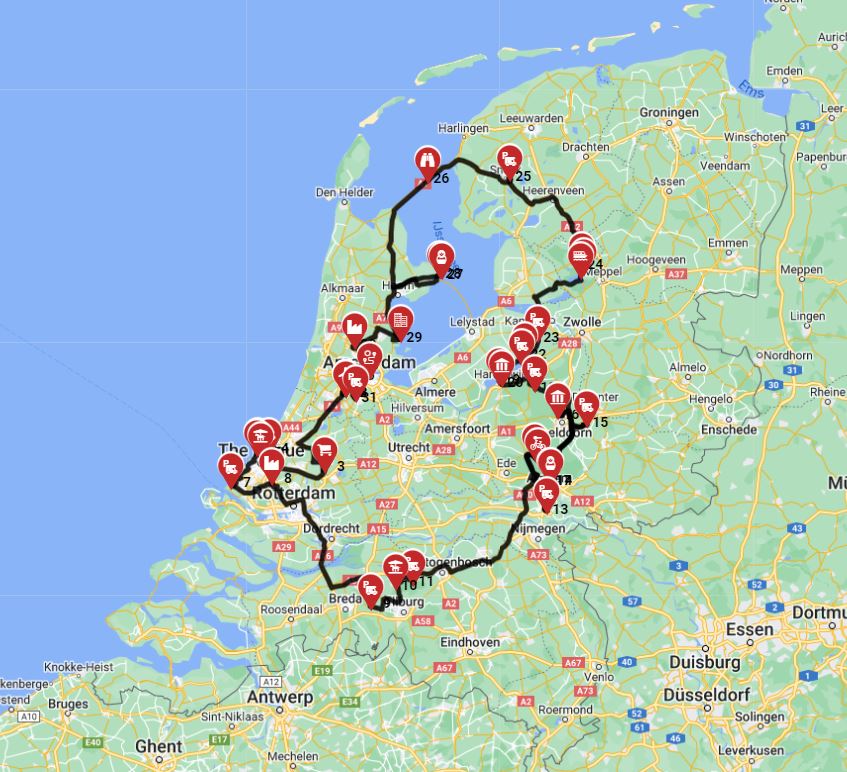
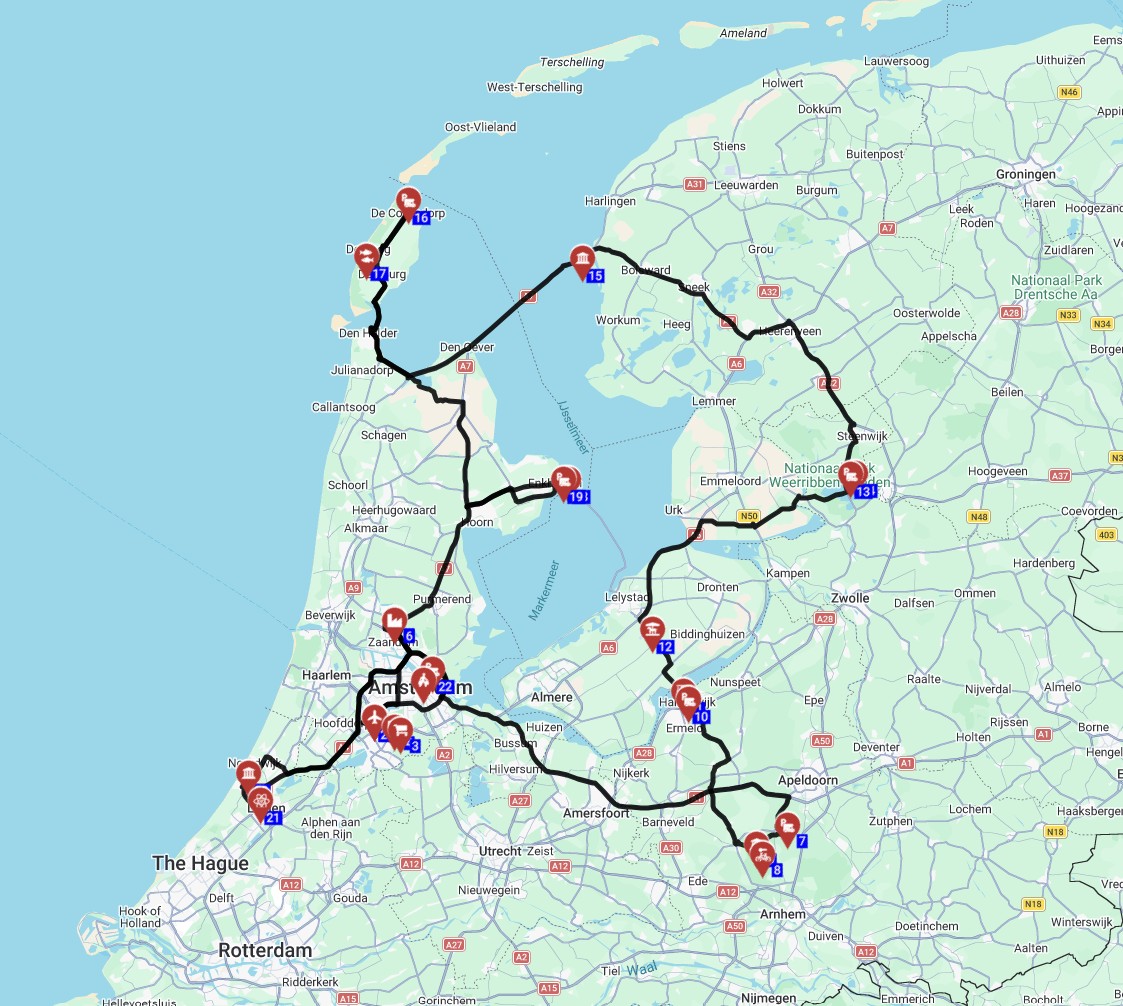
For a 5-day RV trip, consider a focused regional loop like South Holland, visiting Delft, The Hague, and the iconic Kinderdijk windmills. A 7-day itinerary could cover the Golden Age Route, encompassing Amsterdam, Utrecht, and Leiden, blending rich history with vibrant city life and relatively easy RV access. Extend to 10 days for a Northern Netherlands tour, exploring Friesland's tranquil lakes, Groningen's lively city, and the unique Wadden Sea islands. A comprehensive 14-day journey allows for a grand tour, integrating historical sites, coastal drives, nature exploration in areas like the Veluwe, and artistic tours, providing a deep dive into diverse Dutch regions.
Season-specific RV travel guides, highlighting unique experiences, challenges, and preparation tips for each time of year (e.g., tulip season in spring, beach trips in summer, forest colors in autumn, unique winter experiences).
Spring (March-May) is quintessential for witnessing the famous tulip fields in bloom and visiting Keukenhof, though this requires early campsite bookings due to peak popularity. Summer (June-August) is perfect for beach trips along the North Sea coast, enjoying outdoor festivals, and longer daylight hours, but campsites are bustling, making advance reservations essential. Autumn (September-November) offers stunning forest colors in regions like Veluwe and Utrechtse Heuvelrug, fewer crowds, and pleasant temperatures for cycling and hiking, requiring preparation for cooler evenings. Winter (December-February) provides unique experiences such as exploring charming Christmas markets, and potentially ice skating on frozen canals (weather permitting), necessitating preparation for cold weather and shorter daylight hours.
What You Shouldn't Miss
- Cycle through the iconic windmills of Kinderdijk, a UNESCO World Heritage site, easily accessible from many South Holland campsites.
- Explore the picturesque canals and unique boat-only streets of Giethoorn, a charming village perfect for a leisurely RV stop.
- Visit the Hoge Veluwe National Park, offering diverse landscapes and the Kröller-Müller Museum, with convenient camperplaatsen nearby for nature and art lovers.
- Experience a traditional Dutch cheese market in Alkmaar, a lively event that offers a taste of local culture and history, with RV parking often available on the outskirts.
- Discover the fortified town of Naarden, a remarkably preserved example of 17th-century military architecture, offering a historical detour.
- Journey through the Frisian Lakes region for a taste of the Netherlands' northern charm, featuring water sports and quaint island villages accessible by RV.
Final Thoughts
Renting an RV and exploring the Netherlands offers an unparalleled way to experience its charm at your own pace. From the iconic windmills to the picturesque canals and vibrant cities, the Netherlands is a treasure trove of experiences waiting to be discovered.
We believe in making your RV rental journey as seamless and transparent as possible. With Bandana Caravan, you get the peace of mind that comes from expert knowledge, a wide selection of vehicles, and dedicated support. Start planning your dream Dutch adventure today!
Get inspired for your next trip! Discover top destinations, planning tips, all in one place!