In This Guide
- Where to Camp in Alaska - Top Options
- Campground Types in Alaska (National, Private, Wild)
- Featured RV Park or Campground in Alaska
- Hookups & Amenities - What to Expect
- Booking Windows & Reservations in Alaska
- Nearby Supermarkets & Resupply Points
- Best RV Class for Camping in Alaska
- How to Save on Campgrounds in Alaska
- Can I park my RV anywhere in Alaska?
- What is the 3-3-3 rule for RVs and campers?
- Where is the best place to park an RV for free in Alaska?
- Is boondocking legal in Alaska?
- Can you park an RV anywhere in Alaska?
- What does FF mean in camping?
- What is the best time of year to RV to Alaska?
- How much are campsites in Alaska?
- What is the 3-3-3 rule for camping?
- What is the 200 rule for camping?
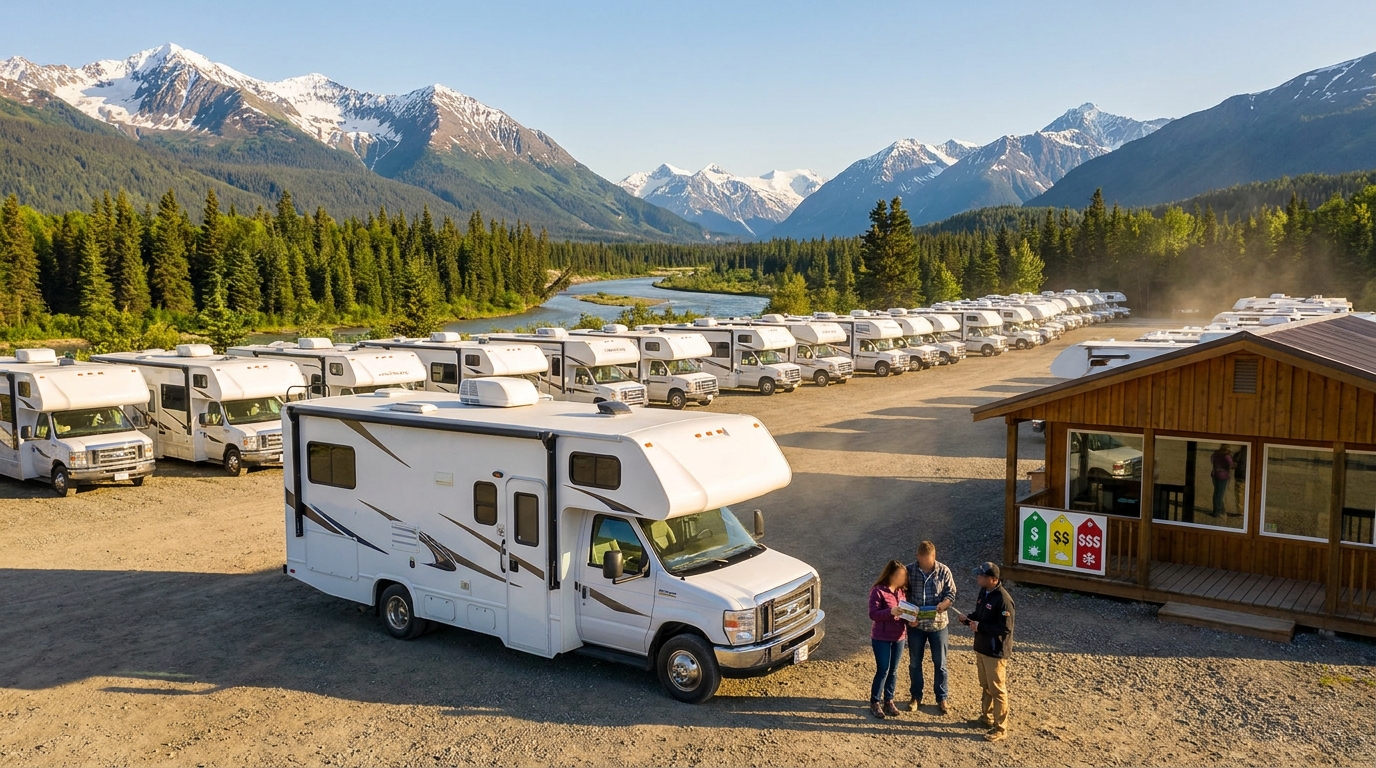
Alaska, "The Last Frontier," calls out to adventurous souls seeking unparalleled natural beauty and a true sense of exploration. Imagine yourself waking up to glacial views, spotting a moose from your window, or fishing for salmon just steps from your rented motorhome. This vast and majestic state is perfectly suited for RV travel, offering a freedom and flexibility that simply can't be matched by traditional hotel stays. At Bandana Caravan, we are true RV specialists, with over 20 years of experience helping tens of thousands of travelers explore the world by RV, and Alaska is one of our absolute favorite destinations. For live availability and current prices, start with our RV Rental Alaska - Complete Guide 2026 guide.
Where to Camp in Alaska - Top Options
Alaska offers diverse camping experiences from coastal regions like the Kenai Peninsula to the interior near Denali National Park, providing a wide range of settings for your rented campervan adventure. Consider state parks, national forests, and privately run RV parks for varying amenities and accessibility. Popular areas for camping include the Parks Highway corridor, Seward, Homer, and the Fairbanks surroundings, each providing unique access to wildlife, glaciers, and local culture. You can find convenient pick-up locations for your rented RV in many of these areas, making it easy to start your journey. Remember, driving your rental motorhome slowly and carefully allows you to navigate almost anywhere without issues, regardless of size, so there’s no need to stress about city driving - just use common sense and pay attention.Top Cities for RV Rental in Alaska
While Alaska is primarily about its wilderness, several cities serve as excellent starting or stopping points for your rented RV journey:
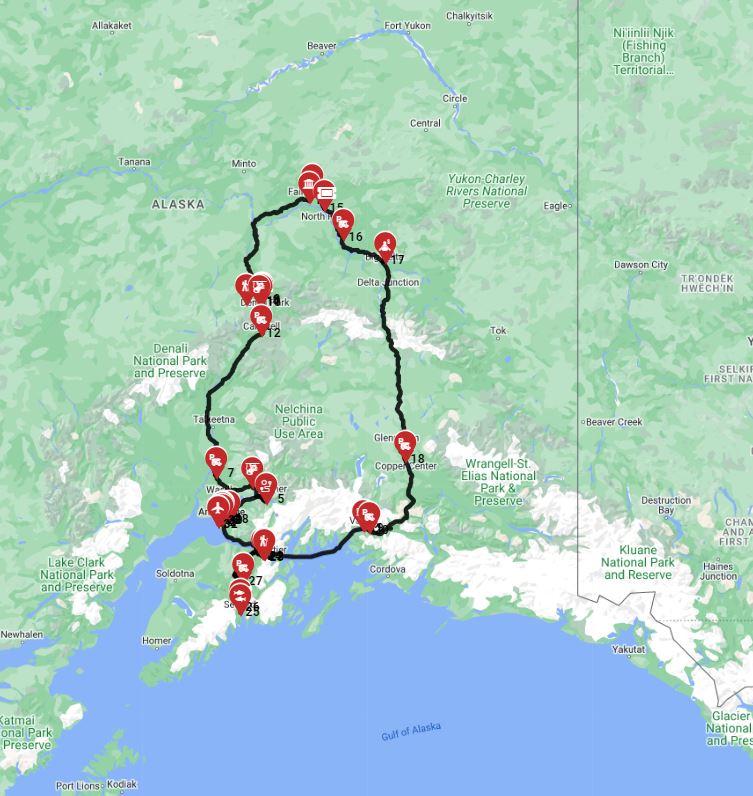
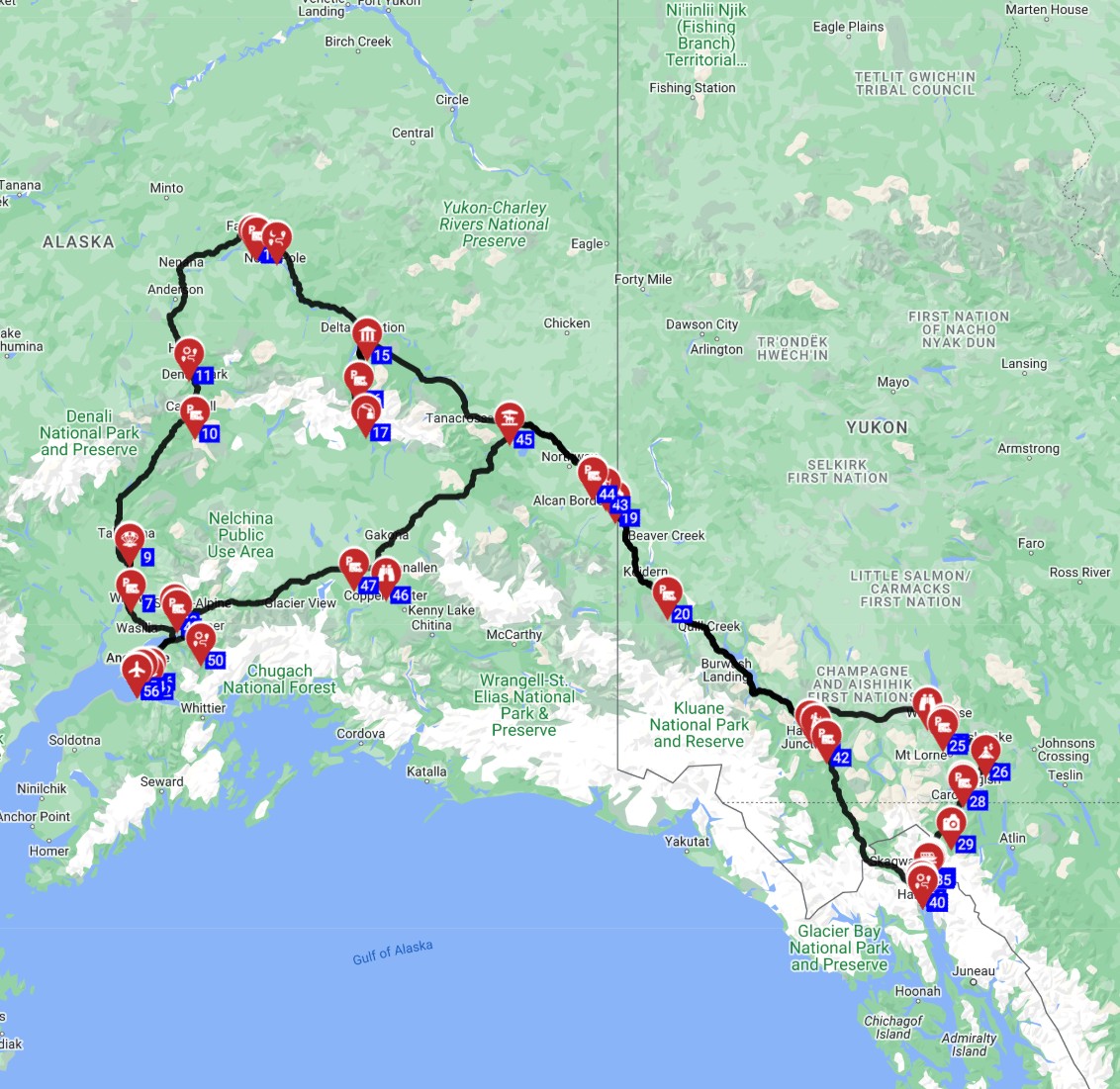
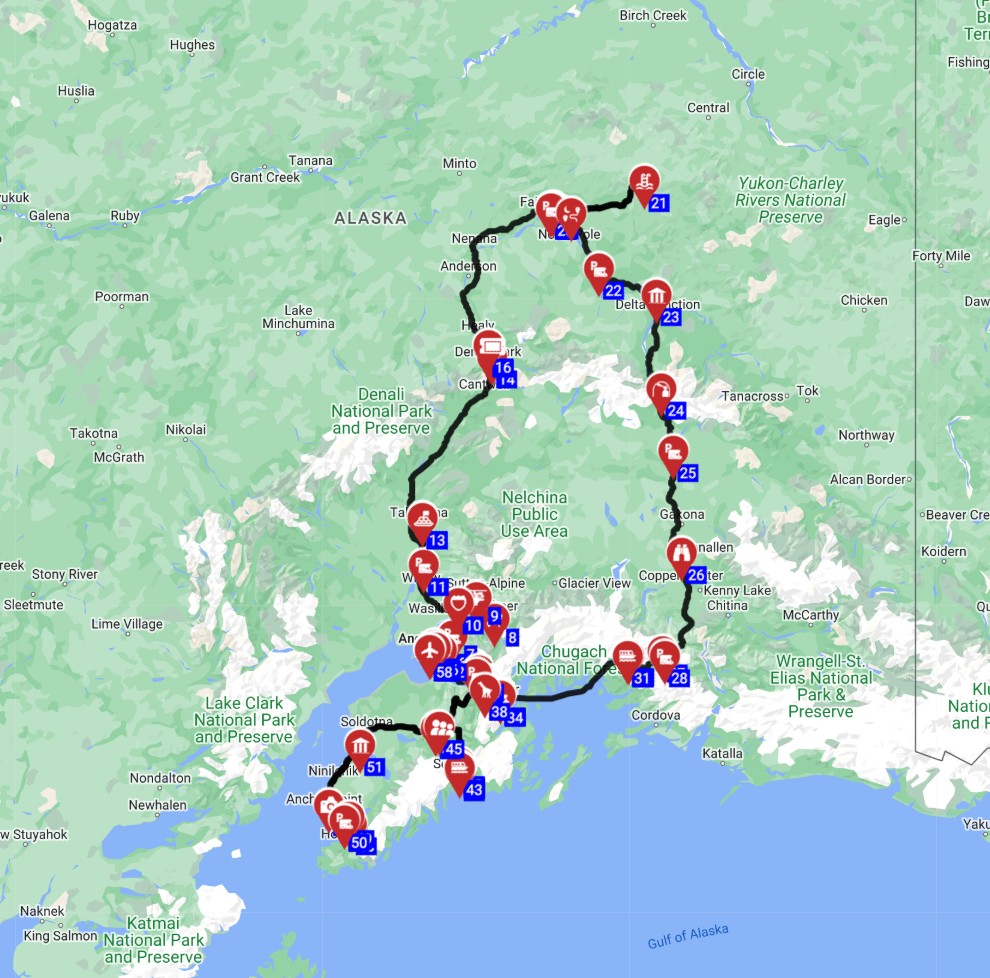
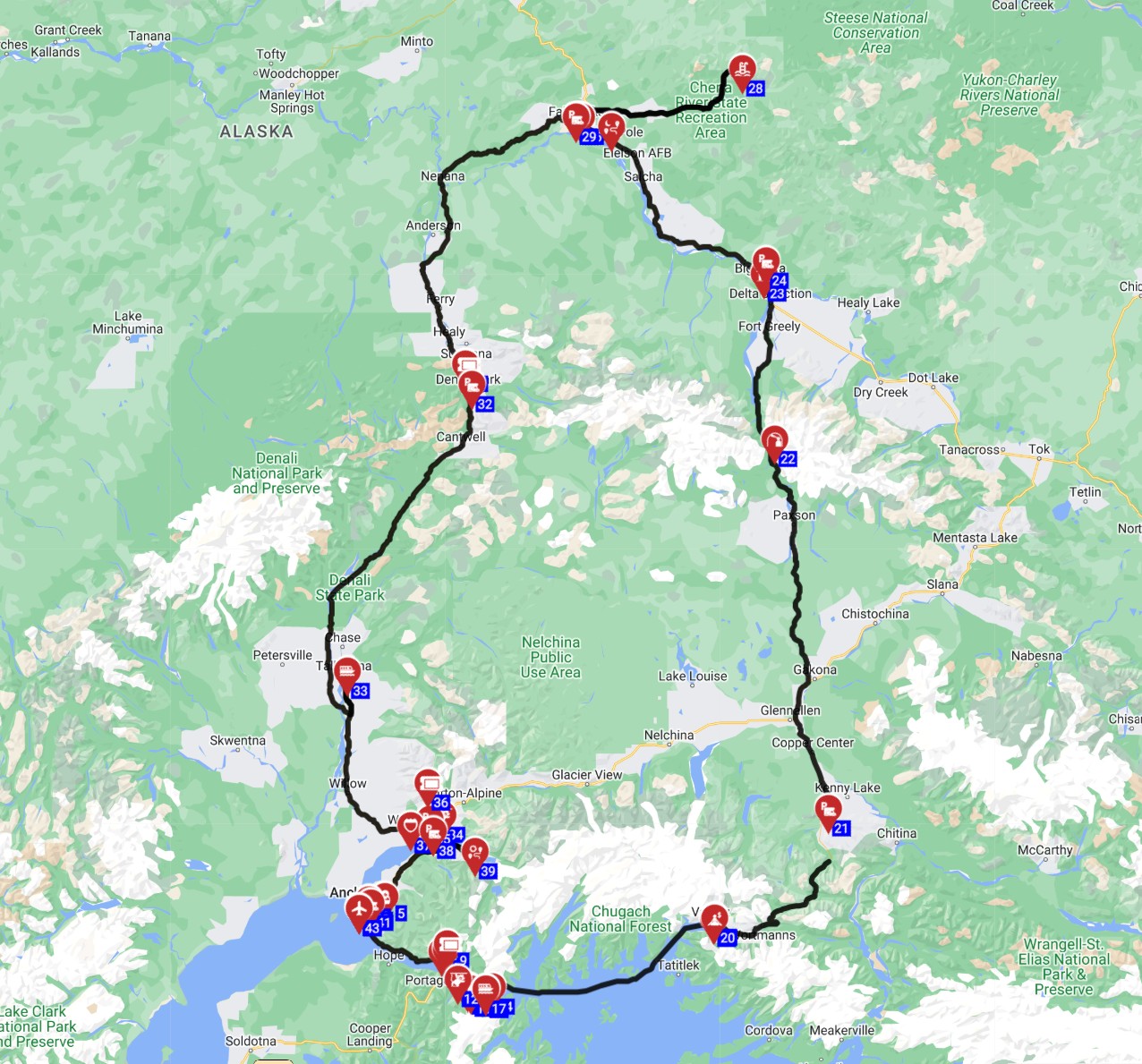
- Anchorage: The largest city in Alaska, Anchorage is often the primary gateway for RV travelers. It offers a wide selection of RV rental suppliers and is an excellent base for exploring the Kenai Peninsula, Denali National Park, and the Chugach Mountains. Consider our "
" route plan which covers 1928.5 km and includes 2 animal shows/wildlife watches and 3 day tours.
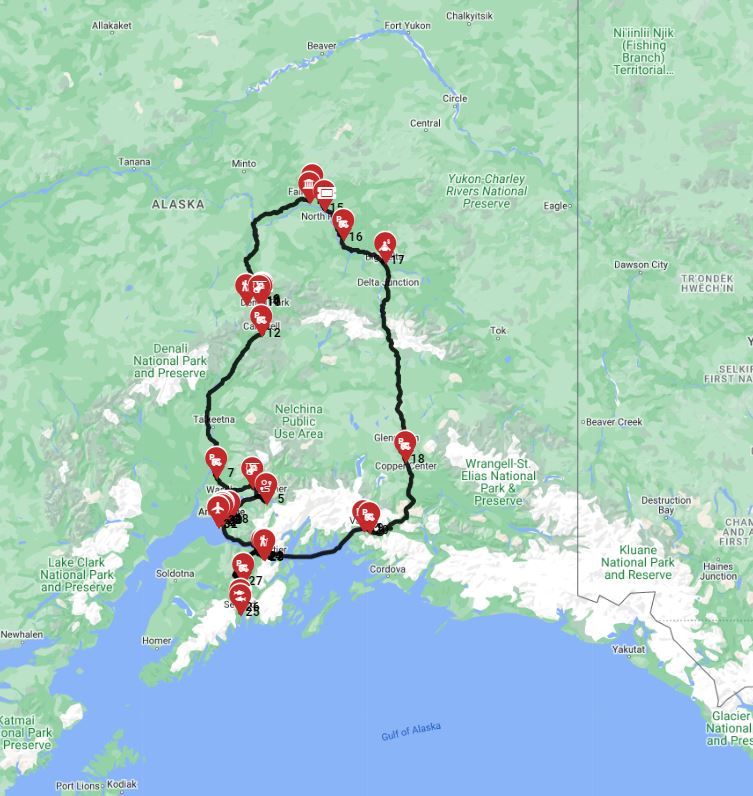 Anchorage Roundtrip - Alaska
 - Fairbanks: Located further north, Fairbanks is ideal for those looking to experience the Arctic Circle, the northern lights, and access to more remote wilderness. It's a great spot to start if your interest lies in interior Alaska.
- Seward: A picturesque coastal town on the Kenai Peninsula, Seward is known for its Resurrection Bay cruises and gateway to Kenai Fjords National Park. It's a popular destination for fishing and marine wildlife viewing.
- Homer: Dubbed the "Halibut Fishing Capital of the World," Homer sits at the end of the Sterling Highway on Kachemak Bay. It offers stunning views, vibrant arts scene, and opportunities for bear viewing tours.
- Valdez: Tucked away at the end of the scenic Richardson Highway, Valdez is a port town known for its tidewater glaciers, Prince William Sound tours, and excellent salmon fishing.
Campground Types in Alaska (National, Private, Wild)
Alaska provides a spectrum of camping options for your rented motorhome, including federally managed sites (National Parks, Forests, BLM), privately operated RV parks, and legally permitted dispersed (wild) camping. National Park campgrounds often require reservations and offer basic amenities, such as vault toilets and potable water spigots, while National Forests and Bureau of Land Management (BLM) lands feature more rustic or dispersed camping opportunities. Private RV parks typically offer full hookups (electric, water, sewer), Wi-Fi, laundry, and showers, catering to those seeking more amenities for their comfortable campervan. Wild camping, also known as boondocking or dispersed camping, is generally legal on public lands (BLM, National Forest) provided you adhere to 'Leave No Trace' principles and local regulations, offering a truly immersive wilderness experience with your rental RV.Featured RV Park or Campground in Alaska
While specific RV park recommendations for Alaska depend on your itinerary, look for campgrounds that offer proximity to major attractions, stunning natural views, and essential services for an optimal Alaskan adventure. Ideal features include easy access to main roads, clean facilities, a dump station, potable water, and potentially electric hookups to keep your rented mobile home comfortable. Many top-rated parks are located near popular destinations like Anchorage, Denali National Park, Seward, and Homer, providing a convenient base for exploration. For instance, Riley Creek Campground in Denali National Park offers 147 sites with potable water and restrooms, making it a fantastic gateway to the park's wonders.Hookups & Amenities - What to Expect
RV campgrounds in Alaska typically offer a range of hookups and amenities, with electric (30 or 50 amp), water, and sewer (dump station) being the most common, while Wi-Fi and laundry facilities are more prevalent at private parks. Most private RV parks provide full hookups and may include additional amenities like showers, restrooms, picnic tables, and fire rings, ensuring a comfortable stay in your rental camper. State and federal campgrounds often provide more basic amenities, such as vault toilets, potable water spigots, and dump stations, with fewer sites offering electrical hookups. Cell service can be spotty in remote areas, so do not rely solely on Wi-Fi or mobile data for connectivity. For preparing delicious meals in your RV's kitchen, check out our RV-friendly recipes playlist for inspiration.Booking Windows & Reservations in Alaska
For an RV trip in Alaska, planners should secure reservations for popular campgrounds, especially in national parks like Denali, 3-6 months in advance, though spontaneous travelers can often find same-day or next-day spots by calling ahead. Popular state park campgrounds and private RV resorts, particularly along the Seward and Parks Highways, can fill up quickly during peak season (June-August). Many national park campgrounds, including 170+ sites along the Parks Highway, only release 25%-30% of spots for reservations, with the remainder available on a first-come, first-served basis (FF), offering flexibility for spontaneous travelers. You will almost certainly find a place to camp—if not at the first campground, then at the next; calling ahead before driving long distances is highly recommended to confirm availability for your rented RV. Our "RV Travel Guide to Alaska - Tips and Top Spots 2026" offers more booking advice.Nearby Supermarkets & Resupply Points
When RVing in Alaska, major towns along popular routes will offer supermarkets for resupply, with chains like Fred Meyer (Kroger), Safeway, and Carrs being common options. Plan your route to include stops in larger communities such as Anchorage, Fairbanks, Wasilla, Soldotna, and Homer to restock groceries, fuel, and other essentials for your rental motorhome. Smaller towns and remote areas may have limited options or higher prices, so it's wise to carry extra supplies when venturing off the main corridors. Consider local markets for fresh Alaskan produce and unique regional items, adding a local flavor to your RV-friendly recipes playlist meals. For efficient trip budgeting, you can itemize and track every expense along the way with RV PLANET routes.Best RV Class for Camping in Alaska
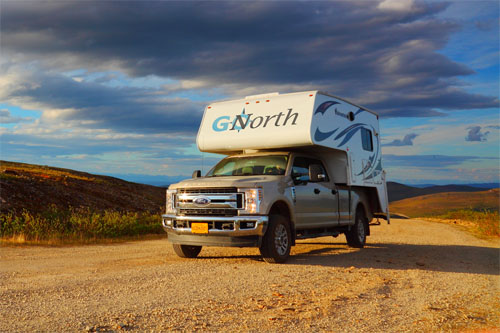
For camping in Alaska, Class B Camper Vans and Class C Alcove RVs are popular choices, balancing maneuverability on varied terrain with comfortable living spaces and sleeping capacities.Class B - Camper Van: With an average length of 5.8 meters and sleeping 3.2 people, these vans offer excellent maneuverability, better fuel economy (around 10 Liters/100 km), and are ideal for navigating smaller roads and urban areas. A rented `rv rental denver example Category Van` with features like "Front Air condition," "Shower," and "Toilet" is perfect for couples or small families seeking flexibility and ease of driving during their Alaskan adventure.
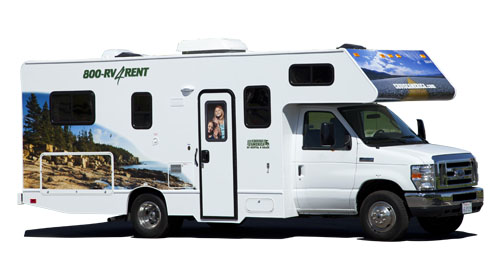
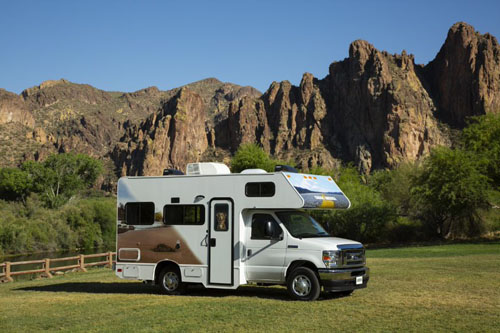
Class C - Alcove: Averaging 7.5 meters in length and sleeping 5.8 people, Class C RVs like the `alaska rv rental example Category C` provide more space, amenities, and comfort for families, though they are less agile than campervans. Fuel consumption typically ranges from 10-12 Liters/100 km. These motorhomes often include multiple beds, such as a double bed over the cab and a rear double bed, a shower, and a toilet, making them a great option for a comfortable extended road trip.
Class A - Integrated: For larger groups seeking luxury and ample space, Class A motorhomes, averaging 9-10 meters in length and sleeping up to 7, offer the most amenities and expansive living areas. A rented `Class A - Thor ACE 30` can feature spacious living, a full kitchen, and multiple sleeping areas, making it a fantastic choice for larger families or groups. While these are larger, driving slowly and carefully makes navigating Alaskan roads completely manageable.
No matter which class of rental motorhome you choose, a standard car driver's license is sufficient for all motorhome classes (Class A, Class B, and Class C) in Alaska, and indeed across the USA. No special license or additional permits are required, making RV travel accessible to many. An International Driving Permit (IDP) is recommended for visitors from non-English-speaking countries but is not mandatory in most cases.
How to Save on Campgrounds in Alaska
Renters can save on Alaska campgrounds by utilizing discount programs like those offered by Bandana's partners, booking during shoulder seasons, and opting for municipal or regional sites over pricier private resorts. Look for campground discount cards (e.g., KOA, Passport America, or specific Bandana discounts) which can provide significant savings on daily rates, often reducing costs by 10-20%. Traveling during the shoulder seasons (late May-early June and late August-early September) often results in lower rates, fewer crowds, and better availability, with potential savings of 15-30% on peak season prices. Choosing state, federal, or municipal campgrounds, which typically have lower fees at $20-$35 per night compared to private RV parks that can range from $40-$70+, can drastically reduce costs over a week-long trip. Staying for three or more nights can sometimes qualify you for weekly rates, which are often more economical than nightly bookings. For a complete understanding of costs, check our "RV Rental in Alaska - Prices and Best Deals 2026" guide.Can I park my RV anywhere in Alaska?
No, you cannot park your RV just anywhere in Alaska; parking regulations vary significantly by location and land ownership, with strict rules applying in national parks, private lands, and often within city limits. Private property requires explicit permission from the owner for overnight parking to avoid trespassing. National Parks and most State Parks mandate camping only in designated campgrounds, such as the 147 sites at Riley Creek in Denali. City ordinances often prohibit overnight RV parking on streets or in public lots, especially in more populated areas like Anchorage or Fairbanks. Dispersed camping, however, is allowed on many Bureau of Land Management (BLM) and National Forest lands, but specific rules, such as maximum stay limits of 14 days, apply and should always be checked locally.What is the 3-3-3 rule for RVs and campers?
The "3-3-3 rule" for RVs and campers is a guideline suggesting you drive no more than 300 miles (approximately 480 km) a day, arrive at your campsite by 3 PM, and stay for a minimum of 3 nights. Driving less than 300 miles a day prevents driver fatigue and allows for scenic stops, promoting a slower travel experience averaging 100-150 km per day. Arriving by 3 PM ensures you have daylight to set up camp and secure a good spot, especially at first-come, first-served sites, where early arrival is key. Staying for at least 3 nights allows for relaxation and deeper exploration of the local area without constant packing and unpacking your rented campervan. This rule is designed to promote a more relaxed, enjoyable, and less rushed RV travel experience in Alaska.Where is the best place to park an RV for free in Alaska?
The best places to park a rented RV for free in Alaska often involve designated dispersed camping areas on public lands, such as those managed by the Bureau of Land Management (BLM) and some National Forests. BLM lands are excellent for free, dispersed camping, often found along less-traveled gravel roads, providing vast, open spaces for boondocking. Some National Forests also permit dispersed camping outside of developed campgrounds, with many offering scenic, secluded spots. Always adhere to 'Leave No Trace' principles by packing out all trash and minimizing environmental impact, preserving Alaska's pristine wilderness. It's crucial to research specific locations beforehand, as regulations can vary and some areas may have restrictions or closures, such as seasonal fire bans. The "RV Rental USA - Complete Guide 2026" provides more general information on camping regulations.Is boondocking legal in Alaska?
Yes, boondocking (dispersed camping without hookups) is generally legal and popular in Alaska on vast public lands, including many areas managed by the Bureau of Land Management (BLM) and some National Forests, provided you follow specific regulations and leave no trace principles. Alaska's expansive public lands offer extensive opportunities for boondocking, allowing for remote and scenic camping experiences away from crowded campgrounds. Always confirm local regulations, as some areas may have fire bans, length-of-stay limits (typically 14 days in a 30-day period), or other restrictions that apply to your rented caravan. Practice 'Leave No Trace' ethics diligently to preserve the pristine Alaskan wilderness for others, packing out everything you pack in. Ensure your RV is self-sufficient with adequate fresh water, power from solar or a generator, and waste capacity for the duration of your boondocking stay.Can you park an RV anywhere in Alaska?
No, you cannot indiscriminately park a rented RV anywhere in Alaska, as parking is restricted on private property without permission, within many city limits, and in protected areas like national parks outside of designated campgrounds. While Alaska offers vast wilderness, the ability to park an RV is governed by land ownership (private, state, federal) and local municipal ordinances, which can vary greatly. Parking overnight in undesignated areas within towns or on private land without explicit consent is illegal and can lead to fines, typically ranging from $50-$200. Always look for signs indicating parking restrictions or 'no overnight parking' to avoid issues. Designated campgrounds or specific public lands (like BLM) are the legal and safe options for RV parking and overnight stays in your rented motorhome. Our "One-Way RV Rental in Alaska - Price Guide 2026" might be helpful for planning your stops.What does FF mean in camping?
In camping contexts, "FF" typically stands for "First-Come, First-Served," indicating that a campsite cannot be reserved in advance and is available to the first party to arrive and claim it. Many popular campgrounds in Alaska, especially within state and national parks like the Kenai Peninsula's Chugach National Forest sites, allocate a portion of their spots as First-Come, First-Served (FF) to accommodate spontaneous travelers. To secure an FF site, it's often best to arrive early in the morning, particularly during peak season (July-August) or on weekends, as sites fill up quickly, sometimes before noon. Once claimed, campers usually register and pay a fee, typically $20-$35, at a self-service station or with a campground host. FF sites offer flexibility but come with the risk of not finding a spot, so always have a backup plan, especially with a rented RV during busy times.What is the best time of year to RV to Alaska?
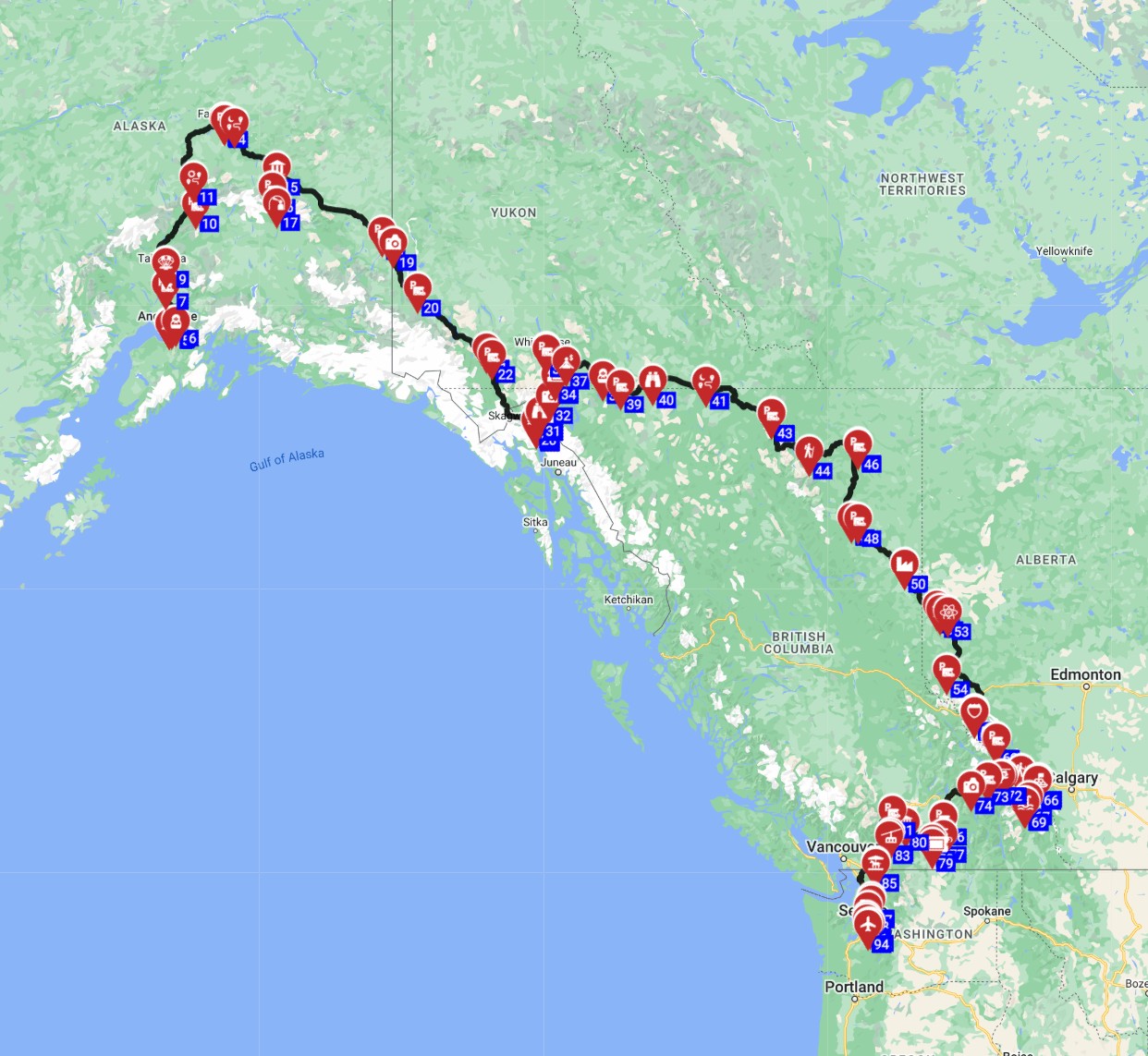
The best time of year to RV to Alaska is generally from late May through early September, when daylight hours are longest, temperatures are mildest, and most services and attractions are open. Late May to early June offers fewer crowds, wildflowers blooming, and excellent wildlife viewing opportunities, though some services and campgrounds might still be opening up. July and August represent the peak season, with the warmest weather, all attractions fully open (such as the 3 cruise terminals and 3 hiking areas on our "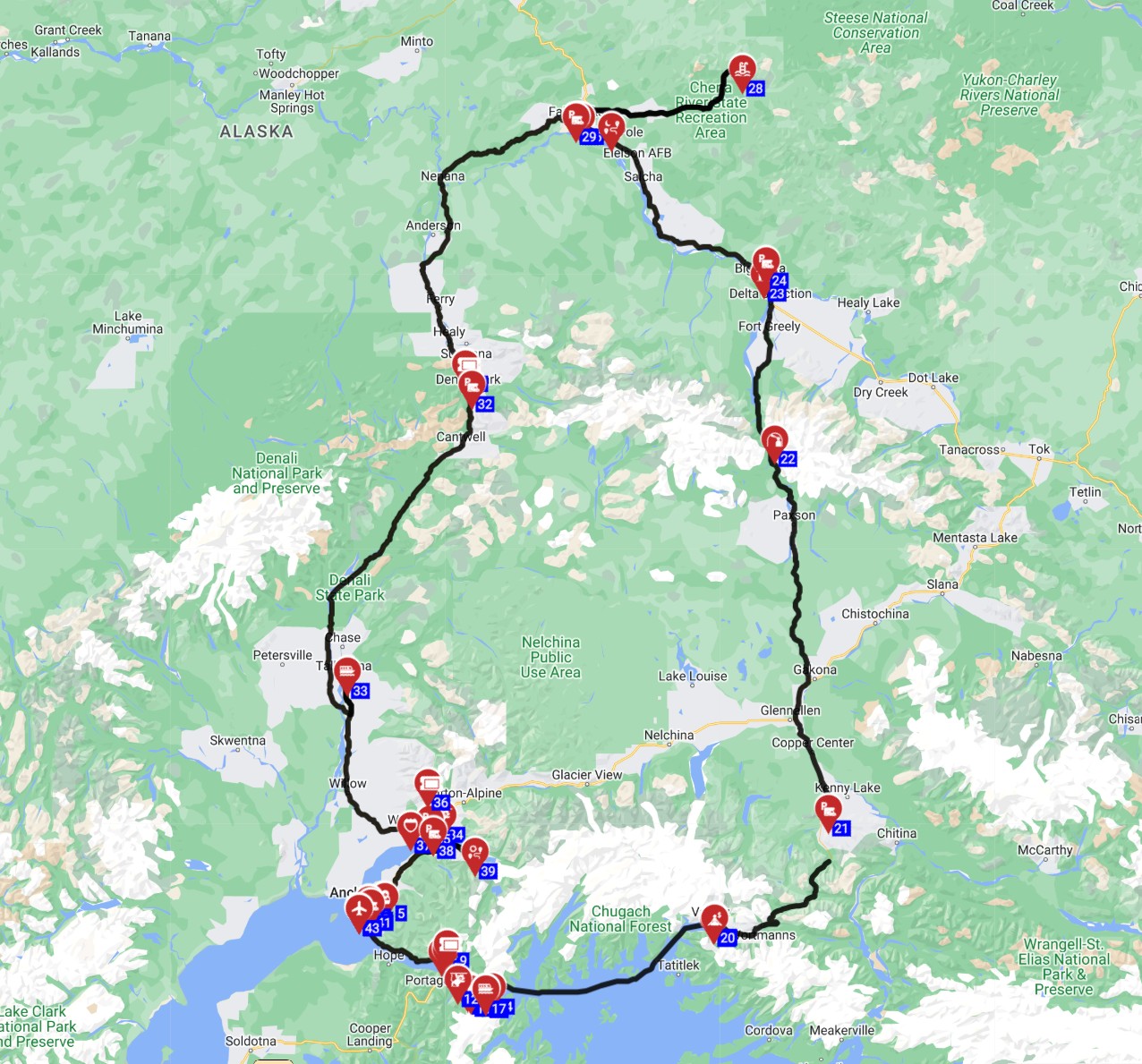
How much are campsites in Alaska?
Campsite costs in Alaska vary significantly, ranging from free for dispersed camping on public lands to $20-$30 for basic state or federal campgrounds, and $40-$70+ for private RV parks with full hookups and amenities. Free camping is available on Bureau of Land Management (BLM) lands and in some designated areas of National Forests, requiring self-sufficiency in your rented campervan. State and federal campgrounds typically cost $20-$35 per night, offering basic amenities like pit toilets and potable water, with some having limited electrical hookups for an additional fee of $5-$10. Private RV parks, especially those near popular attractions or with extensive amenities like Wi-Fi and laundry, can range from $40 to over $70 per night for full hookups. Prices can fluctuate based on location, time of year, and the level of amenities provided, so checking ahead or using resources like rvplan.net is advisable.What is the 3-3-3 rule for camping?
The "3-3-3 rule" for camping is a popular guideline for RVers and campers, recommending driving no more than 300 miles a day, arriving at your campsite by 3 PM, and staying for a minimum of 3 nights at each location to promote a relaxed travel pace. This rule is identical to the one for RVs and helps prevent 'travel burnout' on long trips, particularly across Alaska's vast distances. Adhering to the rule allows more time for enjoying destinations rather than constantly moving, enabling deeper connection to the culture, food, and scenery. It also provides a buffer for unexpected delays or spontaneous detours, enhancing the overall joy of your rental motorhome adventure. Implementing the 3-3-3 rule can significantly enhance the enjoyment and reduce the stress of an Alaskan RV adventure.What is the 200 rule for camping?
The "200 rule for camping" is a less common guideline, often interpreted as aiming to limit daily driving to approximately 200 miles (around 320 km) to allow for more leisure time and avoid feeling rushed during your RV trip. This rule emphasizes a slower travel pace, encouraging campers to savor their journey and explore more deeply, perhaps staying 5 nights or more in a particularly scenic spot. Driving fewer miles each day reduces fuel consumption for your rented mobile home and minimizes wear and tear. It provides ample time for setting up camp, cooking meals, and engaging in recreational activities at each stop, such as hiking or fishing. While not as widely known as the 3-3-3 rule, the 200-mile guideline is perfect for those seeking a truly unhurried Alaskan experience, focusing on quality over quantity of miles.🎬 Video coming soon
What You Shouldn't Miss
- Denali National Park: Experience North America's highest peak and abundant wildlife like grizzly bears and caribou. Explore hiking trails, shuttle bus tours, and soak in the raw wilderness.
- Kenai Fjords National Park: Take a boat tour from Seward to witness tidewater glaciers calve into the ocean and observe marine wildlife such as whales, seals, and puffins.
- Anchorage Coastal Wildlife Refuge: Just outside the city, this refuge offers incredible opportunities for birdwatching and spotting moose, especially during migration seasons.
- Alaska Highway (Alcan): Drive this iconic route with your rental RV, originally built during WWII, to fully appreciate the vastness and beauty of Alaska and the Yukon.
- Fairbanks and the Northern Lights: Travel to Fairbanks during late summer or early fall for a chance to witness the breathtaking Aurora Borealis dance across the night sky.
- Homer Spit: Walk along this narrow strip of land extending into Kachemak Bay, famous for its fishing charters, charming shops, and stunning views of the surrounding mountains and glaciers.
Looking for expert insights from Avi Bandana? Top 5 Adventures - recommendations from Avi Bandana.
Final Thoughts
Alaska truly is a destination made for RV travel. With its vast wilderness, breathtaking landscapes, and incredible wildlife, a rented motorhome gives you the freedom to explore at your own pace, to pause when a moose crosses your path, or to stay an extra night under a sky lit by the aurora. Whether you're a meticulous planner or a spontaneous adventurer, Alaska welcomes you with open roads and unforgettable experiences. Remember, planning is part of the fun, but the real adventure begins when you hit the road. Choose a comfortable campervan or a spacious motorhome that suits your family or friends, and let the magic of Alaska unfold before you. We're here to support you in finding the easiest, safest, and most affordable way to embark on this journey. So, what are you waiting for? Get inspired for your next trip and plan a truly remarkable week-long trip or extended road trip with a rented RV in Alaska. Compare Motorhome Prices for AlaskaOn the routes offered through RV PLANET routes, you can itemize and track every expense along the way for easy budgeting.