For live availability and current prices, start with our RV Rental Tokyo - Airport - Complete Guide 2026 guide.
In This Guide
- The 5 RV Families Compared for Tokyo - Airport
- Class A (Integrated) - Best For
- Price Comparison by RV Class in Tokyo - Airport
- Class SI (Semi-integrated) - Best For
- Class C (Alcove) - Best For
- Class B (Campervan) - Best For
- Side-by-Side Comparison Table
- Our Recommendation for long term RV rental Travelers in Tokyo - Airport
- Is it worth renting an RV in Japan?
- How much does it cost to rent an RV in Japan?
- How do I pick up an RV from Narita Airport?
- Are RVs popular in Japan?
- Can you sleep anywhere in an RV in Japan?
- What are the road rules for RVs in Japan?
- What should I know before renting an RV in Japan?
- Is Japan RV friendly?
The 5 RV Families Compared for Tokyo - Airport
Choosing the right RV family is a crucial decision for your long-term rental from Tokyo - Airport, given Japan's unique road conditions and travel style. Factors like vehicle size, fuel efficiency, sleeping capacity, and maneuverability significantly impact your extended trip experience. For live availability and current prices, start with our RV Rental Tokyo - Airport - Complete Guide 2024 guide, which offers a comprehensive overview of options.
When you're planning a multi-week or even multi-month adventure through Japan, the type of motorhome you select becomes your home on wheels. Bandana Caravan, with over 23 years helping tens of thousands of travelers, offers full transparency on pricing from 50+ leading RV suppliers like Apollo, so you always know what you're getting without any hidden fees or surprises.
Consider how much time you plan to spend driving daily. For long-term explorations, we always recommend slow travel, averaging max 100-150 km per day. This allows you to truly immerse yourself in local culture, savor regional foods, and connect with the stunning scenery, instead of rushing from place to place. The ideal RV for your long-term rental in Tokyo - Airport will balance comfort for extended stays with practical handling for diverse Japanese roads.
Class A (Integrated) - Best For
Class A motorhomes are generally ideal for long-term travelers prioritizing luxury, extensive space, and premium amenities during their rental from Tokyo - Airport, typically averaging 7.5 meters in length and sleeping 4 to 6 people.
These larger, integrated motorhomes are best suited for bigger families or groups embarking on extended trips where comfort and a full suite of onboard features are paramount. Think of a luxurious home away from home as you explore Japan's varied landscapes. While they offer superior living space, it's honest and transparent to note that their size can present trade-offs, making maneuverability and finding parking a bit more challenging on Japan's often narrower urban and rural roads compared to smaller vehicle classes. However, with careful and slow driving, you can navigate almost anywhere without issues.
When considering a Class A motorhome rental from Tokyo - Airport, remember to factor in the total dimensions for ferry bookings or specific toll road height restrictions, though most standard expressways are accommodating. For those who enjoy cooking up a storm, the spacious kitchens in Class A models are a delight; check out our RV-friendly recipes playlist for inspiration! On the routes offered through RV PLANET routes, you can itemize and track every expense along the way for easy budgeting.
Price Comparison by RV Class in Tokyo - Airport
RV rental prices from Tokyo - Airport are dynamic and flex-rate, meaning they fluctuate daily based on factors like vehicle class, rental duration, and seasonal demand, similar to airline tickets.
Long-term rentals of a month or more often offer more attractive daily rates compared to shorter trips, providing better value for an extended exploration of Japan. For instance, a Class C motorhome might average $100-$150 USD per day for a month-long booking during shoulder season. However, the actual final price is always set at the time of booking and updates daily, so it's always best to check via the live search box for the most current figures. Our promise of full transparency means what you see is what you pay, with no hidden fees or surprises.
Beyond the base rental fee, travelers must budget for additional costs such as expressway tolls (an Electronic Toll Collection - ETC card is highly recommended for convenience on routes like the Shuto Expressway near Tokyo - Airport), fuel (typically 10-12 liters per 100 km for most motorhomes), campground fees, and urban parking fees, especially in central Tokyo areas. For tracking and itemizing every expense, remember that RV PLANET routes allow you to easily manage your budget along the way.
Class SI (Semi-integrated) - Best For
Class SI (Semi-integrated) motorhomes offer a well-balanced blend of comfort and maneuverability, making them an excellent choice for long-term Tokyo - Airport rentals, typically measuring around 6.9 meters long and comfortably sleeping 2 to 4 people.
These vehicles provide more expansive living spaces and amenities than smaller campervans, but their more streamlined profile makes them significantly easier to drive and park than bulkier Class A models, especially on Japan's varied road network. They are ideal for couples or small families seeking an extended, comfortable adventure without the challenges of navigating an excessively large vehicle. Imagine exploring scenic coastal routes like the Boso Peninsula near Tokyo or heading towards Mount Fuji with ease.
Many Class SI models come with essential features like a shower, toilet, and a compact kitchen, such as the "2 Berth Tamar" or "Active Standard Auto" models, ensuring a self-contained and convenient long-term rental experience. Their fuel consumption is typically more economical than Class A models, helping manage ancillary trip costs over a longer journey.
Class C (Alcove) - Best For
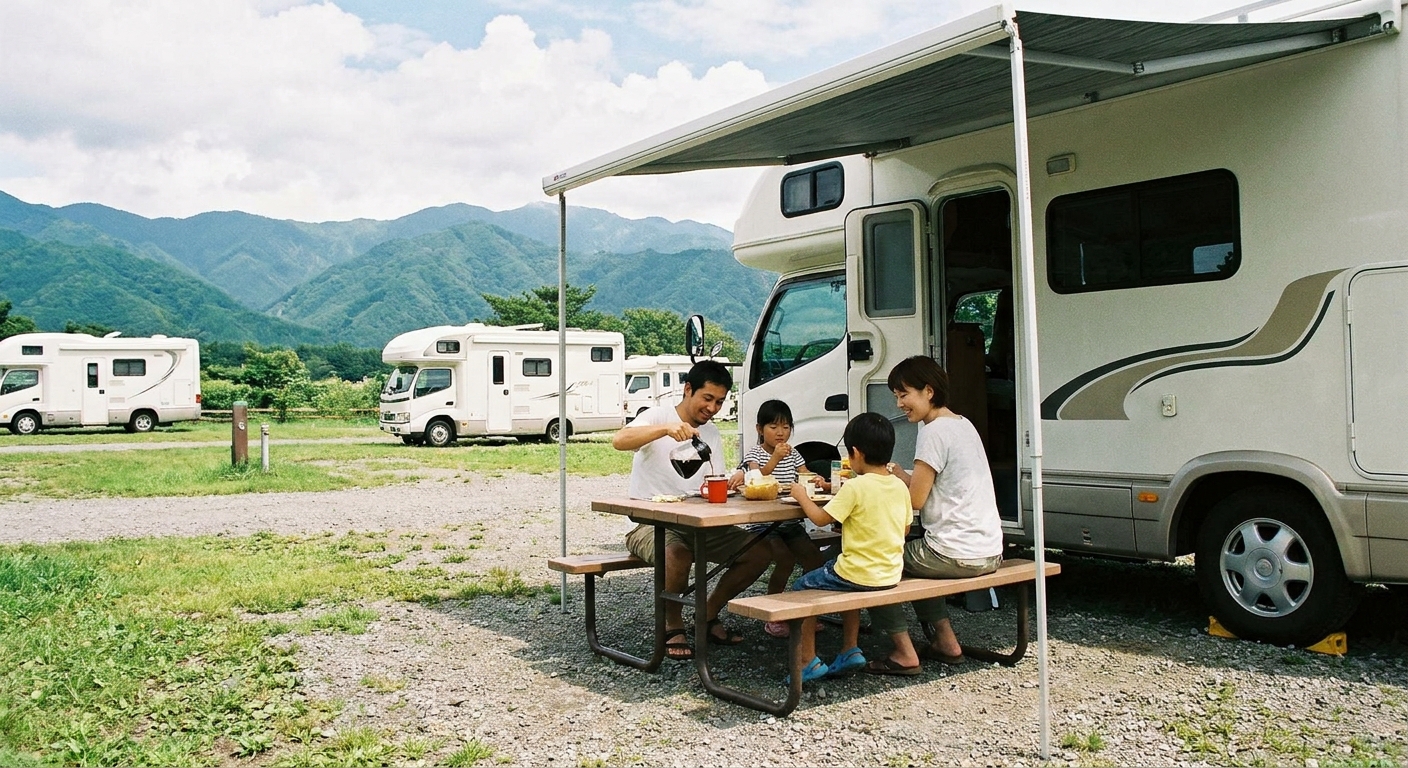
Class C (Alcove) motorhomes are consistently an excellent choice for families or groups on long-term Tokyo - Airport rentals, typically featuring an average length of 7.5 meters and robustly sleeping 4 to 6 people.
Characterized by the distinctive sleeping area above the driver's cab (the 'alcove'), these motorhomes offer generous sleeping capacity and often prove to be highly cost-efficient due to their practical design. This makes them particularly suitable for groups of friends or families with kids planning an extended road trip across Japan. You'll find models like the "Euro Deluxe" or "Conquest" from our suppliers, offering amenities such as a refrigerator, gas stove, and ample dining space, perfect for preparing meals on the go.
While larger than campervans, Class C vehicles strike a good balance between onboard comfort and practical handling for extended travel across Japan's diverse environments. Drive slowly and carefully, and you can drive almost anywhere without issues. No need to stress - just use common sense and pay attention. For families considering a long-term RV Rental in Tokyo - Airport - Pricing Guide 2024 offers detailed cost breakdowns for this vehicle type.
Class B (Campervan) - Best For
Class B (Campervan) models are the most agile and fuel-efficient option for long-term Tokyo - Airport rentals, averaging a compact 5.8 meters in length and generally sleeping 2 to 3 people.
These nimble campervans are best suited for solo travelers, couples, or very small groups who prioritize ease of maneuverability, excellent fuel economy, and the flexibility to navigate Japan's narrower city streets and rural lanes with minimal fuss. Their compact size is perfect for urban parking in areas like Shinjuku or Shibuya, and allows access to more remote locations and smaller campgrounds. Consider a "Camper Van" or an "Active Classic" for your adventure.
With features like a small kitchen, dining area, and often a toilet and shower, modern campervans provide surprising self-sufficiency for extended trips. If you're exploring the more intricate backroads or desire to blend seamlessly into local traffic patterns, a campervan rental in Tokyo - Airport for Couples - Pricing 2024 might be your perfect match. They offer a unique intimate travel experience, allowing you to truly feel the place.
Side-by-Side Comparison Table
A comprehensive comparison table is invaluable for travelers to quickly assess different motorhome families based on key attributes for their long-term Tokyo - Airport rental.
This tool helps match specific long-term travel needs with the most suitable RV class, ensuring your Japanese adventure is as comfortable and convenient as possible. Below is a simplified overview based on Bandana's global fleet averages:
| RV Class | Average Length (meters) | Sleeping Capacity | Fuel Efficiency (L/100km) | Best Use Case |
|---|---|---|---|---|
| Class A (Integrated) | 7.5-9.0 | 4-6 | 18-25 | Luxury, spacious family travel, limited urban driving |
| Class SI (Semi-integrated) | 6.5-7.5 | 2-4 | 12-18 | Balance of comfort & maneuverability, couples/small families |
| Class C (Alcove) | 6.5-8.0 | 4-6 | 15-22 | Family-friendly, generous sleeping, cost-efficient |
| Class B (Campervan) | 5.0-6.5 | 2-3 | 8-13 | Agile, urban friendly, couples/solo travelers, budget-conscious |
This data, derived from our extensive network of suppliers including El Monte and Britz, helps you make an informed decision for your long term RV Rental Comparison in Tokyo - Airport - Monthly Suppliers 2024. Remember that actual specs can vary by model and supplier, so always check the details of your chosen vehicle.
Our Recommendation for long term RV rental Travelers in Tokyo - Airport
For long-term RV rental travelers in Tokyo - Airport, a Class SI (Semi-integrated) motorhome is primarily recommended due to its optimal balance of onboard comfort and crucial maneuverability on Japan's roads.
These vehicles, such as the "Active Standard Auto" model with seating for two and a comfortable sleeping area, provide ample living space for an extended stay while still being manageable enough to navigate diverse Japanese routes, from the bustling streets surrounding Narita Airport to serene mountain passes near Nikko. The ease of driving a Class SI makes for a less stressful long-term adventure. A close runner-up, particularly for larger families needing more sleeping capacity, is a Class C (Alcove) RV, like the "4 Berth Deluxe," which balances comfort with practicality. These recommendations are based on vehicle specifications and their proven suitability for extended travel across Japan's varied environments, considering typical road widths and parking availability at destinations like the Michi-no-Eki network.
Ultimately, the best choice depends on your group size and priorities for space versus agility, but both Class SI and Class C options offer excellent foundations for a memorable long-term journey.
Is it worth renting an RV in Japan?
Renting a motorhome in Japan is highly worthwhile for travelers seeking flexible, immersive, and often cost-effective long-term exploration, providing a unique perspective beyond conventional tourism.
Japan's extensive *Michi-no-Eki* network, with over 1,000 roadside stations, is a key benefit for RVers, offering convenient, often free, overnight parking spots along with clean restrooms, local food markets, and sometimes even hot springs or cultural attractions. This network significantly reduces lodging costs over an extended trip. RV travel in Japan allows for spontaneous itineraries, enabling access to remote natural beauty, charming rural towns, and a deeper cultural immersion that organized tours often miss. You can wake up to views of Mount Fuji, explore the ancient temples of Kyoto, or relax at a coastal *Michi-no-Eki* – all at your own pace. With Bandana Caravan, we compare final prices across 50+ suppliers, making it easy to find the perfect rental for your adventure.
How much does it cost to rent an RV in Japan?
The total cost for a long-term RV rental in Japan from Tokyo - Airport includes the base rental fee, which is dynamic and varies by RV class, rental duration, and seasonality, plus essential additional expenses.
For example, a Class B campervan might average ¥10,000-¥18,000 per day (approx. $65-$120 USD) for a month-long booking in spring, while a Class C family motorhome could range from ¥15,000-¥25,000 per day ($100-$170 USD). Beyond the rental price, travelers must budget for unique Japanese costs: expressway tolls, which can add significant expense (an ETC card from your supplier is strongly advised for efficiency and potential discounts); fuel, with a typical RV consuming 10-25 liters per 100 km; urban parking fees, which can be high in major cities like central Tokyo; and campground fees, usually around ¥2,000-¥5,000 per night ($13-$35 USD) for powered sites. Groceries, dining out, and entry fees to attractions, like those around Lake Kawaguchiko or Nikko, also need to be factored into your overall trip budget. For easy budgeting and tracking expenses, consider using RV PLANET routes to itemize every cost along your itinerary.
How do I pick up an RV from Narita Airport?
Picking up your rented RV from Narita Airport (NRT) typically involves coordinating a shuttle service or using public transport to reach the off-airport rental depot, as most suppliers are not directly on airport grounds.
Upon arrival at Narita, travelers should confirm specific transfer instructions with their chosen rental company, as some offer complimentary shuttle pickups from specific terminals or nearby train stations like Narita Station or Keisei Narita Station. Others may require you to take a taxi or a local bus service to their facility located within a 15-30 minute drive. For example, many depots are located along Route 408 or Route 296, just a short distance from the airport. Expect a comprehensive briefing at the depot on your right-hand drive Japanese RV's features, including the operation of the kitchen (gas stove, refrigerator), toilet, and waste disposal systems, as well as essential Japanese road rules and emergency procedures. This thorough handover ensures you're confident before starting your long-term RV Rental in Tokyo - Airport - Complete Guide 2024 adventure.
Are RVs popular in Japan?
RVs are increasingly popular in Japan, especially among domestic travelers and growing international visitors, supported by a steadily expanding infrastructure tailored for motorhome travel.
Japanese RV culture often favors smaller, more nimble vehicles, such as Class B campervans or compact Class C motorhomes, which are optimally designed for navigating the country's narrower roads and smaller parking spots, especially in urban or mountainous regions. The extensive and well-maintained *Michi-no-Eki* (roadside station) network, with over 1,000 locations nationwide offering amenities and safe overnight parking, further fuels this popularity. This trend reflects a desire for flexible, nature-focused travel and a burgeoning market for specialized Japanese RV models that blend efficiency with comfort. For more specific details on local trends and availability, you might explore RV Rental Japan - Complete Guide 2024.
Can you sleep anywhere in an RV in Japan?
No, sleeping in a rented RV in Japan is generally restricted to designated overnight areas such as *Michi-no-Eki* (roadside stations), paid campgrounds, or official RV parks, which are widely available.
The *Michi-no-Eki* network is a unique and essential aspect of RV travel in Japan, offering safe, usually free, overnight parking along with clean public restrooms, vending machines, and local product shops. When utilizing these facilities, it's crucial to observe local etiquette: dispose of waste properly, keep noise levels down, and generally be respectful of the community. Wild camping, or parking overnight in undesignated areas like random parking lots or residential streets, is typically prohibited and can lead to fines or unwelcome interactions with local authorities. Planning your overnight stops at official facilities is essential for a smooth and enjoyable long-term RV rental experience from Tokyo - Airport.
What are the road rules for RVs in Japan?
Key road rules for RVs in Japan include driving on the left-hand side of the road, strictly adhering to posted speed limits, and being familiar with local signage, which can differ from Western standards.
An International Driving Permit (IDP) is mandatory for visitors from non-English speaking countries and is strongly recommended for all foreign drivers to legally operate a motorhome in Japan; carry both your home country's license and the IDP at all times. Speed limits are generally 100 km/h (approx. 62 mph) on expressways, 80 km/h on national highways, and 40 km/h in urban areas. While navigating cities from Tokyo - Airport, like around the Narita Expressway or towards Route 51, remember that roads can be narrower, so drive slowly and carefully, using common sense and paying attention. An Electronic Toll Collection (ETC) card, often available through your rental supplier, is highly recommended for seamless travel on Japan's extensive toll road network. For more detailed driving advice, consult our Driving an RV in Tokyo - Airport - Complete Guide 2024.
What should I know before renting an RV in Japan?
Before renting an RV in Japan, it's crucial to understand that Japanese motorhomes are typically smaller and operate with right-hand drive, requiring an International Driving Permit (IDP) and some adaptation for international travelers.
Budgeting for specific local costs is also essential; this includes expressway tolls (an ETC card is a must-have for efficient travel), parking fees (which can be substantial in urban centers like those near Tokyo - Airport's main train stations), and fuel, which is generally expensive. Familiarize yourself with Japanese cultural etiquette, especially regarding waste disposal and respectful behavior at Michi-no-Eki and campgrounds. Staying connected is vital; consider purchasing a local SIM card or renting a mobile WiFi device for reliable navigation and communication, especially if you're venturing off-grid. Lastly, have an emergency plan in place for unforeseen circumstances like breakdowns, medical emergencies, or natural disasters (such as typhoons or earthquakes), ensuring you know how to contact local assistance. Bandana RV offers 24/7 support *before, during, and after your booking* to help with any pre-trip coordination questions.
Is Japan RV friendly?
Japan is remarkably RV-friendly for long-term travelers, supported by its excellent infrastructure, including a vast network of well-maintained roads and dedicated RV facilities.
The country offers high-quality roads, making driving comfortable, though urban areas around Tokyo - Airport, such as those near the Narita Higashi IC, and some mountain passes can be narrower and require careful navigation. The extensive *Michi-no-Eki* network is a cornerstone of Japan's RV-friendliness, providing convenient and often free overnight parking spots, restrooms, and local markets across the country. While wild camping is generally not permitted, the abundance of official campsites and RV parks ensures you'll always find a suitable spot. If not at the first campground, then the next one; always call ahead before driving. The Japanese culture of cleanliness and order extends to its RV facilities, ensuring a pleasant and respectful travel experience. Adapting to local customs, such as proper waste disposal and mindful parking, enhances the positive RV journey through this incredible country. Plan a trip itinerary in advance with minimal effort and maximum enjoyment using RVPLAN.NET.
What You Shouldn't Miss
- Explore Naritasan Shinshoji Temple: Just a short drive from Narita Airport, this ancient Buddhist temple offers stunning architecture, serene gardens, and a vibrant approach road lined with traditional shops and restaurants, providing a perfect cultural immersion right after picking up your RV.
- Drive the Tokyo Bay Aqua-Line to Umihotaru: Take your RV on this engineering marvel that includes an underwater tunnel and a bridge, leading to the man-made island rest stop of Umihotaru. Enjoy panoramic views of Tokyo Bay and grab a unique souvenir.
- Visit Sakura-no-Yama Park: For an unforgettable photographic moment, especially in spring, head to this park near Narita Airport. You can park your RV for the day and witness cherry blossoms with jumbo jets landing and taking off directly overhead.
- Discover local flavors at a Michi-no-Eki: Immerse yourself in local Japanese culture by stopping at one of the many *Michi-no-Eki* within a 1-2 hour drive of Tokyo - Airport. Sample regional produce, enjoy fresh meals, and find unique crafts.
- Journey to Kawaguchiko for Fuji Views: Embark on a beautiful drive to Lake Kawaguchiko, one of the Fuji Five Lakes, offering some of the most iconic and breathtaking views of Mount Fuji. Many RV-friendly campgrounds and parking areas are available around the lake.
Looking for expert insights from Avi Bandana? Top 5 Adventures - recommendations from Avi Bandana.
Final Thoughts
Embarking on a long-term RV rental in Tokyo - Airport opens up a world of adventure, allowing you to truly discover the rich tapestry of Japan at your own pace. Imagine waking up to the gentle sounds of nature, cooking a delicious breakfast in your mobile home, and setting off on a new adventure each day. Whether you opt for the agile freedom of a campervan or the spacious comfort of a Class C motorhome, the opportunities for exploration are boundless.
At Bandana Caravan, we're passionate about making your Japanese RV journey as seamless and enjoyable as possible. With our transparent pricing, expert support, and comprehensive comparison tools, you can confidently choose the perfect vehicle for your extended adventure. So, what are you waiting for? Your extraordinary Japanese road trip awaits!
Find Motorhome Rentals in Tokyo - Airport