For live availability and current prices, start with our RV Rental Alaska - Complete Guide 2026 guide.
In This Guide
- Best Alaska RV Itinerary for rv rental — Overview
- 7-Day Classic Route in Alaska
- 14-Day Extended Journey in Alaska
- Recommended RVPlan Trip for Alaska
- Must-See Stops Along the Way (Avi Bandana Picks)
- Daily Driving Distances & Drive Times in Alaska
- Best RV Class for This Itinerary — Couple & Family Picks
- What is the 3-3-3 rule for RV travel?
- What is the best route to Alaska by RV?
- What is the best time of year to RV to Alaska?
- What is the 4-4-4 rule for RV travel?
- What is the best RV class for this itinerary?
- What should I not miss in Alaska?
- Can I park my RV anywhere in Alaska?
Best Alaska RV Itinerary for rv rental — Overview
A typical Alaska RV adventure spans 7-23 days, covering major highlights like Denali and the Kenai Peninsula. The optimal season for RVing in Alaska is June through August due to mild weather and full service availability. An extended 23-day trip, such as the '
7-Day Classic Route in Alaska
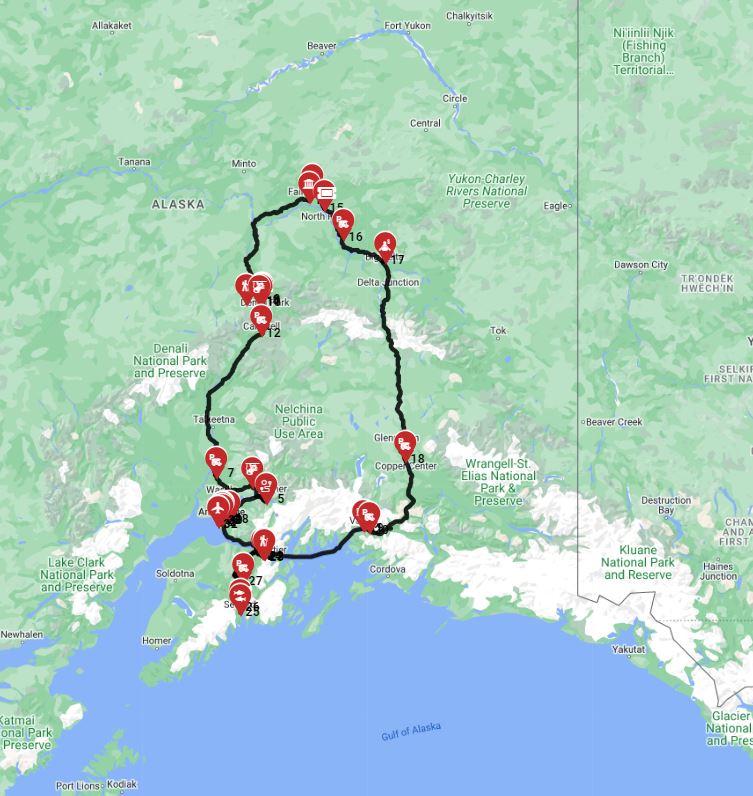
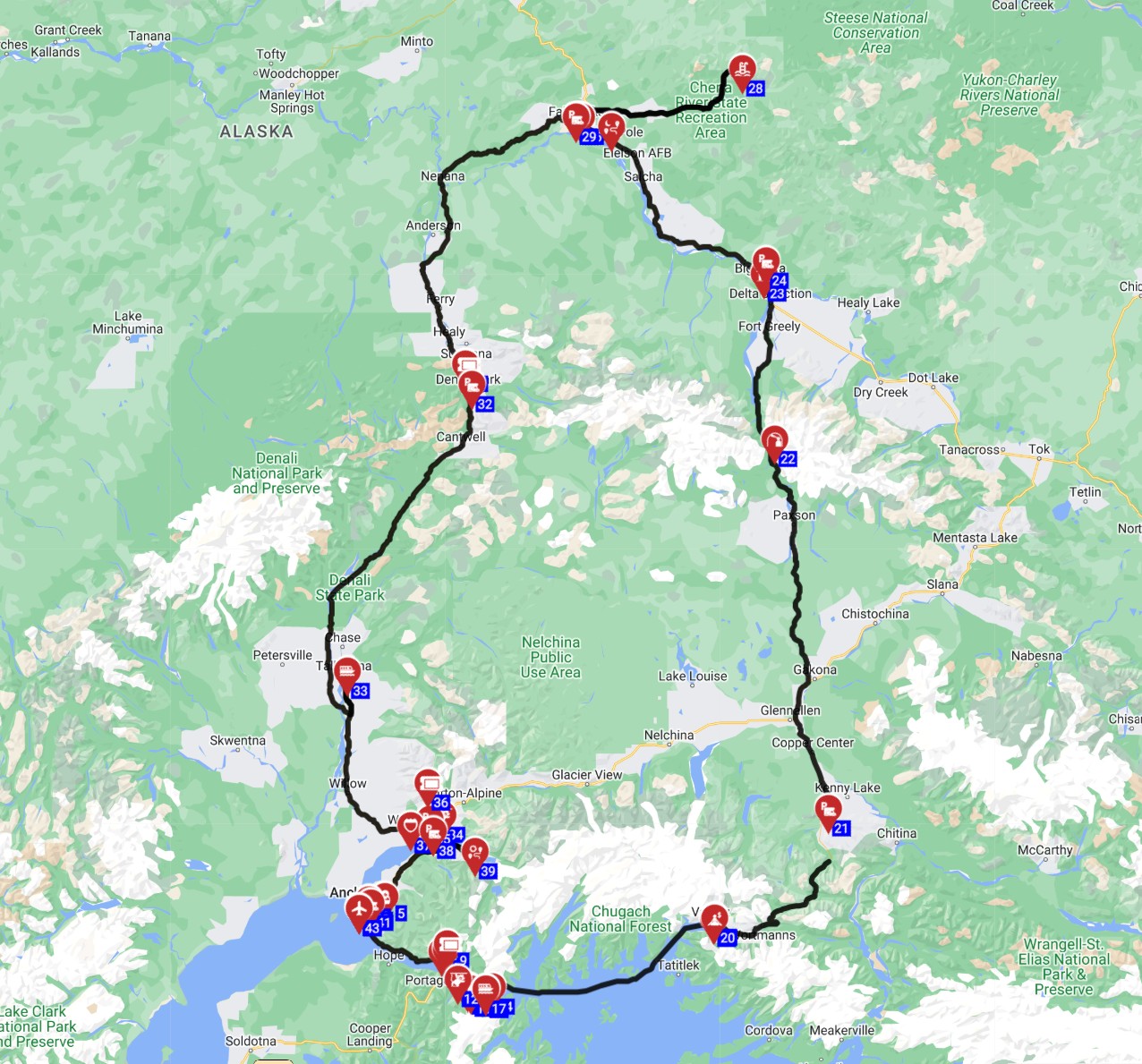
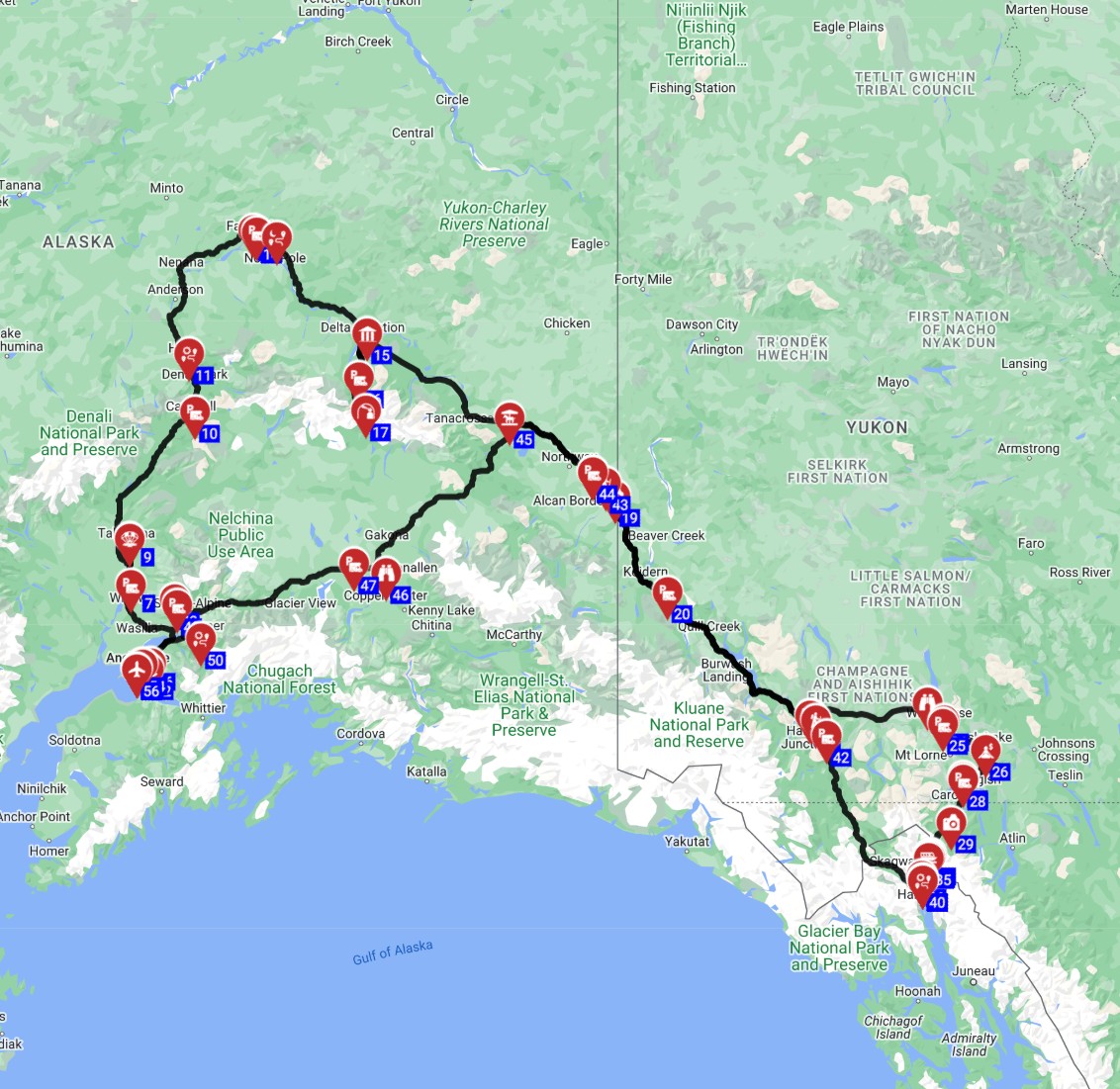
This itinerary focuses on a classic Southcentral Alaska loop, starting and ending in Anchorage. It emphasizes shorter daily drives (around 100-200 km) to allow for extensive exploration at each stop. The route includes iconic destinations such as Denali National Park, Talkeetna, Palmer/Wasilla, and the coastal beauty of Seward.
Day 1: Anchorage to Talkeetna (approx. 180 km / 112 mi)
- Highlights: Scenic drive along the George Parks Highway, views of Denali (weather permitting), exploring the quirky town of Talkeetna. Consider a flightseeing tour of Denali.
- Sleep: Talkeetna Alaskan Lodge RV Park or a nearby private campground.
Day 2: Talkeetna to Denali National Park Entrance (approx. 150 km / 93 mi)
- Highlights: Continue north to the entrance of Denali National Park. Visit the Denali Visitor Center and prepare for park access. Consider a local hike or ranger program.
- Sleep: Denali RV Park & Motel or Riley Creek Campground (within the park, reservations essential).
Day 3: Denali National Park Exploration (0 km driving)
- Highlights: Take a Tundra Wilderness Tour or Savage River Loop bus deeper into the park for prime wildlife viewing (bears, moose, caribou, Dall sheep) and stunning mountain vistas. Hike one of the shorter trails.
- Sleep: Denali RV Park & Motel or Riley Creek Campground.
Day 4: Denali to Palmer/Wasilla (approx. 200 km / 125 mi)
- Highlights: Head south, enjoying the scenic Parks Highway. Explore the fertile Matanuska-Susitna Valley, visit the Reindeer Farm, or the Alaska State Fairgrounds in Palmer.
- Sleep: Homestead RV Park in Palmer or a private campground in Wasilla.
Day 5: Palmer/Wasilla to Seward (approx. 220 km / 137 mi)
- Highlights: Drive the scenic Seward Highway, one of America's most beautiful roads, passing through moose habitat and along Turnagain Arm. Stop at Beluga Point for potential wildlife sightings. Explore Seward's harbor and waterfront.
- Sleep: Seward Waterfront Park Campground or Stoney Creek RV Park.
Day 6: Seward Exploration (0 km driving)
- Highlights: Take a Kenai Fjords National Park boat tour to see glaciers, marine wildlife (whales, sea lions, puffins). Hike to Exit Glacier (a short walk to the ice). Visit the Alaska SeaLife Center.
- Sleep: Seward Waterfront Park Campground or Stoney Creek RV Park.
Day 7: Seward to Anchorage (approx. 200 km / 125 mi)
- Highlights: Enjoy the return drive along the Seward Highway. Upon arrival in Anchorage, return your RV rental and reflect on your Alaskan adventure.
14-Day Extended Journey in Alaska
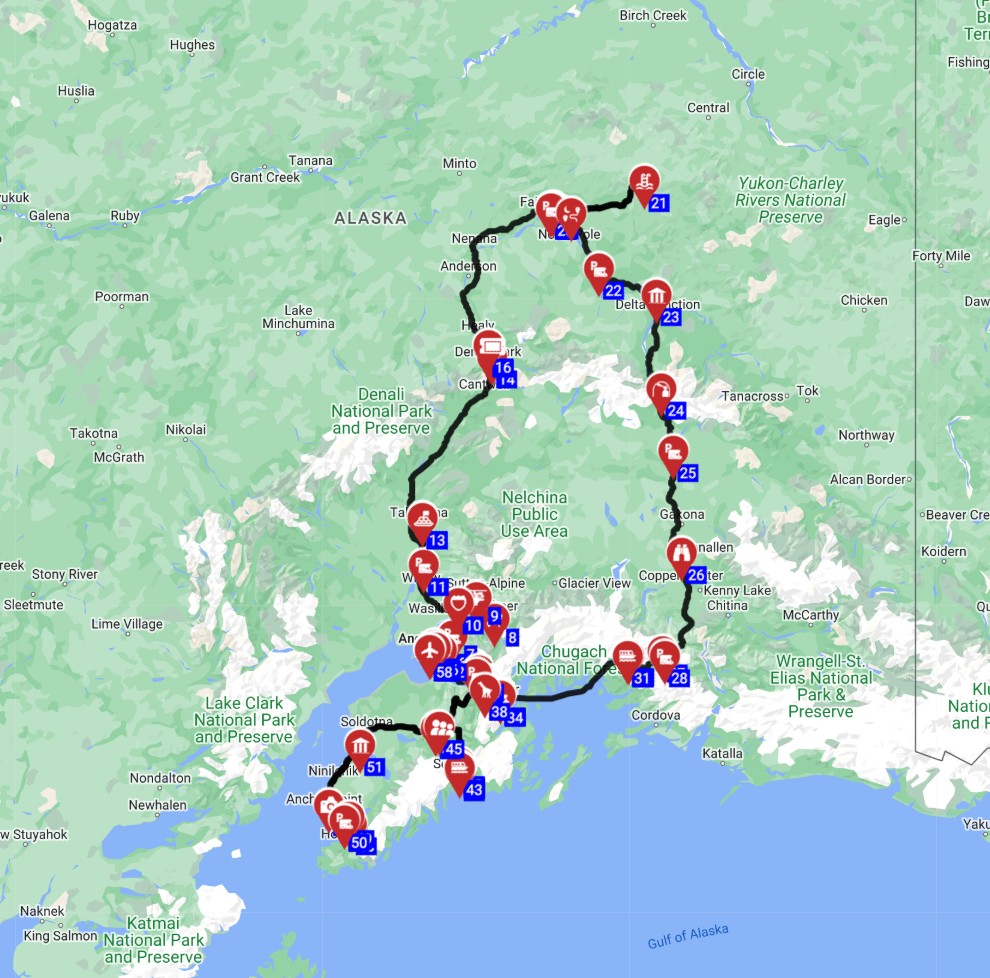
An extended 14-day RV journey through Alaska offers a more comprehensive experience, allowing you to explore the state's diverse landscapes at a relaxed pace, adhering to the recommended maximum of 100 miles (150 km) per day on average. This route expands on the classic itinerary to include more of the Interior and the full Kenai Peninsula.
Part 1: Interior Alaska & Denali (Days 1-7)
- Day 1: Anchorage to Talkeetna (180 km / 112 mi) Arrival in Anchorage, pick up RV rental. Drive to Talkeetna. Explore the historic downtown and enjoy views of Denali. Overnight in Talkeetna.
- Day 2: Talkeetna to Denali National Park (150 km / 93 mi) Continue to Denali. Settle into a campground near the park entrance. Attend a ranger program or visit the Murie Science and Learning Center.
- Day 3: Denali National Park Exploration Full day for a bus tour into Denali, hiking, and wildlife viewing. This is a no-driving day for your RV.
- Day 4: Denali National Park to Fairbanks (200 km / 124 mi) Drive north to Fairbanks, Alaska's second-largest city. Visit the University of Alaska Museum of the North or explore downtown Fairbanks.
- Day 5: Fairbanks Exploration Discover the 'Golden Heart City.' Take a sternwheeler riverboat cruise on the Chena River, visit Pioneer Park, or soak in Chena Hot Springs (a longer day trip, but worth it if you're prepared for the drive).
- Day 6: Fairbanks to Paxson (270 km / 168 mi) Head south on the Richardson Highway, known for its stunning mountain views. Stop at Rika's Roadhouse for a historical break. Overnight at a scenic campground near Paxson Lake.
- Day 7: Paxson to Valdez (200 km / 124 mi) Continue along the Richardson Highway through Thompson Pass, stopping at Worthington Glacier. Arrive in Valdez, 'The Switzerland of Alaska.' Explore the harbor and enjoy coastal views.
Part 2: Kenai Peninsula & Return (Days 8-14)
- Day 8: Valdez Exploration Take a glacier and wildlife cruise in Prince William Sound, kayak among icebergs, or visit the Solomon Gulch Hatchery. This is a no-driving day for your RV.
- Day 9: Valdez to Glennallen/Copper Center (190 km / 118 mi) Begin your journey back west on the Glenn Highway, a designated National Scenic Byway. Explore the Wrangell-St. Elias National Park Visitor Center near Copper Center.
- Day 10: Glennallen to Palmer/Wasilla (190 km / 118 mi) Continue on the Glenn Highway, enjoying views of the Matanuska Glacier. Consider a stop at the Musk Ox Farm or a hike in the Matanuska Valley.
- Day 11: Palmer/Wasilla to Seward (220 km / 137 mi) Drive the spectacular Seward Highway to Seward. Settle in and explore the town, perhaps visiting the Alaska SeaLife Center.
- Day 12: Seward Exploration Another full day for a Kenai Fjords National Park tour, hiking to Exit Glacier, or exploring the waterfront. This is a no-driving day for your RV.
- Day 13: Seward to Homer (270 km / 168 mi) Journey south along the Sterling Highway to Homer, nestled on Kachemak Bay. Explore the Homer Spit, known for fishing charters and unique shops. Enjoy a fresh seafood dinner.
- Day 14: Homer to Anchorage (360 km / 224 mi) Return to Anchorage, perhaps stopping at scenic viewpoints along the way. Drop off your RV rental and depart, or spend an extra night in Anchorage to relax.
Recommended RVPlan Trip for Alaska
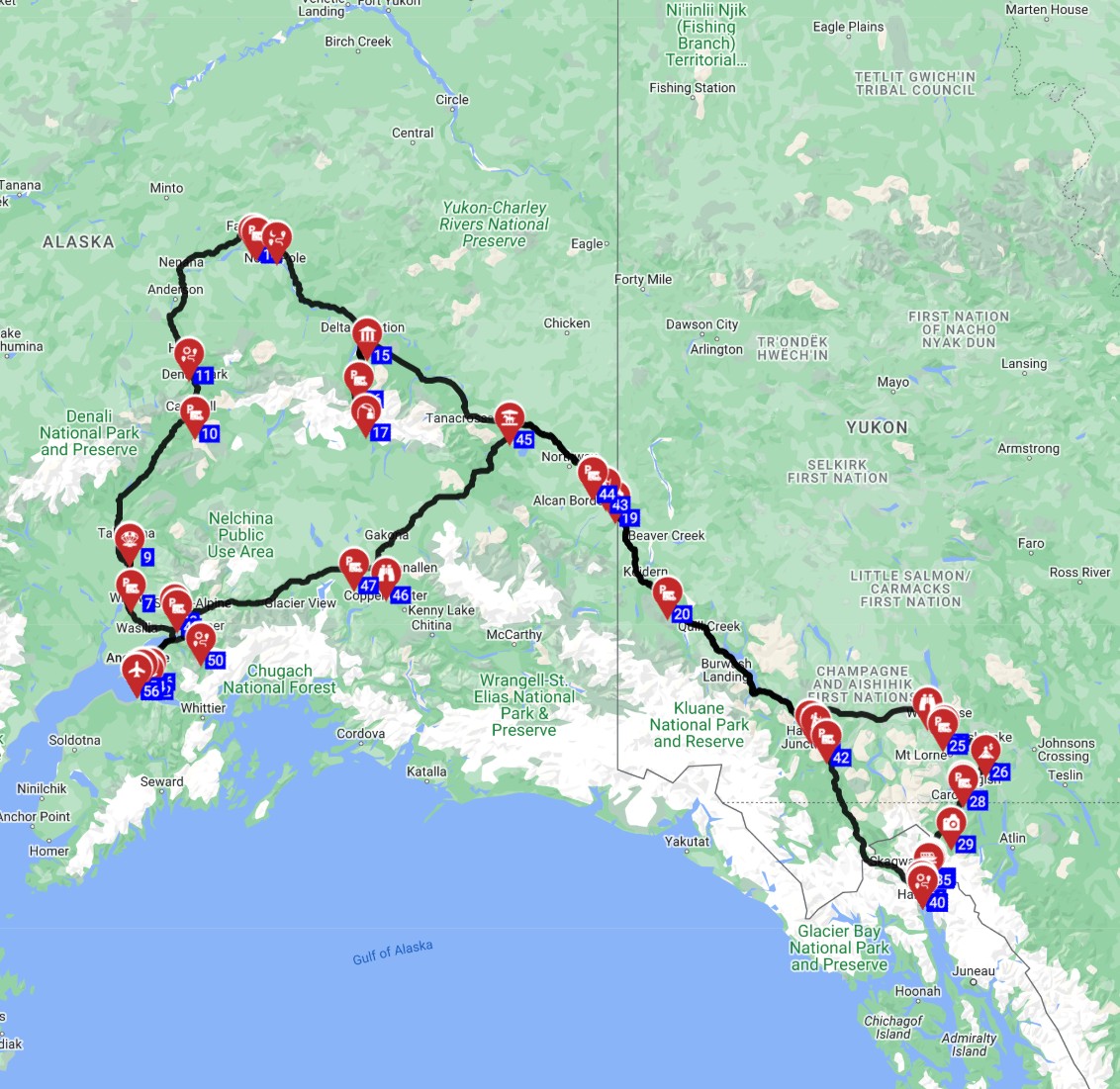
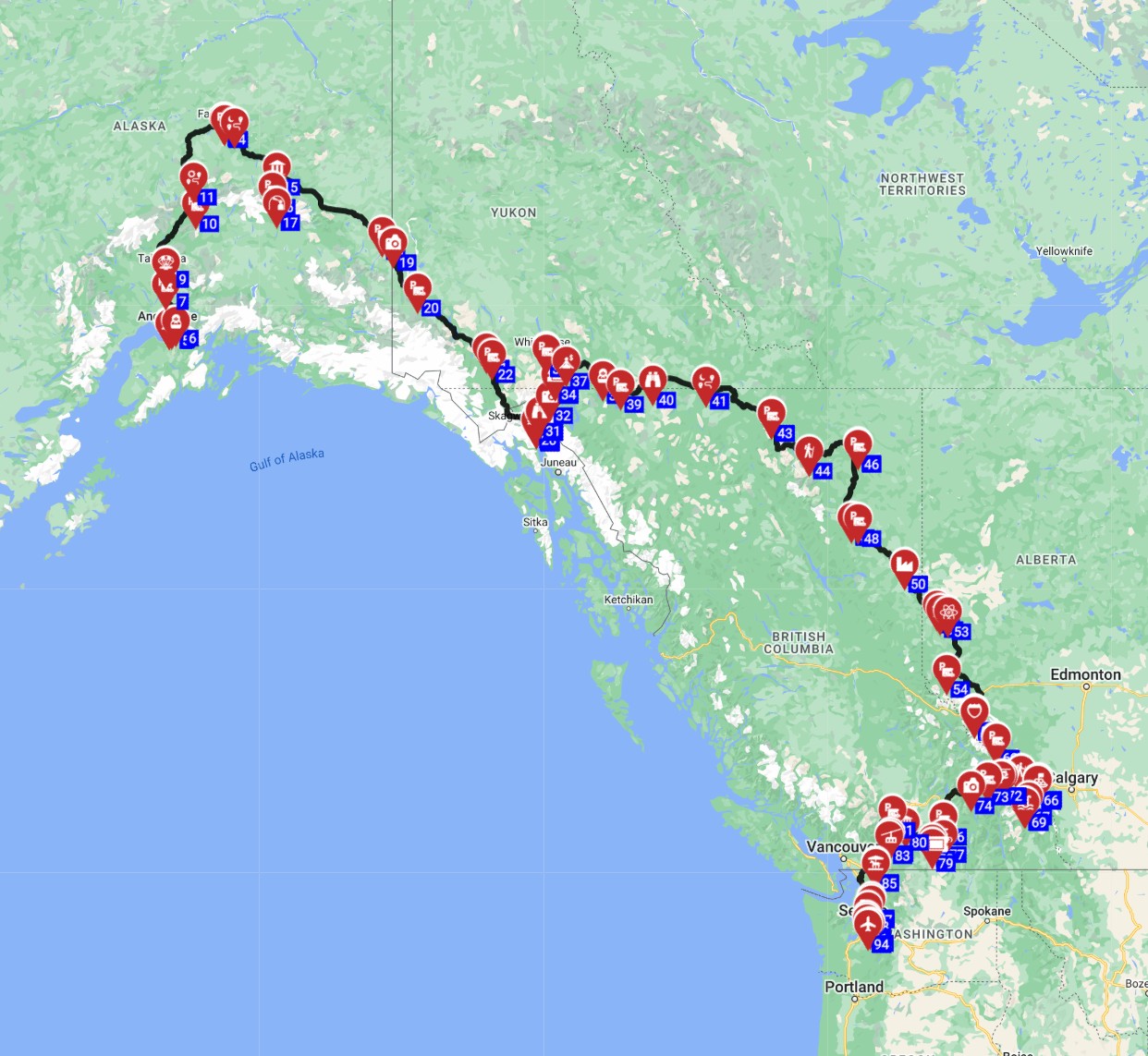
For those seeking a meticulously planned and extensive Alaskan adventure that also ventures into Canada, Bandana recommends the RVPlan trip titled "Anchorage Round Trip - Alaska-Yukon Discovery Trail".
This robust itinerary spans 23 days and covers a total distance of 3,539.2 km, beginning and ending in Anchorage. It's an ideal choice for travelers who want a ready-made route that minimizes planning stress while maximizing exploration of both Alaska and the Yukon Territory. You can find more details and start planning at: RV trip planner USA from Anchorage motorhome trip route Alaska and Yukon.
Must-See Stops Along the Way (Avi Bandana Picks)
Drawing from the expertise behind the RVPlan itineraries, Avi Bandana's personal picks for must-see stops in Alaska often lean towards experiences that offer deep cultural insight, historical significance, and authentic local flavor. These aren't just roadside attractions but opportunities to truly connect with the spirit of the Last Frontier.
- Alaska Native Heritage Center (Traditional Visit, Heritage): Located in Anchorage, this center provides an invaluable opportunity to learn about Alaska's diverse indigenous cultures through traditional dances, storytelling, and artisan demonstrations. It's a profound start or end to any Alaskan journey.
- S.S. Klondike National Historic Site (Historical Site): While part of the Alaska-Yukon Discovery Trail, this Whitehorse, Yukon stop offers a fascinating glimpse into the gold rush era and the pivotal role riverboats played in connecting remote communities. It’s a key piece of regional history.
- Independence Mine State Historical Park (Historical Site): Near Palmer, this well-preserved mining camp offers a chance to step back in time to Alaska's gold mining days. Explore the buildings, learn about the harsh realities of mining, and enjoy stunning mountain views.
- Traditional Restaurant / Fine Dining: Beyond specific landmarks, Avi Bandana encourages seeking out local eateries that serve authentic Alaskan cuisine. Look for establishments offering fresh, locally sourced seafood (salmon, halibut, crab), reindeer sausage, or hearty frontier-style meals. This is crucial for experiencing the local industry and culture through its food.
Daily Driving Distances & Drive Times in Alaska
Traveling slowly is key to an enjoyable RV experience in Alaska. Avi Bandana recommends a maximum of 100 miles or 150 km per day on average. This guideline ensures you have ample time to soak in the breathtaking landscapes, stop at unexpected viewpoints, and account for the unique challenges of Alaskan roads, which can include frost heaves, gravel sections, and wildlife crossings. Rushing through the state means missing out on its true essence.
Here are some example drive-time estimates for popular pairings, assuming good road conditions and minimal stops:
- Anchorage to Seward: Approximately 2.5 to 3 hours for 200 km (125 miles).
- Anchorage to Talkeetna: Roughly 2 to 2.5 hours for 180 km (112 miles).
- Anchorage to Denali National Park Entrance: Expect around 4 to 5 hours for 380 km (236 miles) without significant stops. (Note: This is an example of a longer stretch that might take more than one leisurely day for some travelers, reinforcing the 100-mile *average* principle).
Remember to factor in extra time for fuel stops, rest breaks, photo opportunities, and potential delays due to construction or wildlife on the road. Embrace the journey as much as the destination.
Best RV Class for This Itinerary — Couple & Family Picks
Choosing the right RV for your Alaskan adventure is crucial for comfort and maneuverability. Based on Bandana's global fleet averages and the nature of Alaskan travel, here are two recommended RV classes:
For Couples: Class B - Camper Van
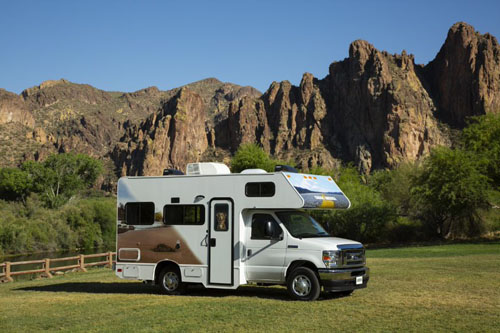
For couples or solo travelers, the Class B - Camper Van is an excellent choice. Its compact size, with an average length of 5.8 meters, makes it agile and easier to navigate on Alaska's varied roads, including narrower sections or ferry access. These vans typically offer an average of 3.2 sleeping places and cater to about 2.7 adults, providing enough comfort without excess bulk. Their fuel efficiency, often around 8-10 Liters/100 km, is also a significant advantage when covering long distances in Alaska where fuel stops can be further apart. They offer the flexibility to explore smaller towns and boondock in more secluded spots.
For Families: Class C - Alcove
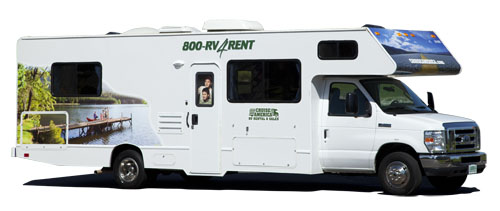
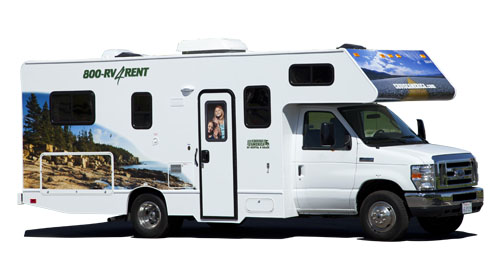
Families will find the Class C - Alcove RV ideal for an Alaskan itinerary. Averaging 7.5 meters in length, these motorhomes provide significantly more living space, which is essential for family comfort on extended trips. With an average of 5.8 sleeping places and accommodation for around 4.4 adults, there's plenty of room for everyone. The alcove design above the cab often provides an extra bed, perfect for children. While slightly less agile than a camper van, the added space for gear, food storage, and comfortable relaxation makes it worth it for a family-focused adventure.
No matter which class you choose, Bandana's "Rent & Plan" service simplifies your entire trip. It combines your RV rental with a ready-made itinerary crafted by travel experts, providing full access to trip-planning software. This removes the headache of itinerary planning, allowing you to focus on the excitement of your Alaskan journey.
What is the 3-3-3 rule for RV travel?
The 3-3-3 rule for RV travel is a widely adopted guideline that advises travelers to drive no more than 300 miles (approximately 480 km) in a day, arrive at their campsite by 3 PM, and stay for at least 3 nights at each location. This rule aims to promote a more relaxed, enjoyable, and safer RV experience by preventing driver fatigue and allowing ample time for setup and local exploration.
While the 'arrive by 3 PM' and 'stay for 3 nights' components are particularly pertinent and highly recommended for RVing in Alaska to allow for full enjoyment and minimize late-night driving risks (especially with wildlife), the '300 miles' driving distance is often considered too aggressive for the Last Frontier. Given Alaska's unique road conditions—which can include frost heaves, gravel sections, and long stretches between services—and the sheer amount of scenic beauty to absorb, Avi Bandana strongly recommends a slower pace, typically advising a maximum of 100 miles (150 km) per day on average. This adjusted approach aligns better with the intent of the 3-3-3 rule by prioritizing enjoyment and safety over covering vast distances quickly.
What is the best route to Alaska by RV?
For most RV travelers, the best route to Alaska is the iconic Alaska Highway, often referred to as the ALCAN Highway. This historic route begins in Dawson Creek, British Columbia, and stretches over 2,200 kilometers (1,370 miles) through the Yukon Territory before entering Alaska. It's renowned for its stunning scenery, historical significance, and gradually improving road conditions.
Key considerations for this route:
- Border Crossing: You will enter Canada from the Lower 48 and then Alaska from Canada. Ensure you have valid passports for all travelers, vehicle registration, proof of insurance, and any necessary permits for pets. Be aware of Canadian and U.S. customs regulations regarding prohibited items (e.g., firearms, certain food items, cannabis). Check the latest requirements from both Canadian Border Services Agency (CBSA) and U.S. Customs and Border Protection (CBP) before your trip, especially concerning pet vaccinations and microchips.
- Road Conditions: While largely paved, expect sections of gravel, construction, and frost heaves, especially in earlier parts of the season. The route is well-maintained but demands attention. Suitable RV types for this route should have decent ground clearance and robust tires.
- Services: Fuel, food, and lodging are available along the ALCAN, though towns can be far apart. Always top off your fuel tank when opportunities arise. Cellular and internet connectivity can be spotty to non-existent in many remote stretches, so download offline maps and consider a satellite communicator for emergencies.
- Alternative: The Cassiar Highway (Highway 37): This route, branching off Highway 16 in British Columbia, offers a more rugged and wilderness-focused experience. It's shorter than parts of the ALCAN but has fewer services and more unpaved sections. It's a fantastic choice for those seeking deeper immersion in nature and prepared for more remote travel and potential mechanical breakdown strategies, as roadside assistance can be sparse.
What is the best time of year to RV to Alaska?
The best time of year to RV to Alaska is unequivocally June through August. During these months, the state experiences its warmest temperatures, the longest daylight hours (up to 19-24 hours in some northern regions), and all campgrounds, visitor centers, and attractions are fully open and operational. This period allows for optimal wildlife viewing, hiking, and exploring without the concerns of extreme cold or road closures.
May (Shoulder Season): Traveling in May can offer fewer crowds and potentially lower prices. However, some roads (like the full length of Denali Park Road) may still be closed, and campgrounds might not all be open. Expect cooler temperatures, some rain, and potential for late-season snow in higher elevations. The thawing permafrost can also lead to more pronounced frost heaves on roads.
June-August (Peak Season): This is prime time. Reservations for RV parks, ferry services, and popular tours are essential, often needing to be booked months in advance. The weather is generally mild, with average daytime temperatures ranging from 15-25°C (60-75°F) in most popular areas, though nights can still be cool. Road conditions are typically at their best, though construction is common.
September (Shoulder Season): Early September can be a beautiful time to visit, with vibrant fall colors and fewer tourists. However, daylight hours shorten considerably, and temperatures begin to drop, with the increasing possibility of snow, particularly in the interior and mountains. Some businesses and campgrounds may start closing after Labor Day.
What is the 4-4-4 rule for RV travel?
The 4-4-4 rule for RV travel is a variation of the 3-3-3 rule, advocating for a leisurely pace on the road. It generally recommends driving no more than 400 miles (approximately 640 km) in a day, ensuring you're parked and set up by 4 PM, and staying a minimum of 4 nights at each destination. The core intent of this rule, much like the 3-3-3 rule, is to reduce the stress of travel, allow for greater enjoyment of each location, and enhance overall safety.
While the 'arrive by 4 PM' and 'stay for 4 nights' principles are highly beneficial for an Alaska RV trip—allowing for deep exploration of areas like Denali or the Kenari Peninsula and better managing potential emergencies in remote settings—the '400 miles' driving distance is typically far too ambitious for Alaskan roads. Given the state's vast, often challenging, and incredibly scenic highways, covering such a distance daily would mean constant rushing and missing out on countless photographic opportunities and unexpected discoveries. For Alaska, adhering to Bandana's recommendation of an average maximum of 100 miles (150 km) per day is a more realistic and rewarding approach, aligning with the spirit of slow travel inherent in both the 3-3-3 and 4-4-4 rules.
What is the best RV class for this itinerary?
Choosing the right RV rental for your Alaskan adventure is crucial for both comfort and maneuverability. Based on Bandana's global fleet averages and the unique demands of Alaskan travel, consider these classes:
For Couples: Class B - Camper Van
A Class B - Camper Van is an excellent choice for couples. Averaging 5.8 meters in length, these vehicles are highly maneuverable, making them easier to navigate on Alaska's varied roads, including potentially tighter sections or ferry crossings. They typically offer sleeping places for approximately 3.2 adults, providing a cozy yet comfortable space. Their fuel efficiency, often around 8-10 liters per 100 km, is a significant advantage when covering the vast distances in Alaska. The compact nature also allows for greater flexibility in accessing more remote locations or smaller towns.
For Families: Class C - Alcove
Families will find the Class C - Alcove RV to be an ideal choice for an Alaskan itinerary. These motorhomes average 7.5 meters in length and offer substantially more living space, which is essential for family comfort on extended journeys. With an average of 5.8 sleeping places, they can comfortably accommodate larger groups. The characteristic alcove design above the cab often provides an additional sleeping area, perfect for children. While they may be less agile than camper vans, the increased space for gear, food storage, and relaxation areas makes them a superior choice for a family-focused adventure.
Regardless of your choice, Bandana's "Rent & Plan" service can streamline your entire trip, pairing your RV rental with expert-designed itineraries to ensure a seamless and enjoyable experience.
What should I not miss in Alaska?
When RVing in Alaska, certain experiences and destinations are truly unmissable, offering a blend of natural grandeur, unique wildlife, and rich cultural heritage. Beyond the major cities, focusing on the state's incredible wilderness and distinct communities will create lasting memories.
- Denali National Park and Preserve: This is perhaps the most iconic stop. Don't miss taking one of the park's bus tours deep into its interior for unparalleled opportunities to spot grizzly bears, moose, caribou, and Dall sheep, all set against the backdrop of North America's tallest peak, Denali.
- The Kenai Peninsula (Seward & Homer): This region is a microcosm of Alaskan beauty. In Seward, take a Kenai Fjords National Park cruise to witness calving glaciers, sea lions, puffins, and whales. Hike to Exit Glacier for a walk on the ice. In Homer, explore the famous Homer Spit, known for its vibrant fishing culture, art galleries, and fresh seafood restaurants. Consider a halibut fishing charter or a bear-viewing tour across Kachemak Bay.
- Fairbanks and the Interior: Visit the University of Alaska Museum of the North to learn about the state's natural and cultural history. If traveling in late summer or early fall, this region offers some of the best chances to witness the mesmerizing Northern Lights.
- Valdez and Prince William Sound: Often called "The Switzerland of Alaska," Valdez is surrounded by towering mountains and glaciers. Take a boat tour into Prince William Sound to see tidewater glaciers, sea otters, and eagles. Kayaking among icebergs is an unforgettable experience.
- Cultural Experiences and Local Gems: Beyond the main attractions, seek out cultural experiences like the Alaska Native Heritage Center in Anchorage or smaller community museums and historical sites. Look for lesser-known scenic detours, like the drive along Turnagain Arm for potential beluga whale sightings, or explore local industry tours such as fish hatcheries or reindeer farms. Checking local event calendars can reveal unique festivals, dog mushing demonstrations, or arts markets that offer a truly authentic perspective on Alaskan life. Always be prepared for wildlife encounters, maintaining safe distances and practicing responsible food storage to ensure safety for both humans and animals.
Can I park my RV anywhere in Alaska?
While Alaska is vast and largely undeveloped, the answer to whether you can park your RV anywhere is no. RV parking and camping are regulated, and the rules vary significantly depending on land ownership: state lands, federal lands (such as Bureau of Land Management - BLM, National Forests, National Parks), tribal lands, and private property.
Where you can generally park (boondock/dispersed camping):
- Bureau of Land Management (BLM) Lands: Vast areas of BLM land in Alaska are open for dispersed camping, which is often free. These areas typically have no amenities, so you must be self-sufficient and practice 'Leave No Trace' principles rigorously. This includes packing out all trash, properly disposing of human waste, and minimizing your impact.
- National Forests: Similar to BLM land, National Forests (e.g., Chugach and Tongass) often allow dispersed camping in designated or undesignated areas. Check with local ranger stations for current restrictions or fire bans.
- State Recreation Sites/Areas: Alaska State Parks and Recreation Areas often have designated campgrounds, but some might allow dispersed camping in specific zones. Fees usually apply for developed sites.
Where you generally cannot park:
- National Parks (e.g., Denali): Most National Parks have strict rules, limiting camping to designated campgrounds with reservations often required well in advance. Dispersed camping within the parks is usually highly restricted or prohibited, particularly along main roads.
- Private Property: Unless you have explicit permission from the landowner, parking or camping on private land is prohibited.
- Roadsides: While some pull-offs on state highways might seem inviting, overnight parking can be illegal, unsafe, or simply not permitted.
Safety and Considerations:
- Wildlife Safety: Alaska is wild. When boondocking, extreme caution is needed for wildlife encounters, especially with bears. Practice strict bear-safe food storage protocols (e.g., using bear-resistant containers, storing food inside your RV, never leaving food or scented items outside). Understand how to react if you encounter different species like bears, moose, or caribou.
- Remoteness and Emergency Preparedness: Many dispersed camping areas are very remote with no cellular service. Consider carrying a satellite communicator for emergencies. A well-stocked self-repair kit and emergency supplies are essential.
- Ferry Considerations: If you plan to use the Alaska Marine Highway, be aware that RV parking is specifically managed on ferries and requires reservations.
Always research specific areas before you go, respect signage, and plan your stops carefully. Local visitor centers are excellent resources for up-to-date information on camping regulations and safe practices.
What You Shouldn't Miss
- Immerse yourself in the grandeur of Denali National Park for unparalleled wildlife viewing and breathtaking mountain vistas.
- Explore the Kenai Peninsula, visiting Seward and Homer to experience glaciers, abundant marine wildlife, and world-class fishing.
- Seek out unique cultural experiences at the Alaska Native Heritage Center and smaller local festivals to gain an authentic Alaskan perspective.
- Drive the scenic Seward Highway, a designated All-American Road, and be sure to stop at Turnagain Arm for potential beluga whale sightings.
- Consider a flightseeing tour over Denali for an unforgettable perspective of North America's highest peak.
- Experience the history of the Gold Rush era by visiting sites like Independence Mine State Historical Park near Palmer.
Final Thoughts
Embarking on an RV adventure in Alaska is an experience like no other. The sheer scale of the landscapes, the abundance of wildlife, and the unique cultural tapestry offer a journey that truly transforms. By planning thoughtfully and embracing the spirit of slow travel, you can create an unforgettable expedition through the Last Frontier.
From the rugged beauty of the national parks to the charming coastal towns, Alaska promises a rich and rewarding experience for every RVer. With Bandana Caravan, you have a partner committed to making your journey as seamless as possible, from initial planning to the final mile.
For ideas you can prep on the road, watch our RV-friendly recipes playlist on YouTube.