In This Guide
- Can You Drive an RV in Chile? License & Age Rules
- Road Conditions & Terrain in Chile
- RV Size Limits, Bridges & Restricted Zones
- Fuel: Diesel vs. Petrol & Cost per 100 km
- Tolls, Vignettes & Border Rules
- Driving Tips for long term rv rental Travelers
- Recommended RV Class for Chile Roads
- Should I Choose a Compact Van Instead of a Large RV in Chile?
- Can I Park Anywhere? Free & Wild Camping Rules in Chile
- Can I Drive an RV Into the City Center? Heights, Tunnels & Local Signage
- Top Cities for RV Rental in Chile
- Country-Wide Practical Information for RV Travelers
- What You Shouldn't Miss
- Why Book with Bandana Caravan
- Final Thoughts
- Frequently Asked Questions
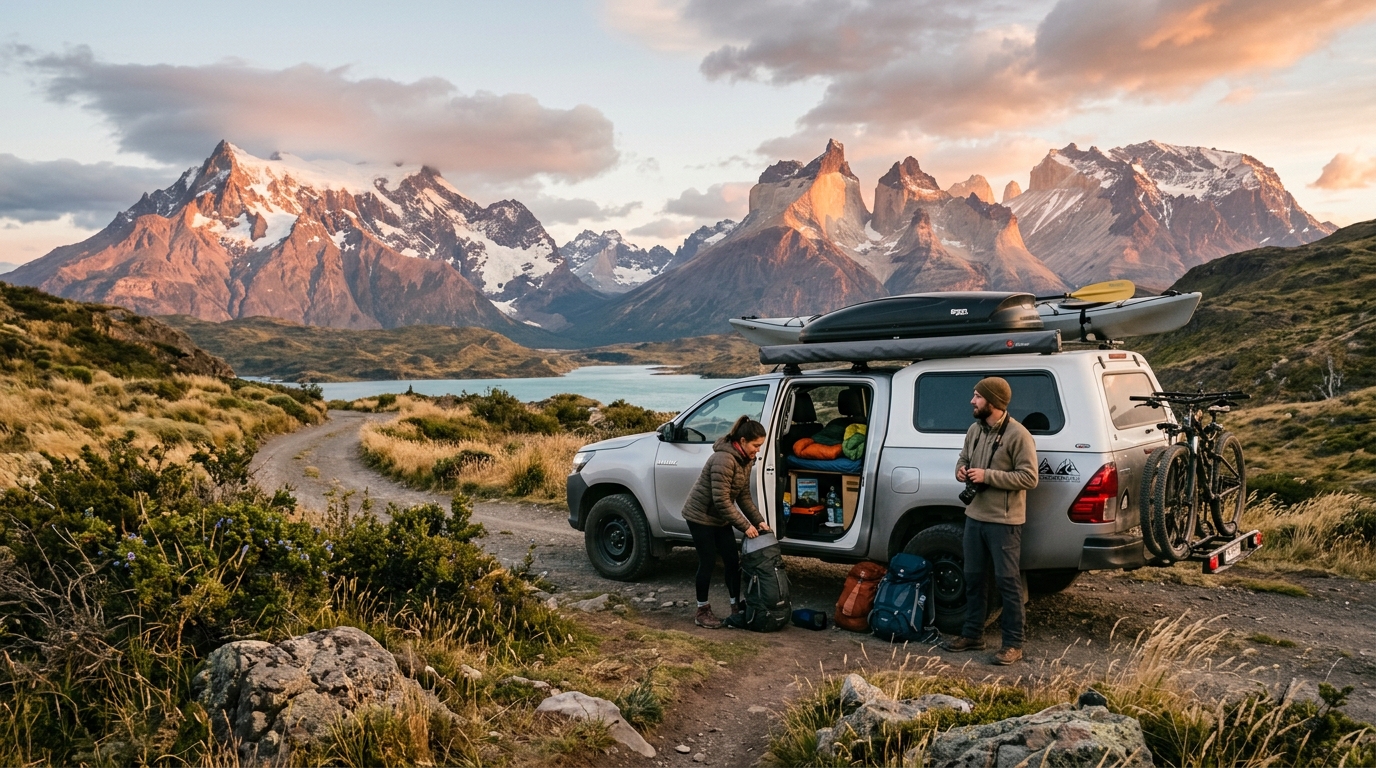
Imagine yourself on a thrilling long-term RV adventure, traversing the diverse landscapes of Chile, from the arid Atacama Desert in the north to the glacial fjords of Patagonia in the south. With a rented motorhome, you unlock unparalleled freedom to explore this incredible country at your own pace, changing your itinerary as the mood strikes. Chile offers an RV experience like no other, promising breathtaking scenery, vibrant culture, and unforgettable memories around every corner. For live availability and current prices, start with our RV Rental Chile - Complete Guide 2026 guide.
Can You Drive an RV in Chile? License & Age Rules
Yes, international drivers can operate rented RVs in Chile with a valid foreign driver's license, though an International Driving Permit (IDP) is highly recommended and often required by many rental agencies for clarity. For most motorhomes and campervans under 3,500 kg, such as a Class B Camper Van or a Class SI Semi-integrated RV, a standard B-class driver's license (or its equivalent from your home country) is sufficient. Bandana Caravan partners with numerous suppliers who generally enforce a minimum driver age of 21 for all RV rentals in Chile, with no young driver surcharges or vehicle class restrictions based on age. It is crucial to ensure your license is current and to always carry your physical passport and IDP (if applicable) when driving a rented RV in Chile.
Road Conditions & Terrain in Chile
Chile features remarkably diverse road conditions, ranging from excellent paved highways to challenging gravel and unpaved roads, particularly in remote regions. Drivers can expect well-maintained asphalt surfaces in and around major cities like Santiago, and along key routes such as the Pan-American Highway (Ruta 5), which stretches the length of the country. However, prepare for extended stretches of gravel, known locally as 'ripio,' in areas like Patagonia, many parts of the Atacama Desert, and some sections of the Lakes District. Mountain passes in the Andes present steep ascents, descents, and winding roads, necessitating slower speeds and careful driving, especially when navigating a larger Class C Alcove RV. We always encourage slow, scenic driving, averaging a maximum of 100-150 km per day, to fully appreciate Chile's varied landscapes, connect with the local culture and food, and account for potential hazards like potholes, free-roaming livestock, or unexpected road construction. While most standard RVs can handle well-maintained unpaved sections, consider the type of terrain you plan to cover extensively; a 4x4 capable campervan, such as the Patagonia Camper 4x4 double cab, might be beneficial for truly remote areas or specific off-season explorations beyond well-traveled routes.
RV Size Limits, Bridges & Restricted Zones
Most standard RV rentals, including Class A, Class B, and Class C motorhomes, generally encounter few issues with size restrictions on Chile's main road network. However, drivers should be aware of occasional height restrictions, narrow bridges, and potential environmental zones, particularly when navigating older city centers or specific national parks. Smaller towns, mountain passes, and ferries (such as those to Chiloé Island) may have specific length or weight limits, so always check local advisories if heading off the main highways. It is vital to pay close attention to road signage for height clearances, especially when approaching tunnels, underpasses, or considering any underground parking facilities (which are generally not suitable for larger RVs). Environmental zones are less common in Chile compared to some European countries, but they can be implemented in certain urban areas or protected natural reserves, especially during periods of high pollution; always verify local regulations before entering sensitive areas to avoid any surprises. Drive slowly and carefully, and you can drive almost anywhere without issues. No need to stress - just use common sense and pay attention.
Fuel: Diesel vs. Petrol & Cost per 100 km
Most long-term RV rentals in Chile, particularly larger models from Bandana's fleet like Class SI Semi-integrated and Class C Alcove RVs, operate on diesel fuel, commonly known as 'diésel' or 'petróleo.' Diesel is widely available throughout the country, even in more remote areas. For budgeting purposes, Bandana's Class B Camper Vans typically consume 8-10 Liters/100 km, while Class SI Semi-integrated RVs average 10-11 Liters/100 km. Larger Class C Alcove models, like a 29′ Class C Motorhome, usually require 10-12 Liters/100 km. Fuel prices can fluctuate significantly between urban centers and very remote regions, with the Atacama Desert or parts of Patagonia often having higher costs. It's always advisable to fill up your rental campervan whenever possible in remote areas, as gas stations ('bencineras') can be sparse. While many stations accept cards, some, especially in rural settings, may only accept cash, so having some Chilean pesos on hand is a smart move. For a comprehensive overview of potential costs beyond just fuel, remember that RV PLANET routes allow you to itemize and track every expense, making budgeting for your trip much easier. On the routes offered through RV PLANET routes, you can itemize and track every expense along the way for easy budgeting.
Tolls, Vignettes & Border Rules
Chile operates a well-developed toll road system, particularly around major cities such as Santiago and along key sections of the central Ruta 5 highway. Unlike some countries, Chile does not use vignettes for toll collection; instead, many urban highways, especially in Santiago, utilize an electronic toll system called TAG. Most Bandana RV rentals in Chile come equipped with a TAG device, or you may need to purchase a temporary one to avoid fines. For international border crossings, such as into neighboring Argentina, specific documentation is required. You will need your passport, your vehicle registration (which your rental company will provide), proof of a temporary vehicle import permit, and mandatory international insurance, often referred to as Mercosur insurance. The border crossing process typically involves passing through Chilean customs and immigration outbound, followed by Argentinian customs and immigration inbound. Wait times can vary significantly depending on the season and the specific border post, so build flexibility into your travel plans. Always confirm all required documentation for cross-border travel directly with your rental provider to ensure a smooth transition. Our guide "One-Way RV Rental in Chile - Price Guide 2026" offers more details on cross-border options.
Driving Tips for long term rv rental Travelers
Long-term RV travelers embarking on a Chilean adventure will greatly benefit from adopting a flexible mindset, planning routes with ample buffer time, and prioritizing safety on the country's varied terrains. Drive defensively and always adjust your speed to road conditions, especially on gravel ('ripio') roads or in mountainous regions. Chilean drivers can sometimes be assertive, so remaining vigilant and anticipating maneuvers is key. For longer trips, planning for frequent stops every 2-3 hours to rest, stretch, and explore local sights is essential, fostering cultural immersion and reducing driver fatigue. Secure all interior items within your rented motorhome before driving, as sudden stops or rough roads can cause shifts and damage. It's always wise to carry emergency supplies like extra water, a comprehensive first-aid kit, a spare tire, and basic tools. Download offline maps, such as Maps.me or iOverlander, before heading into areas with limited connectivity, and learning basic Spanish phrases for common scenarios (e.g., asking for directions, finding fuel, or requesting assistance) will significantly enhance your local interactions and problem-solving abilities. Prioritize safety by securing your RV, especially overnight, utilizing available campgrounds, and avoiding leaving valuables unattended. Research local safety considerations for both urban and rural areas to ensure a worry-free experience.
🎬 Video coming soon
Recommended RV Class for Chile Roads
For a long-term RV rental in Chile, a Class SI (Semi-integrated) motorhome or a Class B (Camper Van) often provides the ideal balance of comfort, maneuverability, and fuel efficiency needed for navigating the country's incredibly diverse road network. Bandana offers a variety of suitable vehicles, including Class B Camper Vans which, with an average length of 5.8 meters and consuming typically 8-10 Liters/100 km, are perfect for couples or small families seeking agility for tighter roads, easier parking in towns, and greater fuel economy. Our Class SI Semi-integrated RVs, averaging 6.9 meters in length and consuming around 10-11 Liters/100 km, offer more spacious living areas, private bathrooms, and enhanced amenities, making them an excellent choice for families needing comfort for extended trips without the bulk of the largest vehicles. While Class C Alcove RVs (average 7.5m in length and 10-12 Liters/100 km fuel consumption) provide ample sleeping space for larger families, their increased height and length may require more caution on some narrow or unpaved roads. Consider the ground clearance needed for your planned routes, as some gravel roads or remote tracks might benefit from a higher chassis, though most standard RVs are designed to handle well-maintained unpaved sections comfortably.
Should I Choose a Compact Van Instead of a Large RV in Chile?
The choice between a compact campervan and a larger motorhome for your long-term rental in Chile largely depends on your travel style and priorities. Compact vans, like Bandana's Class B Camper Vans, excel in superior maneuverability for tighter urban spaces and some narrow mountain roads, making them an excellent fit for solo travelers or couples prioritizing flexibility, ease of parking, and fuel efficiency, typically consuming 8-10 Liters/100 km. However, for a long-term trip, the increased indoor space, dedicated amenities (such as a shower and toilet, larger kitchen facilities, and permanent beds), and greater storage capacity of a Class SI Semi-integrated or Class C Alcove RV significantly enhance overall comfort and convenience. For a family of 2+2, a Class SI motorhome offers more room for everyone to relax, cook, and sleep comfortably over several weeks or months. Ultimately, if agility and minimalist travel are key, a compact van is a great choice. But if comfort, extended living space, and comprehensive amenities are priorities for your month-long or longer Chilean adventure, a larger Class SI or Class C RV will provide a more comfortable home-on-wheels. Our "Cheap RV Rental in Chile - Budget Guide 2026" explores various vehicle sizes and their cost implications.
Can I Park Anywhere? Free & Wild Camping Rules in Chile
While wild camping, or *camping libre*, is practiced in many rural and remote areas of Chile, its legality is often ambiguous and varies by municipality and private land ownership, requiring careful consideration and respect for local regulations and property. Many national parks and protected areas generally prohibit wild camping outside their designated campgrounds to preserve sensitive ecosystems and ensure visitor safety. When considering overnight stops with your rented RV, ethical considerations are paramount: practice 'Leave No Trace' principles rigorously, packing out all trash, avoiding disturbing local wildlife, and respecting the privacy and property of local communities. Finding safe and appropriate spots for *camping libre* often involves using apps like iOverlander, thoroughly researching specific regions, or asking friendly locals for recommendations, always prioritizing well-lit, secure locations, especially for a long-term trip. Always confirm local regulations and land ownership before parking overnight, as rules vary significantly across different regions of Chile, and trespassing can lead to fines or conflict. For finding campsites and campgrounds during your trip, we recommend using RV PLANET (rvplan.net) – a great resource for locating available spots along your route. You'll find a spot. If not at the first campground, then the next one. Call ahead before driving.
Can I Drive an RV Into the City Center? Heights, Tunnels & Local Signage
Yes, you can generally drive a rented RV into Chilean city centers, but drivers must pay close attention to local signage indicating height restrictions, tunnel clearances, and potential environmental or residents-only zones. In cities like Santiago, parts of the urban highway system operate with electronic tolls (TAG); your rental RV will often come with a TAG device, or you may need to purchase a temporary pass, as entering certain zones without one can incur fines. Be especially mindful of height limits when approaching tunnels, low bridges, and underground car parks, as many urban structures are not designed for the dimensions of a larger motorhome. City centers can feature narrow streets, one-way systems, and heavy traffic, so maintaining slower speeds and heightened awareness are crucial for a smooth experience. Parking can also be challenging to find for larger vehicles, so consider parking on the outskirts and using public transport for city exploration. Drive slowly and carefully, and you can drive almost anywhere without issues. No need to stress - just use common sense and pay attention. Always adhere to local signage, which provides critical information regarding vehicle restrictions, parking regulations, and environmental zones, ensuring a seamless urban driving experience during your long-term RV rental in Chile.
Top Cities for RV Rental in Chile
Chile offers several excellent starting points for your long-term RV rental adventure, each providing unique access to the country's diverse regions. Whether you're a pre-planner or a spontaneous traveler, you'll find great options:
- Santiago: As the capital and largest city, Santiago offers the widest selection of RV rental options, including Class A, B, and C motorhomes. It's the perfect gateway to exploring the Central Valley's wine regions, the nearby Andes mountains, or beginning a longer journey north to the Atacama Desert or south towards Patagonia.
- Santiago - Airport (SCL): Picking up your campervan directly at Santiago Airport provides ultimate convenience, allowing you to hit the road without delay.
- Calama - Airport (CJC): For those eager to dive straight into the otherworldly landscapes of the Atacama Desert, Calama Airport is the ideal hub. From here, you can easily access San Pedro de Atacama and its surrounding wonders with your rented RV.
- Puerto Montt: Situated in the heart of the Lakes District, Puerto Montt is an excellent starting point for exploring the stunning volcanic landscapes, pristine lakes, and temperate rainforests of northern Patagonia. You can rent a motorhome here and head straight for the iconic Carretera Austral.
- Punta Arenas: As the southernmost major city in Chile, Punta Arenas is the ultimate gateway to Chilean Patagonia and Tierra del Fuego. A rental RV from here puts you on the doorstep of Torres del Paine National Park and vast wilderness.
- Arica: Located in the far north, Arica provides access to the coastal deserts, Andean altiplano, and ancient geoglyphs, offering a distinctly different RV experience from the rest of Chile.
For detailed availability and competitive rates for each of these locations, search for your long term rv rental in Chile with Bandana Caravan.
Country-Wide Practical Information for RV Travelers
When planning your long-term motorhome trip across Chile, understanding key practical details will ensure a smooth and enjoyable journey. Chile drives on the **right-hand side of the road**, similar to North America and most of Europe. Speed limits generally are 50 km/h in urban areas, 100 km/h on rural roads, and 120 km/h on highways. Always adhere to posted signage, which may vary. For connectivity, purchasing a local SIM card upon arrival, especially from major providers like Entel, Movistar, or Claro, is highly recommended. You can typically find these at the airport or in any major city. Many rental RVs come equipped with USB charging ports, and some larger Class C models may offer inverters to keep your devices charged. Emergency numbers in Chile are: 133 for Police (Carabineros), 131 for Ambulance (SAMU), and 132 for Fire (Bomberos). In case of a breakdown, contact your RV rental supplier immediately for assistance. Remember to cook delicious meals in your rented campervan, and for inspiration, check out our RV-friendly recipes playlist! Be sure to carry local currency (Chilean Pesos) as cash for small purchases or in remote areas where card payments may not be accepted. Itineraries developed through RV PLANET can help you plan your route effectively, minimizing surprises.
What You Shouldn't Miss
- Explore the Atacama Desert: Drive your rented campervan through the driest desert in the world. Witness surreal landscapes like the Valley of the Moon, geysers at El Tatio, and enjoy unparalleled stargazing in the Elqui Valley.
- Hike in Torres del Paine National Park: Access the iconic W Trek or shorter day hikes with your RV as a base, marveling at granite peaks, turquoise lakes, and massive glaciers in Patagonia.
- Drive the Carretera Austral: Embark on an epic 1,240-kilometer journey through Chile's wild Patagonia, encountering remote villages, fjords, and national parks accessible only by this famed route.
- Discover the Lakes District: With your motorhome, explore the picturesque towns, active volcanoes like Osorno, and serene lakes around Puerto Varas and Frutillar.
- Visit Chiloé Island: Take an RV-friendly ferry to this unique island archipelago, home to distinctive wooden churches (16 UNESCO World Heritage Sites) and a rich maritime culture.
- Taste Chilean Wine in the Central Valley: Park your RV near Santiago and indulge in vineyard tours and wine tastings in valleys like Maipo, Colchagua, or Casablanca.
Looking for expert insights from Avi Bandana? Top 5 Adventures - recommendations from Avi Bandana
Avi Bandana, our founder, always emphasizes getting off the beaten path and truly immersing yourself in the local experience. For Chile, he strongly recommends dedicating ample time to the Carretera Austral, suggesting at least a two-week adventure to truly soak in its wild beauty. "Don't rush it," he advises, "drive slowly, interact with the local communities, and let the landscape guide your journey. The raw beauty of Patagonia, especially along Route 7, is best experienced with a flexible schedule and an open heart." He also champions the unique cultural immersion found on Chiloé Island, with its vibrant markets and distinct architecture, and the unparalleled stargazing opportunities in the Atacama Desert. "Always remember," Avi says, "the best memories are often made during unexpected detours and spontaneous stops, which is exactly what RV travel allows."
Final Thoughts
A long-term RV rental in Chile is more than just a vacation; it's an immersive journey that allows you to truly connect with one of the most geographically diverse countries on Earth. From the moon-like landscapes of the Atacama to the wild glaciers of Patagonia, a rented motorhome gives you the flexibility and comfort to discover hidden gems and iconic sights at your own pace. Embrace the slow travel philosophy, allowing yourself to linger in places that capture your heart, savoring the local cuisine and connecting with friendly Chileans.
We at Bandana Caravan are passionate about helping you craft these unforgettable experiences. With our transparent pricing, expert knowledge, and supportive service, you can embark on your Chilean adventure with complete confidence. So, why wait? The open road, incredible routes, and the freedom of a long-term RV journey through Chile are calling.
Compare Motorhome Prices for Chile and start planning your epic, extended road trip today!