In This Guide
- Can You Drive an RV in Alaska? License & Age Rules
- Road Conditions & Terrain in Alaska
- RV Size Limits, Bridges & Restricted Zones
- Fuel: Diesel vs. Petrol & Cost per 100 km
- Tolls, Vignettes & Border Rules
- Driving Tips for RV Rental Travelers
- Recommended RV Class for Alaska Roads
- Should I Choose a Compact Van Instead of a Large RV in Alaska?
- Can I Park Anywhere? Free & Wild Camping Rules in Alaska
- Can I Drive an RV Into the City Center? Heights, Tunnels & Local Signage
- Can I drive my RV to Alaska?
- What is the 3-3-3 rule for RV living?
- Can you sleep in an RV while driving in the USA?
- Can you turn left on a red light in Alaska?
- What You Shouldn't Miss
- Why Book with Bandana Caravan
- Final Thoughts
- Frequently Asked Questions
Imagine vast wilderness, majestic glaciers, and wildlife encounters right outside your mobile home. An extended RV trip through Alaska offers an unparalleled sense of freedom and discovery, allowing you to immerse yourself deeply in its breathtaking landscapes. For live availability and current prices, start with our RV Rental Alaska - Complete Guide 2026 guide. Whether you're planning a month-long adventure or a multi-week exploration, getting around this stunning state in a rented motorhome or campervan is a rewarding experience.
Can You Drive an RV in Alaska? License & Age Rules
A standard Class D driver's license, or its international equivalent, is typically all you need to drive most rental RVs in Alaska, as fleet vehicles generally have a Gross Vehicle Weight Rating (GVWR) under 26,001 pounds. For most travelers, this means no special permits or commercial licenses are required to embark on your Alaskan road trip. The minimum age for RV rental in Alaska is usually 21 years old with Bandana RV, and you'll be pleased to know there are no young driver surcharges and no vehicle class restrictions based on age, giving younger adventurers the same access to our diverse fleet, including Class A, Class B, and Class C motorhomes, and campervans. If your home country's license is not in English, carrying an International Driving Permit (IDP) is recommended for easier communication, although it's often not strictly mandated.
Road Conditions & Terrain in Alaska
Alaskan road conditions offer a mix of experiences, ranging from major, well-maintained paved highways like the Alaska Highway and Parks Highway, to numerous gravel roads and challenging mountain passes, requiring drivers to exercise caution and drive slowly. Expect some secondary roads to be unpaved, prone to potholes, and affected by frost heaves, especially during spring and early summer when the ground thaws. The diverse terrain includes vast flatlands, rolling hills, and impressive mountain passes, particularly in interior Alaska and mountainous coastal regions. It is always wise to adjust your speed, especially on unpaved sections or through construction zones common in summer, and during any adverse weather conditions. While summer driving offers the advantage of exceptionally long daylight hours, remember that rain can make gravel roads slick, and winter RV travel is generally not recommended for most rental units due to extreme cold and unpredictable snow conditions.
RV Size Limits, Bridges & Restricted Zones
Most Alaskan highways and primary routes are well-equipped to accommodate standard RV sizes, with legal maximum vehicle lengths generally up to 40 feet for a single motorhome and 75 feet for a combination, such as a motorhome towing a car. Low bridges or tunnels are quite rare on major routes, but always observe posted signage for height clearances, particularly on smaller or historic roads. Alaska does not have widespread environmental zones or urban low-emission zones that typically restrict RV access in its cities, making city exploration relatively straightforward. When planning to use ferry travel, such as the Alaska Marine Highway System, precise RV length and height measurements are crucial for accurate booking and pricing. Be aware that certain remote state or national park roads, like specific sections of Denali National Park Road, may have their own distinct restrictions or strong recommendations against large RVs due to varied road conditions, limited size capacity, or restricted turnaround space.
Fuel: Diesel vs. Petrol & Cost per 100 km
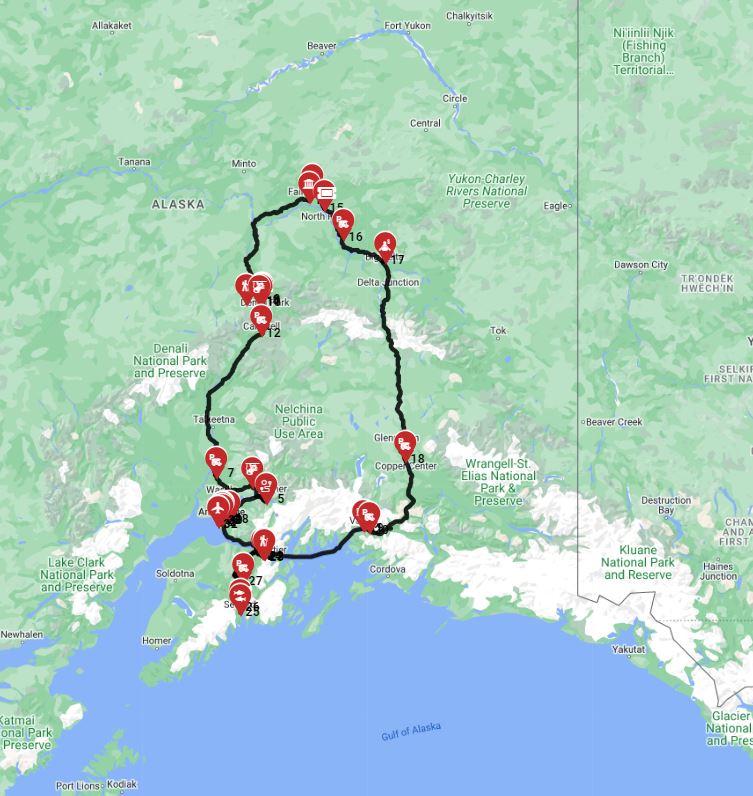
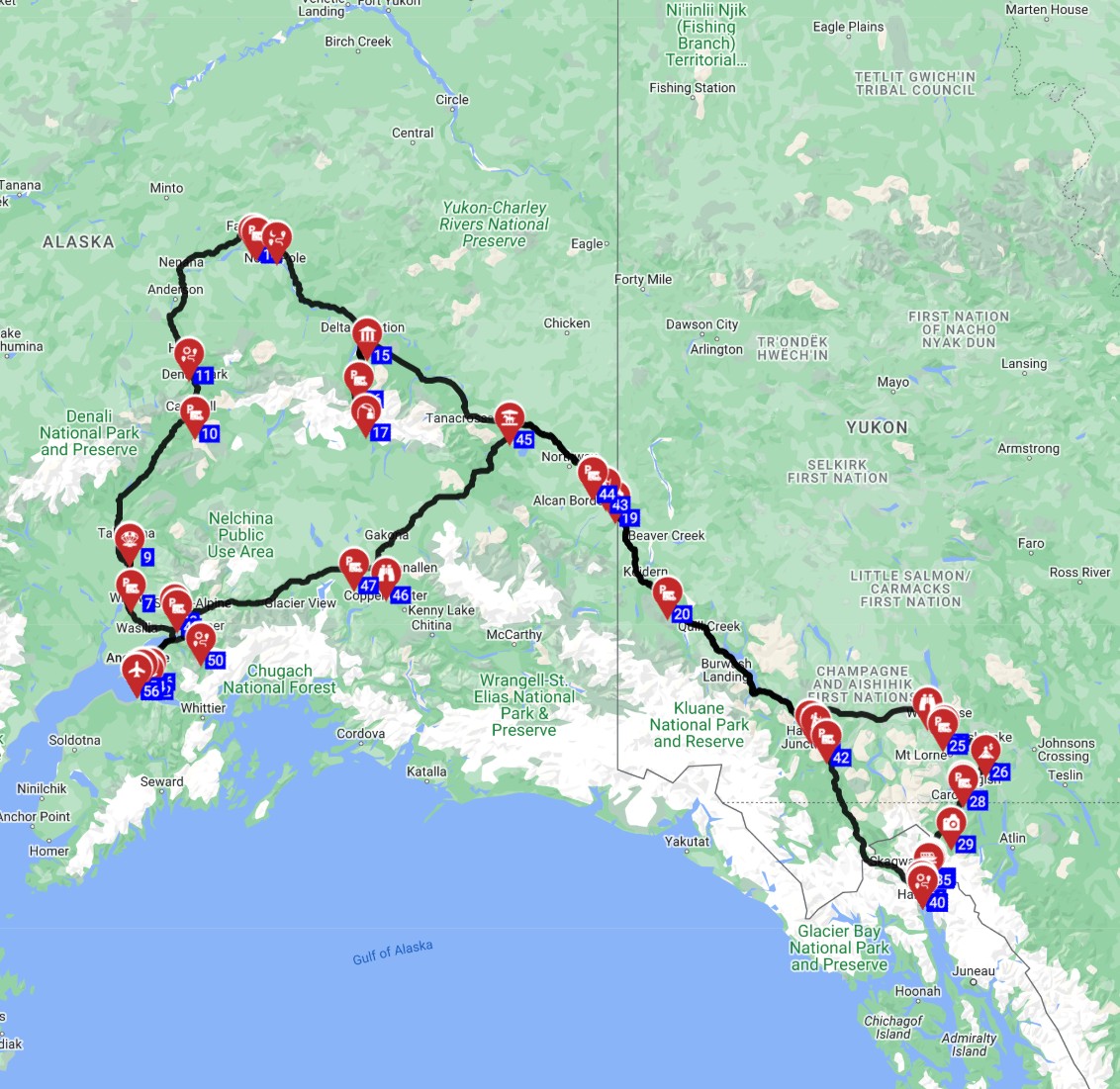
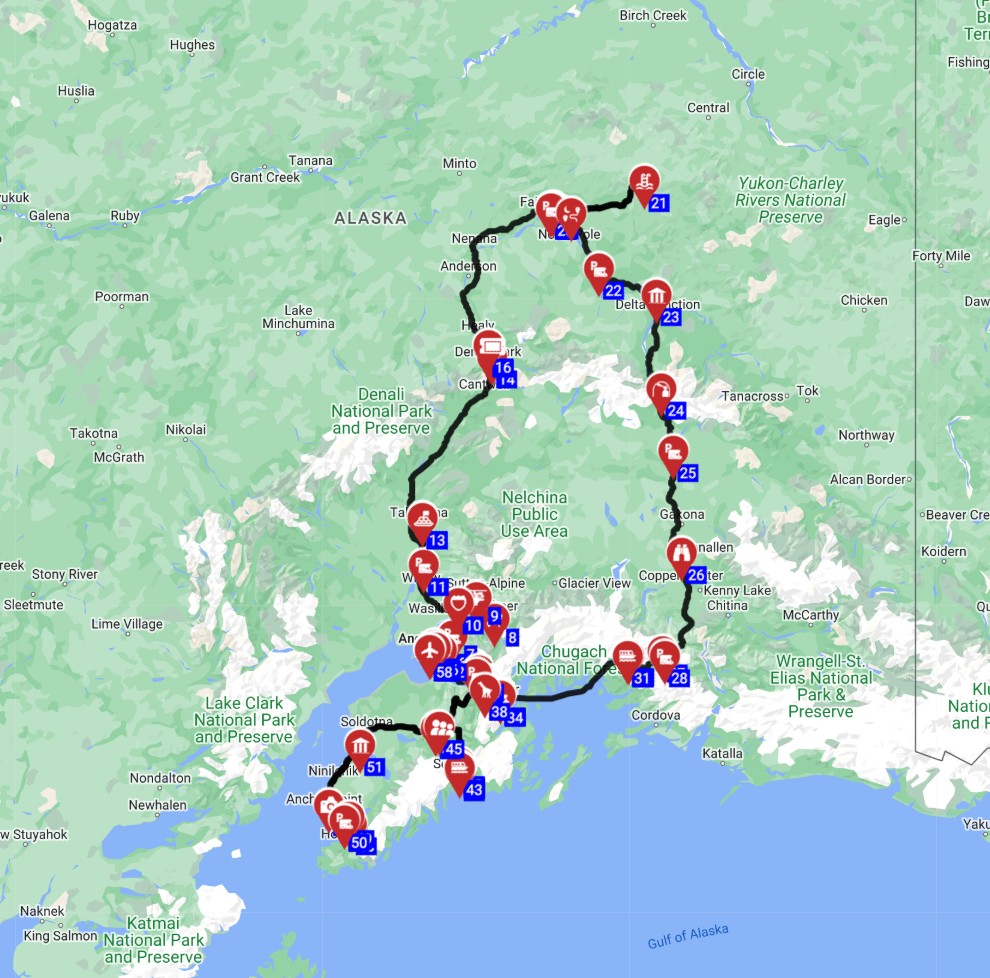
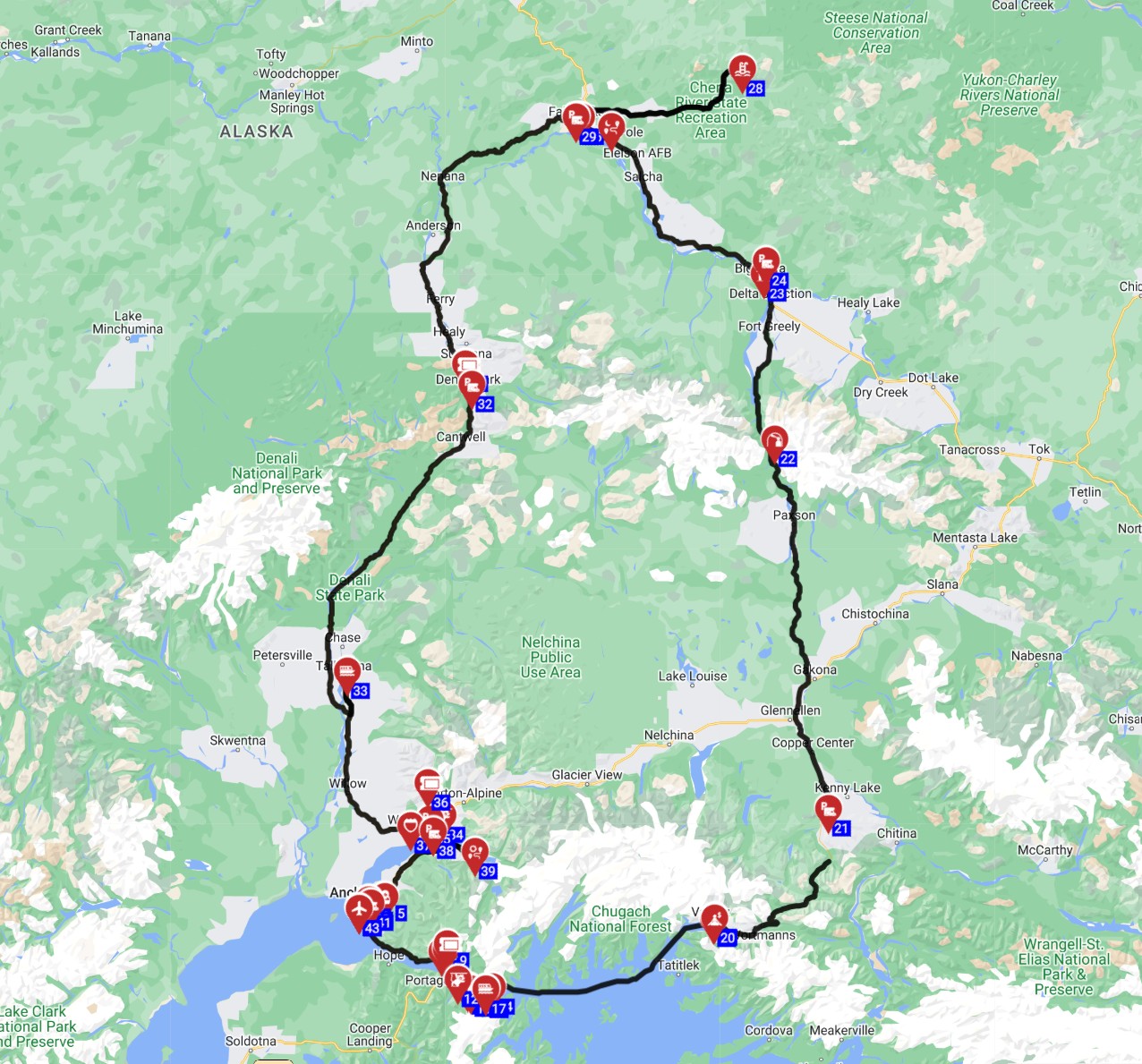
Fuel in Alaska is available as both gasoline (petrol) and diesel, though prices are typically higher than in the contiguous United States due to significant transportation costs, and availability can be limited in remote areas. When planning your budget, expect higher fuel expenses; carrying a fuel discount card, if available through your rental, can help mitigate these costs. For common fuel consumption, Bandana's fleet averages approximately 8-10 Liters/100 Km for Class B Camper Vans, 10-11 Liters/100 Km for Class SI Semi-integrated RVs, 10-12 Liters/100 Km for Class C Alcove models, and 8-12 Liters/100 Km for Class A Integrated RVs. Diesel is generally less common than petrol in very remote regions, so drivers of diesel RVs should plan their routes carefully and refuel whenever opportunities arise. For easy budgeting and tracking all trip expenses, including fuel, tolls, and campground fees, we recommend utilizing RV PLANET routes, where you can itemize every cost along the way. On the routes offered through RV PLANET routes, you can itemize and track every expense along the way for easy budgeting.
Tolls, Vignettes & Border Rules
Alaska does not have any toll roads or vignette systems within its state boundaries, which simplifies intra-state RV travel considerably. However, RV travelers driving to Alaska via the Alaska Highway will need to pass through Canada, necessitating valid passports for all occupants of the vehicle. You will also need to carry proof of vehicle registration and insurance for the rented RV that explicitly covers international travel into Canada and back into the US. Canadian customs officials strictly enforce regulations on items such as firearms, alcohol, tobacco, and certain food products, so travelers should meticulously check current restrictions before crossing the border to avoid any issues or delays.
Driving Tips for RV Rental Travelers
To fully enjoy your long-term RV driving in Alaska, adopt a slower pace and remain highly observant of your surroundings. Always drive defensively and constantly scan for abundant wildlife like moose, caribou, and bears on or near roadways, especially during dawn and dusk. Fuel planning is critical; distances between services can be vast, so always refuel at every opportunity, particularly before venturing into remote areas. Cell service is often sporadic or nonexistent outside major towns, making it wise to consider renting a satellite phone or carrying a GPS communication device for emergencies, ensuring you have real people behind you even in the wilderness. Embrace Alaska's stunning scenery by planning for shorter daily driving distances, ideally no more than 100-150 km per day on average, and incorporating frequent stops; adhering to the '3-3-3 rule' (drive no more than 300 miles, arrive by 3 PM, stay for at least 3 nights) can greatly enhance a relaxed experience. Before embarking on less-traveled or gravel routes, always utilize resources like Alaska 511 or local visitor centers for current road conditions. For camping, strictly follow bear safety guidelines, as food storage rules are enforced in many areas to prevent attracting bears.
Recommended RV Class for Alaska Roads
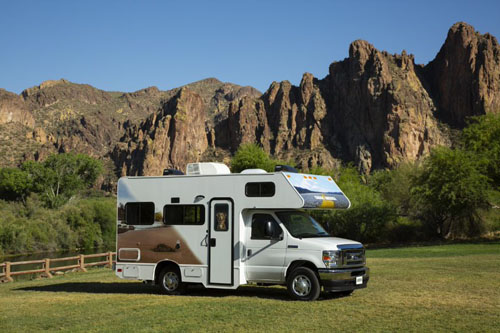
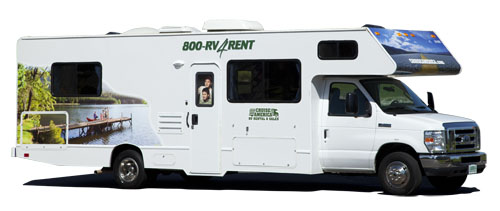
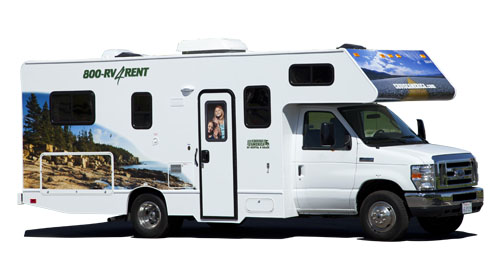
For navigating Alaska's diverse roads, Class C Alcove RVs and Class B Camper Vans generally offer the best balance of space and maneuverability. Class C Alcove RVs from Bandana's fleet, typically averaging 7.5 meters (24.6 feet) in length and comfortably sleeping 5-6 people, provide ample living space and an elevated driving position, which is a great advantage for spotting wildlife. These motorhomes strike an excellent balance between spaciousness and ease of handling on most Alaskan highways. Alternatively, Class B Camper Vans, averaging 5.8 meters (19 feet) in length and sleeping 2-3 people, offer superior maneuverability. Their compact size makes them ideal for narrower roads, fitting into tighter campsites, and simplifying parking in Alaskan towns, and they typically consume 8-10 Liters/100 Km of fuel. While larger Class A models can certainly navigate the main paved routes, the flexibility offered by a Class C or B motorhome often proves more practical for accessing the varied campgrounds and winding secondary roads that lead to some of Alaska's most stunning natural features.
Should I Choose a Compact Van Instead of a Large RV in Alaska?
The choice between a compact van, such as a Class B Camper Van, and a larger RV largely depends on your travel style, group size, and desired amenities in Alaska. While a compact van offers superior maneuverability and often better fuel efficiency (e.g., 8-10 Liters/100 Km), a larger RV provides significantly more comfort, interior living space, and amenities, which can be highly advantageous for longer trips or during Alaska's variable weather conditions. Compact vans are ideal for solo travelers or couples seeking agility on gravel roads, easier parking, and a less intimidating driving experience, as detailed in our RV Rental USA - Complete Guide 2026. For families or groups, larger RVs, like Class C or semi-integrated motorhomes, typically provide ample interior space, separate sleeping areas, full kitchens for preparing delicious RV-friendly recipes playlist, and robust heating systems, which are invaluable during inclement weather or extended stays. Alaska's primary highways generally accommodate larger RVs without significant issues, meaning the optimal choice often hinges more on your group's specific needs and comfort priorities rather than a strict necessity for a smaller vehicle.
Can I Park Anywhere? Free & Wild Camping Rules in Alaska
While Alaska offers abundant opportunities for free and dispersed camping on public lands, it is explicitly illegal to park an RV "anywhere" you please, as specific regulations govern overnight parking to protect natural resources and ensure public safety. Dispersed camping (often called boondocking) is generally permitted on lands managed by the Bureau of Land Management (BLM) and in some National Forests, provided you are away from developed sites and diligently follow all local rules and Leave No Trace principles. However, within National Parks and Preserves, regulations vary significantly; overnight parking is typically restricted to designated campgrounds, which often require advance reservations or permits, such as in Denali National Park. State Parks and Recreation Areas usually require fees and reservations for their established campsites, and overnight parking outside these designated areas is generally prohibited. For private property and within municipalities, always obtain explicit permission before parking overnight; many Alaskan towns and cities enforce ordinances against overnight RV parking on streets or in public lots. Prioritize safety, especially concerning wildlife, and always check for current fire restrictions, as rules vary by region, and adhere to local law before parking overnight.
Can I Drive an RV Into the City Center? Heights, Tunnels & Local Signage
Yes, driving a rented RV into most Alaskan city centers, such as Anchorage or Fairbanks, is generally permissible, but drivers must remain highly observant of local signage regarding parking, height restrictions, and one-way streets. Alaskan cities are typically RV-friendly, featuring infrastructure designed to accommodate larger vehicles on their primary routes without undue difficulty. The main challenges for RVs in city centers usually involve finding adequate parking spots, which can be limited for larger motorhomes, and navigating potentially narrower streets or busy intersections. Always pay close attention to posted signs indicating height clearances for tunnels, underpasses, or bridges, though these are uncommon on major city routes. Be aware of specific parking regulations, such as time limits, designated commercial vehicle routes, or "no overnight parking" restrictions, particularly in crowded downtown areas, to ensure a smooth urban experience. Drive slowly and carefully, and you can drive almost anywhere without issues. No need to stress - just use common sense and pay attention.
Can I drive my RV to Alaska?
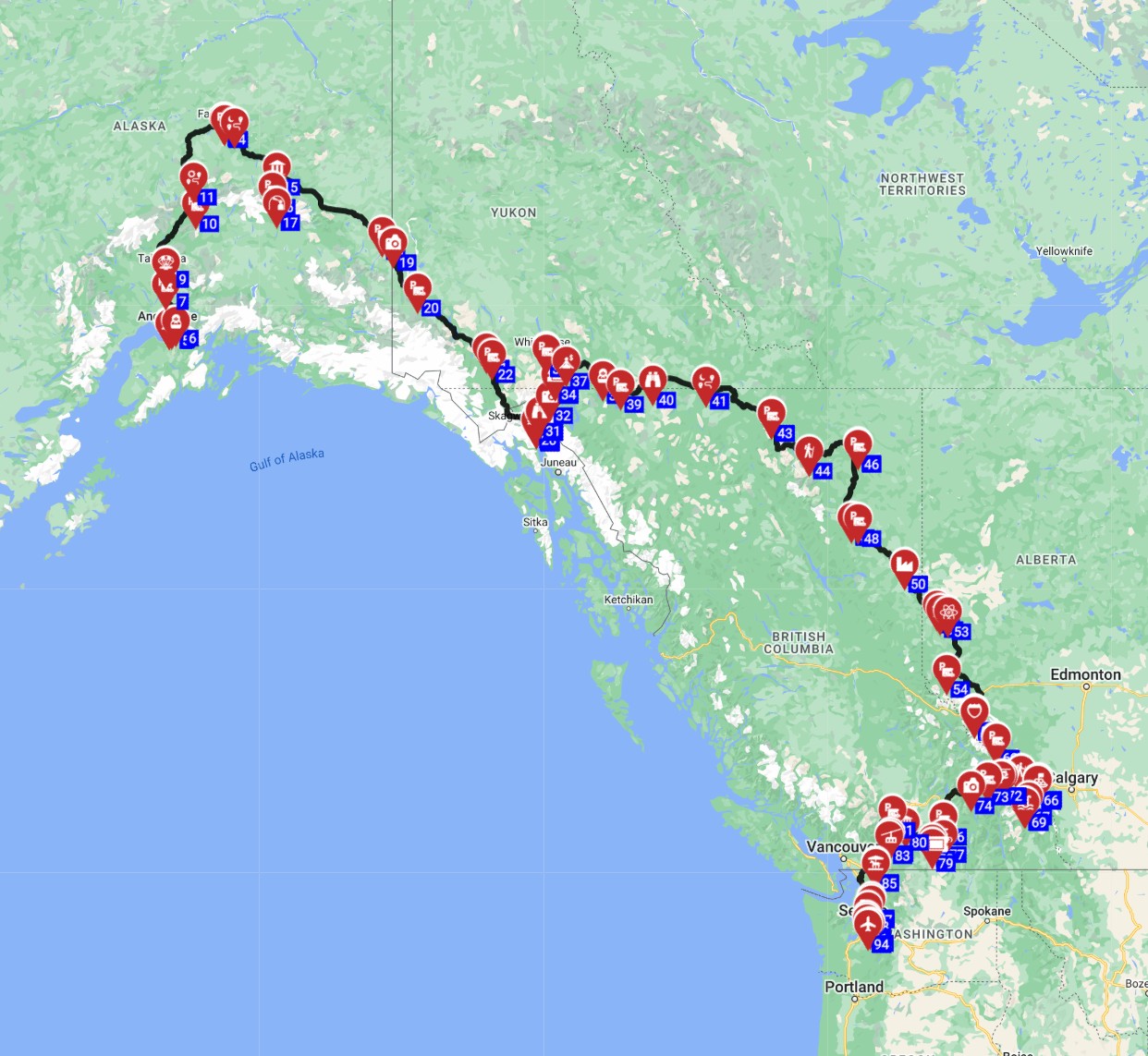
Yes, you can absolutely drive your personal or rental RV to Alaska, with the most common and iconic route being the Alaska Highway (also known as the Alcan), which originates in Dawson Creek, British Columbia, Canada. Traveling via the Alaska Highway requires all vehicle occupants to possess valid passports for crossing the US-Canada border. It is crucial to ensure your RV rental agreement explicitly permits international travel into Canada and then back into the US, and that your vehicle registration and insurance are valid for both countries. Moreover, preparing your RV for long distances, potentially unpaved or rough road sections, and limited services between towns, especially in northern British Columbia and the Yukon, is essential for a smooth journey. The ideal time to undertake this epic drive to Alaska is typically late spring through early fall (May to September) to avoid severe winter weather conditions and ensure optimal road access.
What is the 3-3-3 rule for RV living?
The 3-3-3 rule for RV travel is a widely recognized guideline that recommends driving no more than 300 miles (or roughly 480 km) a day, arriving at your destination by 3 PM, and staying for at least 3 nights, all designed to promote a more relaxed and enjoyable trip. Driving no more than 300 miles/km helps prevent driver fatigue, allows ample time for scenic stops and unexpected delays, and is particularly advisable in Alaska due to its varying road conditions and frequent wildlife sightings. Arriving by 3 PM ensures you have sufficient daylight to find and comfortably set up your campsite, which is especially important in popular areas where spots fill quickly, or when scouting a good boondocking location before dusk. Staying for at least 3 nights encourages travelers to fully immerse themselves in each location, allowing more time to explore local attractions, connect with the culture, and truly feel the scenery, avoiding the rushed feeling of constantly moving on.
Can you sleep in an RV while driving in the USA?
No, it is illegal and highly unsafe for passengers to sleep in the main living area of a rented RV while the vehicle is in motion on US roads, including those in Alaska. All occupants of a moving RV are required by law to be properly buckled into designated seats equipped with seatbelts, not in beds, sofas, or dinettes without seatbelts. Sleeping while the vehicle is in motion poses a severe safety risk in the event of a sudden stop, collision, or sharp turn, as unsecured passengers can be seriously injured. For rest, the RV must be completely stopped and safely parked at a designated rest area, campground, or other approved overnight parking location where it is stationary.
Can you turn left on a red light in Alaska?
In Alaska, similar to most US states, turning left on a red light is generally prohibited, with a specific exception that allows it only when turning from a one-way street onto another one-way street. This is permissible provided there is no opposing traffic and no sign explicitly prohibits the turn. The standard rule across Alaska is to wait for a green light before making a left turn, unless otherwise indicated by specific signage. Drivers should always exercise extreme caution and yield to all traffic and pedestrians when considering a left turn on red; if uncertain about its legality or safety in a particular situation, it is always best to wait for a green signal to ensure everyone's safety.
What You Shouldn't Miss
Alaska is a land of endless wonders, perfect for an extended rented motorhome adventure. Here are some experiences you absolutely shouldn't miss:
- Explore Denali National Park: Drive a portion of the Denali Park Road (restrictions apply to private vehicles past Savage River, km 24) to witness North America's tallest peak, Denali, and search for grizzly bears, moose, caribou, and Dall sheep. This vast park is a highlight for many RV travelers.
- Cruise Prince William Sound: Take a scenic boat tour from Whittier or Valdez to witness towering tidewater glaciers, sea otters, seals, and diverse birdlife. Some tours may even let you get close enough to feel the spray from calving ice.
- Fish in Kenai Peninsula: Spend a week or two exploring the Kenai Peninsula, renowned for its world-class salmon and halibut fishing. Towns like Seward and Homer offer incredible charter fishing experiences, and there are numerous RV-friendly campgrounds nearby.
- Visit the Alaska Wildlife Conservation Center: Located just south of Anchorage, this sanctuary offers a chance to see rescued Alaskan animals up close, including bears, moose, musk oxen, and elk, in expansive enclosures designed to replicate their natural habitats.
- Hike in Chugach State Park: Easily accessible from Anchorage, Chugach State Park offers over 4,950 square kilometers (1,900 square miles) of stunning mountain trails, glaciers, and alpine lakes, providing incredible day-hike opportunities with panoramic views.
- Drive the Scenic Byways: Beyond the main highways, seek out scenic byways like the Glenn Highway, which offers breathtaking views of the Chugach Mountains, Matanuska Glacier, and winding rivers. It’s an ideal route for slow travel, averaging 100-150 km per day, allowing you to truly connect with the culture and scenery.
Looking for expert insights from Avi Bandana? Top 5 Adventures - recommendations from Avi Bandana
🎬 Video coming soon
Final Thoughts
An extended RV trip through Alaska is more than just a vacation; it's an immersive journey into one of the world's last great wildernesses. The beauty and majesty of the Last Frontier truly come alive when you travel at your own pace in a comfortable motorhome or campervan, with the freedom to explore hidden gems and iconic landmarks alike. Remember to embrace the spirit of slow travel, taking time to savor each moment, connect with local cultures, and fully absorb the incredible scenery that unfolds around you.
By understanding the unique aspects of RV travel in Alaska, from road conditions and fuel planning to camping regulations, you're well-equipped for an unforgettable adventure. With Bandana Caravan, you have a partner dedicated to transparency, support, and helping you find the perfect rental RV for your Alaskan dream trip. So pack your bags, prepare for wonder, and hit the road – Alaska is calling!
Compare Motorhome Prices for Alaska and start planning your epic journey today!