In This Guide
- Top 5 Tips for RV Rental in Paris
- Before You Book - Class, Dates, Insurance
- Pre-Trip Prep - Packing Checklist for Paris
- On the Road - Driving, Fueling, Navigation
- At the Campground - Setup, Hookups & Etiquette
- RV Rental-Specific Tips for Paris
- Common Mistakes to Avoid in Paris
- What are the new rules for motorhomes in France?
- Is France motorhome friendly?
- Do I need speed stickers on my motorhome in France?
- What is the 3-3-3 rule when RVing?
- What is the 4-4-4 rule for RVing?
- How much does it cost to rent an RV in France?
- What is the rule of 3 with an RV?
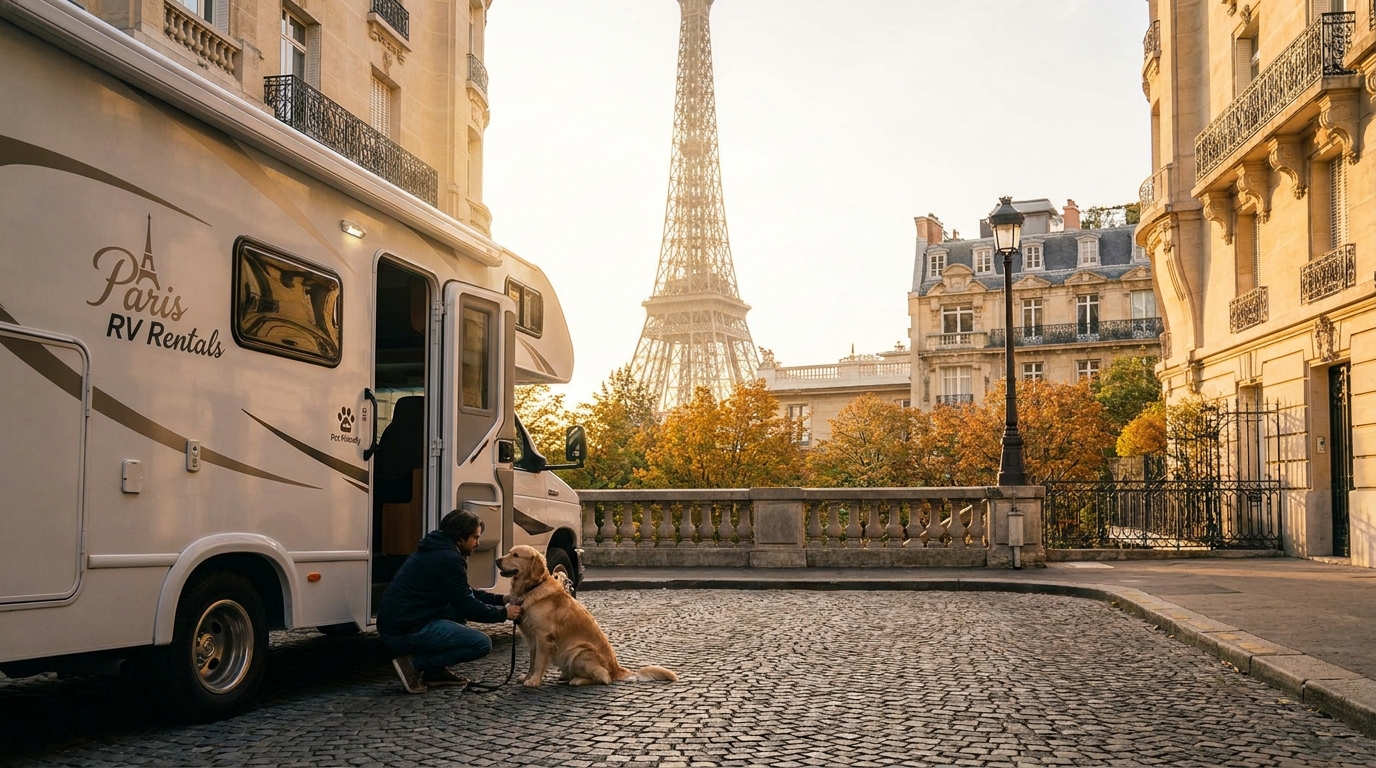
Imagine yourself cruising along the scenic roads of France, with the iconic landmarks of Paris awaiting your arrival. An RV rental in Paris offers unparalleled freedom to explore the City of Light and its stunning surroundings. At Bandana Caravan, we've been helping tens of thousands of travelers discover the world by RV since 2001, and our extensive experience makes us true RV specialists, not just a side department of a general travel agency. For live availability and current prices, start with our RV Rental Paris - Complete Guide 2026 guide to find your perfect vehicle for an unforgettable adventure. We believe in full transparency, meaning no hidden fees and no surprises throughout your booking journey.
Top 5 Tips for RV Rental in Paris
Navigating Paris with a rented RV requires specific considerations to ensure a smooth trip, given the city's unique driving and environmental regulations. Prioritize smaller RVs for easier navigation in Paris's narrow streets and limited parking, such as a compact campervan like the "rv rental denver example Category Van" or a smaller Class C motorhome, which typically measures under 7 meters in length.
Next, it's essential to obtain a Crit'Air vignette well in advance to comply with Paris's emission zone requirements, as this sticker is mandatory for legal entry into designated low-emission zones. Research and book peripheral campgrounds with excellent public transport links into the city center, transforming your motorhome into a comfortable base rather than attempting to park centrally. Budget comprehensively for tolls, fuel, and specific city driving regulations, which can be significant, especially when factoring in the high cost of diesel (Gazole) at around €1.80-€2.00 per liter and potential péage (highway) tolls. Finally, secure your RV rental and preferred campgrounds early, especially when traveling during peak tourist seasons, as dynamic pricing and limited availability can impact your plans. On the routes offered through RV PLANET routes, you can itemize and track every expense along the way for easy budgeting.
Remember, while driving into the heart of Paris is often impractical, staying at a well-connected campground like Camping de Paris in Boulogne-Billancourt means you can be at Notre Dame via public transport in just about 15 minutes. We handle the details, you live the journey, offering personal service from day one until your booking is confirmed.
Before You Book - Class, Dates, Insurance
Selecting the right RV class, booking dates, and understanding insurance options are crucial steps before securing your rv rental for Paris, ensuring your trip aligns with both your expectations and budget. For Paris, consider compact campervans or smaller Class C RVs to facilitate maneuvering in urban environments and parking at peripheral campgrounds. These vehicles, often like a "hire campervan example Paradise S/T" or a smaller Class C with a length of around 6-7 meters, are much more adaptable to European roads.
Booking 3-6 months ahead is recommended for peak seasons to ensure availability and potentially better rates, though off-season offers more flexibility for last-minute deals. Prices are dynamic, similar to flight tickets, changing daily based on availability and seasonality. Basic insurance is always included; to see prices including the most comprehensive coverage, select that option during your search, and all relevant insurance options will be shown. You can also upgrade to a top-level deductible for extra peace of mind, which is an optional addition to your rental.
One-way motorhome rentals are also an option with most suppliers, allowing you to pick up your vehicle near Paris and drop it off in another European city, though a one-way drop-off fee will apply. For comprehensive planning, including detailed cost breakdowns for your trip, consider utilizing RV PLANET routes, where you can itemize and track every expense along the way for easy budgeting.
Pre-Trip Prep - Packing Checklist for Paris
An effective packing checklist ensures you have all necessities for an RV adventure in and around Paris, from essential documents to practical gear, enabling a hassle-free journey. Remember to pack layers for varying weather, as Paris can be unpredictable, along with comfortable walking shoes to explore the city's cobblestone streets and numerous museums. A rain jacket or umbrella is always a good idea, and a scarf can be useful for both warmth and adhering to dress codes at cultural and religious sites.
For your rented motorhome's kitchen, bring reusable water bottles, compact cooking essentials, and a cooler bag for day trips to markets like Marché des Enfants Rouges. Don't forget coffee or tea supplies to enjoy your morning brew with a view. You can whip up delicious meals on board with our RV-friendly recipes playlist.
Safety and legal items are critical: a first-aid kit, a reflective vest (required in France), and a warning triangle (also required in France) should always be on board. Ensure you have a European adapter for electronics. Most importantly, carry your valid driver's license (an International Driving Permit is recommended for visitors from non-English-speaking countries but not mandatory in most cases), passport or visa if applicable, and your RV rental agreement. The Crit'Air vignette, which you should have applied for and received in advance, is also a must-have for driving in Paris.
On the Road - Driving, Fueling, Navigation
Navigating an RV in France, especially around Paris, requires understanding specific road rules, fuel types, and effective navigation strategies to avoid unnecessary stress and fines. Be aware of Paris's ZFE (Low Emission Zone) rules requiring a Crit'Air vignette, which must be displayed on your windscreen; larger RVs may struggle with narrow streets, low bridges near the Seine, and heavy traffic, making Park & Ride options advisable outside the Boulevard Périphérique. Drive slowly and carefully, and you can drive almost anywhere without issues. No need to stress — just use common sense and pay attention.
Fueling stations typically offer Diesel (Gazole) for RVs, which is the most common fuel type for rental motorhomes; use apps like Waze or Google Maps for location and be prepared for automated pumps that may require a French credit card. It's wise to fill up at larger service stations on highways or outside major city centers to avoid potential access issues for bigger vehicles. Utilize GPS tailored for RVs, such as those found through RV PLANET's route plans, which indicates height and weight restrictions to avoid unsuitable routes and the challenges of the Boulevard Périphérique.
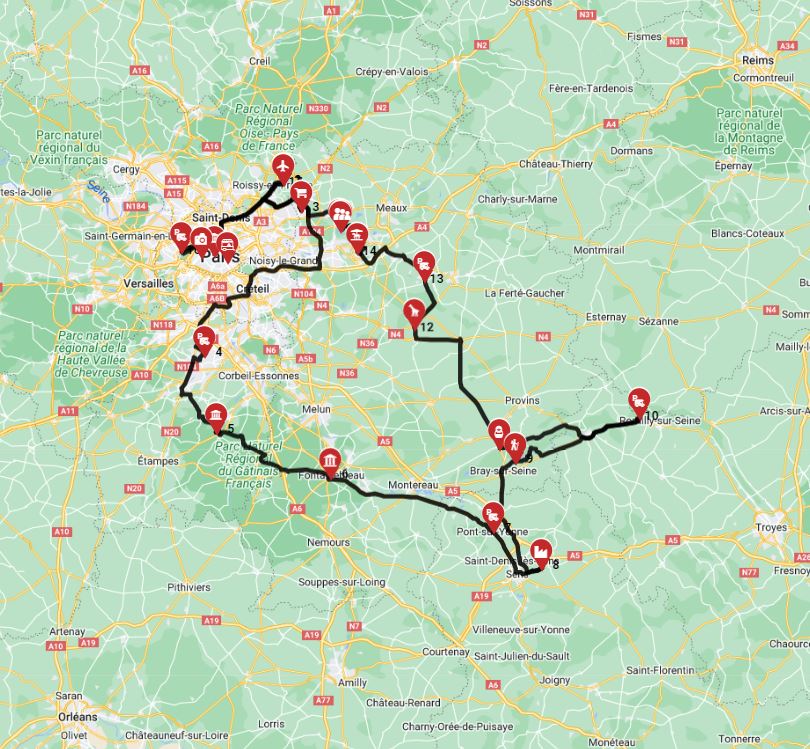
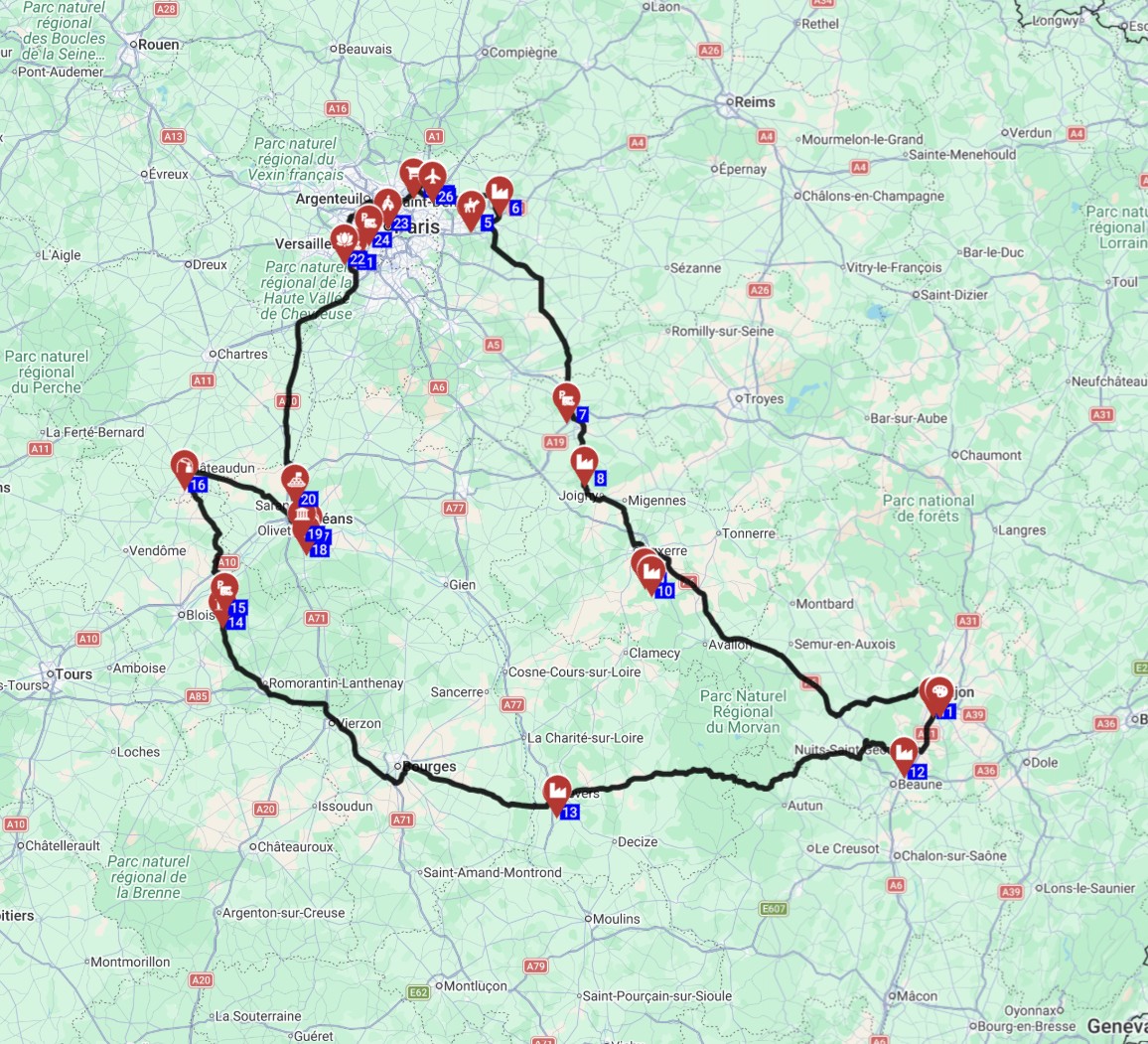
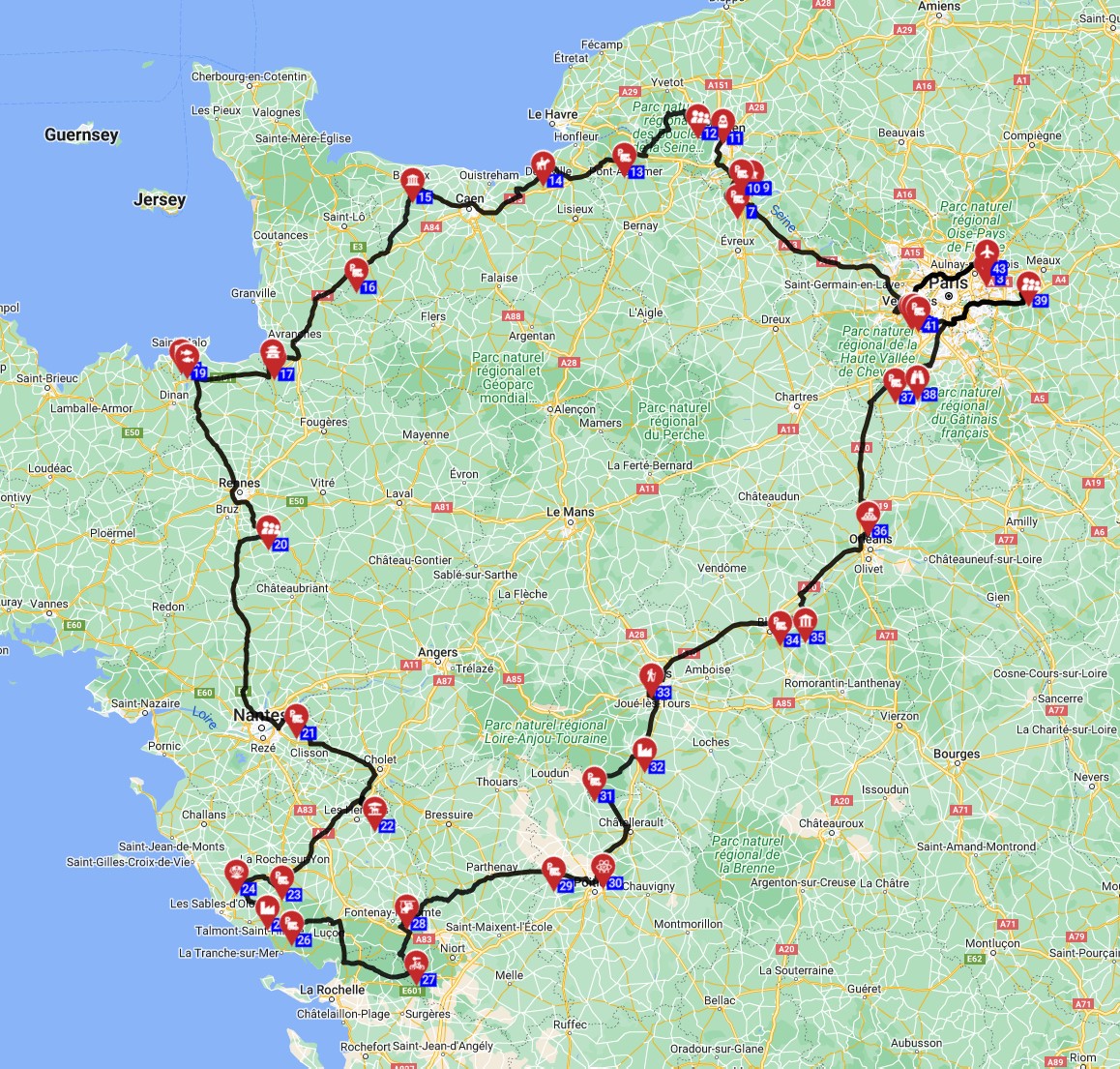
Consider planning your routes to adhere to slow travel principles, aiming for a maximum of 100-150 km per day on average, allowing you to fully immerse yourself in the culture, food, and scenery of regions like the Loire Valley, which features 1 botanical garden and 1 traditional market on a popular 8-day route from Paris.
At the Campground - Setup, Hookups & Etiquette
Proper setup, understanding hookups, and observing local etiquette are essential for a smooth RV experience at French campgrounds, ensuring a respectful and enjoyable stay. Position your RV on the designated pitch, ensuring it is level, and extend any awnings or deploy leveling jacks as needed for stability. French campgrounds often have clearly marked pitches and a friendly, communal atmosphere.
When connecting utilities, always connect electricity first (using the correct European adapter), then water, and finally the waste hose (grey water before black water, when emptying) to avoid cross-contamination. Many campgrounds around Paris, such as those along the Seine, offer standard 230V electrical hookups and fresh water points. Observe quiet hours, typically from 10 PM to 7 AM, and maintain a tidy pitch while using designated waste and recycling facilities. This respect for fellow campers and the environment is highly valued.
For finding campsites and campgrounds during your trip, we recommend using RV PLANET (rvplan.net) - a great resource for locating available spots along your route, ensuring you always have a comfortable place to stay. You'll find a spot. If not at the first campground, then the next one. Call ahead before driving.
RV Rental-Specific Tips for Paris
Tailoring your RV rental experience to your specific traveler profile enhances a trip to Paris, addressing unique needs from family entertainment to ergonomic comfort. Family travelers should opt for RVs with adequate sleeping and separate living spaces, like a "Group G" motorhome with bunk beds and sleeping capacity for up to 7, planning drives around nap schedules and seeking campgrounds near Paris with family amenities such as playgrounds or swimming pools. For couples, a compact campervan like the "V2L" or a Class B "rv rental denver example Category Van" offers ideal space and maneuverability.
Senior travelers benefit from RVs with easy access and ergonomic seating, prioritizing campgrounds near Paris with full amenities and convenient public transport links to minimize walking distances. Budget-conscious travelers can save by choosing smaller, fuel-efficient RVs, cooking meals onboard to reduce restaurant expenses (a crucial money-saver around Paris), using Park & Ride facilities, and utilizing public transport instead of driving into Paris. Luxury travelers might consider fully-equipped Class A or larger Class C RVs with premium features and explore add-ons like enhanced bedding or kitchen packages for ultimate comfort, knowing that suppliers like El Monte and Apollo offer such options.
Common Mistakes to Avoid in Paris
Being aware of typical pitfalls when RVing in and around Paris can help ensure a smoother and more enjoyable travel experience, saving you time and potential fines. Instead of ignoring Crit'Air vignette requirements, apply for yours well in advance to legally drive in Paris's low-emission zone; failure to display it can result in fines starting from €68. Instead of attempting to drive or park a large RV in central Paris, which is often impossible due to narrow streets like Rue de Rivoli and minimal parking, utilize peripheral Park & Ride (P+R) facilities or park at well-connected campgrounds outside the city.
Instead of underestimating costs, factor in realistic budgets for highway tolls (péages), fuel (which can be over €2.00 per liter for diesel), and city-specific public transport expenses (a 10-ticket 'carnet' is about €16.90). Always book your desired campgrounds around Paris in advance, especially during peak season (June-August) when spots fill up quickly, to avoid disappointment. Instead of neglecting vehicle size for navigation, use RV-specific GPS to plan routes considering height and weight restrictions, preventing encounters with low bridges or unsuitable roads. Finally, instead of expecting wild camping near Paris, plan to stay at designated campgrounds or official 'aires de service' for motorhomes, as free overnighting is generally not permitted and can lead to issues with local authorities.
What are the new rules for motorhomes in France?
The primary new rule impacting motorhomes in France pertains to low-emission zones (Zones à Faibles Émissions - ZFE) in major cities like Paris, requiring a Crit'Air vignette and potentially restricting access for older, heavier vehicles. A Crit'Air vignette, categorized by vehicle emissions (from green for cleanest to grey for most polluting), is mandatory for all vehicles, including motorhomes, to drive in designated ZFEs such as the Paris ZFE inside the A86 motorway. This applies to a wide range of vehicles, from small campervans to larger Class C motorhomes, affecting most rental fleets. As of 2026, the Paris ZFE progressively restricts older, more polluting motorhomes (e.g., Euro 3 diesel vehicles) during specific hours or days, particularly weekdays from 8 AM to 8 PM. The vignette must be ordered online from the official French government website well before your trip, as it cannot be purchased upon arrival at a cost of approximately €4.61.
Is France motorhome friendly?
France is largely motorhome friendly with an extensive network of 'aires de service' and campgrounds, but RVing *into* central Paris presents significant challenges due to traffic, emission zones, and extremely limited parking. Outside major urban centers, France is highly accommodating for motorhomes, offering numerous 'aires de service' for overnight parking, waste disposal (dumping grey and black water), and water refills, alongside excellent road infrastructure and abundant campgrounds often ranging from €25-€60 per night. Driving a motorhome directly into central Paris is highly discouraged due to strict Crit'Air ZFE regulations, narrow streets, heavy traffic around landmarks like the Arc de Triomphe, low bridge clearances, and virtually no suitable parking. For visiting Paris, it's advisable to park your RV at a peripheral campground with good public transport links, such as Camping de Paris, or utilize Park & Ride (P+R) facilities located outside the ZFE, which can save you time and stress. Wild camping or 'free' overnighting directly in or very close to Paris is generally not feasible or permitted; official sites are recommended for safety and access to services like fresh water and electricity.
Do I need speed stickers on my motorhome in France?
Motorhomes exceeding 3.5 tonnes are generally required to display blind spot (Angles Morts) stickers in France, while specific speed limit stickers are less commonly mandatory for private recreational vehicles under this weight. Since January 1, 2026, all vehicles over 3.5 tonnes, including larger Class A and some Class C motorhomes, must display 'Angles Morts' stickers to warn cyclists and pedestrians of blind spots, with fines of €135 for non-compliance. For most private motorhomes under 3.5 tonnes, which includes many Class B campervans and smaller Class C vehicles like a "Duo" or "Combi Van", specific speed stickers indicating lower limits than cars are not typically mandatory, as they generally follow car speed limits. However, if your motorhome's registered gross vehicle weight (GVW) exceeds 3.5 tonnes, it may be subject to lower speed limits on certain roads (e.g., 90 km/h on expressways and 110 km/h on motorways, compared to 110 km/h and 130 km/h for cars, respectively).
What is the 3-3-3 rule when RVing?
The '3-3-3 rule' in RVing is a popular guideline for trip planning and safety, suggesting that travelers drive no more than 300 miles (approximately 480 km) a day, arrive at their destination by 3 PM, and stay for at least 3 nights. The '300 Miles' component helps prevent driver fatigue and allows for flexible stops, making the journey itself an enjoyable part of the trip, especially when traveling through scenic regions of France, ensuring you adhere to our recommendation to travel slowly. Arriving by '3 PM' ensures sufficient daylight for setting up camp, exploring the immediate area around your Paris campground, and addressing any potential issues before dark, which is crucial for safety and comfort. A '3-Night Stay' encourages a slower travel pace, allowing for deeper exploration of local attractions, connecting to the culture and food, and reducing the frequency of packing and unpacking, epitomizing the relaxed RV travel experience we advocate.
What is the 4-4-4 rule for RVing?
The '4-4-4 rule' is another RV travel guideline, advising that you drive no more than 400 miles (approximately 640 km) a day, stop by 4 PM, and ideally stay in one spot for at least 4 nights, offering a slightly more ambitious pace than the 3-3-3 rule. The '400 Miles' component allows for slightly longer daily travel compared to the 3-3-3 rule while still aiming to minimize driver fatigue, suitable for covering more ground between major destinations or for a longer two-week adventure. Stopping by '4 PM' provides ample time for campsite setup, necessary errands, and relaxation before evening activities, accounting for potential delays like traffic around major cities or stops at an 'aire de service' for propane or water. A '4-Night Stay' promotes a leisurely pace, allowing for more in-depth exploration of an area, local excursions, and genuine relaxation without frequent relocations, perfect for experiencing multiple facets of France from a single rented mobile home base.
How much does it cost to rent an RV in France?
The cost to rent an RV in France typically ranges from €80 to €200 per day for a Class C motorhome, but a comprehensive budget for a trip to Paris must also account for fuel, tolls, campsite fees, city taxes, and public transport within the capital. RV rental fees vary significantly by season, with a small campervan like the "luxury rv rentals example Carthago Malibu 600" starting around €70-€120/day off-peak and a large integrated RV during peak season potentially costing up to €300+/day. Budget for fuel (Diesel/Gazole) at approximately €1.80-€2.00 per liter, with average fuel consumption for a typical motorhome being 10-14 liters per 100 km. Highway tolls (péages) can add roughly €0.10-€0.20 per kilometer, especially on major routes like the A1 or A6 leading to Paris.
Peripheral campgrounds near Paris typically range from €25-€60 per night, depending on amenities and season, for a powered pitch for a Class C motorhome like the "MHC24" (length 7.3m). Additional city-specific costs for Paris include the Crit'Air vignette (around €4.61), public transport passes (e.g., a Navigo Découverte week-long pass for zones 1-5 is about €30 for unlimited travel), and potential Park & Ride fees. For instance, a one-week RV trip for a family of four might budget €800-€1500 for the rental, plus an additional €500-€800 for ancillary costs like fuel, tolls, and camping fees, making a total trip cost of €1300-€2300. For detailed budgeting, our RV PLANET routes allow you to itemize and track every expense along the way.
What is the rule of 3 with an RV?
The 'rule of 3 with an RV' most commonly refers to the '3-3-3 rule' for trip planning, suggesting driving no more than 300 miles (480 km) a day, arriving by 3 PM, and staying for at least 3 nights, though it can sometimes relate to other safety or maintenance checks. The primary interpretation, the 3-3-3 rule, is a widely adopted guideline to ensure a relaxed and enjoyable travel pace, preventing driver fatigue and allowing ample time for campsite setup and local exploration. This is particularly valuable when visiting a vibrant city like Paris, enabling you to truly feel the place, connect to its culture, and savor its famous food. Less commonly, the 'rule of 3' can also refer to practical aspects such as having three essential safety items (e.g., a first-aid kit, fire extinguisher, and roadside assistance information readily available) or performing three critical pre-trip checks (e.g., tires, fluid levels, and hookup connections). Another interpretation might involve ensuring waste disposal and fresh water refills are managed every three days, depending on usage and tank capacities, to maintain comfort in your rented campervan.
What You Shouldn't Miss
- **A Day Trip to Versailles:** Just a short drive southwest of Paris, the Palace of Versailles offers opulent history. Park your motorhome at a nearby campsite, then use local transport or bikes to explore the palace, gardens, and Trianons.
- **Stroll Along the Seine:** Even without driving your RV into the city, take public transport to central Paris and enjoy a leisurely walk along the Seine, perhaps from Notre Dame to the Eiffel Tower, soaking in the iconic views.
- **Explore Montmartre & Sacré-Cœur:** Ascend to the artistic heart of Paris. Park at a periphery spot or campground and take the metro. Wander through charming streets, visit the Sacré-Cœur Basilica for panoramic city views, and soak in the bohemian atmosphere.
- **Experience a French Market:** Visit a local market, such as Marché Bastille or Marché des Enfants Rouges, to gather fresh ingredients for a meal prepared in your RV's kitchen. It’s a fantastic way to connect with local food culture.
- **Evening Cruise on the Seine:** After a day of exploration, treat yourself to a Bateaux-Mouches or similar river cruise. It offers a spectacular, illuminated view of Paris's landmarks, a truly magical experience.
- **Looking for expert insights from Avi Bandana?** Top 5 Adventures - recommendations from Avi Bandana.
Final Thoughts
Embarking on a last-minute RV adventure to Paris is absolutely achievable with careful planning and the right approach. From selecting the perfect campervan for navigating French roads to understanding local regulations like the Crit'Air vignette, every detail contributes to a seamless experience. Remember, the journey is as important as the destination, so embrace slow travel, allowing yourself to soak in the beauty and culture of France.
Whether you're exploring the charming villages around Paris or making your way into the city via public transport from a comfortable peripheral campground, a rented motorhome offers the flexibility and freedom to create truly personal memories. Our commitment to full transparency, dedicated support, and extensive expertise ensures you’re in good hands every step of the way. Discover top destinations, planning tips, all in one place!
Don't let the idea of last-minute planning deter you from experiencing the magic of Paris by RV. With these tips and Bandana Caravan by your side, your quick planning can lead to an extraordinary week-long trip or extended road trip. Plan a trip itinerary in advance with minimal effort and maximum enjoyment!
Find Motorhome Rentals in Paris