For live availability and current prices, start with our RV Rental Canada - Complete Guide 2026 guide.
In This Guide
- What a Last-Minute RV Rental Costs in Canada (2024)
- Seasonal Pricing - Peak vs. Shoulder vs. Off-Season in Canada
- What's Included vs. What's an Add-On
- Hidden Costs to Budget For in Canada
- How to Save on a Last-Minute RV Rental in Canada
- What is the cheapest month to rent an RV in Canada
- What is the best month to RV in Canada
- Is it cheaper to rent an RV in the US and drive to Canada
- Can I rent an RV in Canada and drive to the US
- How much does it cost to RV Canada for 2 weeks
- Is it difficult to drive an RV in Canada
- How much does it cost to camp an RV in Canada
- Top Cities for RV Rental in Canada
- Canada RV Driving & Camping Essentials
- What You Shouldn't Miss
- Why Book with Bandana Caravan
- Final Thoughts
- Frequently Asked Questions
Exploring Canada by rented motorhome is an unparalleled adventure, offering vast landscapes, vibrant cities, and incredible wildlife encounters. Even if you're planning a spontaneous getaway, finding a last-minute RV rental in Canada is entirely possible, though pricing and availability can vary. For live availability and current prices, start with our RV Rental Canada - Complete Guide 2024 guide, which provides comprehensive information to help you plan your journey. We're here to make sure your spontaneous trip is just as rewarding and stress-free as a meticulously planned one.
What a Last-Minute RV Rental Costs in Canada (2024)
Last-minute RV rental costs in Canada for 2024 are dynamic, meaning they fluctuate daily based on demand, vehicle availability, the specific RV class (such as a compact campervan like an "rv rental denver example Category Van" or a larger family-friendly Class C motorhome), and the season. While April is often the cheapest month to rent an RV in Canada, securing a last-minute deal means being flexible with your travel dates and vehicle type. Expect to see daily rental rates for a mid-sized Class C motorhome range from CAD $150-$400 in shoulder seasons, potentially increasing to CAD $350-$600+ during peak summer months.
To give you a realistic idea, here's an example of how rental costs might break down for various RV classes for a 1-week, 2-week, or 1-month trip in Canada, keeping in mind these are indicative and actual prices will be set at the time of booking:
| RV Class | 1-Week Trip (CAD) | 2-Week Trip (CAD) | 1-Month Trip (CAD) | Ideal For |
|---|---|---|---|---|
| Campervan (Class B) | $1050 - $2100 | $1800 - $3500 | $3500 - $6500 | Couples or solo travelers |
| Compact Motorhome (Class C up to 24 ft) | $1500 - $2800 | $2800 - $5000 | $5500 - $9000 | Small families (2 adults, 2 kids) |
| Standard Motorhome (Class C 25-28 ft) | $1800 - $3500 | $3200 - $6000 | $6000 - $11000 | Families (4-6 people) |
| Large Motorhome (Class A or C 29+ ft) | $2500 - $4500+ | $4500 - $8000+ | $8500 - $15000+ | Large families or groups (6-8 people) |
These figures demonstrate that opting for a compact campervan like a "hire campervan example Paradise S/T" typically presents the lowest entry cost for a quick trip, while a larger "rv rentals example Comfort Class" designed for a big family / group of friends will naturally incur higher rental expenses. Remember, prices can change daily based on availability, seasonality, and supplier marketing decisions, so checking live rates is always the best approach for last minute rv rental in Canada.
🎬 Video coming soon
Seasonal Pricing - Peak vs. Shoulder vs. Off-Season in Canada
RV rental prices in Canada exhibit significant seasonal variations, with peak season (July-August) rates often being 50-70% higher than off-season prices, while shoulder seasons offer a balanced compromise. The Canadian travel season is broadly divided into three periods, each with distinct pricing structures and travel benefits for your mobile home adventure.
Peak Season (July-August)
Peak season, spanning July and August, is characterized by the warmest weather, fullest accessibility to all national parks, and the highest demand for campervan and motorhome rentals in Canada. During this period, availability is limited, and prices are at their premium, often requiring bookings 6-12 months in advance for the best selection of popular models such as the "cruise america rv rental example Explorer". Last-minute options during peak season are rare and often come at a premium, if available at all.
Shoulder Seasons (May-June and September-October)
Shoulder seasons, typically May-June and September-October, offer an excellent balance for RV travelers with moderate weather, fewer crowds, and more favorable pricing, often seeing rental rates 20-40% lower than peak season. These periods are ideal for discovering hidden gems and enjoying outdoor activities without the summer rush. May and early June bring lush greenery and blooming wildflowers, while September and October showcase stunning fall foliage, particularly on routes like the Cabot Trail. Last-minute deals are more likely to surface during these transitional months, providing flexibility for spontaneous adventurers.
Off-Season (November-April)
The off-season, extending from November to April, presents the cheapest rates and greatest availability for an RV rental in Canada, with April standing out as the lowest-cost month. During these winter months, daily rates can be 40-60% lower than peak season, particularly for an "rv rental denver example Category Van" or similar compact units. However, many northern routes, mountain passes, and campgrounds are closed due limiting destination access due to weather, limiting options primarily to warmer coastal regions in British Columbia or specific winter-ready RV resorts. Always verify accessibility and road conditions for any winter travel.
What's Included vs. What's an Add-On
When securing a last-minute RV rental in Canada, basic insurance coverage is universally included, safeguarding against core liabilities, but additional items such as enhanced insurance, unlimited mileage, and convenient kitchen kits are typically offered as optional add-ons. Understanding these distinctions is crucial for managing your budget and ensuring your journey is as comfortable and carefree as possible.
Standard rentals generally provide the vehicle itself, basic liability insurance, and often a starter kit of essential supplies. However, to truly enhance your experience with a rented motorhome, consider these common add-ons:
- Enhanced Insurance Coverage: While basic insurance is included, upgrading to a top-level deductible for extra peace of mind is highly recommended. This optional upgrade can significantly reduce your financial exposure in case of an accident.
- Mileage Packages: Many last-minute RV rental suppliers in Canada offer tiered mileage packages. Unlimited mileage is a popular add-on, especially for longer trips like the "Halifax to Whitehorse - Exploring Canada’s Heartland in a Motorhome" itinerary, which spans over 9,199.1 km.
- Convenience Kits: These often include essential kitchenware, cooking utensils, and sometimes bedding and linen packages. If you plan on preparing meals in your RV kitchen, like some of our RV-friendly recipes playlist suggest, a kitchen kit is invaluable. Always check what's included with each specific RV, such as the "rv rental denver example Category Van" or a larger "Class II DKG," during the booking process.
- Generator Usage: While some RVs, like the "MHC24" or "MHC30", come with built-in generators, usage might incur an hourly fee. For off-grid camping, this is a must-have.
- Navigation Systems: Although many use smartphone apps, a dedicated GPS designed for RVs can be a useful add-on, especially in areas with limited cell service.
Comparing these options across Bandana’s partner suppliers like El Monte, Cruise America, Apollo, and Britz will help you tailor your package to your needs, ensuring full transparency with no hidden fees or surprises at pickup. Our platform lets you toggle these options to see their impact on the total price.
Hidden Costs to Budget For in Canada
Beyond the advertised daily rental rate, several ancillary expenses contribute to the total cost of an RV trip in Canada, requiring careful budgeting to avoid any surprises. Being transparent about these costs is part of our commitment to you, ensuring your adventure remains enjoyable. On the routes offered through RV PLANET routes, you can itemize and track every expense along the way for easy budgeting.
Key hidden costs to consider include:
- Fuel: Canada is a vast country, and fuel prices can vary significantly between provinces and even between urban and rural areas. For example, a 2-week trip covering 2,000 km in a Class C motorhome (averaging 20-25 L/100 km) could incur CAD $500-$800 in fuel costs.
- Campsite Fees: National and Provincial Parks typically charge CAD $25-$70 per night for a serviced site. Private campgrounds, offering more amenities like laundry and pools, can range from CAD $40-$90+ per night. Popular spots often require advance reservations, which may incur booking fees.
- National and Provincial Park Entrance Fees: Entry to Canada’s iconic national parks, like Banff or Jasper, requires a Parks Canada Discovery Pass (approx. CAD $72 for an adult annual pass or CAD $145 for a family/group pass), or daily entrance fees. Provincial parks also have their own fees.
- Propane: Used for heating, cooking, and the refrigerator, propane tanks will need refilling, typically costing CAD $20-$40 per refill depending on tank size and usage.
- Dump Station Fees: While many campgrounds include this service, some private or municipal dump stations might charge a small fee (CAD $5-$15) to empty your grey and black water tanks.
- Tolls: Some Canadian highways, particularly in Ontario (e.g., Highway 407 ETR) and Nova Scotia, have toll roads. Plan your route to minimize these or be prepared to pay. Many rental RVs do not include transponders, requiring manual payment or risk of fines.
- Additional Driver Fees: Some suppliers may charge an extra fee for each additional driver listed on the rental agreement, typically CAD $10-$20 per day.
- One-Way Drop-Off Fees: If you plan to pick up your RV in one city and drop it off in another (e.g., Vancouver to Toronto), a one-way fee will apply, usually ranging from CAD $200 to over $1000, depending on the distance and demand.
When planning your adventure, keep these ancillary costs in mind. Our RV PLANET routes are designed to help you itemize and track every expense along the way for easy budgeting, so you always know what to expect and can adjust your trip accordingly.
How to Save on a Last-Minute RV Rental in Canada
To optimize savings on a last-minute RV rental in Canada, embracing flexibility with your travel dates and destination, choosing a smaller campervan, and diligently comparing prices across various suppliers are key strategies. While last-minute deals can be harder to snag during peak seasons, smart planning can still yield significant cost reductions for your rented motorhome adventure.
Here are some insider tips:
- Be Flexible with Dates: As prices are dynamic, shifting your pickup or drop-off by a few days can sometimes reveal much cheaper rates. Mid-week rentals often cost less than weekend pickups, and traveling during the shoulder seasons (May-June, September-October) will almost always be more economical than peak summer months.
- Consider Smaller RVs: Opting for a compact Class B campervan, like an "Active Compact Select" with automatic transmission, instead of a large Class A motorhome, can save you considerably on both daily rental rates and fuel costs. Smaller vehicles are also easier to maneuver and park.
- Compare Multiple Suppliers: Use a comparison platform like Bandana to quickly view prices and inclusions from numerous trusted suppliers such as El Monte, Cruise America, Apollo, and Britz. This ensures you’re getting the best possible deal and full transparency on what you're paying for.
- Look for Relocation Deals: While rare for specific last-minute requests, sometimes suppliers need to move RVs between locations, offering heavily discounted one-way rates. Keep an eye out for these special offers on our platform.
- Leverage Longer Rental Periods: Often, the daily rate decreases the longer you rent. If you have the flexibility, consider extending your trip to a week or more to benefit from lower average daily costs. A two-week adventure might be more cost-effective per day than a shorter trip.
- Book & Plan Ahead for Discounts: While this article focuses on last-minute, knowing that pre-planners can get a 25% planning discount when using rvplan.net is a useful long-term tip for those who aren't on a tight deadline.
Remember, we champion slow travel – aiming for a maximum of 100-150 km per day on average. This not only makes your trip more enjoyable and allows you to truly feel the place, connect to the culture, the food, and the scenery, but it also helps reduce fuel costs, a significant portion of any RV trip budget.
What is the cheapest month to rent an RV in Canada
April typically stands out as the cheapest month to rent an RV in Canada, offering lower demand and more favorable flex-rates compared to peak summer, with daily rental costs for a campervan often starting from CAD $100-$180. This is largely due to the transition from winter, where many popular areas are still experiencing colder weather, but before the influx of summer travelers.
While the weather in April can be unpredictable, it offers unique advantages like fewer crowds at popular attractions and national parks. Late autumn and early winter months (November to March) also present significantly reduced rental prices, sometimes with savings of up to 50-60% compared to peak season. However, travel during these periods often requires a winter-ready RV (which some suppliers offer) and careful route planning due to potential road closures and limited access to certain campgrounds.
For budget-conscious travelers seeking a last-minute RV rental in Canada, targeting April, late October, or November can yield substantial savings on the base rental price of motorhomes and campervans. Always verify local conditions and services, as many seasonal businesses might still be closed.
What is the best month to RV in Canada
The best month to RV in Canada largely depends on your desired activities and region, with July and August offering the warmest weather and full access to all parks, while the shoulder seasons (May-June, September-October) provide milder temperatures, fewer crowds, and often better prices. For a comprehensive exploration of Canada's vast landscapes in a rented motorhome or campervan, the summer months generally offer the most favorable conditions.
- July and August: These are the prime months for RV travel across Canada. Temperatures are at their warmest, all national parks (such as Banff, Jasper, and Gros Morne) and attractions are fully operational, and outdoor activities like hiking, swimming, and kayaking are in full swing. This is ideal for popular routes like a "
" trip, which covers 4,886.2 km and includes numerous heritage sites and natural features. However, demand is highest, so securing an RV rental and campground reservations well in advance is crucial, even for those looking for last minute rv rental in Canada.
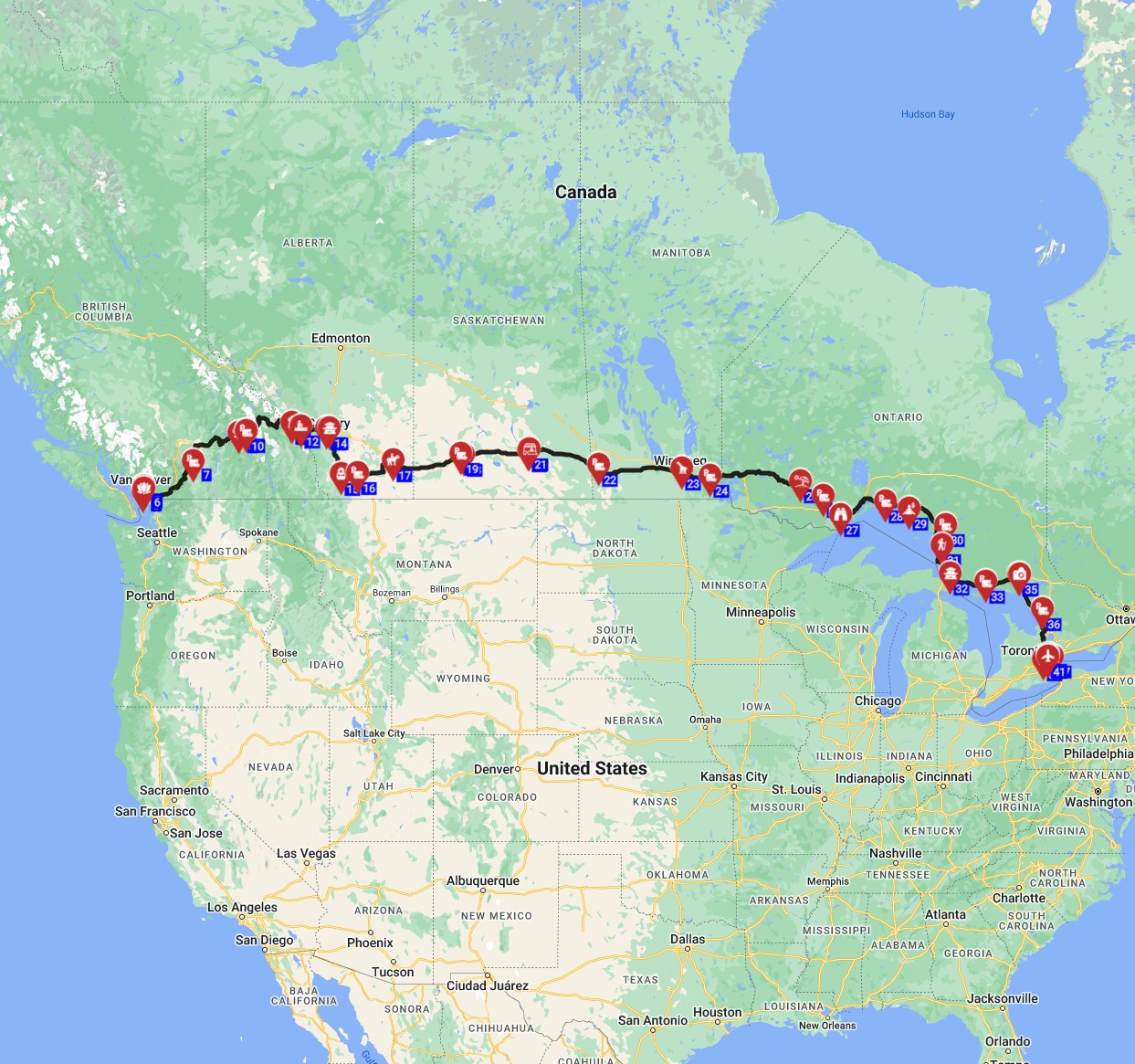 Vancouver to Toronto - Trans Canada West to East
 - May and June: The spring shoulder season offers lush greenery, blooming wildflowers, and fewer insects than later summer. Temperatures are generally pleasant, though some higher elevation mountain passes might still have snow or be subject to late openings. This period is excellent for exploring provincial parks and coastal routes in British Columbia or the Maritimes.
- September and October: The autumn shoulder season is renowned for stunning fall foliage, particularly in Eastern Canada (e.g., Quebec and Ontario), and offers excellent wildlife viewing opportunities as animals are more active. The crowds thin out after Labour Day, making for a quieter experience. Temperatures are cooler but often still very comfortable for outdoor activities, and prices for a rented RV are typically lower than in peak summer.
Ultimately, the "best" month is subjective, but for broad accessibility and warm weather, July and August are top choices, while May, June, September, and October offer a fantastic balance of good weather, fewer crowds, and more affordable RV rental options. For those on a tight schedule, an itinerary like the "

Is it cheaper to rent an RV in the US and drive to Canada
While base rental rates for an RV in the US might occasionally appear lower, renting an RV in the US and driving to Canada often incurs additional cross-border fees, insurance complexities, and fuel costs that typically negate any initial savings. Most US rental companies charge specific international travel fees, usually a one-time fee of USD $100-$300, for taking a vehicle into Canada.
Furthermore, it is critical to verify that your US RV insurance policy explicitly covers travel within Canada; some policies may require an endorsement or supplementary coverage, adding to your overall expense. Fuel prices also fluctuate between the two countries, and exchange rates (USD to CAD) can impact your budget significantly. While considering an RV Rental USA - Complete Guide 2024 is a good idea for trips focused on the states, for primarily Canadian adventures, renting directly in Canada often simplifies logistics and can prove more cost-effective once all factors are accounted for.
Can I rent an RV in Canada and drive to the US
Yes, it is generally possible to rent an RV in Canada and drive to the US, provided you confirm your rental agreement explicitly allows cross-border travel, ensure your insurance coverage extends to US territory, and are prepared for customs procedures. Many of Bandana's partner suppliers, including El Monte and Cruise America, offer this flexibility for a rented motorhome or campervan.
Before embarking on your journey, always review the specific terms and conditions of your Canadian rental company, as some may have restrictions or charge a cross-border fee (typically CAD $150-$400). You'll also need to ensure your Canadian RV insurance policy provides adequate coverage for travel within the United States. Be prepared with valid passports and all RV documentation for customs and immigration procedures at the border. If you plan to drop off the RV in the US instead of returning it to Canada, anticipate substantial one-way drop-off fees, which can range from CAD $500 to well over $1000 depending on the distance and supplier.
How much does it cost to RV Canada for 2 weeks
The cost to RV Canada for two weeks can vary significantly, typically ranging from CAD $2,000 to over $6,000 for a family of four, depending on the RV class, rental season, included amenities, and daily expenses like fuel and campsites. A compact Class C motorhome, like an "rv rentals utah example Sunrise Escape" for 5 people, would generally be on the lower end of this range, while a luxurious Class A motorhome would be on the higher end.
Here's a breakdown of potential costs for a two-week RV trip in Canada:
- RV Rental Fees: For a 14-day period, expect to pay CAD $1800-$3500 for a standard Class C motorhome during the shoulder season, or CAD $3500-$5500+ during peak season (July-August). These dynamic prices are set at actual booking time, so it's always best to compare options.
- Fuel Costs: Covering an average of 100-150 km per day (1400-2100 km total) in a Class C RV (consuming roughly 20-25 L/100 km) could mean CAD $400-$800 in fuel, depending on current prices and your route. For long trips, considering "Budget RV Driving in Canada - Save on Fuel 2024" is always a smart move.
- Campsite Fees: Budgeting for 14 nights at serviced campgrounds, at an average of CAD $35-$70 per night, would result in CAD $490-$980. Some travelers might opt for a mix of private campgrounds and national/provincial parks for variety and cost savings.
- Food & Groceries: Cooking in your RV kitchen can save significant money. Allocating CAD $300-$600 for groceries for two weeks for a family of four is a reasonable estimate, assuming some meals out. For inspiration, check our RV-friendly recipes playlist.
- Activities & Park Fees: Entrance fees to national parks (e.g., Parks Canada Discovery Pass for CAD $145 for a family), attractions, and optional activities can add CAD $200-$500+.
- Miscellaneous: Propane refills, dump station fees, and unexpected expenses might add another CAD $100-$200.
Therefore, a typical 2-week RV trip in Canada for a family of four could range from CAD $3,300 (shoulder season, modest RV) to over CAD $8,000 (peak season, larger RV, more activities), excluding flights. Planning ahead, even for a last minute rv rental, allows you to anticipate these costs better.
Is it difficult to drive an RV in Canada
Driving an RV in Canada is generally manageable on major highways, which are well-maintained and offer ample space, but it can become more challenging in mountainous regions, dense urban centers, and on unpaved provincial roads, requiring driver awareness and common sense. A standard car driver's license is sufficient for all motorhome classes (Class A, B, and C) rented in Canada, removing any licensing hurdles.
Here’s what to expect when driving a rented RV in Canada:
- Major Highways: Routes like the Trans-Canada Highway are wide and well-marked, making long-distance travel straightforward. Speed limits are typically 80-110 km/h.
- Urban Driving: Driving a motorhome, even a larger one like a "Class A - Thor ACE 30," in cities can be daunting due to heavier traffic and narrower streets. However, with careful attention and a slower pace, you can drive almost anywhere without issues. No need to stress - just use common sense and pay attention to signs for RV-friendly parking.
- Mountainous Terrain: Regions like the Canadian Rockies present winding roads, steep grades, and occasional wildlife (bears, moose). Drive slowly, use lower gears for descents, and be aware of your vehicle's length and height, especially for Class A or larger Class C RVs like the "MH-A" which is winter ready.
- Rural and Unpaved Roads: Many scenic routes or access roads to smaller provincial parks might be gravel or less maintained. Assess road conditions before proceeding, especially with a large RV. Some rental agreements might have restrictions on unpaved roads.
- Wildlife: Canada is home to abundant wildlife. Be vigilant, particularly at dawn and dusk, for deer, moose, elk, and even bears on roadways, especially in national parks or forested areas.
- Connectivity: In remote areas, cell phone service can be sporadic. Plan for offline navigation and emergency communication methods.
Overall, with a mindful approach and adherence to local road rules (Canada drives on the right side of the road), driving a rented RV in Canada is a rewarding experience. For more detailed advice, refer to our "Driving an RV in Canada - Complete Guide 2024."
How much does it cost to camp an RV in Canada
The cost to camp an RV in Canada typically ranges from CAD $25 to $70 per night, varying significantly based on the type of campground (provincial, national, private), included amenities (hookups, showers), and location. This range provides options for various budgets and preferences for your rented camper adventure.
- National Parks: Parks Canada campgrounds, located in stunning natural settings like Banff or Jasper, generally cost CAD $25-$60 per night for sites with basic hookups (power, water, and sometimes sewer). An additional park entrance fee or Discovery Pass is required. Many sites, even for popular parks, operate on a first-come, first-served basis for 70-75% of spots, though 25-30% are reservable well in advance.
- Provincial Parks: These offer a similar experience to national parks, with fees usually ranging from CAD $30-$55 per night for serviced sites. Each province has its own park system and booking procedures.
- Private Campgrounds: Often found near popular tourist destinations or cities like Vancouver or Toronto, private campgrounds typically offer more amenities such as full hookups, Wi-Fi, laundry facilities, swimming pools, and convenience stores. Prices for these can range from CAD $40-$90+ per night.
- Boondocking/Dispersed Camping: Free camping, often referred to as boondocking or dispersed camping, is permitted on Crown land in certain provinces, notably British Columbia and Alberta, but regulations vary for non-residents and facilities are non-existent. Always research local rules and restrictions thoroughly. You can find detailed information on such options on rvplan.net when planning your route.
When planning your trip, especially last-minute, calling ahead to campgrounds is always recommended to check availability. If one campground is full, there's often another nearby, ensuring you'll find a spot.
Top Cities for RV Rental in Canada
Canada offers numerous excellent cities for RV pickup, providing convenient starting points for exploring diverse landscapes, from coastal drives to mountain adventures. Whether you're looking for an expansive "MHLUX" for a large family or a nimble campervan, these cities offer a wide selection of rented RVs through our direct partnerships with over 50 leading RV suppliers worldwide.
- Vancouver, British Columbia: A popular starting point for West Coast adventures, offering access to the Pacific Coast, Vancouver Island, and the Rocky Mountains. Many suppliers like Fraserway RV and CanaDream operate here.
- Calgary, Alberta: The gateway to the Canadian Rockies, including Banff and Jasper National Parks. Ideal for those planning mountain scenery and outdoor activities.
- Toronto, Ontario: The largest city in Canada and a hub for exploring Eastern Canada, including the Great Lakes region, Niagara Falls, and nearby provincial parks.
- Montreal, Quebec: A vibrant, bilingual city perfect for starting a tour of Quebec's rich history and natural beauty, including the Laurentian Mountains.
- Halifax, Nova Scotia: The prime location for exploring the stunning Maritimes, including the Cabot Trail and the Bay of Fundy. A perfect starting point for coastal routes like the "Halifax to Whitehorse - Exploring Canada’s Heartland in a Motorhome" which is a 37-day, 9,199.1 km journey that showcases Canada's vast heartland.
- Abbotsford, British Columbia: Situated in the Fraser Valley, it's a great alternative pickup spot to Vancouver for exploring BC's interior and southern regions.
- Bolton, Ontario: Located north of Toronto, this offers another convenient option for those looking to explore Ontario and beyond, avoiding the immediate city traffic.
These cities provide excellent infrastructure for RV travelers, with multiple rental stations and easy access to major highways and scenic routes. For those considering a journey beginning in the USA, our "RV Rental USA - Complete Guide 2024" offers helpful advice.
Canada RV Driving & Camping Essentials
Navigating Canada with a rented RV requires an understanding of local regulations and practical tips to ensure a smooth and enjoyable trip, especially when planning a last minute rv rental. Canada's diverse geography means road conditions and local customs can vary significantly by province.
Road Rules and Regulations:
- Driving Side: In Canada, you drive on the right side of the road, similar to the USA and most of continental Europe.
- Speed Limits: Speed limits vary but are generally 80-100 km/h on major highways and 30-50 km/h in urban areas. Always observe posted signs, as limits can change.
- Licensing: A standard car driver's license from your home country is sufficient for operating any Class A, Class B, or Class C motorhome or campervan for rental purposes in Canada. An International Driving Permit (IDP) is recommended for visitors from non-English speaking countries, though not strictly mandatory in all provinces.
- Seatbelts: Seatbelt usage is mandatory for all occupants in an RV, both in the driver's cabin and the living area while the vehicle is in motion.
- Toll Roads: Be aware of potential toll roads, especially in Ontario and Nova Scotia. These are typically electronic, and fines can accrue quickly if not handled correctly. Plan for these or use GPS to navigate around them.
- Emergency Numbers: The universal emergency number for police, fire, and ambulance across Canada is 911.
Camping and Connectivity:
- Campsite Booking: While many national and provincial parks reserve 25-30% of sites, the remaining 70-75% are often first-come, first-served. It's always best to call ahead, especially during peak season, before driving to a remote campground. If not at the first campground, then the next one. You'll find a spot. For finding campsites and campgrounds during your trip, we recommend using RV PLANET (rvplan.net) - a great resource for locating available spots along your route.
- Wildlife Safety: In national and provincial parks, and many rural areas, wildlife encounters are common. Store food properly, dispose of garbage securely, and never approach or feed wild animals. Be bear-aware and use bear-proof food storage where provided.
- Connectivity: Major urban centers and popular routes will have good cellular coverage. However, in remote areas, particularly in Northern Canada or within national parks, connectivity can be limited. Consider downloading offline maps and communicating your itinerary to someone before venturing into remote regions.
- RV Size in Cities: You might think a smaller Class B campervan, like an "rv rental denver example Category Van", is better for cities, but in Canada, most cities are accustomed to larger vehicles. Drive slowly and carefully, and you can drive almost anywhere without issues. No need to stress - just use common sense and pay attention.
What You Shouldn't Miss
A rented motorhome adventure in Canada offers boundless opportunities to create unforgettable memories. Here are some must-do experiences:
- Explore the Canadian Rockies: Drive the Icefields Parkway between Banff and Jasper National Parks. This 232 km scenic route is consistently ranked among the world's most beautiful drives, offering glacier views, turquoise lakes, and abundant wildlife.
- Discover the Pacific Coast: In British Columbia, ferry your RV to Vancouver Island and explore the rugged coastlines, ancient forests, and charming towns like Tofino and Victoria. The "Vancouver Round Trip - West Canada Cycling Adventure" is a fantastic 19-day route covering 2659.4 km of cycling opportunities, parks, and scenic routes.
- Experience the Bay of Fundy's Tides: Witness the world's highest tides in New Brunswick and Nova Scotia. You can even try tidal bore rafting near Moncton or explore the dramatic Hopewell Rocks.
- Journey through Quebec's Historic Charm: Drive along the St. Lawrence River, exploring historic Quebec City and Montreal, and venturing into the Laurentian Mountains for picturesque drives and outdoor activities.
- See the Northern Lights: For a truly magical experience, head north to the Yukon or Northwest Territories during autumn or winter. Remote locations offer prime viewing opportunities for the aurora borealis, making a 37-day trip like "Halifax to Whitehorse - Exploring Canada’s Heartland in a Motorhome" an epic journey.
- Looking for expert insights from Avi Bandana? Top 5 Adventures - recommendations from Avi Bandana
Traveling slowly is the key to truly appreciating Canada's immense beauty. Allow yourself to embrace the journey, averaging no more than 100-150 km per day. This pace allows you to immerse yourself in the local culture, savor regional food, and connect deeply with the breathtaking scenery, transforming your motorhome trip into a cherished memory.
Final Thoughts
Embracing a last-minute RV rental in Canada opens up a world of spontaneous adventure, from the majestic Rockies to the charming Maritimes. While prices are dynamic and vary by season and demand, being flexible and knowing where to look can still land you a fantastic deal on a rented motorhome or campervan. Remember, the journey itself is the destination, and Canada's vast, beautiful landscapes are best savored at a slow pace, allowing you to immerse yourself fully in its natural wonders and vibrant culture.
Whether you’re a seasoned RVer or a first-timer, the thrill of hitting the open road with your mobile home is unmatched. Don't let the idea of last-minute planning deter you. With the right information, a little flexibility, and the support of dedicated RV specialists, your Canadian RV adventure is well within reach. So go ahead, get inspired for your next trip and plan a trip itinerary in advance with minimal effort and maximum enjoyment.
Compare Motorhome Prices for Canada and start your unforgettable journey today. Find last minute rv Rentals in Canada and check Canada RV Rental Prices Now to discover the perfect vehicle for your spontaneous Canadian road trip.