In This Guide
- Can You Drive an RV in Scandinavia? License & Age Rules
- Road Conditions & Terrain in Scandinavia
- RV Size Limits, Bridges & Restricted Zones
- Fuel: Diesel vs. Petrol & Cost per 100 km
- Tolls, Vignettes & Border Rules
- Driving Tips for last minute rv rental Travelers
- Recommended RV Class for Scandinavia Roads
- Should I Choose a Compact Van Instead of a Large RV in Scandinavia?
- Can I Park Anywhere? Free & Wild Camping Rules in Scandinavia
- Can I Drive an RV Into the City Center? Heights, Tunnels & Local Signage
- What is the 3-3-3 rule for RV travel?
- Can you drive an RV in Europe?
- Can you wild camp in a campervan in Sweden?
- Can you park a campervan anywhere in Norway?
- What is the 333 rule for campervan?
- Is Norway RV friendly?
- Can you park a campervan anywhere in Sweden?
- Do you need a separate licence to drive an RV?
- Can you rent an RV in Sweden?
- Do they have RV parks in Europe?
- Top Cities for RV Rental in Scandinavia
- What You Shouldn't Miss
Scandinavia, encompassing Norway, Sweden, and Denmark, offers an unparalleled setting for a last minute rv rental adventure, blending breathtaking natural beauty with charming cities and rich history. Exploring this diverse region in a motorhome provides the ultimate freedom to chase the Northern Lights, marvel at majestic fjords, or discover quaint coastal villages at your own pace. For live availability and current prices, start with our RV Rental Scandinavia - Complete Guide 2026 guide. Bandana Caravan is here to make your journey seamless, with over 23 years of expertise in helping tens of thousands of travelers embark on their dream RV trips across 50+ countries. We pride ourselves on full transparency, ensuring no hidden fees or surprises.
RV Size Limits, Bridges & Restricted Zones
While Scandinavia generally accommodates rented RVs of all sizes, drivers should remain aware of potential restrictions, particularly concerning height, weight, and environmental zones. Many urban centers, especially in Sweden and Norway, have environmental zones or congestion charges that may apply to specific vehicle types or older RVs; sometimes these require prior online registration or payment. For instance, our "RV Rental in Scandinavia - Prices and Best Deals 2026" guide offers insights into managing these costs.
Low bridges and narrow tunnels are more common in older towns or along specific mountain routes, so always pay close attention to roadside signage indicating height and weight limits to avoid issues. When planning ferry crossings, which are a common and integral part of Norway's road network, RV length and weight directly impact ticket prices, and booking in advance is highly advisable for larger vehicles on popular routes. Always adhere strictly to posted speed limits, which are often lower for larger vehicles and differ significantly between urban areas, main roads, and highways. Drive slowly and carefully, and you can drive almost anywhere without issues. No need to stress - just use common sense and pay attention.
Fuel: Diesel vs. Petrol & Cost per 100 km
Diesel, commonly labeled 'diesel' or 'gasoil', is the most prevalent fuel type for rented motorhomes in Scandinavia and is widely available at service stations throughout Norway, Sweden, and Denmark. Petrol, typically labeled 'bensin' or 'blyfri', is also readily available for petrol-engine vehicles, though fewer RVs operate on this type. Bandana's global fleet of Class SI - Semi-integrated RVs typically consumes 10-11 Liters/100 km, while Class C - Alcove models average 10-12 Liters/100 km, and Class B - Camper Vans usually achieve 8-10 Liters/100 km. Fuel costs in Scandinavia, particularly Norway and Denmark, are among the highest in Europe, so budgeting for fuel is a crucial part of your trip planning. Our RV PLANET routes allow travelers to itemize and track every expense, including fuel, for easy budgeting. On the routes offered through RV PLANET routes, you can itemize and track every expense along the way for easy budgeting.
Propane (LPG) for heating and cooking inside your rented RV can be less universally available than diesel or petrol; it's wise to plan ahead for refill stations or carry appropriate adapters if your motorhome relies heavily on it. Many rental motorhomes come with a gas stove for cooking delicious meals on the go. Fuel up when you see stations, especially in more remote areas of northern Sweden or along Norway’s fjords, as distances between stops can be significant. Our detailed approach means we handle the booking details, so you can focus on the journey, including those essential fuel stops. For ideas you can prep on the road, watch our RV-friendly recipes playlist on YouTube.
Tolls, Vignettes & Border Rules
Scandinavia operates without a single vignette system; instead, tolls are typically paid per use, often electronically. Norway has an extensive automated toll system called AutoPASS, where vehicles are registered automatically via a camera scan. Foreign vehicles usually receive an invoice by mail, though registering for an AutoPASS account or confirming a toll pass is included with your rental motorhome can simplify the process and help avoid potential fines. Sweden has congestion charges in major cities like Stockholm and Gothenburg, along with tolls on some bridges, such as the Øresund Bridge connecting to Denmark, which are also often automated. Denmark features tolls on its major bridges, notably the Storebælt Bridge (Great Belt Fixed Link) and the Øresund Bridge.
Crossing borders between Scandinavian countries (Sweden, Norway, Denmark, Finland) is generally straightforward with minimal customs checks for EU citizens. Non-EU travelers should always have their passports and all necessary vehicle documentation, including your rental agreement and a recommended International Driving Permit (IDP), readily available. Our full price transparency means any potential one-way fees for last minute rv rental, or charges like these, are clear upfront. You'll find specific details in our "One-Way RV Rental in Scandinavia - Price Guide 2026" to help you plan cross-border adventures with confidence.
Driving Tips for last minute rv rental Travelers
Always drive with headlights on, even during daylight hours, as this is a legal requirement in all Scandinavian countries, enhancing visibility on often winding roads. Be prepared for automated tolls, especially in Norway, by researching AutoPASS options or confirming if your last minute rv rental includes a toll pass to streamline payments and prevent unexpected invoices. Plan your routes with fuel stops in mind, particularly when traversing remote areas like the Swedish Lapland, where distances between service stations can be substantial. For finding campsites and campgrounds during your trip, we recommend using RV PLANET (rvplan.net) - a great resource for locating available spots along your route.
Account for ferries, which are an integral part of Norway's road network, particularly in the fjord-rich western regions; check schedules in advance and factor in potential waiting times and costs. Keeping an eye out for wildlife, such as moose and reindeer, is crucial, especially at dawn and dusk on smaller roads and in forested areas where animals frequently cross. Many road signs in Sweden and Norway depicting these animals often suggest reduced speed limits to prevent collisions. Our support extends to pre-booking comparisons and post-booking coordination, ensuring you are well-prepared for these local driving conditions.
Can I Drive an RV Into the City Center? Heights, Tunnels & Local Signage
Yes, you can almost always drive an RV into city centers in Scandinavia, but it requires careful attention to local signage, height restrictions, and environmental zones. Pay close attention to signs indicating height and weight limits, especially for older tunnels, multi-story car parks (which are often too low for RVs), and narrow streets in historic districts. Many Scandinavian cities, like Stockholm and Oslo, operate environmental zones or congestion charges that may apply to your rented RV, or have residents-only parking restrictions, so always look for specific 'P-Hus' (parking garages) or 'Parkering' (parking) signs designed for larger vehicles. For example, a typical Class C alcove model, like a "6 Berth Derwent," can be around 7.5 meters long and 3.2 meters high, requiring careful navigation.
Some cities, such as Stockholm and Gothenburg, implement congestion charges for entering the city center, which may be automatically billed to your vehicle based on its registration. Consider parking on the outskirts of major cities and utilizing public transport, which is excellent in Scandinavia, to avoid navigation stress and potentially high parking fees for larger vehicles. Drive slowly and carefully, and you can drive almost anywhere without issues. No need to stress - just use common sense and pay attention. Our support team is here to help with pre-booking queries, ensuring you choose a suitable motorhome for your urban explorations.
What is the 3-3-3 rule for RV travel?
The 3-3-3 rule for RV travel is a widely recommended guideline to ensure a relaxed and enjoyable road trip experience: drive no more than 300 miles (approximately 480 km) per day, stop driving by 3 PM, and stay at least 3 nights in each location. This rule is particularly beneficial for last minute rv rental trips in Scandinavia, where scenic routes and abundant natural beauty encourage slower travel and deeper exploration of individual areas. By following this, you naturally adhere to our recommended pace of max 100-150 km per day, allowing you to truly immerse yourself in the journey.
Adhering to the 'drive no more than 300 miles' aspect helps prevent driver fatigue, especially on potentially winding or mountainous Scandinavian roads, and allows for spontaneous stops at picturesque viewpoints. Stopping by '3 PM' provides ample time to find a campsite, set up your rented motorhome, and relax before dinner, avoiding stressful late-night arrivals. Staying '3 nights' in one spot allows travelers to fully experience a region, engage in local activities, and minimizes the constant packing and unpacking inherent in RV travel, which is ideal for immersing oneself in Scandinavian culture and nature.
Can you drive an RV in Europe?
Yes, you can absolutely drive an RV in Europe, and it is an incredibly popular way to explore the continent, offering immense flexibility and access to diverse landscapes from bustling cities to remote natural parks. Europe's well-developed road network and extensive camping infrastructure make it very RV-friendly, with specific regulations for vehicle size, licenses, and tolls varying by country. Our "RV Rental Europe - Complete Guide 2026" provides a detailed overview of what to expect when planning a motorhome adventure across the continent. Most standard RVs and campervans can be driven with a regular B-category driving license, provided their Gross Vehicle Weight (GVW) does not exceed 3,500 kg (3.5 tons).
Travelers should always be mindful of specific driving laws in each country, including varying speed limits, requirements for headlights (always on in Scandinavia), and environmental zones in urban areas. An International Driving Permit (IDP) is often recommended or required for non-EU drivers to complement their national driving license when touring Europe. With Bandana Caravan, you benefit from our direct partnerships with 50+ leading RV suppliers worldwide, offering bookings in 30+ currencies with full price transparency. We cover 50+ countries with local expertise, ensuring your rented motorhome trip across Europe, including Scandinavia, is smooth and well-supported.
Can you wild camp in a campervan in Sweden?
While Sweden's 'Allemansrätten' (Right of Public Access) allows for respectful access to nature and traditional wild camping with tents, its application for overnight parking of campervans or RVs is generally more restricted and often not permitted as true 'wild camping.' This right emphasizes not disturbing or destroying nature, and placing a large vehicle in an undesignated spot can be seen as violating these principles, especially near residential areas or cultivated land. For campervans and RVs, overnight parking is typically confined to designated parking areas, service areas, official campsites, or private land with explicit permission from the landowner.
Local municipalities often have specific bylaws regarding where vehicles can park overnight, so it's always crucial to look for signage and adhere to local regulations to avoid fines. To ensure a hassle-free experience with your rented motorhome, it is highly recommended to utilize Sweden's extensive network of official campsites and stellplatz (motorhome parking areas) for overnight stays, which offer essential services like electricity hook-ups and waste disposal. Always prioritize leaving no trace, respecting privacy (staying a significant distance, at least 150 meters, from houses), and ensuring your campervan is parked in a safe, non-obstructive location if attempting an overnight stop outside of a formal site.
Can you park a campervan anywhere in Norway?
No, you cannot park a campervan just anywhere in Norway; while Norway has a generous 'Right to Roam' (allemannsretten) similar to Sweden, this right explicitly states that motorized vehicles, including campervans and RVs, must be parked on established roads or designated parking areas, not off-road or on private land without permission. Overnight parking for rented campervans is permitted in many roadside rest areas and designated parking spots, provided it is for a short duration and does not obstruct traffic or cause damage. For instance, many rest stops along scenic routes like the Atlantic Ocean Road allow overnight parking, but not for extended stays.
It is strictly forbidden to park off-road or in national parks and other protected natural areas unless explicitly marked as a designated parking spot. Always adhere to local signage regarding parking restrictions, especially in popular tourist areas, near residential zones, and in urban centers where specific rules and fees apply. To ensure a hassle-free experience, it is highly recommended to utilize Norway's extensive network of official campsites and stellplatz (motorhome parking spots) for overnight stays. These sites, which often number over 100 across the country, provide essential services and are well-integrated into the country's travel infrastructure. If you're looking for last minute rv rental deals in Scandinavia, remember that availability for campsites can change rapidly, so call ahead.
What is the 333 rule for campervan?
The 333 rule for campervan travel is identical to the RV guideline, advising travelers to drive no more than 300 miles (480 km) in a day, stop by 3 PM, and stay for at least 3 nights at each location. This guideline is particularly suitable for campervan adventures in Scandinavia, fostering a relaxed pace that allows for spontaneous stops and a deeper connection with the stunning landscapes. By limiting daily mileage, campervan travelers can minimize fatigue, especially when navigating Norway's scenic but winding fjord roads or exploring Sweden's vast forests. A compact campervan, such as a "Combi Van" with a 60-liter fresh water tank, is perfect for embracing this slower travel philosophy.
Stopping by 3 PM ensures sufficient time to find a suitable parking spot or campsite, set up your rented campervan, and enjoy the evening without rushing, perhaps cooking a meal using your onboard gas stove. The recommendation to stay 3 nights in one spot encourages thorough exploration of local attractions and cultural experiences, transforming a rushed road trip into a more immersive journey. This approach is highly effective for embracing the Scandinavian concept of "friluftsliv" (open-air living), allowing ample time for hiking, kayaking, or simply relaxing in nature. It's a great way to ensure you're refreshed and ready for each new day of your adventure.
Is Norway RV friendly?
Yes, Norway is exceptionally RV friendly, offering stunning natural landscapes, a well-maintained road network, and extensive infrastructure catering to motorhome travelers. The country boasts breathtaking fjords, mountains, and coastal routes perfectly suited for scenic RV journeys, though some roads can be narrow or winding, especially on the iconic Trollstigen or Fjord routes. Norway has numerous well-equipped campsites and designated stellplatz (motorhome parking areas), often over 150 across the country, that provide essential services like electricity hook-ups, fresh water, and waste disposal, making it convenient for even a last minute rv rental trip. Finding a good spot is typically manageable.
While wild camping rules for RVs are stricter than for tents, requiring parking on established roads or designated areas rather than off-road, there are still many opportunities for scenic overnight stops in designated spots. Be prepared for automated road tolls (AutoPASS), which are prevalent throughout the country and handled electronically, and plan for ferry crossings, which are a common and integral part of navigating Norway's fjord-rich landscape. Our local expertise, backed by direct partnerships with suppliers like Apollo and Britz, helps ensure you have all the information needed for a smooth journey. To find inspiration, explore our "Luxury RV Rental in Scandinavia - Premium Prices 2026" options that perfectly suit the Norwegian landscape.
Can you park a campervan anywhere in Sweden?
No, you cannot park a campervan just anywhere in Sweden, despite the widely known 'Allemansrätten' (Right of Public Access) which generally applies more broadly to hikers and tents rather than motorized vehicles. For campervans and RVs, overnight parking is generally restricted to designated parking areas, formal campsites, service points, or on private land with the owner's explicit permission. This distinction is important for rented motorhomes, as violating these rules can lead to fines and unwanted disruptions to your trip. You should expect around 400-500 official campsites available across Sweden, many with amenities for larger vehicles.
Parking off-road, on cultivated land, too close to private dwellings (within 150 meters), or in a way that obstructs traffic or access is strictly prohibited. Local municipalities often have specific bylaws regarding where campervans can park overnight, so it is crucial to observe all signage and respect local regulations. To ensure compliance and access to necessary facilities, utilizing Sweden's extensive network of official campsites and specific stellplatz (motorhome parking areas) is the recommended approach for campervan travelers. These facilities not only provide a legal place to park your rented RV but also offer amenities like fresh water and waste disposal, crucial for a comfortable longer trip.
Do you need a separate licence to drive an RV?
Whether you need a separate license to drive an RV depends on its Gross Vehicle Weight (GVW) and the driving license category you already hold. In most European countries, including Scandinavia, a standard B-category driving license (for cars) is sufficient for driving RVs or campervans with a GVW up to 3,500 kg (3.5 tons). Many popular campervans and semi-integrated RV models, such as Bandana's global fleet of Class B - Camper Vans (avg. 5.8m length) and many Class SI - Semi-integrated RVs (avg. 6.9m length), fall within this 3,500 kg limit, meaning your regular car license is likely all you'll need.
For larger and heavier RVs (e.g., some Class C - Alcove or Class A - Integrated models) with a GVW exceeding 3,500 kg, a higher license category, typically C1 (for up to 7,500 kg) or C (for over 7,500 kg), might be required, though most rental motorhomes suitable for a family of 2+2 typically remain within the B-category limits. Always verify the specific GVW of your rental RV and check the corresponding license requirements for your country of origin and the countries you plan to drive through. An International Driving Permit (IDP) is recommended for visitors from non-English-speaking countries like Norway and Sweden, but is not mandatory in most cases. Rest assured, a standard car driver's license is sufficient for ALL motorhome classes (Class A, Class B, and Class C) rented through Bandana, with no special license, CDL, or additional permits required.
Can you rent an RV in Sweden?
Yes, you can absolutely rent an RV or campervan in Sweden, as it is a popular and well-established destination for motorhome holidays, with numerous rental companies operating across the country. Rental options range from compact campervans, like a "Class SI - Semi-integrated" ideal for couples and small families, to larger, fully-equipped motorhomes perfect for families of 2+2 or groups of 4-6 people, catering to various budgets and travel styles. Major cities like Stockholm, Gothenburg, and Malmö, as well as locations near international airports such as Stockholm Arlanda (ARN), are common pick-up points for RV rentals.
Renting a motorhome in Sweden allows travelers to experience the country's diverse landscapes, from its pristine coastline and archipelagos to its vast forests and northern wilderness, at their own pace. When booking, compare rental terms, insurance options (you can upgrade to a top-level deductible for extra peace of mind), and included amenities. Bandana Caravan offers bookings in 30+ currencies with full price transparency, ensuring no hidden fees or conversion commissions. We handle the details, you live the journey, from day one until your booking is confirmed, making even a last minute rv rental in Sweden a smooth process.
Do they have RV parks in Europe?
Yes, Europe boasts an extensive and highly developed network of RV parks and campsites, making it an ideal continent for motorhome travel. These facilities range from basic pitches in scenic natural settings to full-service holiday parks with amenities like swimming pools, restaurants, and entertainment. In Scandinavia specifically, you'll find numerous well-maintained RV parks (known as campingplasser in Norwegian/Swedish) and stellplatz (motorhome parking areas) that offer essential services such as electricity hook-ups, fresh water, waste disposal (grey and black water), and often laundry facilities. For instance, in Sweden alone, there are over 450 registered campsites.
Many RV parks are strategically located near popular tourist attractions, national parks, and coastal areas, providing convenient access to sightseeing opportunities. It is advisable to book pitches in advance, especially during peak season (summer months of June-August), as popular RV parks can fill up quickly, ensuring you have a guaranteed spot with all necessary amenities for your rented RV. However, don't stress if you're a spontaneous traveler; many national/state parks reserve 25-30% of spots for first-come-first-serve guests. You'll find a spot; if not at the first campground, then the next one. Just call ahead before driving. Our support is with travelers before, during, and after their booking, making the planning simple.
What You Shouldn't Miss
- Norway's Fjordland: Drive through the dramatic landscapes of Geirangerfjord and Nærøyfjord, both UNESCO World Heritage Sites, experiencing winding roads and ferry crossings integral to the journey.
- Swedish Lapland: Venture north to experience the Midnight Sun in summer or the Northern Lights in winter, with opportunities for hiking, dog sledding, or visiting a Sami cultural center.
- Danish Coastlines & Islands: Explore the picturesque sandy beaches and charming fishing villages along Denmark's varied coast, especially popular areas like Skagen or the islands of Funen and Zealand.
- The Arctic Circle Crossing: Make a memorable stop at the Arctic Circle in Norway, Sweden, or Finland, often marked by visitor centers where you can get a certificate and fully appreciate this unique geographic point.
- Oslo to Bergen Scenic Route: Embark on one of Europe's most beautiful road trips, traversing stunning mountain passes, vast plateaus, and charming towns between Norway's two largest cities.
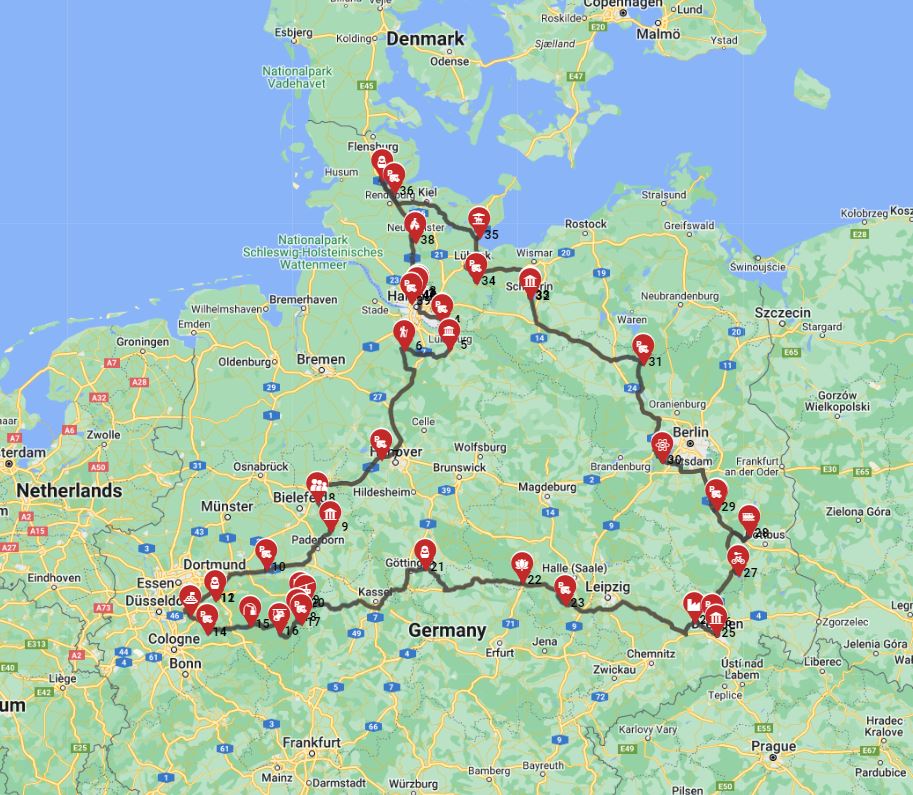
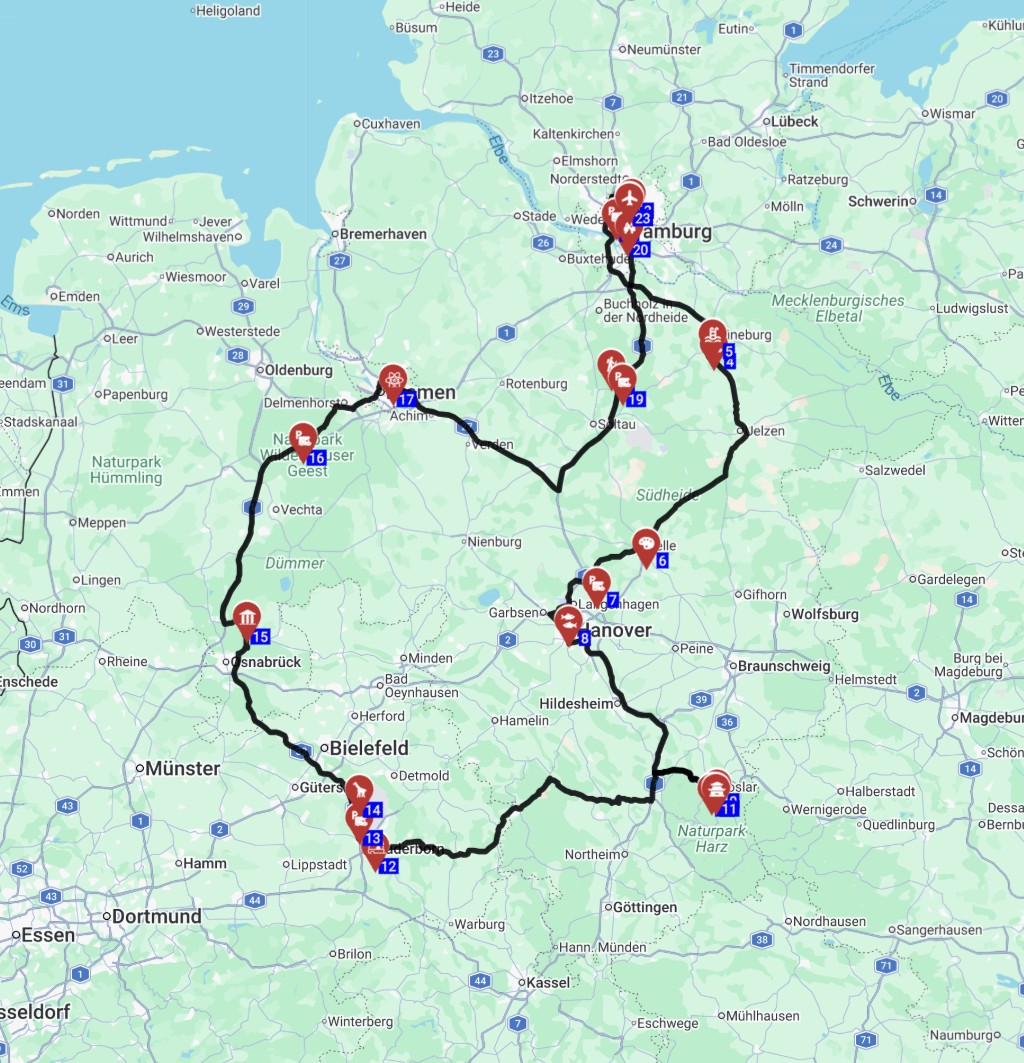
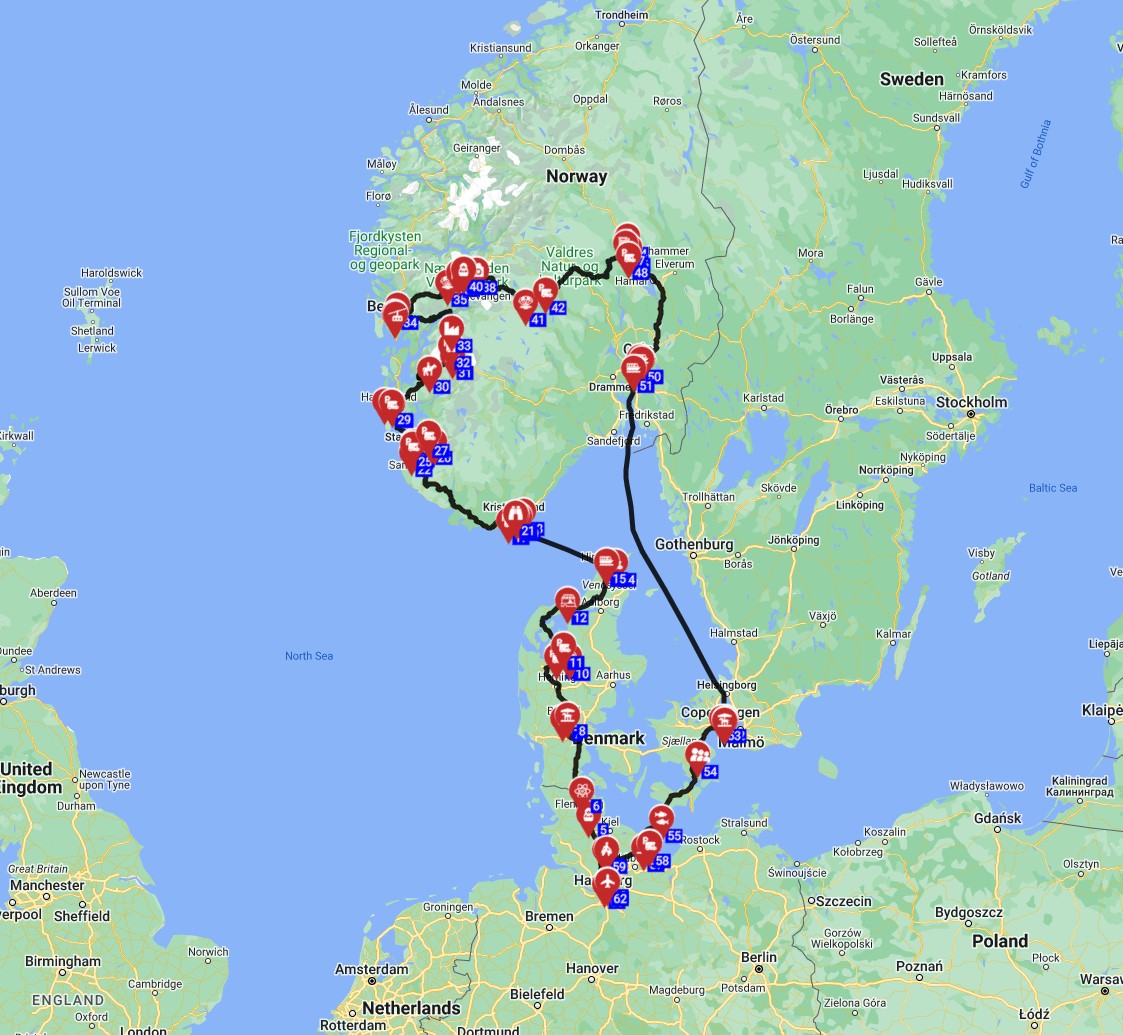
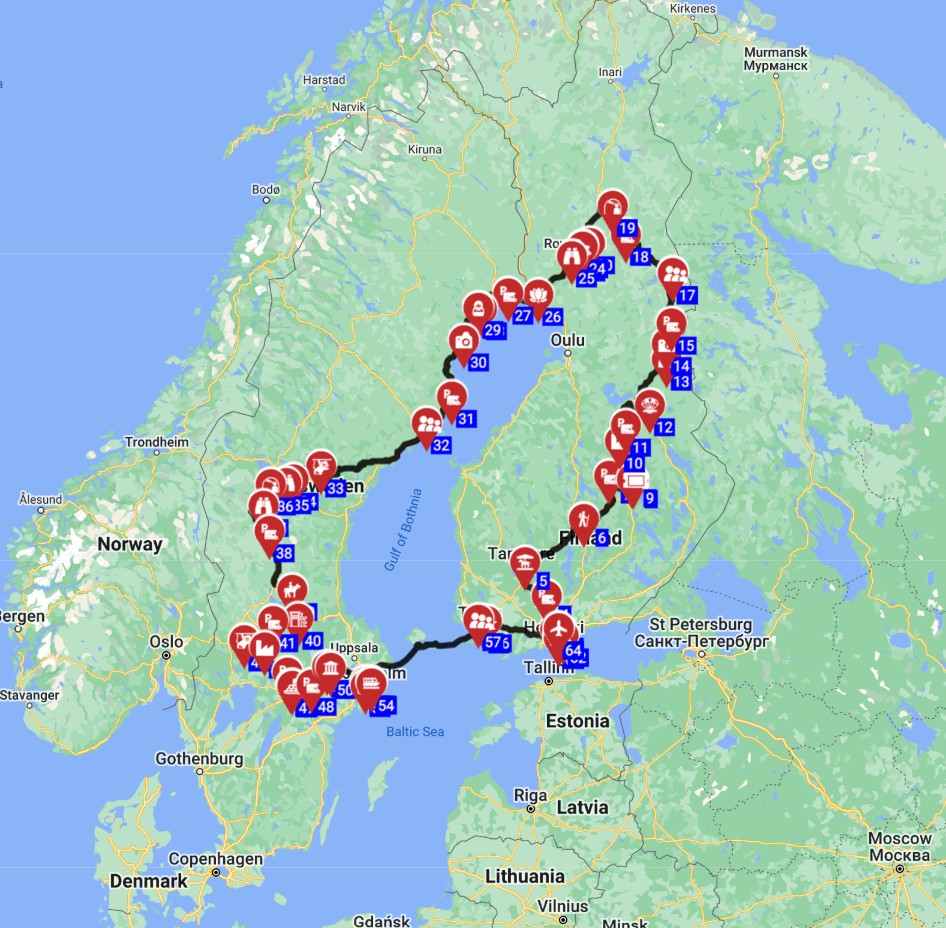
- Lulea Round trip - Timeless Scandinavia: Fjords, Forests, and History: Dive into a comprehensive 15-day, 2,910 km adventure from Luleå, exploring Swedish Lapland and Norway's Lofoten Islands. This meticulously planned route includes highlights like 2 animal shows/wildlife watch experiences, 1 bike rental, 1 canoe/kayak/rafting excursion, a visit to an ancient cave, 2 scenic cruise terminals/sailing opportunities, 1 extreme activity, 1 family activity, 2 hiking areas, 1 historical site, 1 horseback riding session, a look into 1 local industry, 3 museums, 1 stunning natural feature, 1 point of interest, 1 science site, 1 traditional restaurant/fine dining experience, and 2 traditional cultural visits, plus a zoo. It's a fantastic way to discover the region's diverse offerings.
Looking for expert insights from Avi Bandana? Top 5 Adventures - recommendations from Avi Bandana
Avi Bandana, our founder, personally seeks out the most authentic and enriching RV experiences worldwide. His top adventures in Scandinavia often involve combining stunning natural wonders with deep cultural dives. He emphasizes the joy of spontaneous detours and the value of spending enough time in each location to truly absorb its essence. For instance, he highly recommends a multi-day hike in Norway's Jotunheimen National Park after parking your motorhome at a nearby campsite, followed by exploring local fishing villages along the coast and sampling freshly caught seafood. He also suggests spending a week exploring the remote wilderness of Swedish Lapland, embracing the serene solitude and unique Sami culture. "Life is now!" he always says, encouraging travelers to embrace every moment of their rented RV journey.
🎬 Video coming soon
Final Thoughts
A last minute rv rental in Scandinavia offers an incredible opportunity to explore one of the world's most beautiful regions with unmatched flexibility and comfort. From the dramatic fjords of Norway to the serene lakes and forests of Sweden and the charming coastlines of Denmark, a motorhome allows you to immerse yourself fully in the natural and cultural wonders. Embrace the slow travel philosophy – spend a week or more truly feeling each place, connecting with its unique charm, and savoring every moment.
Whether you're a meticulous planner or prefer spontaneous adventures, Bandana Caravan is your trusted partner. With our commitment to full transparency, expert guidance, and dedicated support from pre-booking to post-booking coordination, we make sure your journey is as smooth and enjoyable as the breathtaking Scandinavian landscapes themselves. It's time to stop dreaming and start driving; your unforgettable Nordic adventure awaits!
Discover top destinations, planning tips, all in one place! Find last minute rv Rentals in Scandinavia with Bandana today.