In This Guide
- Can You Drive an RV in Alaska? License & Age Rules
- Road Conditions & Terrain in Alaska
- RV Size Limits, Bridges & Restricted Zones
- Fuel: Diesel vs. Petrol & Cost per 100 km
- Tolls, Vignettes & Border Rules
- Driving Tips for RV Rental Travelers
- Recommended RV Class for Alaska Roads
- Should I Choose a Compact Van Instead of a Large RV in Alaska?
- Can I Park Anywhere? Free & Wild Camping Rules in Alaska
- Can I Drive an RV Into the City Center? Heights, Tunnels & Local Signage
- Do you need a special license to drive an RV in Alaska?
- Do you have to have a special license to drive a 30 ft RV?
- Can I drive my RV to Alaska?
- Can I park my RV anywhere in Alaska?
- What is the 3-3-3 rule for RV living?
- Can you sleep in an RV while driving in the USA?
- Can you turn left on a red light in Alaska?
- How do I transfer my license to Alaska?
- Do I need to register my trailer in Alaska?
- What You Shouldn't Miss
- Why Book with Bandana Caravan
- Final Thoughts
- Frequently Asked Questions
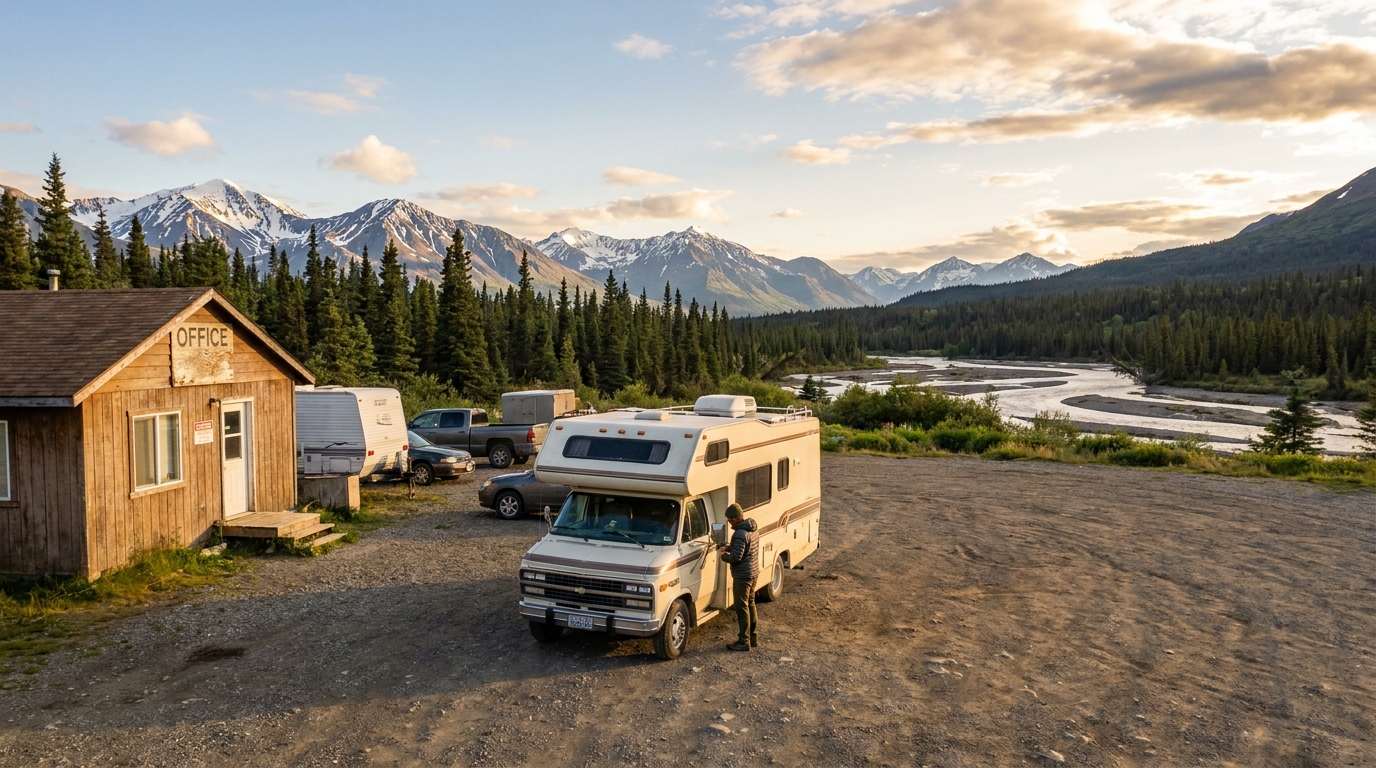
Imagine yourself on the open road, the breathtaking Alaskan wilderness unfolding before you, from towering glaciers to majestic wildlife. Exploring Alaska by rented RV or campervan is an unparalleled adventure, offering the freedom to follow your own path and immerse yourself in nature's grandeur. Whether you're a meticulous planner or a spontaneous traveler, Bandana RV is here to ensure your Alaskan RV experience is seamless and unforgettable. For live availability and current prices, start with our RV Rental Alaska - Complete Guide 2026 guide.
Can You Drive an RV in Alaska? License & Age Rules
Yes, you can absolutely drive an RV in Alaska with a standard car driver's license, as long as the vehicle's Gross Vehicle Weight Rating (GVWR) is under 26,001 pounds and it's not being used commercially. This covers virtually all recreational motorhomes and campervans available for rent, including popular models like a 6-berth "MHC24" with its 7.3 meter length. The minimum age to rent and drive an RV in Alaska is typically 21 years old across most Bandana partner suppliers, with no young driver surcharges and no vehicle class restrictions based on age. Foreign drivers can generally use their valid home country driver's license for up to 90 days, though an International Driving Permit (IDP) is recommended for clarity and ease of translation, particularly for licenses not in English.
RVs exceeding 26,001 pounds GVWR or those equipped with air brakes might require a Commercial Driver's License (CDL) with specific endorsements, but these are rarely encountered with standard rental motorhomes. At Bandana RV, we understand that "God is in the small details," and we make sure these licensing requirements are clear upfront, so there are no surprises when you pick up your chosen Class A, Class B, or Class C motorhome.
Road Conditions & Terrain in Alaska
Alaska's road conditions vary significantly, transitioning from well-maintained paved highways like the iconic Alaska Highway to often-encountered gravel sections, especially on more remote routes and scenic byways. Expect diverse terrain including mountainous passes, coastal routes, and dense forests, which can influence driving speed and require careful maneuvering. The state is renowned for its stunning, often remote, landscapes, encouraging a slower, scenic driving pace (we recommend an average of 100-150 km per day) to fully appreciate the views and navigate potential hazards, like unexpected potholes or loose gravel. Wildlife encounters are common, especially on rural roads, necessitating vigilance and reduced speeds, particularly at dawn and dusk. By taking your time, you'll not only enhance safety but also connect more deeply with Alaska's incredible nature.
RV Size Limits, Bridges & Restricted Zones
While there are no unusually restrictive statewide RV size limits in Alaska compared to the rest of the US, drivers should always be mindful of their vehicle dimensions for specific routes, ferry services, and campgrounds. Most bridges in Alaska comfortably accommodate standard RV sizes; however, drivers should always observe posted height and weight limits on smaller, more remote bridges or overpasses. Some national parks or conservation areas may have specific vehicle length restrictions on certain scenic drives or campgrounds; for example, some interior park roads might advise against vehicles over 25 feet. Always check park regulations in advance to avoid any unexpected detours.
Environmental zones are less common in Alaska's vast wilderness areas than in other parts of the world, but urban centers may have local parking restrictions or designated zones. Drive slowly and carefully, and you can drive almost anywhere without issues. No need to stress - just use common sense and pay attention.
Fuel: Diesel vs. Petrol & Cost per 100 km
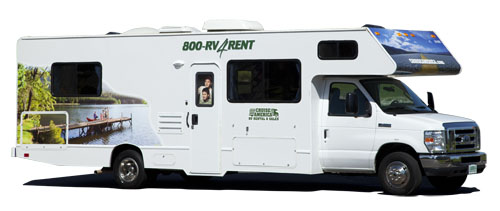
Both diesel and petrol (gasoline) are widely available in Alaska, though diesel might be less common in very remote areas, making planning fuel stops crucial for RV travelers. Fuel prices in Alaska can be significantly higher than in the lower 48 states, particularly in remote regions, so budgeting for fuel and utilizing any available fuel-card perks is advisable. Always keep your fuel tank topped up when traveling between major towns, as distances between service stations can be extensive, sometimes over 100 miles. For reference, Bandana's global fleet averages for fuel consumption include Class SI (Semi-integrated) RVs at 10–11 Liters/100 km, Class C (Alcove) at 10–12 Liters/100 km (for example, a "cruise america rv rental example Explorer" with a 75-liter fuel tank), and Class B (Camper Van) at 8-10 Liters/100 km. Understanding these consumption rates will help you plan your stops and budget effectively. For detailed route plans that include itemized expense tracking, we recommend exploring RV PLANET routes. On the routes offered through RV PLANET routes, you can itemize and track every expense along the way for easy budgeting.
When cooking meals in your rented motorhome, remember that stove fuel (propane) is a separate cost from vehicle fuel. Preparing delicious meals in your RV kitchen adds to the adventure, and you can find inspiration in our RV-friendly recipes playlist.
Tolls, Vignettes & Border Rules
Alaska does not have major toll roads or require vignettes for general road use, unlike some European countries; however, some state parks or private attractions may have entrance fees. For RV travel to Alaska, border rules with Canada are critical, as the primary overland route, the Alaska Highway, traverses through Canadian provinces. All occupants of a rented motorhome must have valid passports, and ensure the RV's registration and insurance are current for both the U.S. and Canada. Be prepared for potential customs inspections at the Canadian border and know regulations regarding bringing specific items (e.g., firearms, alcohol, agricultural products) into Canada and then back into Alaska. Bandana RV specializes in international travel, offering coverage across 50+ countries with local expertise to help you navigate these details before you even begin your journey.
Driving Tips for RV Rental Travelers
Driving a rented RV through Alaska requires a mindful approach, prioritizing safety and enjoyment. Prioritize wildlife awareness: Drive defensively and be especially vigilant for moose, bears, and caribou on roadsides, particularly at dawn, dusk, and night. These animals can be massive and unpredictable. Plan your route and fuel stops carefully: Distances between towns can be vast, so carry extra fuel if venturing into very remote areas and ensure you have an updated map and a communication device (a satellite phone for deep wilderness areas is a smart precaution). Pack for all weather conditions: Alaskan weather is notoriously unpredictable; be prepared for sudden changes, including rain, snow (even in summer at higher elevations), and strong winds, and ensure your RV rental is properly equipped for varying temperatures. Practice slow and steady driving: Alaska's scenic beauty encourages a relaxed pace; avoid rushing, especially on gravel roads or winding mountain passes, to ensure safety and fully enjoy the journey. Consider an emergency kit: Beyond basic vehicle tools, an Alaskan RV emergency kit should include bear spray, a robust first-aid kit, non-perishable food, water, and extra layers of clothing, especially for remote area travel. Remember, Bandana RV provides 24/7 support leading up to your trip, helping you prepare for these unique challenges with confidence.
Recommended RV Class for Alaska Roads
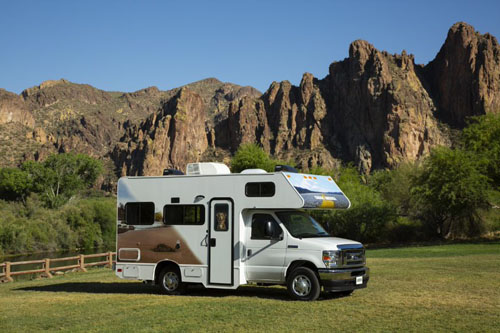
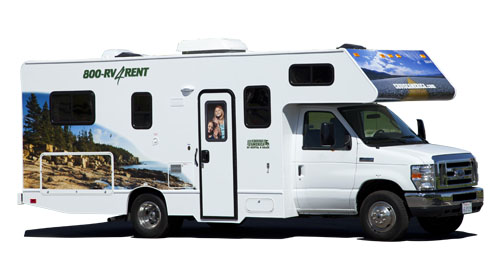
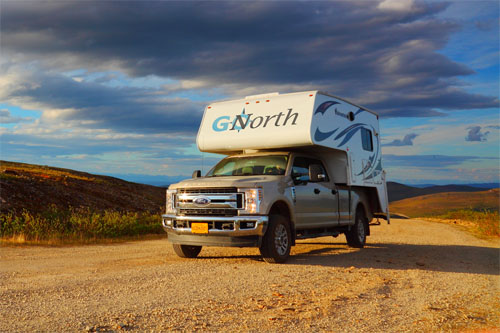
For families or groups seeking a balance of comfort and maneuverability, a Class C (Alcove) RV is highly recommended for Alaska, offering ample living space (averaging 7.5 meters in length, like an "alaska rv rental example Category B" which is ideal for a family of 2+2) and sleeping capacity for around 4-5 adults. These motorhomes often come with features like front air conditioning, a shower, and a toilet for a comfortable experience. Couples or solo travelers prioritizing agility and ease of parking might prefer a Class B (Camper Van), which, at an average length of 5.8 meters, offers excellent fuel efficiency and can navigate tighter spaces more easily. For more rugged adventures or off-the-beaten-path travel into areas like the Denali Highway, a Class TC (Truck Camper) provides robust construction and often better ground clearance, though they typically offer less interior space. While larger Class A (Integrated) and Class SI (Semi-integrated) RVs provide luxurious amenities and spacious interiors, their greater length (averaging 7-7.5 meters) might require more cautious driving on narrow or winding Alaskan roads. Bandana RV, as true RV specialists, helps you compare final prices across 50+ leading RV suppliers worldwide, including trusted partners like El Monte and Cruise America, ensuring you find the perfect rented motorhome or campervan for your Alaskan adventure.
Should I Choose a Compact Van Instead of a Large RV in Alaska?
Choosing between a compact van (Class B Camper Van) and a large RV (Class C, Class A, or Semi-integrated) in Alaska primarily depends on your group size, desired amenities, and preferred travel style, as most Alaskan roads can accommodate various RV sizes. A compact van offers superior maneuverability, better fuel economy (8-10 Liters/100 km for models like the "V3"), and easier parking in towns or smaller campgrounds, which can be advantageous for couples or solo travelers. These are great for zipping around cities like Fairbanks or navigating tighter spots. Larger RVs provide significantly more interior space, dedicated sleeping areas, larger kitchens (ideal for preparing an RV-friendly meal), and often more storage, enhancing comfort for families or longer trips. While a compact van might seem better for narrow passes, Alaska's main tourist routes are generally well-suited for larger RVs; the trade-off usually favors the comfort and living space of a larger vehicle for extended stays in the wilderness. Remember, you're on vacation; travel slowly, enjoy the journey, and no matter the size of your rented RV, just use common sense and pay attention. Drive slowly and carefully, and you can drive almost anywhere without issues. No need to stress.
Can I Park Anywhere? Free & Wild Camping Rules in Alaska
No, you cannot park your rented RV just anywhere in Alaska; while the state offers abundant opportunities for dispersed camping, strict rules apply to private land, municipal areas, and designated public lands. Dispersed camping (often called boondocking) is generally permitted on lands managed by the Bureau of Land Management (BLM) and the U.S. Forest Service (USFS) in Alaska, typically for up to 14 days in one location, provided you follow Leave No Trace principles. Overnight parking on roadsides or in city limits is often prohibited or restricted by local ordinances; always look for 'No Overnight Parking' signs and verify local rules. National Parks, State Parks, and many recreation areas require you to camp in designated campgrounds, often with fees and reservations, so always check specific park regulations. Rules vary significantly by region and land management agency — always check local regulations and follow local law before parking overnight to avoid fines or unintended trespassing. For finding campsites and campgrounds during your trip, we recommend using RV PLANET (rvplan.net) — a great resource for locating available spots along your route.
Can I Drive an RV Into the City Center? Heights, Tunnels & Local Signage
Yes, you can generally drive a rented RV into most Alaskan city centers like Anchorage or Fairbanks, as they are equipped to handle larger vehicles, but always pay close attention to local signage. Be alert for posted height restrictions for tunnels, underpasses, or parking garages, as well as weight limits on older bridges within city limits. Most Alaskan cities do not have complex environmental zones, but drivers should still be mindful of local parking regulations, one-way streets, and areas designated for residents-only parking. Navigation within city centers typically requires awareness of your RV's dimensions, especially when turning or parking, to avoid obstacles and ensure safe passage. Drive slowly and carefully, and you can drive almost anywhere without issues. No need to stress - just use common sense and pay attention. Your rented motorhome provides a comfortable base even when exploring urban attractions, allowing you to venture out easily.
Do you need a special license to drive an RV in Alaska?
No, for the vast majority of RVs, including rental units from Bandana's partners like El Monte and Apollo, a standard Class D driver's license is sufficient in Alaska, aligning with general U.S. requirements. A special license is only required if the RV's Gross Vehicle Weight Rating (GVWR) exceeds 26,001 pounds or if it is equipped with air brakes and not for personal use, which is rare for typical rental motorhomes. This means that individuals holding a valid driver's license from any U.S. state or, with appropriate documentation, from a foreign country, can legally operate most RVs in Alaska without additional permits. The minimum rental age in Alaska is 21 years, and there are no young driver surcharges for any vehicle class.
Do you have to have a special license to drive a 30 ft RV?
No, in Alaska and most U.S. states, a special license is typically not required to drive a rented RV up to 30 feet long, provided it is being used for personal recreation and its Gross Vehicle Weight Rating (GVWR) remains below 26,001 pounds. The length of a motorhome, such as a 30-foot "Denali Searcher 30 - Gold" Class C with sleeping capacity for 8, does not automatically trigger special licensing requirements; rather, it is the vehicle's weight rating that determines if a Commercial Driver's License (CDL) is needed. Most recreational RVs, including those 30 feet in length, are designed to fall within the standard driver's license weight limits, allowing for easy operation by licensed drivers. You can comfortably explore Alaska with such a rented vehicle.
Can I drive my RV to Alaska?
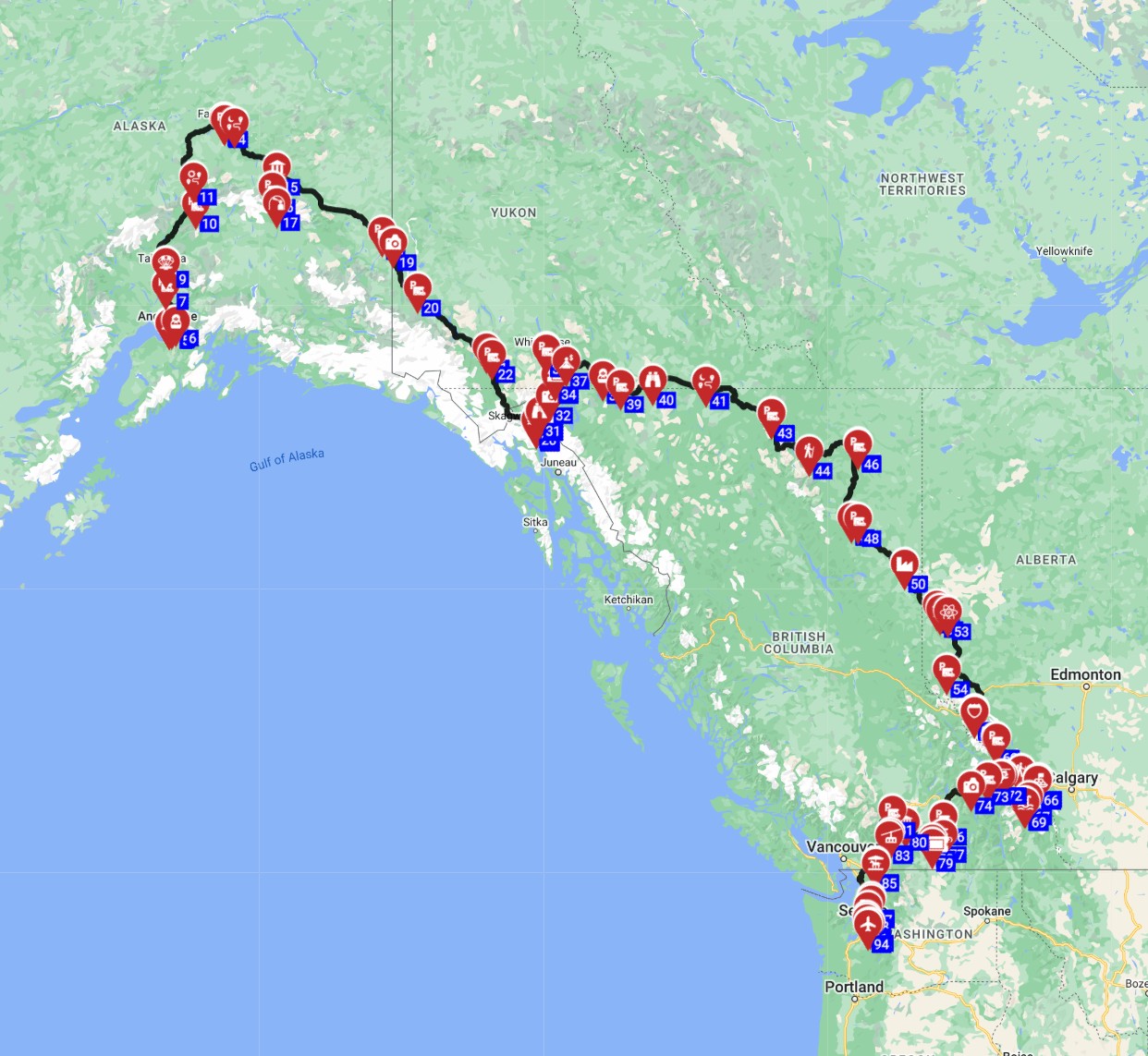
Yes, you can drive your RV to Alaska, with the most common and established route being the Alaska Highway (also known as the Alcan Highway) which traverses through Canada. This epic journey requires careful planning, including ensuring all necessary vehicle documentation, insurance, and personal identification (passports for all occupants) are current for both U.S. and Canadian border crossings. The drive itself is a significant adventure, involving long stretches of road that can vary in condition, necessitating preparedness for remote areas, fluctuating fuel prices, and potential wildlife encounters. Many travelers choose to combine an Alaska trip with a broader North American adventure, often using our "RV Rental USA - Complete Guide 2026" for planning.
Can I park my RV anywhere in Alaska?
No, you cannot park your rented RV just anywhere in Alaska; while vast public lands offer dispersed camping opportunities, specific local regulations, private property restrictions, and designated campground rules must be observed. Dispersed camping on Bureau of Land Management (BLM) and U.S. Forest Service (USFS) lands is generally allowed, but rules regarding stay limits (e.g., 14 days in one spot) and Leave No Trace principles apply. In cities and towns, overnight parking for RVs is typically restricted to designated campgrounds, RV parks, or specific parking lots, and is generally prohibited on public streets or private business lots without permission. Always research specific areas and check with local authorities or land management agencies to understand current parking and camping regulations before settling down for the night. Our partners at RV PLANET (rvplan.net) offer extensive route plans and camping resources to help you find suitable spots for your journey.
What is the 3-3-3 rule for RV living?
The '3-3-3 rule' for RV living is a popular guideline suggesting travelers aim to drive no more than 300 miles (approximately 480 km) a day, arrive at their destination by 3 PM, and stay for at least 3 nights. This rule is designed to promote a more relaxed and enjoyable RV travel experience by preventing burnout from excessive driving, allowing ample time for setup and relaxation, and encouraging deeper exploration of each location. Adopting the 3-3-3 rule in Alaska can be particularly beneficial due to the state's vast distances and numerous scenic attractions, ensuring a less hurried and more immersive journey through its diverse landscapes. We always recommend slow travel, aiming for 100-150 km per day on average, so you truly take time to feel the place, connect to the culture, the food, and the scenery.
Can you sleep in an RV while driving in the USA?
No, it is illegal and highly unsafe for passengers to sleep in the living area of an RV while it is in motion in the USA, including Alaska, as all occupants must be properly seated and restrained with seatbelts. Federal and state laws require all passengers to be secured in designated seats with functioning seatbelts whenever the vehicle is in operation, similar to any other passenger vehicle. Sleeping or moving freely in the back of a moving RV significantly increases the risk of severe injury or fatality in the event of a sudden stop, collision, or sharp turn. Safety is paramount, and ensuring everyone is buckled up is a non-negotiable aspect of responsible rented RV travel.
Can you turn left on a red light in Alaska?
No, in Alaska, similar to most U.S. states, turning left on a red light is generally prohibited unless turning from a one-way street onto another one-way street after a complete stop and when safe to do so. The standard rule across Alaska's roadways is that a left turn on a red light is illegal, with the rare exception being from a one-way street onto another one-way street after coming to a full stop and yielding to all traffic and pedestrians. Always observe traffic signals carefully and only proceed with a left turn on a green light or a designated green arrow, ensuring full compliance with Alaskan traffic laws. This is a crucial detail for drivers not accustomed to U.S. road rules, especially when navigating Anchorage or Fairbanks in a rented motorhome.
How do I transfer my license to Alaska?
To transfer your driver's license to Alaska, you must generally visit an Alaska Division of Motor Vehicles (DMV) office, typically within 90 days of becoming a resident, provide proof of identity, residency, and Social Security number, and surrender your out-of-state license. Applicants will usually need to pass a vision test and may be required to pass a written knowledge test if their out-of-state license has expired or they do not meet specific reciprocity agreements. This process is relevant for individuals establishing permanent residency in Alaska and is distinct from the requirements for short-term RV rental tourists, who generally only need a valid standard driver's license from their home state or country, along with an optional IDP for non-English licenses.
Do I need to register my trailer in Alaska?
Yes, if your trailer is primarily based in Alaska and meets specific criteria, such as a Gross Vehicle Weight Rating (GVWR) over 2,500 pounds or certain commercial uses, it generally needs to be registered with the Alaska Division of Motor Vehicles (DMV). Utility trailers under 2,500 pounds GVWR are exempt from registration, but all other trailers, including travel trailers and boat trailers exceeding this weight, require registration. Proper registration ensures legal compliance, and failure to register can result in fines, particularly if you are an Alaska resident. As Bandana RV focuses exclusively on motorhome and campervan rentals, this information pertains to personal trailer ownership, not vehicles rented through our platform.
🎬 Video coming soon
What You Shouldn't Miss
Alaska is a land of unparalleled beauty, and with your rented motorhome, you have a mobile headquarters to venture out to its national parks, remote trails, and charming towns. Here are some of Avi Bandana's top recommendations for your Alaskan RV adventure:
- Denali National Park: Drive the 92-mile Denali Park Road (restricted beyond mile 15 for private vehicles) and witness North America's tallest peak, Denali. Look for grizzly bears, moose, caribou, and Dall sheep. Reservations for campgrounds fill up, but there are first-come-first-serve options.
- Kenai Fjords National Park: Explore the stunning coastal landscapes near Seward. Take a glacier cruise to see tidewater glaciers calving into the ocean and spot marine wildlife like whales and sea otters. The Exit Glacier area offers accessible hiking trails.
- Anchorage: Start or end your trip in Alaska's largest city. Enjoy urban amenities, museums like the Anchorage Museum, and access to state parks.
- Fairbanks: Head north to the "Golden Heart City" for a chance to see the Northern Lights (seasonal), visit the University of Alaska Museum of the North, and explore local history.
- Seward Highway (Alaska Route 1): This incredibly scenic 200-kilometer drive between Anchorage and Seward offers breathtaking views of mountains, Turnagain Arm, and wildlife. Take your time, pull over at designated viewpoints, and soak in the scenery.
- Matanuska Glacier: Just a couple of hours northeast of Anchorage, this is Alaska's largest glacier accessible by road. You can even join guided tours to walk on the ice!
Looking for expert insights from Avi Bandana? Top 5 Adventures – recommendations from Avi Bandana.
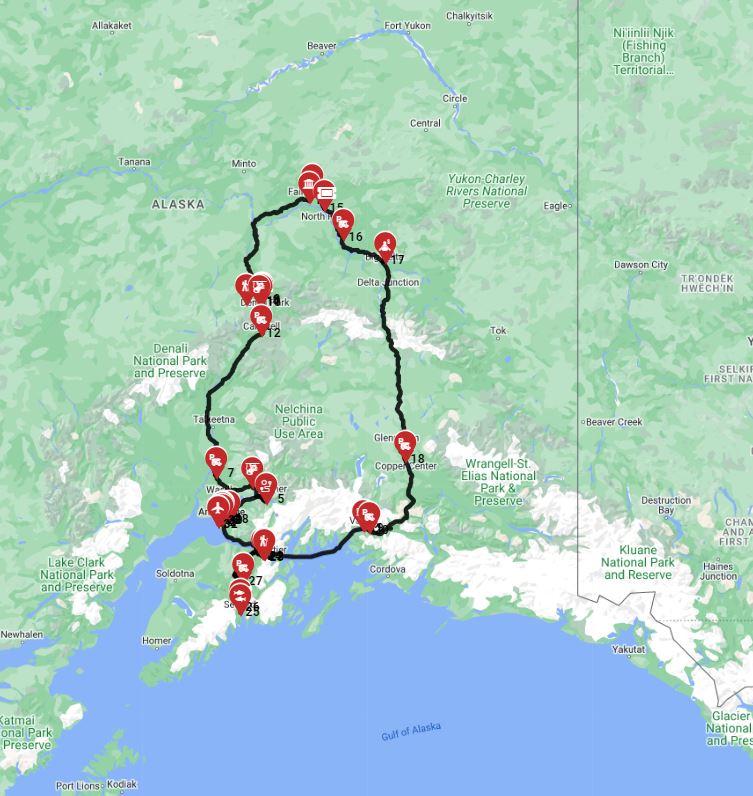
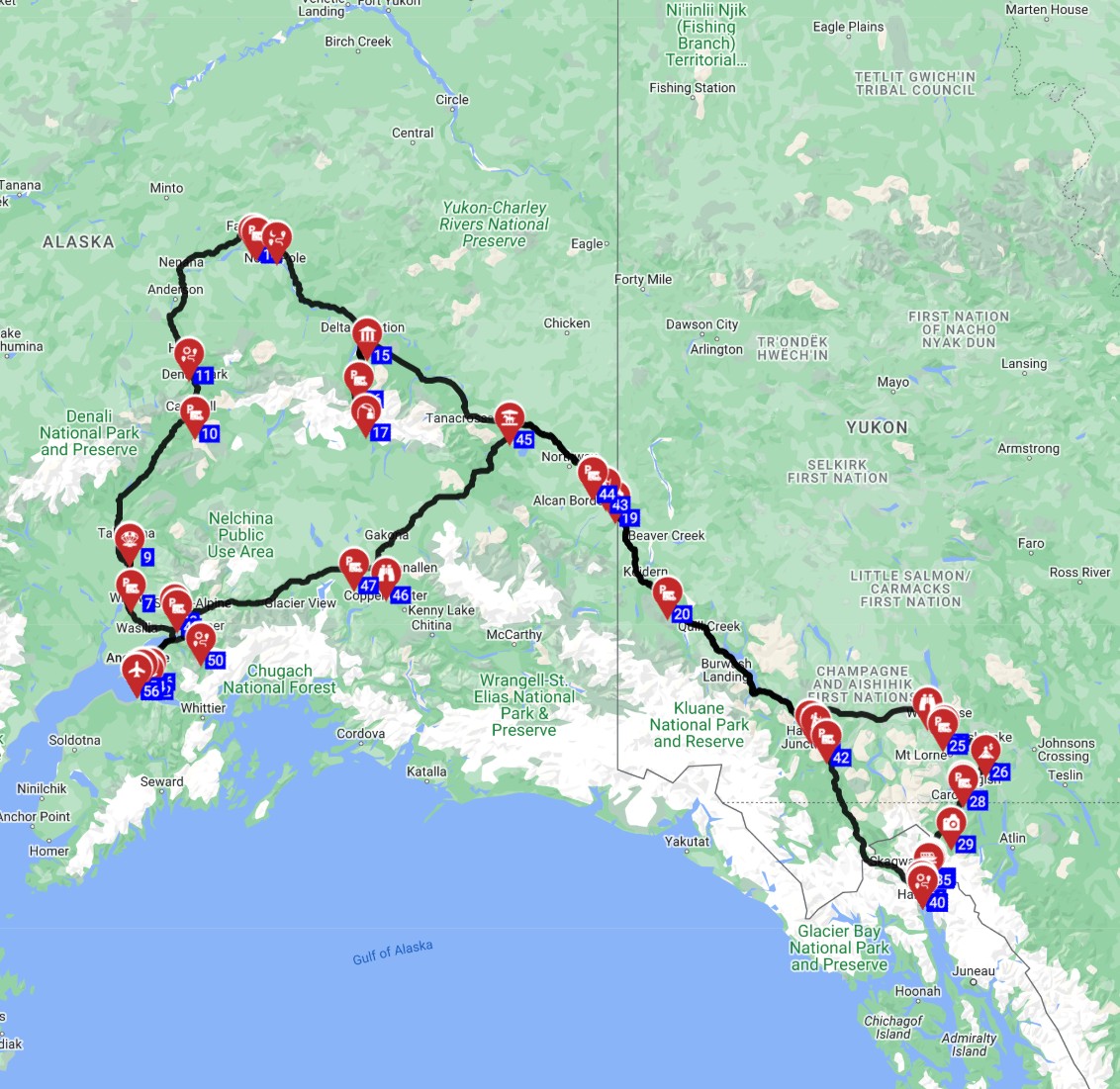
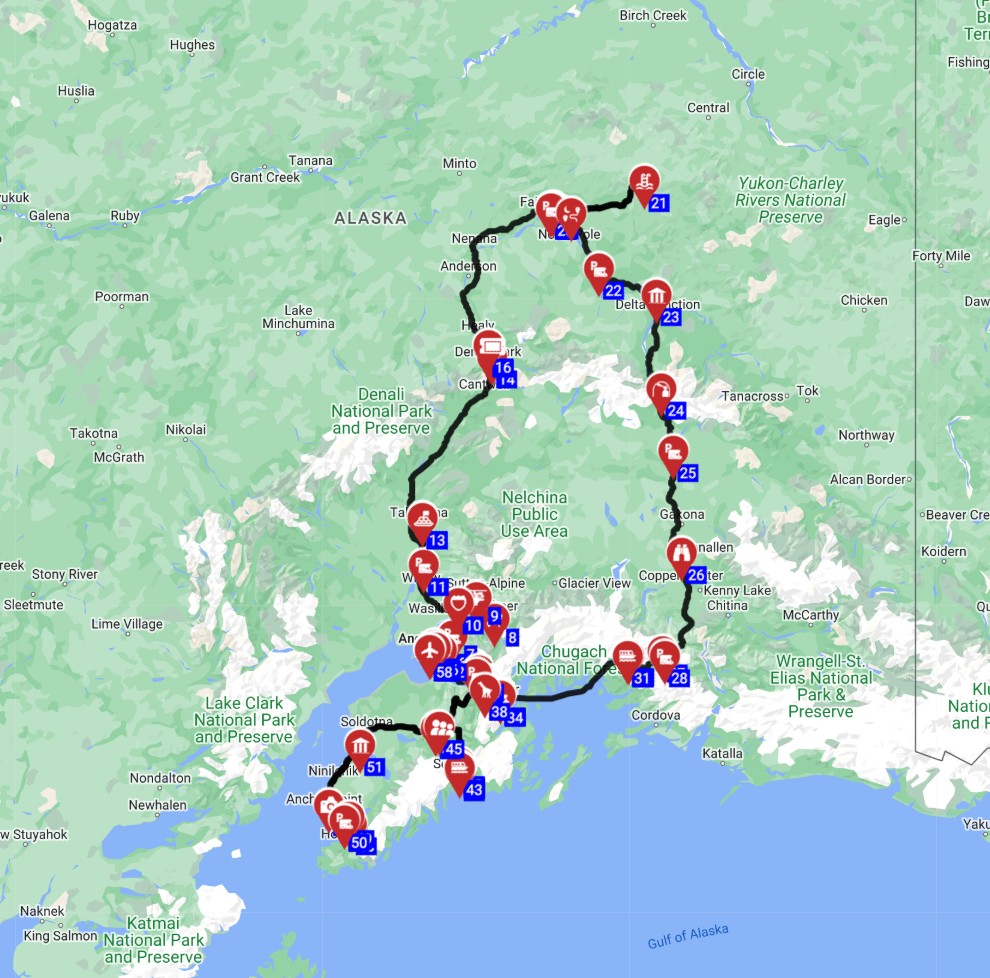
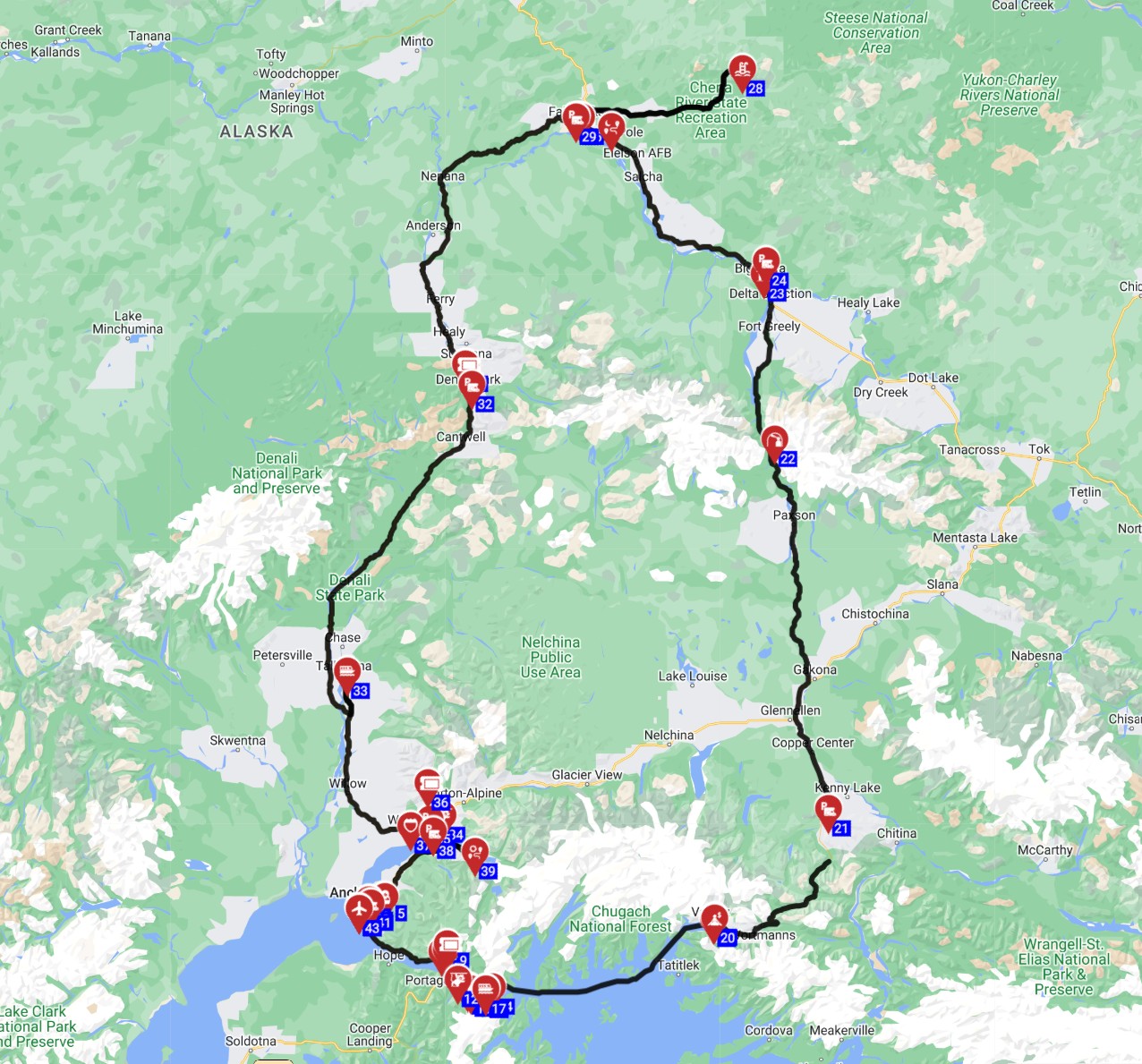
For those who love a pre-planned adventure, consider these professionally curated route plans:
Final Thoughts
Embarking on a rented RV journey through Alaska is more than just a vacation; it's an opportunity to create lasting memories amidst some of the world's most spectacular natural beauty. From navigating diverse terrains to encountering incredible wildlife, every day offers a new adventure. With the freedom of a motorhome or campervan, you can truly embrace slow travel, savoring each moment and connecting deeply with the Alaskan spirit.
At Bandana RV, we're passionate about helping you discover this incredible way to travel. Our commitment to full transparency, expert support, and a wide selection of quality vehicles means you can plan your trip with confidence. So, take the leap, imagine the possibilities, and prepare for an unforgettable Alaskan road trip.
Discover top destinations and planning tips, all in one place! Find the perfect motorhome for your adventure.
In This Guide
- Can You Drive an RV in Alaska? License & Age Rules
- Road Conditions & Terrain in Alaska
- RV Size Limits, Bridges & Restricted Zones
- Fuel: Diesel vs. Petrol & Cost per 100 km
- Tolls, Vignettes & Border Rules
- Driving Tips for RV Rental Travelers
- Recommended RV Class for Alaska Roads
- Should I Choose a Compact Van Instead of a Large RV in Alaska?
- Can I Park Anywhere? Free & Wild Camping Rules in Alaska
- Can I Drive an RV Into the City Center? Heights, Tunnels & Local Signage
- Do you need a special license to drive an RV in Alaska?
- Do you have to have a special license to drive a 30 ft RV?
- Can I drive my RV to Alaska?
- Can I park my RV anywhere in Alaska?
- What is the 3-3-3 rule for RV living?
- Can you sleep in an RV while driving in the USA?
- Can you turn left on a red light in Alaska?
- How do I transfer my license to Alaska?
- Do I need to register my trailer in Alaska?
- What You Shouldn't Miss
- Why Book with Bandana Caravan
- Final Thoughts
- Frequently Asked Questions
Imagine yourself on the open road, the breathtaking Alaskan wilderness unfolding before you, from towering glaciers to majestic wildlife. Exploring Alaska by rented RV or campervan is an unparalleled adventure, offering the freedom to follow your own path and immerse yourself in nature's grandeur. Whether you're a meticulous planner or a spontaneous traveler, Bandana RV is here to ensure your Alaskan RV experience is seamless and unforgettable. For live availability and current prices, start with our RV Rental Alaska - Complete Guide 2026 guide.
Can You Drive an RV in Alaska? License & Age Rules
Yes, you can absolutely drive an RV in Alaska with a standard car driver's license, as long as the vehicle's Gross Vehicle Weight Rating (GVWR) is under 26,001 pounds and it's not being used commercially. This covers virtually all recreational motorhomes and campervans available for rent, including popular models like a 6-berth "MHC24" with its 7.3 meter length. The minimum age to rent and drive an RV in Alaska is typically 21 years old across most Bandana partner suppliers, with no young driver surcharges and no vehicle class restrictions based on age. Foreign drivers can generally use their valid home country driver's license for up to 90 days, though an International Driving Permit (IDP) is recommended for clarity and ease of translation, particularly for licenses not in English.
RVs exceeding 26,001 pounds GVWR or those equipped with air brakes might require a Commercial Driver's License (CDL) with specific endorsements, but these are rarely encountered with standard rental motorhomes. At Bandana RV, we understand that "God is in the small details," and we make sure these licensing requirements are clear upfront, so there are no surprises when you pick up your chosen Class A, Class B, or Class C motorhome.
Road Conditions & Terrain in Alaska
Alaska's road conditions vary significantly, transitioning from well-maintained paved highways like the iconic Alaska Highway to often-encountered gravel sections, especially on more remote routes and scenic byways. Expect diverse terrain including mountainous passes, coastal routes, and dense forests, which can influence driving speed and require careful maneuvering. The state is renowned for its stunning, often remote, landscapes, encouraging a slower, scenic driving pace (we recommend an average of 100-150 km per day) to fully appreciate the views and navigate potential hazards, like unexpected potholes or loose gravel. Wildlife encounters are common, especially on rural roads, necessitating vigilance and reduced speeds, particularly at dawn and dusk. By taking your time, you'll not only enhance safety but also connect more deeply with Alaska's incredible nature.
RV Size Limits, Bridges & Restricted Zones
While there are no unusually restrictive statewide RV size limits in Alaska compared to the rest of the US, drivers should always be mindful of their vehicle dimensions for specific routes, ferry services, and campgrounds. Most bridges in Alaska comfortably accommodate standard RV sizes; however, drivers should always observe posted height and weight limits on smaller, more remote bridges or overpasses. Some national parks or conservation areas may have specific vehicle length restrictions on certain scenic drives or campgrounds; for example, some interior park roads might advise against vehicles over 25 feet. Always check park regulations in advance to avoid any unexpected detours.
Environmental zones are less common in Alaska's vast wilderness areas than in other parts of the world, but urban centers may have local parking restrictions or designated zones. Drive slowly and carefully, and you can drive almost anywhere without issues. No need to stress - just use common sense and pay attention.
Fuel: Diesel vs. Petrol & Cost per 100 km
Both diesel and petrol (gasoline) are widely available in Alaska, though diesel might be less common in very remote areas, making planning fuel stops crucial for RV travelers. Fuel prices in Alaska can be significantly higher than in the lower 48 states, particularly in remote regions, so budgeting for fuel and utilizing any available fuel-card perks is advisable. Always keep your fuel tank topped up when traveling between major towns, as distances between service stations can be extensive, sometimes over 100 miles. For reference, Bandana's global fleet averages for fuel consumption include Class SI (Semi-integrated) RVs at 10–11 Liters/100 km, Class C (Alcove) at 10–12 Liters/100 km (for example, a "cruise america rv rental example Explorer" with a 75-liter fuel tank), and Class B (Camper Van) at 8-10 Liters/100 km. Understanding these consumption rates will help you plan your stops and budget effectively. For detailed route plans that include itemized expense tracking, we recommend exploring RV PLANET routes.
When cooking meals in your rented motorhome, remember that stove fuel (propane) is a separate cost from vehicle fuel. Preparing delicious meals in your RV kitchen adds to the adventure, and you can find inspiration in our RV-friendly recipes playlist.
Tolls, Vignettes & Border Rules
Alaska does not have major toll roads or require vignettes for general road use, unlike some European countries; however, some state parks or private attractions may have entrance fees. For RV travel to Alaska, border rules with Canada are critical, as the primary overland route, the Alaska Highway, traverses through Canadian provinces. All occupants of a rented motorhome must have valid passports, and ensure the RV's registration and insurance are current for both the U.S. and Canada. Be prepared for potential customs inspections at the Canadian border and know regulations regarding bringing specific items (e.g., firearms, alcohol, agricultural products) into Canada and then back into Alaska. Bandana RV specializes in international travel, offering coverage across 50+ countries with local expertise and support to help you navigate these details before you even begin your journey.
Driving Tips for RV Rental Travelers
Driving a rented RV through Alaska requires a mindful approach, prioritizing safety and enjoyment. Prioritize wildlife awareness: Drive defensively and be especially vigilant for moose, bears, and caribou on roadsides, particularly at dawn, dusk, and night. These animals can be massive and unpredictable. Plan your route and fuel stops carefully: Distances between towns can be vast, so carry extra fuel if venturing into very remote areas and ensure you have an updated map and a communication device (a satellite phone for deep wilderness areas is a smart precaution). Pack for all weather conditions: Alaskan weather is notoriously unpredictable; be prepared for sudden changes, including rain, snow (even in summer at higher elevations), and strong winds, and ensure your RV rental is properly equipped for varying temperatures. Practice slow and steady driving: Alaska's scenic beauty encourages a relaxed pace; avoid rushing, especially on gravel roads or winding mountain passes, to ensure safety and fully enjoy the journey. Consider an emergency kit: Beyond basic vehicle tools, an Alaskan RV emergency kit should include bear spray, a robust first-aid kit, non-perishable food, water, and extra layers of clothing, especially for remote area travel. Remember, Bandana RV provides 24/7 support leading up to your trip, helping you prepare for these unique challenges with confidence.
Recommended RV Class for Alaska Roads
For families or groups seeking a balance of comfort and maneuverability, a Class C (Alcove) RV is highly recommended for Alaska, offering ample living space (averaging 7.5 meters in length, like an "alaska rv rental example Category B" which is ideal for a family of 2+2) and sleeping capacity for around 4-5 adults. These motorhomes often come with features like front air conditioning, a shower, and a toilet for a comfortable experience. Couples or solo travelers prioritizing agility and ease of parking might prefer a Class B (Camper Van), which, at an average length of 5.8 meters, offers excellent fuel efficiency and can navigate tighter spaces more easily. For more rugged adventures or off-the-beaten-path travel into areas like the Denali Highway, a Class TC (Truck Camper) provides robust construction and often better ground clearance, though they typically offer less interior space. While larger Class A (Integrated) and Class SI (Semi-integrated) RVs provide luxurious amenities and spacious interiors, their greater length (averaging 7-7.5 meters) might require more cautious driving on narrow or winding Alaskan roads. Bandana RV, as true RV specialists, helps you compare final prices across 50+ leading RV suppliers worldwide, including trusted partners like El Monte and Cruise America, ensuring you find the perfect rented motorhome or campervan for your Alaskan adventure.
Should I Choose a Compact Van Instead of a Large RV in Alaska?
Choosing between a compact van (Class B Camper Van) and a large RV (Class C, Class A, or Semi-integrated) in Alaska primarily depends on your group size, desired amenities, and preferred travel style, as most Alaskan roads can accommodate various RV sizes. A compact van offers superior maneuverability, better fuel economy (8-10 Liters/100 km for models like the "V3"), and easier parking in towns or smaller campgrounds, which can be advantageous for couples or solo travelers. These are great for zipping around cities like Fairbanks or navigating tighter spots. Larger RVs provide significantly more interior space, dedicated sleeping areas, larger kitchens (ideal for preparing an RV-friendly meal), and often more storage, enhancing comfort for families or longer trips. While a compact van might seem better for narrow passes, Alaska's main tourist routes are generally well-suited for larger RVs; the trade-off usually favors the comfort and living space of a larger vehicle for extended stays in the wilderness. Remember, you're on vacation; travel slowly, enjoy the journey, and no matter the size of your rented RV, just use common sense and pay attention. Drive slowly and carefully, and you can drive almost anywhere without issues. No need to stress.
Can I Park Anywhere? Free & Wild Camping Rules in Alaska
No, you cannot park your rented RV just anywhere in Alaska; while the state offers abundant opportunities for dispersed camping, strict rules apply to private land, municipal areas, and designated public lands. Dispersed camping (often called boondocking) is generally permitted on lands managed by the Bureau of Land Management (BLM) and the U.S. Forest Service (USFS) in Alaska, typically for up to 14 days in one location, provided you follow Leave No Trace principles. Overnight parking on roadsides or in city limits is often prohibited or restricted by local ordinances; always look for 'No Overnight Parking' signs and verify local rules. National Parks, State Parks, and many recreation areas require you to camp in designated campgrounds, often with fees and reservations, so always check specific park regulations. Rules vary significantly by region and land management agency — always check local regulations and follow local law before parking overnight to avoid fines or unintended trespassing. For finding campsites and campgrounds during your trip, we recommend using RV PLANET (rvplan.net) — a great resource for locating available spots along your route.
Can I Drive an RV Into the City Center? Heights, Tunnels & Local Signage
Yes, you can generally drive a rented RV into most Alaskan city centers like Anchorage or Fairbanks, as they are equipped to handle larger vehicles, but always pay close attention to local signage. Be alert for posted height restrictions for tunnels, underpasses, or parking garages, as well as weight limits on older bridges within city limits. Most Alaskan cities do not have complex environmental zones, but drivers should still be mindful of local parking regulations, one-way streets, and areas designated for residents-only parking. Navigation within city centers typically requires awareness of your RV's dimensions, especially when turning or parking, to avoid obstacles and ensure safe passage. Drive slowly and carefully, and you can drive almost anywhere without issues. No need to stress - just use common sense and pay attention. Your rented motorhome provides a comfortable base even when exploring urban attractions, allowing you to venture out easily.
Do you need a special license to drive an RV in Alaska?
No, for the vast majority of RVs, including rental units from Bandana's partners like El Monte and Apollo, a standard Class D driver's license is sufficient in Alaska, aligning with general U.S. requirements. A special license is only required if the RV's Gross Vehicle Weight Rating (GVWR) exceeds 26,001 pounds or if it is equipped with air brakes and not for personal use, which is rare for typical rental motorhomes. This means that individuals holding a valid driver's license from any U.S. state or, with appropriate documentation, from a foreign country, can legally operate most RVs in Alaska without additional permits. The minimum rental age in Alaska is 21 years, and there are no young driver surcharges for any vehicle class.
Do you have to have a special license to drive a 30 ft RV?
No, in Alaska and most U.S. states, a special license is typically not required to drive a rented RV up to 30 feet long, provided it is being used for personal recreation and its Gross Vehicle Weight Rating (GVWR) remains below 26,001 pounds. The length of a motorhome, such as a 30-foot "Denali Searcher 30 - Gold" Class C with sleeping capacity for 8, does not automatically trigger special licensing requirements; rather, it is the vehicle's weight rating that determines if a Commercial Driver's License (CDL) is needed. Most recreational RVs, including those 30 feet in length, are designed to fall within the standard driver's license weight limits, allowing for easy operation by licensed drivers. You can comfortably explore Alaska with such a rented vehicle.
Can I drive my RV to Alaska?
Yes, you can drive your RV to Alaska, with the most common and established route being the Alaska Highway (also known as the Alcan Highway) which traverses through Canada. This epic journey requires careful planning, including ensuring all necessary vehicle documentation, insurance, and personal identification (passports for all occupants) are current for both U.S. and Canadian border crossings. The drive itself is a significant adventure, involving long stretches of road that can vary in condition, necessitating preparedness for remote areas, fluctuating fuel prices, and potential wildlife encounters. Many travelers choose to combine an Alaska trip with a broader North American adventure, often using our "RV Rental USA - Complete Guide 2026" for planning.
Can I park my RV anywhere in Alaska?
No, you cannot park your rented RV just anywhere in Alaska; while vast public lands offer dispersed camping opportunities, specific local regulations, private property restrictions, and designated campground rules must be observed. Dispersed camping on Bureau of Land Management (BLM) and U.S. Forest Service (USFS) lands is generally allowed, but rules regarding stay limits (e.g., 14 days in one spot) and Leave No Trace principles apply. In cities and towns, overnight parking for RVs is typically restricted to designated campgrounds, RV parks, or specific parking lots, and is generally prohibited on public streets or private business lots without permission. Always research specific areas and check with local authorities or land management agencies to understand current parking and camping regulations before settling down for the night. Our partners at RV PLANET (rvplan.net) offer extensive route plans and camping resources to help you find suitable spots for your journey.
What is the 3-3-3 rule for RV living?
The '3-3-3 rule' for RV living is a popular guideline suggesting travelers aim to drive no more than 300 miles (approximately 480 km) a day, arrive at their destination by 3 PM, and stay for at least 3 nights. This rule is designed to promote a more relaxed and enjoyable RV travel experience by preventing burnout from excessive driving, allowing ample time for setup and relaxation, and encouraging deeper exploration of each location. Adopting the 3-3-3 rule in Alaska can be particularly beneficial due to the state's vast distances and numerous scenic attractions, ensuring a less hurried and more immersive journey through its diverse landscapes. We always recommend slow travel, aiming for 100-150 km per day on average, so you truly take time to feel the place, connect to the culture, the food, and the scenery.
Can you sleep in an RV while driving in the USA?
No, it is illegal and highly unsafe for passengers to sleep in the living area of an RV while it is in motion in the USA, including Alaska, as all occupants must be properly seated and restrained with seatbelts. Federal and state laws require all passengers to be secured in designated seats with functioning seatbelts whenever the vehicle is in operation, similar to any other passenger vehicle. Sleeping or moving freely in the back of a moving RV significantly increases the risk of severe injury or fatality in the event of a sudden stop, collision, or sharp turn. Safety is paramount, and ensuring everyone is buckled up is a non-negotiable aspect of responsible rented RV travel.
Can you turn left on a red light in Alaska?
No, in Alaska, similar to most U.S. states, turning left on a red light is generally prohibited unless turning from a one-way street onto another one-way street after a complete stop and when safe to do so. The standard rule across Alaska's roadways is that a left turn on a red light is illegal, with the rare exception being from a one-way street onto another one-way street after coming to a full stop and yielding to all traffic and pedestrians. Always observe traffic signals carefully and only proceed with a left turn on a green light or a designated green arrow, ensuring full compliance with Alaskan traffic laws. This is a crucial detail for drivers not accustomed to U.S. road rules, especially when navigating Anchorage or Fairbanks in a rented motorhome.
How do I transfer my license to Alaska?
To transfer your driver's license to Alaska, you must generally visit an Alaska Division of Motor Vehicles (DMV) office, typically within 90 days of becoming a resident, provide proof of identity, residency, and Social Security number, and surrender your out-of-state license. Applicants will usually need to pass a vision test and may be required to pass a written knowledge test if their out-of-state license has expired or they do not meet specific reciprocity agreements. This process is relevant for individuals establishing permanent residency in Alaska and is distinct from the requirements for short-term RV rental tourists, who generally only need a valid standard driver's license from their home state or country, along with an optional IDP for non-English licenses.
Do I need to register my trailer in Alaska?
Yes, if your trailer is primarily based in Alaska and meets specific criteria, such as a Gross Vehicle Weight Rating (GVWR) over 2,500 pounds or certain commercial uses, it generally needs to be registered with the Alaska Division of Motor Vehicles (DMV). Utility trailers under 2,500 pounds GVWR are exempt from registration, but all other trailers, including travel trailers and boat trailers exceeding this weight, require registration. Proper registration ensures legal compliance, and failure to register can result in fines, particularly if you are an Alaska resident. As Bandana RV focuses exclusively on motorhome and campervan rentals, this information pertains to personal trailer ownership, not vehicles rented through our platform.
🎬 Video coming soon
What You Shouldn't Miss
Alaska is a land of unparalleled beauty, and with your rented motorhome, you have a mobile headquarters to venture out to its national parks, remote trails, and charming towns. Here are some of Avi Bandana's top recommendations for your Alaskan RV adventure:
- Denali National Park: Drive the 92-mile Denali Park Road (restricted beyond mile 15 for private vehicles) and witness North America's tallest peak, Denali. Look for grizzly bears, moose, caribou, and Dall sheep. Reservations for campgrounds fill up, but there are first-come-first-serve options.
- Kenai Fjords National Park: Explore the stunning coastal landscapes near Seward. Take a glacier cruise to see tidewater glaciers calving into the ocean and spot marine wildlife like whales and sea otters. The Exit Glacier area offers accessible hiking trails.
- Anchorage: Start or end your trip in Alaska's largest city. Enjoy urban amenities, museums like the Anchorage Museum, and access to state parks.
- Fairbanks: Head north to the "Golden Heart City" for a chance to see the Northern Lights (seasonal), visit the University of Alaska Museum of the North, and explore local history.
- Seward Highway (Alaska Route 1): This incredibly scenic 200-kilometer drive between Anchorage and Seward offers breathtaking views of mountains, Turnagain Arm, and wildlife. Take your time, pull over at designated viewpoints, and soak in the scenery.
- Matanuska Glacier: Just a couple of hours northeast of Anchorage, this is Alaska's largest glacier accessible by road. You can even join guided tours to walk on the ice!
Looking for expert insights from Avi Bandana? Top 5 Adventures – recommendations from Avi Bandana.
For those who love a pre-planned adventure, consider these professionally curated route plans:
Final Thoughts
Embarking on a rented RV journey through Alaska is more than just a vacation; it's an opportunity to create lasting memories amidst some of the world's most spectacular natural beauty. From navigating diverse terrains to encountering incredible wildlife, every day offers a new adventure. With the freedom of a motorhome or campervan, you can truly embrace slow travel, savoring each moment and connecting deeply with the Alaskan spirit.
At Bandana RV, we're passionate about helping you discover this incredible way to travel. Our commitment to full transparency, expert support, and a wide selection of quality vehicles means you can plan your trip with confidence. So, take the leap, imagine the possibilities, and prepare for an unforgettable Alaskan road trip.
Discover top destinations and planning tips, all in one place! Find the perfect motorhome for your adventure.