In This Guide
- Where to Camp in West Canada - Top Options
- Campground Types in West Canada (National, Private, Wild)
- Featured RV Park or Campground in West Canada
- Hookups & Amenities - What to Expect
- Booking Windows & Reservations in West Canada
- Nearby Supermarkets & Resupply Points
- Best RV Class for Camping in West Canada
- How to Save on Campgrounds in West Canada
- How much does it cost to rent an RV for a week in Canada?
- What RV is best for Canadian Rockies?
- Is it hard to drive an RV in Canada?
- Can I stay overnight in my RV anywhere in Canada?
- Is it safe to RV in Canada?
- What are the rules for camping in Canada?
- Can you RV in Canada in October?
- Do I need a passport to drive an RV into Canada?
Embarking on a last-minute RV adventure in West Canada offers incredible flexibility and the thrill of spontaneous discovery. Imagine waking up to panoramic mountain views or the calming sound of ocean waves from your rented motorhome. West Canada, encompassing the provinces of British Columbia and Alberta, is a vast region boasting diverse landscapes, from the majestic peaks of the Canadian Rockies to the serene coastlines of Vancouver Island. Finding available last-minute RV camping sites in West Canada is entirely possible with a bit of savvy planning and flexibility, opening up a world of breathtaking scenery and unforgettable experiences.
Whether you're a seasoned RVer or a first-timer, this guide provides all the essential information to help you secure a great spot, even on short notice. For live availability and current prices, start with our RV Rental West Canada - Complete Guide 2026 guide.
Where to Camp in West Canada - Top Options
West Canada offers diverse camping experiences, ranging from the rugged peaks of the Rocky Mountains to the tranquil coastal regions of British Columbia. Popular RV camping areas include the iconic Canadian Rockies in Alberta (Banff and Jasper National Parks), the sun-drenched Okanagan Valley with its vineyards and lakes, and the wild, beautiful expanses of Vancouver Island. Your choice of location should align with your desired activities, whether it's hiking through alpine meadows, enjoying water sports on a glacial lake, or spotting incredible wildlife. Even for last-minute travelers, flexibility in your destination can uncover hidden gems outside the most sought-after national parks, such as provincial parks or private campgrounds with good availability.
Many RVers enjoy the flexibility of crafting their own adventure, moving at their own pace. We always recommend slow travel, aiming for a maximum of 100-150 km per day on average, allowing you plenty of time to truly feel the place, connect to the local culture, savor the food, and immerse yourself in the scenery.
Campground Types in West Canada (National, Private, Wild)
West Canada provides a variety of campground types to suit every RV rental style, from fully serviced sites to remote boondocking. National Parks, managed by Parks Canada, offer incredibly scenic, well-maintained sites, often requiring reservations months in advance for peak season, especially in popular areas like Banff and Jasper. However, even in these popular parks, 25-30% of their sites are often held for first-come, first-served (FCFS) same-day arrivals, so early morning arrival can be key for last-minute RVers. Provincial Parks, such as BC Parks and Alberta Parks, provide similar experiences to national parks with varying amenities and reservation systems, often offering more last-minute availability. Private campgrounds, found in or near towns and attractions, typically boast full hookups (15, 30, or 50 amp electric, water, and sewer), reliable Wi-Fi, and a range of amenities like laundry facilities and heated showers, and may be easier to book last minute.
For adventurous RVers, wild camping or 'boondocking' on Crown Land is legally permissible in many parts of British Columbia and Alberta. However, it is crucial to conduct diligent research into specific provincial regulations and adhere strictly to 'leave no trace' principles for sustainable travel. This often means packing out all trash, minimizing impact on the environment, and respecting local wildlife and private property. Always check local government websites for the most current rules on Crown Land use, as regulations can vary significantly by region and season. The beauty of a rented RV is having the freedom to choose your overnight spot, whether it's a bustling resort or a secluded forest haven.
Featured RV Park or Campground in West Canada
When selecting a featured RV park in West Canada, prioritize locations that offer a balance of stunning natural beauty and essential amenities for a comfortable stay. Consider campgrounds that provide direct access to hiking trails into the wilderness, serene lakeside spots perfect for a morning coffee in your rented campervan, or convenient proximity to charming small towns where you can explore local culture and cuisine. An ideal featured park often delivers a mix of full-hookup sites, clean washrooms, and perhaps even communal fire pits or picnic areas, ensuring a comfortable base for all your explorations. For instance, the Whistlers Campground in Jasper National Park, while popular, offers over 700 sites and is a perfect launching pad for exploring the Canadian Rockies with your rented motorhome. Many campgrounds also offer fire rings where you can enjoy an evening campfire and prepare delicious outdoor meals, complemented by insights from our RV-friendly recipes playlist.
Hookups & Amenities - What to Expect
When RV camping in West Canada with a rented motorhome, you can generally expect a good range of hookups and amenities. Most private campgrounds and many public sites offer electrical hookups (typically 15, 30, or 50 amp options), fresh water, and sewer connections, ensuring a comfortable stay. While campground Wi-Fi is often advertised as available, especially in more developed areas, it can be spotty or come with an extra charge, particularly in remote regions. Always manage your expectations regarding internet speed when you’re deep in nature. For connectivity in more isolated spots, consider bringing a portable Wi-Fi hotspot or plan to intentionally disconnect and enjoy the stunning natural surroundings. You'll typically find access to clean shower facilities, laundry services, and communal dump stations at most serviced campgrounds, making extended trips convenient. On the routes offered through RV PLANET routes, you can itemize and track every expense along the way for easy budgeting.
Booking Windows & Reservations in West Canada
While popular campgrounds, particularly in National Parks like Banff or Jasper, often book up months in advance for peak season (June-August), last-minute RVers in West Canada can still secure spots by being flexible. Many national park campgrounds, as well as provincial parks, release 25%-30% of their sites for first-come, first-served (FCFS) same-day arrivals. The key to snagging one of these coveted spots is often to arrive early in the morning on the day you wish to camp, as spots fill up quickly. For spontaneous travelers, calling ahead to smaller private campgrounds or less-known provincial parks is highly recommended to check availability before driving long distances. Flexibility on your exact location and campground type significantly increases your chances of securing a comfortable spot, even during peak season. No need to stress - you'll find a spot. If not at the first campground, then the next one. Call ahead before driving.
Nearby Supermarkets & Resupply Points
For convenient resupply during your West Canada RV adventure, towns and cities throughout British Columbia and Alberta host major supermarket chains such as Save-On-Foods, Safeway, and Superstore. Even smaller communities along popular routes typically feature local grocery stores or general stores where you can find essential provisions for your rented camper. Strategically planning your route to pass through these towns for groceries and other supplies is a smart move, especially before venturing into more remote areas where options become scarce. Keeping your pantry stocked allows for more flexibility in your camping choices and enhances the joy of cooking meals in your RV. It’s all part of the fun of RV travel.
Best RV Class for Camping in West Canada
Choosing the right RV for West Canada's diverse terrain and weather depends significantly on your trip style and comfort needs. Class B Camper Vans, averaging 5.8 meters (19 feet) in length with 3.2 sleeping places, are excellent for navigating winding mountain roads and finding smaller, more secluded campsites. Their compact size (like a "rv rental denver example Category Van" or "Active Bunk Auto") also makes them more fuel-efficient, typically consuming around 8-10 Liters/100 km, and easier to park in towns. Class C Alcoves, such as the "cruise america rv rental example Explorer" (7.1 meters, 4 sleeping places, 11 L/100 km fuel consumption) or a "Category Family 5" (7 meters, 6 sleeping places, 10-12 L/100 km fuel consumption), provide more living space and amenities for families, making them suitable for campgrounds with hookups. They offer a comfortable experience with sleeping capacities of 4-6 people, with layouts such as a double bed over the cab, a rear double bed, and a dinette that converts to another bed. When selecting your RV, consider factors like insulation for cooler shoulder seasons, adequate engine power for steep ascents in the Rockies, off-road capability if you plan to explore gravel access roads, and sufficient fresh/grey water capacity for boondocking.
How to Save on Campgrounds in West Canada
Saving money on campgrounds in West Canada with your rented motorhome involves a few smart strategies. Utilizing campground discount cards, often available through RV rental providers like Bandana, can be a primary way to reduce nightly rates by 10-15% at participating parks. Booking your trip during the shoulder seasons (spring, usually April-May, and fall, typically September-October) can result in significantly lower prices and fewer crowds compared to the peak summer months. Choosing municipal or regional campgrounds over private resorts often yields more budget-friendly options, as their amenities might be simpler but still perfectly functional. Opting for longer stays, such as a week-long trip instead of nightly hopping, can sometimes unlock weekly rates, which provide better value. Additionally, sharing hookup costs in a group can further reduce individual expenses. When budgeting for your journey, keep in mind all ancillary costs like fuel, campsite fees, propane, and groceries. On RV PLANET routes, travelers can itemize and track every expense along the way for easy budgeting.
How much does it cost to rent an RV for a week in Canada?
The cost to rent an RV for a week in West Canada varies significantly, typically ranging from CAD $1,000 to $3,000+, depending on the RV class, season, rental duration, and specific supplier. For example, a compact Class B Camper Van might start from CAD $150/day in the shoulder season, totaling around CAD $1,050 for a week, whereas a larger Class C Alcove (like a "MHC28" with 7 sleeping places and an average daily rate of CAD $106) during peak summer could easily exceed CAD $350/day, reaching over CAD $2,450 for a week. These detailed cost breakdowns should always account for the base rental fee, any chosen insurance coverage, mileage packages, and additional charges such as preparation fees, cleaning fees, and applicable taxes. Beyond the rental itself, factor in fuel costs, where a Class B Camper Van averages 8-10 Liters/100 km and a Class C Alcove averages 10-12 Liters/100 km. You'll also need to budget for campground fees (CAD $30-$80/night for serviced sites), national or provincial park permits (e.g., a Parks Canada Discovery Pass is CAD $151.25 for a family/group annual pass), activities, and food. Luxury or larger RVs rented during the peak summer season will always be at the higher end of this range, while smaller units rented in shoulder seasons or through last-minute deals often offer better value.
What RV is best for Canadian Rockies?
For navigating the Canadian Rockies, an RV that effectively balances maneuverability with interior comfort is ideal. Class B Camper Vans, averaging 5.8 meters (19 feet) in length, or Class SI Semi-integrated RVs, typically around 6.9 meters (23 feet), are excellent choices. Class B Camper Vans offer superior agility for the winding mountain roads and are easier to park at popular trailheads and scenic viewpoints. Their smaller footprint makes them less intimidating to drive through smaller towns like Banff or Jasper. Class SI Semi-integrated models provide a good compromise, offering more interior space and amenities, such as a full kitchen with a 3-burner gas stove and a 100-liter refrigerator, while remaining relatively compact for mountain driving. When selecting your RV, consider a unit with good insulation for variable mountain weather (even summer nights can be cool), sufficient engine power for steep ascents, and adequate fresh/grey water capacity if you plan to explore less serviced areas or boondock near scenic spots. Vehicles like a "2 Berth Rover" (Class SI, medium size) or a "Koru Star 4 Freedom" (Class B, medium size) would offer a great balance of features and drivability for this region.
Is it hard to drive an RV in Canada?
Driving an RV in Canada is generally manageable and a rewarding experience, especially on well-maintained major highways. However, navigating West Canada's diverse landscapes requires awareness of specific conditions. Mountain passes, prevalent throughout British Columbia and Alberta, demand careful attention to braking and gear selection, particularly with larger rented motorhomes. Selecting an RV with appropriate engine power, such as a Class C with a V8 engine, can make ascents much smoother. Be prepared for potential gravel roads leading to remote campsites or attractions; while we only rent motorhomes and campervans, it's wise to consider tire types and vehicle clearance for these less-maintained routes. Always check for seasonal road closures, especially during spring and fall, as mountain passes can be affected by early snow or late thaws. Drive slowly and carefully, and you can drive almost anywhere without issues. No need to stress - just use common sense and pay attention. Pay mindful attention to your RV's height and length, especially when entering smaller towns or navigating gas stations, to avoid any surprises. Remember, you can drive almost anywhere without issues.
Can I stay overnight in my RV anywhere in Canada?
No, you cannot typically stay overnight in your RV just 'anywhere' in Canada; specific regulations govern overnight parking and camping, particularly in West Canada. Designated campgrounds, including national parks, provincial parks, and private campgrounds, are the primary legal and safest options for overnight RV stays. These sites are equipped with facilities and offer peace of mind. Wild camping or 'boondocking' is generally permissible on specific Crown Land in provinces like British Columbia and Alberta. However, it is crucial to research local bylaws, such as the Forest Service Road regulations in BC, and adhere to strict 'leave no trace' principles to avoid fines or environmental damage. Overnight parking in urban areas, rest stops, or private property without explicit permission is typically prohibited. Always consult official provincial and municipal government websites for precise regulations before choosing an overnight spot for your rented campervan.
Is it safe to RV in Canada?
RVing in Canada is generally very safe, making it an excellent choice for a family adventure or a couple's escape. However, adherence to thorough wildlife safety protocols is essential, particularly in West Canada's expansive natural environments. Key precautions include proper food storage in bear-safe containers or securely inside your rented RV, never feeding wildlife, and knowing how to react during various wildlife encounters (e.g., bears, cougars, elk). Always carry bear spray in national parks and know how to use it. Be prepared for rapidly changing weather conditions, especially in mountain regions; a rented motorhome with good heating is advisable for shoulder seasons. Ensure your RV has appropriate emergency supplies and a reliable means of communication, as cell service can be spotty in remote areas. A satellite messenger can offer extra peace of mind. General road safety practices, awareness of driving conditions, and staying in designated campgrounds also contribute to a safe and enjoyable trip across West Canada.
What are the rules for camping in Canada?
Camping rules in Canada are primarily location-specific, varying significantly between national parks, provincial parks, private campgrounds, and Crown Land. Common regulations across most sites include respecting quiet hours (typically 10 PM to 7 AM), proper waste disposal (pack in, pack out), and strict adherence to campfire regulations, as fire bans are common during dry seasons. In national and provincial parks, strict rules apply to protect wildlife and natural habitats, encompassing mandatory food storage in bear-proof lockers or inside your rented RV, and staying within designated camping areas. For wild camping on Crown Land, always check provincial guidelines regarding the maximum length of stay (often 14 days in a single spot), no-trace camping principles, and permitted activities. This thoroughness ensures you respect the environment and local regulations, making your last-minute RV trip in West Canada enjoyable and responsible.
Can you RV in Canada in October?
Yes, RVing in West Canada in October is definitely possible and offers unique experiences, albeit with the need for careful planning. October is considered a shoulder season, providing stunning fall foliage, significantly fewer crowds, and often lower campground rates compared to the peak summer months. Imagine crisp mornings and cozy evenings in your rented RV, surrounded by golden larches and red maples. However, be prepared for cooler nights, necessitating a rented motorhome with good insulation and a reliable heating system. Some campgrounds or access roads, particularly at higher elevations in the Rocky Mountains, may begin to close for the winter by mid-October. It's advisable to check specific weather forecasts and campground operating dates well in advance, and to be aware of the potential for early snowfalls, especially in mountainous regions. Despite the cooler temperatures, October can be a magical time for a spontaneous RV trip in West Canada, offering a serene and vibrant natural experience.
Do I need a passport to drive an RV into Canada?
Yes, all international travelers, including U.S. citizens, require a valid passport to drive an RV into Canada. It's an essential document for border crossing and a strict requirement. In addition to a valid passport, you must carry your current and valid driver's license (a standard car driver's license is sufficient for all motorhome classes), vehicle registration for your rented motorhome, and proof of vehicle insurance. An International Driving Permit (IDP) is recommended for visitors from non-English-speaking countries, although it is not mandatory in most cases. Be aware of Canadian customs regulations regarding what you can legally bring across the border, including restrictions on firearms, alcohol, cannabis, and certain food items, to avoid any delays or penalties at the border. Having all your documents readily accessible for border agents and being prepared to declare any regulated goods will ensure a smooth entry into West Canada for your RV adventure.
🎬 Video coming soon
What You Shouldn't Miss
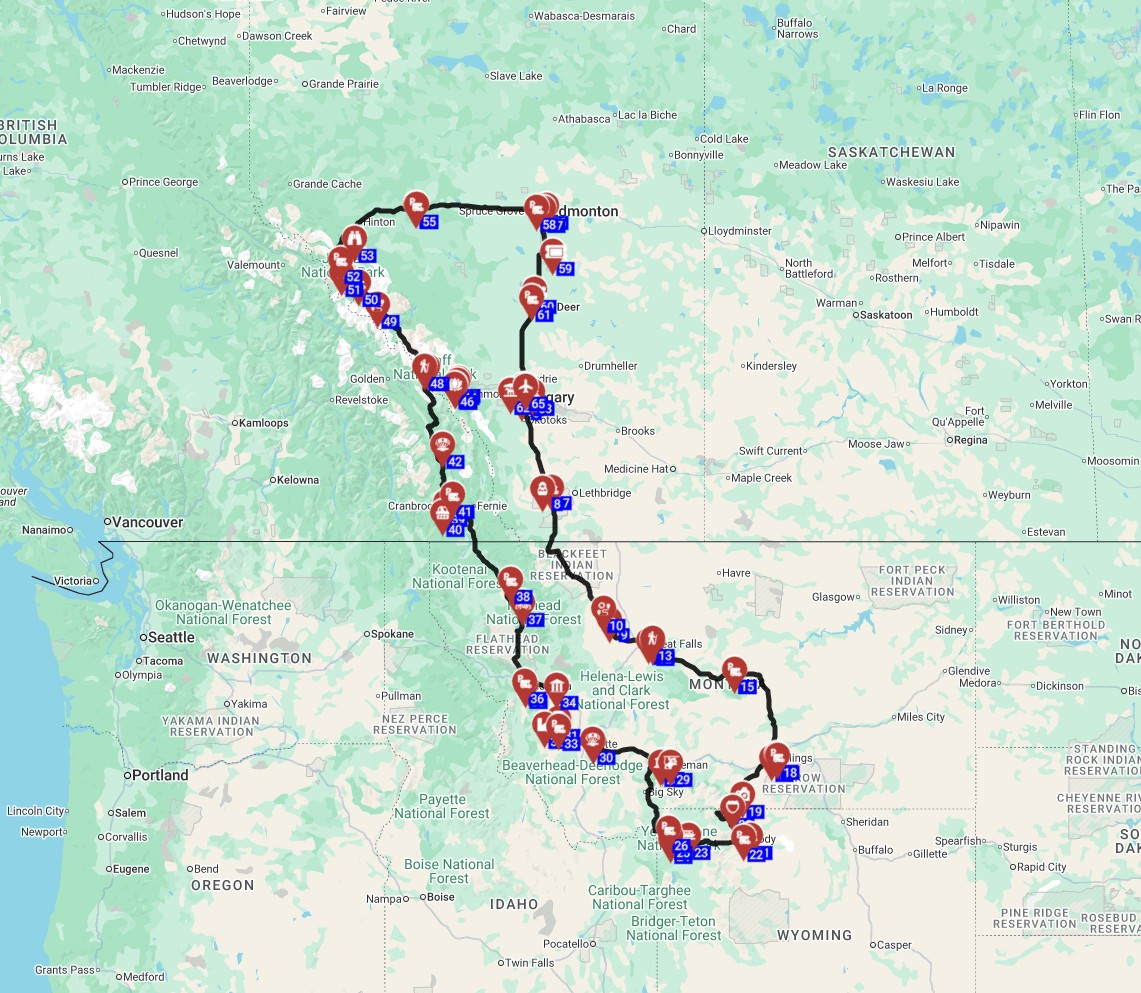
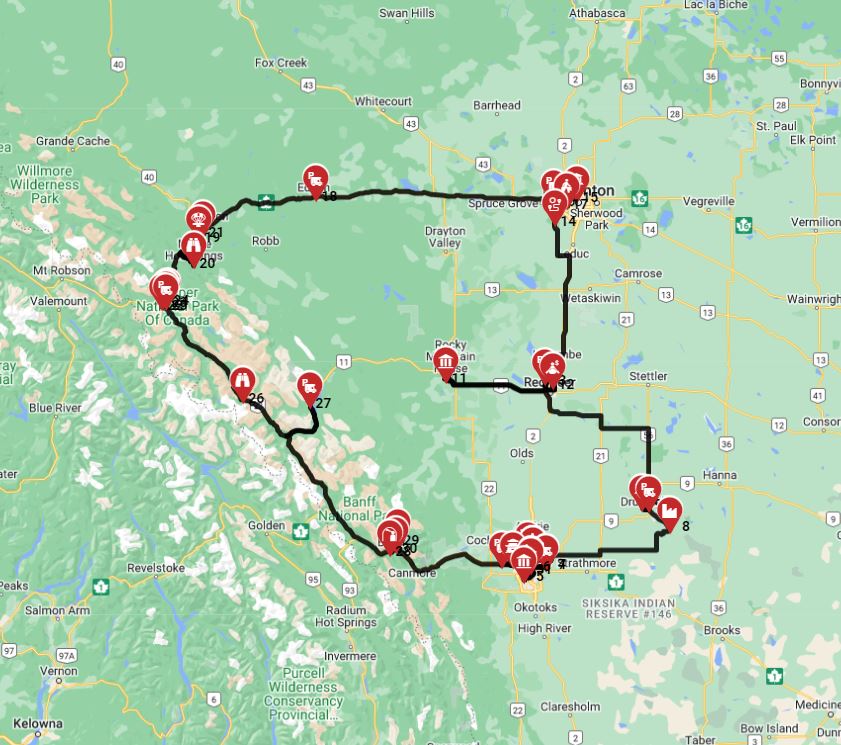
- Explore Banff National Park: Drive the scenic Bow Valley Parkway for wildlife viewing and stunning mountain vistas, and don't miss Lake Louise and Moraine Lake (seasonal access). Hike a trail and then return to your RV for a relaxing evening.
- Journey on the Icefields Parkway: This 232 km (144 mi) stretch between Banff and Jasper National Parks offers countless viewpoints, glaciers, and hiking opportunities. Plan a day tour or spend a few nights camping along the way.
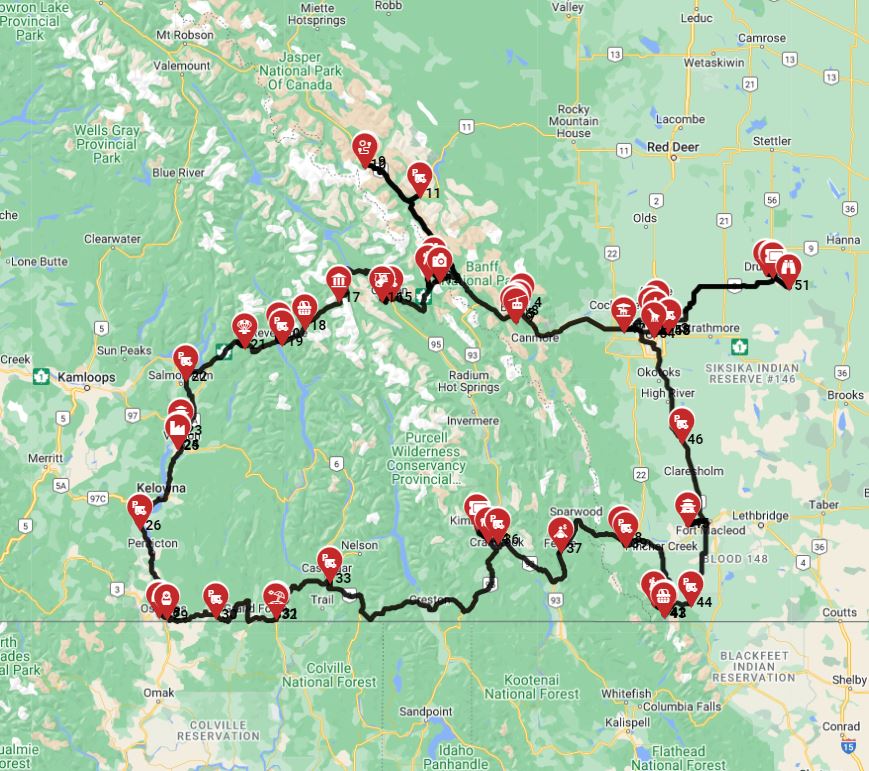
- Discover Vancouver Island: Take a ferry from mainland BC to explore the rugged Pacific Rim National Park Reserve near Tofino or the charming coastal towns. Consider our "
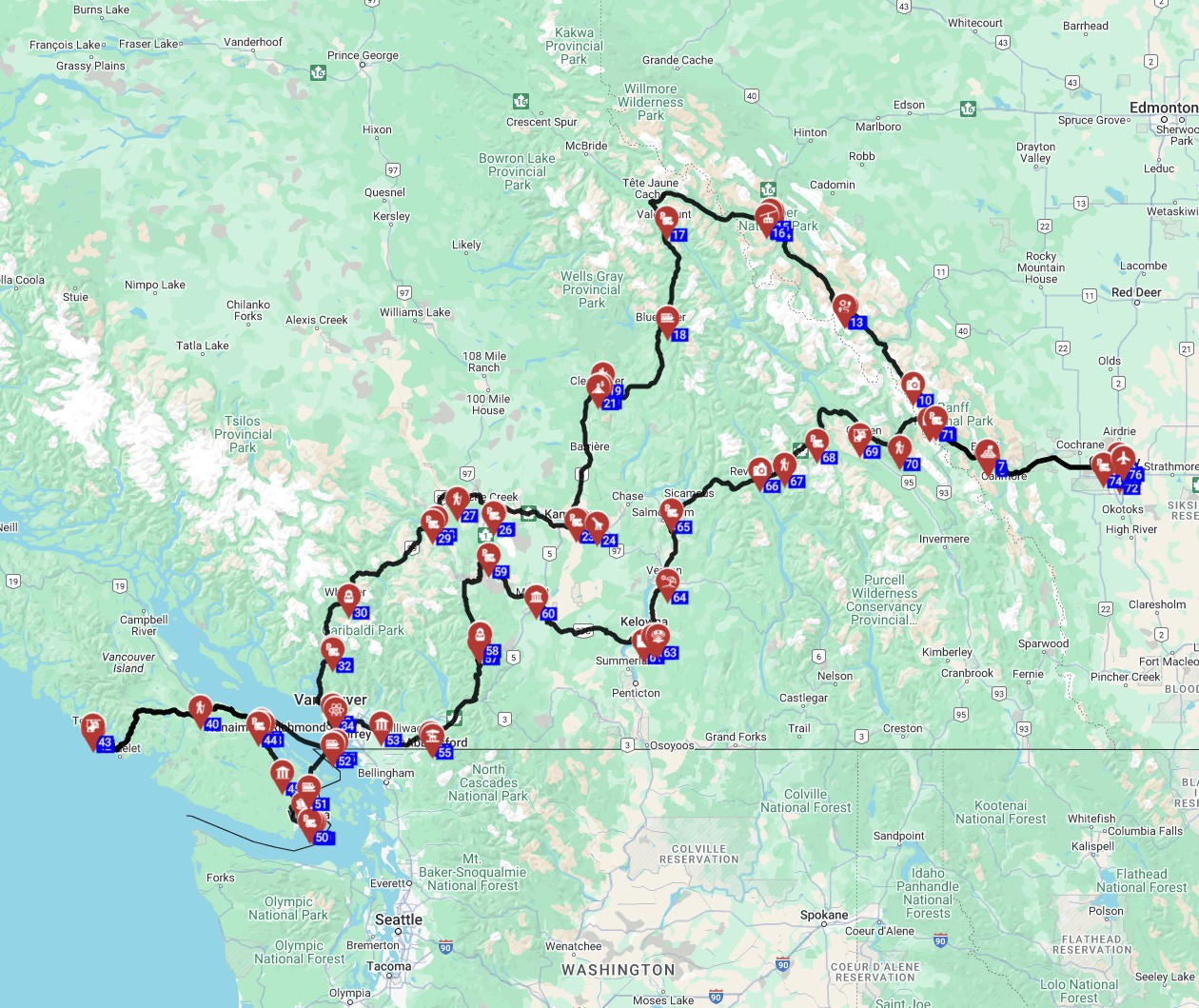
" route plan which includes 1 Aquarium, 3 Bike Rental spots, and 4 Points Of Interest over 19 days and 2659.4 km.
 Vancouver Round Trip - West Canada Cycling Adventure
 - Relax in the Okanagan Valley: Enjoy the warm climate, beautiful lakes, and world-class wineries. This region is perfect for slow travel, averaging 100-150 km per day, allowing time to connect to the culture and food.
- Visit Drumheller's Badlands & Dinosaurs: Head to Dinosaur Provincial Park in Alberta, a UNESCO World Heritage Site with the world's richest dinosaur fossil fields, offering unique camping experiences amidst an ancient landscape.
- Ski & RV in Winter: For experienced RVers, consider a winter trip to places like Whistler or Sun Peaks. Many campgrounds offer winter readiness, and a rented RV (like the "MH-A" which is winter-ready) can be a cozy base for skiing or snowboarding.
Looking for expert insights from Avi Bandana? Top 5 Adventures - recommendations from Avi Bandana
Final Thoughts
Embarking on a last-minute RV camping adventure in West Canada is an incredible way to experience the unparalleled natural beauty of this vast region. From the towering peaks of the Canadian Rockies to the serene Pacific coastlines, a rented motorhome offers the freedom and flexibility to explore at your own pace, even if you decide to go on short notice. Remember, being adaptable with your destinations and arriving early for first-come, first-served campsites can significantly enhance your spontaneous travel experience.
At Bandana RV, we're passionate about helping you discover the joy of RV travel. We strive for full transparency, providing you with all the information you need to make informed decisions without hidden fees or surprises. Our team of true RV specialists is here to support you every step of the way, from comparing options to ensuring your post-booking coordination is seamless.
So, take the leap! Whether you're planning a week-long trip or an extended road trip, West Canada awaits with its breathtaking landscapes and welcoming campgrounds. Get inspired for your next trip! Discover top destinations, planning tips, all in one place! Plan a trip itinerary in advance with minimal effort and maximum enjoyment. Find your perfect last-minute rv rental in West Canada today and start making memories that will last a lifetime.