In This Guide
- The 5 RV Families Compared for Denmark
- Class A (Integrated) — Best For
- Price Comparison by RV Class in Denmark
- Class SI (Semi-Integrated) — Best For
- Class C (Alcove) — Best For
- Class B (Campervan) — Best For
- Class TC (Truck Camper) — Best For
- Side-by-Side Comparison Table
- Our Recommendation for RV Rental Beginners Travelers in Denmark
- What do I need to know before renting an RV in Denmark?
- How do I plan an RV trip to Denmark?
- What is the average cost to rent an RV in Denmark?
- How much does it cost to camp in Denmark?
- What is the best month to RV in Denmark?
- Is it easy to drive an RV in Denmark?
- Do you need a special license to drive an RV in Denmark?
- What is the speed limit for RVs in Denmark?
- Where can you park an RV in Denmark?
- Can you sleep anywhere in an RV in Denmark?
- How long should you spend RVing in Denmark?
The 5 RV Families Compared for Denmark
Choosing the right RV family is crucial for a smooth first-time RV rental experience in Denmark. The RV’s size and design significantly impact navigation on Danish roads, access to charming towns, and parking availability. Understanding these differences, such as the average length of Bandana's global fleet which ranges from 5.8 meters for campervans to 7.5 meters for larger motorhomes, will help you select a vehicle that offers optimal comfort for your group size and trip duration. Beginners will find it particularly beneficial to consider how RV dimensions, like the average 2.3-meter width across many models, relate to Denmark's well-maintained but often narrower rural infrastructure and city streets. The terrain and climate also play a role; while Denmark is generally flat, coastal roads and smaller villages might be more easily navigated by more compact models. For instance, larger integrated or alcove models, while offering more living space, can present a challenge in quaint Danish villages or bustling urban areas, making a thoughtful choice essential for an enjoyable journey.
Class A (Integrated) — Best For
Class A motorhomes are ideal for those seeking luxury, spacious living, and maximum comfort, particularly for larger groups or extended trips in Denmark. With Bandana's global fleet averaging around 7.5 meters in length and comfortably sleeping 4.4 people (often accommodating 4 adults), these integrated models offer a home-away-from-home experience. They boast a higher load capacity, averaging 209.5 kg, and a typical fuel consumption of 11-12 L/100 km, making them a substantial yet manageable option. The primary trade-off with Class A vehicles is their larger size, which can present challenges when navigating narrower Danish roads or finding parking in historic city centers and picturesque villages. However, with slow and careful driving, access to most areas is achievable.
Price Comparison by RV Class in Denmark
RV rental prices in Denmark vary significantly, influenced by the RV class, rental duration, and seasonality. Generally, smaller campervans (Class B) are more economical than larger integrated (Class A) or alcove (Class C) models. Prices are dynamic and fluctuate based on demand, making advance booking a wise strategy to secure better rates. For example, you might find campervans starting from around €70-€150 per night off-season, while larger, more amenity-rich motorhomes can range from €200-€350+ per night during peak summer months.
Because pricing is flex-rate, the table below pulls real example prices from Bandana's live search for various RV classes and trip durations in Denmark. Please note that these prices are flex-rate estimates and may change daily due to demand and availability; for the most current figures, use the search box at the top of the page.
| RV Family | Avg Length (m) | Sleeps (Avg) | Fuel Use (L/100km) | Best Use Case in Denmark |
|---|---|---|---|---|
| Class A (Integrated) | 7.5 | 4.4 | 11-12 | Luxury, large groups, extended trips, spacious living. |
| Class SI (Semi-integrated) | 6.9 | 3.8 | 10-11 | Balanced comfort & maneuverability, couples/small families. |
| Class C (Alcove) | 7.5 | 5.8 | 10-12 | Families with children, extra sleeping, straightforward driving. |
| Class B (Camper Van) | 5.8 | 3.2 | ~10 | Maneuverability, fuel efficiency, solo/couples, urban access. |
| Class TC (Truck Camper) | 5.5 | 2.4 | 12-17 | Off-grid adventure, flexibility, rugged exploration for couples. |
Class SI (Semi-Integrated) — Best For
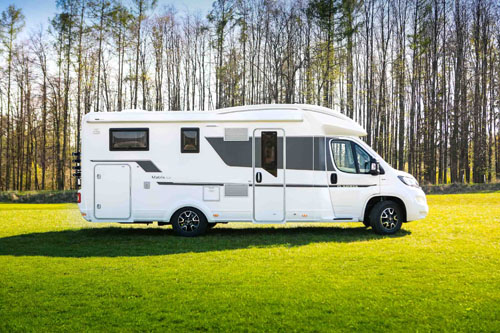
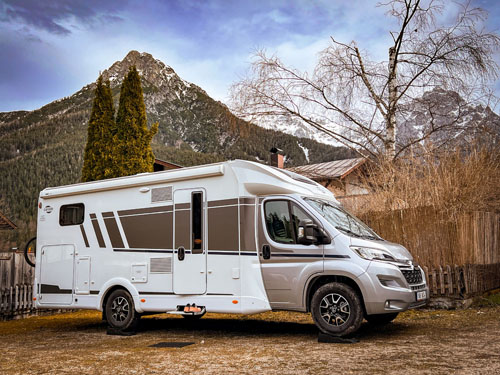
Class SI (Semi-Integrated) motorhomes are an excellent balanced choice for beginners in Denmark, offering a good compromise between comfortable living space and manageable driving dimensions. Bandana's global fleet averages 6.9 meters in length, sleeping approximately 3.8 people (suitable for 3.4 adults), providing ample room without being overly challenging. These vehicles typically offer good load capacity, around 72.2 kg, and fuel efficiency in the range of 10-11 L/100 km. They outperform larger Class A motorhomes in handling on narrower Danish roads and provide more interior space and amenities than a typical Class B campervan, making them a popular and practical option for a first-time RV adventure.
Class C (Alcove) — Best For
Class C (Alcove) motorhomes are primarily recommended for beginner families traveling in Denmark due to their efficient use of space and straightforward driving experience. Bandana's fleet averages 7.5 meters in length, providing ample sleeping space for approximately 5.8 people (suitable for 4.4 adults), ensuring comfort for larger groups or families with children. These models typically have a load capacity around 42.4 kg and fuel consumption of 10-12 L/100 km. The distinctive over-cab sleeping area is a major advantage for families, offering dedicated sleeping quarters that maximize living space and balance comfort with practical navigation on Danish roads.
Class B (Campervan) — Best For
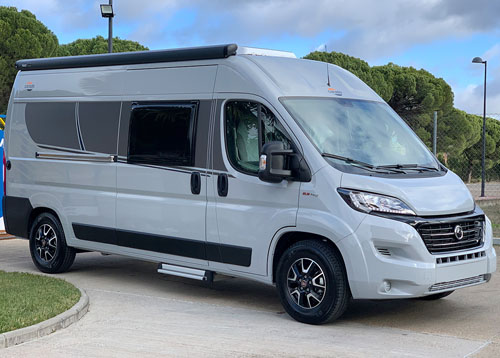
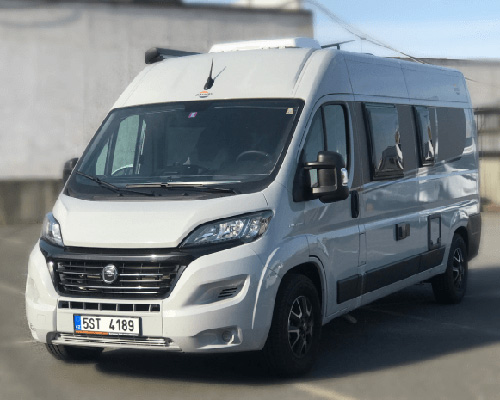
Class B campervans are ideal for beginners prioritizing maneuverability, fuel efficiency, and the flexibility to access smaller towns and urban areas in Denmark. Bandana's campervan fleet averages 5.8 meters in length, sleeping around 3.2 people (suitable for 2.7 adults). They offer excellent fuel efficiency, typically around 10 L/100 km, and a nimble driving experience comparable to a large car. This makes them perfect for solo travelers or couples seeking an agile and easy-to-park option, allowing for a more intimate connection with Denmark's scenic routes and charming locales.
Class TC (Truck Camper) — Best For
Truck campers are best suited for beginner RVers seeking a rugged, flexible, and off-grid capable experience, particularly for adventurous couples exploring Denmark. With Bandana's global fleet averaging 5.5 meters in length, these campers are designed for 2.4 sleeping places (suitable for 2.1 adults) and are built on robust truck platforms, leading to fuel consumption ranging from 12-17 L/100 km. Their detachable nature offers exceptional driving versatility, allowing for easier navigation of less-accessible Danish terrain and the flexibility to use the truck independently once the camper is detached.
Side-by-Side Comparison Table
To help beginners visualize the key differences and select the best RV fit for their Danish adventure, this table compares RV classes by average length, sleeping capacity, typical fuel usage, and their ideal use cases within Denmark.
| RV Family | Avg Length (m) | Sleeps (Avg) | Fuel Use (L/100km) | Best Use Case in Denmark |
|---|---|---|---|---|
| Class A (Integrated) | 7.5 | 4.4 | 11-12 | Luxury, large groups, extended trips, spacious living. |
| Class SI (Semi-integrated) | 6.9 | 3.8 | 10-11 | Balanced comfort & maneuverability, couples/small families. |
| Class C (Alcove) | 7.5 | 5.8 | 10-12 | Families with children, extra sleeping, straightforward driving. |
| Class B (Camper Van) | 5.8 | 3.2 | ~10 | Maneuverability, fuel efficiency, solo/couples, urban access. |
| Class TC (Truck Camper) | 5.5 | 2.4 | 12-17 | Off-grid adventure, flexibility, rugged exploration for couples. |
Our Recommendation for RV Rental Beginners Travelers in Denmark
For most beginner RV travelers in Denmark, we primarily recommend a Class SI (Semi-Integrated) motorhome due to its optimal balance of manageable size and comfortable living space, while a Class B (Campervan) serves as an excellent runner-up for those prioritizing agility. The Semi-integrated (avg. 6.9m length, 3.8 sleeps) offers sufficient amenities and room for couples or small families without being overly challenging to drive on Denmark's diverse roads, from scenic coastal routes to city outskirts. It strikes the perfect balance between interior comfort and external maneuverability, which is key for a first-time RV experience in a foreign country. For travelers focused on maximum flexibility, navigating smaller towns, and greater fuel economy, a Class B Campervan (avg. 5.8m length, 3.2 sleeps) is an agile alternative, allowing easier parking and a more intimate connection with the surroundings.
What do I need to know before renting an RV in Denmark?
Before renting an RV in Denmark, familiarize yourself with local driving regulations and ensure you have the necessary documentation, potentially including an International Driving Permit (IDP) if your license is not from an EU country. For easier navigation on Denmark's charming but sometimes narrow roads and better city access, consider opting for smaller RV sizes like Class B campervans or Class SI motorhomes. Familiarize yourself with Danish cultural etiquette, particularly regarding punctuality and respecting quiet hours at campsites. Plan for technology and connectivity by considering a local SIM card, checking Wi-Fi availability at campsites, and bringing appropriate power adapters. Understand your rental's breakdown assistance plan, know emergency numbers (112), and secure comprehensive travel and rental insurance for peace of mind. If traveling with pets, research pet-friendly campsites and attractions beforehand, as not all are accommodating.
How do I plan an RV trip to Denmark?
To plan an enriching RV trip to Denmark, move beyond generic tourist spots and choose unique themed itineraries, such as following Viking routes, exploring coastal cycling paths, or embarking on culinary trails. Incorporate local food sourcing by visiting markets and farm stands to cook with fresh Danish ingredients aboard your rented RV. Practice sustainability by managing waste diligently, conserving resources, and selecting eco-friendly campsites. Consider traveling in the off-season, such as the shoulder seasons or winter, for fewer crowds, lower prices, and unique 'hygge' experiences, while being mindful of potential challenges like shorter daylight hours and limited facilities. For ideas you can prep on the road, watch our RV-friendly recipes playlist on YouTube.
What is the average cost to rent an RV in Denmark?
The average cost to rent an RV in Denmark typically ranges from €70-€150 per night for campervans during the off-season to €200-€350+ per night for larger motorhomes in peak summer. Remember to budget for fuel, as Denmark has relatively high fuel prices, with consumption varying from 10-17 L/100 km depending on the RV class. Campsite fees are an additional consideration, usually falling between €25 and €50+ per night, depending on the campsite's location and amenities. Also, account for potential tolls on major bridges, such as the Storebælt and Øresund bridges, and your daily expenses for food and activities. On the routes offered through RV PLANET routes, you can itemize and track every expense along the way for easy budgeting.
How much does it cost to camp in Denmark?
Camping in Denmark typically costs between €25 and €50 per night for a standard RV pitch, with prices varying based on the campsite’s location—coastal or popular regions are usually higher—and the facilities provided. Many Danish campsites offer excellent amenities, including electricity, water hookups, waste disposal stations, and family-friendly options. Some campsites may require or offer benefits with a camping pass, such as the Camping Key Europe, which can streamline check-in and provide additional perks.
What is the best month to RV in Denmark?
For beginners seeking the most favorable weather and the widest availability of attractions, June, July, and August are the best months to RV in Denmark. These summer months offer warm temperatures, long daylight hours, and fully operational tourist facilities. May and September, the shoulder seasons, provide a pleasant balance with good temperatures, fewer crowds, and potentially lower prices for a more tranquil experience. The off-season, from October to April, offers unique 'hygge' (coziness) experiences but requires careful preparation for cold weather, shorter days, and potentially limited campsite services.
Is it easy to drive an RV in Denmark?
Driving an RV in Denmark is generally considered easy due to the country's well-maintained roads and clear signage. However, it's important to be mindful of narrower roads often found in rural areas and specific regulations for larger vehicles in city centers. Smaller RVs, such as Class B campervans (avg. 5.8m length) or Class SI motorhomes (avg. 6.9m length), are significantly easier to maneuver and park than larger Class A or C models (avg. 7.5m length). For urban exploration, planning to park larger RVs on city outskirts and utilize public transport is often the most practical approach to avoid navigation and parking challenges.
Do you need a special license to drive an RV in Denmark?
For most RVs up to 3,500 kg Maximum Authorised Mass (MAM), a standard B driver's license is sufficient, covering many campervans, semi-integrated, and alcove motorhomes. However, larger or heavier motorhomes with a MAM between 3,500 kg and 7,500 kg may require a C1 license. Always confirm the specific license category needed with your rental provider, as this is based on the exact MAM of the RV you choose.
What is the speed limit for RVs in Denmark?
RVs under 3,500 kg (MAM) follow standard passenger car speed limits: 50 km/h in built-up areas, 80 km/h outside built-up areas, and up to 130 km/h on motorways. For RVs over 3,500 kg (MAM), lower restrictions apply: 50 km/h in built-up areas, 80 km/h outside built-up areas, and a maximum of 80 km/h on motorways. Always pay close attention to local road signs, which may indicate different limits based on specific road conditions or zones.
Where can you park an RV in Denmark?
In Denmark, RVs can be parked in designated campsites ('campingpladser'), which typically offer full facilities like electricity and water hookups. Simpler motorhome parking areas, known as Stellplatze ('autocamperpladser'), are also available and sometimes offer basic services for a fee. During the day, larger public parking lots may be suitable, but always check for time limits or 'no overnight parking' signs. Parking on private property is only permitted with the owner's explicit permission; avoid residential streets to prevent obstruction or inconvenience to locals.
Can you sleep anywhere in an RV in Denmark?
No, generally speaking, wild camping or sleeping anywhere in an RV outside of designated areas is not permitted in Denmark. Danish law prohibits wild camping in natural public areas like forests and beaches. Overnight parking in RVs on public roads or in undesignated parking lots is typically forbidden and can result in fines. For legal and safe overnight stays, it is essential to utilize official campsites or designated 'autocamperpladser' that cater specifically to motorhomes.
How long should you spend RVing in Denmark?
A 7 to 14-day trip is generally ideal for beginner RVers in Denmark, allowing ample time to explore a main region or a curated route without feeling rushed. One week is suitable for focusing on a single major region, such as Jutland or Zealand, while two weeks allows for a more comprehensive experience, enabling you to combine regions or explore one area in greater depth at a relaxed pace. For beginners, it's always advisable to avoid over-scheduling, leaving room for spontaneous stops and relaxation to truly savor the Danish landscape and culture.
What You Shouldn't Miss
- Viking History Trail: Explore Denmark's rich Viking heritage by visiting key sites like the Viking Ship Museum in Roskilde or the Jorvik Viking Centre (though located in York, UK, its influence is strong in Danish heritage). Consider a route that connects these historical points.
- The Danish Riviera: Drive your RV along the picturesque northern coast of Zealand, known as the Danish Riviera. Discover charming coastal towns, beautiful beaches, and scenic viewpoints perfect for a relaxed RV stop.
- Legoland Billund: A must-visit for families, Legoland offers a magical experience with incredible brick creations and thrilling rides. It's easily accessible by RV and offers a memorable stop for all ages.
- Odense's Fairytale Charm: Visit the birthplace of Hans Christian Andersen in Odense. Explore charming streets, visit the Andersen Museum, and experience the fairytale atmosphere that inspired his beloved stories.
- The Wadden Sea National Park: Located in southwestern Denmark, this UNESCO World Heritage site offers unique tidal landscapes, rich birdlife, and opportunities for guided 'mudflat' walks. It's a perfect natural escape for RV travelers.
Final Thoughts
Renting an RV in Denmark for the first time offers an incredible way to experience the country's unique blend of stunning natural beauty and rich cultural heritage. By understanding the different RV classes and considering your travel style, you can choose the perfect vehicle for an unforgettable adventure. Remember that planning ahead, being flexible, and embracing the open road are key to a rewarding RV journey.
We're here to support you every step of the way, from comparing options to finalizing your booking. With our commitment to full transparency and exceptional service, your first Danish RV adventure is sure to be a memorable one. Get inspired for your next trip!