For live availability and current prices, start with our RV Rental Scandinavia - Complete Guide 2026 guide.
In This Guide
- Best Scandinavia RV Itinerary for rv rental beginners — Overview
- 7-Day Classic Route in Scandinavia
- 14-Day Extended Journey in Scandinavia
- Recommended RVPlan Trip for Scandinavia
- Daily Driving Distances & Drive Times in Scandinavia
- Best RV Class for This Itinerary — Couple & Family Picks
- What is the best time of year to RV in Scandinavia?
- Is it safe to RV in Scandinavia?
- Do you need a special license to drive an RV in Europe?
- What do you need to know about driving in Norway?
- Are roads in Norway difficult to drive?
- Can you take an RV on a ferry in Norway?
- Can you wild camp in Scandinavia?
- How do you dispose of RV waste in Norway?
- What currency do they use in Scandinavia?
- How much does it cost to RV in Norway?
- How much does gas cost in Norway?
- What is the cheapest way to travel in Scandinavia?
- How much does an RV cost in Norway?
- Is Norway RV friendly?
- Is Sweden RV friendly?
- How to rent an RV in Norway?
- How many miles should an RV travel per day?
Best Scandinavia RV Itinerary for rv rental beginners — Overview
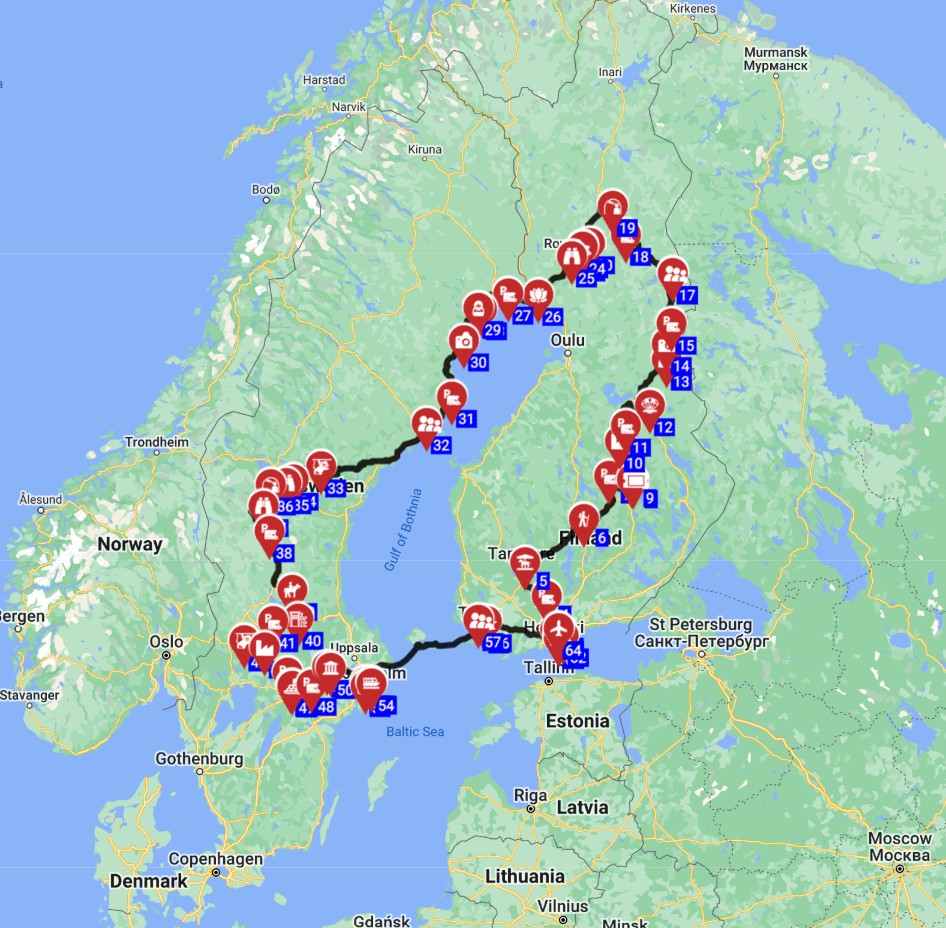
Embarking on your first RV adventure in Scandinavia offers a breathtaking journey through stunning fjords, charming cities, and serene landscapes. For beginners, a minimum of 7 days is recommended to truly savor the experience, though a 14-day trip allows for a more comprehensive exploration of Norway and Sweden's diverse beauty. The best season to travel is generally from late spring to early autumn, specifically May through September, ensuring optimal weather conditions and the longest daylight hours, perfect for maximizing your sightseeing. A well-planned itinerary, such as Bandana's 'Lulea Round trip - Timeless Scandinavia: Fjords, Forests, and History,' can span approximately 2910 km over 15 days, providing an in-depth cultural and natural immersion.
7-Day Classic Route in Scandinavia
A fantastic 7-day classic route for RV rental beginners in Scandinavia offers a taste of Norway's iconic fjords and coastal beauty. Starting in Bergen, you'll pick up your rented motorhome and head to Voss (100 km), known as the adventure capital, with a stop at the impressive Tvindefossen waterfall. Day 2 takes you to Flåm (60 km), where you can experience the famous Flåm Railway and a scenic cruise on the Aurlandsfjord. The journey continues to Balestrand (70 km, including a ferry), an idyllic village on the Sognefjord, followed by a drive to Førde (90 km) to visit the West Norwegian Art Museum.
The next day involves a scenic drive (140 km, with ferry segments) to Utne on the Hardangerfjord, famous for its fruit farms and the Hardanger Folk Museum. Day 6 leads you to Rosendal (70 km) to explore Barony Rosendal and its gardens, before returning to Bergen (120 km, via ferry) on Day 7 for your RV drop-off, allowing time for last-minute city exploration. Overnight stays are planned at convenient locations like Voss Camping, Flåm Camping & Vandrarhem, Balestrand Camping, Førde Camping, Utne Camping, Rosendal Camping, and Bergen Camping Park, offering comfortable bases for your adventure.
14-Day Extended Journey in Scandinavia
For a more immersive experience, consider a 14-day Scandinavian RV itinerary, starting in Oslo. Day 1 takes you to Kongsberg (80 km) to explore its historic silver mines and the Lågdalsmuseet. Journey to Rjukan (120 km) on Day 2 to visit the UNESCO-listed Heavy Water Sabotage Site and climb Gaustatoppen for panoramic views. The route continues to Dalen (70 km) on Day 3, where you can discover the Telemark Canal and the historic Dalen Hotel.
Day 4 involves a scenic drive to Odda (140 km), the gateway to the famous Trolltunga hike, before heading to Utne (50 km incl. ferry) on Day 5 to explore Hardanger's fruit orchards and folk museum. Day 6 brings you to Bergen (80 km incl. ferry), the vibrant city known for its Bryggen Wharf and Fløibanen Funicular. Dedicate Day 7 to fully exploring Bergen's fish market and museums. The return leg starts on Day 8 with a drive to Voss (100 km) for adventure activities, followed by Flåm (60 km) on Day 9 to experience the Flåm Railway and Stegastein viewpoint.
Continue to Lærdal (40 km incl. tunnel/ferry) to see the ancient Borgund Stave Church on Day 10, then to Fagernes (100 km) on Day 11 to visit the Valdres Folk Museum. Day 12 takes you to Gol (50 km) for family fun at the Tropicana Water Park, followed by Hønefoss (80 km) on Day 13 to see the Ringerike Museum. Finally, on Day 14, return to Oslo (60 km) for your RV drop-off, concluding your extensive fjord and mountain adventure. This extended journey covers a variety of landscapes and cultural experiences.
Recommended RVPlan Trip for Scandinavia
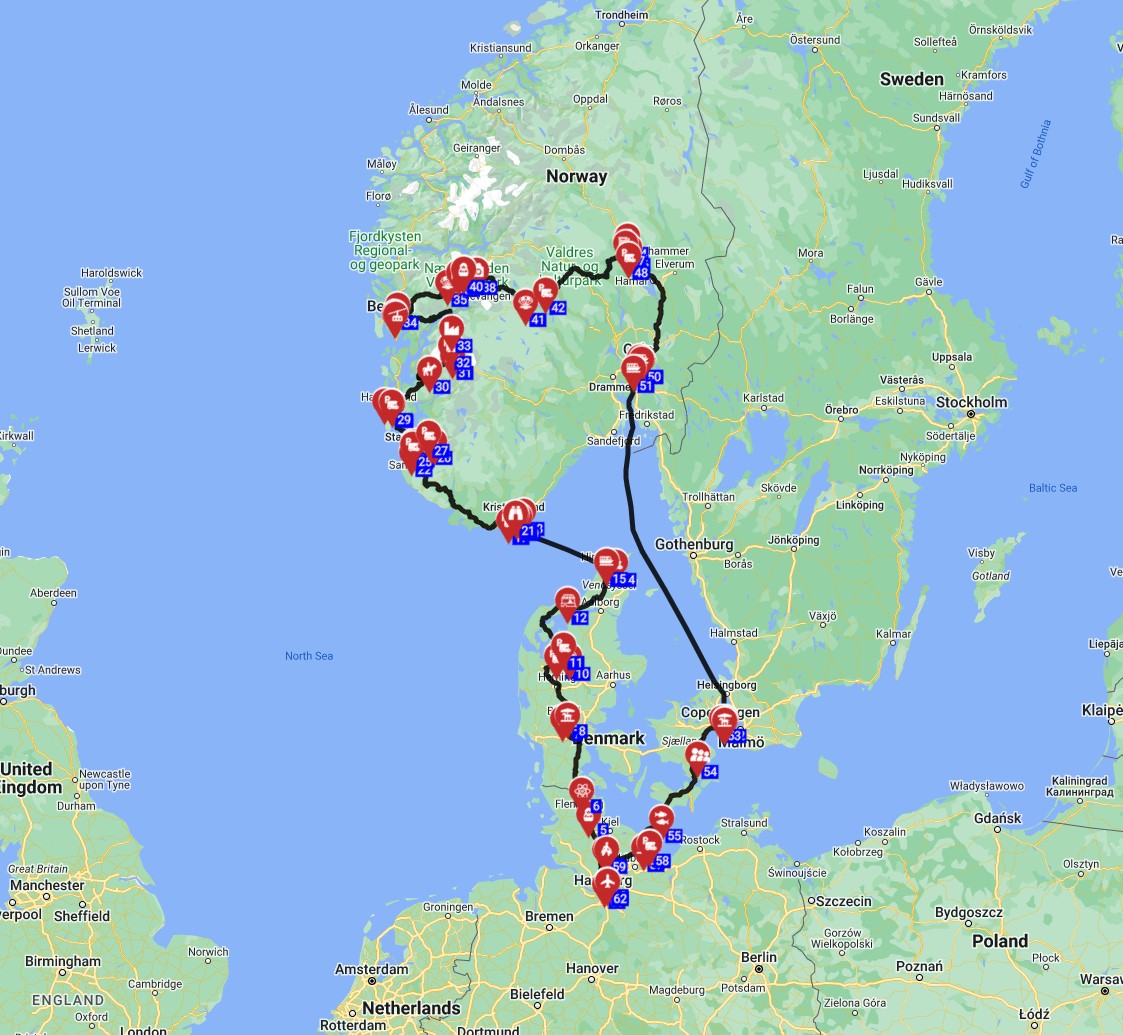
For a seamless and expertly crafted first-time RV itinerary in Scandinavia, Bandana recommends the "Lulea Round trip - Timeless Scandinavia: Fjords, Forests, and History" RVPlan trip. This unique 15-day adventure, designed to provide a comprehensive exploration of Swedish Lapland and the Lofoten Islands, covers approximately 2910.7 km, commencing and concluding in Luleå. The itinerary is carefully curated to blend breathtaking natural beauty with rich cultural insights, offering a balanced experience for beginners. You can find more details and start planning your trip by exploring the route map and specific activities available through the link provided.
Daily Driving Distances & Drive Times in Scandinavia
To truly immerse yourself in the stunning Scandinavian scenery and connect with its culture, Avi Bandana recommends a relaxed pace, averaging a maximum of 100 miles or 150 km per day when RVing. This approach allows for spontaneous stops at picturesque viewpoints, local markets, and charming hidden gems, fostering a deeper appreciation for the region. For instance, the drive from Oslo to Kongsberg, covering approximately 80 km, takes around 1.5 hours, leaving ample time for exploration. Similarly, the journey from Bergen to Flåm, though around 160 km and often involving ferry segments, can take 3-4 hours, highlighting that distance doesn't always directly correlate with drive time due to the terrain and ferry schedules.
Best RV Class for This Itinerary — Couple & Family Picks
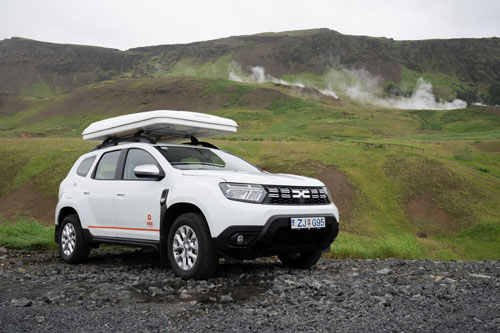
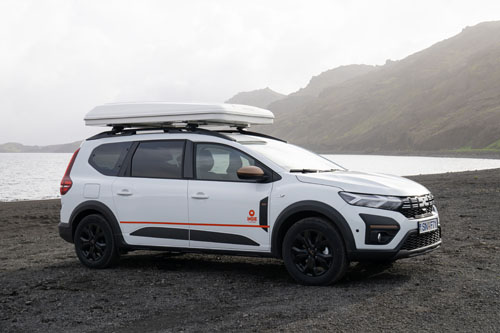
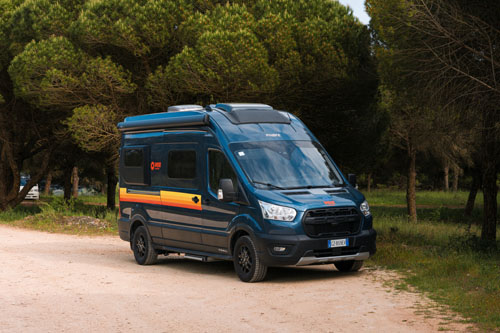
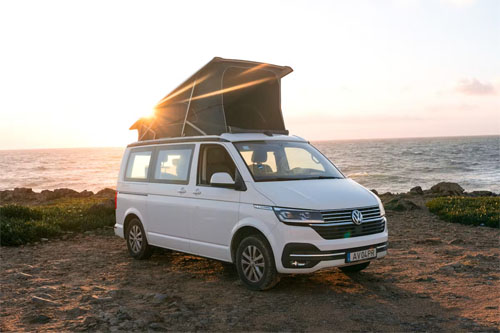
For couples seeking a nimble and fuel-efficient option for exploring Scandinavia, a Class B - Camper Van is often ideal. These compact motorhomes, averaging around 5.8 meters in length and typically sleeping 2-3 adults, are easy to maneuver on Scandinavian roads and ferries. For families, a Class C - Alcove RV offers significantly more living and sleeping space. With Bandana's global fleet, these larger motorhomes, averaging 7.5 meters in length, can comfortably accommodate families of 4-7 people, often featuring separate sleeping areas and ample storage for extended trips.
To simplify the planning process, especially for beginners, consider utilizing Bandana's 'Rent & Plan' service. This service bundles RV rentals with expert-designed itineraries and trip-planning software, making your Scandinavian adventure more accessible and enjoyable. When choosing, a Class B Camper Van like the "hire campervan example Paradise S/T" offers maneuverability, while a larger Class C, such as the "rv rentals example Comfort Class," provides ample space for families.
What is the best time of year to RV in Scandinavia?
The prime time for beginners to RV in Scandinavia is typically from late spring to early autumn, specifically May through September. This period offers the most pleasant weather, extended daylight hours, and ensures that most campsites and attractions are fully operational. Summer, from June to August, provides the warmest temperatures and the phenomenon of the midnight sun in the far north, alongside complete access to all roads and trails. However, this is also the busiest and most expensive time.
The shoulder seasons, May and September, present a great balance with fewer crowds and more competitive prices, although some higher-altitude roads or northern attractions might have limited accessibility early or late in the season. Winter RVing (October to April) is possible but presents challenges like snow, ice, and potential road closures. However, it offers unique experiences such as chasing the Northern Lights and enjoying winter sports, requiring specific vehicle preparations like winter tires and robust heating systems.
Is it safe to RV in Scandinavia?
Scandinavia is renowned for its safety, making it an excellent and secure destination for RV travel. The region boasts low crime rates, well-maintained infrastructure, and a generally welcoming environment for tourists. Road safety is a high priority, with clear signage and considerate drivers, though vigilance is advised for wildlife, particularly moose and reindeer, on rural roads, especially during dawn and dusk. Campsites are typically secure and offer community amenities, while wild camping, where permitted, also maintains a high level of personal safety.
Staying connected with local navigation, camping, and emergency service apps significantly enhances both safety and convenience for RVers. These tools provide real-time information and access to essential services, ensuring a smooth and secure journey across the diverse Scandinavian landscapes. Remember to always inform someone of your general travel plans and check local conditions.
Do you need a special license to drive an RV in Europe?
For most standard RVs in Europe, a regular B-class driving license is sufficient, provided the vehicle's Maximum Authorised Mass (MAM), or Gross Vehicle Weight, does not exceed 3,500 kg. If your chosen RV has a MAM between 3,500 kg and 7,500 kg, a C1 license is typically required. It is essential for drivers to verify the specific weight limits of their rented RV and consult their national driving license regulations, especially if their license was issued outside the EU, to ensure compliance with local laws.
This regulation applies across most of Scandinavia, making it accessible for many international travelers. Always double-check the specific rental company's requirements and the vehicle's specifications before booking to avoid any surprises. For instance, the Bandana fleet includes a variety of vehicle classes, from compact camper vans to larger motorhomes, all manageable with the appropriate license for their weight category.
What do you need to know about driving in Norway?
Driving an RV in Norway requires familiarity with its unique infrastructure and regulations, including automated toll systems (AutoPASS), frequent ferry crossings, and navigating sometimes narrow, winding mountain roads. Norway utilizes an automated toll system called AutoPASS, so registering your vehicle online before your trip or being prepared for an invoice to be mailed to your home country is advisable. Ferries are an indispensable part of traversing Norway's fjords and coastline, with charges based on vehicle size and passenger count; booking popular routes in advance can be beneficial, especially during peak season. On the routes offered through RV PLANET routes, you can itemize and track every expense along the way for easy budgeting.
Expect varied road conditions, from well-maintained highways to steep mountain passes, with some roads subject to seasonal closures due to snow. Always check local road reports before setting out. Fuel availability is generally good, with diesel and petrol widely accessible, though electric vehicle charging infrastructure is still developing in remote areas. Remember to drive slowly and carefully, especially on winding roads and when encountering local traffic.
Are roads in Norway difficult to drive?
While Norway's roads are generally well-maintained, some sections, particularly those winding through mountainous regions or along fjords, can be challenging due to their narrowness, steep inclines, and frequent hairpin bends. These characteristics are especially true for the famous National Tourist Routes, which offer stunning vistas but require focused driving and a relaxed pace, particularly when operating an RV. The effort is rewarded with unparalleled driving experiences amidst breathtaking landscapes, making the challenge a worthwhile part of the adventure.
Winter driving conditions can be particularly demanding, necessitating appropriate winter tires (studded or friction) and prior experience with snow and ice. Always check local weather and road conditions before embarking on your journey, especially during the colder months. Driving slowly and cautiously is paramount, allowing you to fully appreciate the scenery while remaining safe.
Can you take an RV on a ferry in Norway?
Yes, RVs are a common sight on Norway's extensive ferry network, which is integral to navigating the country's many fjords and coastal routes. Ferry costs are typically calculated based on the vehicle's length and weight, as well as the number of passengers. For popular routes or during peak travel times, booking your ferry in advance is advisable to secure a spot, although many shorter crossings operate on a first-come, first-served basis. It's always best to check the specific ferry company's website for the most up-to-date information on schedules and booking procedures.
Be aware that some smaller, local ferry routes may have limited space for larger RVs, so arriving early or confirming availability beforehand can prevent delays. Planning your route with ferry crossings in mind is essential for a smooth RV journey through Norway's stunning landscapes.
Can you wild camp in Scandinavia?
Scandinavia, particularly Norway and Sweden, permits wild camping under the principle of "Allemannsretten" (Everyman's Right), which grants access to open country for recreation. This right allows you to camp on uncultivated land for one or two nights, provided you maintain a respectful distance of at least 150 meters from the nearest inhabited house or cabin. The core ethics of Allemannsretten emphasize leaving no trace, respecting private property, avoiding cultivated land, not disturbing wildlife, and adhering to fire restrictions.
It's important to note that while Finland also embraces Everyman's Right, Iceland has stricter regulations, generally requiring landowner permission or use of designated campsites for overnight stays. Always research the specific regulations for the country you are visiting to ensure responsible and legal wild camping practices.
How do you dispose of RV waste in Norway?
Responsible disposal of RV waste, including greywater (from sinks and showers) and blackwater (from toilets), is crucial in Norway. Designated dump stations are available at campsites, some gas stations, and specific RV service points. Norway's strong environmental ethos means that improper disposal is discouraged and can lead to fines, so always utilize these facilities to maintain the pristine natural environment.
Many campsites offer comprehensive facilities for emptying both greywater and blackwater tanks, often included in the overnight fee. For convenient planning, use apps like "Park4night" or "Campercontact" to locate nearby waste disposal points along your route, ensuring your travels are both enjoyable and sustainable.
What currency do they use in Scandinavia?
Scandinavia is comprised of countries with distinct currencies: Denmark uses the Danish Krone (DKK), Norway the Norwegian Krone (NOK), and Sweden the Swedish Krona (SEK). Finland uses the Euro (EUR), and Iceland uses the Icelandic Króna (ISK). While card payments are widely accepted across the region, it's always advisable to carry some local currency for smaller purchases or in situations where cards might not be accepted.
Exchange rates fluctuate, so checking current rates before your trip is recommended. Embracing contactless and mobile payment apps is also convenient, as they are widely used throughout Scandinavia, minimizing the need to carry large amounts of cash.
How much does it cost to RV in Norway?
RVing in Norway can range from approximately €150 to €300+ per day. This estimate encompasses RV rental costs, fuel, tolls, ferry fees, and campsite expenses, highlighting the importance of detailed budgeting for first-time visitors. RV rental prices typically fall between €100-€250+ daily for a mid-sized motorhome, varying significantly with the season and booking lead time. Fuel is a considerable expense due to Norway's high prices, so budgeting an additional €25-€50+ daily is wise, depending on your driving habits and the RV's fuel efficiency.
Factor in that tolls and ferries can add another €20-€50 per day, particularly when navigating fjords and toll roads. Campsite fees generally range from €20-€40 per night for basic pitches, with more amenity-rich sites costing more. Preparing meals in your RV is a fantastic way to manage costs, as dining out in Norway is generally expensive. Balancing these expenses with the flexibility and freedom of RV travel makes Scandinavia an accessible and rewarding destination. For ideas you can prep on the road, watch our RV-friendly recipes playlist on YouTube.
How much does gas cost in Norway?
Fuel costs in Norway are among the highest in Europe, typically fluctuating but generally ranging from 20-25 NOK per liter (approximately €1.80-€2.30) for both diesel and petrol as of 2026. These prices can vary slightly by region and individual petrol stations, often being a bit higher in more remote areas or along popular tourist routes. It's essential for RVers to factor this significant expense into their daily budget, especially if planning extensive travel, and to use apps to compare prices where available.
Consider opting for an RV with better fuel efficiency, such as a Class B Camper Van, to help manage these travel costs. Planning your routes to minimize unnecessary driving and utilizing campsites with refill points can also contribute to cost savings.
What is the cheapest way to travel in Scandinavia?
For independent travel, RVing can be a surprisingly cost-effective way to explore Scandinavia, particularly for groups or families, when compared to the combined expenses of hotels, rental cars, and frequent dining out. The inherent flexibility of a rented RV allows for budget-conscious decisions, like opting for wild camping where permitted, which significantly reduces accommodation costs. Utilizing the "Allemannsretten" (Everyman's Right) in Norway and Sweden for wild camping can drastically cut down on expenses, making RV travel much more affordable.
Furthermore, cooking your own meals in the RV using groceries purchased from local supermarkets is considerably cheaper than dining out in Scandinavia's often expensive restaurants. Traveling during the shoulder seasons (May, early June, or September) also offers more competitive RV rental rates and fewer crowds, providing better overall value. Prioritizing free activities like hiking, exploring national parks, and enjoying scenic drives, which Scandinavia offers in abundance, further enhances the cost-effectiveness of your RV adventure.
How much does an RV cost in Norway?
The cost to rent an RV in Norway varies significantly based on vehicle class, rental duration, and the season, typically ranging from €100 to €250+ per day for a standard model. Smaller camper vans (Class B) are generally more affordable, while larger integrated (Class A) or alcove (Class C) models with more amenities will command higher prices. Peak summer months, particularly July and August, experience the highest demand and consequently the highest rates.
Traveling during the shoulder seasons (May to June, and September) can offer more competitive rates. Longer rental periods often result in lower per-day costs, providing better value for extended trips. Always ensure you confirm what is included in the rental price, such as mileage limits, insurance deductibles, and essential amenities like bedding and kitchenware, to avoid unexpected charges.
Is Norway RV friendly?
Norway is exceptionally RV-friendly, offering excellent infrastructure, numerous stunning natural campsites, and a welcoming atmosphere towards motorhome tourism. The country's dramatic geography, characterized by fjords and mountains, makes RV travel an ideal way to explore, providing unparalleled flexibility and access to remote, picturesque locations that are otherwise difficult to reach.
Norway features a well-developed network of campsites and designated service points specifically for RVs, complemented by the generous "Allemannsretten" for those who wish to experience wild camping. The scenic routes are thoughtfully designed to highlight Norway's natural beauty, ensuring that RV travel is not just transportation, but an immersive and rewarding experience, despite some of the more challenging, albeit beautiful, road conditions.
Is Sweden RV friendly?
Sweden is highly RV-friendly, boasting a well-developed network of campsites, excellent road conditions, and the significant advantage of "Allemansrätten" (Everyman's Right) for wild camping, making it an ideal destination for motorhome travel. Sweden's diverse landscapes, from the southern coastlines to the northern wilderness, are all readily accessible by RV, offering abundant opportunities for outdoor activities like hiking and wildlife viewing.
Campsites are plentiful and well-equipped, often situated in scenic areas near lakes or forests, providing convenient amenities for RVers. The country's generally gentle terrain in many regions contributes to relaxed driving, which is particularly suitable for beginner RV drivers, ensuring a comfortable and enjoyable journey.
How to rent an RV in Norway?
Renting an RV in Norway typically involves researching reputable rental companies like Bandana, selecting a suitable vehicle class based on your needs, and understanding local regulations and insurance options. For peak season travel, it's highly recommended to book your RV several months in advance to secure your preferred vehicle and potentially benefit from better rates. Consider your group size and comfort preferences when choosing a vehicle class; Bandana offers a range from compact Class B camper vans perfect for couples, to more spacious Class C motorhomes ideal for families.
When reviewing rental agreements, meticulously verify what is covered in the rental price, paying close attention to mileage limits, insurance deductibles, and included amenities. Finally, arrange convenient pickup and drop-off locations, which are commonly available at major airports or cities like Oslo and Bergen, ensuring a smooth start and end to your Scandinavian adventure.
How many miles should an RV travel per day?
Avi Bandana strongly recommends an average maximum of 100 miles (approximately 150 km) per day for an RV trip in Scandinavia. This pace is designed to allow for leisurely exploration, enabling travelers to fully immerse themselves in the journey and discover the destinations without feeling rushed. This approach is particularly beneficial for RV rental beginners, prioritizing the experience of the travel itself over covering vast distances.
Adhering to shorter daily drives helps prevent driver fatigue, allows for spontaneous stops at scenic viewpoints or local attractions, and ensures a relaxed and memorable vacation. While longer driving days can be incorporated on specific travel legs, balancing them with shorter, more relaxed days maintains an enjoyable pace throughout the trip.
What You Shouldn't Miss
- Holgers Traktormuseum (Local Industry): A unique glimpse into rural Scandinavian history with vintage tractors and farm equipment, offering a tangible connection to the region's past.
- Stentorp Experience Lapland (Traditional Visit): An authentic immersion into Sami culture, featuring storytelling, traditional crafts, and delicious, locally sourced food.
- Lofotr Viking Museum (Traditional Visit): Step back in time to the Viking era with engaging, interactive exhibits and meticulously reconstructed longhouses, providing a rich historical and cultural experience.
- Seek Out Traditional Restaurants: Savor authentic Scandinavian cuisine, from the freshest seafood to hearty Lapland dishes, by visiting local eateries in towns like Luleå or along the Norwegian fjords.
Final Thoughts
Embarking on your first RV journey through Scandinavia is an incredible way to experience its unique blend of natural beauty and cultural richness. With careful planning and the right vehicle, you can create memories that will last a lifetime. Remember to embrace the slower pace of RV travel, allowing yourself to truly connect with the stunning landscapes and local charm.
From the majestic fjords of Norway to the vast wilderness of Sweden, Scandinavia offers an unparalleled RV adventure for beginners. With Bandana Caravan, you have the support and resources to plan a trip that perfectly suits your style, ensuring a seamless and enriching experience. Get inspired for your next trip and start planning your Scandinavian motorhome adventure today!