In This Guide
- Best Alaska RV Itinerary for rv rental - Overview
- 7-Day Classic Route in Alaska
- 14-Day Extended Journey in Alaska
- Recommended RVPlan Trip for Alaska
- Must-See Stops Along the Way (Avi Bandana Picks)
- Daily Driving Distances & Drive Times in Alaska
- Best RV Class for This Itinerary - Couple & Family Picks
- What is the 3-3-3 rule for RV travel?
- What is the 4-4-4 rule for RV travel?
- What is the best time of year to RV to Alaska?
- What is the best route to Alaska by RV?
- Can I park my RV anywhere in Alaska?
- What should I not miss in Alaska?
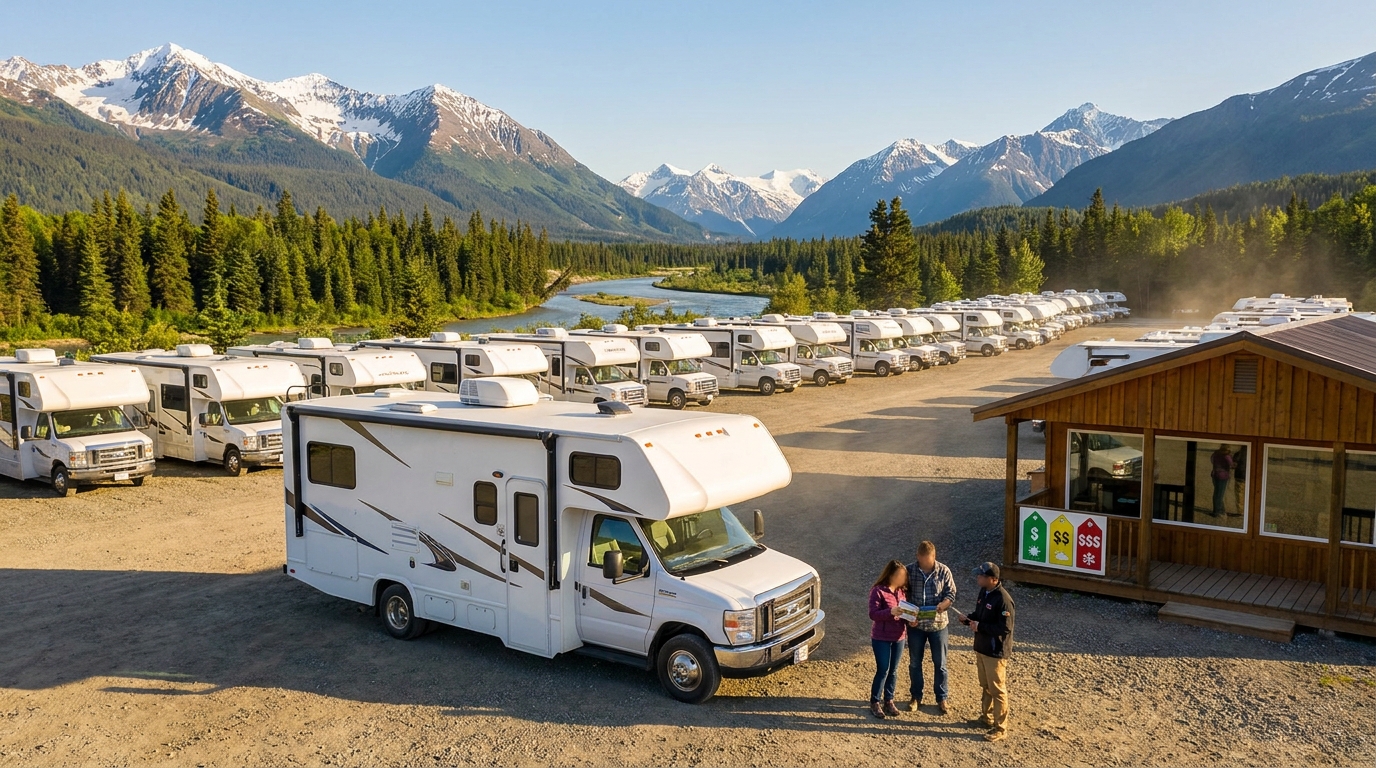
Embarking on an RV rental adventure in Alaska offers unparalleled freedom to explore the Last Frontier's vast, majestic landscapes at your own pace. With a rented motorhome or campervan, you transform the open road into your personalized pathway to glaciers, wildlife, and breathtaking natural wonders. This guide provides first-time RV travelers with comprehensive itineraries and essential tips for an unforgettable Alaskan journey.
For live availability and current prices, start with our RV Rental Alaska - Complete Guide 2026 guide. We are true RV specialists, founded in 2001, with over 20 years of experience helping tens of thousands of travelers explore the world by RV, focusing exclusively on motorhome travel with unmatched personal experience.
Best Alaska RV Itinerary for rv rental - Overview
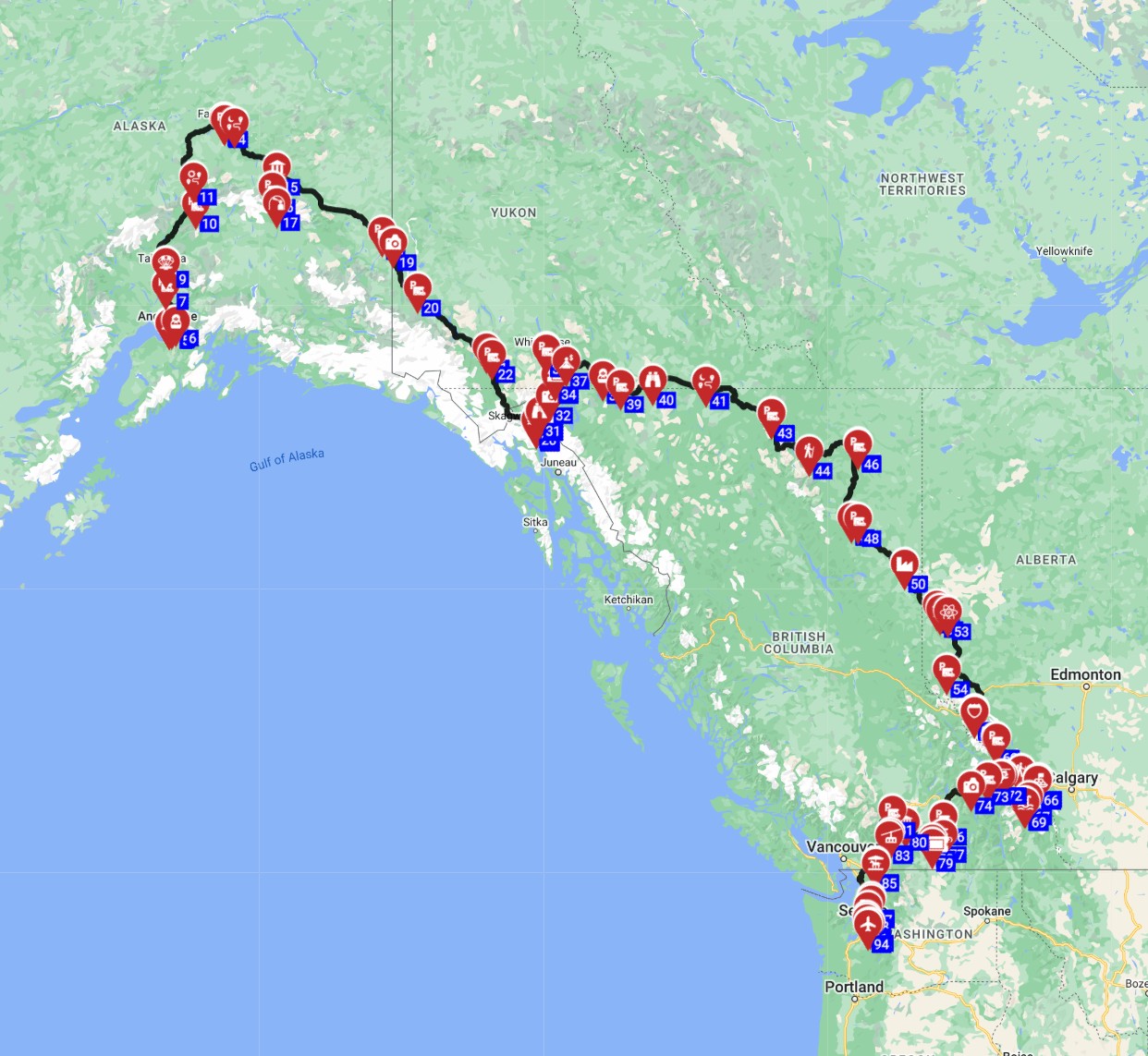
A typical Alaska RV adventure spans 7-23 days, covering varied distances from 1,000 km to over 3,500 km, with the optimal season being June to August for the best weather and access. This comprehensive guide outlines ideal routes within Alaska, including extended journeys into the Yukon, focusing on scenic drives, abundant wildlife viewing, and immersive cultural experiences. For a truly rewarding experience, a minimum of 7 days is recommended to explore key highlights, while 14-23 days allow for deeper exploration and the full 'Journey To' Alaska experience. Budget considerations for your trip should meticulously account for the RV rental cost, fluctuating fuel prices (especially critical in remote Alaskan areas), potential ferry costs for coastal access, specific tour prices like glacier cruises, and Canadian currency exchange rates if your adventure crosses borders into Canada. Planning for these ancillary costs is easy when you use RV PLANET routes, where you can itemize and track every expense along the way for effortless budgeting. On the routes offered through RV PLANET routes, you can itemize and track every expense along the way for easy budgeting.
Many travelers also consider a combined trip, venturing from Alaska to other parts of the USA. Our "RV Rental USA - Complete Guide 2026" offers extensive information for planning such broader North American road trips.
7-Day Classic Route in Alaska
This concise 7-day itinerary offers a focused exploration of Alaska's iconic highlights, adhering to Avi Bandana's recommended maximum of 100 miles (150 km) driving per day for optimal enjoyment and immersion. This slower pace ensures you truly experience each location rather than rushing through. For those keen to find the most value, explore "RV Rental in Alaska - Prices and Best Deals 2026" to find the best fit for this route.
- Day 1: Anchorage to Talkeetna (~113 miles / 182 km). Begin your journey with a pickup of your rented motorhome in Anchorage, then head north. Highlights along the way include the Alaska Wildlife Conservation Center, offering guaranteed sightings of local wildlife. Settle in for the night at Talkeetna RV Park, known for its views of Denali on clear days.
- Day 2: Talkeetna to Denali National Park entrance (~150 miles / 241 km). Enjoy the scenic drive north towards Denali. Spend the afternoon preparing for your park visit, such as securing bus tickets. Consider camping at Riley Creek Campground, located near the park entrance, but remember reservations are essential, especially during peak season.
- Day 3: Denali National Park. Devote a full day to exploring Denali National Park by taking a shuttle bus tour deep into the park, offering the best chances for wildlife viewing and access to various trailheads for short hikes. Overnight again at Riley Creek Campground.
- Day 4: Denali National Park to Fairbanks (~120 miles / 193 km). Drive further north to Fairbanks, Alaska's Golden Heart City. A recommended detour is Chena Hot Springs, about an hour east of Fairbanks, for a relaxing soak. Camp at Chena River Wayside for convenient access to the city.
- Day 5: Fairbanks to Gakona (~140 miles / 225 km). Head southeast, passing the Trans-Alaska Pipeline viewpoint, a marvel of engineering. The Richardson Highway offers stunning scenery. Your overnight stop will be the historic Gakona Roadhouse & RV Park.
- Day 6: Gakona to Valdez (~70 miles / 113 km). Continue on one of Alaska's most breathtaking drives, featuring Thompson Pass, the impressive Worthington Glacier, and the dramatic Keystone Canyon with its numerous waterfalls. Settle in at Valdez Glacier Campground for the night.
- Day 7: Valdez to Anchorage (~300 miles / 483 km via Glenn Highway). Return to Anchorage via the scenic Glenn Highway, taking time to stop at the massive Matanuska Glacier, which offers accessible guided tours. Alternatively, a scenic ferry option is available to Whittier, then a drive back to Anchorage. Return your rented RV in Anchorage or opt for a local Anchorage RV park for an additional night.
14-Day Extended Journey in Alaska
An extended 14-day RV journey provides ample time to immerse yourself in Alaska's vast landscapes and less-traveled gems, maintaining a relaxed pace of around 100 miles (150 km) per day, perfectly aligning with the slow travel philosophy. This extra time allows for flexibility, deeper exploration, and more opportunities for spontaneous discoveries.
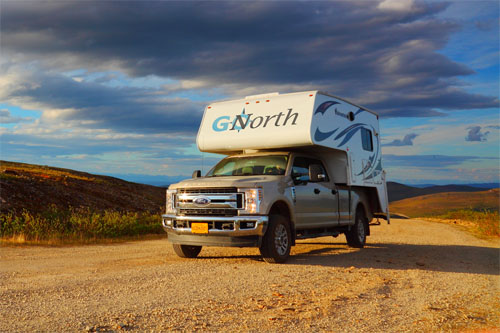
- Days 1-3: Anchorage & Kenai Peninsula. Begin your adventure in Anchorage, picking up your rented RV. Then, drive south to explore the stunning Kenai Peninsula, including Seward (where you can enjoy a Kenai Fjords National Park cruise to see glaciers and marine wildlife) and Homer (famous for fishing and bear viewing tours).
- Days 4-6: Interior Alaska & Denali. Head north from the Kenai Peninsula to Talkeetna, a charming town with spectacular Denali views. Continue to Denali National Park, dedicating two full days to shuttle bus tours, wildlife viewing, and extensive hiking.
- Days 7-9: Fairbanks & Arctic Circle. Drive to Fairbanks for cultural sites like the University of Alaska Museum of the North. Consider an adventurous day trip north towards the Arctic Circle via the Dalton Highway, but ensure your rented motorhome is appropriately prepared for gravel roads.
- Days 10-12: Wrangell-St. Elias National Park. Journey southeast to the colossal Wrangell-St. Elias National Park, America's largest. Park your RV in McCarthy and take a local shuttle to Kennicott to explore the historic copper mine and surrounding glaciers. This is a truly unique destination that few travelers get to experience.
- Days 13-14: Glennallen & Return to Anchorage. Drive through Glennallen, stopping at the majestic Matanuska Glacier for a guided walk on the ice. Complete your loop back to Anchorage, savoring the final Alaskan views before returning your rented RV.
This extended route allows for deeper engagement with each region, offering unique camping and exploration opportunities away from peak crowds, and providing better chances for memorable wildlife encounters. For budgeting and tracking your expenses throughout this longer trip, remember that RV PLANET routes allow you to easily itemize all your costs.
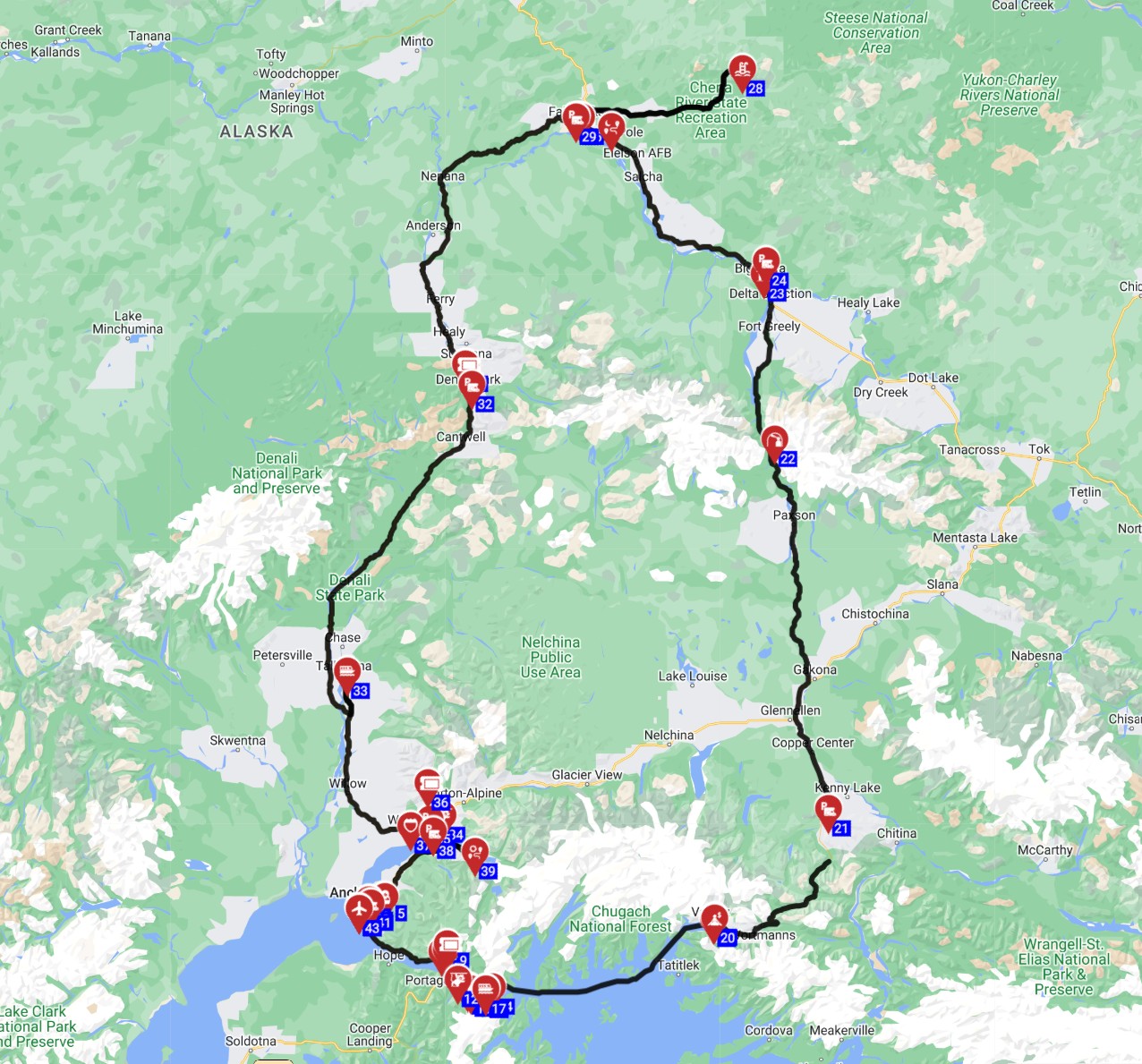
Recommended RVPlan Trip for Alaska
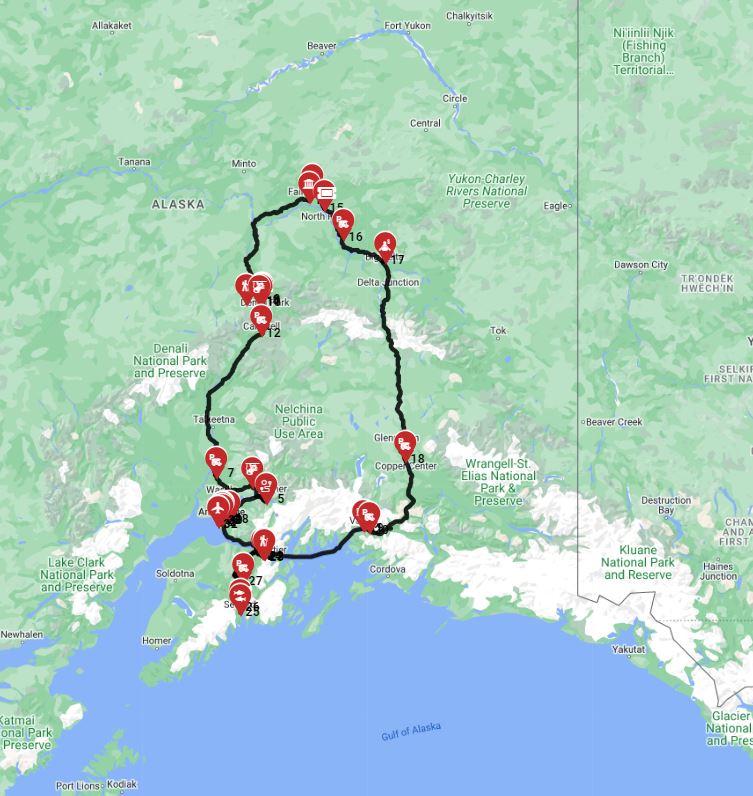
For an in-depth Alaskan RV rental adventure, the "
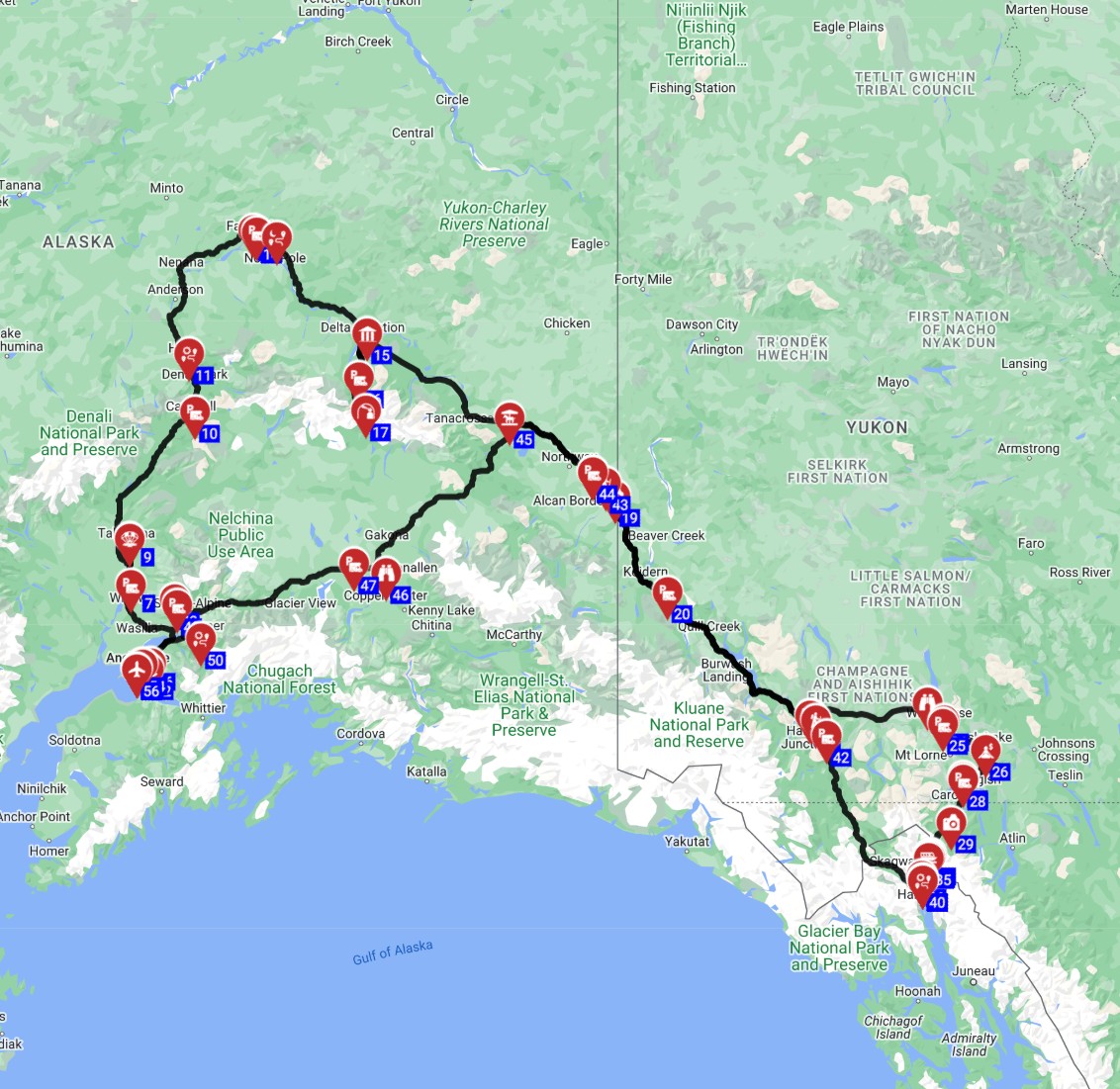
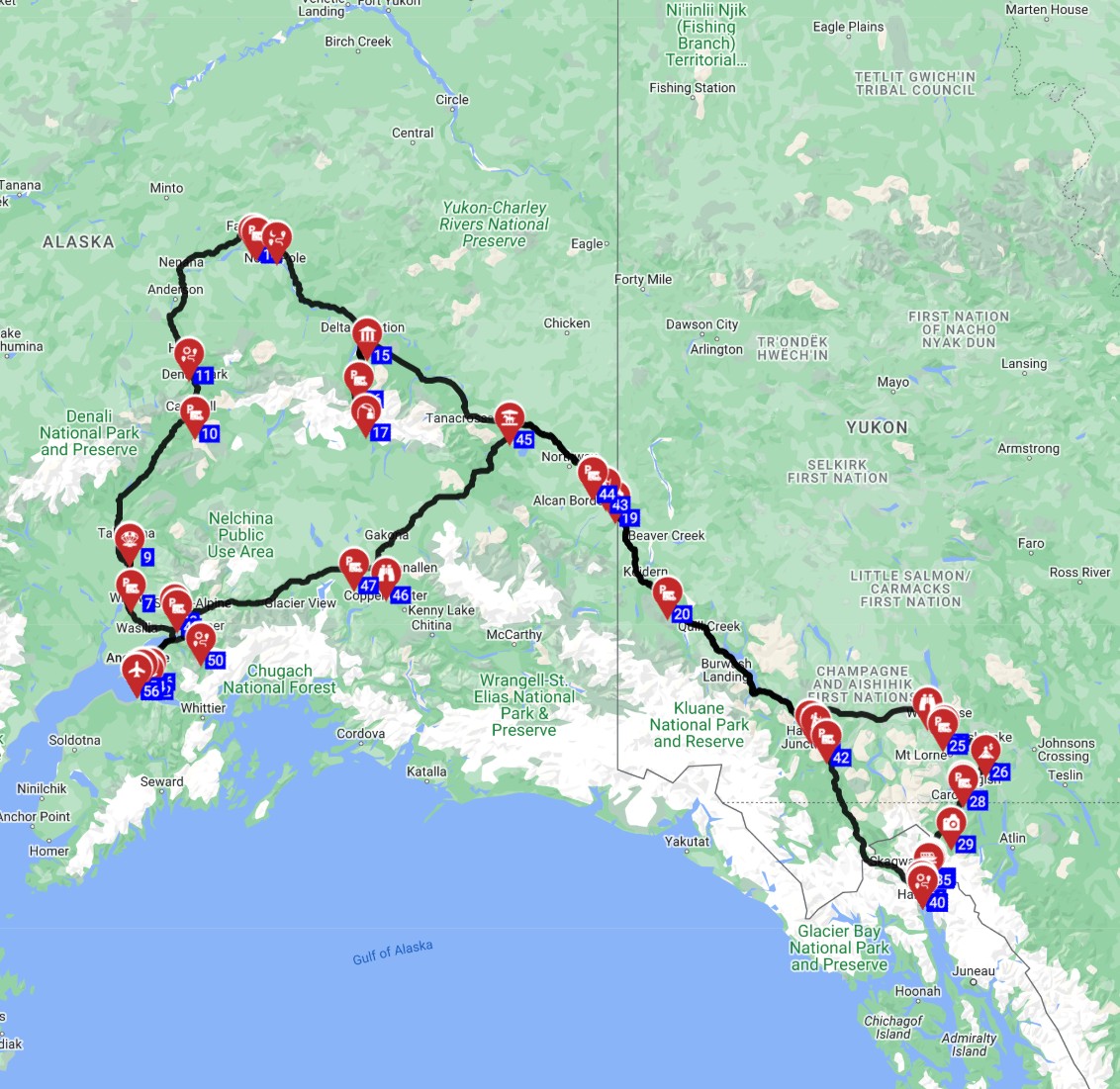
Alternatively, the "
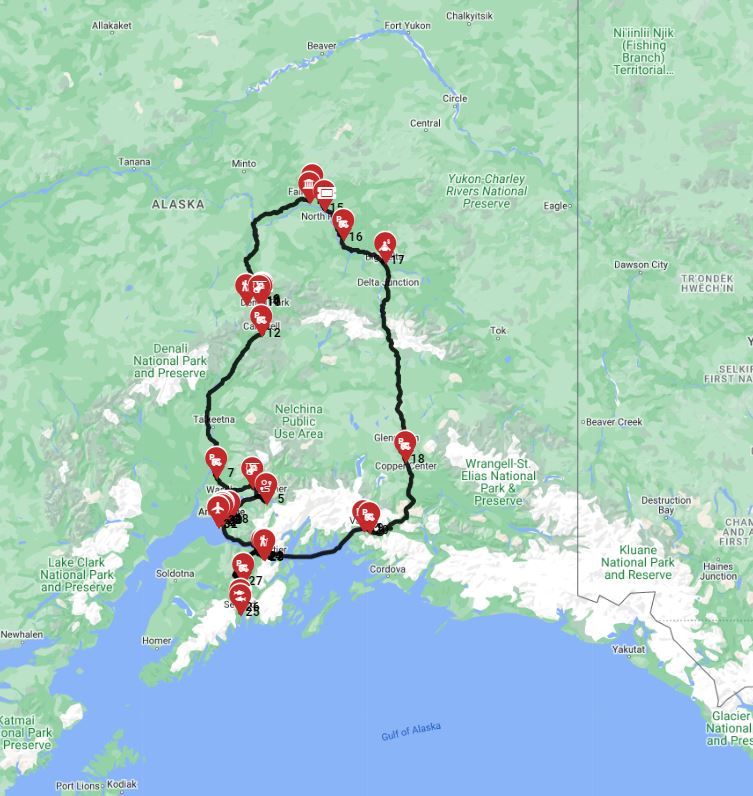
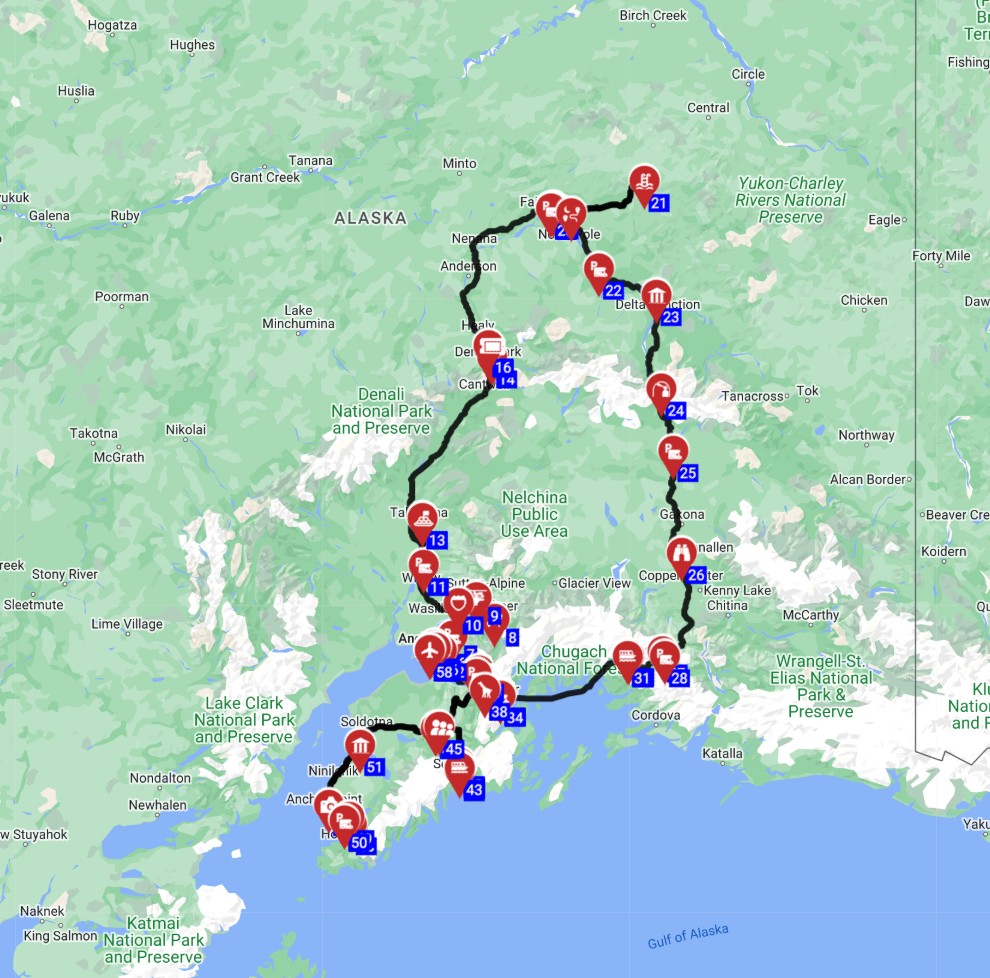
For those looking for a slightly longer focus on the Alaskan interior, the "
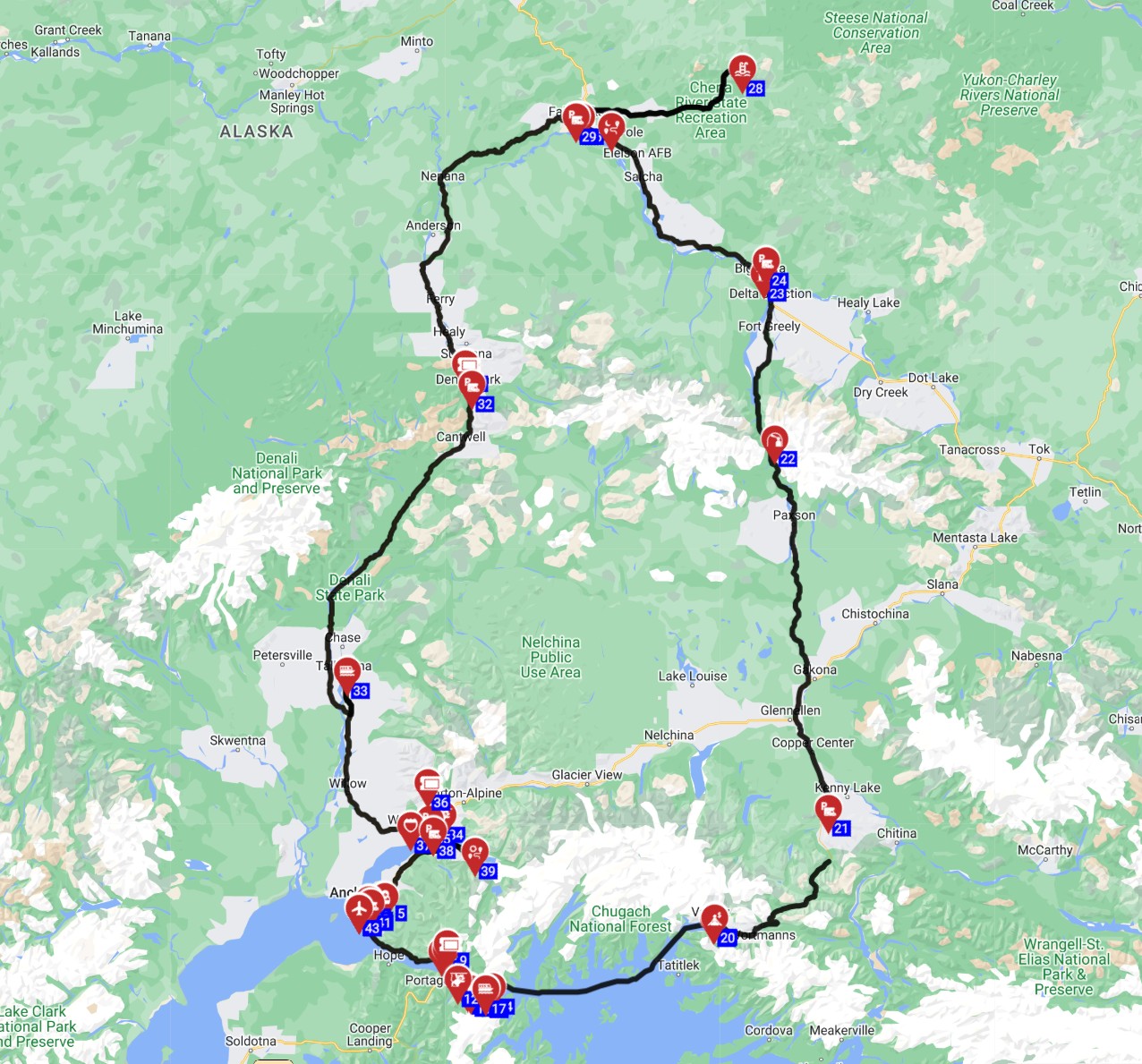
These pre-planned routes from RVPLAN.net (our sister company, offering over 1,300 routes across 5 continents) save you countless hours of research, letting you focus on the excitement of your upcoming RV rental adventure. With Bandana's Rent&Plan service, you not only secure your ideal RV rental but also gain full access to these meticulously designed itineraries and trip-planning software, streamlining your Alaskan adventure from start to finish. Remember, customers using rvplan.net for route planning also receive a 25% discount on planning services.
Must-See Stops Along the Way (Avi Bandana Picks)
Looking for expert insights from Avi Bandana? Top 5 Adventures - recommendations from Avi Bandana emphasize focusing on unique cultural and culinary experiences when exploring Alaska by RV, moving beyond just scenic views. Alaska's charm lies in its vast wilderness and the stories woven into its local communities, offering more than just pretty vistas.
- Denali National Park and Preserve: This is a non-negotiable must-see for its stunning landscapes and unparalleled wildlife viewing opportunities, including grizzly bears, moose, and caribou. Remember, booking a park shuttle bus is essential for deep exploration beyond the initial 15 miles accessible by private vehicles.
- Kenai Fjords National Park (Seward): Experience dramatic coastal scenery by taking a boat tour from Seward. These cruises often reveal calving glaciers, abundant marine wildlife like whales, sea otters, and puffins, providing a different perspective of Alaska's grandeur.
- Wrangell-St. Elias National Park: As America's largest national park, it offers immense, rugged beauty and a profound sense of wilderness. Visit McCarthy and Kennicott for a glimpse into historic copper mining and direct glacier access. You'll park your rented motorhome and use local shuttles to reach these remote spots, making it a unique logistical adventure.
- Valdez & The Richardson Highway: The drive into Valdez on the Richardson Highway is incredibly scenic, showcasing glaciers (like Worthington Glacier), countless waterfalls, and dramatic mountains. Once in Valdez, consider a glacier or wildlife cruise in Prince William Sound.
- Authentic Alaskan Cuisine: The RVPLAN itineraries consistently highlight opportunities to savor local Alaskan cuisine. Look for traditional restaurants or fine dining establishments that feature fresh seafood, such as wild-caught salmon and halibut, or regional game. Cooking meals in your rented RV's kitchen is also a fantastic way to enjoy local ingredients; for inspiration, check out our RV-friendly recipes playlist.
Consider seeking out local markets in towns like Homer or Seward to purchase locally caught fish or artisanal crafts. Engaging with local industries, such as visiting a salmon cannery or a gold mining operation, offers a tangible connection to Alaska's economy and heritage, enriching your entire RV rental trip.
Daily Driving Distances & Drive Times in Alaska
Avi Bandana, our founder, strongly recommends adhering to a maximum of 100 miles or 150 km per day on average when RVing in Alaska. This philosophy of slow travel is crucial to ensure a leisurely pace that allows for spontaneous stops, wildlife viewing, and true immersion in the spectacular scenery. Rushing through Alaska means missing out on countless hidden gems and photo opportunities.
Prioritizing slow travel enables visitors to fully appreciate Alaska's vast landscapes, numerous pull-offs for wildlife viewing, and serene spots that are easily overlooked when trying to cover too much ground. For example, driving from Anchorage to Seward, approximately 125 miles (200 km), typically takes around 2.5-3 hours of pure driving time. However, you'll want to factor in additional hours for stops at scenic overlooks, short hikes, or unexpected wildlife sightings. The journey from Fairbanks to Denali National Park entrance, about 120 miles (193 km), can take approximately 2.5 hours, providing ample time for a relaxed morning and an afternoon park exploration.
Even seemingly shorter drives, such as from Valdez to Worthington Glacier (approximately 30 miles / 48 km), can extend beyond expectations due to the dramatic landscapes and numerous photo opportunities. This emphasizes the need for flexible planning and resisting the urge to pack too much into a single day. Remember, the journey itself is a significant part of the Alaskan RV rental experience, and savoring each moment is key to an unforgettable trip.
Best RV Class for This Itinerary - Couple & Family Picks
Choosing the right RV class significantly impacts your Alaska RV rental experience, with comfort, maneuverability, and space being key considerations for couples and families alike. Bandana, as true RV specialists, offers a diverse fleet of motorhomes and campervans to suit every travel style.
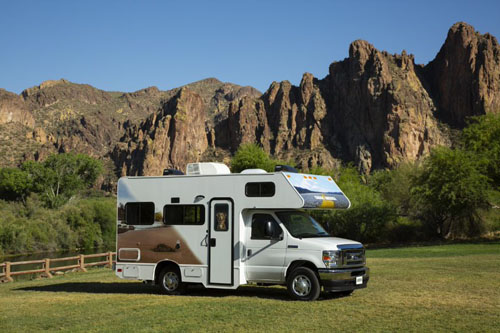
- For a Couple: Class B - Camper Van. Bandana's fleet typically features agile Class B Camper Vans, averaging around 5.8 meters in length with sleeping places for up to 3 people, comfortably accommodating 2.7 adults. These compact units, like our "rv rental denver example Category Van" or "Active Classic," are ideal for navigating Alaska's varied roads, including narrower tracks or smaller campgrounds, offering an agile and fuel-efficient option (typically 8-10 Liter/100 Km). They are perfect for couples seeking flexibility and ease of driving, without sacrificing essential amenities like a shower and toilet.
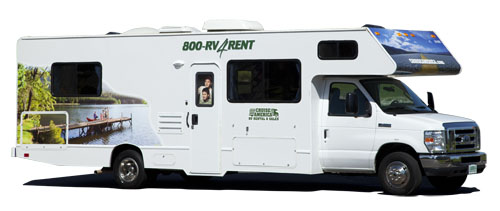
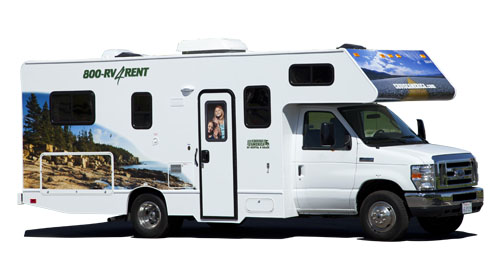
- For a Family: Class C - Alcove. For families with kids or larger groups, Bandana's fleet often includes spacious Class C Alcove RVs. These motorhomes average 7.5 meters in length and offer approximately 5.8 sleeping places, making them suitable for around 4.4 adults, providing ample living and sleeping space. A Class C, such as a "cruise america rv rental example Explorer" (7.1m length, 82L fresh water tank, 11 Liter / 100 Km fuel consumption) or an "rv rentals utah example Sunrise Escape" (7.6m length, 167L fresh water tank, 20-25 Liter / 100 Km fuel consumption), is crucial for families carrying extra gear, offering a comfortable home-on-wheels while maintaining reasonable fuel consumption (typically 10-12 Liter/100 km) for longer Alaskan journeys.
Our Rent&Plan service provides not just the ideal RV rental but also access to pre-planned routes by travel experts with full access to trip-planning software, removing the headache of meticulous planning for your Alaskan adventure. With Bandana, you get a seamless experience, from choosing the perfect rented motorhome to navigating the stunning Alaskan wilderness.
What is the 3-3-3 rule for RV travel?
The 3-3-3 rule for RV travel is a widely adopted guideline emphasizing safety and enjoyment: drive no more than 300 miles, arrive by 3 PM, and stay for at least 3 days. This rule is particularly crucial for Alaskan RV rental adventures due to the vast distances between services, variable road conditions, and the profound desire to fully experience destinations without rushing. Adhering to the 'drive no more than 300 miles' aspect helps prevent driver fatigue, which is especially important on remote Alaskan highways where wildlife encounters are common and cell service is limited.
Arriving by '3 PM' allows ample time to find a suitable campsite (a critical factor for popular spots or those with first-come, first-served policies, which comprise 70-75% of state and national park sites), set up your rented RV, and scout your surroundings before dusk. This early arrival is vital for wildlife safety and settling comfortably into your evening. Staying for 'at least 3 days' at each major stop enables deeper exploration of national parks, charming fishing towns, or wilderness areas, perfectly aligning with the slow travel philosophy recommended for Alaska. This rule also helps manage expectations for connectivity and emergency preparedness; by not over-extending daily drives, you increase the likelihood of reaching areas with better infrastructure or having sufficient daylight to address unexpected issues.
What is the 4-4-4 rule for RV travel?
The 4-4-4 rule for RV travel is a variation of the 3-3-3 guideline, recommending drivers cover no more than 400 miles, arrive by 4 PM, and stay for at least 4 nights, offering slightly more flexibility for experienced RVers on specific routes. While similar to the 3-3-3 rule, the 4-4-4 guideline might be considered for a return trip from Alaska or when traversing well-maintained, less winding sections of highway where driving conditions are less demanding. However, for the initial 'Journey To' Alaska, especially when navigating the Alaska or Cassiar Highways through Canada, adhering to the 3-3-3 rule is generally more prudent due to unpredictable road conditions, construction, and the need for more frequent rest stops.
The increased mileage (400 miles) and later arrival time (4 PM) associated with the 4-4-4 rule require heightened awareness of potential challenges. These include driver fatigue, fuel availability (which can be sparse in remote regions), and the ability to find a suitable campground quickly, particularly when crossing international borders. Staying for 'at least 4 nights' allows for an even more relaxed pace and greater opportunities for unique and off-the-beaten-path camping experiences, such as exploring remote dispersed camping spots or dry cabins in state parks, once you've arrived at your desired destination. This extended stay minimizes packing up and setting up, allowing more time for genuine exploration from your rented motorhome.
What is the best time of year to RV to Alaska?
The best time of year to RV to Alaska is generally from mid-June to mid-August, offering the warmest weather, longest daylight hours (often over 18 hours), and the widest availability of services and attractions. During this peak summer season, most campgrounds, visitor centers, and tour operators are fully operational, and the roads are typically in their best condition. However, this is also the busiest and most expensive time for an RV rental in Alaska, requiring advance bookings for motorhomes, campsites (especially in popular National Parks like Denali), and popular excursions. Booking 3-6 months in advance can significantly improve your chances of securing preferred dates and vehicles.
Late May to early June provides fewer crowds and often lower prices, potentially saving you up to 15-20% on weekly RV rental rates in Alaska. However, some high-elevation passes or attractions might still be inaccessible due to lingering snow, and services may have limited hours. Late August to early September offers cooler temperatures, stunning fall foliage, a chance to see the Northern Lights (especially later in the season as daylight hours shorten), and fewer tourists. For the arduous drive to Alaska via Canada, July and August offer the most reliable road conditions for the Alaska Highway or Cassiar Highway, minimizing risks associated with spring thaw or early winter conditions. Regardless of your travel time, consider mosquito season, which peaks in June and July; packing appropriate repellents and screens for your rented campervan is essential.
What is the best route to Alaska by RV?
The two primary and most popular routes for RVing to Alaska via Canada are the Alaska Highway (ALCAN) and the Cassiar Highway (Highway 37), each offering distinct advantages for the multi-day drive. For more details on budgeting for such an extended journey, including fuel and international costs, refer to our "One-Way RV Rental in Alaska - Price Guide 2026" which also touches on trans-border travel.
- The Alaska Highway: This is the most iconic and well-traveled route, starting in Dawson Creek, BC, and extending over 1,300 miles (2,090 km) to Delta Junction, AK. It is known for its historical significance and generally better road maintenance. This route offers more services, fuel stops, and towns along the way, making it a more comfortable option for first-time RVers to Alaska, though segments can still be rough due to permafrost heaves and ongoing construction.
- The Cassiar Highway (Highway 37): This is a more remote and often more scenic alternative, branching off the Yellowhead Highway (Highway 16) in British Columbia and connecting to the Alaska Highway near Watson Lake, Yukon. The Cassiar is typically narrower with fewer services, making it a better choice for those seeking a wilder, more adventurous drive and who are well-prepared with extra fuel and supplies for their rented motorhome.
Both routes require proper planning for border crossing procedures into Canada, including required documentation (passport, vehicle registration for your rented RV), restricted items (e.g., firearms, certain foods), and awareness of Canadian currency exchange rates. Essential preparations for either route include carrying at least two full-size spare tires, extra fuel, a well-stocked emergency kit, and a communication device like a satellite messenger due to extensive stretches without cell service. We encourage exploring "RV Travel Guide to Alaska - Tips and Top Spots 2026" for more practical advice on these routes.
Can I park my RV anywhere in Alaska?
No, you cannot park your rented RV just anywhere in Alaska; regulations vary significantly by land ownership, requiring careful attention to avoid fines, ensure safety, and protect the environment. Understanding these rules is crucial for responsible RV rental travel. Drive slowly and carefully, and you can drive almost anywhere without issues. No need to stress - just use common sense and pay attention.
- Boondocking (dispersed camping) is permissible on much of Alaska's public lands managed by the Bureau of Land Management (BLM) and some National Forests. However, always check local regulations and adhere strictly to Leave No Trace principles, especially regarding waste disposal and campfires.
- National Parks and State Parks have designated campgrounds, often requiring reservations well in advance, particularly for popular spots like those in Denali National Park. These parks typically prohibit off-road or dispersed camping within their boundaries to protect sensitive ecosystems and manage visitor impact. Many campgrounds, however, operate on a first-come, first-served basis for 25-30% of their spots; if the first is full, just call ahead to the next.
- Private property always requires explicit permission from the landowner. Parking in towns or cities is typically restricted to designated RV parks or paid parking lots, so plan your overnight stays accordingly.
Crucial wildlife safety protocols, such as proper food storage in bear-resistant containers and maintaining a safe distance from animals, must be strictly followed regardless of where you park your rented motorhome. Never feed wildlife or leave food unattended. Information on cell service availability along various routes is vital for emergency preparedness, as many remote areas lack coverage, making a satellite communication device a wise investment for your peace of mind.
What should I not miss in Alaska?
Beyond the major tourist hubs, RV travelers to Alaska should prioritize experiences that offer genuine connection to its wilderness, unique culture, and local character. When planning your route with a rented motorhome, consider these highlights:
- Denali National Park and Preserve: As mentioned, this is a definite must-see. The sheer scale and beauty are incredible, and it's one of the best places in North America for wildlife viewing.
- Kenai Fjords National Park (Seward): A boat tour here is an unforgettable experience, showcasing dramatic tidewater glaciers and marine life, including whales, seals, and puffins. The town of Seward itself offers excellent fishing charters.
- Wrangell-St. Elias National Park & Preserve: This immense park is larger than Switzerland and offers rugged, unspoiled wilderness. Visiting McCarthy and Kennicott provides a fascinating blend of history and adventure, with opportunities for glacier hikes.
- Valdez & The Richardson Highway: The drive through Thompson Pass to Valdez is renowned for its waterfalls and glaciers. In Valdez, take a boat tour into Prince William Sound for more glacier and wildlife viewing.
- Local Hot Springs: Beyond Chena Hot Springs near Fairbanks, consider other remote hot springs for a unique and relaxing wilderness experience.
- Matanuska Glacier: Its accessibility makes it a unique opportunity to walk on a massive glacier, often with guided tours available right from your parking spot.
- Homer & the Homer Spit: Known as the "Halibut Fishing Capital of the World," Homer offers a vibrant arts scene, excellent seafood, and incredible views across Kachemak Bay. You can catch charter fishing trips from the Homer Spit, which is an adventure in itself.
Packing and gear specifics are essential for an Alaskan RV rental trip. Bring quality binoculars for wildlife viewing, bear spray (and know how to use it safely), fishing equipment (if you plan to fish, ensure you have appropriate licenses), and layered clothing suitable for rapidly changing Alaskan weather, even in summer. Always be prepared for all conditions. Remember, Bandana is with you before, during (coordination), and after your booking, providing support and ensuring your peace of mind.
Final Thoughts
Renting an RV in Alaska offers an unparalleled opportunity to discover its wild beauty, from towering glaciers to abundant wildlife, all at a pace that suits your adventurous spirit. Whether you opt for a compact campervan for two or a spacious motorhome for the entire family, remember to embrace the journey as much as the destination. We encourage you to travel slowly, allowing approximately 100-150 km per day on average, so you can truly feel the place, connect to the culture, the incredible food, and the stunning scenery.
With Bandana Caravan, you're not just booking an RV rental; you're gaining a partner dedicated to making your Alaskan dreams a reality. We handle all the details, so you can focus on living the journey, confident in our transparent pricing, expert knowledge, and supportive service from day one. God is in the small details, and we take care of them. That's what makes the big difference in your travel experience.
Imagine yourself cruising along scenic highways, waking up to majestic mountain views, and making memories that will last a lifetime. Your Alaskan RV adventure is waiting!
🎬 Video coming soon