In This Guide
- Can You Drive an RV in West Canada? License & Age Rules
- Road Conditions & Terrain in West Canada
- RV Size Limits, Bridges & Restricted Zones
- Fuel: Diesel vs. Petrol & Cost per 100 km
- Tolls, Vignettes & Border Rules
- Driving Tips for rv rental beginners Travelers
- Recommended RV Class for West Canada Roads
- Should I Choose a Compact Van Instead of a Large RV in West Canada?
- Can I Park Anywhere? Free & Wild Camping Rules in West Canada
- Can I Drive an RV Into the City Center? Heights, Tunnels & Local Signage
- What do I need to know before renting an RV in Canada?
- How much does it cost to RV in West Canada?
- What is the best RV for Canada?
- Is it safe to RV in Canada?
- Can I bring my dog in an RV to Canada?
- What is the best time of year to RV in Western Canada?
Can You Drive an RV in West Canada? License & Age Rules
Yes, most rental RVs in West Canada can be driven with a standard car driver's license. Specifically, RVs under 11,000 kg (26,000 lbs) Gross Vehicle Weight Rating (GVWR) typically only require a standard Class 5 (or equivalent) driver's license, which is what most drivers already possess. Rental companies generally have a minimum age requirement, usually 21 years old, though some may require drivers to be 25, particularly for larger or more powerful RV classes like Class A motorhomes, due to insurance policies. For foreign visitors, a valid driver's license from your home country is essential. While not always mandatory, an International Driving Permit (IDP) is highly recommended as it provides a translated version of your license, aiding communication with authorities and rental staff if needed. Larger RVs exceeding the 11,000 kg GVWR limit may necessitate a higher license class, but these are uncommon in rental fleets.
Road Conditions & Terrain in West Canada
West Canada boasts a remarkably diverse landscape, reflected in its road network. You'll find extensively maintained paved highways that are excellent for RV travel, particularly along major routes like the Trans-Canada Highway. However, as you venture into more remote areas or national parks, be prepared for varying terrain. Mountainous regions, such as the Canadian Rockies, feature steep grades and sharp curves that require cautious driving. Many roads leading to campgrounds or attractions in these areas may be unpaved or gravel. It’s crucial for beginners to anticipate these conditions and drive slowly to manage dust, loose rocks, and the vehicle's handling. Embracing a slower pace of travel allows you to adapt to unfamiliar routes, enjoy the scenery, and be more aware of potential wildlife encounters. Slow, scenic driving is not just a recommendation; it's often a necessity for a safe and enjoyable RV experience.
RV Size Limits, Bridges & Restricted Zones
Navigating West Canada in an RV is generally straightforward, as most major roads and infrastructure are designed to accommodate standard RV sizes. However, always be observant of signage, particularly for specific height and weight restrictions. Pay close attention to signs indicating low bridges, tunnels, and entrances to certain parkways or historical sites, especially if you're driving a larger Class C or Class A RV. If you plan on using ferries, such as BC Ferries, be aware that surcharges are often applied based on vehicle length and height, and booking well in advance for larger rigs is essential. Some scenic parkways or roads within national parks may have seasonal restrictions on vehicle length, height, or even type. It’s always wise to check the official websites of national and provincial parks or consult your rental provider for any specific route limitations before you set out.
Fuel: Diesel vs. Petrol & Cost per 100 km
The majority of rental RVs in West Canada, particularly the larger motorhomes and Class C models, operate on diesel fuel. Diesel is widely available across the country at most service stations. For context from Bandana's fleet, Class B Camper Vans typically consume between 8-10 liters per 100 km. Semi-integrated RVs (like Class SI) average around 10-11 L/100 km, while larger Class C "Alcove" models might see consumption of 10-12 L/100 km. Truck Campers (Class TC) can range from 12-17 L/100 km. Therefore, fuel is a significant, albeit variable, expense. Based on 2026 average diesel prices in West Canada, which have ranged from approximately $1.80 to $2.20 CAD per liter, you can estimate your daily fuel cost. For instance, a larger RV consuming 15 L/100 km could spend between $27 and $33 CAD for every 100 kilometers driven. Some rental companies may offer fuel discount cards, which can be helpful for managing your travel budget. On the routes offered through RV PLANET routes, you can itemize and track every expense along the way for easy budgeting.
Tolls, Vignettes & Border Rules
One of the appealing aspects of RVing in West Canada is the relative simplicity of its road charging systems. There are very few tolled roads or bridges, and no vignette system is in place, which means no stickers or special permits are required for using the roads, making navigation easier for beginners. If your itinerary includes crossing the border into the United States, ensure all occupants have valid passports. You'll also need specific documentation for the RV itself and any pets traveling with you. Be prepared for customs procedures at the border; declare all goods accurately and confirm that your rental agreement explicitly permits international travel. It's crucial to verify that your insurance coverage extends to the US. For pet owners, carrying up-to-date rabies vaccination certificates and any other required health documentation is essential for both entry into the US and re-entry into Canada.
Driving Tips for rv rental beginners Travelers
Before embarking on your West Canada RV adventure, take some time to practice driving and maneuvering your rented vehicle in an open, uncrowded space. This will help you get accustomed to its size, turning radius, and braking distance. Always maintain significantly more stopping distance than you would in a car; RVs are heavier and require longer braking times. When descending steep mountain passes, especially in areas like the Canadian Rockies, utilize lower gears to control your speed and prevent brake overheating. Wildlife is abundant, particularly at dawn and dusk, so be extra vigilant on rural roads and within park areas. Slow down, avoid sudden swerving, and never approach wild animals. For longer drives, plan for frequent stops every 2-3 hours to rest, stretch, and perform quick vehicle checks – this is especially important for families on extended journeys.
Recommended RV Class for West Canada Roads
For those new to RVing in West Canada, Class B Camper Vans, like Bandana's fleet average of 5.8m length, are highly recommended. Their compact size and maneuverability make them ideal for solo travelers or couples, offering easier driving, parking, and better fuel efficiency, especially beneficial in cities or on narrower mountain roads. Class SI Semi-integrated RVs, averaging around 6.9m in length, provide a good balance of increased living space and amenities while remaining relatively manageable for first-time drivers, making them suitable for small families or groups. While Class C Alcove RVs (averaging 7.5m length) and Class A Integrated RVs offer ample living space and amenities, their larger dimensions can present more of a challenge on winding mountain roads or in busy tourist hubs. When selecting your RV class, consider your group size, desired onboard facilities, and your personal comfort level with driving a larger vehicle. For exploring West Canada, a Class B or a compact Class SI often strikes the best balance for beginners.
Should I Choose a Compact Van Instead of a Large RV in West Canada?
While a compact van excels in maneuverability and fuel efficiency, especially in urban settings or tight spaces, West Canada's main routes and many secondary roads are generally well-suited for larger RVs. The primary advantage of a larger RV, such as a Class SI or Class C, is the significantly greater indoor living space, enhanced comfort, and better onboard amenities like full kitchens, bathrooms, and more spacious sleeping areas. For longer trips, these comforts often outweigh the marginal differences in maneuverability. For beginners, the perceived difficulty of driving a larger RV is usually overcome quickly, and the increased comfort can truly elevate the overall travel experience. Your decision should primarily be guided by your group size, your desire for onboard amenities, and the anticipated length of your trip, as West Canada's infrastructure generally accommodates a wide range of RV sizes effectively.
Can I Park Anywhere? Free & Wild Camping Rules in West Canada
No, free and wild camping (often referred to as boondocking) in West Canada is not permitted everywhere. It's primarily restricted to designated areas, often found on Crown land, and national or provincial parks strictly require advance reservations for their designated campsites. In British Columbia and Alberta, overnight parking on Crown land is generally permitted for up to 14-21 days in a single spot, provided you adhere to "leave no trace" principles and are mindful of local fire bans or specific restrictions. National and Provincial Parks mandate advance reservations for campsites, especially during peak tourist seasons, and prohibit overnight parking outside these designated areas. Most towns and cities have bylaws that prohibit overnight RV parking on streets or in public parking lots. Always seek out private campgrounds, designated RV-friendly parking lots, or truck stops if you are unsure. Confirming local regulations and signage before parking overnight is crucial, as non-compliance can lead to fines.
Can I Drive an RV Into the City Center? Heights, Tunnels & Local Signage
Yes, RVs can generally be driven into most West Canadian city centers using the main arterial routes. However, it is critical to pay very close attention to local signage, especially regarding height limits when approaching older bridges, tunnels, or attempting to enter underground parking garages, which are typically too low for RVs. While Canada does not have widespread environmental zones or "residents-only" streets that restrict RV access, parking within city centers can be challenging due to limited space for larger vehicles. To navigate urban areas more effectively, consider using RV-specific GPS devices or mapping applications that account for vehicle dimensions. These tools can help you identify suitable, larger parking options or suggest transit connections from the city outskirts, simplifying your urban exploration.
What do I need to know before renting an RV in Canada?
Before you rent an RV in Canada, understanding the local requirements is key. Confirm that your driver's license is valid for RV operation; typically, a standard license is sufficient for most common rental RVs, and the minimum driver age is usually between 21 and 25, depending on the supplier and vehicle class. Thoroughly review your rental agreement, paying close attention to mileage limits, insurance options, pet policies, and what amenities are included versus optional add-ons, to avoid unexpected costs. It’s also essential to research your desired routes and popular campgrounds, especially within National and Provincial Parks, as reservations are often required months in advance. Budget comprehensively, accounting for daily rental rates, estimated fuel expenses, campground fees, National Park passes, food, and activities. If you plan to cross the border from the US, ensure you have valid passports for all passengers, the necessary pet documentation if applicable, and confirm that your rental company permits cross-border travel and provides adequate insurance coverage.
How much does it cost to RV in West Canada?
The total cost for an RV trip in West Canada can vary significantly, typically ranging from CAD $150 to $500+ per day. This range depends heavily on factors like the RV class chosen, the season of travel, and your personal travel style. Rental fees are a major component; expect daily rates for smaller RVs like Class B camper vans to start around $100-$250, while larger classes such as Class C or SI motorhomes can range from $150-$400+ per day. Fuel is another substantial variable; with Bandana's fleet averaging 8-17 liters per 100 km, budget approximately $15-$37 per 100 km based on 2026 diesel prices. Campground fees also add to the daily expenses, typically ranging from $25-$50+ per night for basic sites in national or provincial parks to $40-$80+ for full hookups at private campgrounds. Boondocking, where permitted, can be free. Don't forget additional costs like National Park passes (mandatory for entry), food and groceries (budget $50-$100+ daily for a family), potential insurance add-ons, and costs for various activities.
What is the best RV for Canada?
Determining the "best" RV for Canada really depends on your specific needs, including group size, budget, desired comfort level, and planned itinerary. For solo travelers or couples exploring Canada, Class B Camper Vans (Bandana's fleet averages 5.8m in length) are excellent choices, offering ease of driving, better fuel economy, and flexibility for both urban and remote exploration. Class SI Semi-integrated RVs (average 6.9m length) provide a versatile option for small families (3-4 people), balancing living space and amenities with manageable driving characteristics. For larger families (4-6 people) who prioritize sleeping capacity and onboard facilities, Class C Alcove RVs (average 7.5m length) are a great fit, though they do require more cautious driving. Consider if your priority is maneuverability for tight mountain roads and city parking (Class B), or if comfort and space for longer journeys with a larger group are more important (Class SI, C).
Is it safe to RV in Canada?
RVing in Canada is generally very safe, but beginners should be prepared for specific regional challenges. Wildlife encounters, particularly with bears, moose, and deer, are common. Drive defensively, especially at dawn and dusk, secure food properly, and never approach wild animals. In remote areas of West Canada, expect spotty cell service and significant distances between fuel stations; always carry emergency supplies and extra water. Weather can change rapidly, particularly in the mountains, with potential for sudden rain, strong winds, or even summer snow at higher elevations. It’s crucial to familiarize yourself with your rental RV's systems and ensure it's in good working order. Always know your roadside assistance and emergency contact procedures; remember that 911 is the emergency number across Canada.
Can I bring my dog in an RV to Canada?
Yes, you can generally bring your dog in an RV to Canada, provided you have a valid rabies vaccination certificate signed by a licensed veterinarian for dogs over 3 months old. When crossing the US-Canada border, be prepared for inspection by the Canada Border Services Agency (CBSA) of your pet's documentation; carrying a recent health certificate is also a wise precaution. Importantly, confirm your RV rental company's specific pet policy. Most companies are pet-friendly but may charge an additional cleaning fee and have specific rules regarding pet size or breed. Always adhere to provincial and national park regulations, which typically require dogs to be leashed and may prohibit them from certain trails, buildings, or sensitive wildlife areas. Ensure your RV is safe and comfortable for your dog during travel, providing proper ventilation and never leaving pets unattended, especially in warm weather.
What is the best time of year to RV in Western Canada?
For first-time RVers in Western Canada, the ideal times to visit are generally late spring (May-June) and early fall (September-October). These periods offer a pleasant balance of moderate weather, fewer tourist crowds, and most facilities and services being fully operational. Summer (July-August) provides the warmest weather and complete access to all roads and attractions, but it also brings peak tourist crowds, higher rental and campground prices, and the potential for wildfire smoke in some regions. Late spring is wonderful for seeing wildflowers and enjoying mild temperatures with fewer people, though some higher elevation roads might still be inaccessible early in the season, and services might have limited hours. Early fall is spectacular for autumn foliage, crisp air, and significantly reduced crowds, making it perfect for scenic drives and wildlife viewing before many campgrounds begin to close in late October. Winter (November-April) RVing is only recommended for experienced cold-weather travelers with properly winterized RVs, as many roads close, services are limited, and driving conditions can be challenging due to snow and ice.
What You Shouldn't Miss
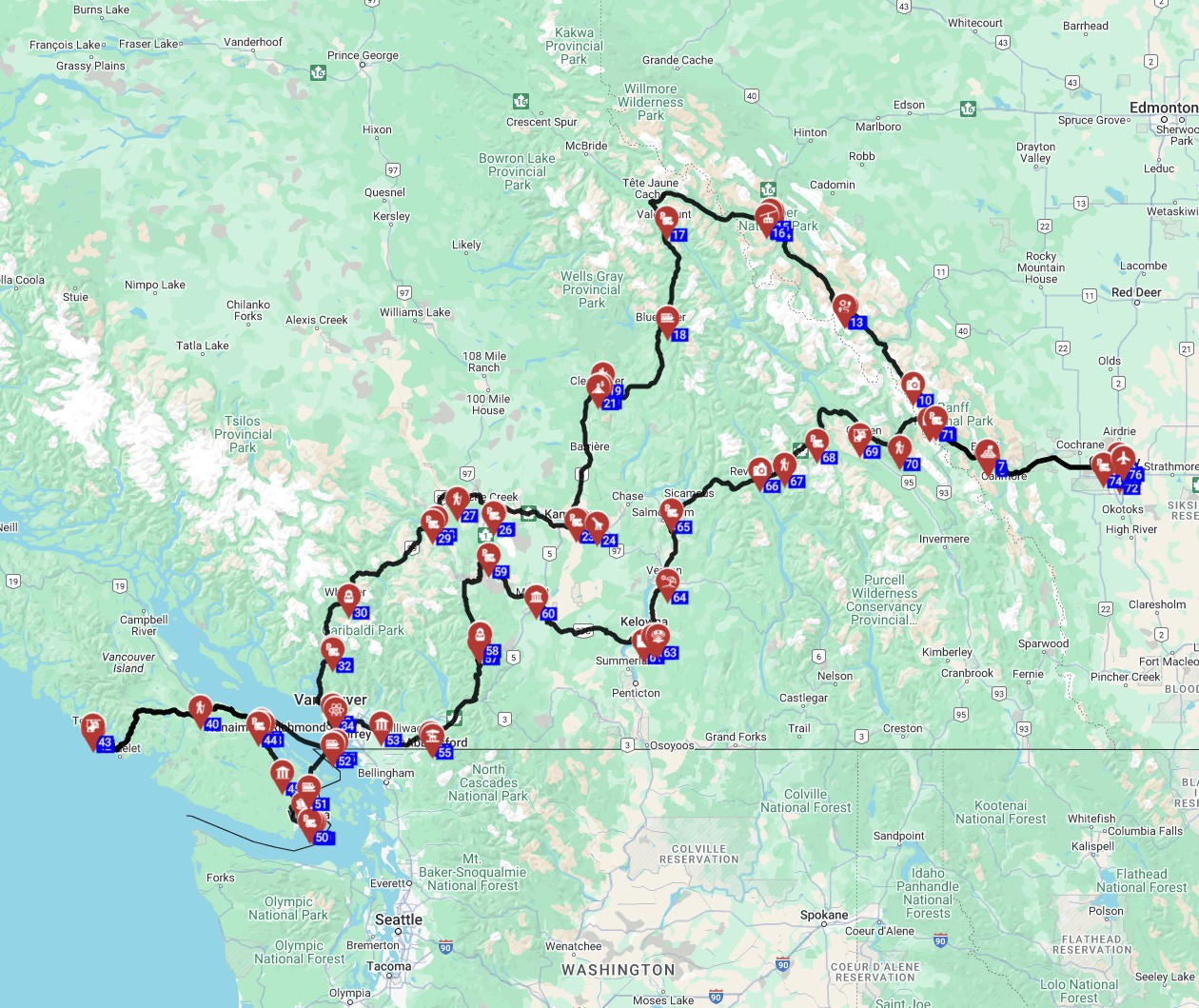
- Drive a portion of the Icefields Parkway (Highway 93N) in Alberta, renowned as one of the most scenic drives globally, and be sure to stop at viewpoints like Peyto Lake and Athabasca Glacier.
- Explore the dramatic coastal scenery of British Columbia, perhaps driving the Sea-to-Sky Highway (Highway 99) from Vancouver towards Whistler, with potential stops at Shannon Falls and the Sea to Sky Gondola.
- Visit at least one of Western Canada's iconic national parks: Banff, Jasper, Yoho, or Glacier National Park. Plan ahead for campsite reservations as spots fill up quickly.
- Experience the unique "Dark Sky Preserve" atmosphere in Jasper National Park, offering unparalleled stargazing opportunities away from city lights.
- Take a scenic drive through the Okanagan Valley in British Columbia, known for its wineries, orchards, and beautiful lakes, perfect for a leisurely RV excursion.
- Keep an eye out for abundant wildlife, from elk and deer to bears and bighorn sheep, particularly in and around national parks. Always maintain a safe distance and never feed wild animals.
Final Thoughts
Embarking on your first RV adventure in West Canada is an incredibly rewarding experience. By understanding the basics of driving, road conditions, and rental specifics, you can set yourself up for a smooth and unforgettable journey. Remember to plan ahead for popular sites, pack smart, and most importantly, embrace the freedom of the open road.
With Bandana Caravan, you benefit from our deep expertise and commitment to transparency, ensuring you find the perfect RV for your Canadian exploration. We're here to support you every step of the way, from initial booking to the final mile of your trip.
Discover the breathtaking landscapes and unique experiences that await you in West Canada. Start planning your dream RV road trip today and create memories that will last a lifetime!