In This Guide
- Can You Drive an RV in Paris? License & Age Rules
- Road Conditions & Terrain in Paris
- RV Size Limits, Bridges & Restricted Zones
- Fuel: Diesel vs. Petrol & Cost per 100 km
- Tolls, Vignettes & Border Rules
- Driving Tips for rv rental Travelers
- Recommended RV Class for Paris Roads
- Should I Choose a Compact Van Instead of a Large RV in Paris?
- Can I Park Anywhere? Free & Wild Camping Rules in Paris
- Can I Drive an RV Into the City Center? Heights, Tunnels & Local Signage
- Do I need a Crit'Air sticker for my motorhome in France?
- Are D-roads in France suitable for motorhomes?
- Do I have to pay Paris low emission zone?
- Is France motorhome friendly?
- Can I drive in Paris with a US driver's license?
- Can you own an RV in Europe?
- What kind of license is required for an RV?
- How much is insurance on a $200,000 RV?
- Does France have public liability insurance?
Can You Drive an RV in Paris? License & Age Rules
A standard B driver's license is sufficient for driving most rented RVs up to 3,500 kg (7,700 lbs) in France, which covers many popular campervans and smaller Class C or Class SI motorhomes available for rental. For RVs exceeding 3,500 kg, a C1 or C license is required, though these are typically larger vehicles less common for first-time renters in urban areas. Most Bandana rental partners in Paris require drivers to be at least 21 years old and to have held their license for a minimum of 2-3 years, with no young driver surcharges based on vehicle class. US citizens driving a rented motorhome in France should carry an International Driving Permit (IDP) alongside their valid US driver's license, especially for stays over 90 days, though it's recommended for any length of trip to simplify any interactions with authorities. Remember, you can always count on our pre-booking comparison and booking support to clarify any licensing questions.Road Conditions & Terrain in Paris
Paris's urban road network is generally well-maintained, but it is characterized by high traffic density, particularly on the Périphérique ring road that encircles the city. Navigating Parisian streets with a rented RV requires vigilance due to potentially narrow lanes, complex one-way systems, and numerous intersections. Once you venture immediately outside the city center, roads are typically good, leading to a mix of national (N), departmental (D), and toll motorways (A) that offer smoother travel. Drive slowly and carefully, and you can drive almost anywhere without issues; there's no need to stress, just use common sense and pay attention.RV Size Limits, Bridges & Restricted Zones
When driving a rented RV in Paris, you must adhere to strict height and weight limits, particularly when considering underground parking garages or passing under historic bridges. Paris operates a Low Emission Zone (ZFE) where specific vehicles, including motorhomes, are restricted based on their Crit'Air vignette during certain hours, a critical detail for any first-time RV driver in the area. Additionally, be aware of Zone à Trafic Limité (ZTL) areas, such as the area around Les Halles, and bus lanes which are generally off-limits to private vehicles, including RVs, and are often monitored by cameras. Always look for clear signage that indicates these restrictions before proceeding.Fuel: Diesel vs. Petrol & Cost per 100 km
Most motorhomes and campervans in Bandana's fleet available for rental in Paris and across France run on diesel fuel, which is widely available at service stations along motorways and in towns. A Class SI - Semi-integrated RV typically consumes around 10-11 Liters/100 km, offering good fuel efficiency for its size. Larger Class C - Alcove RVs average slightly higher, at 10-12 Liters/100 km, due to their increased frontal area and weight. For those prioritizing fuel economy and city maneuverability, compact Class B - Camper Vans are the most efficient, often achieving 8-10 Liters/100 km. You should budget for fuel costs based on average consumption and dynamic prices, keeping in mind that some rentals might include fuel discount cards. For a comprehensive overview of trip costs, remember that RV PLANET routes allow you to itemize and track every expense along the way for easy budgeting.Tolls, Vignettes & Border Rules
France has an extensive network of toll motorways, known as `autoroutes`, where charges are distance-based and typically paid at toll booths or through automated systems. While there is no general vignette system for motorways in France, a Crit'Air vignette is mandatory for accessing Low Emission Zones (ZFEs) in cities like Paris, as further detailed in our RV Travel Guide to Paris - Tips and Top Spots 2026. Some Bandana partner suppliers offer rented motorhomes equipped with pre-purchased toll passes (e.g., Liber-t badge) to streamline your journey and avoid potential fines on toll roads. For cross-border adventures from France to neighboring countries within the Schengen Area, such as Belgium or Germany, border checks are often minimal, but always have your passport and rental documents readily available.Driving Tips for rv rental Travelers
To make your first time driving a rented RV in Paris smooth and enjoyable, careful route planning is essential, especially to avoid heavily restricted urban areas like the central Zone à Trafic Limité and to utilize GPS systems optimized for RVs. Familiarize yourself with French road signs, particularly those indicating height and weight restrictions, and environmental zones, before you start your journey. We always recommend slow travel, averaging no more than 100-150 km per day, allowing ample time for travel, particularly around Paris's busy Périphérique, which can experience significant congestion during peak hours. For enhanced comfort in stop-and-go urban traffic, consider opting for an automatic transmission RV when comparing options. Don't forget that using our Rent&Plan service earns you a 25% planning discount on your pre-planned routes designed by professionals.Recommended RV Class for Paris Roads
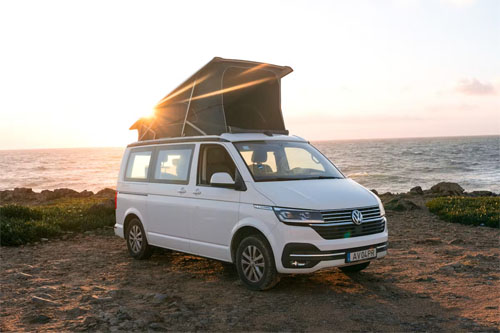
For navigating Paris and its surrounding areas, a Class B - Camper Van or a smaller Class SI - Semi-integrated RV is often recommended due to its superior maneuverability. Class B - Camper Vans, with an average length of 5.8m, offer compact dimensions ideal for urban driving, fitting into tighter parking spaces, and generally feeling more like a large car. Smaller Class SI - Semi-integrated RVs, averaging 6.9m in length, provide a good balance of comfortable living space and relative ease of handling on French roads, making them suitable for couples or small families. Vehicles like the "luxury rv rentals example Carthago Malibu 600" or the "Active Pop Top Select" are good examples of highly maneuverable campervans and semi-integrated motorhomes.Should I Choose a Compact Van Instead of a Large RV in Paris?
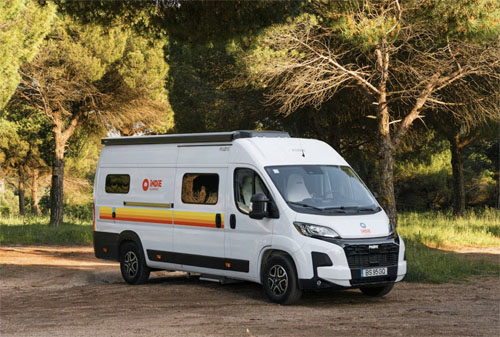
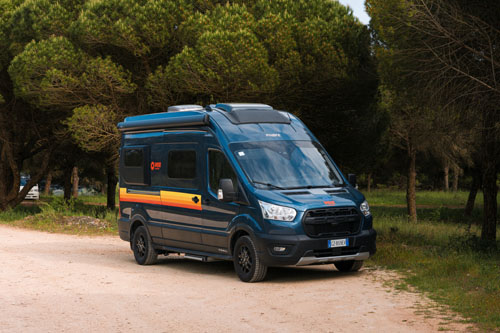
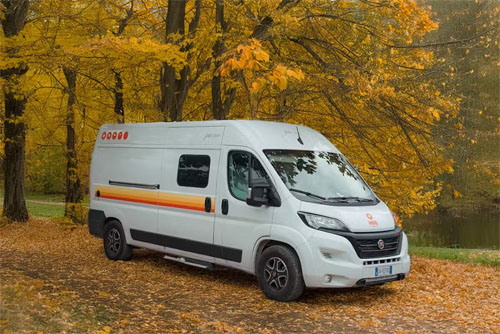
Choosing between a compact campervan and a larger motorhome for your Paris adventure involves balancing maneuverability with comfort. While a compact camper van (Class B) offers superior agility in very tight historic centers and narrow village roads, larger RVs often provide a more comfortable living experience for extended trips with more amenities. For travel in and around Paris, the decision often balances interior comfort and amenities against marginal gains in agility, as many central areas have generalized restrictions for all larger vehicles. A larger Class SI or Class C RV, like the "cruise america rv rental example Explorer" (7.1m length) or the "MHC24" (7.3m length), provides more sleeping capacity (e.g., Class C averages 5.8 sleeping places vs. Class B's 3.2), more storage, and better facilities, which can be invaluable for families or longer journeys. Consider a compact van if your itinerary prioritizes squeezing into the smallest spots or frequently navigating exceptionally narrow village roads; otherwise, a larger RV might offer better overall comfort without significantly hindering your Paris experience, especially if you plan to stay at campsites on the outskirts.Can I Park Anywhere? Free & Wild Camping Rules in Paris
Wild camping and overnight parking outside designated areas are generally restricted or illegal within Paris and its immediate suburbs, including areas around the Arc de Triomphe or the Eiffel Tower. Travelers with a rented motorhome should plan to use official campsites, municipal campgrounds like Camping de Paris in the Bois de Boulogne, or designated 'Aires de Service' for motorhomes to park and stay overnight. France offers an excellent, extensive network of 'Aires de Service,' which are specific parking areas often equipped with services for RVs such as water refill, waste disposal, and sometimes electrical hookups, with many being free or low-cost. Rules for overnight parking and wild camping vary significantly by region and local municipality, so always check local regulations and follow local law before parking your rental RV overnight, particularly if you're outside a designated campground. For finding campsites and campgrounds during your trip, we recommend using RV PLANET (rvplan.net) - a great resource for locating available spots along your route.Can I Drive an RV Into the City Center? Heights, Tunnels & Local Signage
Driving a rented RV into the Paris city center is generally possible but requires strict adherence to local signage, including height limits for tunnels, like those under the Place de l'Étoile, and environmental zone restrictions. The Périphérique (ring road) circles Paris and provides numerous access points, but central areas are subject to the Crit'Air Low Emission Zone (ZFE) and sometimes Zone à Trafic Limité (ZTL), which can severely restrict or prohibit vehicle access during certain hours. Always pay close attention to blue signs indicating specific vehicle restrictions, such as height limits (gabarit), no-entry zones, or local parking regulations near landmarks like the Louvre. Finding suitable parking for an RV directly within the historic core of Paris is exceptionally difficult; instead, consider parking your rental motorhome on the outskirts at a designated RV-friendly car park or campsite and using public transport, like the RER train, to reach central attractions.Do I need a Crit'Air sticker for my motorhome in France?
Yes, a Crit'Air sticker is mandatory for most vehicles, including rented motorhomes, to drive in designated low-emission zones (ZFEs) in France, which notably includes Paris. The Crit'Air vignette is an anti-pollution certificate that classifies vehicles based on their emissions, determining their access to ZFEs, which aim to improve air quality in urban areas. Vehicles without a valid Crit'Air sticker or those that do not meet the required emission standard for the specific ZFE face fines that can range from €68 to €450 for heavier vehicles. You can apply for the Crit'Air vignette online before your trip at the official French government website, and it typically takes several weeks to arrive by post, so plan ahead.Are D-roads in France suitable for motorhomes?
Yes, 'D-roads' (routes départementales) in France are generally suitable for rented motorhomes and are often preferred by RV travelers seeking scenic routes away from toll motorways. These departmental roads typically connect towns and villages, offering a slower pace of travel and excellent opportunities to explore rural landscapes and discover hidden gems. While generally well-maintained, D-roads can be narrower and more winding than `autoroutes`, particularly in hilly or mountainous regions, requiring careful driving, especially with larger RVs. Motorhome drivers should always be mindful of local speed limits, which are often lower on D-roads (e.g., 80 km/h or 50 km/h in some areas), and be prepared for potential cyclists or agricultural vehicles.Do I have to pay Paris low emission zone?
You do not 'pay' a direct fee to enter the Paris Low Emission Zone (ZFE); instead, your rented vehicle must display a valid Crit'Air sticker corresponding to its emissions class to be allowed entry during restricted hours. The Paris ZFE operates from Monday to Friday, 8 AM to 8 PM, excluding public holidays, within the area encircled by the A86 motorway (the second ring road around Paris). Vehicles that do not meet the minimum Crit'Air standard for a given day or those without a sticker are prohibited from driving in the ZFE during these hours, with fines enforced by automatic number plate recognition (ANPR) cameras located at entry points. Always check the current restrictions and the validity of your Crit'Air sticker before driving into Paris, as these rules can change. You can also review our "Cheap RV Rental in Paris - Budget Guide 2026" for more cost-saving tips.Is France motorhome friendly?
France is widely considered one of the most motorhome-friendly countries in Europe, offering an extensive and well-developed infrastructure that caters specifically to RV travelers. The country boasts thousands of 'Aires de Service,' which are dedicated service areas for motorhomes providing essential amenities like fresh water, grey water, and black water disposal, and often overnight parking, many of which are free or inexpensive. Numerous municipal and private campsites across France cater specifically to RVs, offering various amenities and scenic locations, including family-friendly options near popular attractions. The overall culture surrounding RV travel in France is very welcoming, with many towns and villages providing facilities and embracing 'camping-car' tourism, making an extended road trip a fantastic option for families looking for flexibility.Can I drive in Paris with a US driver's license?
US citizens can generally drive a rented motorhome in France with a valid US driver's license for short visits, typically up to 90 days. However, carrying an International Driving Permit (IDP) alongside your valid US driver's license is strongly recommended, as it translates your license into several languages, which can be essential for interactions with local law enforcement or in the event of an accident. For stays exceeding 90 days, a French driver's license or an exchange of your US license might be required, depending on agreements between individual US states and France. Always ensure your US driver's license is current and in good standing when driving your rental RV in Paris or anywhere in France.Can you own an RV in Europe?
While non-EU citizens can theoretically own an RV in Europe, the process involves complex vehicle registration, insurance, and residency considerations across different countries, making renting a motorhome a significantly more practical and less bureaucratic option for most visitors planning a trip to Paris. Owning an RV in Europe requires navigating various national laws for vehicle registration, annual inspections (Contrôle Technique), and roadworthiness certificates, which differ significantly between European countries. Long-term insurance for non-residents can be challenging and costly to arrange, and you may face tax implications and import duties depending on your country of origin. Renting an RV for your exploration of Paris and beyond eliminates these logistical hurdles, allowing you to focus purely on your travel experience without the complexities of ownership.What kind of license is required for an RV?
In Europe, the type of license required for a rented RV depends on its Maximum Authorized Mass (MAM), with a standard B license typically covering vehicles up to 3,500 kg (approximately 7,700 lbs). For RVs with an MAM between 3,500 kg and 7,500 kg, a C1 license is required, while vehicles over 7,500 kg require a full C license. Most rental campervans (Class B) and many semi-integrated models (Class SI), such as a "Category Van" or an "hire campervan example Paradise S/T", fall under the 3,500 kg limit and can be driven with a standard B license, which is the equivalent of a regular car driver's license in many countries. Always confirm the MAM of your chosen RV model and ensure your driver's license category is appropriate before renting to ensure compliance with French law.How much is insurance on a $200,000 RV?
The cost of insurance for a high-value RV, such as one valued at $200,000, in Europe varies significantly based on factors like the rental company's specific policy, the chosen coverage level, the driver's age, and the deductible amount. For RV rentals in Paris, basic third-party liability insurance is always included in the rental price, as it is legally mandatory in France to cover damages or injuries caused to others. Many travelers opt for additional Collision Damage Waiver (CDW) or comprehensive coverage to reduce their financial liability in case of damage or theft, often available as an add-on. Bandana RV offers you the option to upgrade to a top-level deductible for extra peace of mind, significantly lowering your out-of-pocket expenses should an incident occur. It's crucial to review the insurance terms provided by your rental company thoroughly and consider supplementary travel insurance for personal belongings or medical emergencies. For more pricing details, check our "Luxury RV Rental in Paris - Premium Prices 2026" guide.Does France have public liability insurance?
Yes, in France, third-party liability insurance ('Assurance Responsabilité Civile') is legally mandatory for all motor vehicles, including rented RVs, covering damages or injuries caused to others. This essential insurance protects the driver against claims for property damage or personal injury they might cause to a third party while operating the vehicle. When renting an RV through Bandana's partners, this basic public liability insurance is always included as part of your rental agreement to ensure compliance with French law. While mandatory and crucial for protection against external claims, this typically does not cover damage to your rental RV itself; for that, you would need additional coverage like a Collision Damage Waiver (CDW) or a supplemental insurance package, which can be purchased during the booking process.What You Shouldn't Miss
- **Cruise the Seine by Campervan:** While you can't *drive* directly along the Seine in central Paris, imagine parking your campervan at Camping de Paris and enjoying a leisurely boat tour, seeing iconic sights like Notre Dame and the Louvre from the water.
- **Explore Versailles' Gardens:** Drive your rented motorhome a short distance southwest of Paris to the Palace of Versailles. While parking the RV near the palace itself requires planning (often in designated larger vehicle lots), the sheer scale of the gardens and the Hall of Mirrors are a must-see.
- **Delve into Regional Cuisine:** Venture out to charming towns like Chartres (known for its cathedral) or Fontainebleau, easily accessible with your RV. Sample local French cuisine beyond Parisian bistros, perhaps even picking up fresh produce from a traditional market to cook delicious meals in your RV kitchen. Our RV-friendly recipes playlist offers inspiration!
- **Cycle the Loire Valley:** Embrace slow travel by heading to the Loire Valley, an easy drive from Paris. Park your motorhome at a riverside campground and rent bikes for a day to explore some of the 1,200 km of cycling paths, visiting châteaux and vineyards.
- **Discover Giverny:** Drive your RV northwest of Paris to Claude Monet's house and gardens in Giverny. This picturesque village is an artistic and horticultural delight, and you can find RV parking spots a short walk from the entrance.
Looking for expert insights from Avi Bandana?
🎬 Video coming soon
Final Thoughts
Driving a rented RV in Paris for the first time is an adventure that blends the thrill of independent travel with the unparalleled beauty of France's capital and its surrounding regions. While navigating the city requires a bit of planning, including understanding Crit'Air zones and parking options, the freedom your motorhome provides is priceless. Imagine waking up with fresh coffee in your campervan and setting off to explore charming villages or majestic châteaux, all at your own pace.At Bandana RV, we handle the details, so you can truly live the journey. From pre-booking comparison and support to post-booking coordination, our dedicated team is with you, ensuring a seamless and transparent rental experience. We believe that discovering the world by RV should be easy and joyful, offering top-level deductible reimbursement as an optional upgrade for ultimate peace of mind.
So, take a deep breath, embrace the open road, and let Bandana RV help you unlock an unforgettable French adventure. Travel slowly, savor every moment, and connect with the rich culture and stunning scenery that awaits you. Your epic Paris RV road trip starts here.
Find Motorhome Rentals in ParisOn the routes offered through RV PLANET routes, you can itemize and track every expense along the way for easy budgeting.