In This Guide
- What should a beginner know about RVing in Zambia?
- How much does it cost to rent an RV in Zambia?
- Is it safe to RV in Zambia?
- What are the road conditions like for RVs in Zambia?
- Where to Camp in Zambia - Top Options
- Campground Types in Zambia (National, Private, Wild)
- Featured RV Park or Campground in Zambia
- Hookups & Amenities - What to Expect
- Booking Windows & Reservations in Zambia
- Nearby Supermarkets & Resupply Points
- Best RV Class for Camping in Zambia
- How to Save on Campgrounds in Zambia
- What permits do I need to RV in Zambia?
- How do I find water and electricity for my RV in Zambia?
- What cultural etiquette should RV travelers observe in Zambia?
- How can RVers travel responsibly in Zambia?
Embarking on a rented motorhome adventure in Zambia offers an unparalleled opportunity to explore its breathtaking landscapes, diverse wildlife, and vibrant cultures at your own pace. For first-time RVers, Zambia presents a unique blend of wild safari experiences and rich cultural encounters. Imagine waking up to the sounds of the African bush, enjoying breakfast at your mobile kitchen, and setting off on a new adventure each day. To start planning your unforgettable journey, consult our RV Rental Zambia - Complete Guide 2026 for comprehensive information and availability.
What should a beginner know about RVing in Zambia?
Beginners RVing in Zambia should prioritize understanding local road conditions, campsite availability, and essential safety protocols for a successful trip, as highlighted by experienced travelers. It is crucial to research road conditions extensively, as many routes, especially to national parks, can be unpaved, corrugated, or require 4x4 capabilities, directly impacting your choice of a rented RV and driving strategy. Familiarize yourself with local safety and security protocols, which include securing your rented RV at all times, being aware of wildlife in camping areas, and knowing emergency contacts and medical facilities along your route. Understanding local etiquette and cultural norms will enhance interactions with communities, fostering respectful and authentic experiences beyond typical tourist routes. Prioritize health preparedness, including necessary vaccinations, malaria prophylaxis, and a comprehensive first-aid kit, along with knowing where to access medical help in remote areas. Responsible tourism practices, such as minimizing your environmental footprint and supporting local businesses, are vital for preserving Zambia's natural beauty and contributing positively to local communities. We want you to feel supported before, during, and after your booking, which is why Bandana RV offers full transparency with no hidden fees and real people behind you.How much does it cost to rent an RV in Zambia?
The cost to rent an RV in Zambia varies significantly based on RV class, rental duration, season, and inclusions, generally ranging from approximately $100-$300 USD per day for smaller models to $300-$600+ for larger, more luxurious or 4x4-equipped options. Rental prices often include basic insurance, but it is essential to clarify what is covered and consider additional comprehensive policies, especially for off-road travel or extended periods. Fuel is a significant variable expense; with Bandana's global fleet averaging 8-17 Liters/100 km depending on the class, budgeting for fuel availability and quality, which can fluctuate in remote areas, is critical. Beyond rental fees, comprehensive trip costs include national park entry fees (often $20-$30 USD per person per day for international visitors), specific RV permits for certain areas, and border crossing fees if planning to visit neighboring countries. Budget for various travel styles: a 'budget' trip might focus on smaller rented RVs and basic campsites, 'mid-range' could involve comfortable RVs and private lodges, while 'luxury' options would include larger, fully equipped RVs and premium safaris with full amenities. For details on various rental models and their pricing, explore guides like RV Rental in Zambia - Prices and Best Deals 2026. For easy budgeting and tracking all trip expenses, including fuel and park fees, consider using RV PLANET routes.Is it safe to RV in Zambia?
RVing in Zambia is generally safe, but requires adherence to specific safety protocols, including secure campsite selection, mindful driving, and awareness of wildlife, especially in national parks, as advised by travel safety experts. Campsite security is paramount; choose reputable campgrounds with fences, guards, or positive traveler reviews, and always secure your rented motorhome, especially overnight, to deter opportunistic theft. Driving precautions are essential: adhere to speed limits, be wary of potholes and livestock on roads, avoid driving at night, and always inform someone of your planned route and expected arrival times. Wildlife encounters, particularly in and around national parks, are common; never approach animals, keep food secured, and remain inside your rented RV after dark in designated wildlife areas. Carry essential communication devices like a satellite phone or a local SIM card for emergencies, as mobile network coverage can be sporadic in remote regions. Practical health and wellness advice includes carrying a well-stocked first-aid kit, necessary prescription medications, insect repellent, and knowing the nearest medical facilities or emergency contacts along your route. You can upgrade to a top-level deductible for extra peace of mind, ensuring your adventure is worry-free.🎬 Video coming soon
What are the road conditions like for RVs in Zambia?
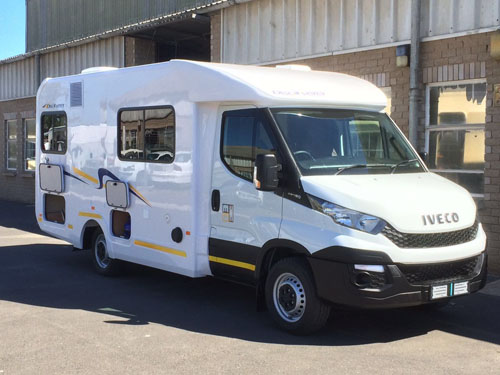
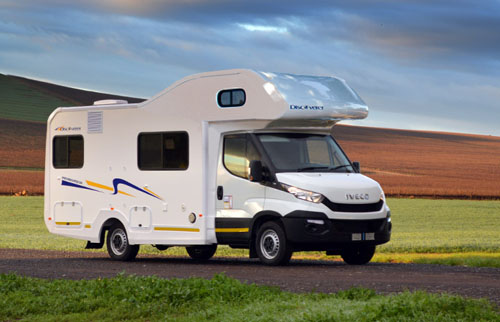
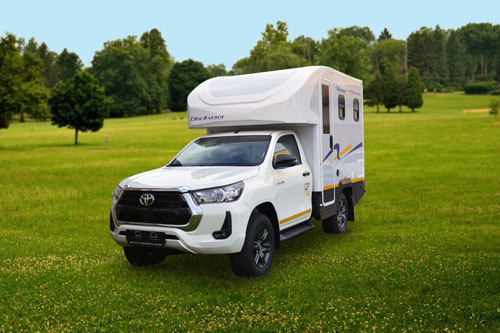
Road conditions for RVs in Zambia are highly diverse, ranging from well-maintained tarred highways in urban centers to challenging gravel, dirt, and sand tracks in rural and national park areas, often requiring 4x4 capabilities and careful navigation. Major routes connecting cities like Lusaka, Livingstone, and Ndola are generally paved and in reasonable condition, suitable for most RV classes like a rented Class SI (Semi-integrated) or Class C (Alcove) motorhome. Venturing into national parks (e.g., South Luangwa, Kafue) or more remote regions will almost certainly involve driving on unpaved roads that can be corrugated, sandy, muddy during the rainy season, or heavily potholed, necessitating a robust rented vehicle like a Class TC (Truck Camper) or a Class B (Camper Van) with good ground clearance. Drive slowly and carefully, and you can drive almost anywhere without issues. No need to stress - just use common sense and pay attention. Off-road driving tips for beginners include deflating tires slightly for sandy tracks, maintaining a steady speed, avoiding sudden braking, and engaging 4x4 if available and necessary. Navigation tools beyond standard GPS are highly recommended, such as offline maps (e.g., Maps.me, Tracks4Africa), a physical map, and a compass, as GPS signals can be unreliable in wilderness areas.Where to Camp in Zambia - Top Options
Zambia offers diverse camping experiences from well-equipped private sites to rustic national park campgrounds and even designated wild camping areas, providing options for every type of RV traveler. Popular destinations include the South Luangwa National Park, known for incredible wildlife viewing, and the Lower Zambezi National Park, offering picturesque riverside camping. Areas around Livingstone provide more developed campsites with amenities, suitable for beginners seeking comfort and security, especially those arriving at Livingstone Airport. Always research specific campground security measures and wildlife precautions, especially when camping within national parks. For finding campsites and campgrounds during your trip, we recommend using RV PLANET (rvplan.net) - a great resource for locating available spots along your route.Campground Types in Zambia (National, Private, Wild)
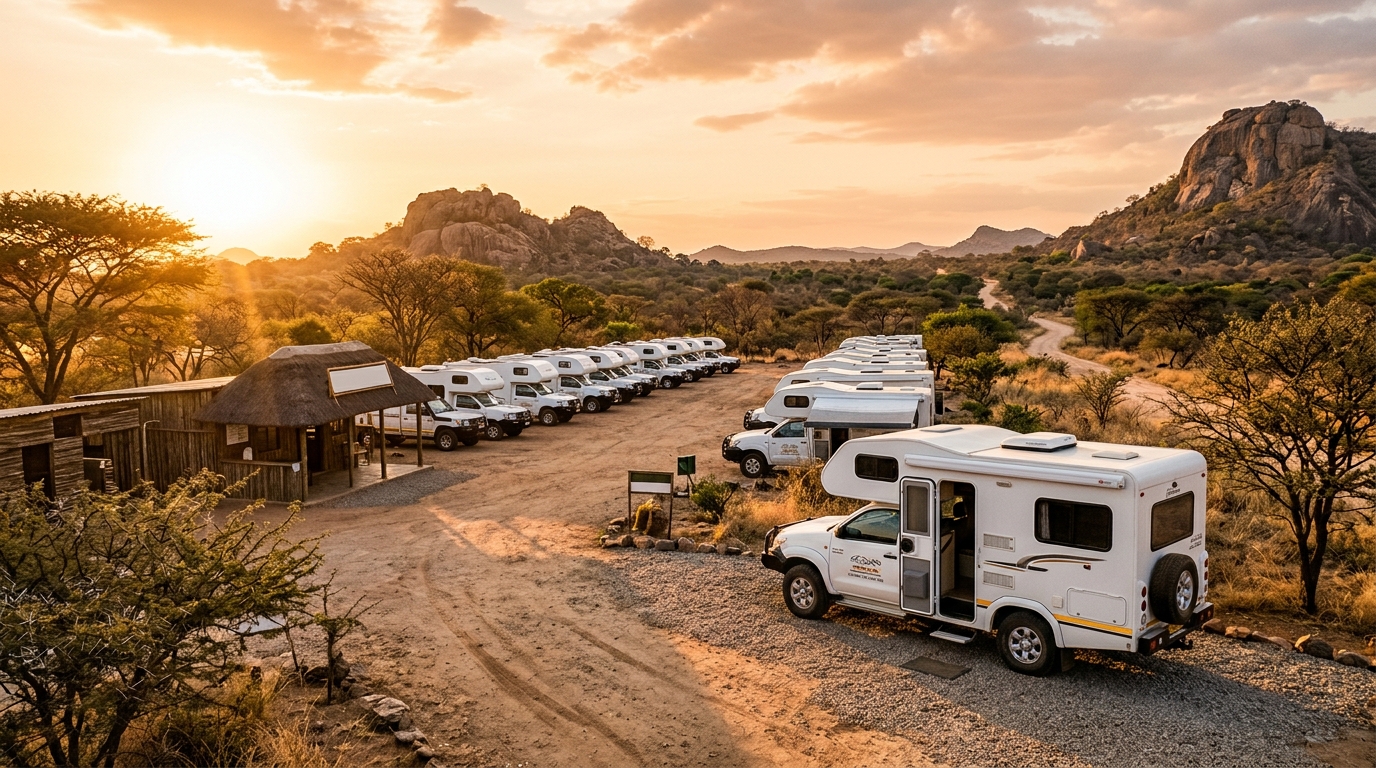
Zambia features three primary types of campgrounds: National Park sites, private campgrounds, and designated wild camping areas, each offering a distinct experience for your rented motorhome. National Park campgrounds, often more rustic, place you directly within wildlife areas, requiring careful adherence to safety protocols like staying within your vehicle at night and securing food from animals. Private campgrounds and lodges, typically found near towns or established tourist routes, often provide better security, amenities like fences or guards, and more consistent access to water and electricity. While wild camping (freedom camping) is generally tolerated in some remote, non-protected areas, it is crucial to understand local regulations and prioritize personal safety and environmental impact, as formal security is absent. Always confirm regulations for any planned wild camping spots beforehand.Featured RV Park or Campground in Zambia
For RV beginners in Zambia, look for campgrounds that offer secure parking, essential amenities, and readily available staff assistance, such as those found near major tourist hubs like Livingstone or Lusaka. An ideal beginner-friendly RV park would feature secure perimeter fencing, 24-hour security, clearly marked pitches with basic hookups (water and electricity), and an on-site office for inquiries and emergencies. Prioritize locations that have positive reviews specifically mentioning RV-friendliness, good road access, and proximity to resupply points or medical facilities. Verify facilities like waste disposal points and any specific vehicle restrictions before booking, especially if traveling with a larger RV rental. Our Rent&Plan service can also provide pre-planned routes by professionals, often highlighting such beginner-friendly locations.Hookups & Amenities - What to Expect
In Zambia, RV travelers can expect varied availability of hookups and amenities, with full hookups (electric, water, sewer) more common at private lodges or major city campgrounds than in remote national parks. Electricity typically operates at 230V, and rented RVs should be equipped with appropriate adapters for Type G (UK-style) or Type D (South African/Indian style) sockets, though generator power or solar setups are often necessary in wilder areas. Potable water access varies; some sites offer tap water hookups, while others may require filling from central points, so carrying a good supply and filtration system is advisable. Waste disposal (dump stations) can be scarce outside of larger, well-established RV parks, necessitating careful planning for black and grey water management, especially with Class A or Class C RVs that have larger tanks. Wi-Fi and laundry facilities are primarily found at more developed private campsites or lodges, while basic showers and toilets are more common across all types of formal campgrounds. When planning your meals, remember that cooking in your rented motorhome is a fantastic way to enjoy your trip; check out our RV-friendly recipes playlist for inspiration.Booking Windows & Reservations in Zambia
For RV travel in Zambia, planning ahead for reservations is crucial, especially during peak seasons (June to October) and for popular national parks. Pre-planners should book national park campsites months in advance, noting that many parks only release a limited percentage (e.g., 25%-30%) of spots for pre-booking, with the remainder often available on a first-come, first-served basis. Spontaneous travelers have a better chance of finding a spot in private campgrounds or outside of national parks, but it is always recommended to call ahead, particularly before driving long distances to a specific location. Reassure yourself that even if your first choice is full, alternative accommodations are usually available nearby, ensuring you will almost certainly find a place - if not at the first campground, then the next one. For RV rental beginners, having confirmed bookings for at least the first few nights provides peace of mind and a smooth start to the adventure. You can explore options for Weekly RV Rental in Zambia - Pricing 2026 or longer.Nearby Supermarkets & Resupply Points
RV travelers in Zambia will find major supermarkets and resupply points primarily in larger towns and cities, essential for stocking up before venturing into remote areas. Look for chains like Shoprite, Pick n Pay, and Spar in urban centers such as Lusaka, Livingstone, and Kitwe, which offer a wide range of groceries, fresh produce, and other essentials. Smaller towns and villages will have local markets or kiosks for basic supplies, but selection may be limited, and specific items might be unavailable, so plan your main resupply stops strategically. Always keep your rented RV well-stocked with non-perishable food, water, and any specialized items, as the distance between reliable resupply points can be significant in some regions. This is especially important if you plan a multi-week adventure.Best RV Class for Camping in Zambia
The best RV class for camping in Zambia largely depends on your travel style and the terrains you plan to explore, with compact and robust options often proving most practical for a rented motorhome. * **Class B - Camper Van** is often ideal for beginners due to its maneuverability, relatively small footprint (Bandana's global fleet averages 5.8 meters in length), and fuel efficiency (typically 8-10 Liters/100 km), making it suitable for varying road conditions and easier navigation. A "rent a campervan example Paradise S/T" offers automatic transmission and is ideal for a couple, or a "rent an rv for a week example Active Classic" is also great for couples. * **Class TC - Truck Camper** offers ruggedness and often 4x4 capabilities (Bandana's global fleet averages 5.5 meters in length), making it excellent for venturing off paved roads into national parks, though it provides less internal space (averaging 2.4 sleeping places) and has higher fuel consumption (12-17 Liters/100 km). Consider a "Patagonia Camper 4x4 double cab" for this robust experience. * **Class SI - Semi-integrated** RVs (Bandana's global fleet averages 6.9 meters in length, 3.8 sleeping places) offer a balance of comfort and reasonable size (10-11 Liters/100 km fuel consumption) for main roads but may struggle on rougher tracks. The "2 Berth Rover" is a great example of this class. * Larger **Class C - Alcove** (7.5 meters, 5.8 sleeping places, 10-12 Liters/100 km) and **Class A - Integrated** (7.5 meters, 4.4 sleeping places, 8-12 Liters/100 km) models offer more space and amenities but are less suited for Zambia's challenging rural and park roads due to their size and lower ground clearance. An example of a larger Class C is the "29′ Class C Motorhome", while a Class A might be a "rent rv example E3".How to Save on Campgrounds in Zambia
To save on campground costs in Zambia, consider leveraging campground discount cards, booking during shoulder seasons, and opting for less commercialized sites. Explore potential discounts offered by your RV rental provider, as some suppliers may provide campground discount cards, which can offer significant savings on various sites. Travel during the shoulder seasons (e.g., April-May or November-early December) when demand is lower, leading to potentially reduced rates and fewer crowds. Choose municipal or regional campgrounds over private resorts, as they often provide more basic facilities at a fraction of the cost, aligning with a more authentic RV experience. Inquire about weekly or monthly rates if your itinerary allows for longer stays (3+ nights at one location), as these are often more economical per night than single-night bookings. Consider sharing hookups with another RV group if permitted, as some campgrounds may offer group rates or shared utility options, further reducing individual costs. Our commitment is to offer the easiest, safest, and most affordable way to rent an RV, comparing final prices across 50+ suppliers so you do not have to.What permits do I need to RV in Zambia?
RV travelers in Zambia typically need a valid driver's license (an International Driving Permit often recommended in conjunction with your national license), vehicle registration, insurance, and specific park entry permits or conservation fees for national parks and protected areas. A standard car driver's license is sufficient for driving all motorhome classes (Class A, Class B, and Class C) in Zambia. No special license or additional permits are required for any rental motorhome. Ensure your RV rental agreement covers travel within Zambia and any potential cross-border trips, as additional documentation and fees may apply for border crossings (e.g., Carbon Tax, Road Access Fees, COMESA yellow card insurance). National park entry fees are usually paid upon arrival at the park gate or can sometimes be pre-purchased online, with costs varying for citizens, residents, and international visitors, and often including a separate vehicle entry fee. Some remote or community conservation areas may require additional RV-specific permits or fees that contribute directly to local initiatives; always inquire locally or with your tour operator prior to your trip to avoid any complications. Our Rent&Plan routes, available through RV PLANET (rvplan.net), often include details on required permits for pre-planned itineraries.How do I find water and electricity for my RV in Zambia?
Finding water and electricity for a rented RV in Zambia typically involves utilizing designated campsites and lodges that offer hookups, though availability can be limited in more remote areas, necessitating self-sufficiency and careful planning. Established private campgrounds and lodges, especially those catering to international tourists, are the most reliable sources for consistent electrical hookups (230V) and potable water taps. In national park campgrounds, electricity hookups are often scarce or non-existent, requiring RVs to rely on solar power, generators, or robust battery systems for charging devices and running appliances. Water availability in national parks can be limited to central boreholes or communal taps; always carry ample reserves and consider a water filtration system for peace of mind, as water quality can vary. Waste disposal facilities (dump stations for grey and black water) are generally only found at larger, more developed RV parks or specific lodge campsites; plan your route to include these stops strategically, especially with Class A or Class C RVs that have larger tanks. Remember, Bandana RV, founded in 2001, has helped tens of thousands of travelers plan such details for journeys across 50+ countries.What cultural etiquette should RV travelers observe in Zambia?
RV travelers in Zambia should observe local cultural etiquette by dressing modestly, greeting people respectfully, asking permission before taking photos, and engaging in responsible community interactions to foster positive relationships, as recommended by cultural guides. Modesty in dress, especially outside of major tourist areas, is appreciated; women should aim for longer skirts or trousers, and shoulders should be covered. Always greet people with a 'Muli Bwanji' (How are you?) or 'Hello' before engaging in conversation, as this shows respect and openness. Asking for permission before taking photographs of individuals, especially children, is a sign of respect, and a friendly 'zikomo' (thank you) goes a long way. Engage respectfully with local communities by purchasing goods from local markets, supporting small businesses, and being mindful of noise levels and waste disposal in populated areas. Seek opportunities for authentic cultural immersion, such as visiting local villages (with a local guide), learning a few basic phrases in local languages like Nyanja or Bemba, and participating in traditional activities if invited, ensuring you are doing so respectfully and not intrusively.How can RVers travel responsibly in Zambia?
RVers can travel responsibly in Zambia by practicing 'Leave No Trace' principles, supporting local businesses, respecting wildlife, and minimizing their environmental impact to contribute positively to conservation efforts and local communities. Adhere strictly to 'Leave No Trace' principles: pack out everything you pack in, dispose of waste properly in designated bins, and avoid disturbing natural habitats or leaving any litter. Support the local economy by purchasing groceries, crafts, and services from local markets and community-run establishments rather than large international chains. Always maintain a safe and respectful distance from wildlife, never feed animals, and drive slowly in wildlife areas to prevent accidents and minimize disturbance to their natural behavior. Minimize your environmental footprint by conserving water and electricity, avoiding plastic use where possible, and utilizing designated waste disposal and recycling facilities. Choose to camp at officially sanctioned sites, particularly in national parks, as these contribute directly to conservation funding and provide controlled environments to protect delicate ecosystems. Traveling slowly, perhaps covering a maximum of 100-150 km per day on average, allows you to truly feel the place, connect to the culture, the food, and the scenery, enhancing your responsible travel experience.What You Shouldn't Miss
- Victoria Falls: Experience the awe-inspiring 'Smoke that Thunders' from both the Zambian and Zimbabwean sides, and perhaps even take a dip in the Devil's Pool during dry season.
- South Luangwa National Park: Go on incredible walking safaris and game drives, known as one of Africa's best wildlife destinations, often featuring leopard sightings.
- Lower Zambezi National Park: Enjoy river-based safaris, canoeing, and fishing on the magnificent Zambezi River, with elephants often seen along the banks.
- Lusaka's Markets: Immerse yourself in the vibrant local culture by exploring bustling markets like Soweto Market, sampling local foods and finding unique souvenirs.
- Shiwa Ng'andu: Visit 'Africa's English Country Estate,' a fascinating historical manor in a remote part of Northern Zambia, offering a glimpse into colonial history.
Looking for expert insights from Avi Bandana? Top 5 Adventures - recommendations from Avi Bandana
Final Thoughts
Your first RV adventure in Zambia promises a journey of discovery, bringing you closer to nature and the heart of Africa. With careful planning and the right rental motorhome, you will create memories that last a lifetime. Remember, our goal at Bandana RV is to make your planning as seamless as possible, so you can focus on the excitement of the open road and the incredible experiences that await.
From the thundering Victoria Falls to the abundant wildlife of its national parks, Zambia is ready to welcome you. Embrace the adventure, drive slowly, and let the magic of a rented RV trip unfold before you. We handle the details, you live the journey.
So, are you ready to chart your course? Start your planning today!
Discover top destinations, planning tips, all in one place! Find RV Rental Deals in Zambia Now.
On the routes offered through RV PLANET routes, you can itemize and track every expense along the way for easy budgeting.